Custom Umbrellas for Cruise Lines and Shore Excursion Teams
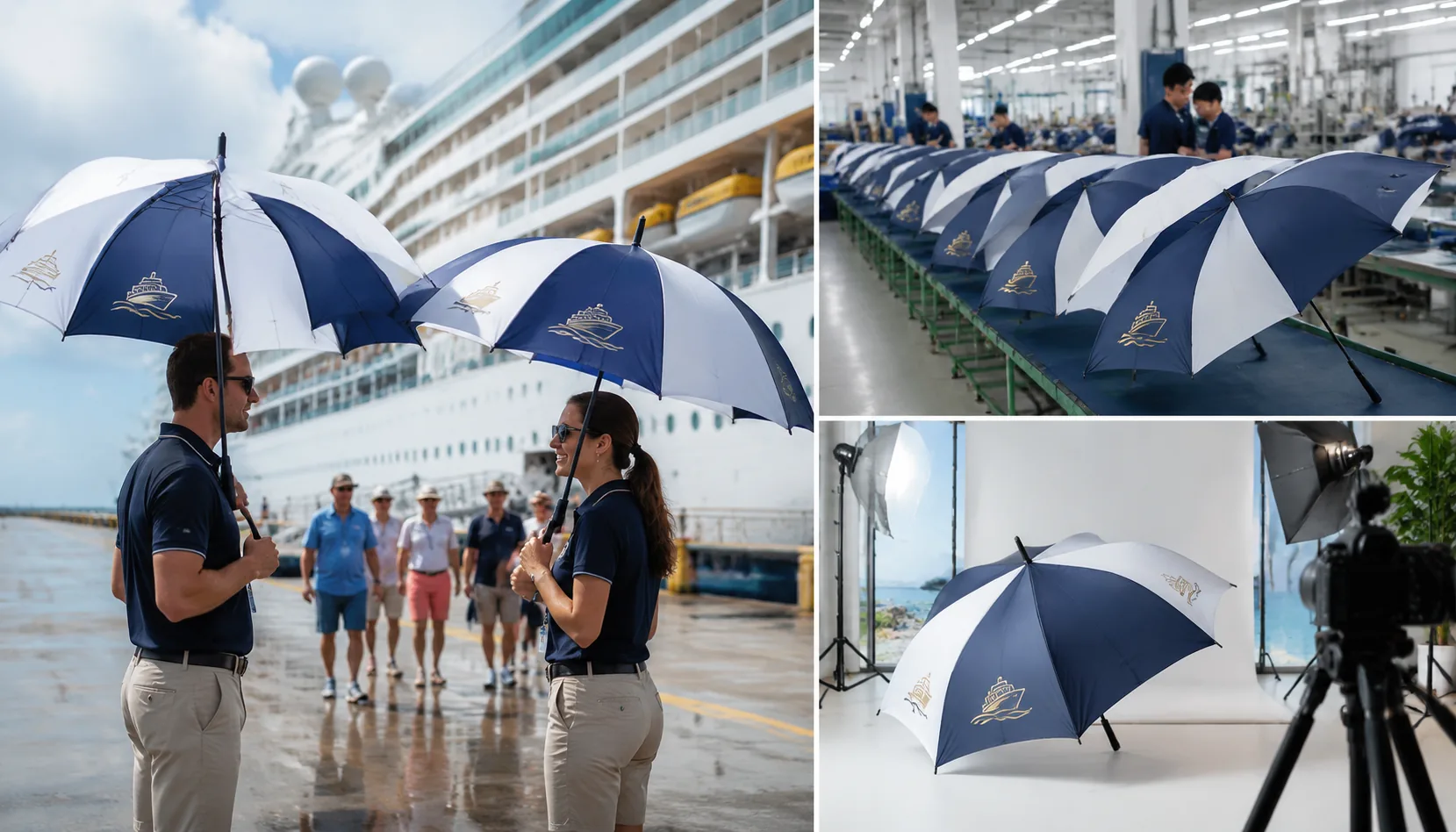
For cruise buyers, an umbrella order is not just about canopy color; it has to survive salt air, gusty piers, tight cabin storage, and fixed vessel delivery windows. On our Songxia factory floor, we check frame tension, rib alignment, fabric coating, carton strength, and packing cube because cruise line umbrellas often move through several hands before they reach guests or shore teams. The right spec prevents returns, missed sailings, and bulky inventory at port.
Where Cruise Operators Use Branded Umbrellas
The highest-visibility use for cruise line umbrellas is staff control during shore days, especially when 2,000 to 5,000 guests are moving through a wet pier, a coach parking lot, or a crowded old-town meeting point. Shore excursion umbrellas are usually not designed like retail gifts; they are working tools for identification. I prefer 27" or 30" golf umbrellas with 8K or 10K fiberglass ribs, auto-open shafts, and bright 190T or 210T pongee canopies printed on 4 panels so guests can spot the guide above head height. For windy ports, a double-canopy vented construction is worth the extra cost because a cheap steel-rib umbrella will invert fast near terminals and waterfront roads. Some operators also issue compact 21" branded travel umbrellas to transfer coordinators, pier agents, and hotel reps, but those should use reinforced stretchers, not the light promotional frames used for one-day events.
Onboard retail and loyalty gifting need a different specification because the umbrella becomes a product, not just a marker. Cruise merchandise umbrellas should feel clean in hand, pack well in a cabin, and survive repeat travel after the voyage. A 23" auto-open-close folding umbrella with fiberglass-reinforced ribs, black electroplated shaft, 210T pongee, Teflon water-repellent coating, and UPF 50+ option is a practical SKU for gift shops. For premium loyalty tiers, a 27" stick umbrella with EVA or rubberized handle can look more substantial, but it takes more storage volume per carton and raises freight cost under FOB or DDP terms. Retail umbrellas also need barcode labels, hang tags, carton markings, and color consistency tighter than staff umbrellas, because guests compare them on the shelf. For sellable SKUs, we normally inspect printing alignment, seam tension, open-close function, and fabric stains under AQL 2.5 before release.
Guest lending programs sit between operations and hospitality, so marine hospitality sourcing teams should not treat them as disposable giveaways. Lending umbrellas at gangways, suite decks, concierge desks, and tender waiting areas need durable frames, easy-dry canopies, and simple numbering or room-tracking labels. I would avoid complicated all-over sublimation for these because replacement lots must match over several seasons; a single-color canopy with screen-printed ship logo or heat-transfer emblem is easier to reorder at MOQ. Manual-open 27" umbrellas are acceptable for lending racks because they reduce spring failures, while auto-open models make more sense for VIP escort teams and security staff who need one-hand operation. Staff-identification umbrellas should prioritize visibility, color coding, and wind resistance; branded travel umbrellas for sale should prioritize handle feel, pouch finish, retail packaging, and margin. Mixing those two purposes in one specification usually creates a product that is too expensive for operations and too plain for passengers.
Choosing Specs for Ports, Decks, and Travel Bags
Compact 3-fold models make the most sense for passenger retail because they fit the way cruise guests actually pack: one checked bag, one carry-on, and very little patience for bulky souvenirs. A 21" or 23" three-fold auto-open-close umbrella with a 190T pongee canopy usually lands in the sweet spot for branded travel umbrellas: small enough for a cabin drawer or shore bag, but not so tiny that it feels disposable in a port rainstorm. For cruise merchandise umbrellas, I would avoid ultra-light six-rib frames unless the retail price point is very low; an 8K fiberglass-and-steel hybrid frame gives better recovery after gusts on open piers. If the program is premium, 210T pongee with Teflon water-repellent coating has a smoother hand feel, tighter weave, and cleaner print surface than basic polyester, especially for navy, white, and metallic cruise logos.
Staff umbrellas need different specs because crew and shore excursion teams use them as tools, not souvenirs. For gangway control, tender boarding, bus dispatch, and walking tours, 23" to 25" auto-open stick umbrellas are easier to deploy one-handed while holding a radio, manifest, or guest sign. I prefer 8K or 10K fiberglass ribs over steel ribs in salt-air environments because steel ribs look fine in pre-shipment inspection but can show rust at rivets and tips after repeated exposure to sea spray. A straight EVA or rubberized handle is more reliable than painted wood for wet hands, and a manual-close shaft is simpler to maintain than auto-open-close on high-use staff units. For shore excursion umbrellas, specify reinforced tips, a vented canopy if wind exposure is frequent, and a shaft strong enough to survive repeated loading into coach luggage bays.
Color and branding should follow the operating environment, not just the brand book. Dark canopies hide dirt from bus floors and wet decks, but high-visibility panels help guests identify guides in crowded ports; many cruise line umbrellas use navy or black outer panels with one white or bright accent panel for wayfinding. Screen printing is cost-effective for one- or two-color logos on 190T pongee, while heat transfer gives sharper small text for excursion team names, QR codes, or itinerary icons. For marine hospitality sourcing, I would set separate AQL 2.5 inspection checkpoints for frame function, salt-exposed metal parts, canopy seam leakage, and logo alignment, because umbrella failures usually come from small assembly shortcuts rather than the main fabric. Typical MOQ is 500–1,000 pieces per model, with 25–35 days production after artwork approval and FOB Ningbo or Shanghai shipping for consolidated cruise supply orders.
Designing for Guest Experience and Brand Control
Color discipline matters more at sea than most buyers expect because guests photograph everything against bright decks, blue water, and port backdrops. For cruise line umbrellas, I usually recommend navy, white, or route-themed alternating panels rather than busy all-over graphics; a 23" auto-open stick umbrella in 190T or 210T pongee gives enough print area without feeling like a golf umbrella. PMS matching should be checked on both dry fabric and after water-repellent treatment, because a coated navy can shift half a shade darker after finishing. For Mediterranean routes, a white-and-cobalt layout works cleanly; for Alaska, deep navy with glacier blue panels reads premium without showing dirt as quickly as pure white.
Brand control should extend past the canopy. Sleeve branding is often the part guests keep visible in cabins, buses, and tote bags, so we align the sleeve logo size with the main canopy mark instead of treating it as a leftover accessory. QR hangtags are useful for shore excursion umbrellas when they link to meeting-point maps, safety instructions, or onboard shop pages, but the tag needs matte lamination and a reinforced string loop so it survives humidity and baggage handling. Our standard practice at ZheBrella is to run a printed strike-off before bulk cutting, then inspect logo placement and color under AQL 2.5 before export packing.
For tropical routes, UPF 50+ coating is not optional if the umbrella will be used in Cozumel, Nassau, Singapore, or the Greek islands. A light-colored interior, especially silver-gray or soft white, reduces heat buildup better than a black underside and feels less claustrophobic when guests stand in a tender queue. If the same design is sold as cruise merchandise umbrellas, I would keep the canopy construction practical: fiberglass ribs, 8K or 10K frame, rust-resistant shaft, and a Teflon-style water-repellent finish. That specification supports marine hospitality sourcing because it balances guest comfort, photo-friendly branding, and realistic FOB/DDP landed cost control.
Order Planning Across Routes and Seasons
Route planning matters more than umbrella design when a cruise program covers six ships, three embarkation ports, and two language markets. I would not put every vessel on the same SKU unless the deck plan, retail price point, and shore excursion use case are truly identical. A 21" auto-open-close branded travel umbrella works well for gift shops and fly-in passengers, while a 27" manual or auto-open straight umbrella gives better coverage for pier staff, tender queues, and rainy walking tours. For cruise line umbrellas, we usually map each style by ship class, route climate, and distribution point before confirming artwork, because a Caribbean retail item and an Alaska shore team umbrella should not use the same fabric weight or frame spec.
Shore excursion umbrellas need stricter calendar control because missed launch windows are expensive. Typical MOQ is 500-1,000 pieces per style, which is practical for separating English, Spanish, Japanese, or bilingual logo layouts without overloading inventory. Sampling normally takes 7-10 days after artwork confirmation, including print strike-off on 190T or 210T pongee, handle logo check, and carton mark review. For cruise merchandise umbrellas, I recommend locking the sample before the ship repositioning date is within 60 days; otherwise, small artwork revisions, PMS color changes, or port documentation can squeeze production time too tightly.
Bulk production is usually 30-40 days before consolidation, and that clock should start only after the approved sample, deposit, and packing instructions are all confirmed. Marine hospitality sourcing often involves mixed shipment plans: FOB Ningbo/Shanghai for central warehouses, DDP for U.S. promotional distributors, or consolidated cartons labeled by vessel, sailing month, and port agent. Our standard practice at ZheBrella is to build the order sheet around route batches, not just total quantity, so the factory can separate POE/PVC rain ponchos, compact umbrellas, and 23" or 27" straight umbrellas into clean carton sequences for inspection under AQL 2.5 before export booking.
Inspection, Packing, and Logistics for Cruise Programs
Inspection for cruise line umbrellas has to be stricter than a normal promotional order because the goods may be split across ships, ports, gift shops, and shore excursion teams with little chance for rework. Our standard practice at ZheBrella is AQL 2.5 for major defects and a tighter internal watch on print placement, because a crooked logo on a 23" auto-open umbrella is immediately visible in guest photos. We check canopy stitching for skipped stitches, loose bartacks at rib tips, uneven seam tension, and puckering on 190T or 210T pongee. For POE and EVA clear canopies, we also check weld clarity, edge binding, and cold-crack risk after folding. On 8K and 10K frames, inspectors open and close samples repeatedly to catch weak springs, sticky runners, bent steel ribs, and fiberglass rib delamination before carton sealing.
For shore excursion umbrellas, the small details matter because staff issue them quickly at gangways, buses, and tender points. We inspect handle finish for scratches, paint chips, soft-touch coating rub-off, and poor logo adhesion on wooden, EVA, rubberized, or plastic handles. Sleeve fit is checked because an umbrella that cannot slide back into its sleeve becomes waste after the first tour; we allow enough tolerance for damp 210T pongee but reject sleeves that are visibly oversized or twisted. Barcode accuracy is a separate checkpoint, not an afterthought: UPC/EAN labels, carton marks, ship-to codes, SKU color names, and cruise merchandise umbrellas assortment ratios must match the packing list. For branded travel umbrellas packed by destination or itinerary, mixed cartons need clear inner polybag labels so onboard teams do not open 20 cartons to find the navy 21" compact model.
FOB shipment to a central warehouse is usually best when the cruise operator or distributor already consolidates marine hospitality sourcing from China, Vietnam, and Europe. Under FOB Ningbo or Shanghai, the buyer controls ocean freight, customs entry, and onward allocation, which lowers unit cost on larger 3,000–20,000 piece programs but adds planning discipline: production lead time is typically 30–45 days after artwork approval, plus sailing time and port handling. DDP delivery to regional cruise supply hubs costs more, but it is cleaner for urgent replenishment, event launches, or split deliveries to Miami, Barcelona, Southampton, or Singapore. With DDP, we quote landed cost including export handling, freight, duty, customs clearance, and final truck delivery. For cruise line umbrellas tied to a sailing season, I prefer FOB for annual core stock and DDP for late artwork changes, charter events, or shore excursion umbrellas that must arrive before a specific embarkation date.
Frequently Asked Questions
Are compact or stick umbrellas better for cruise programs?
Compact 3-fold umbrellas are better for onboard retail and passenger bags. Stick umbrellas are better for excursion leaders because they are more visible and faster to open in crowded ports.
Can umbrellas be packed by ship or route?
Yes, cartons can be marked by ship name, route, SKU, or port destination. Final packing plans should be confirmed before production so barcodes, hangtags, and carton labels match the cruise operator’s system.
What umbrella styles work best for cruise shore excursion teams?
Compact automatic folding umbrellas with fiberglass ribs are usually best because they pack easily in staff bags and handle coastal wind better than basic steel frames. For premium shore teams, a 21- or 23-inch windproof model with a vented canopy is a practical choice.
Can cruise merchandise umbrellas be packed for onboard retail display?
Yes. Common retail options include printed sleeves, hang tags, barcode labels, color boxes, and inner cartons sized for shipboard storage. Buyers should confirm carton dimensions and case pack quantities before finalizing the purchase order.
What lead time should cruise buyers plan for custom logo umbrellas?
For OEM logo umbrellas, plan about 25–45 days for production after artwork and sample approval, plus ocean or air freight time. Seasonal programs should start sourcing at least 8–12 weeks before the sailing or retail launch date.
Looking to Launch Your Custom Umbrella Line?
ZheBrella is a Zhejiang-based OEM/ODM umbrella manufacturer with 17 years of export experience. Free design, low MOQ from 100 pieces, windproof construction, full-color print.
Get Free Quote Now »People Also Search For
Related Articles
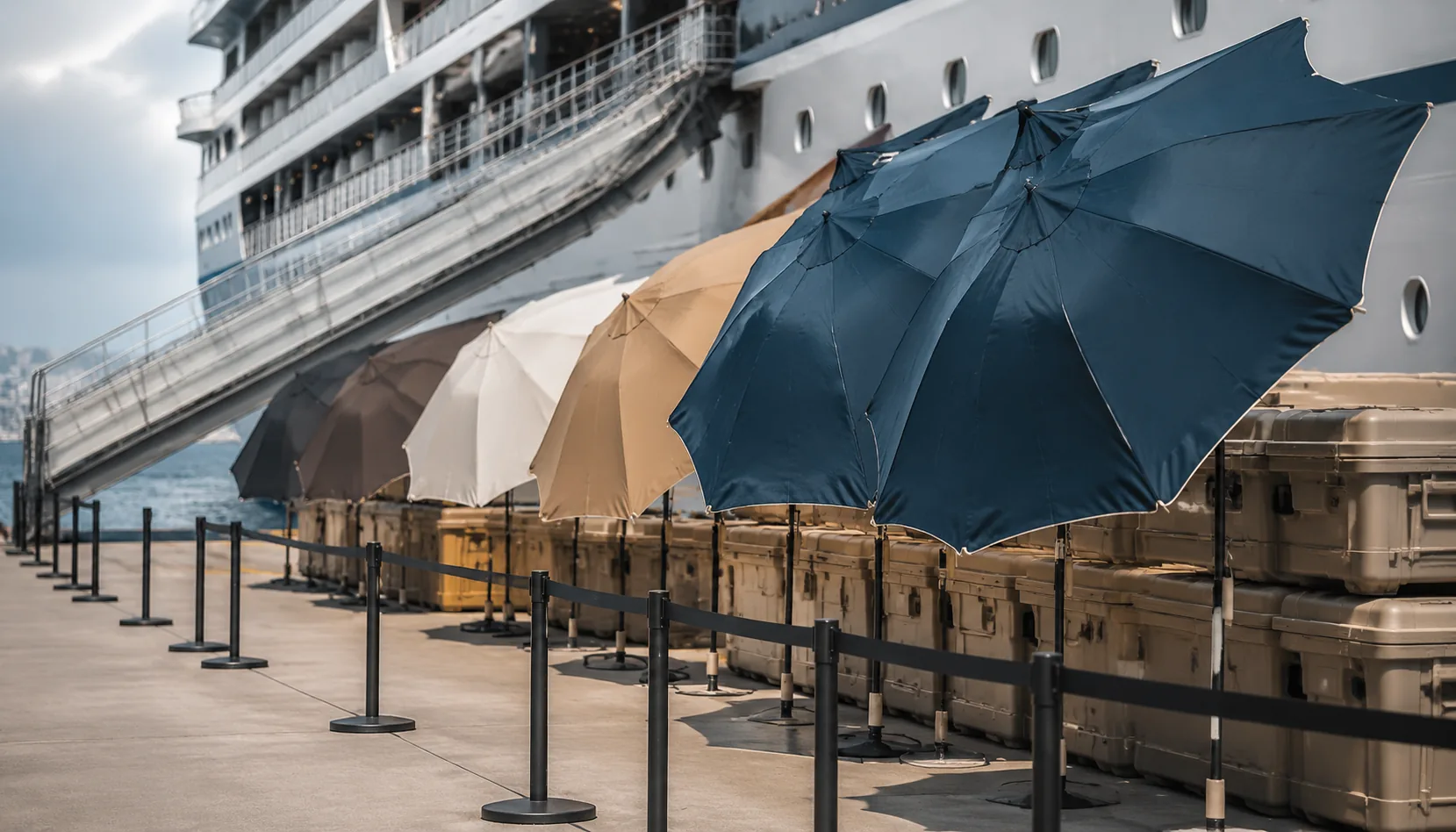
Umbrellas for Cruise Lines and Shore Excursion Programs
Specify umbrellas for cruise retail, shore excursions, and crew use with UPF 50+ canopies, corrosion-aware frames, MOQs,...
Read More »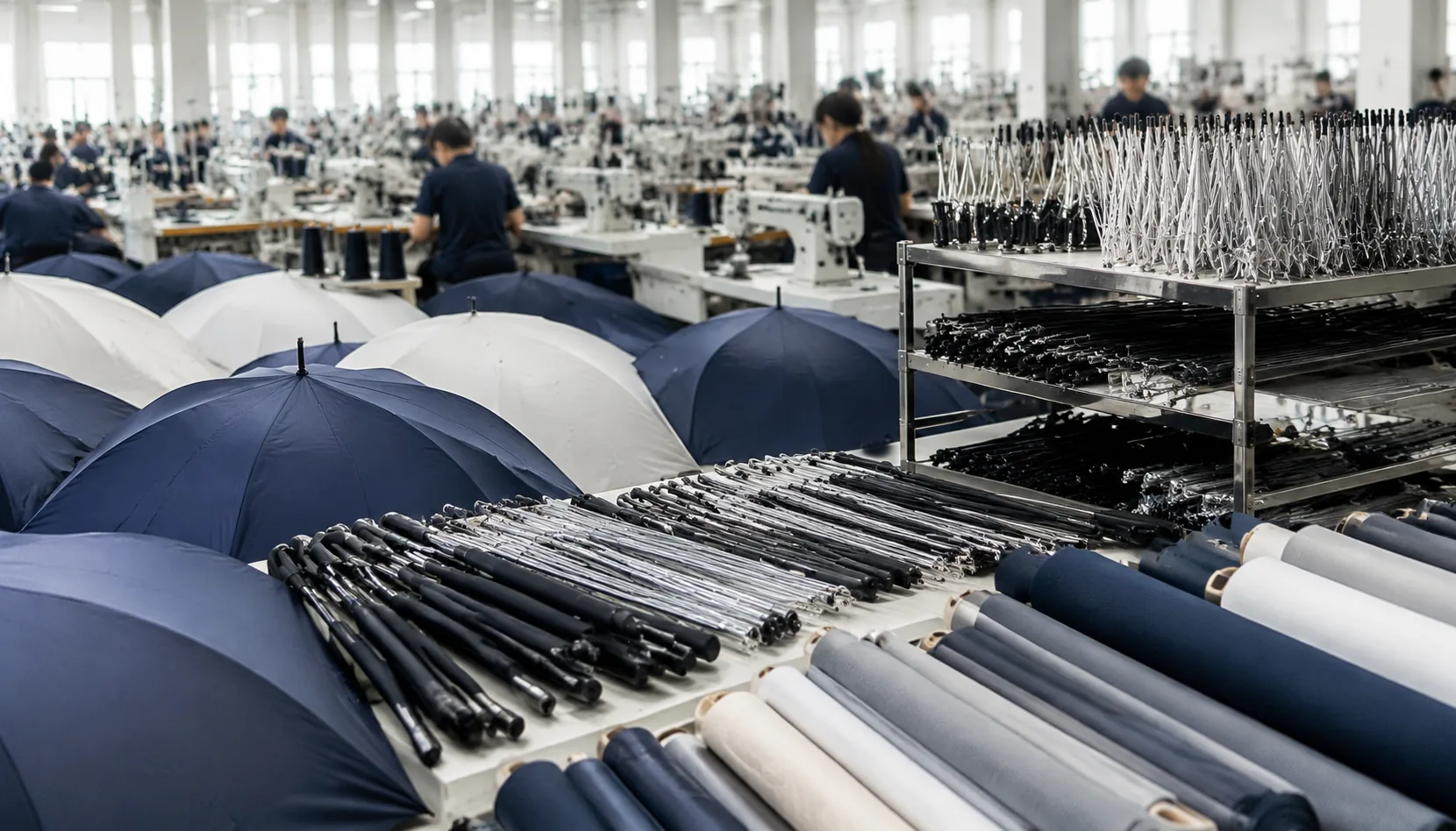
Custom Umbrellas for Cruise Lines and Ferry Operators
Source marine passenger umbrellas with windproof builds, corrosion-aware materials, and FOB/DDP planning for cruise, fer...
Read More »
Branded Umbrellas for Cruise Lines and Ferry Operators
Source marine-ready umbrellas for shore excursions, terminals, and onboard retail with windproof frames, 210T pongee, AQ...
Read More »