Branded Umbrellas for Cruise Lines and Ferry Operators
For cruise lines and ferry operators, an umbrella is not just a souvenir—it has to survive salt air, gusty piers, wet tenders, and fast handout at busy terminals. When buyers source cruise line branded umbrellas, the real risk is inconsistent frame strength, weak fabric coating, late packing changes, and unclear landed cost. On our Songxia factory floor, we control these details through windproof frame selection, 210T pongee inspection, AQL 2.5 checks, and DDP-ready packing plans.
Operational Use Cases for Marine Passenger Brands
Cruise line branded umbrellas should be specified by operating zone, not by one generic SKU. Shore excursion teams need durable 23" or 27" auto-open umbrellas with fiberglass ribs, 8K or 10K frames, 190T or 210T pongee, and a logo panel that remains readable when guides hold the umbrella above a crowd. For tender ports and bus loading areas, I prefer a slightly larger arc and a straight EVA or rubberized handle because wet hands and sunscreen make glossy plastic slippery. A double-canopy vented windproof design is worth the extra cost where gusts come off the pier; a well-built 10K fiberglass frame can survive 50+ mph wind-tunnel testing, while cheap steel-rib souvenir frames usually invert before the first rain squall. These are operator assets, so each unit should carry a small internal ID label, color-coded department tag, and packed spares for lost tips, sleeves, and broken runner clips.
Ferry passenger umbrellas are a different problem because speed of deployment matters more than gift-box presentation. At ferry terminals, staff may hand umbrellas to passengers walking from ticket halls to gangways, parking lots, or shuttle buses, so manual-open is often too slow; 23" auto-open or 21" compact auto-open-close windproof travel umbrellas work better when queues move fast. For crew escorts, security teams, and wheelchair assistance, high-visibility canopy colors with reflective piping are more useful than dark luxury branding, especially during early departures or fog. Marine hospitality umbrellas for VIP transfers can justify 210T pongee with Teflon water-repellent treatment, UPF 50+ coating, a color-matched sleeve, and a cleaner heat-transfer logo instead of a heavy screen print. Our standard practice at ZheBrella is to separate terminal-use umbrellas from guest-facing hospitality umbrellas during sampling, because the frame stress, logo visibility, and acceptable loss rate are completely different.
Onboard retail shops should not buy the same umbrella used by operations unless the goal is pure utility. Souvenir-grade merchandise can use lighter 8K steel or hybrid steel-fiberglass frames, 190T pongee, PVC windows for kids’ designs, or full-panel sublimation for destination artwork; the buyer is paying for memory value, not daily pier abuse. Reusable operator umbrellas need higher AQL discipline, usually AQL 2.5 for frame function, stitching, logo placement, and water-spray resistance, because a failed umbrella in a guest escort lane becomes a service issue immediately. For bulk umbrellas for operators, I would split the PO into two BOMs: 60–70% durable service stock in solid brand colors and 30–40% retail or promotional stock with more decorative printing. Typical MOQ is 500–1,000 pieces per model, with 25–35 days production after artwork approval, plus FOB Ningbo/Shanghai or DDP delivery depending on whether the operator consolidates with other marine supplies.
Specs for Coastal Wind, Salt Air, and Frequent Handling
Fiberglass ribs are the safer default for cruise line branded umbrellas because ports punish cheap steel frames faster than inland retail use. Salt air creeps into rivets, stretchers, and spring joints; once a steel rib starts staining the canopy seam, the umbrella looks old even if the fabric is still sound. For passenger-sale 21" or 23" compact models, I recommend 8K fiberglass ribs with a chrome-plated or black electrophoretic steel shaft, not full steel ribs. That keeps weight manageable for luggage while giving better wind recovery when guests step off the gangway into 25–35 mph gusts. A 190T pongee canopy is acceptable for budget ferry passenger umbrellas, but 210T pongee with a Teflon water-repellent finish dries faster in cabin corridors and gift shops. For transparent sightseeing styles, POE is cleaner and more cold-resistant than brittle PVC, especially for shoulder-season routes in northern ports.
Crew-led excursions need a different build than gift-shop compact umbrellas. For shore tours, tender operations, and queue management, 27" or 30" stick umbrellas with 16K fiberglass ribs give better coverage and a more controlled look when a guide is holding the umbrella as a meeting marker. If the itinerary includes exposed piers, island transfers, or rainy walking tours, a double-canopy vented windproof design is worth the extra cost because it releases uplift instead of flipping inside out; our standard practice is to test these against repeated open-close cycles and wind-tunnel targets around 50+ mph before approving bulk umbrellas for operators. Auto-open is practical for guides carrying radios or clipboards, but auto-open-close compact mechanisms add more failure points in sandy, wet environments, so I reserve them for premium retail programs rather than daily crew use.
Branding should be specified around handling abuse, not just logo size. Screen printing is economical for one- or two-color logos on navy, black, or white pongee, while heat transfer gives cleaner edges for gradient cruise marks; sublimation works best on white panels when the design covers the full canopy. For marine hospitality umbrellas, I would add UPF 50+ coating if the route includes Caribbean, Mediterranean, or Southeast Asia sailings, because sun protection sells even when rain is seasonal. Packaging also matters: individual polybags trap moisture after onboard use, so retail units can be bagged but operational umbrellas should use breathable sleeves or be dried before storage. For cruise line branded umbrellas, set inspection at AQL 2.5 for frame function, canopy stains, print alignment within 3 mm, and open-diameter tolerance. Typical MOQ is 500–1,000 pieces per style, with 25–35 days production after artwork approval, FOB Ningbo or Shanghai, and DDP available for consolidated deliveries to port warehouses.
Fabric and Feature Choices for Passenger Comfort
For most cruise line branded umbrellas, 190T pongee is the right workhorse fabric: tight enough for clean screen printing, light enough for daily passenger handling, and cost-stable when you are buying bulk umbrellas for operators in 1,000 to 10,000-piece runs. I would pair it with a standard water-repellent finish, usually a fluorine-free C0 treatment now, because deck staff do not want canopies that stay wet and drip through the gangway queue. On 21" or 23" compact auto-open frames, 190T keeps the folded diameter reasonable for cabin storage and excursion bags. If the umbrella is mainly a welcome amenity, shore-excursion loaner, or rainy-port giveaway, this fabric gives enough body for a sharp one-color or two-color logo without making the unit feel overbuilt.
210T pongee makes more sense for premium retail, suite-level gifts, or VIP marine hospitality umbrellas because the hand feel is denser, the canopy hangs smoother, and color saturation is better on heat-transfer or full-panel digital print. The added yarn density is noticeable when guests buy the umbrella in an onboard shop or receive it with a loyalty-tier package; it feels less like a disposable promo item. For hot routes in the Caribbean, Mediterranean, Southeast Asia, or Australia, specify a UPF 50+ coating, not just a dark fabric color, because UV performance should be testable. A silver or black UV backing can reduce heat load, but it may affect inside appearance and print planning, so artwork should be checked before bulk cutting.
Passenger comfort is not only fabric; it is how the umbrella behaves during boarding, disembarkation, and windy pier conditions. Auto-open mechanisms are worth the small extra cost for ferry passenger umbrellas because one-hand operation matters when guests are carrying passports, phones, duty-free bags, or children’s rain jackets. I prefer non-slip EVA, rubberized ABS, or matte-coated J handles over glossy plastic, especially around salt spray, wet railings, and gloved winter ferry traffic. For windproof travel umbrellas, use fiberglass ribs or at least fiberglass end ribs on 8K or 10K frames, with a vented double canopy if the operator expects exposed terminals or 30–50 mph gusts. Our standard practice at ZheBrella is to run opening-cycle checks, fabric adhesion checks after coating, and AQL 2.5 final inspection before FOB Ningbo or Shanghai shipment.
Designing Umbrellas for Retail, Crew, and Safety Visibility
Artwork placement should be decided before frame selection, because the rib count controls how clean the logo reads when the canopy is under tension. For cruise line branded umbrellas, we usually map the main mark across one or two adjacent panels on an 8K or 10K 23" stick umbrella, then reserve alternating panels for secondary patterns, route colors, or sponsor marks. A full 16K golf umbrella gives more panel breaks, but it also cuts large artwork into narrower wedges, so oversized ship silhouettes or ferry route maps need careful distortion correction in the print file. PMS matching should be done against the actual canopy cloth, not just a coated paper chart; 190T pongee, 210T pongee, POE, and PVC all shift color differently after heat transfer, screen printing, or sublimation. For retail shops onboard, I prefer 210T pongee with a Teflon water-repellent finish because it takes branding cleanly and folds better than cheaper polyester after repeated passenger handling.
Sleeves and handle tags are not decoration afterthoughts; they are the parts passengers see when the umbrella is closed in a cabin, gift shop, or terminal queue. A sleeve can carry a vertical logo, QR code, itinerary message, or safety notice, but the sewing allowance and tapered shape must be built into the artwork template or the logo will disappear into the seam. For marine hospitality umbrellas, woven labels and rubber handle tags hold up better than paper hangtags in salty air, especially on 27" and 30" guest umbrellas stored near gangways. We normally keep sleeve print widths under 55–65 mm on compact 21" windproof travel umbrellas so the artwork remains readable when folded. For bulk umbrellas for operators, handle options matter too: EVA foam is practical for crew grip, straight ABS is cleaner for retail, and rubberized crook handles work well for ferry passenger umbrellas where people carry bags and tickets.
Crew escort umbrellas need visibility features that retail umbrellas usually do not. Reflective piping on the canopy edge, silver reflective transfer on two opposite panels, or one high-visibility yellow or orange panel can make staff easier to track in wet terminals, shore-excursion staging areas, and rainy ports. I would not cover all eight panels in fluorescent color unless the umbrella is purely operational; it looks cheap in passenger photos and clashes with most cruise or ferry brand standards. A better specification is a navy or black 190T pongee canopy with two branded panels, reflective piping around the perimeter, and a manual or auto-open fiberglass frame that survives 50+ mph wind-tunnel testing. For procurement, separate the SKU list by use: retail compact umbrellas at 21" or 23", crew escort umbrellas at 27", and safety or boarding-control umbrellas at 30" double-canopy vented windproof construction. Inspection should include PMS tolerance, panel registration, reflective adhesion, open-close cycling, and AQL 2.5 checks before FOB or DDP shipment.
Sourcing, Inspection, and Route-Based Logistics
Logistics should match how the operator replenishes stock: vessel stores, terminal warehouses, concession retail, or central purchasing. FOB Ningbo or Shanghai works well when buyers already consolidate uniforms, cabin amenities, or retail merchandise in China; umbrellas can be packed by ship name, route code, SKU, or terminal so the forwarder does not have to break mixed cartons later. DDP delivery is better for ferry operators with smaller procurement teams, especially when goods must land directly at port warehouses in Miami, Seattle, Vancouver, Southampton, Rotterdam, or Singapore. For DDP, carton marks should include PO number, item code, case quantity, gross weight, and destination terminal, because port receiving teams reject vague promotional cartons more often than factories expect. Plan a buffer of 7–14 days around peak sailing seasons, customs exams, or typhoon disruptions in East China, and avoid last-minute mechanism changes from manual to auto-open-close after sample approval because that resets tooling, testing, and packing dimensions.
Frequently Asked Questions
Are fiberglass ribs necessary for cruise and ferry umbrellas?
Fiberglass ribs are strongly recommended for coastal programs because they resist corrosion better than steel and flex in gusty port conditions. Steel can work for budget souvenir umbrellas if the expected use is light.
Can one umbrella order support both onboard retail and operations?
Yes, but the specs should be separated by use case. Retail may prioritize 210T pongee and premium packaging, while operations may need 16K ribs, double-canopy windproof construction, and easy inventory labeling.
What umbrella specifications work best for cruise shore excursions?
Most cruise buyers choose compact 3-fold umbrellas with fiberglass ribs, a windproof frame, and 210T pongee fabric. A common retail-ready size is 21 or 23 inches with logo printing on 1-2 panels and a branded sleeve.
Can umbrellas be packed for onboard retail and terminal distribution separately?
Yes. Retail units can use individual sleeves, hang tags, barcodes, and master cartons, while terminal giveaway umbrellas can be packed in bulk polybags to reduce cost. Carton marks can be separated by vessel, route, port, or promotion.
What quality control standard should ferry and cruise operators request?
For bulk marine hospitality orders, AQL 2.5 for major defects and AQL 4.0 for minor defects is commonly used. Pre-shipment inspection should check opening function, rib strength, fabric coating, print alignment, and carton drop resistance.
Looking to Launch Your Custom Umbrella Line?
ZheBrella is a Zhejiang-based OEM/ODM umbrella manufacturer with 17 years of export experience. Free design, low MOQ from 100 pieces, windproof construction, full-color print.
Get Free Quote Now »People Also Search For
Related Articles
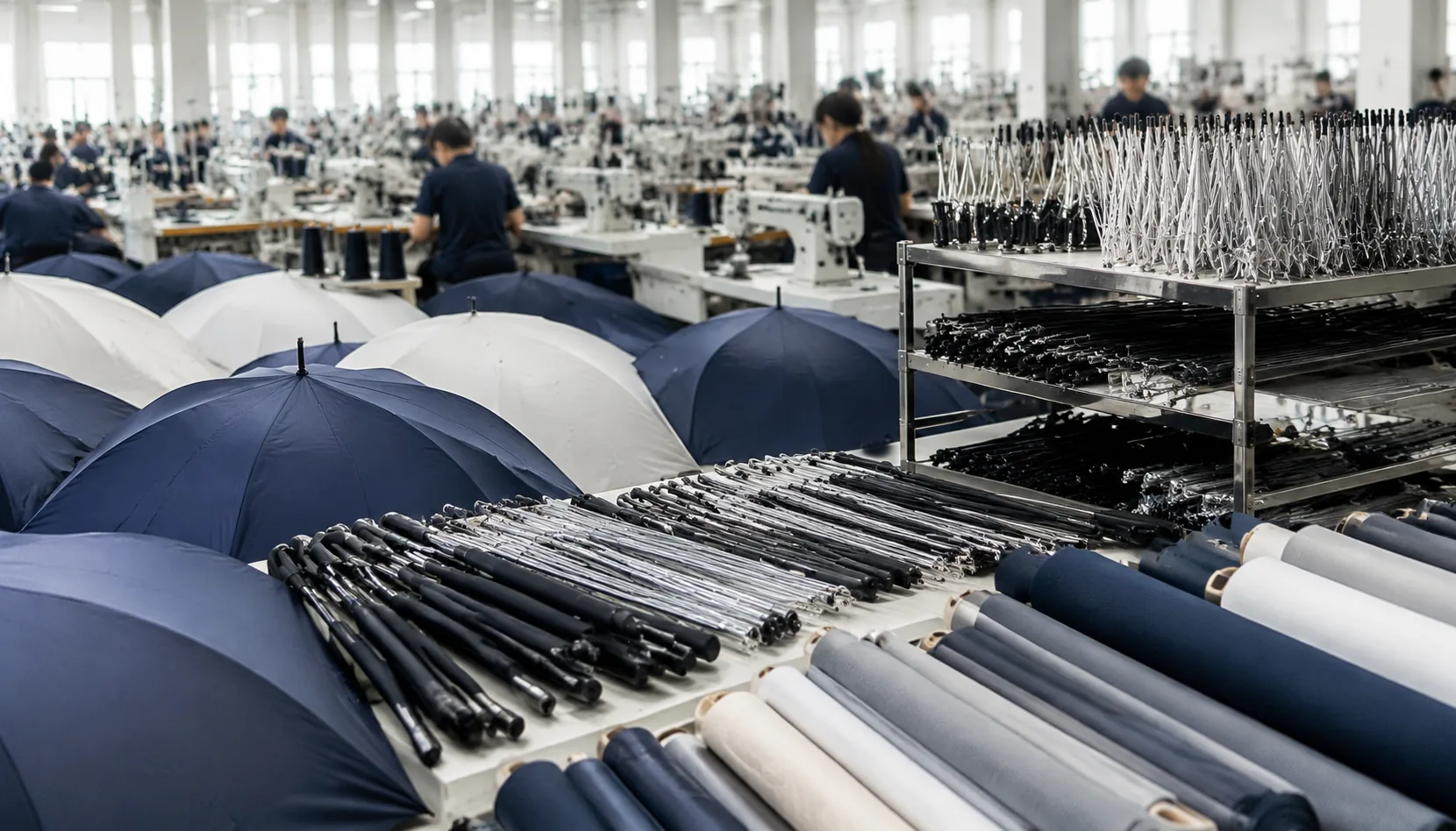
Custom Umbrellas for Cruise Lines and Ferry Operators
Source marine passenger umbrellas with windproof builds, corrosion-aware materials, and FOB/DDP planning for cruise, fer...
Read More »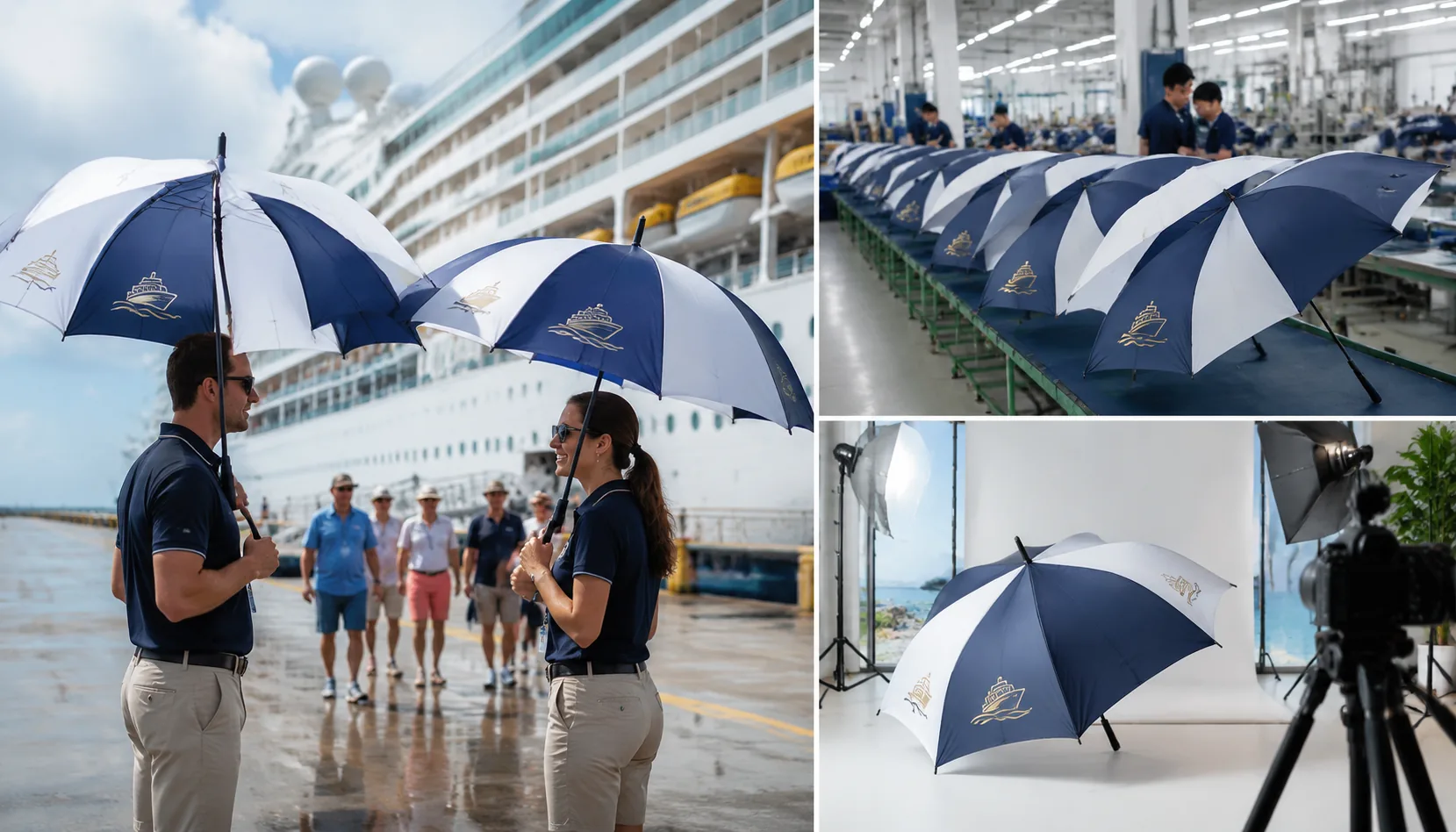
Custom Umbrellas for Cruise Lines and Shore Excursion Teams
Source cruise-ready umbrellas for shore teams, guest retail, and excursions with windproof frames, compact packing, and ...
Read More »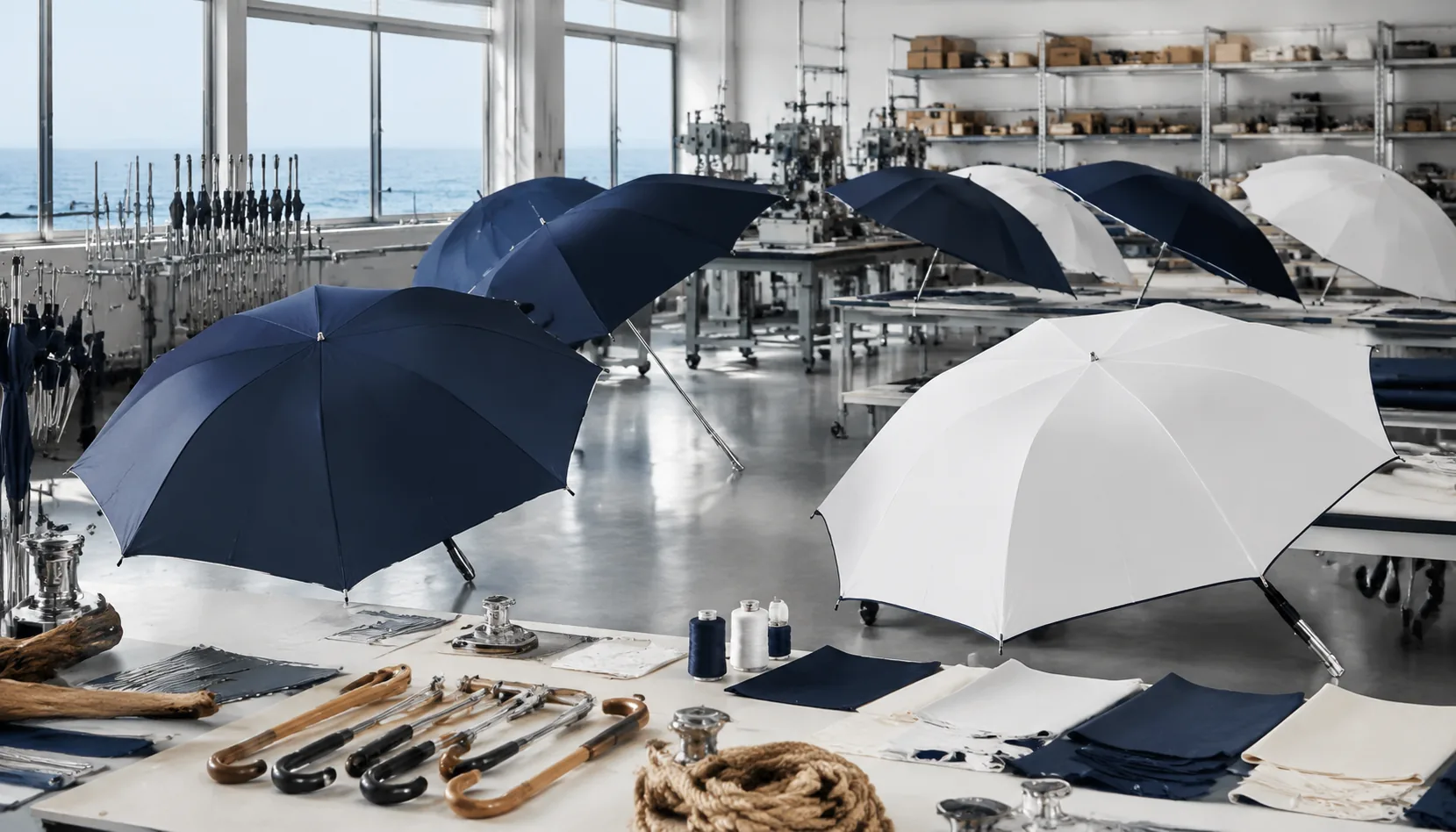
Branded Umbrellas for Cruise Lines and Marine Tourism
Source umbrellas for cruise retail, shore excursions, and VIP guests with corrosion-aware specs, windproof frames, packa...
Read More »