Branded Umbrellas for Cruise Lines and Shore Excursions

Cruise buyers rarely struggle with artwork alone; the real risk is whether a branded umbrella program can survive salt air, gusty gangways, tight port delivery windows, and mixed-volume replenishment. From our factory floor in Songxia, we see the failures that matter most—rusting ribs, canopy color drift, weak auto-open springs, and carton specs that do not match onward handling—so cruise line branded umbrellas have to be engineered around use conditions, QC checkpoints, and shipping terms from the start.
Cruise and Excursion Use Cases Require Different Specs
The spec split usually starts with who is carrying the umbrella and for how long. Onboard guest issue umbrellas are typically compact 21" or 23" folding models with auto-open, because passengers want one-handed deployment when they step from cabin corridor to open deck or from terminal shuttle to gangway. For this job, 3-fold frames with fiberglass ribs and aluminum shaft sections outperform cheap all-steel builds; they keep weight around 340 to 420 grams and resist salt-air corrosion better. If the umbrella is part of a cabin program or loyalty giveaway, cruise line branded umbrellas in 190T or 210T pongee with a simple sleeve pack well and hold logo detail cleanly by screen print or heat transfer. For sunny embarkation ports, UV protection umbrellas with a black UV coating or silver undercoating tested to UPF 50+ make more sense than plain rain canopies, because guests use them on dockside walks as often as in rain.
Gangway rain coverage and crew-controlled use need a different frame entirely. Here I would not spec a traveler compact unless the buyer is willing to replace them constantly. A 27" or 30" straight umbrella with 8K fiberglass ribs, or even 16K frames when visual coverage matters, gives better span, better stability, and less rib inversion in crosswind around the ship side. For embarkation queues, shore excursion umbrellas used by guides or ground staff are often auto-open straight umbrellas with EVA handle, thicker shaft wall, and double canopy umbrellas if the line operates in windy ports. A properly vented double-canopy build can realistically be tested in the 45 to 55 mph range, while a basic single canopy promotional frame usually fails much earlier. That difference shows up fast at the pier, where wind tunnels between terminal buildings punish weak stretchers and poor runner fit.
Retail resale is its own category because appearance, margin, and carton efficiency matter as much as function. Gift-shop umbrellas usually need cleaner finishing, barcode-ready hangtags, tighter color matching on PMS logo panels, and lower defect tolerance at final inspection, commonly AQL 2.5. The best-selling mix is often a compact auto-open for guest convenience plus a larger straight style for excursion staff, rather than forcing one SKU to cover every use case. From an FOB umbrella supplier standpoint, this is also where umbrella lead times diverge: a stock-frame compact with custom canopy may run 25 to 35 days, while a molded-handle retail program or 16K custom frame can push 45 to 60 days after sample approval. At ZheBrella, our standard practice is to separate these use cases at quotation stage, because combining onboard issue, shore support, and retail resale into one umbrella usually saves pennies up front and creates complaints later.
Materials and Frame Choices for Wind, Salt Air, and Sun
Fiberglass ribs are the right default for cruise line branded umbrellas because salt air punishes bare metal fast, especially around rib joints, springs, and tips. A fiberglass-and-aluminum frame on a 23-inch or 27-inch umbrella will usually outlast plated steel in Caribbean, Mediterranean, and South Pacific service, and it flexes better when guests open it on windy gangways or exposed piers. For real wind performance, I would spec 8K or 10K fiberglass ribs with a reinforced runner and, if the budget allows, a double-canopy vented construction that can handle gusts above 50 mph in factory wind testing. That matters for shore excursion umbrellas used by guides, launch crews, and port teams, where a failed frame is not just a warranty issue; it becomes an operational problem in front of passengers.
Steel still has a place in budget-driven programs, but only when the usage pattern is short-term, inland, or heavily price-capped. If a buyer is trying to hit a promotional cost target for welcome kits or one-season events, a black electrocoated steel shaft with steel ribs can work on a 21-inch or compact auto-open model, provided the factory is honest about the tradeoff: more weight, less flex recovery, and a higher corrosion risk if the umbrellas stay wet in storage. Our standard practice is to steer buyers toward mixed construction when possible, such as a steel shaft with fiberglass ribs, because it keeps MOQ and FOB umbrella supplier pricing more manageable without giving up the part of the frame that usually fails first in wind. That balance also helps when umbrella lead times are tight, since common mixed-frame tooling is easier to source than fully custom marine-grade builds.
For the canopy, 190T pongee is the volume choice because it prints cleanly, dries reasonably fast, and keeps cost under control for large cruise deployments. If the program needs a more substantial hand feel and better long-term appearance, 210T pongee is worth the upgrade; it holds color density better on dark brand shades and generally performs better after repeated wet-dry cycles. On high-UV itineraries, I would not rely on color alone for sun protection. Specify silver coating on the inside for stronger light blocking, or better yet, a certified UPF 50+ fabric if the umbrella is expected to function as a true sunshade in tropical ports. That is especially relevant for UV protection umbrellas used on queue lines, beach transfers, and walking tours, where comfort matters as much as rain coverage.
Branding, Packaging, and Product Tier Strategy
The fastest way to make the program work is to split it into three price tiers with different frame specs, not just different logos. For a giveaway compact, I’d use a 21 inch or 23 inch 3-fold manual or auto-open frame with 8K ribs, black steel shaft, and 190T pongee canopy. That keeps carton weight under control for vessel resupply and port delivery, and it is the tier where most cruise line branded umbrellas live when the goal is reach, not longevity. For shore excursion umbrellas that need better field performance, move to a 27 inch straight umbrella with fiberglass ribs and a double-canopy vented construction rated for 50+ mph gust resistance in factory wind testing. For the top tier, a retail-ready souvenir SKU should feel like store merchandise: 23 inch auto-open-close compact or 27 inch premium straight, 210T pongee, cleaner stitching, matching handle color, and optional UV protection umbrellas finish with a black-UV or silver-UV coating targeting UPF 50+. The decoration method should follow both artwork complexity and fabric color. Simple one- or two-color ship logos print cleanly on 190T pongee with screen printing, while gradient destination art, marine photography, or full-panel maps are better handled by heat transfer or sublimation on light base fabric. On an 8K umbrella, a large bridge logo usually sits best across 2 adjacent panels, but on 10K or 16K canopies each panel is narrower, so the artwork often needs to be reduced or repeated rather than stretched. A 21 inch compact has less readable print area than a 27 inch straight stick, so if the buyer wants sponsor marks, itinerary branding, and a cruise line branded umbrellas master logo together, I’d push them toward a larger canopy or a sleeve print to avoid a cluttered top view. ZheBrella’s standard practice is to check logo distortion after canopy sewing, because rib curvature can pull circles and wordmarks off proportion if the print file was set too close to the seam allowance.
Packaging is where many cruise programs either save money or accidentally create headaches for onboard retail. Giveaway units usually go with a plain self-fabric sleeve or low-cost polyester pouch, packed 36 or 48 pieces per export carton. A premium guest umbrella can justify a color-matched sleeve with woven label, push-button strap closure, and care card explaining salt-air drying and closing instructions for auto-open-close mechanisms. For souvenir retail, ask for an individual polybag plus printed hangtag, EAN or UPC barcode, SKU label, and retail-facing insert card that names the port collection or ship class. If the item will be sold onboard, confirm hang hole style, price-sticker zone, and whether the pouch needs multilingual fiber-content language before final artwork approval; these are small details, but they slow production more than buyers expect. Lead time planning should match the tier strategy from the start. A basic printed compact can often run in 25 to 35 days after sample approval, while custom-mold handles, full-print canopies, or retail packaging usually push umbrella lead times to 40 to 55 days. MOQ also changes by tier: a stock-frame giveaway may start around 500 pieces per color, but a souvenir SKU with custom sleeve, barcode set, and retail card is more realistic at 1,000 to 3,000 pieces. If the buyer is comparing a domestic decorator against a FOB umbrella supplier in China, they should cost the whole program, not just unit price: carton efficiency, packaging labor, AQL 2.5 inspection, and whether mixed SKUs can ship together under one FOB booking or move DDP to a consolidator matter just as much as the print cost.
MOQ, Lead Times, and Shipping Terms for Port-Based Delivery
MOQ gets decided by frame complexity, canopy fabric, and how many logo positions you want locked to one artwork set. For cruise line branded umbrellas, the practical floor is usually 300 to 500 pieces for a stock 23 inch auto-open straight umbrella in one canopy color with 190T pongee and a single screen print, while a 21 inch auto-open-close folding model is more often 500 to 1,000 pieces because the mechanism and packing time are less forgiving. If you move into double canopy umbrellas, 27 inch golf sizes, or custom-dyed Pantone canopies, expect MOQ to land around 1,000 pieces per color, sometimes 1,200 if you need fiberglass ribs, vent alignment, woven labels, and retail sleeves all in one run. Transparent POE or EVA styles used for wet-weather gangway operations can start around 500 pieces, but custom handle molds or mixed rib counts like 8K versus 16K will push the minimum higher fast.
Sampling is where good schedules are won or lost. A digital mockup can be turned in 24 to 48 hours, but a real pre-production sample with correct canopy fabric, handle, and print method normally takes 5 to 7 days for a stock frame and 10 to 14 days if you are matching Pantone, testing heat-transfer placement, or building shore excursion umbrellas with UPF 50+ silver or black UV coating under 190T or 210T pongee. Bulk production is typically 25 to 35 days after sample approval and deposit for straightforward models, and 35 to 45 days for UV protection umbrellas, auto-open-close folders, or any order with assorted carton packs by vessel, excursion desk, or port code. In our standard practice, buyers planning for spring sailings should add a 7 to 10 day buffer before Chinese New Year and at least 10 to 15 days in the May to September peak, because print tables, rib assembly lines, and vessel bookings all tighten at the same time.
FOB works best when the buyer already has a forwarder consolidating goods for several ports, because a FOB umbrella supplier can load by shipping mark, destination code, and distributor reference so cartons break cleanly at the warehouse without repalletizing. For example, outer cartons can be marked by port, sailing region, SKU, color, and PO line, with split shipments packed as 40 cartons for Miami, 25 for Barcelona, and 15 for Civitavecchia under one production order; that is much cleaner than mixing destinations inside a single pallet. DDP is useful when regional teams want landed pricing and less customs coordination, but it needs tighter carton data upfront because duty code, consignee format, and last-mile delivery windows vary by country. For umbrella lead times, DDP usually adds roughly 7 to 12 days over FOB for air and 18 to 35 days over FOB for ocean, depending on destination, customs clearance, and whether delivery is going to one central distributor or multiple port-based drop points.
Quality Control Standards That Reduce Complaints at Scale
If you want fewer complaints at scale, lock the pass/fail standards before production starts, not after cartons are packed. For cruise line branded umbrellas, the most common field failures are not dramatic breakages; they are sticky auto-open actions, crooked rib geometry, off-center logos, and rust stains showing up after salt-air exposure. A practical control plan starts with incoming checks on frames, springs, ferrules, and handle fit, then in-line checks during sewing and printing, and ends with pre-shipment sampling at AQL 2.5. On the factory floor, we normally define auto-open acceptance by repeated cycle testing: the runner must travel smoothly, lock positively, and release without two-hand force or partial rebound. For manual, auto-open, and auto-open-close styles, I would set a clear reject threshold for any hesitation, mislock, sharp burr, or exposed spring risk rather than relying on a vague “opens okay” note.
Rib alignment and canopy workmanship need their own checkpoints because they drive both appearance and wind performance. On 8K and 10K shore excursion umbrellas, inspectors should open each sample fully and check that top notch, stretchers, and rib tips sit evenly with no twisted fiberglass ribs, bent steel ribs, or asymmetric canopy tension. Stitching should be checked at panel joins, tip pockets, and strap seams for skipped stitches, loose thread ends, seam grin, and reinforcement at high-stress points; this matters more on 190T and 210T pongee than buyers sometimes realize because thin fabric can hide poor sewing until the umbrella is wet and under load. Print registration should be reviewed against approved artwork on every color station, especially for multi-panel logos and repeat branding, with measurable tolerances for logo centering, color drift, and panel-to-panel alignment. Our standard practice is to pull sealed production samples under daylight-equivalent lighting so print defects are judged consistently, not under whatever light happens to be above the packing line.
Corrosion resistance is where many UV protection umbrellas and double canopy umbrellas succeed or fail after delivery, especially in marine use. Ferrules, caps, rivets, springs, and plated shaft parts should be checked for coating coverage, burrs, and early oxidation, and if the order is for cruise or beach programs I strongly prefer fiberglass ribs with better-treated metal components over low-grade painted steel. Water-repellent canopy performance also needs a defined standard: spray testing should show beading and runoff without obvious wet-out, and coated pongee with Teflon or similar finish should not lose performance after basic rub and open-close handling. For handles, inspectors should verify straight assembly, no rotation under torque, no gaps at the shaft insert, and no cracking around molded joints. Before shipment, a buyer using an FOB umbrella supplier should require a pre-shipment report covering AQL 2.5 results, mechanism defects, rust findings, carton condition, and agreed umbrella lead times, because once cargo is on the water, small defects become expensive complaint volume very quickly.
Frequently Asked Questions
What umbrella size works best for cruise guest programs versus shore excursions?
For guest-room or concierge programs, compact auto-open umbrellas are easier to store and carry. For shore excursions and gangway operations, buyers usually move up to larger full-size or golf-style coverage depending on wind exposure and group handling needs.
Is fiberglass worth the added cost for marine and coastal use?
Usually yes, especially for exposed decks, tender operations, and windy ports. Fiberglass ribs generally outperform steel in wind resistance and are less vulnerable to corrosion in salt-air environments, reducing breakage complaints over repeat orders.
What umbrella specifications work best for cruise shore excursions?
For tropical ports, buyers typically choose 190T pongee or polyester with UV coating, fiberglass ribs, and a windproof double-canopy structure. Compact 21–23 inch folding umbrellas are easier for passenger distribution, while 27–30 inch golf umbrellas offer better coverage for guides and premium programs.
What MOQ should cruise lines expect for branded umbrella orders?
A realistic MOQ is usually 500–1,000 pieces per model for standard logo printing, depending on fabric color and frame availability. Custom fabric colors, private molds, or retail packaging may require 2,000–3,000 pieces.
How early should importers place umbrella orders before cruise season?
Plan 45–60 days for sampling, production, QC, and export preparation, plus ocean or air freight time to the destination port. For peak spring and summer cruise programs, confirm artwork and PO at least 90 days before the first sailing date.
Looking to Launch Your Custom Umbrella Line?
ZheBrella is a Zhejiang-based OEM/ODM umbrella manufacturer with 17 years of export experience. Free design, low MOQ from 100 pieces, windproof construction, full-color print.
Get Free Quote Now »People Also Search For
Related Articles
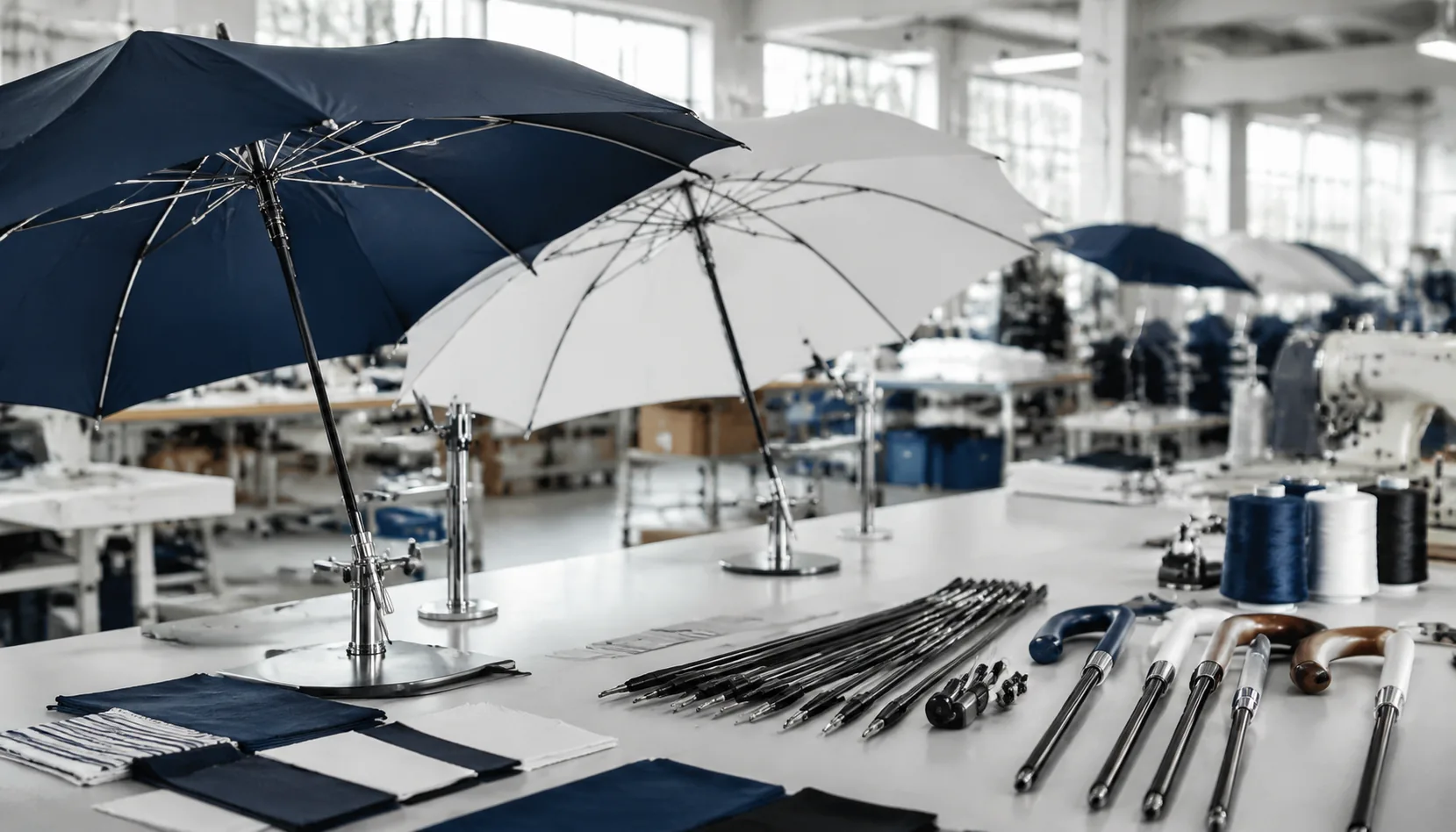
Custom Umbrellas for Cruise Lines and Shore Excursions
Source cruise-ready umbrellas with compact frames, UPF 50+ canopies, corrosion-resistant ribs, and carton plans for cabi...
Read More »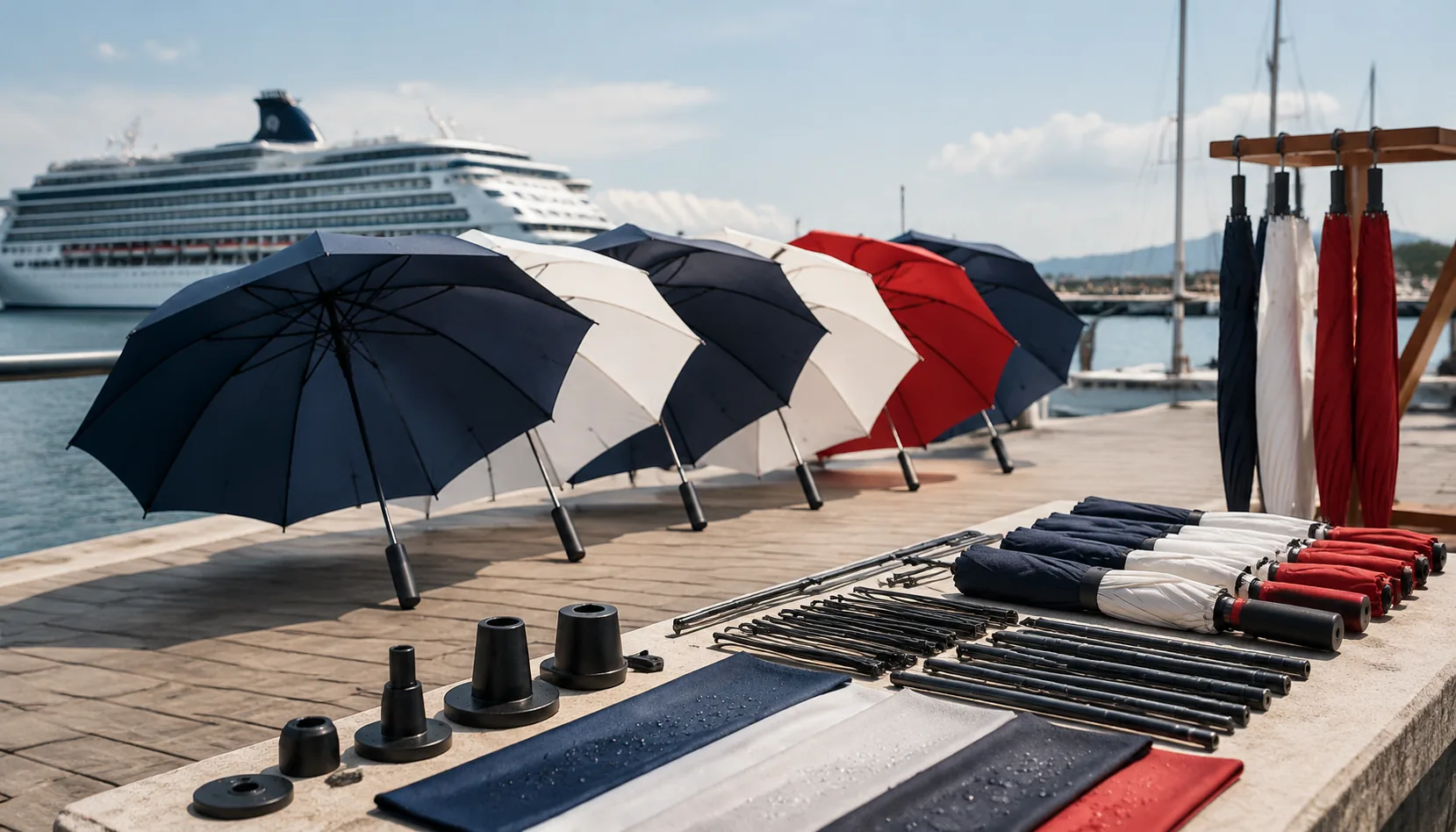
Custom Umbrellas for Cruise Lines, Marinas, and Excursions
Source umbrellas for cruise retail, marina guests, and shore excursions with marine-ready specs, branding choices, MOQ p...
Read More »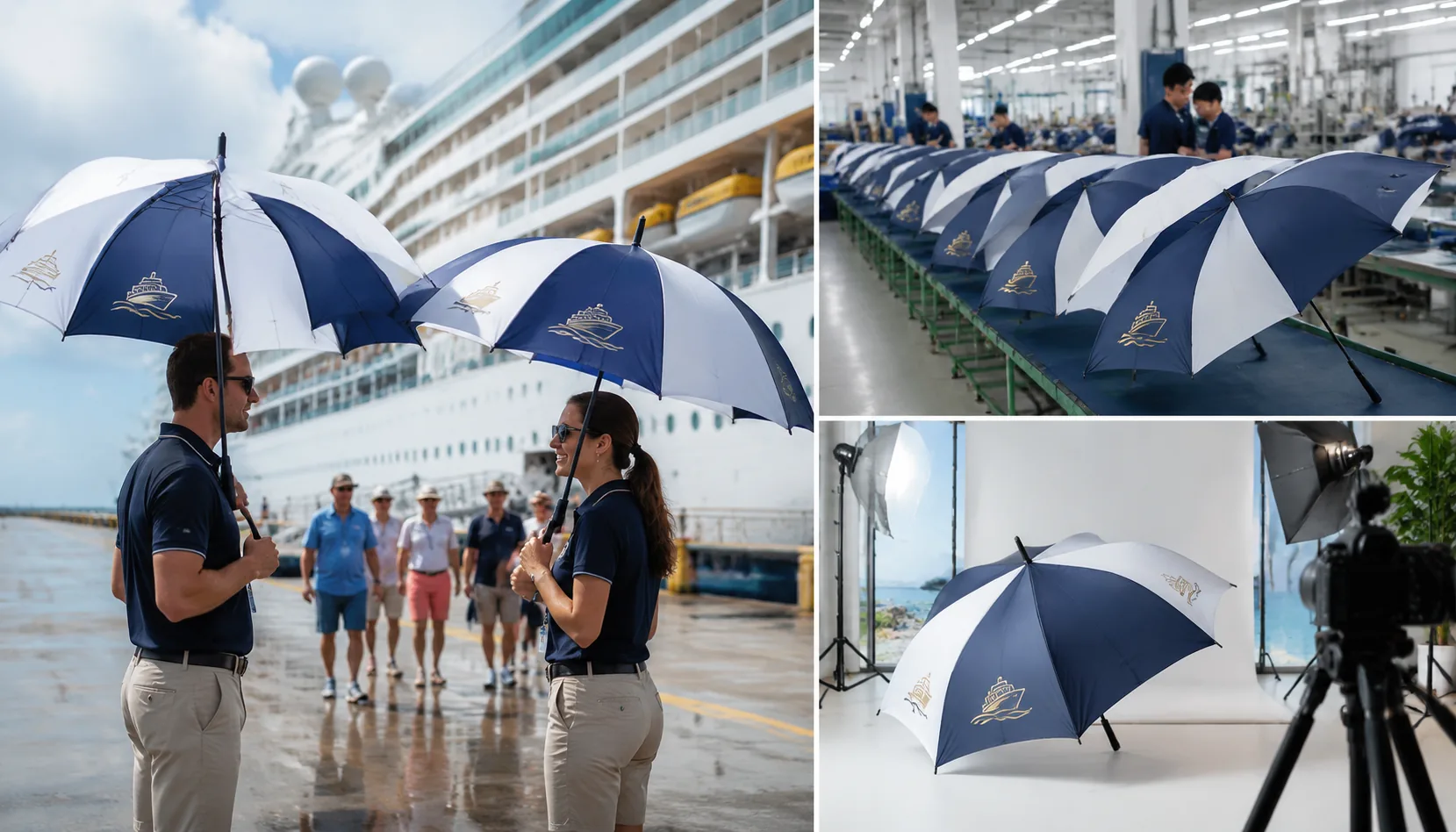
Custom Umbrellas for Cruise Lines and Shore Excursion Teams
Source cruise-ready umbrellas for shore teams, guest retail, and excursions with windproof frames, compact packing, and ...
Read More »