How Water-Repellent Umbrella Coatings (Teflon/DWR) Actually Work
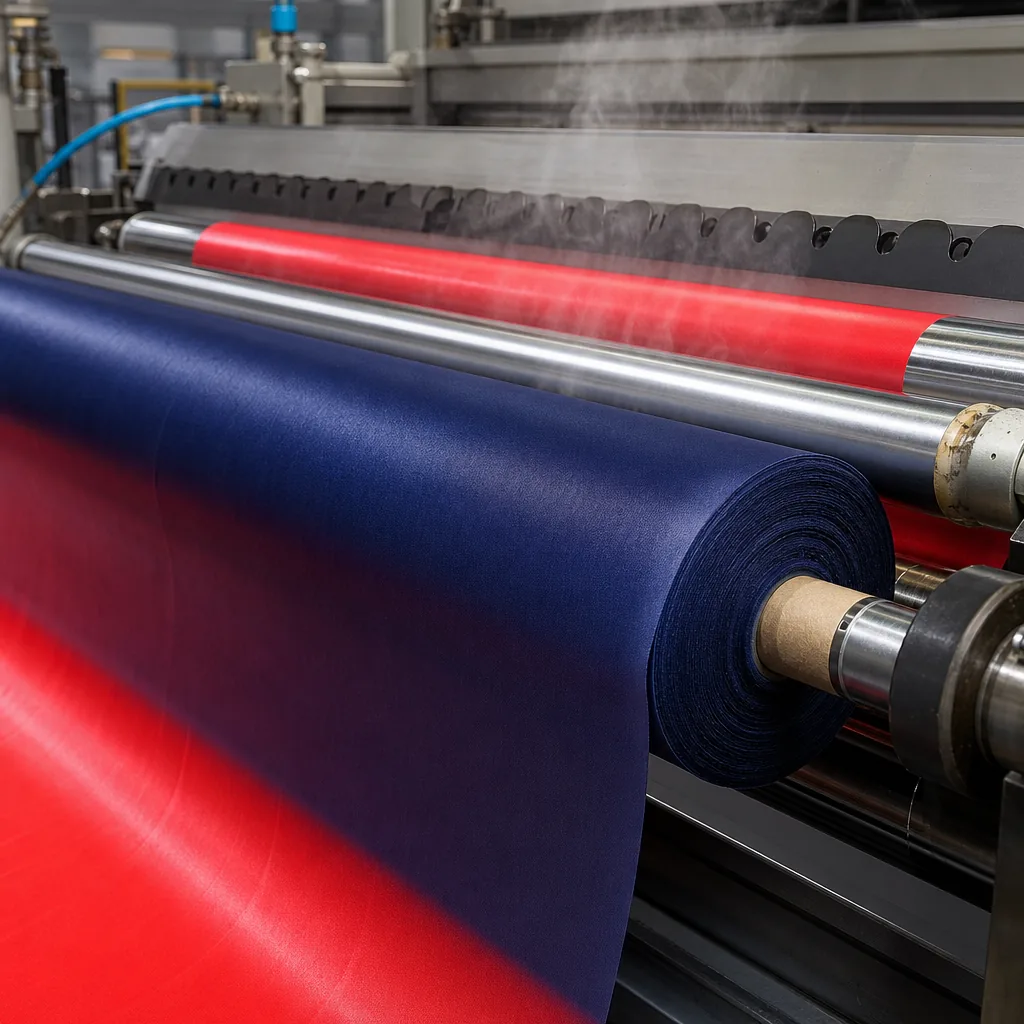
For a water repellent umbrella, the real issue is not whether the first spray sheets off, but how long the canopy keeps beading after UV, flexing, and repeated wet-dry cycles. On the factory floor, Teflon and DWR coatings are judged by more than a lab label: we look at fiber coverage, pickup consistency, cure control, and how the finish behaves after sewing and abrasion. Buyers who miss those details often end up with umbrellas that look right on day one and fail in service.
Repellency vs waterproofing: the difference
A water repellent umbrella is not waterproof in the membrane sense. DWR, including a teflon umbrella coating, changes the surface energy of the fabric so droplets bead up and roll off instead of spreading into the weave. On a 190T or 210T pongee canopy, that treatment sits on the outer fibers and works best when the cloth is clean and the finish is still intact. It does not create a sealed barrier like a rain jacket membrane or a PVC film, so it is the wrong mental model to think of it as a plastic skin. In practice, DWR gives you repellency, lower wet pickup, and a much faster shake-off after use, which is why buyers call it a quick dry umbrella.
Waterproofing is different because it blocks liquid penetration through the material itself. A PU-coated fabric, EVA, PVC, or a laminated structure resists water even when the surface is saturated or abraded, while a dwr umbrella fabric only keeps performing as long as the coating still beads properly. That is why a water repellent umbrella can look dry after a short shower but still wet through the yarns after prolonged soaking, pressure, or repeated folding. The tradeoff is simple: DWR improves drying speed, hand feel, and appearance, while full waterproof layers add weight, stiffness, and cost. In umbrella production, the right choice depends on use case, not on trying to make every canopy behave like a tarp.
How DWR and Teflon finishes are applied
A teflon umbrella coating is usually applied after the canopy fabric is dyed and sewn, not before. In factory work, the common methods are spray or pad-dip finishing, then a controlled cure in a hot-air tunnel so the polymer film anchors to the yarn surface instead of sitting loose on top. On pongee 190T or 210T, the goal is to lower surface energy without clogging the weave, because a flooded fabric stops draping well and gets noisy. The right pickup is thin and even; if it is too heavy, the hand feel turns waxy and the panels print badly later. For a water repellent umbrella, the finish has to survive folding cycles, friction at the ribs, and daily abrasion at the tips and vent seams, which is why some mills use a second pass on the exposed panel faces and edge zones.
What the customer sees is contact-angle behavior: instead of spreading into a flat film, water beads up when the surface tension is high enough to hold a droplet above the fiber peaks. On a good dwr umbrella fabric, the bead can roll off with a small shake, which is why the canopy dries faster and is less likely to stain from dirty rainwater. That does not mean the cloth is waterproof by coating alone; the canopy still depends on tight weave, seam quality, and panel overlap. A quick dry umbrella is the practical result of that combination, not a magic layer. Our standard practice is to verify spray rating, dry time, and wash durability after curing, because a finish that looks good on day one can fail fast if the cure is underdone or the resin is applied unevenly.
Durability: how long repellency lasts
Repellency does not fail all at once. On a water repellent umbrella, the first thing to go is usually the surface finish at the fold lines, tips of panels, and places where the canopy rubs against the runner, stretcher, and tie strap. A teflon umbrella coating or other fluoropolymer finish works by lowering surface energy, so water beads and rolls off instead of soaking in. That effect is strongest on new fabric, especially 190T or 210T pongee, but abrasion from daily opening and closing gradually polishes the yarn surface and wears away the top layer. Once that happens, the canopy can still look intact, yet it starts holding a wet film instead of shedding water cleanly. In real use, a quick dry umbrella usually keeps strong beading through dozens of opening cycles, then slowly loses performance in the high-friction zones first, not evenly across the whole panel.
Folding wear matters more than most buyers expect. Every time the canopy is collapsed, the same creases get compressed, flexed, and scuffed against neighboring panels, so the DWR umbrella fabric loses repellency at the crease edges faster than on flat areas. Dirt, body oils, sunscreen, and road dust also shorten life because they contaminate the finish and give water something to cling to. If the umbrella is stored damp, hydrolysis and mildew can further weaken the hand feel and reduce beading, especially on cheaper PU-backed cloth. For a water repellent umbrella used as a promo item or commuter umbrella, the practical lifespan is often one season of heavy daily use to several seasons of lighter use, depending on fabric grade, coating chemistry, and how harsh the environment is. A canopy that still sheds water unevenly can often be revived with cleaning, but that is maintenance, not a full reset.
Re-treatment is possible, but it is not magic. Once a teflon umbrella coating or aftermarket spray starts to fail, the fabric should be washed with mild soap, rinsed well, and dried fully before any reproofing treatment. Silicone or fluorocarbon sprays can restore water beading on a quick dry umbrella, but they work best on clean, dry polyester or pongee and they cannot rebuild a worn base finish that has been abraded through. If the canopy has visible fuzzing, seam leakage, or a soft soaked look after rain, the fabric itself is nearing the end of its repellency life. The practical standard is simple: keep the umbrella clean, dry it open after use, and avoid hard rubbing against bags, car interiors, or rough concrete. That is what keeps a dwr umbrella fabric performing like one, instead of turning into plain cloth with a thin cosmetic coating.
Quick-dry and anti-drip benefits
A water repellent umbrella works by changing how the canopy surface handles contact with liquid. A Teflon umbrella coating or a similar DWR umbrella fabric finish lowers surface energy, so water beads up instead of soaking into the yarns. On a 190T or 210T pongee canopy, that means rain sits on top of the weave and rolls off faster when the umbrella is tilted or shaken. The result is not magic waterproofing; the fabric still has needle holes, seam lines, and edge stress points, but the coating buys you real shed performance and much less wet carry-back. In practice, that matters most on auto-open-close travel models and compact 21" or 23" umbrellas, where a customer folds the umbrella while it is still damp. A good finish also reduces the dark, saturated look that untreated polyester gets in steady rain, so the canopy keeps a cleaner appearance during use.
The quick-dry benefit comes from what happens after the water leaves the surface. Because less liquid is retained in the yarn bundle, evaporation is faster and the canopy does not stay heavy and clammy for long. A quick dry umbrella usually dries by airflow, not by heat, so the best results come from open weave balance, a properly applied DWR topcoat, and enough spacing in the panels for air to move through after shaking. Poor coatings fail in two common ways: they lose beading after abrasion, or they leave a sticky hand-feel that traps dirt and makes the fabric look worn early. In production, we usually test repellency by spraying, rubbing, and repeated wet-dry cycles, because a coating that looks good on day one but collapses after a few dozen folds is not useful. For buyers, the practical value is simple: less dripping in cars and lobbies, faster turnaround between uses, and fewer complaints about a wet umbrella soaking bags or floors.
Verifying repellency before bulk
A real water repellent umbrella is not judged by the sales sheet alone. The practical screen in procurement is the spray test, usually AATCC 22 or the ISO 4920 equivalent, because it shows whether the canopy sheds water cleanly or just looks coated on day one. For bulk approval, I would ask for a minimum 90 rating after coating and curing; 80 is only acceptable for low-cost promotional work where quick dry performance matters less than price. A teflon umbrella coating should bead water immediately on 190T or 210T pongee, and it should still bead after folding, opening, and a few abrasion cycles. If the factory cannot tell you the test standard, the rating scale, and whether the result was taken on a fresh panel or a finished umbrella, the data is not useful.
The factory should send a pre-production sample, a sealed reference swatch, and one finished umbrella from the actual production line, not a hand-finished lab piece. For a dwr umbrella fabric, request the exact coating system, cure temperature, and coating add-on percentage, because a 2-3 g/m2 difference can change how the fabric wets out after rain or handling. I also ask for a simple report that includes spray rating before and after 10-20 open/close cycles, plus a note on whether the panel was screen printed, sublimated, or heat transferred, since ink layers can interfere with repellency. On a quick dry umbrella, the surface should shed droplets fast enough that the canopy is mostly free of standing water within a few minutes, but that only matters if the fabric has been properly cured.
For bulk control, do not approve a lot from one perfect sample. Ask the factory to test at lot level, ideally one panel from the beginning, middle, and end of production, and compare them against the sealed master swatch. If the product is sold as a water repellent umbrella, I want spray results documented with photos, plus a simple pass/fail rule tied to your purchase order, for example 90+ after coating and no visible wetting-through on the seam line. In practice, I also want to know whether the coating is fluorinated, C0/C6 chemistry, or a standard DWR finish, because longevity and hand feel are different. ZheBrella’s standard practice is to lock the test method, the target rating, and the acceptable wash/abrasion limit before bulk starts, because fixing repellency problems after 5,000 pieces are sewn is expensive and usually too late.
Frequently Asked Questions
Do all umbrellas have a water-repellent coating?
Most polyester canopies have a basic PA coating, but a true DWR or Teflon finish that makes water bead and roll off is an upgrade. It improves shedding and quick-dry behavior, and should be specified and spray-tested if it matters to your program.
Does umbrella water repellency wear off?
It can fade with abrasion and repeated folding over time. A good DWR finish lasts through normal use, and repellency can often be partially restored with heat. Specify a higher spray-test rating for longer life.
How do you verify that an umbrella canopy coating is still performing after production?
Buyers usually ask for a spray rating test, a water-bead roll-off check, and a wipe or rub test after curing. For repeat orders, many factories also track performance after 5,000 to 10,000 abrasion cycles or after a controlled wash simulation, depending on the fabric and coating system.
What coating details should be written into the purchase specification?
Specify the coating type, target spray rating, cure method, and whether the fabric must dry within a set time after rainfall. If the canopy uses 190T or 210T polyester, also confirm coating weight, hand feel, and whether the finish must survive folding and opening cycles without cracking.
Does a stronger water-repellent finish affect MOQ or lead time?
Usually the MOQ does not change, but lead time can increase by 3 to 7 days if the coating requires special curing, additional testing, or imported chemical stock. For custom programs, factories often need a pre-production sample run to confirm coating performance before mass production.
Looking to Launch Your Custom Umbrella Line?
ZheBrella is a Zhejiang-based OEM/ODM umbrella manufacturer with 17 years of export experience. Free design, low MOQ from 100 pieces, windproof construction, full-color print.
Get Free Quote Now »People Also Search For
Related Articles
Umbrella Fabric Coating Cure Control for Stable Water Resistance
How curing time, temperature, and coating add-on affect water resistance, hand feel, and repeatability in OEM umbrella m...
Read More »Quick-Dry and Anti-Drip Umbrella Fabrics: The Technology Explained
How quick-dry and anti-drip umbrella fabrics shed water faster, the coatings behind them, and whether the upgrade is wor...
Read More »
Water-Repellent Umbrella Canopies: Coatings Buyers Compare
Compare DWR, PU, and laminated umbrella coatings to balance runoff, hand feel, UV performance, and drying time across re...
Read More »