Water-Repellent Umbrella Canopies: Coatings Buyers Compare
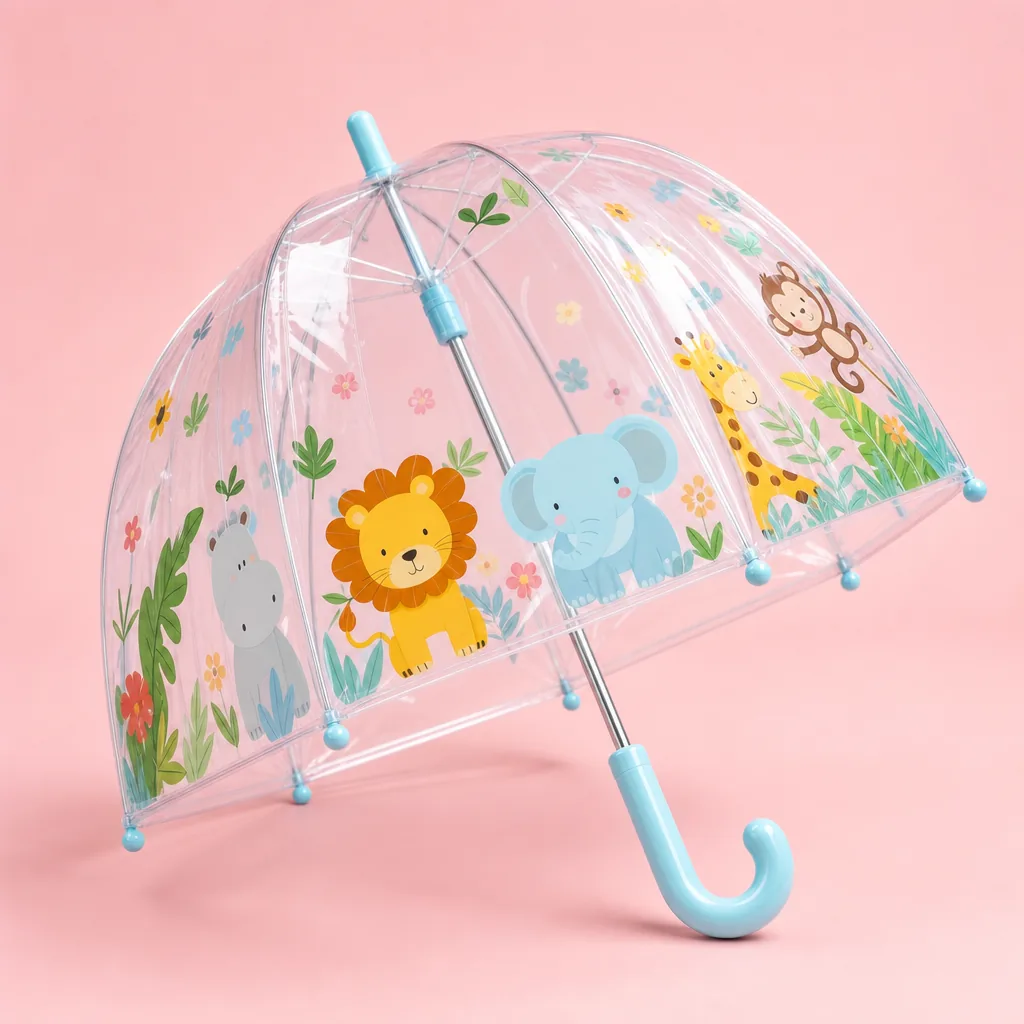
When a buyer specifies a water-repellent umbrella canopy, the coating choice affects more than how fast rain beads off—it changes fabric hand, print behavior, UV claims, packing time, and return risk. On our Songxia production floor, we compare DWR finishes, PU coatings, and laminated fabrics by running sample panels through cutting, sewing, water testing, and drying checks before mass production, because the best coating for a retail line is not always the best choice for a promo order.
What each coating does on 190T and 210T pongee
On a water-repellent umbrella canopy, the base fabric matters before the coating does. Pongee 190T is lighter, softer, and common on 21" and 23" folding umbrellas where low weight and fast packing are priorities. Pongee 210T has a tighter weave, a slightly heavier hand, and better dimensional stability on 27" and 30" golf umbrellas, especially after panel sewing and edge binding. A standard DWR umbrella coating sits on the yarn surface and lowers surface tension, so rain beads and rolls off instead of wetting into the fabric. On fresh 190T, bead-off looks excellent but can soften after abrasion from sleeves and repeated folding. On 210T, the same DWR usually lasts longer because the denser weave supports a more even finish. Drying speed is fastest with DWR-only fabric because there is no heavy back coating trapping moisture at seams.
PU coating changes the fabric from simple water repellency to better water resistance, but buyers should expect a different hand feel. A light PU back coating on pongee 190T makes the canopy feel crisper and slightly noisier, while on pongee 210T it feels more stable and premium if the coating weight is controlled. For rain-only promotional programs, I usually prefer DWR on the face plus a modest PU layer only when leakage resistance is important, such as storm umbrellas or double-canopy vented windproof models rated around 50+ mph. Too much PU makes the canopy boardy, slows drying at folded creases, and can cause sticking when umbrellas are packed before fully dry. In production, our standard practice at ZheBrella is to check coating evenness after cutting, because thin spots near panel edges show up later as seepage complaints.
Laminated films are the right choice when the umbrella must carry stronger functional claims, especially UPF 50+. A PU laminated canopy or black-out laminated layer can block light much better than DWR alone, which is why sun-and-rain umbrellas often use 210T pongee with a black PU, silver PU, or black adhesive film on the back side. The tradeoff is slower drying, a thicker hand, and more attention needed during sewing because needle holes and folded seam stacks can stress the laminate. For rain-only retail or giveaway orders, DWR on pongee 190T or pongee 210T is usually enough if the buyer wants clean bead-off and quick drying. For umbrellas sold as sun protection, especially travel, golf, and beach programs, specify UPF 50+ testing on the finished canopy fabric, not just the coating supplier’s data sheet.
How coating choice affects ribs, weight, and opening feel
Coating weight is not just a fabric issue; it changes how the whole umbrella opens and loads the frame. A light DWR umbrella coating on pongee 190T usually keeps the canopy soft, so the fabric drapes cleanly between panels and does not fight the ribs during opening. Move to a heavier PU laminated canopy, especially on pongee 210T, and the hand feel becomes stiffer. That stiffness can be useful for rain blocking and shape retention, but it also increases the force needed to stretch the canopy to full crown height. On an 8K straight umbrella, each rib carries a wider fabric section, so the coating tension is concentrated in fewer points. On a 16K build, the same canopy load is spread across more ribs, giving a rounder profile and smoother fabric support, but the total frame weight goes up. Buyers comparing a water-repellent umbrella canopy should ask for finished fabric GSM, not only the base fabric specification.
Fiberglass and steel react very differently to the same coated canopy. Fiberglass ribs flex and recover, so they tolerate the extra tension of PU coating or thick UV layers better in wind, especially on 23-inch and 27-inch golf umbrellas with double-canopy venting. The opening feel may seem slightly slower because the ribs absorb some energy before locking out. Steel ribs feel sharper and more immediate when opened, which many retail buyers interpret as “solid,” but steel has less elastic recovery under repeated inversion. With a heavier water-repellent umbrella canopy, steel 8K frames can show higher stress at the rib tip pockets and runner joint after wind-tunnel cycling around 50+ mph. For promotional umbrellas where cost matters, steel is still acceptable, but I prefer fiberglass or hybrid fiberglass ribs when the canopy includes PU lamination, blackout coating, or UPF 50+ treatment.
Auto-open mechanisms are where coating choice becomes obvious to the user. A manual umbrella lets the customer push through the fabric resistance, but an auto-open spring must overcome canopy weight, rib friction, and the stiffness of the coating in one motion. If a buyer approves a sample with pongee 190T and light DWR, then changes to pongee 210T with PU backing for production, the auto-open speed can drop and the runner may not lock reliably unless the spring and shaft are upgraded. Auto-open-close compact umbrellas are even more sensitive because the folded coated fabric adds bulk around the shaft, increasing closing force and making the strap harder to wrap. Our standard practice at ZheBrella is to test coated canopy changes on the final frame, not on fabric swatches alone, with at least 500 open-close cycles before confirming mass production.
Testing water resistance before you approve production
The fastest way to catch a weak water-repellent umbrella canopy is to test fabric before sewing and again after the finished umbrella has been opened, closed, and folded. For production approval, I ask the mill or coating house for a spray rating, then verify it on our cutting floor using AATCC 22-style spray testing or an equivalent ISO 4920 method. A good DWR umbrella coating on pongee 190T should normally rate 80 or above when new; pongee 210T with tighter yarn density often performs more consistently, especially on retail umbrellas where the buyer wants a smoother hand feel. If the canopy uses a PU laminated canopy construction, add a hydrostatic head test instead of relying only on spray beading. For everyday rain umbrellas, 500–1,000 mm is workable; for golf or outdoor event umbrellas, I prefer 1,500 mm or higher because large 27-inch and 30-inch panels hold more standing water under wind.
Finished-umbrella testing matters because many leaks come from sewing, not fabric. Every pre-production sample should be checked along the center cap, tips, panel seams, and any printed logo area where heat-transfer pressure or sublimation temperature may have changed the coating behavior. Our standard practice at ZheBrella is to run a 5-minute shower test on opened samples, then inspect the underside with white tissue so pinhole leaks show immediately. For a water-repellent umbrella canopy with UPF 50+ coating, also check whether the UV layer cracks near fold lines after handling, because darker silver or black UV coatings can look acceptable on the table but fail after repeated flexing. On double-canopy vented windproof models, test both the top canopy and lower canopy overlap; water often enters when the vent gap is cut too wide or the binding tape is stitched too close to the edge.
A simple pass/fail list keeps the factory and buyer from arguing about subjective terms like “good waterproof.” Request these checks on production samples and again on pre-shipment AQL 2.5 inspection: spray rating minimum 80 before folding; hydrostatic head minimum agreed in writing, normally 1,000 mm or higher for PU laminated canopy orders; no visible dripping after a 5-minute shower test; no tissue staining at the top notch, seams, tips, or logo print; no coating peel, whitening, or delamination after 50 open-close-fold cycles; and no water pooling caused by uneven panel tension. For auto-open-close compact umbrellas, include mechanism cycling before the rain test because the canopy is stressed harder than a manual stick umbrella. If any sample fails after 50+ repeat-fold cycles, do not approve bulk shipment based on fresh fabric swatches; ask for corrected coating, seam tension, or canopy pattern before cutting the balance.
Matching coating to retail, promo, and travel programs
For low-cost promotional programs, the coating decision should follow the event date and unit budget, not a catalog photo. A 21" or 23" manual umbrella with steel ribs, pongee 190T, and a basic DWR umbrella coating is usually enough for giveaways, campus events, and insurance or beverage promotions. The surface beads rain at first use, dries reasonably fast, and accepts screen printing without the ink crawling if the fabric is properly corona-free and cured. I would not put a PU laminated canopy here unless the buyer truly needs stronger water resistance, because it adds cost, can stiffen folding, and may slow print approval. Typical MOQs for promo umbrellas run 500 to 1,000 pieces per color, with FOB Ningbo or Shanghai preferred when the buyer already controls freight. DDP makes sense for small distributors without import setup, but the landed price must include carton size, duty classification, and any inland delivery surcharge.
Mid-market retail umbrellas need a better balance: nicer hand feel, repeatable coating performance, and fewer after-sale complaints. For this tier, pongee 210T with a higher-grade water-repellent umbrella canopy finish is more consistent than thin 190T, especially on 23" auto-open and 27" golf models. Fiberglass ribs or fiberglass tips reduce frame failure, and an 8K or 10K construction is enough unless the brand markets wind resistance. If the line includes compact auto-open-close umbrellas, coating thickness matters because bulky fabric creates poor roll-up and higher strap tension. Sampling can take 7 to 12 days when using stock colors and existing molds, but custom canopy colors, private-label handles, or matched print ink can push samples to 15 to 20 days. Bulk lead time is normally 30 to 45 days after sample approval and deposit, longer before Chinese New Year or during peak spring promotional season.
Premium rain-plus-sun styles should be specified from the fabric outward: double-canopy venting, fiberglass shaft and ribs, 10K or 16K rib count where appropriate, and a coating stack that includes both water repellency and UV control. A silver or black PU laminated canopy, or a dense pongee 210T with UV treatment, can reach UPF 50+ when tested properly, but buyers should confirm whether the rating applies before or after folding, printing, and heat exposure. Heat-transfer logos and full-panel sublimation may require separate trials because temperature can disturb some repellent finishes or change shade under a UV layer. At ZheBrella, our standard practice is to lock coating, print method, and packaging during pre-production, then inspect to AQL 2.5 for leaking seams, coating marks, rib alignment, and opening force. For premium programs, expect higher MOQ, often 1,000 to 3,000 pieces, and add 5 to 10 days if lab reports or custom UPF labels are required.
Common buying mistakes with coated umbrella canopies
The first buying mistake is treating every PU finish as the same line item. A light PU back-coating for basic rain shedding is not equal to a PU laminated canopy built for better waterproofing, opacity, and print stability. On pongee 190T, a thin coating can feel acceptable in a showroom sample but show pinholes after sewing tension, especially near the tips and top notch. Pongee 210T gives a tighter base cloth and usually takes coating more evenly, but it still needs a defined spec: coating weight, hydrostatic pressure target, surface DWR umbrella coating grade, and whether the buyer expects UPF 50+ performance. I always ask buyers to separate water repellency from waterproofness. A water-repellent umbrella canopy should bead rain and dry quickly; a heavily coated canopy may resist seepage longer but can become stiff, noisy, and harder to fold cleanly on 3-fold auto-open-close models.
Odor and hand feel are often ignored until the cartons arrive. Low-grade PU, PVC, or poorly cured coatings can smell sharp when packed in polybags for 30 days, and that becomes a real complaint for retail and hotel customers. Ask for sealed-bag odor evaluation after 24 to 48 hours, not just a fresh cutting from the fabric roll. Hand feel also matters by market: promotional buyers may accept a crisper canopy on a 23-inch straight umbrella, while retail buyers expect softer drape and smooth closing on 21-inch compact models. Colorfastness must be checked before mass production, especially for navy, black, red, and dark green. Confirm rubbing fastness, water migration, and whether the coating affects Pantone matching under D65 light. If the artwork uses screen printing, heat transfer, or sublimation, approve it on the final coated fabric, not on uncoated pongee, because ink spread and adhesion change after finishing.
A premium water-repellent umbrella canopy will not save a weak frame. Buyers sometimes specify pongee 210T, Teflon-style beading, and UPF 50+, then accept thin steel ribs, loose stretchers, or an untested auto-open runner to hit a target price. That is backwards. A coated canopy adds folding resistance and stress at the seams, so the frame should match the product level: fiberglass ribs for windproof models, 8K or 10K for standard retail, and 16K only when the buyer accepts extra weight and cost. Before bulk cutting, confirm a pre-production sample with final fabric, final artwork, final handle, and final frame, then run opening cycles, seam slippage, print adhesion, and a rain test. Our standard practice at ZheBrella is to put coated-canopy orders through AQL 2.5 final inspection with checks for coating streaks, shade variation, odor, rib alignment, and logo position before FOB or DDP shipment.
Frequently Asked Questions
Is DWR enough for a rain umbrella canopy?
DWR helps water bead and roll off, but it is not a substitute for a well-made fabric and sealed construction. For heavier rain, ask for a PU or laminated backing and verify spray and leak tests on the finished sample.
Can a coating change a UPF 50+ claim?
Yes. The final UPF result depends on the finished fabric, color, and coating system, not the raw fabric alone. Request test reports on the exact material and shade you plan to buy.
How does coating choice affect umbrella packing and shipping volume?
PU-laminated and multi-layer canopies usually pack bulkier than standard DWR-coated pongee, which can reduce units per carton by roughly 5% to 12% depending on panel size and fold structure. For high-volume imports, buyers should confirm packed dimensions before approving final fabric construction.
Which canopy option is usually best for promotional umbrellas with large logo coverage?
For promo orders, buyers often choose 190T or 210T pongee with a DWR finish because the surface stays smoother and lighter for screen printing or heat transfer. If the artwork is dense and the umbrella also needs sun protection, a silver or black UV backing may be added, but it can slightly change hand feel and color accuracy.
What factory checks help confirm coating consistency before mass production?
Most B2B buyers ask for spray test results, hydrostatic or water penetration checks, color matching under coated conditions, and a production swatch signed before bulk cutting. On OEM orders, this is typically confirmed during pre-production sampling and again during inline inspection to reduce shade or finish variation across lots.
Looking to Launch Your Custom Umbrella Line?
ZheBrella is a Zhejiang-based OEM/ODM umbrella manufacturer with 17 years of export experience. Free design, low MOQ from 100 pieces, windproof construction, full-color print.
Get Free Quote Now »People Also Search For
Related Articles
Choosing Umbrella Canopy Coatings for Rain and UV Sales
Compare canopy coatings for rain and UV products, including water repellency, UPF 50+, hand feel, and order specs buyers...
Read More »
UPF 50+ Umbrellas: Choosing Fabrics, Coatings, and Frames
Learn how to specify UPF 50+ umbrellas with the right fabric, coating, frame, and venting for outdoor retail, events, an...
Read More »UPF 50+ Sun Umbrella Materials for Retail and Promo Buyers
Compare canopy fabrics, coatings, and frame specs for UPF 50+ umbrellas so you can source sun-safe models with clear MOQ...
Read More »