Umbrella Print Colorfastness: How Fading and Bleeding Are Tested
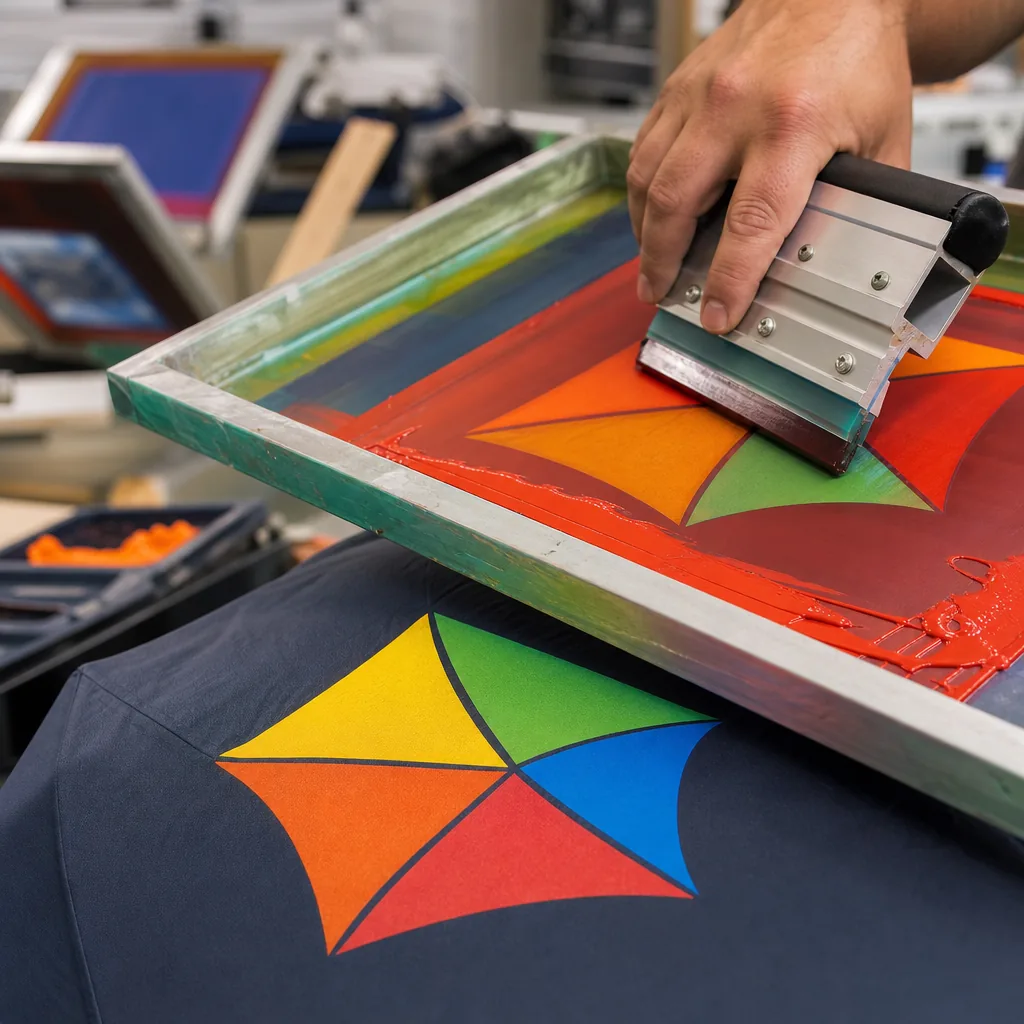
When an umbrella print looks sharp in the sample room but fades, smears, or bleeds after real use, the problem is usually in the ink, fabric, or curing process, not the artwork. At ZheBrella, we test umbrella colorfastness the way buyers actually experience it: under sunlight, rubbing, and water exposure, so you can judge whether a logo will still look consistent after shipping, storage, and field use.
Why umbrella prints fade or bleed
Umbrella prints usually fail for three reasons: sunlight, moisture, and abrasion. UV exposure is the fastest way to expose weak ink systems, especially on 190T or 210T pongee canopies that sit in direct sun for hours on a golf or promo umbrella. If the pigment package and binder are not built for UV stability, you get umbrella print fading first as a dull shift, then a real loss of density. Rain makes the problem worse when the ink layer is not fully cured or the fabric finish is too smooth, because water can carry loose pigment at the edges and create haloing or migration. In practice, umbrella colorfastness depends on the whole stack: fabric base, pretreatment, ink chemistry, and curing temperature, not just the printed artwork.
Rubbing is the other failure mode, and it is usually underestimated until a sample comes back from shipping with scuffed panels. A folded umbrella keeps the print under tension and constant contact, so repeated opening, closing, and sleeve friction can abrade the image even when the ink looks fine in a static light test. That is why color fastness testing umbrella programs usually combine dry rub, wet rub, and accelerated weathering instead of checking one condition alone. Good umbrella print durability means the print survives handling, not just a showroom display. On the factory floor, weak umbrella print durability shows up as edge cracking, color transfer onto adjacent panels, and patchy loss at fold lines, which is exactly why umbrella print fading and bleeding are treated as separate defects, not the same issue.
Colorfastness tests and rating scales
For umbrella colorfastness, the first test I trust is light exposure, because that is where cheap ink and weak dye systems fail fast. In production we compare printed panels against an exposed control after a set lamp cycle or outdoor-equivalent exposure, then judge the change with a grey scale for color change and a separate scale for staining. A good result is not "looks fine from a distance"; it is a small, measurable shift that stays within the customer’s spec. This matters most on bright solids and dark logos, where umbrella print fading shows up before the fabric itself looks worn. On pongee 190T and 210T, sublimation, screen print, and heat-transfer inks all behave differently, so the print method has to be matched to the coating and curing profile before the test is even meaningful.
Rubbing and water tests tell a different story: whether the print will survive use, packing, and rain without bleeding onto hands, sleeves, or adjacent panels. In color fastness testing umbrella programs, we check both dry and wet crocking with standardized cloth, then rate the transfer against the grey scale, where 5 is no change and 1 is severe transfer. Water resistance is not the same as waterproofing; a print can repel rain at first but still bleed if the pigment is under-cured or the binder is weak. For umbrella print durability, the failure mode I watch is edge migration around seams and fold lines, because repeated wet-dry cycles and pressure inside cartons make weak prints smear even when the first test passes. The practical target is a stable print that keeps a high grey-scale rating after rubbing and soaking, not just one that survives opening day.
Print method and durability
On the factory floor, screen printing is still the most reliable option when the artwork is simple and the buyer cares about umbrella colorfastness under real handling, not just a clean sample sheet. A properly cured plastisol or PU screen print on 190T or 210T pongee can hold up well against rain, folding, and routine abrasion, but the result depends on ink chemistry, mesh count, flash cure, and post-cure temperature. If the cure is off by even a little, you get early cracking, powdering, or pigment transfer when the canopy is packed wet. Screen printing is strong for solid spot colors and large logos, but it is not the best choice for gradients or fine photographic detail, and poor fabric pretreatment can still cause umbrella print fading at the edges.
Heat-transfer printing gives sharper detail than screen in many cases, but the durability range is wider, which is another way of saying the process is less forgiving. The film or transfer layer sits on top of the fabric, so it can look excellent on day one and still show edge lift, surface scuffing, or tack loss after repeated open-close cycles and long UV exposure. For color fastness testing umbrella samples, I would not trust a heat-transfer logo unless it has passed rubbing, low-temperature flexing, and outdoor light exposure on the actual canopy fabric. It is useful for short-run promotional umbrellas and complex artwork, but for umbrella print durability it usually trails a well-made screen print in long-term wear.
Sublimation is the best option when the canopy is polyester and the buyer wants the highest visual stability, especially for all-over graphics or photo-quality art. The dye gas penetrates the fiber instead of sitting on top of it, so the print is less likely to crack, peel, or show obvious abrasion marks, which is why sublimation usually leads on umbrella colorfastness for full-panel graphics. On 190T or 210T polyester pongee, it can handle rain and folding better than film-based transfers, but it still depends on fabric quality, heat profile, and pigment load; weak base fabric will still fade under harsh sunlight. In practice, ZheBrella uses sublimation when the spec calls for broad coverage and tighter control on umbrella print fading, while screen printing stays the better choice for bold corporate logos that need a harder surface finish.
Ink and coating interactions
Canopy coating changes the surface energy of the fabric, and that is where umbrella colorfastness usually starts to fail. A tight 190T or 210T pongee with a light PU or acrylic finish will take screen ink differently from a heavy PVC or EVA rainproof layer, because the coating can either lock the pigment in or keep it sitting on top. If the ink only wets the coating poorly, you get early umbrella print fading, edge lift, and chalky abrasion after folding and rubbing. In practice, we look at the full stack: fiber type, weave density, coating thickness, and whether the surface was corona-treated or otherwise prepped before printing. ZheBrella sees the worst failures on glossy coatings, where the print looks strong on day one but loses bond strength once the canopy is flexed and packed repeatedly.
For color fastness testing umbrella samples, coating choice matters more than the ink brand in many cases. A UV coating or Teflon finish can improve water repellency and dirt release, but it can also reduce ink bite unless the printer adjusts mesh count, squeegee pressure, and curing temperature. Sublimation behaves differently from plastisol or solvent ink: it works best on polyester with a receptive layer, while direct printing on POE, PVC, or EVA needs careful primer selection or the image will smear under heat and moisture. The failure mode is usually not a clean peel; it is gradual loss of saturation at the fold points, especially near the tips and panels that see the most compression. Good umbrella print durability depends on matching the coating chemistry to the printing process, not treating them as separate specifications.
The tests should simulate real use, not just a static rub check. We run wet abrasion, tape pull, repeated open-close cycles, and sunlight exposure because canopy coating can change after the fabric is stitched and tensioned into a 21-inch, 23-inch, or 27-inch frame. Once the panel is stretched, a print that looked acceptable on flat cloth may crack along the bias grain or bleed where excess ink sat on the coating surface. That is why umbrella colorfastness should be evaluated after sewing, not only on loose swatches. For procurement, the useful questions are simple: what coating is on the canopy, what ink system was used, and what test method was passed at AQL 2.5 or the buyer's own standard. If those three are not aligned, umbrella print fading will show up in use long before the rest of the umbrella fails.
Specifying durability before bulk
Do not buy on a picture or a blank claim like “colorfast.” For umbrella colorfastness, ask for a real fastness report tied to the exact canopy fabric, ink system, and finishing method you are ordering: 190T or 210T pongee, POE, PVC, or EVA, plus screen print, heat transfer, or sublimation. The report should state the test standard and result for dry and wet rub, water spotting, and light exposure, because umbrella print fading usually shows up first at the fold lines and panel edges after repeated opening, closing, and drying. If the supplier cannot name the method, the lab, and the substrate, the report is not useful for production control. In practice, I want the buyer to specify the minimum level in the PO, not leave it to “factory standard.”
Approve a physical sample before bulk, and make it the controlling sample for umbrella print durability. The sample should be made on the same base cloth, same coating, same curing temperature, and same print alignment you want in the order, because a design can pass on one fabric and bleed on another when the ink sits on a different resin finish. Check for edge feathering, color migration into adjacent panels, and visible change after a quick wet cloth rub, then keep the approved piece sealed and labeled. ZheBrella’s standard practice is to keep one master approved sample on file and one on the buyer side, so there is no argument later about shade or print sharpness.
For bulk orders, build the acceptance criteria into the quality plan before cutting starts. I usually recommend a written limit for shade variation, print registration, and no-bleed zones, plus a photo of the approved strike-off attached to the specification sheet. If the umbrella will be used outdoors, request a separate note on UV exposure, because some inks hold color in the warehouse but still lose strength fast in daylight; that is a different failure mode from washing or rubbing. Ask for pre-production and in-line checks, then final inspection under AQL 2.5 so the lot is judged against the same standard that was approved on the sample. That is the simplest way to control color fastness testing umbrella results without relying on promises after shipment.
Frequently Asked Questions
Will my umbrella logo fade in the sun?
All prints fade eventually under UV, but quality inks and the right method greatly slow it. Dye-sublimation bonds color into polyester fibers for excellent fastness, while good screen and heat-transfer prints also hold up well. Ask for colorfastness ratings if longevity is critical.
How is umbrella print colorfastness tested?
Labs run light-fastness (UV exposure), rubbing (crocking), and water tests, scoring results on a grey scale. Reputable factories can provide these reports for your fabric-and-ink combination so you know how the branding will hold up.
What colorfastness rating should I specify for outdoor promotional umbrellas?
For umbrellas sold into outdoor retail or premium promo channels, ask for at least grade 4 for dry rubbing and grade 4 or higher for wet or rain exposure on the relevant textile test scale. If the logo is on a dark canopy or will see heavy rain, specify a pre-production test and written acceptance standard before mass production.
Which test catches the most common print failure in umbrellas?
Water bleeding and wet rubbing are the two failures most often missed by buyers. A practical QC flow is to test after curing, then run both water exposure and abrasion checks before approving bulk production.
How much lead time should I allow for print durability testing?
A basic lab check usually adds 2 to 4 working days, depending on whether the factory runs in-house or sends samples to a third-party lab. If you need a revised print formula after a failure, add another production and cure cycle, which can push approval out by a week or more.
Looking to Launch Your Custom Umbrella Line?
ZheBrella is a Zhejiang-based OEM/ODM umbrella manufacturer with 17 years of export experience. Free design, low MOQ from 100 pieces, windproof construction, full-color print.
Get Free Quote Now »People Also Search For
Related Articles
How Umbrella Frame Prototypes Are Tested Before Mass Production
See how frame prototypes are checked for cycle life, corrosion, wind resistance, and assembly accuracy before production...
Read More »
How Umbrella Factories Control Colorfastness and Dye Migration
Learn how factories test umbrella fabric colorfastness, prevent dye migration, and control print defects before bulk pro...
Read More »Colorfast Umbrella Printing Standards for Outdoor Promotions
Avoid fading and dye transfer on printed umbrellas by specifying fabric, ink, curing, rub tests, UV exposure checks, and...
Read More »