How Umbrella Factories Control Colorfastness and Dye Migration
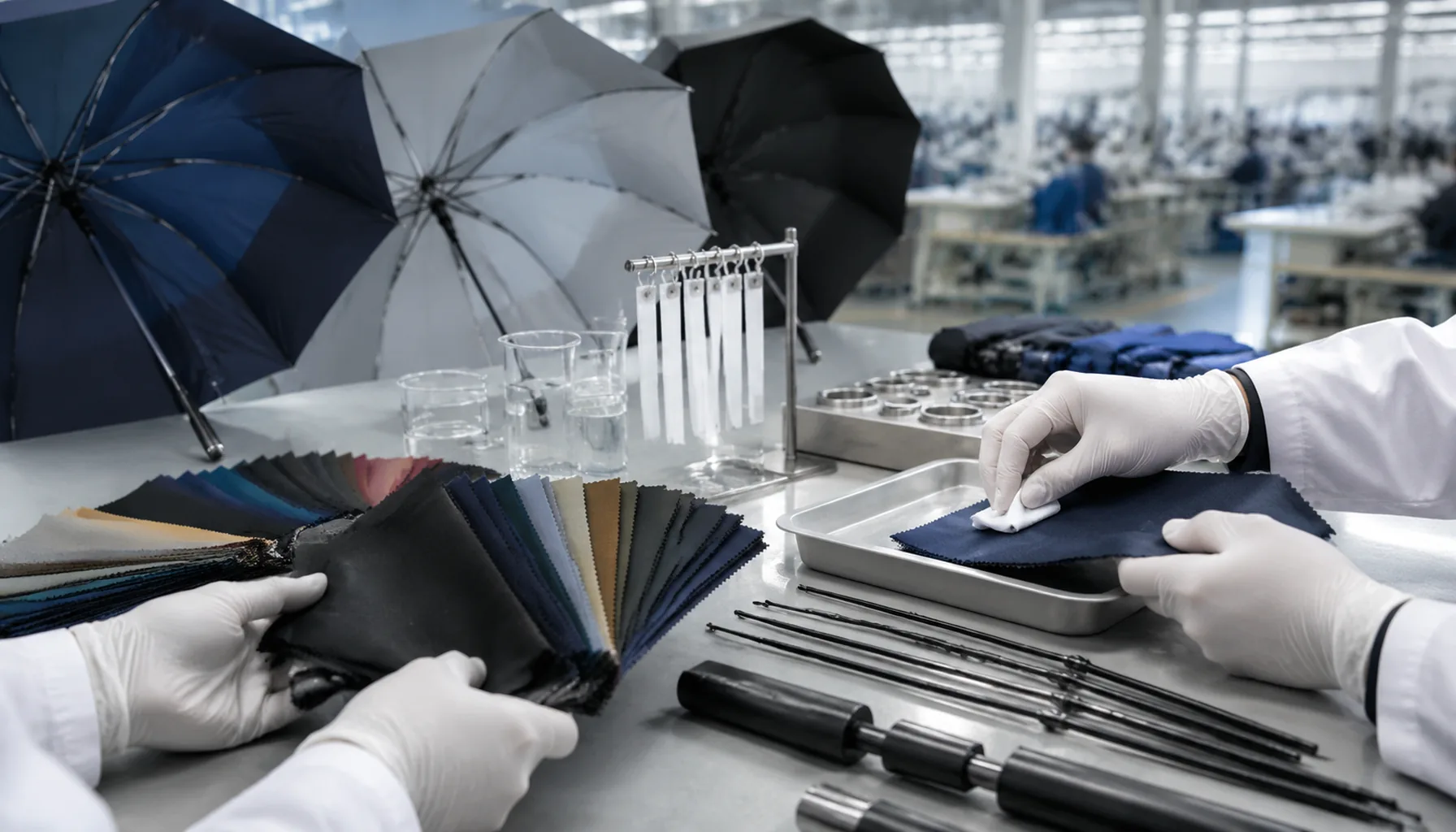
For buyers, a canopy that looks approved in a lab dip but bleeds at the seams, stains a white pouch, or shifts after rain can turn a good PO into claims and rework. On our Songxia factory floor, umbrella colorfastness testing starts before bulk fabric cutting, with checks on dyed polyester, printed panels, coating compatibility, wet rubbing, and packed-material contact so dye migration is caught before shipment.
Start With Fabric and Dye Selection
Colorfastness is mostly decided before the fabric ever reaches the cutting table. Plain 190T polyester is economical and prints cleanly, but its yarn density and dye uptake are less forgiving than 190T or 210T pongee, especially on navy, black, burgundy, and bottle green canopies. Pongee color control is steadier because the fabric has a tighter hand and more uniform filament structure, so batch-to-batch shade variation is easier to hold within a Delta E target, usually under 1.5 to 2.0 for retail programs. In umbrella colorfastness testing, we separate dry rubbing, wet rubbing, rainwater exposure, and heat aging because each failure looks different: rubbing leaves handle stains, rain causes streaking at seam folds, and heat can shift dark shades toward red or gray after carton storage.
Dark canopy colors are the usual troublemakers because they carry heavier dye loads, and excess surface dye can transfer under pressure. Dye migration umbrella fabric problems show up when black or red panels touch white logos, light binding tape, PVC windows, EVA trims, or silver-coated UV layers during storage. A passed lab dip is not enough; we test bulk rolls after coating, printing, and curing because heat-transfer logos and PU or silver UPF 50+ coatings can re-activate unstable dyestuff. Our standard practice at ZheBrella is to condition fabric samples at elevated temperature, typically 50-60°C for 24-48 hours, with stacked pressure pads to simulate compressed export cartons. If a white blotter picks up visible staining, that fabric is not safe for a mixed-color canopy or light-color retail sleeve.
Coated UPF 50+ fabrics need extra discipline because the coating improves UV blocking but can change the way moisture and heat move through the canopy. Silver-coated 190T polyester may pass rain spray but fail wet crocking at fold lines if the coating is under-cured or if residual auxiliaries remain from dyeing. 210T pongee with a black PU or Teflon water-repellent finish usually performs better in premium umbrellas, but only when the mill controls pH, fixation, and post-wash removal of loose dye. For custom umbrella fabric testing, I like to approve fabric by end use: promotional 21" compact umbrellas need strong wet rubbing performance because hands touch the canopy during closing, while 27" or 30" golf umbrellas need storage-pressure checks because large dark panels sit folded tightly for weeks. Good umbrella quality control means rejecting risky dye lots before sewing, not arguing about stains after AQL 2.5 inspection.
Test Colorfastness Before Bulk Cutting
Approve color before the cutting table touches bulk fabric, because one bad dye lot can ruin 3,000 panels faster than any sewing defect. For umbrella colorfastness testing, I want lab dips checked first under D65 daylight and TL84 store light, then the actual pre-production roll checked again after coating, calendaring, and printing. A 190T or 210T pongee canopy can look correct on a 10 x 10 cm lab dip but shift after water-repellent treatment, especially on navy, black, burgundy, and fluorescent shades. Wet rubbing and dry rubbing should be tested with a crockmeter or white cotton cloth: dry rub should normally reach Grade 4 or above, while wet rub should not fall below Grade 3–4 for most promotional orders. If a logo is printed in white over a dark canopy, rub testing must include both the dyed fabric and the printed area, not only the base material.
Water exposure is where dye migration umbrella fabric problems show up in real use. A folded umbrella traps wet panels against each other, so we test fabric-to-fabric contact after soaking, then check whether dark panels stain light panels, binding tape, hook-and-loop straps, or white screen prints. Pongee color control is not just matching a Pantone number; it means checking shade consistency from roll head to roll tail, selvage to center, and panel to panel after cutting. For custom umbrella fabric testing, I like to cut trial triangles from different roll positions and sew a mini canopy before bulk cutting, because color variation becomes more obvious once eight or ten panels meet at the top notch. Our standard practice at ZheBrella is to hold cutting until the buyer signs off the lab dip, bulk roll swatch, and any printed pre-production sample under agreed lighting conditions.
Light and heat create another failure path that many buyers miss. A canopy may pass water tests but fade after a week of outdoor use if the dye recipe is weak, so light exposure should be checked with a xenon arc or equivalent aging method when the order is for retail, beach, golf, or UPF 50+ umbrellas. Heat transfer printing adds extra risk: high platen temperature can pull disperse dye from polyester pongee into pale logos, causing pinking, yellowing, or gray shadows after packing. This is why umbrella quality control should include a heat press simulation, stacked-panel aging test, and packing test at elevated temperature, especially for black fabric with white logos or PVC/POE panels touching dyed trim. Umbrella colorfastness testing costs little compared with re-cutting fabric, reprinting logos, or explaining stained canopies to a distributor after shipment.
Control Printing Risks by Method
Printing method is the first risk control point because dye migration umbrella fabric problems usually show up after the logo looks perfect on the inspection table. Screen print is still the safest choice for white logos on navy, black, red, and dark green 190T/210T pongee because the ink film sits on top of the fabric instead of relying on the canopy dye. For dark panels, we normally specify a low-bleed white base, 2-pass curing, and a finished dry film thick enough to block disperse dye movement without cracking on rib folds. The common mistake is using a soft promotional ink recipe meant for T-shirts; umbrella panels flex differently around 8K and 10K frames, and wet storage inside a sleeve can accelerate staining. In umbrella colorfastness testing, we check printed swatches after 24 to 48 hours at elevated temperature and humidity, then rub test wet and dry before approving bulk production.
Heat transfer gives cleaner small text, gradients, and sponsor marks, but it is less forgiving on coated canopies and dark dyed fabric. A white transfer on black pongee can yellow or gray if the adhesive layer is too thin, the press temperature is too high, or the fabric has poor pongee color control from piece-dyeing. For coated canopies, especially Teflon-treated water-repellent fabric or UV UPF 50+ panels, adhesion is the bigger problem: the film may pass initial peel but lift after folding, rain exposure, or carton compression during a 30-day ocean shipment. Our standard practice at ZheBrella is to run custom umbrella fabric testing on the exact fabric lot, coating lot, and transfer film, not a substitute swatch from the showroom. For retail orders, I prefer heat transfer only when the logo area is moderate, the artwork has tight registration needs, and the buyer accepts a peel/abrasion test in the approval process.
Sublimation is excellent for edge-to-edge panels, photo graphics, race events, and full 23 inch or 27 inch canopy artwork, but it only works properly on white or very light polyester fabric. It does not print opaque white, so a white logo on dark fabric is not a sublimation job unless the entire panel is first printed from white base cloth. This is why edge-to-edge sublimated umbrellas need stricter panel matching, seam allowance control, and cutting marks; a 2 mm shift at the panel edge becomes visible after sewing, especially on 16K golf umbrellas. Sublimation also conflicts with some waterproof coatings because high heat can change hand feel, shrinkage, or water-repellent performance. Good umbrella quality control separates print approval from finished-product approval: we test colorfastness to rubbing, water spotting, folding, and heat storage, then inspect bulk under AQL 2.5 so migration, ghosting, and panel shade variation are caught before packing FOB or DDP orders.
Prevent Problems During Sewing and Packing
Most dye migration umbrella fabric problems are created after printing, not during printing. Fresh sublimated or heat-transfer panels need resting time before they go near the sewing line; our standard hold is 12–24 hours for 190T pongee and longer if the print uses heavy black, navy, or red coverage. Panels are stacked face-to-face only after surface heat and solvent smell are gone, and we separate risky colors with clean kraft paper instead of thin plastic film that can trap moisture. For pongee color control, cutters must keep panels from the same fabric roll and same print batch together, especially on 8K and 10K umbrellas where adjacent panels make shade variation obvious. A small delta that passes on a flat table can look bad once the canopy is tensioned over fiberglass ribs.
Sewing tables are a real contamination point, so umbrella quality control starts with boring habits: white table covers changed by shift, no oily frame parts on canopy benches, and thread cones stored away from damp walls. Operators check panel sequence before joining, because mixing left-over panels from different lots is one of the fastest ways to fail umbrella colorfastness testing later. Printed panels should not be forced through folders while still warm or tacky; pressure from presser feet can leave gloss marks on PVC, POE, EVA, and coated pongee. For light-color canopies, we also control sleeve contact: black sleeves, dark tie straps, and wet PU handles cannot touch white or yellow fabric until all parts pass a dry-rub check and a basic transfer check under weight.
Packing is where factories often undo good custom umbrella fabric testing. Finished umbrellas should be fully dry before sleeving, especially after spot cleaning, steam shaping, or rain-spray inspection; otherwise moisture sits between folds and pulls disperse dye into neighboring panels. Carton humidity should stay below about 65% RH, with desiccant added for sea freight or DDP routes longer than 25–35 days. We avoid over-compressed master cartons because tight straps and pallet weight create pressure marks along fold lines, particularly on 210T pongee with Teflon or UV UPF 50+ coatings. During final AQL 2.5 inspection, inspectors should open stored samples from the bottom and center of cartons, not only the top layer, because dye transfer and storage bruising usually appear where heat, humidity, and pressure are highest.
Verify Results Through Final Inspection
Final inspection is where colorfastness stops being a lab note and becomes a shipment decision. For export orders, AQL 2.5 should include open-canopy inspection under D65 or equivalent daylight lamps, with inspectors checking every sampled umbrella for staining on white binding, logo bleed around screen-printed or heat-transfer artwork, panel-to-panel shade variation, and dye migration umbrella fabric issues where dark navy, black, red, or bottle green panels touch light piping or labels. I do not accept “close enough” if alternate panels read as different lots once the umbrella is opened; on 190T and 210T pongee, that usually points to mixed roll usage or weak pongee color control during cutting. Inspectors should compare production against the approved lab dip, pre-production sample, and signed print strike-off, not against memory. For custom umbrella fabric testing, the final carton sample also needs a rub check on high-contact areas such as the tie strap, sleeve mouth, handle contact point, and canopy folds before FOB or DDP release.
Crocking and transfer marks must be checked in the same way the buyer’s customer will abuse the product: dry rub, damp rub, folded pressure, and sleeve storage. During umbrella colorfastness testing at final inspection, we normally use a white cotton cloth or crocking cloth on dark canopy panels, printed logos, dyed EVA/POE/PVC parts, colored handles, and coated tips; any visible staining becomes at least a major defect if it can mark hands, clothing, or a light sleeve. Logo bleed needs special attention on promotional umbrellas because white, silver, and yellow artwork can pick up background dye after heat pressing or after 24-48 hours packed under compression. Seam puckering is also part of umbrella quality control because tight stitch tension can expose lighter yarn edges or create shiny stress lines along gores, especially on 8K and 10K auto-open models where the canopy is pulled hard over the frame. Shade bands near seams often reveal poor roll relaxation before cutting.
Packaging inspection should not be treated as separate from color inspection, because many failures happen after the umbrella is already folded. AQL 2.5 sampling before shipment should include inner polybags, printed sleeves, carton liners, hangtags, silica gel placement, and any kraft or color gift box that touches the canopy. Dark pongee packed wet, warm, or under high compression can transfer dye to white sleeves, barcode labels, instruction sheets, or neighboring umbrellas, so inspectors should open cartons from the top, center, and bottom after the goods have been packed for at least one night. Our standard practice at ZheBrella is to record staining, crocking, logo bleed, panel shade variation, seam puckering, and packaging transfer marks separately on the inspection report instead of hiding them under a vague “appearance defect” line. If umbrella colorfastness testing fails at this stage, shipment should be held for sorting, sleeve replacement, repacking, or buyer approval; once goods move FOB Ningbo or Shanghai, the cost of a color claim is far higher than one day of factory reinspection.
Frequently Asked Questions
Which umbrella colors have the highest dye migration risk?
Dark navy, black, red, and other saturated colors can create more risk, especially when white or light logos are printed on top. Pre-production testing is important before bulk approval.
Does pongee fabric reduce colorfastness problems?
Quality 190T or 210T pongee often gives a smoother print surface than basic polyester, but it still needs dye, coating, and print compatibility testing before mass production.
What colorfastness tests should buyers request before umbrella bulk production?
For OEM umbrellas, buyers commonly request colorfastness to rubbing, water, perspiration, and light, especially for dark pongee or printed canopies. A factory should confirm the test method, sample size, and pass grade before cutting bulk fabric.
How can dye migration affect custom logo umbrellas?
Dye migration can cause dark canopy colors to bleed into light logos, white panels, binding tape, or heat-transfer prints. This is most common with deep red, navy, black, and fluorescent polyester fabrics if the dyeing or curing process is not controlled.
When should color approval happen for a custom umbrella order?
Color approval should be completed after lab dips or strike-off samples and before bulk fabric dyeing or printing. For typical OEM orders, this step may add 3 to 7 days but helps prevent shade variation and rejected shipments.
Looking to Launch Your Custom Umbrella Line?
ZheBrella is a Zhejiang-based OEM/ODM umbrella manufacturer with 17 years of export experience. Free design, low MOQ from 100 pieces, windproof construction, full-color print.
Get Free Quote Now »People Also Search For
Related Articles
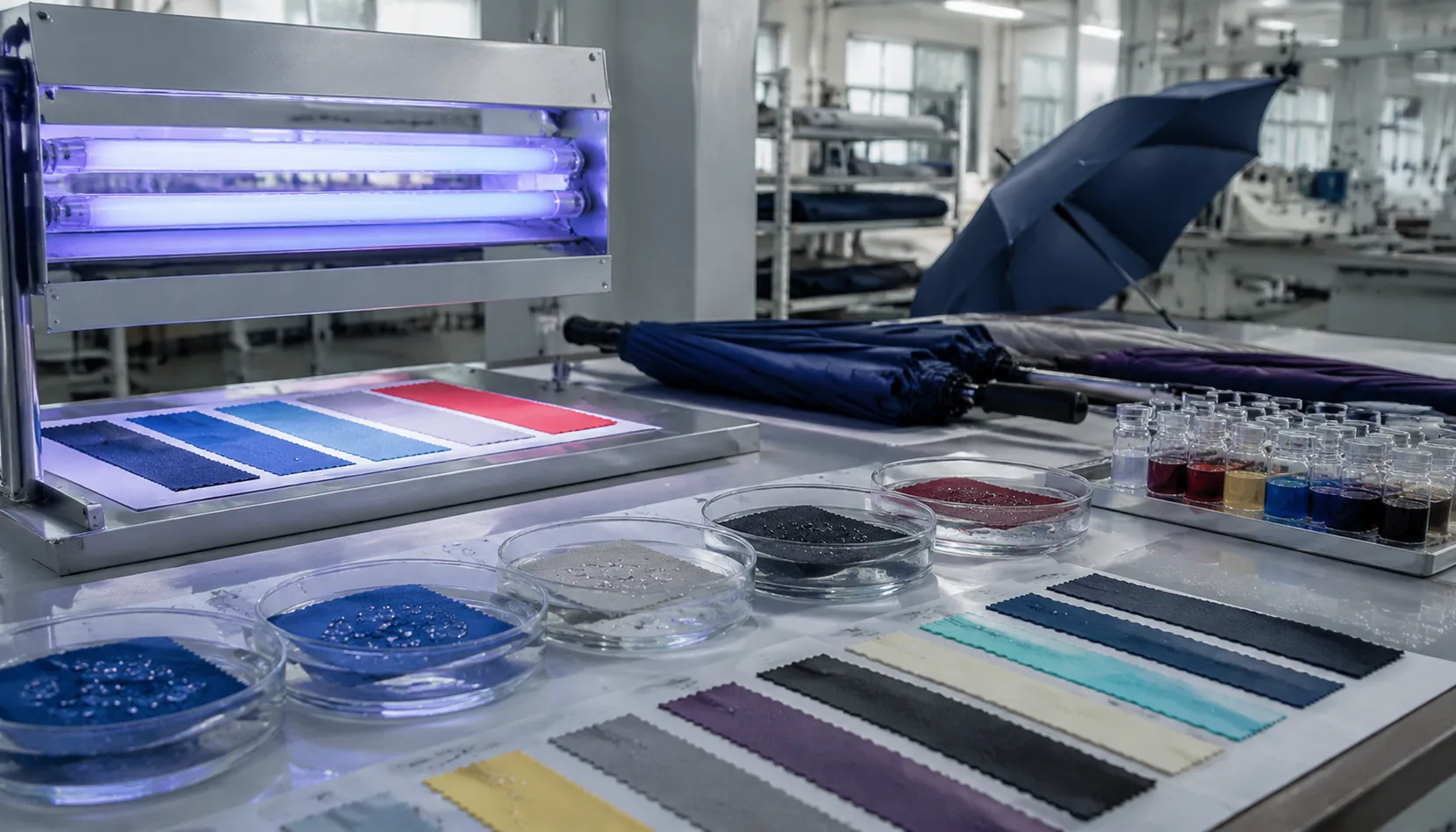
Umbrella Fabric Colorfastness Tests for Branded Orders
Avoid logo bleed and shade drift with colorfastness, rubbing, UV, and rain tests for 190T/210T pongee before bulk umbrel...
Read More »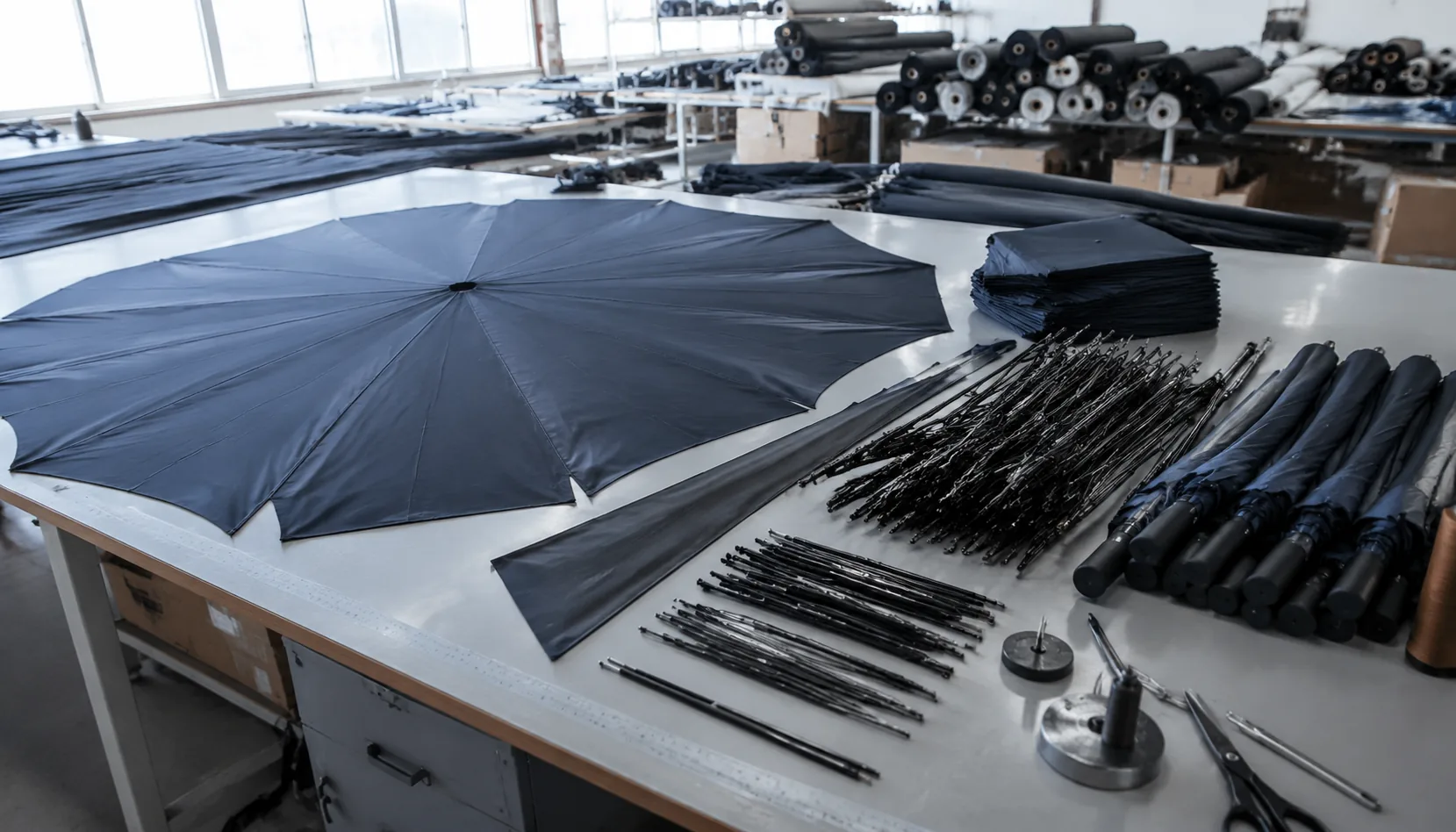
Umbrella Canopy Cutting Tolerances for Consistent Fit
Control panel cutting, fabric relaxation, and marker layout so 190T or 210T pongee canopies fit frames cleanly with fewe...
Read More »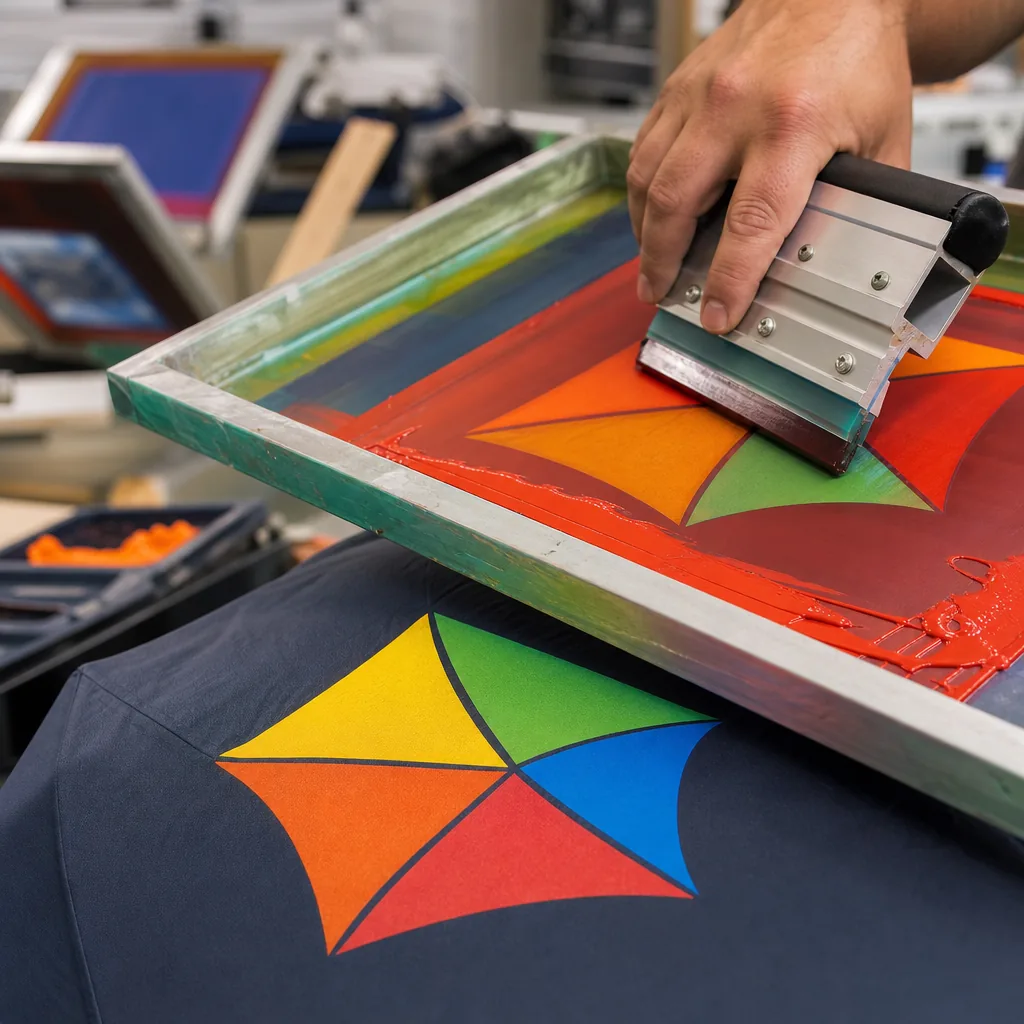
Panel Cutting Tolerances for Umbrella Production Lines
See how CNC patterns, fabric relaxation, +/-2 mm panel control, and shade-lot batching improve 190T/210T pongee canopy f...
Read More »