Panel Cutting Tolerances for Umbrella Production Lines
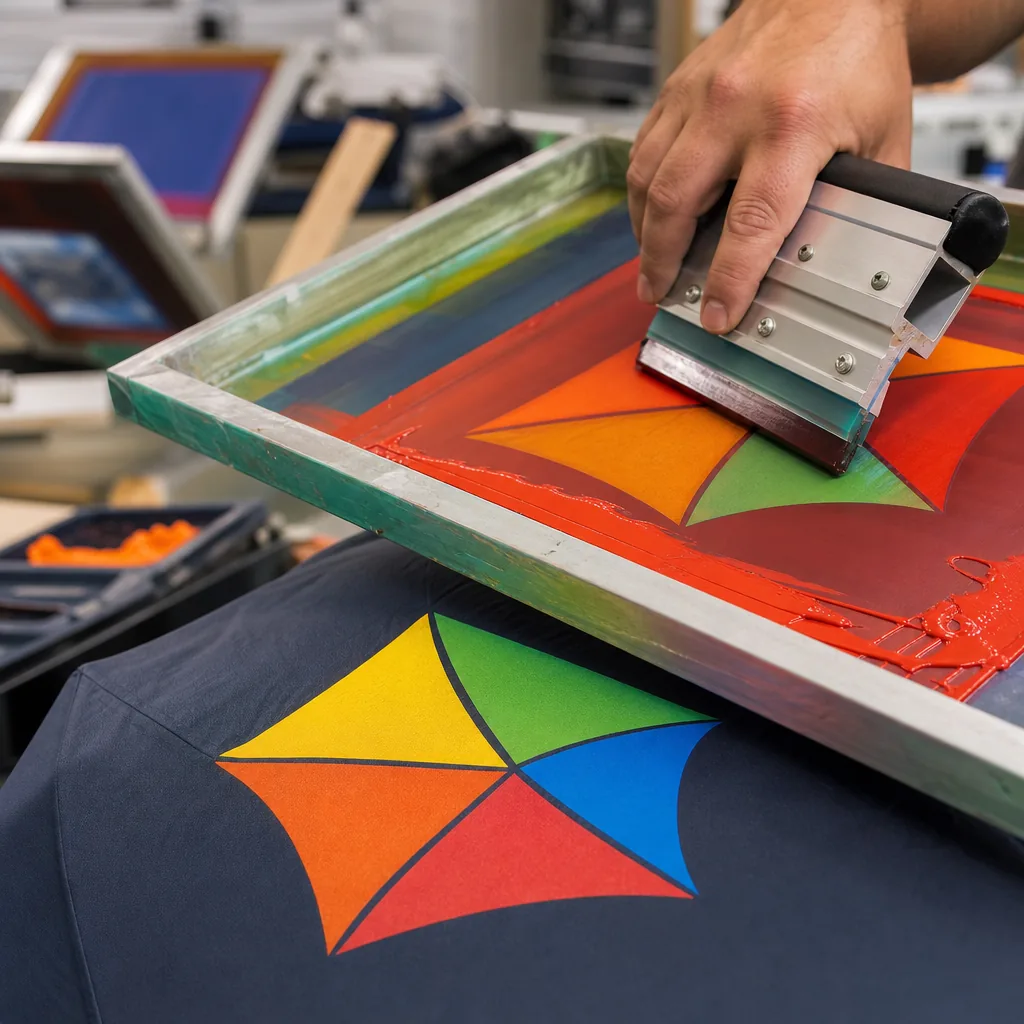
When canopy panels are cut a little wide, tight, or off-grain, the problem does not show up until sewing tension, rib alignment, and final dome shape start fighting each other. On our Songxia production floor, umbrella panel cutting tolerances are controlled through CNC pattern files, fabric relaxation before spreading, +/-2 mm checks, and shade-lot batching so 190T and 210T pongee canopies fit consistently across bulk orders.
Why Panel Cutting Accuracy Affects Final Assembly
Panel accuracy matters because the canopy is not forgiving once it is locked to the frame. On an 8K umbrella, one panel cut 2-3 mm wide at the outer arc can shift tension across the neighboring seams and pull the runner slightly off-center when opened. On a 16K frame, the error is spread over more ribs, but the tolerance stack-up is worse because there are twice as many seam lines, tips, and rib pockets competing for position. In real umbrella canopy production, poor cutting shows up as canopy twisting, uneven scallops, high-low tip alignment, and fabric that looks tight on one rib but baggy on the next. For regular rain umbrellas using 190T or 210T pongee, I like to keep umbrella panel cutting tolerances within about ±1.5 mm on the side edges and ±2 mm on the outer curve before sewing, otherwise the sewing team ends up hiding cutting problems with inconsistent seam allowance.
Compact umbrellas are the least tolerant of bad panels because the folded rib geometry already puts stress into the canopy. A 21" or 23" three-fold frame has short ribs, narrow panel height, and many hinge points, so a small pongee fabric cutting error can make the fabric rub the stretchers or wrinkle near the crown after auto-open-close testing. Golf umbrellas are different: a 27" or 30" canopy has longer seams and more fabric area, so the same 2 mm error may not twist the shaft, but it can create loose valleys between ribs or a wavy outer edge that looks cheap in retail inspection. OEM umbrella panels for brand programs need tighter matching than commodity stock umbrellas because logos printed across seams reveal misalignment immediately, especially with screen printing or heat-transfer artwork that crosses two or four panels.
Double-canopy vented windproof umbrellas need even stricter canopy fit control because the top canopy and lower canopy must breathe without fighting each other. If the upper vent panels are cut too deep, they flap in wind-tunnel testing and can expose the lower canopy unevenly; if they are too shallow, the vent does not release pressure and the umbrella may invert below the claimed 50+ mph rating. On 16K double-canopy golf models with fiberglass ribs, I check panel stack symmetry before sewing and again after tip attachment, because rib flexibility can mask a poor cut until the umbrella is opened under load. Our standard practice at ZheBrella is to separate cutting inspection from final AQL 2.5 inspection: cutting tables verify templates, fabric grain direction, notch position, and panel stack height before any operator starts sewing. That prevents final assembly from becoming a repair station for mistakes made at the knife table.
Fabric Behavior Before Cutting
Fabric behavior is the first place umbrella panel cutting tolerances are won or lost, because 190T and 210T pongee do not sit still after unwinding. A fresh roll has winding tension, edge curl, and slight skew from heat-setting; if we cut immediately, an 8K canopy may sew tight on one rib line and loose on the opposite panel. For standard polyester pongee fabric cutting, I like 4–8 hours of relaxation after spreading, with 12 hours for dense 210T, black PU-backed, or heavy DWR lots. The fabric should be opened on the cutting table without pulling, then allowed to settle under normal workshop humidity, not under a fan or in direct sun. For compact 21 inch and 23 inch umbrellas, a 1–2 mm panel change already shows at the tips. On 27 inch and 30 inch golf umbrellas, that error multiplies across longer seams and affects canopy fit control at the ferrule and rib pockets.
Roll width variation is normal, even when the supplier label says 57/58 inches. In real umbrella canopy production, I often see usable width shift by 5–12 mm from roll to roll, and the selvage may wander more on lower-cost 190T pongee. The cutter must measure usable coated width, not total width, because pinholes, pressure marks, or uneven coating near the edge should not enter OEM umbrella panels. Pattern nesting also changes with rib count: 8K panels tolerate simpler lay planning, while 10K and 16K orders need tighter grain direction control so every gore stretches consistently during sewing. Shade-lot control belongs at the cutting table, not only in the warehouse. Panels from different dye lots can pass visual inspection in roll form but show a patchwork canopy outdoors, especially navy, burgundy, charcoal, and logo-printed corporate colors. Our standard practice at ZheBrella is to cut one canopy set from one shade lot and mark bundle tickets before sewing.
Coating side direction is not a small detail; it decides water shedding, UV performance, print appearance, and how the seam behaves under the presser foot. UPF 50+ silver-coated, black-coated, and DWR pongee must be stacked coating-to-coating or face-to-face according to the cutting plan, with direction arrows on the marker if the fabric has a visible twill, sheen, or one-way finish. Dirty gloves, oily table rails, chalk dust, and dull blades leave marks that become obvious after heat-transfer printing or when rain beads on the canopy. Coated fabrics also dislike repeated handling because creases can fracture the film before sewing, creating weak spots near the crown or panel points. For umbrella panel cutting tolerances, I allow less forgiveness on coated UPF 50+ goods than on plain 190T pongee: cleaner tables, sharper rotary or straight knives, fewer plies per lay, and immediate bundling in poly sleeves reduce shade contamination, coating scratches, and moisture marks before AQL 2.5 inspection ever sees the finished umbrella.
Cutting Methods and Tolerance Targets
For bulk umbrella canopy production, the cutting method should be chosen by panel complexity, fabric behavior, and reorder volume, not by machine name alone. Manual die cutting is still efficient for simple 8K or 10K OEM umbrella panels when the steel rule die is fresh, the lay height is controlled, and the fabric is relaxed before stacking. On 190T or 210T pongee fabric cutting, we normally target +/-2 mm on straight panel edges and about +/-1.5 mm around the crown notch, because small crown errors multiply into puckering at the top cap. The risk with manual die cutting is die wear and operator pressure; after 20,000-30,000 strikes, corners can soften and the panel becomes slightly fat. For basic 21" and 23" promotional umbrellas, that may still pass AQL 2.5 visual inspection, but it will show up as uneven seams if the sewing line is already loose.
Knife cutting, including vertical knife and band knife systems, is more flexible for mixed colors, smaller MOQs, and shaped panels used on 27" golf umbrellas or 30" beach umbrellas. It is slower than die cutting but avoids making a dedicated die for every panel shape, which matters when a buyer changes arc depth, seam allowance, or logo placement after sample approval. With a sharp blade and compressed lay, practical umbrella panel cutting tolerances are usually +/-2 mm on the panel side and +/-3 mm on the outer arc, especially on slippery polyester pongee or Teflon-coated fabric. The biggest mistake I see is cutting too many plies at once; a 120-layer stack saves minutes but causes bottom-layer drag, so the lower panels grow wider than the top panels. For canopy fit control, we keep lay height lower on coated UV UPF 50+ fabrics because coating stiffness changes how the knife tracks through the stack.
CNC cutting gives the best repeatability for vented, double-canopy windproof styles, 16K fashion umbrellas, and orders where printed graphics must meet seam lines cleanly. On double-canopy panels, I want tighter control: around +/-1 mm to +/-1.5 mm on vent overlap edges, because a 2 mm mismatch on each panel can become a visible wave around the full canopy. CNC is also safer for sublimation panels where left and right artwork alignment matters, but fabric spreading still decides the final result; if the roll tension is uneven, even a perfect digital pattern cuts a distorted panel. At ZheBrella, our standard practice is to confirm production panels against the approved sample frame before mass sewing, checking rib tip alignment, crown closing, and skirt drop on a real 8K/10K frame. Good umbrella panel cutting tolerances are not just numbers on a QC sheet; they are what keep auto-open canopies from twisting and vented tops from fluttering under 50+ mph wind-tunnel testing.
In-Process Checks Before Sewing
Panel counting is the first in-process gate because one missing or wrong panel can stop a sewing line faster than a broken needle. For a standard 8K stick umbrella we verify 8 cut panels per canopy bundle; for 10K, 16K, and golf models the bundle card must match the frame spec before the pieces leave the cutting table. I like a physical count plus weight cross-check on large runs, because 190T and 210T pongee stacks can hide short counts when operators are moving fast. Symmetry is checked by folding sample panels point-to-point and comparing rib-edge length, arc, and tip angle against the approved pattern. For umbrella panel cutting tolerances, our normal control is tighter on the rib edge than the outer hem because rib attachment and crown closure show errors immediately after stitching. A 2 mm drift at the top notch can become a twisted canopy after binding, especially on auto-open frames where spring force exposes uneven tension.
Grain direction matters more than many buyers realize, especially in umbrella canopy production using woven pongee fabric cutting. Panels should follow the approved warp/weft orientation so stretch is consistent around the canopy; mixing rotated panels creates one soft side and one tight side after wet testing. Before sewing, inspectors fan out one full canopy set and check that coating side, face side, and grain arrows all match. Printed jobs need a second check: logo position from panel centerline, bleed allowance at seams, and repeat alignment across adjacent OEM umbrella panels. For screen print and heat-transfer logos, we usually hold placement within plus or minus 3 mm unless the artwork crosses seams, where a tighter pre-production approval is needed. Sublimation panels need color sequence control because mirrored or swapped panels are hard to spot once the sewer starts locking seams at 7 to 9 stitches per inch.
Fabric defects and lot control should be caught before stitching, not after the canopy is already tied to an 8K or 10K frame. Each bundle is checked under bright table light for oil marks, slubs, pinholes, coating scratches, color shade bands, and edge fraying from dull cutting blades. Mixed-lot prevention is simple but non-negotiable: roll number, dye lot, cutting table, date, and PO line stay on the bundle ticket until final canopy fit control is passed. At ZheBrella, our standard practice is to quarantine any bundle with unclear lot tags instead of letting it enter sewing and hoping final AQL 2.5 inspection will catch the issue. Early inspection reduces rework because bad panels can still be replaced before overlock stitching, topstitching, binding tape, Velcro tabs, or tip cups are attached. Once those operations are done, correcting umbrella panel cutting tolerances usually means unpicking seams, damaging waterproof coating, and losing far more labor than the original check required.
Buyer Specs That Prevent Canopy Fit Issues
The RFQ should lock the pattern before price discussion, because most canopy fit problems start with vague artwork and “standard size” language. Ask the factory to quote from approved DXF, AI, or PDF pattern files showing panel arc length, seam allowance, notch position, grain direction, and finished canopy diameter for 21", 23", 27", or 30" frames. For umbrella panel cutting tolerances, I prefer a written limit of ±1.5 mm on straight edges and ±2.0 mm on curved bias edges for 190T/210T pongee, with first-piece checks every 300–500 panels. If the order uses OEM umbrella panels across 8K, 10K, or 16K frames, specify rib length, runner height, top cap diameter, and whether the canopy is single-layer, double-canopy vented, or shaped with scallops or ears. Without those numbers, the sewing line will compensate by pulling seams, and the finished umbrella may look acceptable closed but twist badly when opened.
Fabric and printing details need the same discipline. Pongee fabric cutting behaves differently from POE, PVC, and EVA; 210T pongee with Teflon coating can slip on the cutting table, while transparent POE stretches if stacked too high or cut with a dull blade. Put the fabric type, GSM, coating, color standard, and shrinkage expectation directly into the RFQ. For printed umbrellas, define print registration from panel edge to logo center, usually ±2 mm for screen print and ±3 mm for heat-transfer or sublimation across seams. If the logo crosses two panels, require a strike-off plus assembled canopy review, not just a flat print proof. In umbrella canopy production, flat artwork approval is not fit approval; the real test is whether the print lands correctly after sewing, tip attachment, and stretching over the frame.
Inspection terms should be practical enough for a production line to follow. State AQL 2.5 for major defects, with canopy fit control covering uneven tension, exposed rib tips, off-center top notch, puckered seams, mismatched print alignment, and opening force on manual, auto-open, or auto-open-close frames. The RFQ should also include MOQ by fabric and print method, sample lead time of 7–10 days for plain pongee and 10–15 days for printed or shaped canopies, and mandatory PP sample fit approval before bulk cutting. At ZheBrella, our standard practice is to freeze the approved PP sample and keep it at the sewing and final inspection stations. For FOB quotes, extra packing for shaped canopies should be listed when panels cannot be compressed flat; for DDP quotes, include the added carton volume, inner polybag structure, and dimensional-weight impact, because freight can change more than the cutting cost.
Frequently Asked Questions
What panel tolerance is realistic for OEM umbrella production?
+/-2 mm is a common practical target for many pongee umbrella panels, but complex vented or double-canopy designs may need tighter control at key attachment points. Final tolerance should be confirmed during PP sampling.
Does 210T pongee cut differently from 190T pongee?
Yes. 210T pongee is denser and can feel more stable, but coatings and fabric finish still affect slip, stacking height, and edge accuracy. Factories should test cutting settings before bulk production.
What cutting tolerance is typically used for umbrella canopy panels in bulk production?
A common target is +/-2 mm on panel dimensions, especially for 190T and 210T pongee canopies. Tight control helps keep seam alignment consistent and reduces fit issues during sewing and final canopy assembly.
Why is fabric relaxation important before cutting pongee umbrella panels?
Pongee can shift after weaving, dyeing, or storage, so relaxation helps stabilize the fabric before nesting and cutting. Factories often rest the rolls before cutting to reduce post-cut size drift and panel mismatch.
How does shade-lot batching improve canopy fit control?
Batching panels from the same shade lot helps keep color and fabric behavior consistent across a production run. It also reduces variation in hand feel, stretch, and visual matching across adjacent panels.
Looking to Launch Your Custom Umbrella Line?
ZheBrella is a Zhejiang-based OEM/ODM umbrella manufacturer with 17 years of export experience. Free design, low MOQ from 100 pieces, windproof construction, full-color print.
Get Free Quote Now »People Also Search For
Related Articles
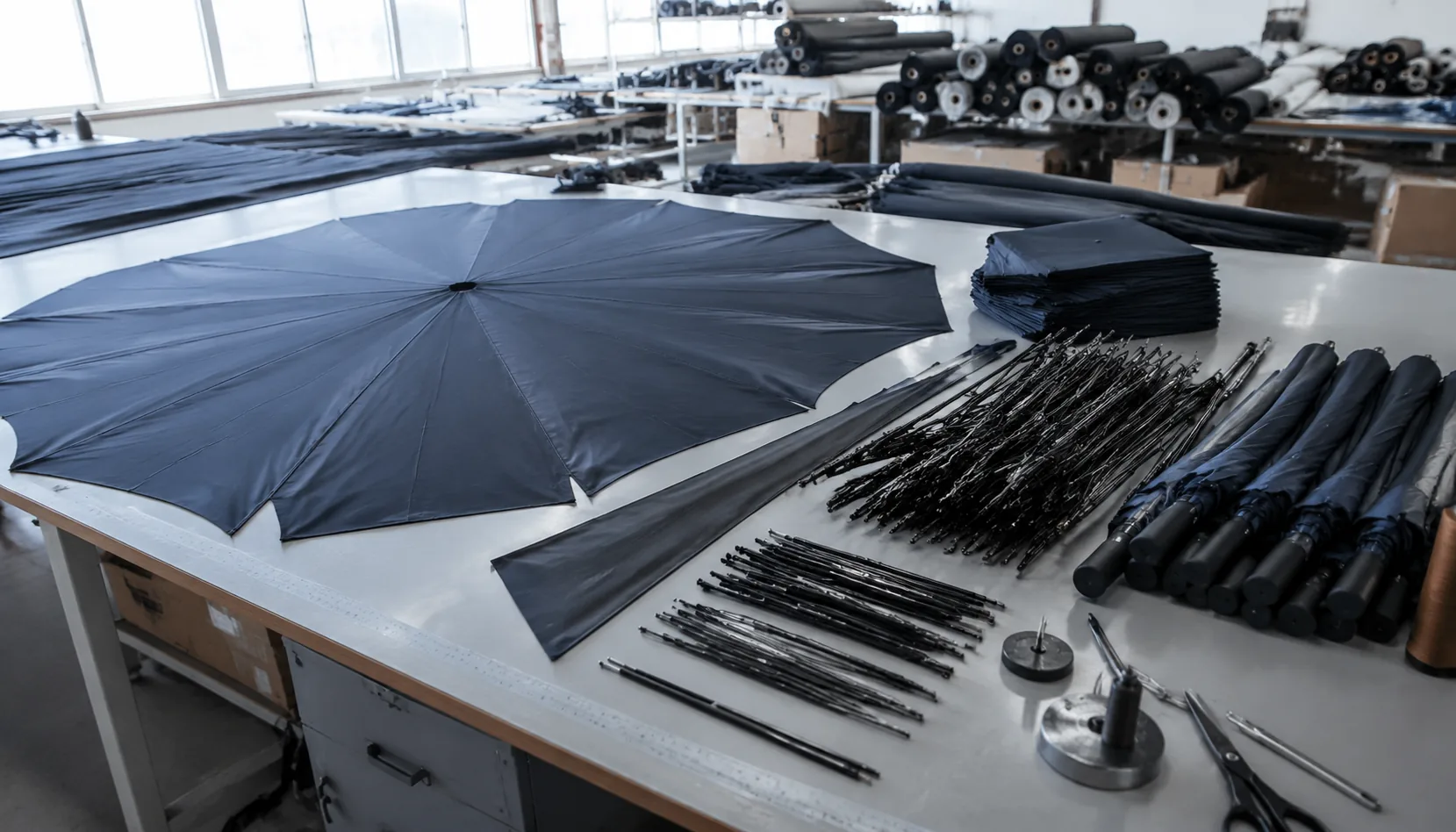
Umbrella Canopy Cutting Tolerances for Consistent Fit
Control panel cutting, fabric relaxation, and marker layout so 190T or 210T pongee canopies fit frames cleanly with fewe...
Read More »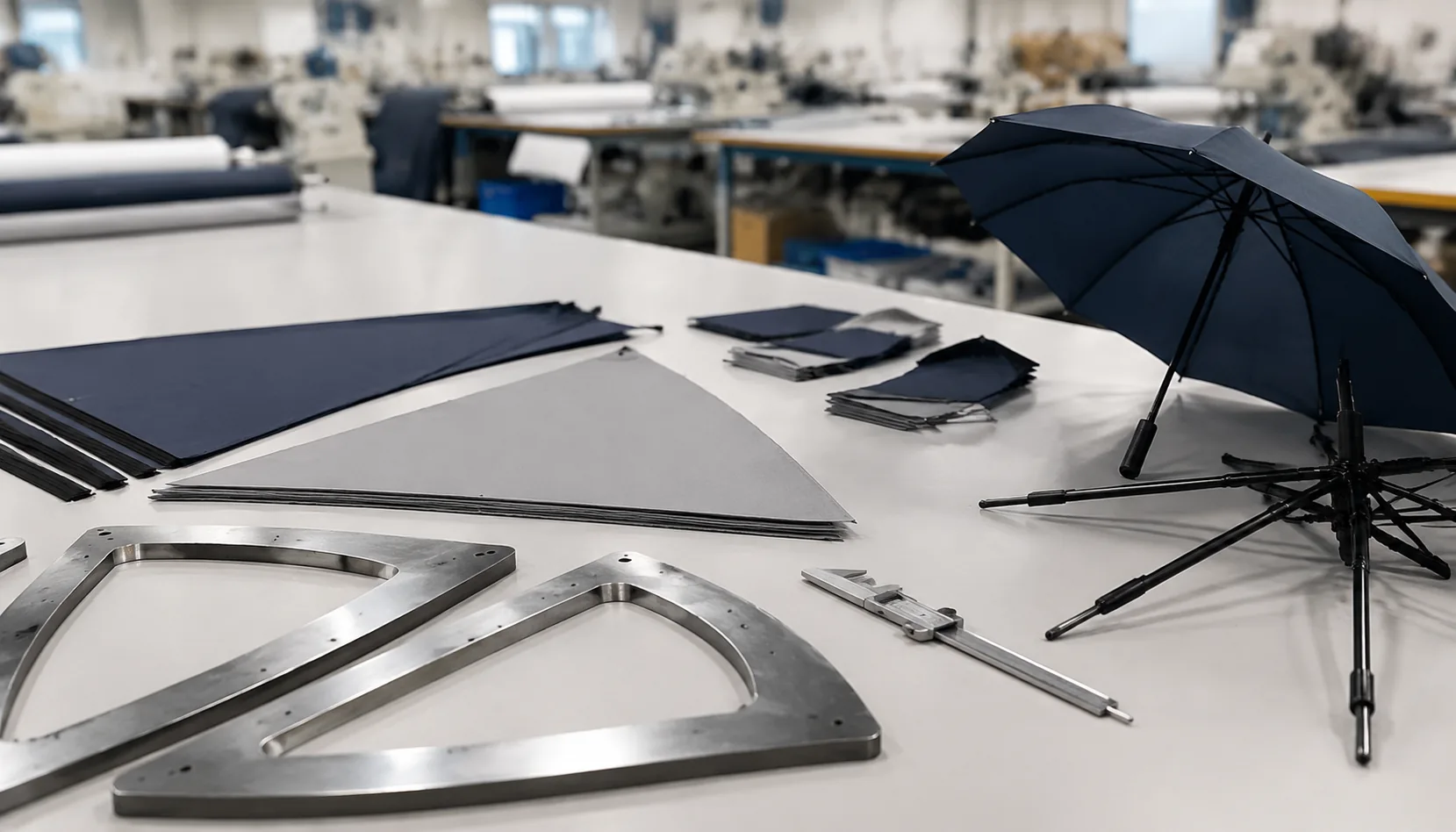
Umbrella Panel Cutting Tolerances for Consistent Canopy Fit
Learn how panel cutting tolerances, fabric lot control, and sewing allowances keep OEM umbrella canopies tight, aligned,...
Read More »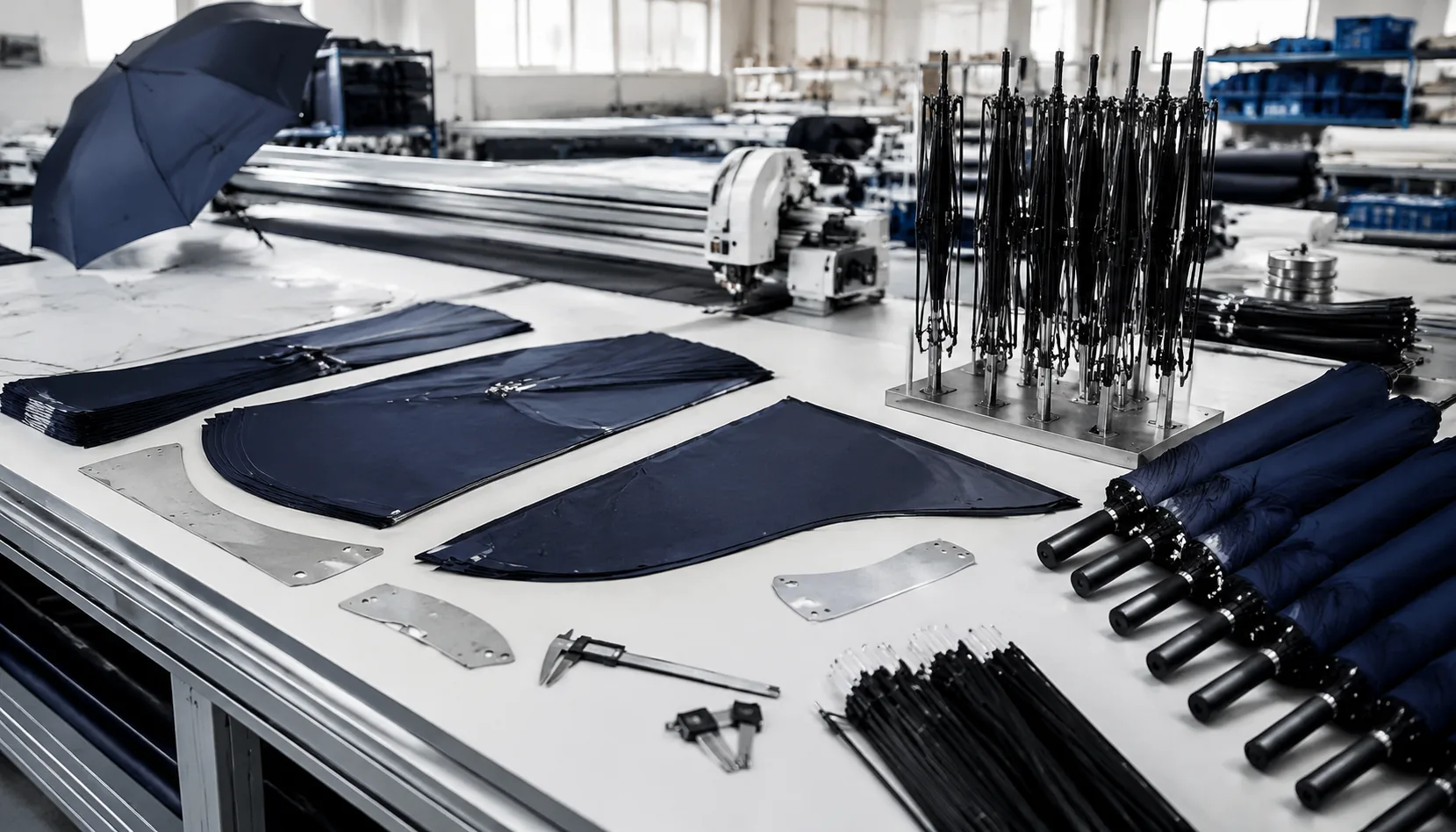
Umbrella Canopy Cutting Tolerances for OEM Panel Fit
Learn how die cutting, grain direction, and panel matching control twist, seam tension, and leakage on 190T/210T pongee ...
Read More »