Umbrella Canopy Cutting Process for Accurate Bulk Orders
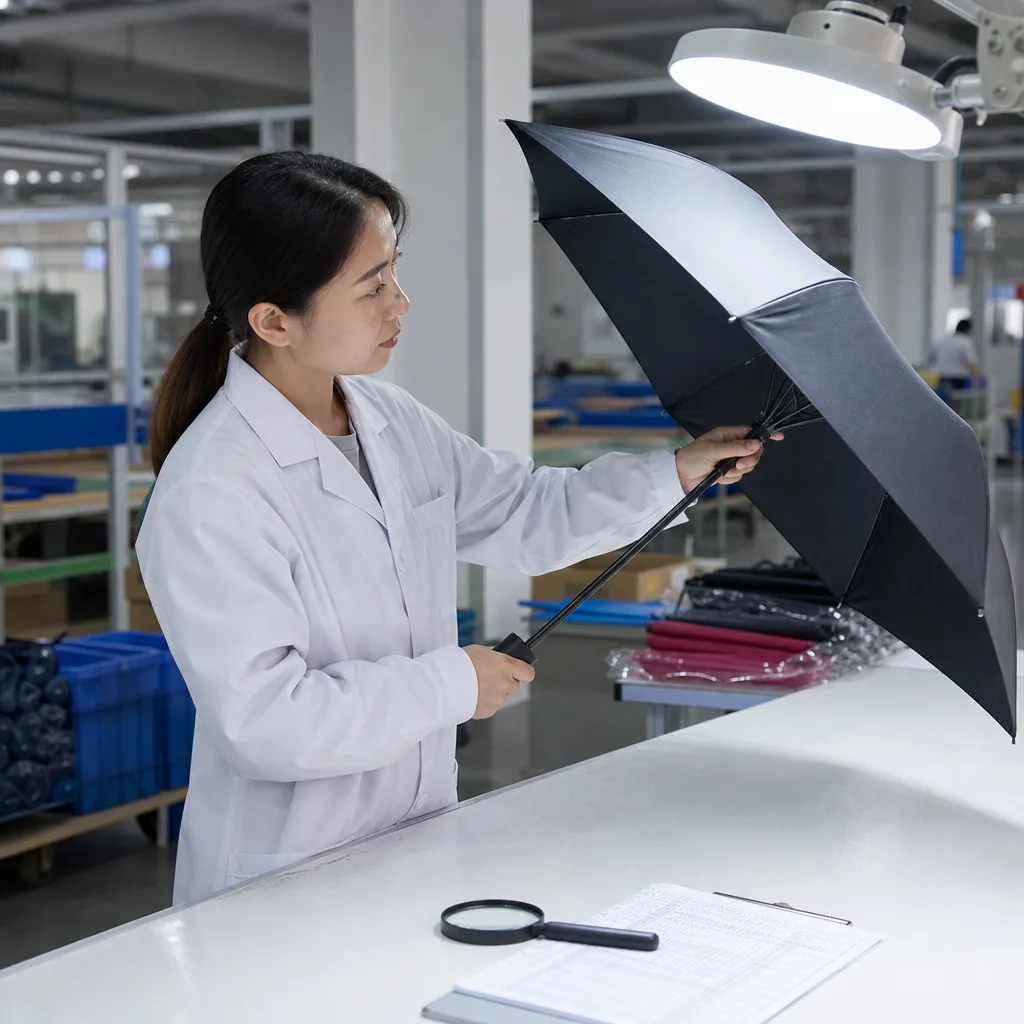
Bulk umbrella orders fail quietly when canopy panels drift a few millimeters, especially on 190T and 210T pongee where tension, coating, and shade lots all affect the final fit. On our Songxia cutting tables, the umbrella canopy cutting process starts before the blade touches fabric: spreading tension, layer height, marker direction, and roll-to-roll color control must be locked down so every OEM frame receives panels that sew cleanly and match in bulk.
How Canopy Cutting Affects Finished Umbrellas
Panel accuracy decides whether a finished umbrella looks clean or fights the frame every time it opens. In the umbrella canopy cutting process, each triangular gore has to match the frame’s arc, rib length, and seam allowance, not just the drawing on the CAD file. A 23" 8K straight umbrella usually tolerates less visible error than buyers expect: if one panel is 2–3 mm short on the rib edge, the tip pulls inward; if it is long, the canopy bags between ribs and sheds water poorly. On 27" and 30" golf umbrellas, that error multiplies across larger panels, especially with 190T or 210T pongee that stretches slightly under sewing tension. Good umbrella panel cutting keeps warp direction consistent, controls the bias edge, and leaves enough margin for lockstitch seams without forcing the operator to “hide” shortage at the tips.
Seam matching is where cutting mistakes become obvious to the buyer. For solid black pongee canopy production, a small mismatch may pass casual inspection, but printed logos, stripes, border artwork, and sublimated panels expose every millimeter. Umbrella print alignment depends on cutting registration marks, fabric relaxation time, and whether the cutting die or CNC knife follows the same reference point used during printing. If panels are stacked too high, the lower layers can shift under the blade, leaving one gore narrow at the top and wide at the hem. During sewing, the operator then stretches one panel against the next, causing puckered seams, crooked artwork, and a canopy that twists clockwise or counterclockwise when mounted on fiberglass or steel ribs.
Frame fit is the final test of cutting discipline in OEM umbrella manufacturing. A canopy that is technically sewn well can still fail if the gore shape does not match the rib geometry, runner travel, and tip pocket placement. On auto-open and auto-open-close models, excessive canopy tension slows opening and stresses the spring; insufficient tension creates loose valleys that collect rain instead of sending water toward the hem. Double-canopy vented windproof umbrellas are even less forgiving because the upper and lower layers must align with vent openings and rib tips without fighting each other in 50+ mph wind-tunnel checks. Our standard practice at ZheBrella is to confirm first-piece cutting against a mounted frame before bulk cutting, then inspect seam symmetry, tip height, and canopy balance under AQL 2.5 rather than waiting until final packing to find twisted canopies and uneven tips.
Fabric Spreading for 190T and 210T Pongee
Fabric spreading is where bulk accuracy is won or lost in the umbrella canopy cutting process, especially with 190T and 210T pongee. We do not cut fresh-opened rolls straight from the warehouse because pongee, polyester, and RPET all carry roll tension; if you spread and cut too early, panels relax after cutting and the canopy circumference changes. For normal 190T pongee, I allow 4 to 8 hours of relaxation after unrolling, and for tightly wound 210T, recycled RPET, or laminated UV fabric, 8 to 12 hours is safer. The spreading table must be clean, flat, and long enough for the panel marker, usually 6 to 12 meters depending on 21", 23", 27", or 30" umbrella sizes. Operators align the selvage and keep the fabric grain consistent from ply to ply, because a mixed grain direction causes one panel to stretch differently during sewing and makes the finished umbrella twist when opened.
Layer height depends on fabric hand feel, coating, and cutting equipment, not just the order quantity. For standard 190T pongee canopy production, a straight-knife cutter can usually handle 60 to 90 plies if the fabric is stable and the marker has enough hold-down. For 210T pongee, I prefer 45 to 70 plies because the denser weave builds heat and pressure around the knife. Polyester taffeta may tolerate higher stacks, while softer RPET often needs a lower stack because recycled yarn lots can vary slightly in thickness and surface friction. Coated UPF 50+, Teflon, DWR, PU, or silver-coated fabrics should be spread lower, commonly 25 to 45 plies, because slick faces slide under the top clamp and coated backs can creep during umbrella panel cutting. If the cutting room tries to save labor by stacking too high, the top panels may pass inspection while the bottom panels drift 2 to 4 mm, enough to affect rib-tip fit on 8K or 10K frames.
Shade-lot separation is not paperwork; it prevents visible color banding after sewing. Every roll label should be checked against the dye lot, fabric width, coating type, and print requirement before spreading. In OEM umbrella manufacturing, one PO may include navy pongee from two dye vats that look identical indoors but separate clearly under daylight or after a DWR finish is applied. Our standard practice at ZheBrella is to cut shade lots separately and mark bundle tickets by lot, panel position, size, and print orientation, then keep those bundles together through sewing and inspection. For orders with logos, border prints, or full-panel sublimation, grain direction and face-side control also protect umbrella print alignment. A reversed ply can shift the print angle or make the coated side face inward, which is costly to catch after assembly. Before mass cutting, the supervisor should approve the first spread, confirm marker direction, measure ply slippage at both ends, and record the stack height for AQL 2.5 traceability.
Panel Cutting Methods and Tolerance Targets
Cutting method should follow order size before anyone talks about speed. For sampling, rush event orders, or MOQ under 300 pieces per color, hand cutting still has a place because there is no tooling cost and a skilled cutter can adjust grain direction, logo position, and small fabric defects on 190T or 210T pongee. The downside is repeatability: even with a steel template, panel edges can drift 1.5–2.5 mm after stacking 40–60 layers, which becomes visible when eight panels meet at the cap. Die cutting is better for stable promotional orders from 1,000–10,000 pieces because the blade rule locks the shape, notch marks, and seam allowance into one tool. Tooling usually costs less than CNC setup, but each size, such as 21", 23", 27", or 30", needs its own die. In our umbrella canopy cutting process, we normally allow hand cutting only for pre-production samples or low-risk solid-color jobs, not for complex umbrella print alignment.
CNC cutting is the most reliable choice for OEM umbrella manufacturing when panel symmetry and repeat printed placement matter more than saving a few cents. It works especially well for sublimated pongee canopy production, digital print layouts, and mixed SKUs where the buyer changes artwork but keeps the same 8K or 16K frame size. A vacuum table and oscillating blade can hold tolerance around ±0.5–1.0 mm if the fabric is relaxed before spreading and the marker file is checked against shrinkage after coating or heat transfer. CNC has higher machine time and setup cost than die cutting, so it is not always efficient for a single 500-piece solid-color order. But for retail programs with 5,000+ pieces split across multiple artworks, CNC reduces shade-mixing mistakes, avoids worn die edges, and lets us correct panel length digitally before bulk cutting instead of rebuilding hard tooling.
The practical inspection points are simple, but skipping them causes ugly umbrellas. Seam allowance must be consistent, usually 7–10 mm depending on the sewing folder and canopy fabric thickness; if one panel is short by 2 mm, the runner may still open, but the canopy will twist under tension. Notch marks should be shallow and placed where the sewing line hides them, never deep enough to create tear starts on coated pongee, POE, or PVC. For umbrella panel cutting, we check left-right symmetry by folding panels point-to-point and comparing arc, tip, and rib-end positions. An 8K umbrella has fewer, wider panels, so small cutting errors show as larger waves along each rib. A 16K canopy hides some waviness visually, but it doubles the number of seams, notch points, and chances for cumulative error. That is why AQL 2.5 inspection should include random panel measurement before sewing, not only finished umbrella opening tests.
Print Placement and Shade Matching Controls
Print placement has to be locked before the first cutting die touches fabric, because a 3 mm error at cutting becomes a visible crooked logo after sewing. For promotional orders, we normally make a print-position template from the approved artwork: center mark, rib seam allowance, top-cap clearance, and bottom hem allowance are drawn against the actual panel shape, not a flat rectangle. On 23" and 27" stick umbrellas, a logo that looks centered on a screen can sit too close to the runner line once the panel is stretched over 8K or 16K ribs. In the umbrella canopy cutting process, printed rolls are checked against the paper pattern, then operators align the repeat mark or registration dot before umbrella panel cutting. Border prints need even stricter control because the hem consumes 12–18 mm; if the print is placed too low, sewing cuts into the stripe, and if it is too high, the finished canopy looks cheap and unbalanced.
Full-panel graphics, especially sublimation on 190T or 210T pongee canopy production, are handled by panel numbering rather than blind stacking. Each printed panel is marked 1 through 8, 10, or 16 depending on rib count, and the cutting table follows the same sequence as the sewing line. This matters for photos, gradients, mascot art, and retail patterns where left-right continuity is part of the design. For OEM umbrella manufacturing, our standard practice at ZheBrella is to approve one pre-production canopy on the actual frame before bulk cutting, because fabric tension changes the visual position of logos and border artwork. Auto-open and auto-open-close frames also pull the canopy differently from manual frames, so print alignment cannot be judged only from flat fabric. If a buyer changes from steel ribs to fiberglass ribs after artwork approval, we recheck the canopy tension and seam position before releasing mass cutting.
Shade matching is where many bulk orders fail quietly. Pongee rolls from different dye lots can all pass a basic color callout, but once sewn into one umbrella, alternating panels may show shade bands under daylight, especially navy, black, red, and PMS-matched corporate blue. Before the umbrella canopy cutting process starts, rolls should be checked under D65 light, labeled by lot, and kept in separate cutting bundles. We use shade band checks by spreading 2–3 meters from each roll side by side, then cutting panels only within the same approved band for one PO. Panel bundles are tied with lot number, cutting date, panel size, and print direction, then passed to sewing without mixing. On promotional campaigns and retail replenishment orders, mixing lots is risky because the end user may open ten umbrellas at one event or display them on one shelf; even a Delta E difference that looks minor in fabric inspection becomes obvious across assembled canopies.
Pre-Sewing Inspection Points for Buyers
The umbrella canopy cutting process starts with a locked-approved fabric swatch, not with the cutter table. On pongee canopy production, I want the buyer to confirm the exact base cloth, coating, and dye lot before we cut the first panel, because a 190T pongee roll can still vary enough to change seam appearance and print shade. The first checkpoint is the approved fabric swatch, followed by a panel measurement report that shows panel length, hem allowance, center-to-edge symmetry, and grain direction. For umbrella panel cutting, these numbers matter more than people expect; a 2 to 3 mm error per panel becomes a crooked canopy on an 8K or 10K frame. This is also where umbrella print alignment gets decided, since logo position has to follow the panel geometry, not just the artwork file.
The second checkpoint is the first-article canopy, which should be sewn from production fabric and measured under the same tooling and tension as bulk output. In OEM umbrella manufacturing, I treat this sample as the real trial, not a showroom piece: panel overlap, tip positioning, seam straightness, and color tolerance all need sign-off before mass cutting starts. Buyers should ask for a PP sample sign-off that records the approved swatch, cutting dimensions, print placement, and any allowed shade deviation under daylight. If the canopy uses UV coating, Teflon, or a double-canopy vented structure, the first-article is where you catch shrinkage or distorted vent edges before they multiply across the order. This is the point where ZheBrella normally freezes the pattern and releases bulk cutting only after written approval.
These early checks protect lead times better than relying only on AQL 2.5 final inspection, because a late fail after sewing wastes fabric, labor, and frame inventory. Once a cut panel is wrong, final inspection can only reject it; it cannot recover the lost schedule. That is why buyers should require the full umbrella canopy cutting process package up front: approved swatch, panel measurement report, first-article canopy, color tolerance window, and PP sample sign-off. For bulk orders, that discipline is especially important when the shipment includes mixed sizes like 21-inch folding umbrellas and 30-inch golf umbrellas, because each size changes panel shape and print scale. If the buyer confirms these points before mass production, we can usually hold the plan on time and avoid the common OEM umbrella manufacturing problem of fixing quality at the end of the line, where every correction costs days instead of minutes.
Frequently Asked Questions
Is CNC cutting always better for umbrella canopies?
CNC cutting is strong for repeatability and complex shapes, especially on larger OEM runs. Die cutting can be faster for stable high-volume SKUs, while hand cutting is usually limited to samples or small MOQ orders.
Why do some bulk umbrellas show slight color differences between panels?
Panel shade variation usually comes from mixed dye lots, uneven fabric coating, or poor layer separation during cutting. Buyers should require shade-lot control and panel numbering before sewing starts.
How do you keep panel sizes consistent across a bulk umbrella canopy order?
Factories usually use controlled fabric spreading, fixed cutting templates, and machine cutting references to keep panel dimensions within tight tolerances. For OEM runs, many suppliers target a size variance of about 1-2 mm per panel, depending on fabric type and cutting method.
Why does print alignment matter before umbrella panel cutting?
If the artwork is not registered correctly before cutting, the seam lines can shift and the logo may look off-center after assembly. Good alignment work is especially important for repeated patterns, full-panel prints, and multi-color designs on pongee canopies.
What should a buyer confirm for 190T and 210T pongee cutting?
Buyers should confirm fabric shrinkage, shade lot control, and whether the factory cuts by panel or by full canopy marker. For bulk OEM orders, sampling is typically 5-10 days and production lead time is often 20-35 days after approval, depending on order size.
Looking to Launch Your Custom Umbrella Line?
ZheBrella is a Zhejiang-based OEM/ODM umbrella manufacturer with 17 years of export experience. Free design, low MOQ from 100 pieces, windproof construction, full-color print.
Get Free Quote Now »People Also Search For
Related Articles
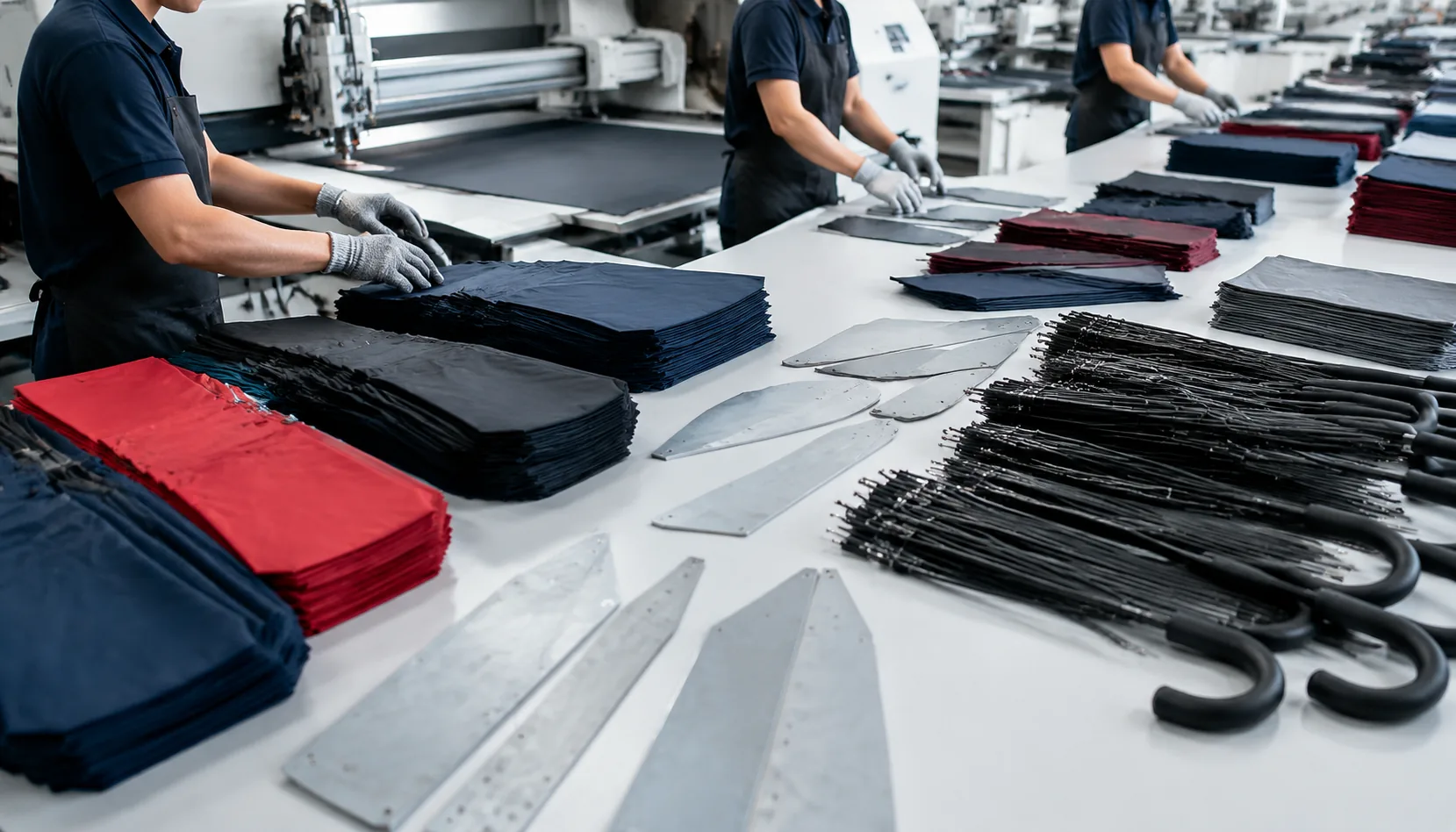
Umbrella Canopy Cutting: Panel Accuracy for Bulk Orders
Understand canopy cutting controls for 190T and 210T pongee, panel matching, shrinkage allowance, and print alignment in...
Read More »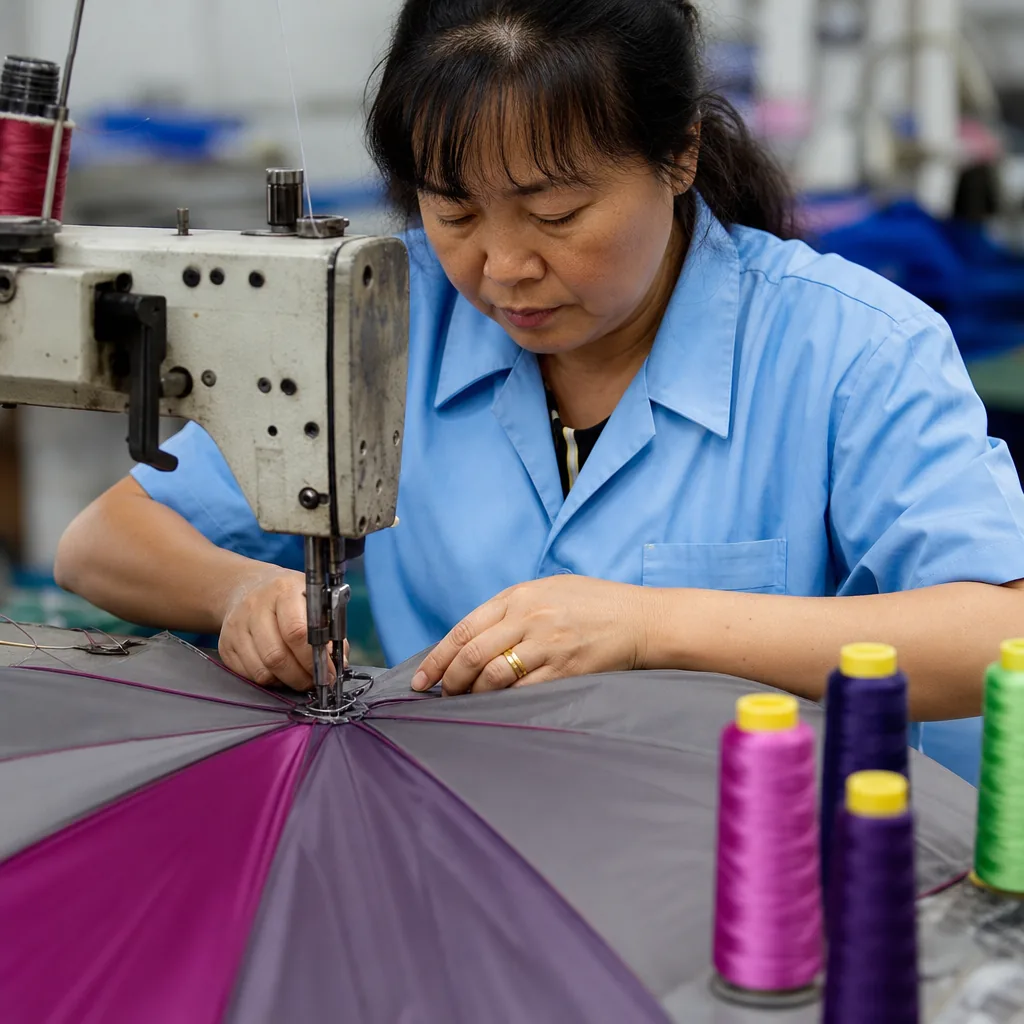
Umbrella Canopy Panel Cutting for Accurate OEM Fit
Learn how canopy panel cutting tolerances, fabric layup, and inspection controls prevent wrinkles, leaks, and fit issues...
Read More »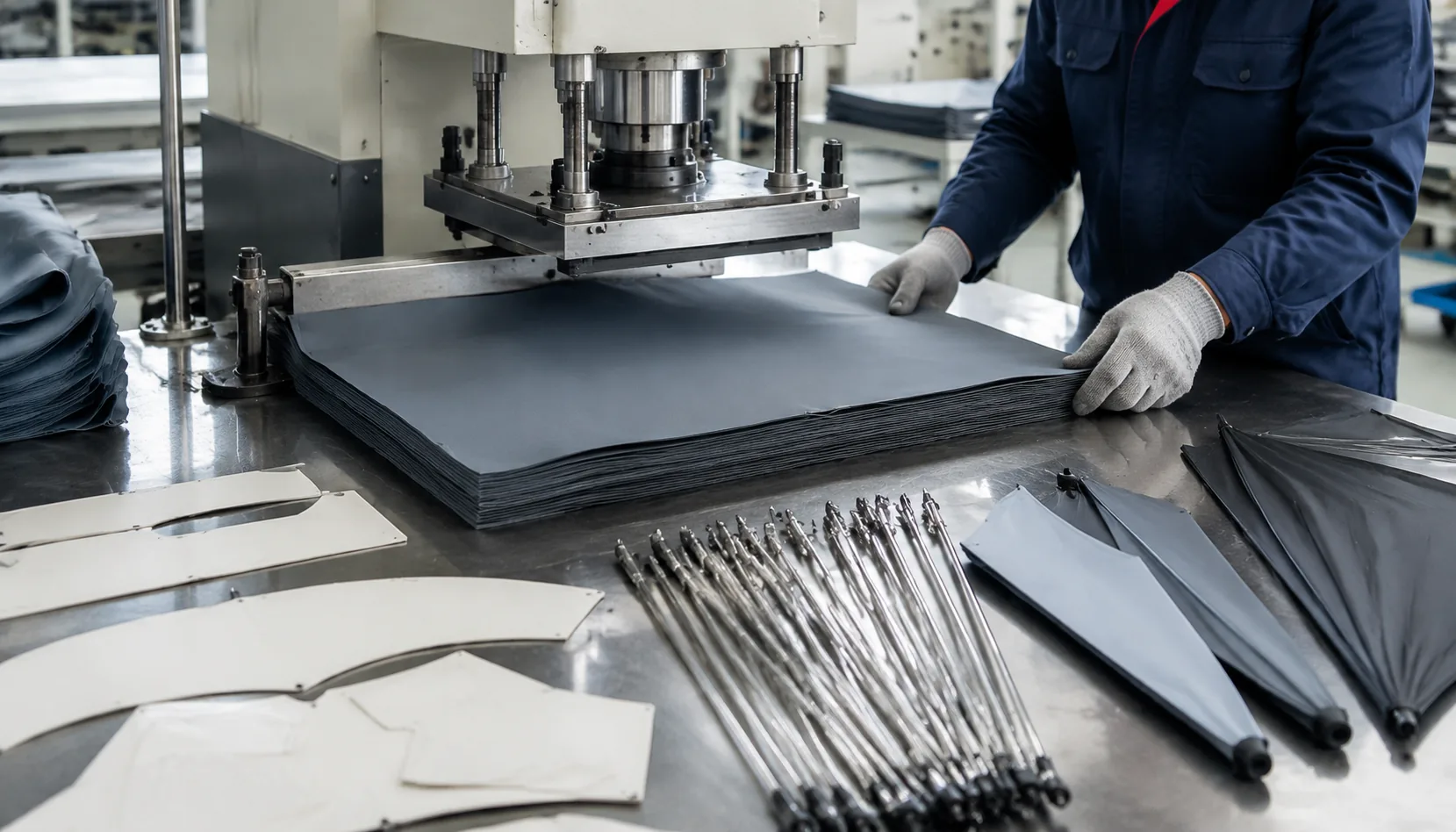
Umbrella Panel Cutting Tolerances for OEM Canopy Fit
Learn how CAD markers, die cutting, and 190T/210T pongee tolerances control canopy tension, seam alignment, and rework i...
Read More »