Umbrella Canopy Panel Cutting for Accurate OEM Fit
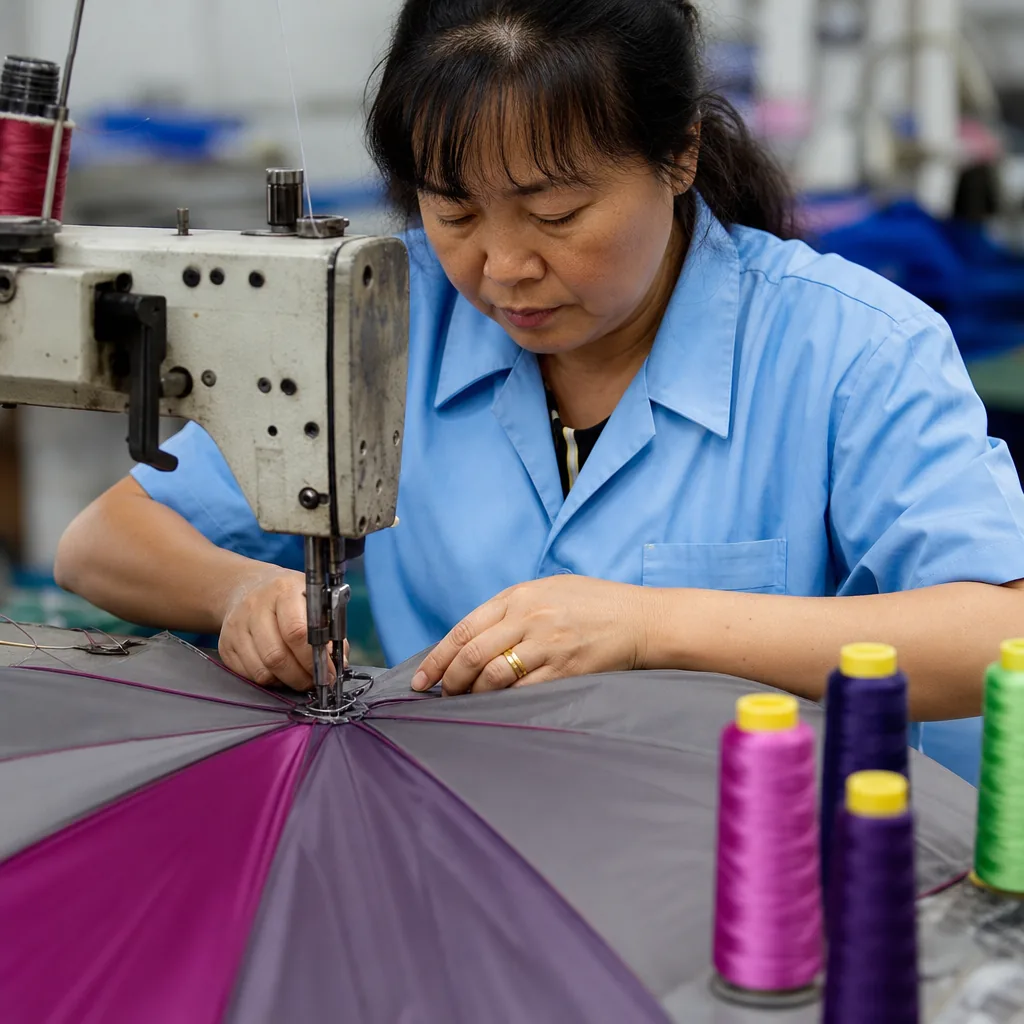
When an OEM umbrella sample looks fine but bulk production shows wrinkles, rib-end tension, or seam leakage, the problem often starts at the cutting table. In umbrella canopy panel cutting, small errors in fabric layup, grain direction, notch position, or panel tolerance multiply across eight or more panels. On our Songxia factory floor, we control these variables before stitching, because accurate fit is cheaper to build into the canopy than to repair after assembly.
Why Panel Cutting Accuracy Drives Canopy Quality
Cutting accuracy decides canopy quality before a single stitch is made. In umbrella canopy panel cutting, a 1 mm error at the panel edge looks harmless on the cutting table, but it multiplies around the frame: 8K means 8 panels, 10K means 10 panels, and 16K means 16 chances for the same mistake to stack into twisted tension. On a 23" auto-open promotional umbrella, we normally hold canopy cutting tolerance within ±1.0 mm for 190T or 210T pongee umbrella panels; tighter is needed for straight-edge logo layouts or contrasting seam tape. If one panel is slightly long and the neighboring panel is short, the canopy does not pull evenly across the ribs. The result is a scalloped edge that waves, rib tips that miss their pocket centerline, and seams that appear to lean after final stretching.
OEM umbrella manufacturing has less room for adjustment than buyers often assume. Once panels are stitched, the seam allowance fixes the geometry; the sewer cannot “pull it straight” without stealing fabric from the next panel. For standard rain umbrellas, seam allowance is usually 6–8 mm, while compact folding umbrellas often need more controlled sewing because the canopy must collapse cleanly between folded ribs. Fiberglass ribs forgive minor tension variation better than steel ribs because they flex, but that does not mean the canopy can be sloppy. On 16K straight umbrellas, each narrow panel has a smaller margin for angular error, so inaccurate cutting can rotate the seam line away from the rib by several millimeters at the edge. That is when you see puckering near the ferrule, uneven tip height, or one rib sitting under the seam instead of centered beneath it.
A disciplined umbrella factory process treats cutting as a measured operation, not a rough fabric job. Fabric relaxation matters: pongee rolls under tension should rest before layer cutting, especially after water-repellent, Teflon, or UV UPF 50+ coating, because coated fabric can shrink or curl differently from untreated cloth. For logo umbrellas, panel direction also matters; if sublimation or heat-transfer artwork crosses seams, even a 2 mm panel mismatch can break a circle, stripe, or brand mark. Our standard practice at ZheBrella is to check the first cut stack against the paper or CAD pattern, then inspect random panels from top, middle, and bottom layers before bulk sewing. That small checkpoint prevents larger AQL 2.5 failures later, where inspectors reject finished umbrellas for poor canopy tension, exposed seam allowance, uneven rib alignment, or a visibly distorted silhouette.
Fabric Layup Rules for 190T and 210T Pongee
Accurate umbrella canopy panel cutting starts before the knife touches fabric. For 190T and 210T pongee, we let rolls relax after unwinding because tightly packed fabric carries tension from dyeing, calendaring, and rolling. If a cutter spreads immediately, the panels can shrink back 2–4 mm after cutting, which is enough to pull a 23" auto-open canopy off-center at the rib tips. In OEM umbrella manufacturing, our standard relaxation window is usually 12–24 hours for bulk-dyed pongee, longer if the fabric arrived compressed or traveled in cold weather. Grain direction is just as important: warp should stay aligned from crown to edge, not rotated for yield savings, because bias-cut panels stretch unevenly when sewn into 8K or 10K frames. A good umbrella factory process marks face side, grain arrow, roll number, and shade lot on every layup ticket so sewing does not mix slightly different batches in one canopy.
Layer height is where many factories quietly lose canopy cutting tolerance. For 190T pongee umbrella panels, we typically keep manual or straight-knife lays around 60–90 layers depending on coating, while CNC oscillating-knife tables may handle more if vacuum hold-down is strong and the marker is nested correctly. With 210T pongee, I prefer a lower lay height, often 40–70 layers, because the denser weave has more drag and creates heat at the blade. Too many layers cause bottom plies to shift, especially on narrow triangular panels where the edge angle is long and slippery. A 1.5 mm error at each side seam becomes visible after eight panels are joined; on a 27" golf umbrella, that can mean puckering near the runner or uneven tension along the tips. For branded retail jobs, ZheBrella normally checks first-cut panels against a hard template before releasing the full lay.
190T and 210T pongee do not cut the same, even when both are sold as “polyester pongee.” The 190T fabric is lighter, easier to compress, and can tolerate slightly lower cutting pressure, but a dull blade may drag threads and leave hairy edges that fray during overlock or French seam sewing. The 210T fabric has a tighter hand, often used with Teflon, PU, or UV UPF 50+ coatings, so the blade needs more consistent pressure and more frequent sharpening or replacement. If the edge becomes polished instead of cleanly sliced, the panels may fuse slightly or show whitening on dark colors. In umbrella canopy panel cutting, we track blade hours by fabric type, not just by shift, because coated 210T wears a knife faster than plain 190T. For OEM orders, that discipline protects fit across manual, auto-open, and auto-open-close umbrellas where panel symmetry controls how smoothly the canopy opens.
Die Cutting, Hand Cutting, and CNC Cutting Options
Steel die cutting is still the fastest and most stable choice when the panel shape is locked and the order is not just a trial run. For straight 23" or 27" stick umbrellas with 8K or 10K frames, a hardened steel die can cut stacked 190T or 210T pongee umbrella panels cleanly with a canopy cutting tolerance around ±1.5 mm if the fabric is relaxed before cutting. The cost is the die itself, usually justified when MOQ reaches 1,000–3,000 pieces per color or when the buyer expects repeat orders. In OEM umbrella manufacturing, I prefer dies for retail programs because every bulk lot follows the same radius, seam allowance, and tip-to-tip arc as the approved sample. The weak point is flexibility: if the client changes from a standard 8-panel canopy to a deeper 16K dome profile, the die may be scrap. That is why die charges should be confirmed only after frame, rib length, runner position, and final canopy drop are approved.
Manual cutting has a place, but it should not be romanticized. A skilled cutter can handle 50–200 sample umbrellas, mixed-color promotional jobs, odd-shaped golf umbrellas, and urgent pre-production samples without waiting for tooling. For a 30" double-canopy vented windproof umbrella, hand cutting also lets the technician adjust top and lower vent panels after checking the actual fiberglass rib curve, not just the CAD file. The tradeoff is consistency. Even with paper markers, chalk lines, and weighted fabric layers, manual umbrella canopy panel cutting usually runs wider variation than die or CNC cutting, especially on slippery 210T pongee with Teflon coating or UV UPF 50+ backing. Small errors show up later as twisted seams, uneven scallops, exposed rib tips, or poor closure on auto-open-close folding umbrellas. For sample development, manual cutting is efficient; for AQL 2.5 bulk inspection, it creates more risk unless the order quantity is low and the factory assigns one cutter to the whole batch.
Automated CNC cutting tables are the best option when accuracy, low tooling commitment, and digital repeatability matter at the same time. A vacuum table with oscillating knife can cut POE, PVC, EVA, polyester pongee, and coated blackout fabrics directly from a CAD marker, so changes to seam allowance, logo placement, or panel curvature do not require a new steel die. This helps mid-size OEM programs around 300–2,000 pieces, multi-SKU retail assortments, and projects where sample-to-bulk repeatability is critical but the design is still moving. In our umbrella factory process at ZheBrella, CNC cutting is also useful for sublimation panels, because print registration must match the canopy template before sewing; a 2–3 mm drift can break a continuous graphic across 8K or 16K seams. CNC is slower than die cutting on large uniform lots, and the table schedule can affect lead time by 1–3 days, but it reduces rework, avoids unnecessary tooling cost, and gives procurement teams cleaner control from approved sample to FOB or DDP shipment.
Tolerance Checks Before Sewing Starts
Tolerance control has to happen before a single panel reaches the sewing line, because a 2 mm cutting error becomes a twisted canopy after eight panels are locked to the ribs. For umbrella canopy panel cutting, we check panel length from top tip to hem edge, arc depth along both side curves, and the V-notch or drill mark position that tells the sewer where the rib seam starts. On a 23 inch 8K straight umbrella, our normal canopy cutting tolerance is ±1.5 mm on panel length, ±1.0 mm on notch position, and no more than 2 mm cumulative arc mismatch when two panels are stacked face to face. For larger 27 inch or 30 inch golf umbrellas, especially 10K or 16K frames, I allow slightly more length variance, usually ±2.0 mm, but I do not relax notch alignment because it controls rib loading and final dome symmetry.
Pongee umbrella panels behave differently from POE, PVC, or EVA, so the inspection method changes with fabric. 190T and 210T pongee can shift under the die or laser table if the lay height is too high, so we limit stacked layers and check the first, middle, and last panels from each bundle. Clear POE and PVC stretch more at the edge, meaning arc checks must be made on a flat table without pulling the material by hand. In our umbrella factory process, the cutting QC operator uses an acrylic template, steel ruler, and marked reference grid to confirm the top point, hem arc, seam allowance, and rib notch before panels are released. Any bundle outside tolerance is quarantined before sewing, not “adjusted” at the machine, because operators cannot fix geometry with thread tension.
Logo reference points must be approved at the same time as the cutting template, especially for OEM umbrella manufacturing where one logo may span two or four panels. Before heat-transfer printing, sublimation, or screen printing, we mark the print centerline from the panel apex and side seam allowance, then confirm distance from the hem, rib seam, and notch. For a single-panel logo on 190T pongee, I normally require ±2 mm placement accuracy; for multi-panel artwork, ±1 mm between adjoining panels is safer or the assembled graphic will look stepped. ZheBrella’s standard practice is to run a pre-sewing layout check using one full canopy set mounted loosely over the production frame, whether it is manual, auto-open, or auto-open-close. That sample confirms that umbrella canopy panel cutting, logo position, seam allowance, and frame fit are correct before mass sewing begins.
How Buyers Should Specify Cutting Requirements
The cleanest OEM umbrella manufacturing projects start with a cutting page in the tech pack, not a vague note saying “same as sample.” Buyers should specify the finished umbrella size, rib count, panel quantity, and exact panel geometry: for example, 23" 8K straight umbrella with eight pongee 190T panels, or 27" 10K golf umbrella with a double-canopy vented top. A proper panel drawing should show base width, center height, side curve, grain direction, logo orientation, and notch positions for crown and tip alignment. For umbrella canopy panel cutting, I want to see seam allowance called out separately from visible finished dimensions, usually 7–10 mm depending on fabric, stitch type, and whether the canopy is single-layer pongee, coated 210T, POE, PVC, or EVA.
Canopy cutting tolerance must be written in measurable numbers, because fabric stretch and stacking height create small errors fast. For pongee umbrella panels, a realistic cutting tolerance is usually ±1.5 mm on straight edges and ±2 mm on curved edges when using die cutting or CNC cutting, while hand-cut sampling may run slightly wider. If the buyer requires print-to-seam registration, mark the logo safe zone at least 15–20 mm away from seam lines unless the artwork is intentionally split across panels. Our standard practice at ZheBrella is to freeze the approved panel pattern after the golden sample, then use that same cutting die or digital cutting file for PP sample and bulk production to avoid silent shape drift.
Inspection requirements should connect directly to fit, not just appearance. Under AQL 2.5, buyers should define checkpoints for panel size, seam allowance, center alignment at the top cap, tip pocket position, logo placement, and canopy tension after assembly on the actual 8K, 10K, or 16K frame. Golden sample approval should confirm the umbrella opens smoothly, panels sit evenly between ribs, and there is no twisting at the runner or crown. PP sample sign-off should then verify bulk fabric behavior, including Teflon coating, UV UPF 50+ coating, or sublimation shrinkage after heat transfer. In the umbrella factory process, cutting errors usually show up later as wrinkled seams, exposed ribs, crooked logos, or poor wind performance, so buyers should approve fit on a complete assembled umbrella, not loose fabric panels alone.
Frequently Asked Questions
What panel cutting tolerance is realistic for bulk umbrella production?
For standard OEM orders, buyers commonly specify about ±1–2 mm on key panel dimensions, depending on fabric and canopy size. Tighter tolerances should be confirmed during sampling and may affect MOQ or cost.
Does panel cutting happen before or after umbrella printing?
Both workflows are possible. All-over sublimation often happens before cutting, while logo screen print or heat transfer may be positioned after cutting to control placement on each panel.
What cutting tolerance is typically acceptable for OEM umbrella canopy panels?
For standard 8-panel umbrellas, factories often control panel cutting within about ±1–2 mm depending on fabric type, canopy size, and sewing allowance. Tighter tolerance is usually required for printed panels, vented canopies, and automatic umbrellas where misalignment is more visible.
How does fabric layup affect canopy fit in bulk umbrella production?
If too many pongee layers are stacked or the fabric is not relaxed before cutting, panels can shift or stretch, causing uneven edges, wrinkles, or seam tension after sewing. Many factories limit layup height and use clamps, templates, or CNC cutting to keep panel dimensions consistent.
What should importers check during production to avoid canopy cutting defects?
Buyers should request in-line checks for panel length, arc shape, seam allowance, print position, and sample canopy assembly before mass sewing. For larger OEM orders, an approved pre-production sample and AQL inspection can help catch fit issues before final packing.
Looking to Launch Your Custom Umbrella Line?
ZheBrella is a Zhejiang-based OEM/ODM umbrella manufacturer with 17 years of export experience. Free design, low MOQ from 100 pieces, windproof construction, full-color print.
Get Free Quote Now »People Also Search For
Related Articles
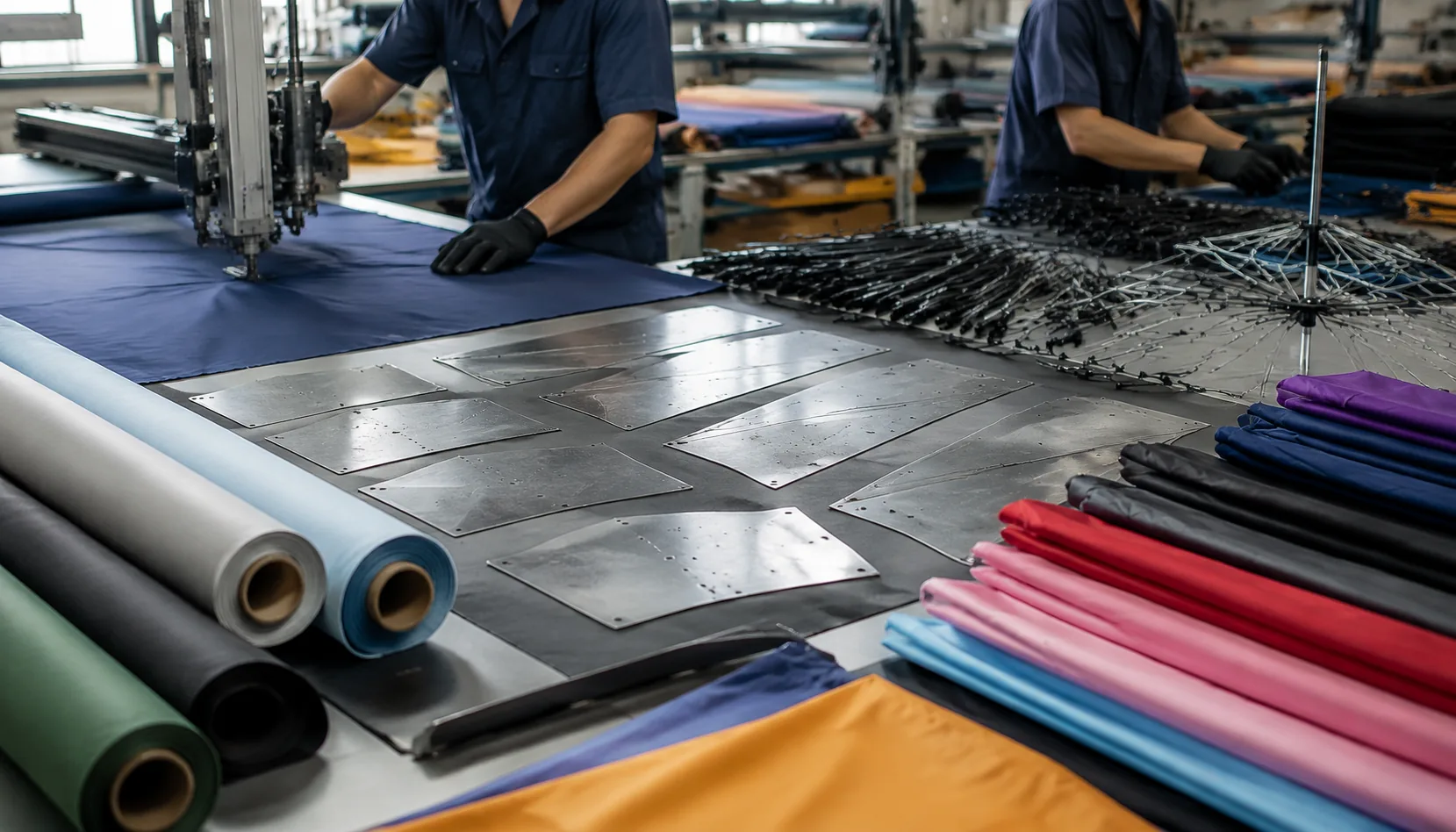
Fabric Spreading and Die Cutting for Umbrella Canopies
Learn how spreading, die cutting, and panel tolerance control improve canopy symmetry, print placement, and fit on bulk ...
Read More »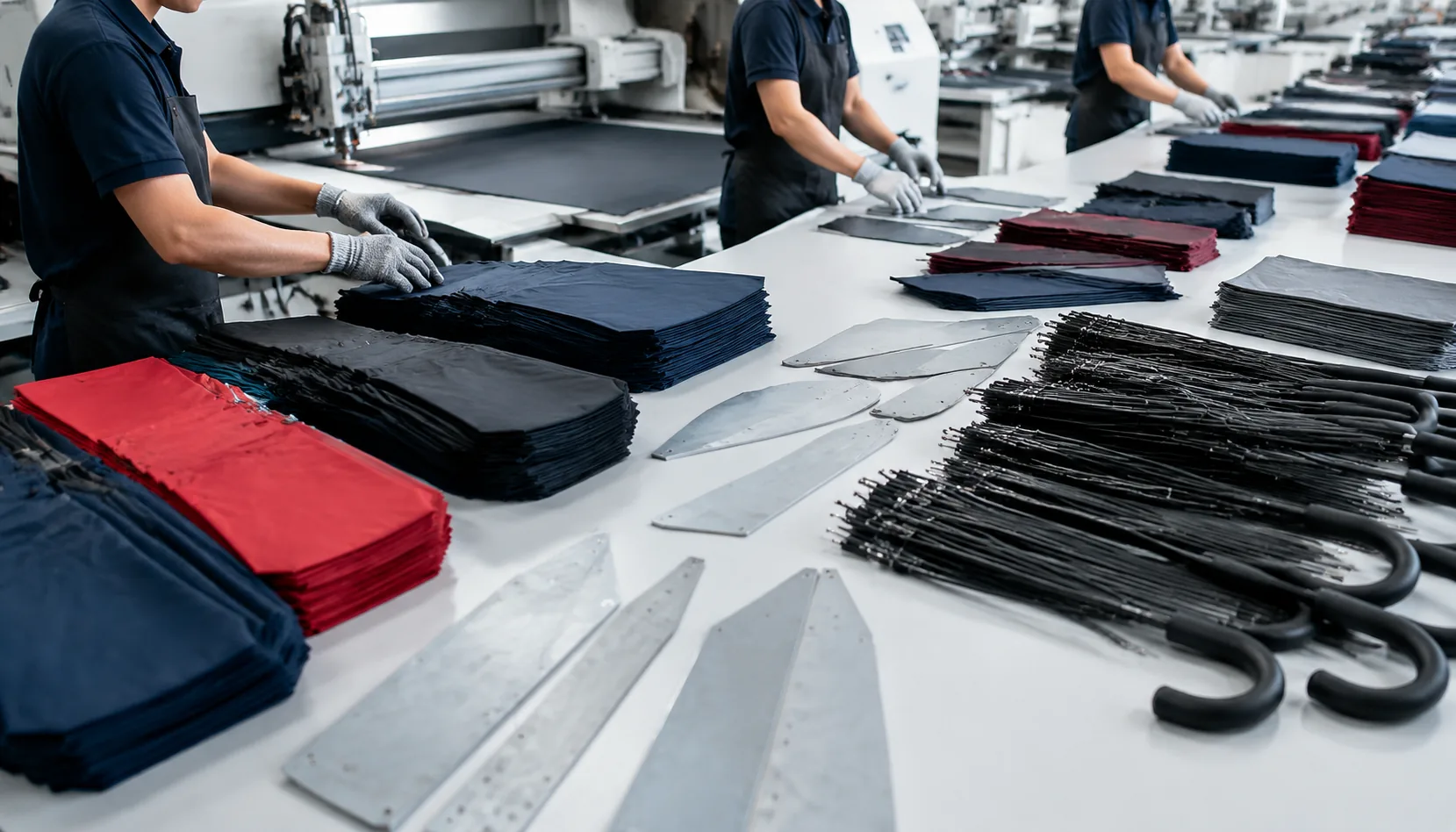
Umbrella Canopy Cutting: Panel Accuracy for Bulk Orders
Understand canopy cutting controls for 190T and 210T pongee, panel matching, shrinkage allowance, and print alignment in...
Read More »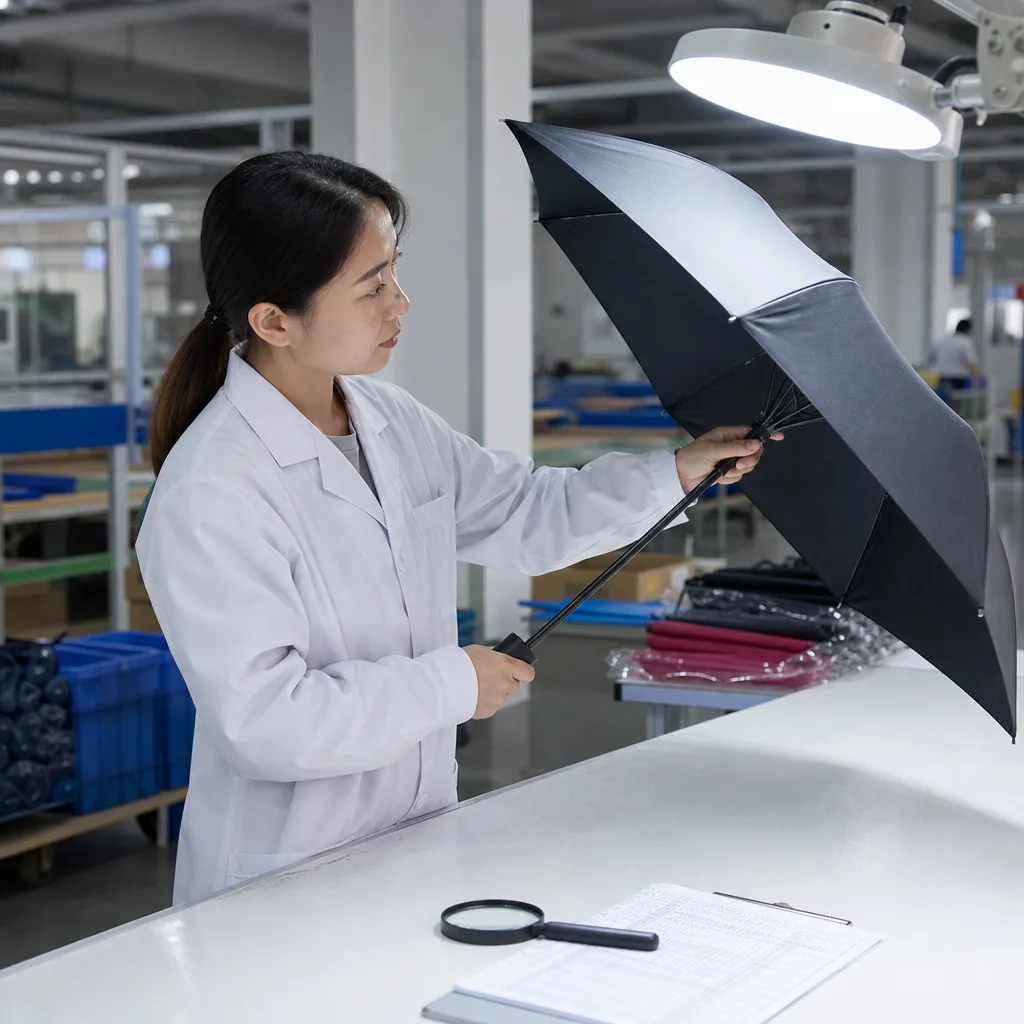
Umbrella Canopy Cutting Process for Accurate Bulk Orders
Understand how fabric spreading, panel cutting, and shade control keep 190T and 210T pongee canopies accurate across bul...
Read More »