Umbrella Canopy Cutting Tolerances for Accurate Panel Fit
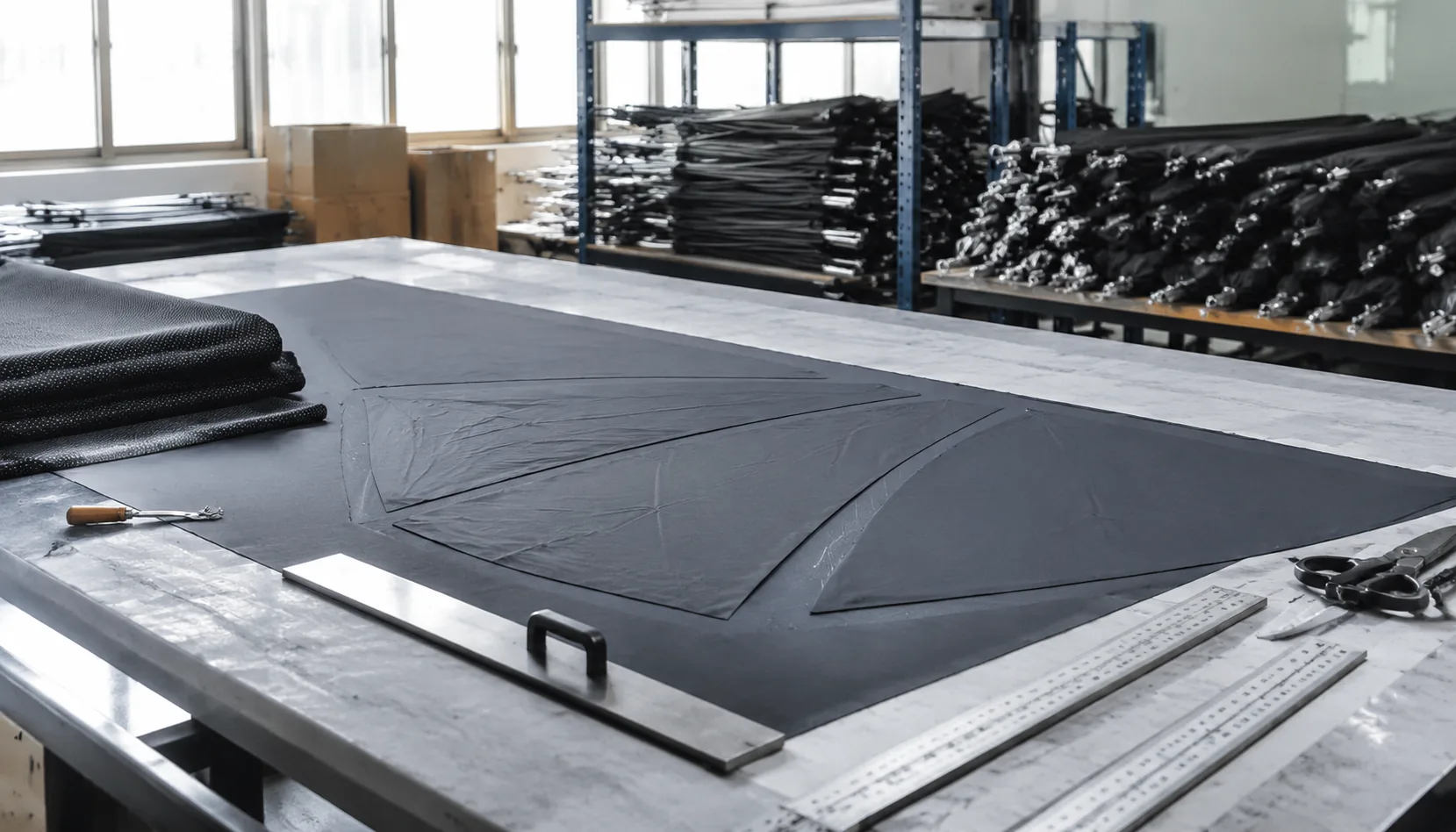
A canopy can look correct on the cutting table and still fail once it reaches stitching, printing, or final frame assembly. For 190T and 210T pongee, umbrella canopy cutting tolerances control whether panels meet cleanly at the crown, hold seam allowance after sewing, and sit on the ribs without wrinkles, leaks, or twist. On our Songxia factory floor, most fit problems trace back to small cutting errors that multiplied across eight panels.
Why Cutting Accuracy Drives Canopy Quality
Cutting accuracy decides whether the canopy sits under clean, even tension or fights the frame from the first opening cycle. In umbrella panel cutting, the issue is not only the outer arc; the rib-edge length, bias direction, notch position, and seam allowance all control how the panel pulls after sewing. On a 23" 8K stick umbrella using pongee 190T or 210T, I normally want panel length variation held around ±1.0 mm on critical rib edges and ±1.5 mm on the outer curve. If one side of a panel is long, the canopy bags between ribs; if it is short, the seam creeps upward and twists the rib tip. That affects appearance, but it also affects function: uneven tension opens needle holes wider, pulls seam tape off center, and makes rain track along the stitch line instead of shedding cleanly toward the tips.
The multiplication effect is where many buyers underestimate umbrella canopy cutting tolerances. An 8K canopy has 8 panels, so a 1.5 mm error per panel can already shift the crown balance or make one rib look high. On 10K umbrellas, especially compact auto-open-close models, the tighter frame geometry gives less forgiveness because each panel angle is narrower and the runner force is higher. With 16K umbrellas, small errors become very visible: a 1 mm rib-edge mismatch repeated around the canopy can create a scalloped lower edge, uneven seam spacing, and ribs that do not sit directly under the stitched lines. For OEM umbrella canopy fit, we check the sewn canopy on the actual frame, not just against a paper pattern, because steel ribs, fiberglass ribs, and mixed fiberglass/steel frames flex differently under the same fabric tension.
Good cutting control starts before the blade touches fabric. Pongee 190T cutting is affected by roll tension, fabric relaxation time, knife sharpness, layer height, and whether the fabric is cut along the correct grain; high stacks save labor but can push lower layers off shape by 2–3 mm if the vacuum table or clamp pressure is poor. For coated fabrics, including Teflon-treated pongee or UPF 50+ silver-coated canopy cloth, heat and pressure can also distort edges during bundling. Our standard practice at ZheBrella is to approve a hard pattern, cut a pilot lot, sew 3–5 full canopies, and mount them on production frames before mass cutting. That step catches the practical problems AQL 2.5 inspection sees later: rotated seams, loose valleys, tight tips, leakage at seam crossings, and inconsistent dome depth that damages umbrella production quality.
Fabric Variables That Affect Cutting
Pongee behaves differently by denier, weave density, and finish, so umbrella canopy cutting tolerances should never be copied blindly from one fabric lot to another. Standard 190T pongee is forgiving enough for promotional 21" and 23" umbrellas, but it can shift under a straight-knife cutter if the lay height is too high or the fabric is rolled with uneven tension. For pongee 190T cutting, our floor limit is usually 40–60 plies per lay for manual or semi-automatic cutting; above that, the bottom layers start showing small panel growth at the bias edge. 210T pongee has a tighter hand and better opacity, but once it carries PU, silver, black-out, or UV coating, it becomes less willing to relax flat. That stiffness helps print registration but can punish umbrella panel cutting if the pattern marker ignores the crown curve, seam allowance, and rib length. A 1.5 mm error per side looks harmless on the table, but across 8K panels it can turn into a tight canopy that pulls the tips inward.
Coating direction matters more than many buyers realize, especially on UPF 50+ and DWR-coated fabrics. The coated face usually has higher friction, so if operators stack alternating face-up and face-down layers, the cutter drag changes through the lay and the panel edge becomes inconsistent. For OEM umbrella canopy fit, we mark face direction on the roll ticket and keep all plies aligned the same way before cutting. DWR fabric also needs clean-table handling because oil, chalk dust, or damp hands can create local surface tension changes that show up later as uneven water beading after AQL 2.5 inspection. UPF 50+ silver-coated pongee is worse: if it is folded sharply before cutting, micro-creases may not recover, and those creases can pull a sewn seam slightly off line. Our standard practice at ZheBrella is to let coated rolls rest 12–24 hours after opening, especially in winter when container-packed fabric arrives compressed and cold.
Fabric relaxation and shrinkage are the hidden causes behind many canopy fit disputes. Freshly unrolled pongee often carries memory from winding tension; if it is cut immediately, panels can contract after sewing and make the umbrella feel short on the ribs even when the steel or fiberglass frame is correct. We normally test shrinkage with a small heat-and-steam check before bulk cutting, particularly for sublimation or heat-transfer orders where later temperature exposure can move the fabric another 1–2%. Bias distortion is another issue: umbrella panels are triangular, so one edge often sits closer to the bias than the others, and that edge can stretch during spreading, cutting, bundling, or sewing. Good umbrella production quality means controlling the whole chain, not only the cutter accuracy. For tight retail work, I prefer a narrower lay, balanced marker direction, fabric clamps at the selvage, and a first-article canopy check mounted on the actual 8K, 10K, or 16K frame before releasing bulk cutting.
Panel Templates, Tolerances, and Seam Allowance
The template is the contract between the frame and the sewing line, so buyers should define the geometry in millimeters, not just approve a canopy diameter. For each umbrella panel cutting file, specify the panel arc along the outer edge, rib-side length from center notch to tip, seam allowance on both sides, center point location, and the acceptable deviation after cutting. For 190T or 210T pongee, our normal working tolerance is ±1.0 mm on rib-side length and ±1.5 mm on outer arc for straight umbrellas; tighter than that sounds good on paper but creates unnecessary rejection unless the fabric is stabilized and cut in smaller stacks. Seam allowance is usually 7-10 mm depending on stitch type, but it must be fixed before printing artwork, because a logo placed too close to the stitch line will disappear into the seam or distort after tensioning.
Straight, folding, golf, and double-canopy umbrellas need separate templates because their frames load the fabric differently. A 23" straight umbrella with 8K steel ribs can tolerate slightly more canopy relaxation than a 21" auto-open-close folding umbrella, where short ribs and multi-section runners expose every small mismatch. Golf umbrellas, especially 27" or 30" models with fiberglass ribs and 8K or 16K layouts, need longer rib-side control because one oversized panel creates scalloping at the edge. Double-canopy vented windproof styles require two template sets: the lower canopy must hold the main frame shape, while the upper vent panel needs controlled overlap, usually 25-40 mm, so wind can escape without showing gaps in rain. These are not interchangeable patterns, even if the finished diameters look similar in a catalog.
For accurate OEM umbrella canopy fit, I recommend buyers put the tolerance table directly into the tech pack: panel arc ±1.5 mm, rib-side length ±1.0 mm, center point offset ±1.0 mm, seam allowance ±0.5 mm, and notch position ±0.8 mm unless the design requires otherwise. Pongee 190T cutting should also state whether panels are knife-cut, die-cut, or CNC-cut, because stack height changes accuracy; we normally keep pongee stacks around 40-60 layers for stable edges, while slippery UV-coated or Teflon-treated fabric may need fewer. Under AQL 2.5 inspection, canopy defects such as twisted tips, uneven scallops, exposed seams, and off-center top caps are often traced back to poor umbrella canopy cutting tolerances rather than sewing skill. Good umbrella production quality starts before the first stitch.
Cutting Methods and In-Process Checks
Cutting method should be chosen by order size and fit risk, not by habit. Hand cutting is still practical for sample runs, mixed-color event orders, and MOQ around 100–300 pcs per SKU, but repeatability depends heavily on the cutter and the paper pattern condition. For a 23 inch 8K straight umbrella in 190T pongee, I normally allow hand cutting only when the artwork is simple and the canopy does not need stripe matching. Die cutting costs more upfront because the steel rule die must be made and maintained, but it is the fastest and most consistent option once the style is stable, usually from 1,000 pcs upward. CNC knife cutting sits between them: slower than die cutting in bulk, but excellent for OEM umbrella canopy fit when the buyer has many sizes, 21 inch, 23 inch, 27 inch, and 30 inch, or frequent pattern revisions. Good umbrella canopy cutting tolerances start with matching the cutting method to the order profile.
Marker layout is where many canopy problems are created before the blade touches fabric. Panels must be nested with grain direction controlled, especially on pongee 190T cutting, because bias stretch can make one side of the umbrella panel grow during sewing and create a twisted canopy after assembly. For solid-color 190T/210T pongee, we usually keep fabric layers lower for hand cutting, about 30–50 plies depending on fabric slippage, while die cutting can run higher if the press pressure is stable and the table is flat. POE, PVC, and EVA clear canopy materials need much smaller stacks because heat, static, and compression marks can distort edges. Printed panels need extra attention: screen print and heat-transfer logos should sit inside the safe area after seam allowance, while sublimation layouts must account for panel shrinkage before bulk cutting. A first-cut approval should check panel length, arc, notch position, seam allowance, and print orientation before the cutting room releases mass production.
In-process checks must be done at the cutting table, not after 5,000 bad panels reach sewing. Our standard practice at ZheBrella is to measure the first full set from every fabric roll and then pull random panels during production, typically 3–5 panels per bundle or per cutting layer change. For umbrella panel cutting, the key dimensions are center height, lower arc width, two side seam lengths, notch depth, and tip position; a 1–2 mm error can be acceptable on some promotional manual-open umbrellas, but windproof double-canopy 10K or 16K frames need tighter control because vent alignment and rib-tip pocket position expose every mistake. Records should identify roll number, cutter, pattern code, ply count, and inspection result. This is basic umbrella production quality discipline: if the cutting room cannot prove stable dimensions, AQL 2.5 final inspection will only find the failure after sewing, frame assembly, and packing costs are already wasted.
How Buyers Should Audit Canopy Fit
The fastest audit for canopy fit is done after sewing and again after mounting on the actual frame, not on a flat table. I tell buyers to open 5–10 PP samples and look across the crown under side light: small fabric tension lines are normal on 190T pongee, but diagonal wrinkles from top notch to rib tip usually mean the umbrella panel cutting is off-grain or one gore is 2–4 mm short. Tip alignment should be checked with the umbrella fully open and locked; every panel seam should land within about ±3 mm of the rib centerline on a 23" or 27" frame. If the seam walks away from the rib, the umbrella canopy cutting tolerances are too loose or the sewing allowance was not controlled. For OEM umbrella canopy fit, approve the canopy only on the confirmed production frame, because a 10K fiberglass frame and an 8K steel frame stretch the same fabric differently.
Rib pocket position is where many buyers miss defects because the umbrella still looks acceptable in a quick photo. Each pocket should hold the rib end without forcing the fabric, and the pocket mouth should not twist when the runner is locked. On golf umbrellas, especially 30" double-canopy vented models, I allow a little movement for wind release, but the top and lower canopy layers must still line up at the tips. For pongee 190T cutting, panels that are too deep create sagging between ribs; panels that are too shallow pull the ferrule area tight and can tear after repeated auto-open cycles. A practical test is to spray the open umbrella for 3–5 minutes and watch for water pooling. Pooling near one gore means poor panel balance, while pooling around the crown often points to wrong notch depth or uneven top-cap sewing pressure.
Final acceptance should be tied to the signed PP sample, not a vague statement like “same as approved quality.” In our standard practice at ZheBrella, the PP sample records canopy fabric lot, coating, panel template version, seam allowance, frame size, rib count, and opening mechanism, then bulk inspection uses those details as the baseline. For umbrella production quality, set AQL 2.5 for major defects such as severe wrinkles, off-center seams, loose rib pockets, visible water pooling, broken stitches, or tip misalignment beyond the approved limit. Buyers should also build a lead time buffer of 3–5 days before pre-shipment inspection, because canopy re-cutting is possible early but expensive after final assembly and packing. If the inspection happens only at carton stage, the factory can replace a few failed units, but it cannot correct systematic umbrella canopy cutting tolerances without delaying shipment.
Frequently Asked Questions
What cutting tolerance is realistic for OEM umbrella panels?
Many factories target about ±1–2 mm on key panel dimensions, depending on fabric, cutting method, and umbrella size. Tight tolerances should be confirmed during sampling before mass production.
Does 210T pongee need different cutting control than 190T pongee?
Yes. 210T pongee is denser and may handle coating, folding, and relaxation differently than 190T. Buyers should approve panel fit on the actual production fabric, not only on substitute sampling cloth.
What cutting tolerance is usually acceptable for 190T or 210T pongee umbrella panels?
For OEM production, a typical cutting tolerance is about ±1 mm to ±2 mm per panel edge, depending on canopy size and fabric stability. Printed or logo-aligned panels usually require tighter control, often around ±1 mm, to avoid visible misalignment after sewing.
How much seam allowance should be included when cutting umbrella canopy panels?
Most standard umbrella panels use a seam allowance of about 6 mm to 8 mm. The exact allowance should match the sewing method, stitch density, and frame size so the finished canopy fits tightly without pulling or sagging.
How can buyers verify canopy cutting accuracy before mass production?
Ask the factory for pre-production cut panels, a finished canopy sample, and measurement photos against the approved pattern. For bulk orders, cutting tables should be checked by lot, and first-article inspection should confirm panel length, seam allowance, print position, and rib-end fit before full sewing starts.
Looking to Launch Your Custom Umbrella Line?
ZheBrella is a Zhejiang-based OEM/ODM umbrella manufacturer with 17 years of export experience. Free design, low MOQ from 100 pieces, windproof construction, full-color print.
Get Free Quote Now »People Also Search For
Related Articles
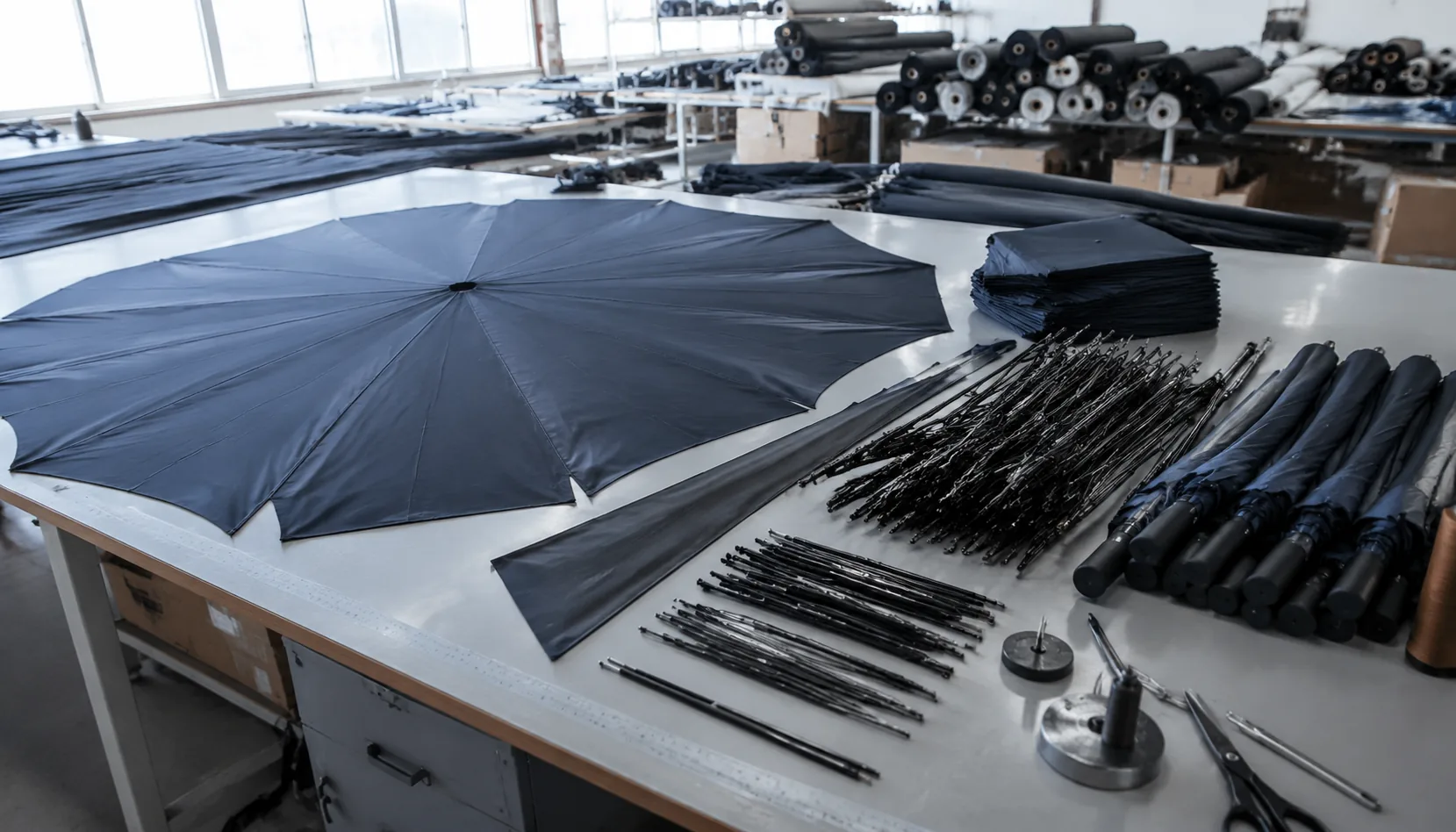
Umbrella Canopy Cutting Tolerances for Consistent Fit
Control panel cutting, fabric relaxation, and marker layout so 190T or 210T pongee canopies fit frames cleanly with fewe...
Read More »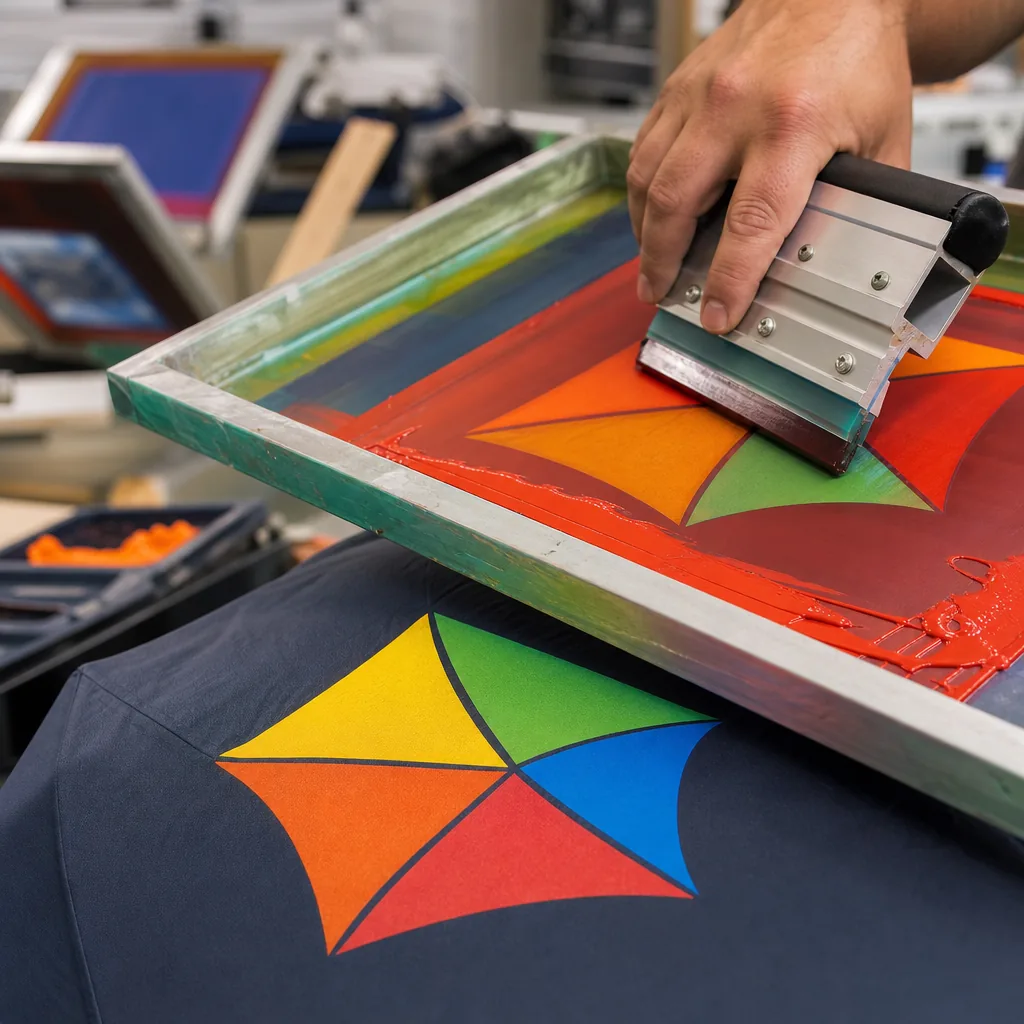
Panel Cutting Tolerances for Umbrella Production Lines
See how CNC patterns, fabric relaxation, +/-2 mm panel control, and shade-lot batching improve 190T/210T pongee canopy f...
Read More »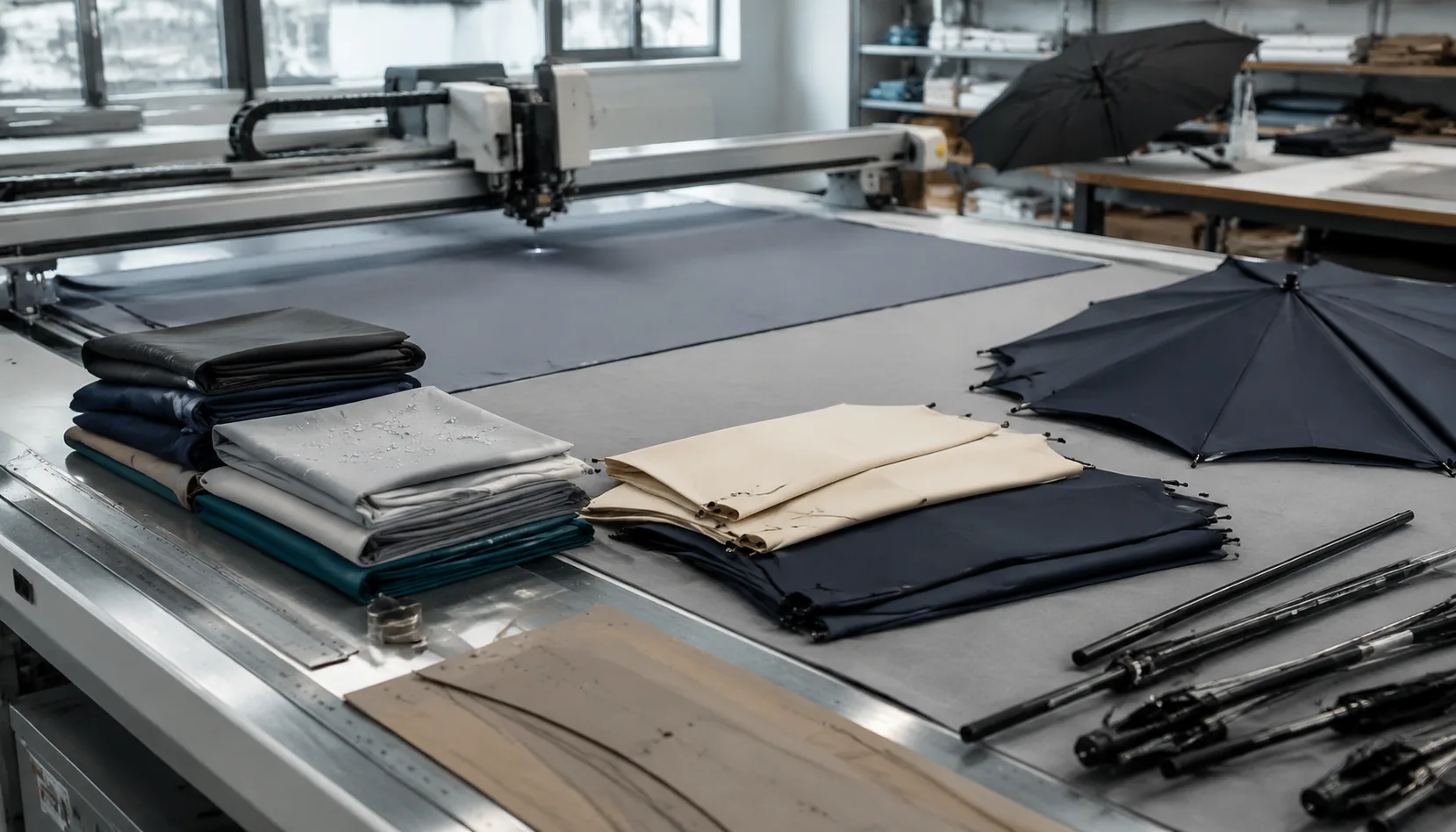
Canopy Panel Cutting Tolerances for Custom Umbrellas
Learn how panel cutting tolerances, fabric direction, and batch control improve canopy fit, seam alignment, and print pl...
Read More »