Umbrella Canopy Cutting Tolerances for OEM Panel Fit
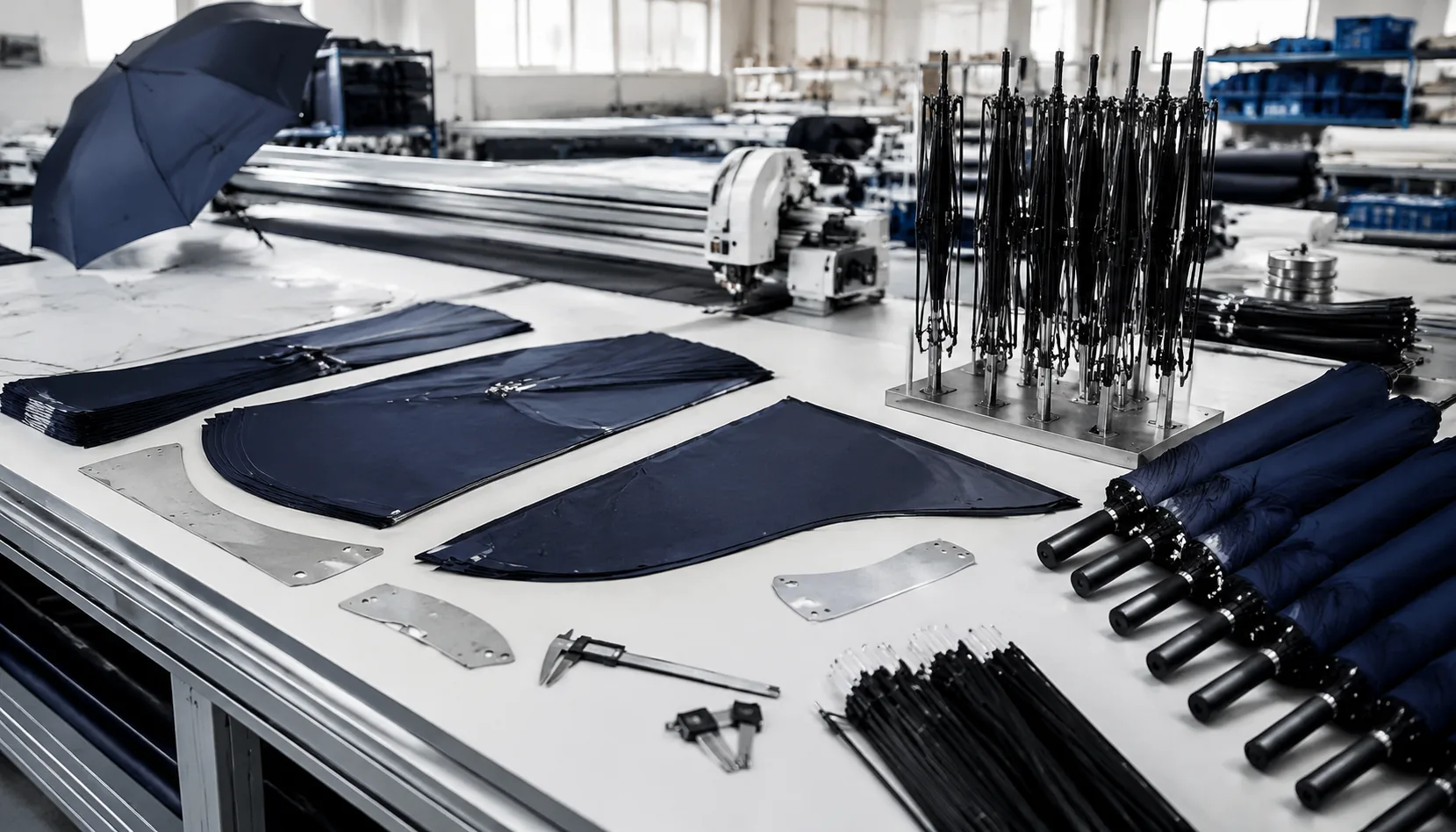
When an OEM umbrella order starts twisting at the tip or pulling open at the seams, the problem often began before sewing—at the cutting table. In our Songxia workshop, umbrella canopy cutting tolerances are checked against die condition, fabric grain, and panel matching because 190T and 210T pongee will expose even small errors after tensioning on the frame. Getting this right early prevents uneven stretch, seam leakage, and costly rework in bulk production.
Why Cutting Accuracy Controls Canopy Shape
Cutting accuracy decides canopy shape before a sewing operator ever touches the panel. On an 8K umbrella, eight pongee umbrella panels must share the load evenly from top notch to tip pocket; if one panel is 2 mm wider on the bias edge and the opposite panel is 2 mm narrow, the finished canopy can rotate slightly after mounting. That shows up as twisted ribs, off-center logo placement, and one or two tips sitting higher than the rest. On 16K frames, the problem is less dramatic per panel but easier to accumulate because there are twice as many seams. In OEM canopy production, we normally hold umbrella canopy cutting tolerances tighter than the buyer’s drawing suggests because 190T 210T pongee stretches differently under sewing tension, especially after water-repellent or UV coating.
The biggest mistake is judging cut panels flat on the table and assuming they will behave the same on a curved frame. Umbrella panel alignment depends on chord length, seam allowance, grain direction, and the stretch along the bias. A 23-inch 8K canopy using 190T pongee may tolerate a small visual mismatch, but a 27-inch golf umbrella or a 30-inch double-canopy vented model will expose every cutting error once the ribs push outward. If the crown edge is short, the top cap pulls the fabric into a cone and creates tight seams near the runner. If the outer arc is long, the skirt sags between tips, especially on steel ribs with less recovery than fiberglass. Our standard practice at ZheBrella is to compare cut-panel stacks against a hard template every 50 to 100 layers, not only against the first sample.
Good umbrella canopy cutting tolerances also protect the sewing line from “fixing” a cutting-room defect with uneven seam take-up. When operators compensate by eating 1 mm extra on one side, the canopy may look acceptable before mounting, but the rib pockets no longer land on the correct centerlines. After assembly, that creates tight tips, loose tips, or a scalloped edge that fails visual inspection under AQL 2.5. For printed OEM orders, the risk is higher because heat-transfer or screen-printed logos must stay centered across seams and panels; a small cut deviation becomes obvious when a brand mark crosses two ribs. For repeat retail programs, I prefer approving a mounted frame sample, measuring panel width after sewing, and locking the cutting die or CAD plotter settings before bulk cutting. That prevents shape drift across 3,000 or 30,000 pieces.
Fabric Behavior: 190T vs 210T Pongee
190T pongee cuts faster and stacks higher, but it moves more under the knife, especially when the roll has been stored loosely or the humidity in the cutting room is above 70%. In OEM canopy production, I normally treat 190T as the “forgiving but unstable” fabric: it stretches enough to hide small sewing variation, yet that same softness can create 1.5–2.5 mm drift at the panel tip if the stack is too tall. For standard 23 inch 8K umbrellas, we keep stack height around 80–120 layers for 190T and reduce it further for printed panels that need tight umbrella panel alignment. Shrinkage allowance is usually modest, but DWR finishing and heat-transfer printing can pull the fabric unevenly, so umbrella canopy cutting tolerances should be checked after coating, not only on greige or dyed cloth.
210T pongee has a denser hand, cleaner edge, and better dimensional stability during cutting, which is why retail brands often choose it for mid- to high-grade auto-open and auto-open-close umbrellas. The tighter weave helps pongee umbrella panels hold the same arc from notch to notch, so rib pocket sewing and tip matching are more predictable on 8K and 10K frames. On a good spread, 210T can stay within about ±1 mm on panel width and ±1.5 mm on panel length, while 190T often needs a slightly wider internal allowance unless the cutter, marker paper, and fabric relaxation time are tightly controlled. The tradeoff is hand feel: 210T feels smoother and heavier, but if the canopy is small, such as 21 inch compact, too much coating can make the umbrella feel stiff when folding.
Coating sensitivity is where many buyers underestimate the difference between 190T 210T pongee. A light DWR finish barely changes cutting behavior, but silver UV, black glue, or UPF 50+ coatings add surface drag and can cause layers to creep if the coated side faces the blade inconsistently. For coated 190T, we relax fabric at least 12–24 hours before spreading and avoid excessive vacuum pressure that distorts the selvage edge. For coated 210T, the main risk is micro-cracking or coating marks when the blade is dull or the stack is compressed too hard. Our standard practice at ZheBrella is to approve cutting tolerance after a pilot run of sewn panels, because the real pass/fail is not the flat panel measurement; it is whether the canopy lands evenly on the ribs without twisted seams, short tips, or puckering at the top notch.
Pattern Making and Die-Cutting Controls
Good panel fit starts in CAD, not at the sewing machine. For OEM canopy production, we build each gore pattern from the finished umbrella diameter, rib length, arc depth, crown height, and seam construction, then add seam allowance as a controlled value instead of letting the cutting room “adjust by feel.” A common allowance is 6–8 mm for standard lockstitch seams on pongee umbrella panels, with 10–12 mm used where reinforcement patches or binding create extra bulk. The CAD file should show finished cut line, stitch line, notch marks, top-cap hole position, and runner clearance, because a 23" 8K umbrella and a 27" golf frame do not tolerate the same panel geometry. For 190T 210T pongee, I prefer buyer tech packs to define umbrella canopy cutting tolerances as ±1.0 mm on straight seam edges, ±1.5 mm on curved outside edges, and ±0.5 mm for notch placement, especially when logos must center across two adjacent panels.
Die-cutting is faster than hand cutting, but only if the die is controlled like tooling, not treated as a consumable blade. Steel-rule dies should be checked against the approved CAD plot before mass cutting, then rechecked after long runs because foam backing compression and blade wear can open the edge by 0.5–1.0 mm without operators noticing. For small promotional orders below 1,000 pieces, plotter cutting may hold better consistency than a rushed die, but for repeat OEM canopy production over 5,000 pieces, a hardened die with registration pins gives more stable umbrella panel alignment. Grain direction matters: pongee has less stretch along the warp than on the bias, so every gore should be nested in the same direction unless the tech pack allows mirrored cutting. Our standard practice at ZheBrella is to mark grain arrows, notch positions, and panel sequence directly on the cutting marker, then keep the first approved cut set as the golden sample for line setup.
Batch numbering is the boring control that prevents expensive canopy mismatches. Each cutting bundle should carry fabric roll number, color lot, coating side, cutting date, pattern revision, and panel count, because 190T 210T pongee from two dye lots can look identical under factory lighting and still fail shade review under retail inspection lamps. For vented double-canopy umbrellas, I recommend numbering top and lower canopy panels separately and locking them to the same frame size, such as 23" 8K or 30" 16K, because mixing revisions can create twisted vents or puckered outer seams. Buyers should include measurable acceptance points in the tech pack: panel length from crown to hem ±1.5 mm, seam edge length difference between paired panels ≤2.0 mm, notch-to-notch distance ±1.0 mm, crown hole position ±0.8 mm, and finished canopy circumference variance within ±5 mm. These umbrella canopy cutting tolerances are realistic for factory production and strict enough to protect sewing efficiency, print registration, and final AQL 2.5 inspection results.
Pre-Sewing QC for Panel Sets
Pre-sewing QC is where panel fit is either protected or lost, so we check every cut bundle before it reaches the sewing line. For an 8K umbrella, one set must contain 8 panels; 10K needs 10, 16K needs 16, with no mixing between sizes such as 21", 23", 27", or 30" canopies. Our standard practice at ZheBrella is to tie panels by order, size, fabric lot, print version, and cutting table number, then sample-measure the stack against the approved paper pattern or CAD marker. For pongee umbrella panels, especially 190T 210T pongee, we normally hold umbrella canopy cutting tolerances within about ±1.5 mm on straight edges and ±2 mm on curved hems, because a small cutting drift becomes visible after eight seams are joined under rib tension.
Color shade grouping must happen before sewing, not after final assembly, because mixed dye lots can look acceptable in loose fabric but obvious once the canopy is stretched in daylight. We group panels under D65 light or a controlled light box and keep one canopy set from the same fabric roll whenever possible. For coated fabrics such as Teflon-treated 210T pongee or UPF 50+ silver-coated material, the face and back side must also be confirmed, since one reversed panel creates a dull triangle that cannot be repaired after stitching. In OEM canopy production, I also require operators to check grain direction and coating direction, because inconsistent orientation can affect water shedding and panel tension, especially on double-canopy vented windproof umbrellas rated for 50+ mph wind testing.
Print placement checks are just as important as dimensions when the order uses screen printing, heat transfer, or sublimation. Before sewing starts, QC lays one full panel set in canopy order and checks logo direction, center distance from the panel tip, bleed allowance, and whether the artwork crosses seam allowances correctly. For umbrella panel alignment, a 2 mm print shift may be acceptable on a plain repeat pattern, but not on a brand logo that must sit centered between ribs. Defect screening at this stage removes panels with needle holes from rework, oil marks, coating scratches, color streaks, slubs, frayed edges, or wrong notch positions. Any rejected panel must be replaced from the same shade group; otherwise the line supervisor risks passing sewing inspection but failing AQL 2.5 final inspection for visual mismatch or distorted canopy shape.
Sampling, MOQ, and Bulk Production Risks
A PP sample is only useful if it is cut from the same roll type and the same tooling planned for bulk. I do not approve PP samples made from substitute cloth or hand-trimmed panels, because 190T 210T pongee behaves differently after spreading, clamping, die pressure, sewing tension, and water-repellent finishing. Pongee umbrella panels in 190T can relax more after cutting, while 210T often holds the edge cleaner but shows small mismatch faster at the tip pocket. For OEM canopy production, the cutting die must match the frame pattern: 21", 23", 27", or 30" arc, 8K/10K/16K rib layout, seam allowance, notch position, and runner height. If the PP sample is laser-cut but bulk will be die-cut in 80–120 layer stacks, the sample proves artwork only, not umbrella panel alignment. Our standard practice at ZheBrella is to lock the PP sample with production fabric, production cutting method, actual rib frame, and the same sewing folder before any bulk fabric is released.
MOQ changes the risk profile because one wrong cutting stack can damage thousands of canopies before anyone sees the finished umbrella. For a 3,000-piece MOQ, a small 2 mm panel-width error may be caught during sewing; for a 30,000-piece retail order, the same error can become a container-level problem with crooked tips, twisted valleys, tight stretch on fiberglass ribs, or loose fabric between steel ribs. Umbrella canopy cutting tolerances should be confirmed through a first-article check before full-line cutting: one complete cutting stack, sewn into finished umbrellas, mounted on the actual manual, auto-open, or auto-open-close frame, then opened and closed at least 20 cycles. I want inspectors checking center cap pull, rib-end pocket fit, seam balance, logo position across adjacent panels, and whether the canopy sits evenly without one panel carrying more tension. This is especially important for double-canopy vented windproof models, where the top and bottom layers must breathe without fighting each other.
Bulk approval should not rely on flat measurements alone; the canopy must be inspected as a stressed 3D assembly. A reasonable control point is panel length tolerance within ±2 mm, seam allowance within ±1 mm, notch position within ±1.5 mm, and printed logo drift within ±3 mm unless the design has tight panel-to-panel registration. For sublimation or heat-transfer artwork, fabric shrinkage after heat can move the edge, so the first article should be cut, printed, sewn, and mounted in the actual sequence. For screen printing, the issue is usually registration against seam lines and whether heavy ink stiffens one side of the canopy. Large orders should hold bulk cutting until the first 20–50 finished umbrellas pass internal inspection, then continue with in-line audits and final AQL 2.5 inspection. The real goal of umbrella canopy cutting tolerances is not a pretty measurement sheet; it is a canopy that opens smoothly, drains correctly, and does not make the frame look defective.
Frequently Asked Questions
What canopy cutting tolerance is reasonable for OEM umbrellas?
Many factories target about ±2 mm on standard panels, but printed, double-canopy, or 16K designs may need tighter control confirmed during PP sampling.
Does sublimation or screen printing change cutting requirements?
Yes. Printed panels need registration marks and shade grouping so logos align at seams and do not shift after sewing or canopy mounting.
What cutting tolerance is acceptable for pongee umbrella panels before sewing?
For 190T and 210T pongee, most OEM factories control panel cutting within about ±1–2 mm depending on canopy size and rib count. Tighter tolerance is usually required for 8-rib automatic umbrellas because small panel variation can create twist or uneven seam tension.
Why does fabric grain direction matter in umbrella canopy production?
If pongee panels are cut against inconsistent grain direction, the canopy can stretch unevenly during sewing and opening tests. This may cause panel twisting, puckered seams, poor alignment at rib tips, or water pooling near seams.
Can buyers request panel matching checks before bulk umbrella sewing?
Yes. For OEM orders, buyers can request pre-sewing panel matching, die-cut sample approval, and random cut-piece inspection before mass assembly. This is especially useful for printed panels, contrast panels, or orders above 3,000–5,000 pieces.
Looking to Launch Your Custom Umbrella Line?
ZheBrella is a Zhejiang-based OEM/ODM umbrella manufacturer with 17 years of export experience. Free design, low MOQ from 100 pieces, windproof construction, full-color print.
Get Free Quote Now »People Also Search For
Related Articles
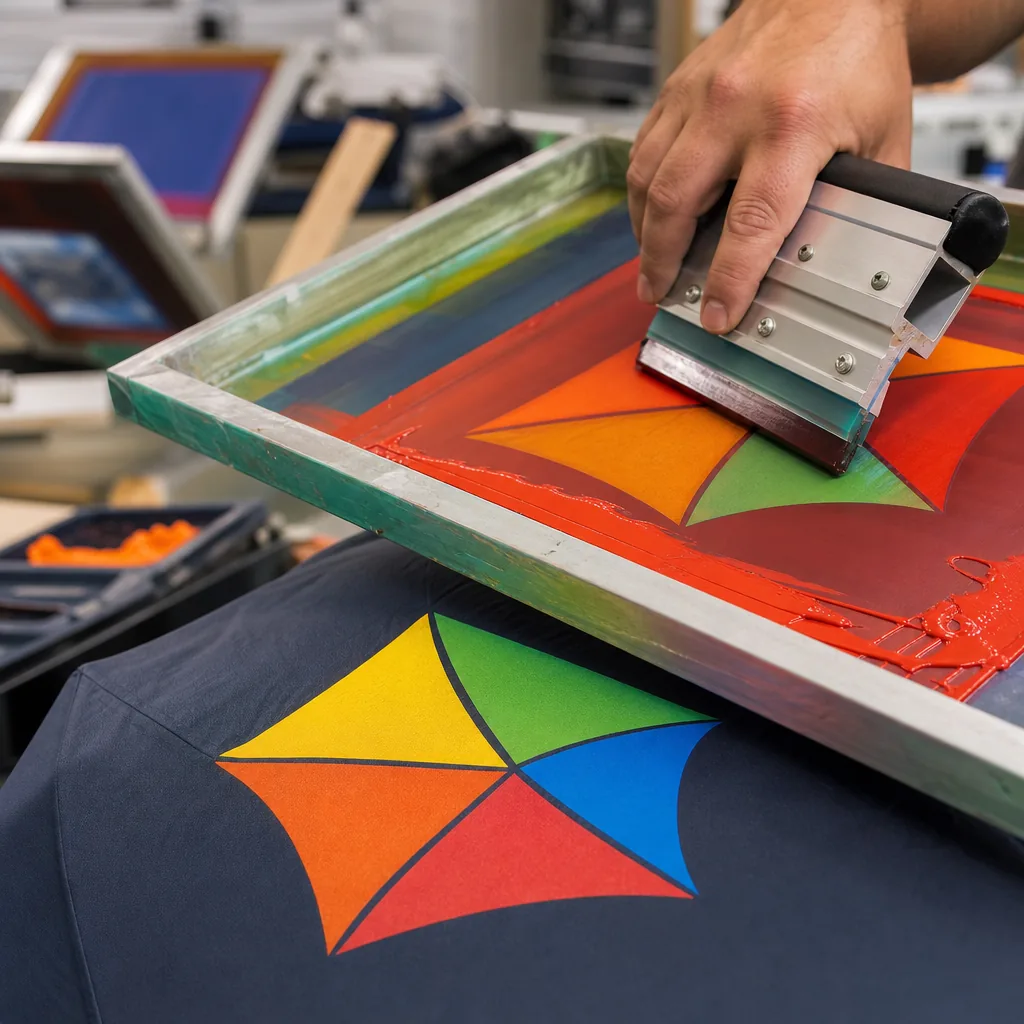
Panel Cutting Tolerances for Umbrella Production Lines
See how CNC patterns, fabric relaxation, +/-2 mm panel control, and shade-lot batching improve 190T/210T pongee canopy f...
Read More »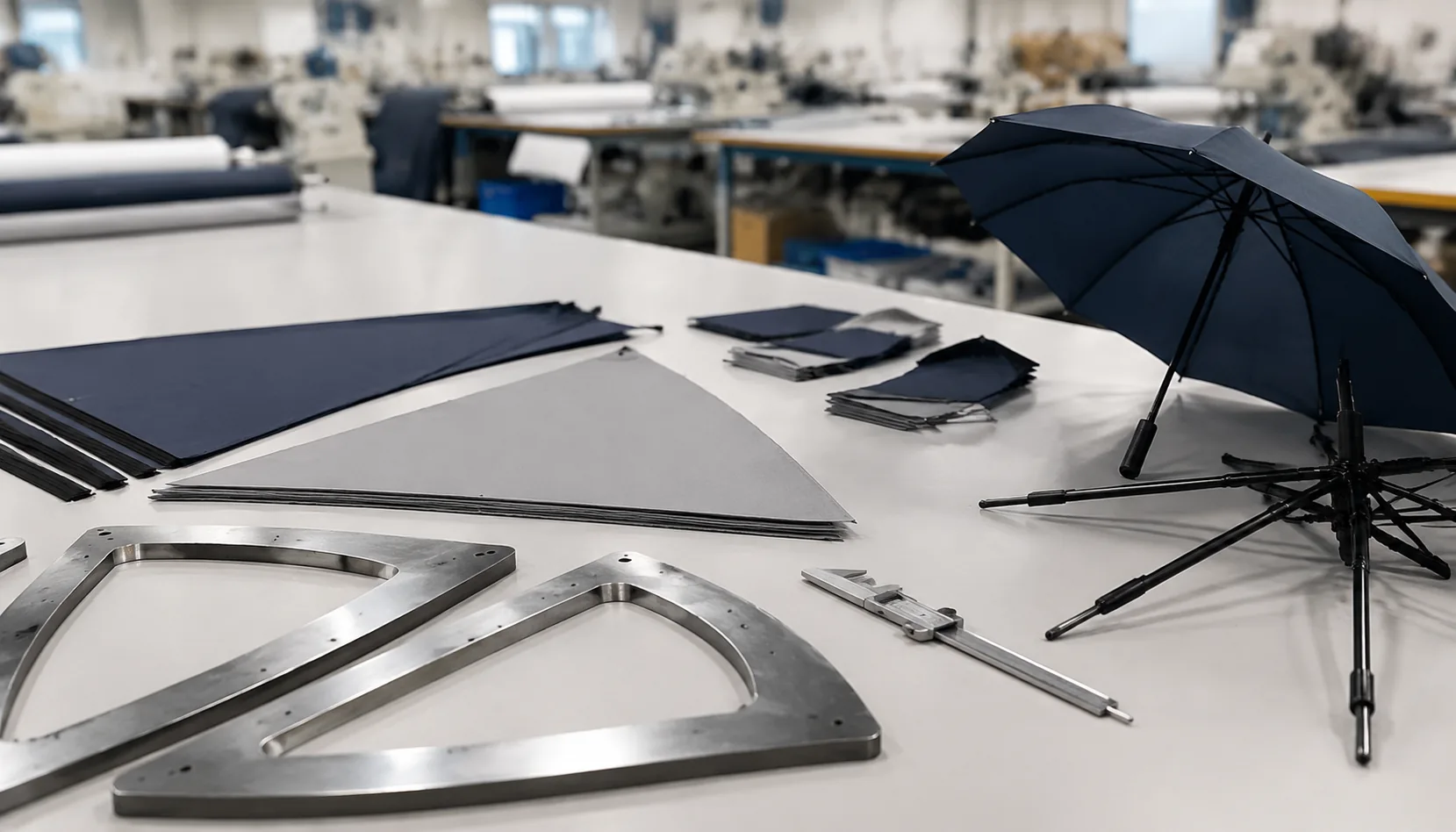
Umbrella Panel Cutting Tolerances for Consistent Canopy Fit
Learn how panel cutting tolerances, fabric lot control, and sewing allowances keep OEM umbrella canopies tight, aligned,...
Read More »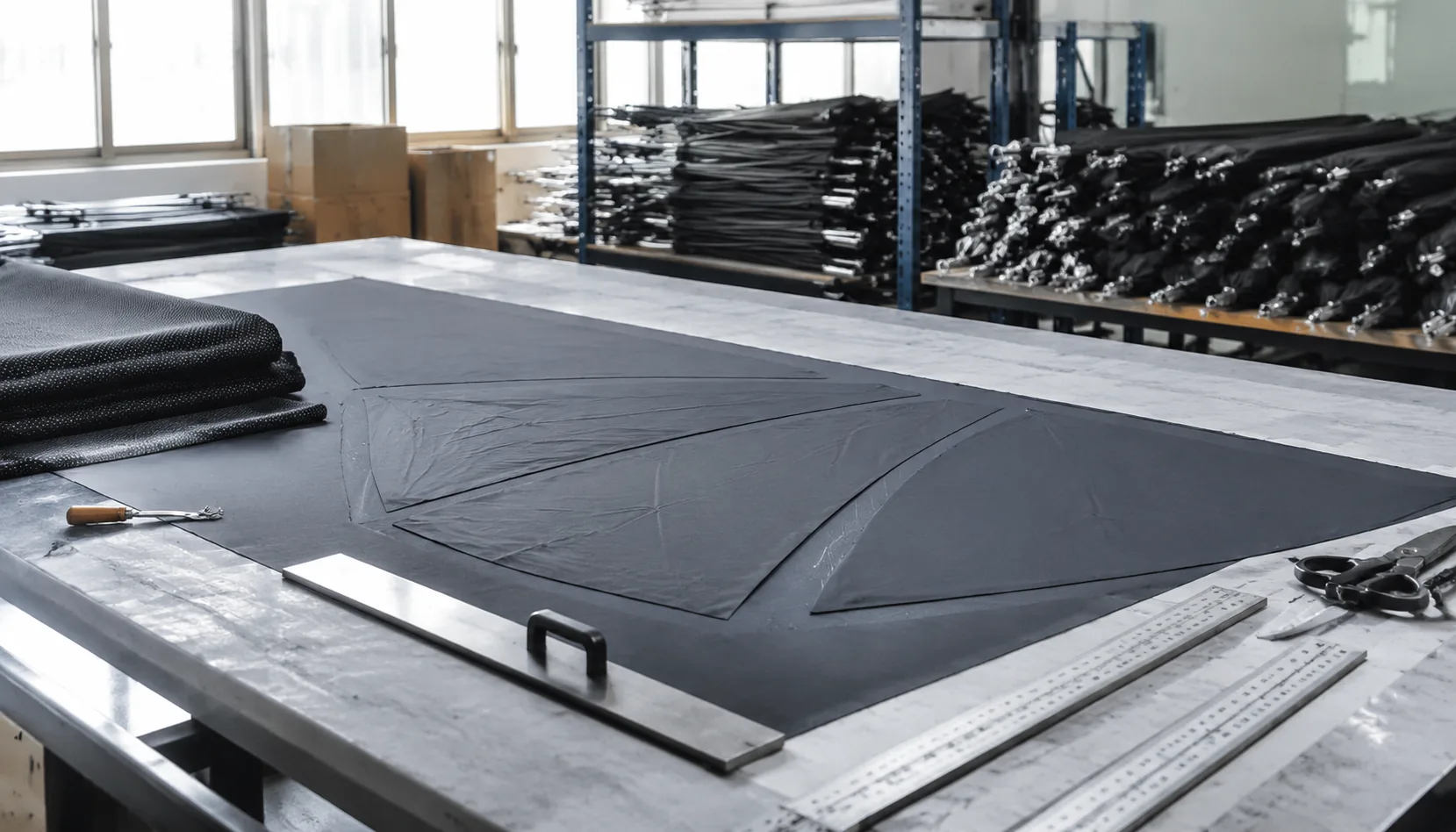
Umbrella Canopy Cutting Tolerances for Accurate Panel Fit
Set canopy cutting tolerances for 190T/210T pongee panels, print alignment, seam allowance, and frame fit to reduce wrin...
Read More »