Umbrella Panel Cutting Tolerances for Consistent Canopy Fit
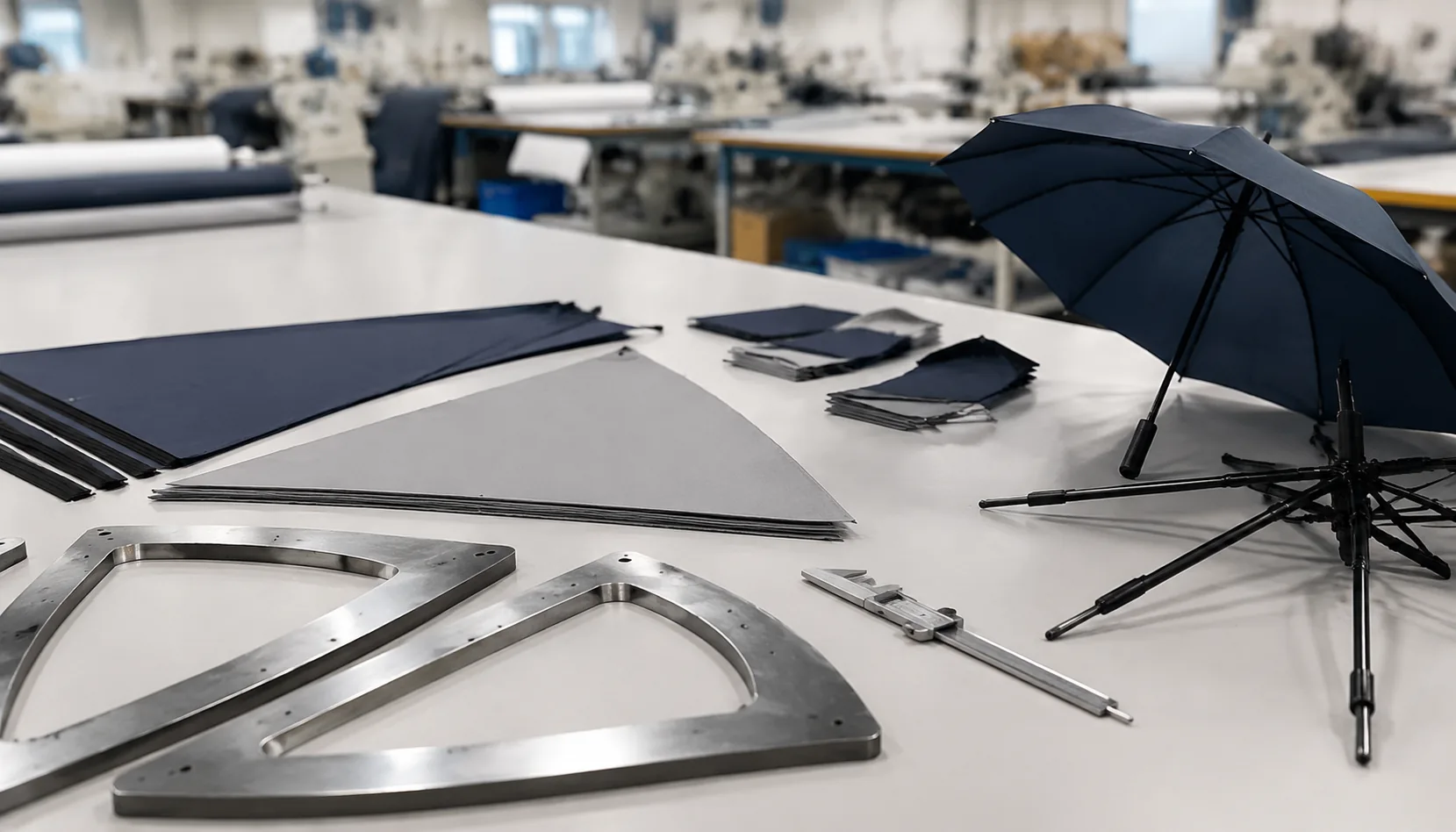
A canopy that looks fine on the cutting table can still twist, sag, or fail rib alignment after sewing if the panels are not controlled as a matched set. In our Songxia factory, umbrella panel cutting tolerances are checked alongside fabric lot stretch, grain direction, seam allowance, and frame size before bulk cutting starts. For OEM buyers, that discipline is what keeps repeat orders consistent and final inspection predictable.
Why Panel Accuracy Drives Canopy Performance
Panel accuracy decides whether an umbrella canopy sits cleanly on the frame or fights it from the first opening cycle. On a standard 8K 23" stick umbrella, each triangular panel shares load through the seam, rib tip, and runner tension; a 2 mm oversize error on every panel can create a visibly loose belly between ribs. On a 16K frame, the panels are narrower, so the same cutting error shows up faster as seam twisting, uneven arc shape, or tip pockets that do not land squarely on the rib ends. In premium OEM umbrella production, we normally hold umbrella panel cutting tolerances at ±1–2 mm per panel after fabric relaxation, not just at the CAD pattern stage.
The fabric itself changes the cutting result if the factory treats umbrella canopy cutting like paper cutting. Pongee umbrella fabric, especially 190T and 210T polyester pongee with Teflon or UPF 50+ coating, can shift under blade pressure, heat, humidity, and stack height. If the cutting stack is too high, the top layer may be within spec while the bottom layer grows or skews by 2–3 mm, which later causes poor canopy panel alignment during sewing. For solid-color retail orders we keep lower stack heights than cheap promotional runs; for stripe, logo, or border-print panels, we add registration marks and inspect panel angle as well as length.
Bad cutting does not stay hidden after sewing. It shows up as one rib pulling tighter than the next, loose panels that flap in 30–40 mph wind, crooked seam lines, and tips that need hand forcing during final assembly. That rework is expensive because the problem is already locked into the canopy, not the frame. Our standard practice at ZheBrella is to confirm first-piece panels against a hard template, check mid-run stacks with calipers, and then verify finished canopy fit on the actual 8K, 10K, or 16K frame before bulk sewing. For AQL 2.5 inspection, canopy tension and tip alignment are treated as functional checks, not cosmetic opinions.
Fabric Behavior: 190T vs 210T Pongee
190T pongee is easier to sew but less forgiving at the cutting table because the yarn density leaves a little more mechanical give in the panel. On a 23" auto-open umbrella, that small stretch can become 2-3 mm of edge drift after stacking 40-60 fabric layers, especially if the fabric has been rolled tight or stored in a humid workshop. 210T pongee umbrella fabric has a denser hand feel, cleaner edge after die cutting, and better dimensional recovery, so it normally holds canopy panel alignment more consistently across 8K and 10K frames. The trade-off is that 210T exposes pattern errors faster: if the cutting die is worn or the marker allows the bias direction to wander, the finished canopy shows uneven rib tension instead of hiding it in fabric stretch.
Coating changes the real cutting behavior more than buyers expect. Plain PU-coated pongee can usually be laid face-to-face or face-up in standard umbrella canopy cutting, but silver, black, and UPF 50+ coatings need stricter layup direction because coating thickness and surface friction are not identical on both sides. Silver coating can crack or show pressure marks if the clamp force is too high; black coating absorbs heat and may soften slightly during hot-room storage; UV coatings can stiffen the fabric and reduce stretch along the weft. For tight umbrella panel cutting tolerances, we reduce stack height by 15-30% on coated 210T and sharpen straight knives more frequently to avoid dragging the coating film at the panel tip.
In OEM umbrella production, I do not approve the same cutting tolerance for every pongee order just because the fabric label says 190T or 210T. We first check GSM, coating adhesion, roll width variation, and bias stretch with a simple pull test before releasing bulk cutting. For a normal 21" or 23" canopy, our practical panel tolerance is usually within ±1.5 mm on critical rib edges and ±2.0 mm at the hem edge; for 27" and 30" golf umbrellas, we allow slightly more length tolerance but keep the top notch and rib seam location tight. ZheBrella’s standard practice is to cut first-article panels, sew one trial canopy, mount it on the actual steel or fiberglass frame, then adjust the marker before bulk cutting if rib-end tension is uneven. That step prevents the common problem where panels pass flat inspection but pull crooked after assembly.
Pattern Making, Grain Direction, and Lot Control
Accurate canopy fit starts before the knife touches fabric: the CAD pattern must reflect the real frame, not just the catalog size. A 23" auto-open straight umbrella with 8K steel ribs does not use the same panel geometry as a 23" fiberglass windproof frame, because rib arc, tip cup position, runner travel, and notch height all change the canopy tension. In OEM umbrella production, we normally build the master pattern from a confirmed frame sample, then add seam allowance, tip reinforcement position, and crown hole location into the CAD file. For umbrella panel cutting tolerances, I do not like leaving more than ±1.5 mm variation on the long panel edge for 190T or 210T pongee umbrella fabric; once eight panels are sewn together, small errors stack into twisted tips, uneven scallops, or a canopy that pulls hard on one rib.
Panel nesting is where many factories quietly lose control. Pongee has a warp and weft direction, and the stretch is not equal, especially after water-repellent, Teflon, or UV coating. If half the panels are nested head-to-tail to save fabric and the other half follow the grain, the umbrella may pass a flat table check but deform after sewing and opening. Our standard practice at ZheBrella is to keep grain direction consistent across all panels in one canopy, mark the cutting direction on the CAD layout, and separate production markers by fabric width and coating type. For vented double-canopy umbrellas or 16K golf umbrellas, grain control matters even more because upper and lower canopies must breathe evenly under wind load; poor umbrella canopy cutting creates flutter, puckering, and off-center vent gaps.
Lot control is not paperwork for the office; it is a visual quality control step. Dyed pongee umbrella fabric can look matched under warehouse lighting, then show clear shade bands after assembly because every other panel reflects light at a slightly different angle. Mixed dye lots are especially obvious on navy, black, red, bottle green, and corporate PMS colors, where a half-tone difference becomes a striped canopy once eight triangular panels meet at the cap. Cutting teams should separate shade bands before spreading, label roll number and dye lot on each bundle, and assign batch numbers through sewing, inspection, and packing. Good canopy panel alignment depends on this discipline: one PO should not mix leftover roll ends unless the buyer has approved shade tolerance, and AQL 2.5 inspection should include opened-canopy color review, not only fabric swatches on a table.
Cutting Methods and In-Process Checks
The cutting method should match the order size and the fabric behavior, not the salesman’s preference. For low MOQ sampling or short OEM umbrella production runs under about 300–500 pieces per color, we usually use CNC knife cutting because pattern changes are fast and there is no die cost. For repeat orders above 1,000 pieces, steel-rule die cutting is still the most efficient: one stroke cuts stacked pongee umbrella fabric panels cleanly, with stable left-right symmetry if the fabric is relaxed before stacking. Laser cutting is useful for POE/PVC/EVA or small shaped panels, but I avoid it on 190T/210T pongee unless the buyer accepts a slightly sealed or darkened edge. Poor umbrella canopy cutting starts when fabric rolls are cut immediately after unwinding; we let tension settle, then control stack height so the lower layers do not creep 2–3 mm out of shape.
Umbrella panel cutting tolerances are checked before sewing because a sewing operator cannot fix a bad gore with a neat seam. For a standard 23 inch 8K straight umbrella, our practical tolerance is usually ±1.5 mm on panel edge length, ±1.0 mm on top notch and tip notch position, and less than 2 mm difference between opposite panel arcs after stacking. Larger golf umbrellas, especially 27 inch or 30 inch 8K/10K frames, need tighter control on arc consistency because a small panel error multiplies around the canopy and causes twisting at the runner. We mark one master pattern per frame drawing, then inspect first-cut panels against a transparent template before bulk cutting. In-process QC pulls panels every 200–300 pieces, checks grain direction, notch depth, and whether the panel tip matches rib length after allowing for cap, ferrule, and sewing shrinkage.
Logo allowance must be confirmed at cutting, not after printing and sewing. For screen print or heat-transfer logos, we normally keep 15–25 mm safe distance from seam lines and 40–60 mm from the panel tip, depending on umbrella size and whether the logo crosses a fold line. Sublimation on white pongee allows fuller artwork, but canopy panel alignment still depends on accurate notches and consistent seam allowance, usually 6–8 mm for lockstitch canopy sewing. Before sewing starts, QC should approve three things: panel size, notch position, and logo placement relative to the rib channel and panel centerline. At ZheBrella, the cutting table keeps a signed first-piece sheet with fabric batch, frame size, rib count, panel template code, and measured seam allowance; this prevents the common problem where correct printed panels are assembled onto the wrong 21 inch, 23 inch, or golf umbrella frame.
How Buyers Should Specify Cutting Requirements
The cutting requirement should be written like a production control item, not a vague note saying “panels must fit.” In the tech pack, list the exact fabric type, such as 190T or 210T pongee umbrella fabric, polyester oxford, recycled RPET pongee, or POE/PVC/EVA if it is a transparent canopy. Add the coating because PU, Teflon water-repellent, black glue, silver UV coating, and UPF 50+ treatments change fabric hand feel, shrinkage, and stacking behavior during umbrella canopy cutting. For woven pongee, I normally expect the buyer to define umbrella panel cutting tolerances at the panel edge, notch point, and tip end, not just an overall size tolerance. A practical spec is often ±1.5 mm on panel width for 21"–23" compact umbrellas and ±2.0 mm for 27"–30" golf umbrellas, but tighter limits may be needed for digital print matching or double-canopy vented windproof models.
Logo and artwork tolerances need their own line in the tech pack because a canopy can be dimensionally acceptable and still look wrong when opened. Specify the logo position tolerance from the panel centerline, lower hem, and rib seam; for promotional OEM umbrella production, ±3 mm is common for screen printing, while heat-transfer and sublimation layouts may need ±2 mm if the artwork crosses seams. If the design uses alternate color panels, edge binding, reflective tape, or a 16K frame where panel rhythm is more visible, include a panel numbering diagram so the cutting room, sewing line, and inspection team all follow the same canopy panel alignment sequence. Do not rely on a flat AI/PDF artwork file alone; include an approved opened-canopy photo showing print orientation relative to the handle, runner, and label position.
The tech pack should also lock the approved color lot and PP sample references before bulk cutting starts. Shade variation between fabric rolls is one of the fastest ways to create “bad fit” complaints because buyers notice mismatched panels before they measure anything. Require roll-to-roll shade grouping, fabric relaxation time before cutting, and first-bundle approval against the signed PP sample. AQL 2.5 final inspection is still necessary, but it is too late to discover distorted panels after 5,000 canopies are sewn and mounted on 8K steel or fiberglass frames. Our standard practice is to support final AQL with in-line cutting checks: marker verification before cutting, random panel measurement every cutting layer stack, printed logo position checks before sewing, and opened-canopy fit review after the first 20–30 assembled umbrellas. That is how umbrella panel cutting tolerances stay controlled in real factory conditions.
Frequently Asked Questions
What panel tolerance is realistic for bulk umbrella production?
For most OEM umbrellas, ±1–2 mm per canopy panel is realistic when CAD patterns and controlled fabric layups are used. Tighter tolerances may increase cutting time and cost, especially on coated 210T pongee.
Does sublimation or screen printing change cutting requirements?
Yes. Printed panels need registration marks and extra allowance so logos align after sewing and tensioning. For full-panel graphics, the factory should approve both a printed strike-off and a PP sample before mass cutting.
What panel cutting tolerance should buyers specify for OEM umbrella orders?
For standard rain umbrellas, many factories control panel cutting within about ±1–2 mm per edge, depending on fabric type, canopy size, and frame structure. Tighter tolerances should be confirmed during pre-production sampling because they may affect cutting speed and cost.
How does fabric lot control affect canopy panel alignment?
Using mixed fabric lots can cause small differences in stretch, coating thickness, color shade, and shrinkage. For bulk OEM orders, panels for one canopy should be cut from the same approved fabric lot whenever possible, especially for pongee and printed fabrics.
What should be checked during inspection for canopy fit consistency?
Inspectors should check panel symmetry, seam allowance consistency, rib-tip alignment, canopy tension after opening, and whether the top notch sits centered on the shaft. For bulk orders, these checks are usually included in inline inspection and final AQL inspection.
Looking to Launch Your Custom Umbrella Line?
ZheBrella is a Zhejiang-based OEM/ODM umbrella manufacturer with 17 years of export experience. Free design, low MOQ from 100 pieces, windproof construction, full-color print.
Get Free Quote Now »People Also Search For
Related Articles
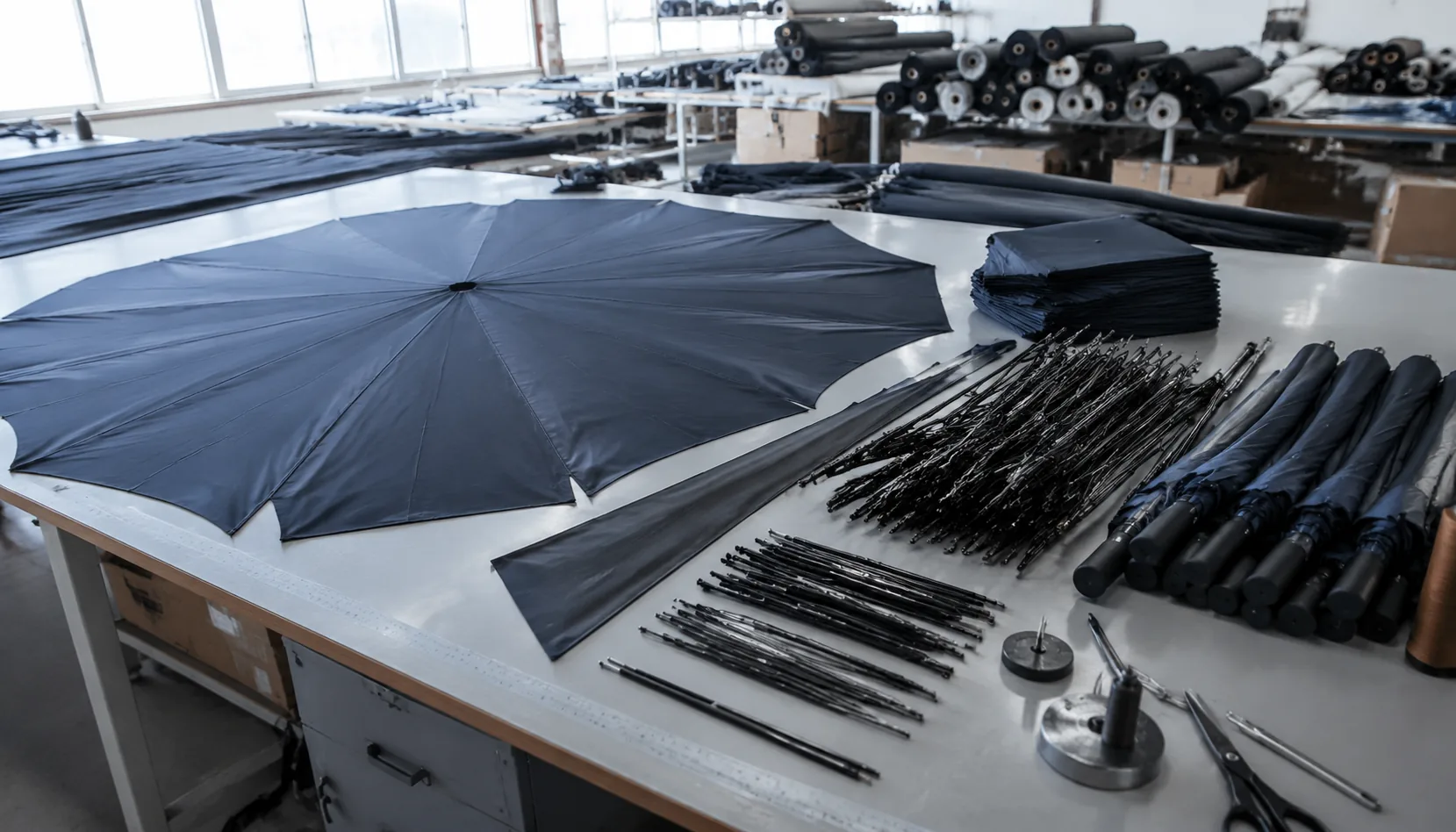
Umbrella Canopy Cutting Tolerances for Consistent Fit
Control panel cutting, fabric relaxation, and marker layout so 190T or 210T pongee canopies fit frames cleanly with fewe...
Read More »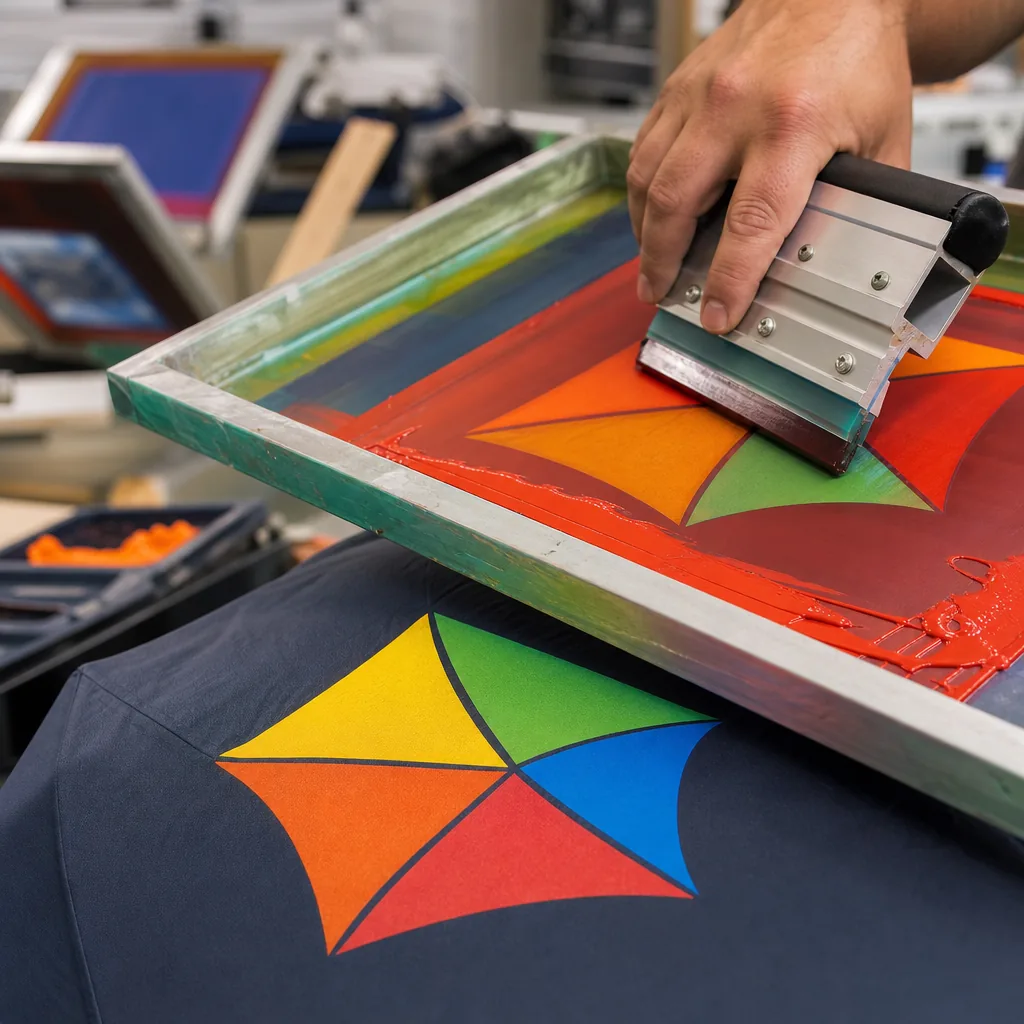
Panel Cutting Tolerances for Umbrella Production Lines
See how CNC patterns, fabric relaxation, +/-2 mm panel control, and shade-lot batching improve 190T/210T pongee canopy f...
Read More »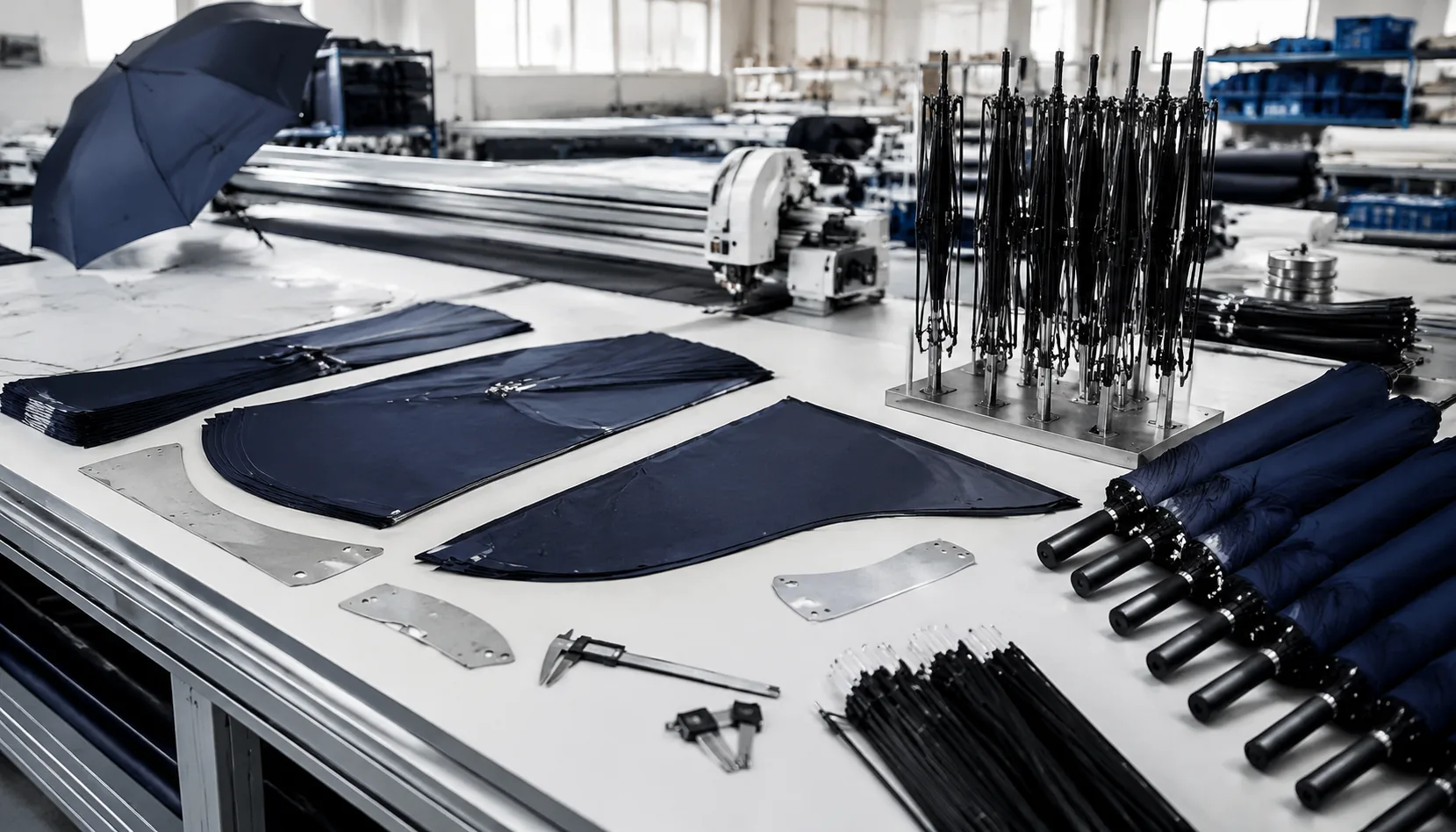
Umbrella Canopy Cutting Tolerances for OEM Panel Fit
Learn how die cutting, grain direction, and panel matching control twist, seam tension, and leakage on 190T/210T pongee ...
Read More »