Umbrella Canopy Cutting: Panel Accuracy for Bulk Orders
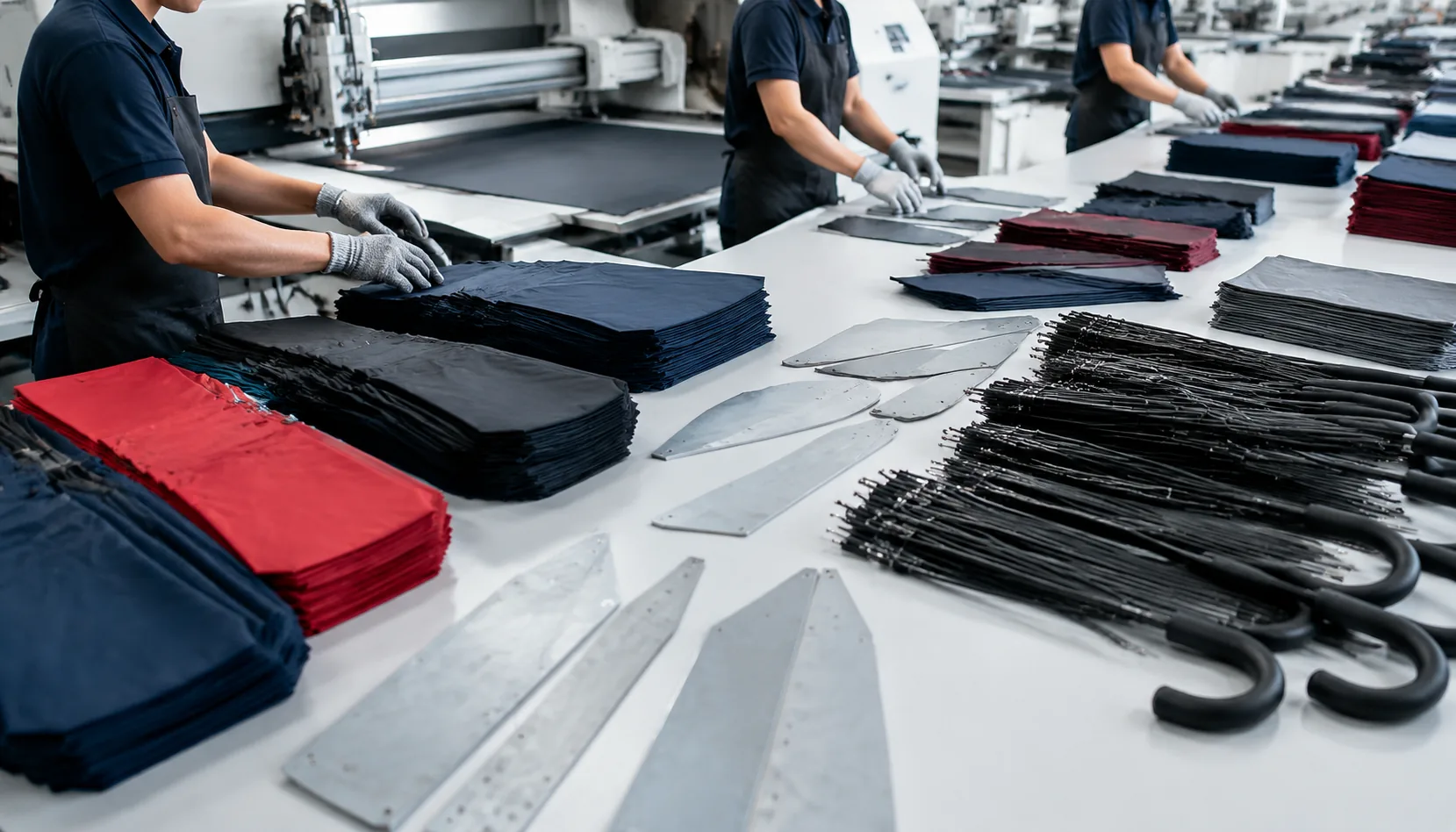
For bulk umbrella orders, a small cutting error becomes a visible mismatch after sewing, especially on 190T and 210T pongee where coating, tension, and print direction all affect panel behavior. On our Songxia cutting tables, the umbrella canopy cutting process starts with fabric relaxation, shrinkage checks, marker control, and panel bundling discipline so every rib line, logo position, and color lot stays consistent from first sample to final carton.
Why Panel Cutting Accuracy Matters
Panel cutting accuracy decides whether an umbrella looks clean on the frame or fights the frame from the first opening. In bulk umbrella manufacturing, a 2 mm error on one pongee 190T or 210T panel sounds harmless, but it changes the seam line, tip spacing, and canopy crown height after sewing. If panels are slightly oversized, the canopy develops loose wrinkles between ribs and the tips may not sit evenly in the pockets. If panels are undersized, the cover becomes tight, the stretch load transfers into the ribs, and the runner feels heavy during opening. This is why a serious OEM umbrella factory does not treat cutting as only a fabric-saving step. The umbrella canopy cutting process must control fabric relaxation, marker alignment, stack height, blade sharpness, and notch position before any sewing operator touches the panels.
The tolerance problem gets worse as rib count increases. On a standard 8K 23" umbrella, eight triangular panels share the circumference, so a small cutting deviation can often be absorbed by seam allowance and fabric stretch, especially with polyester pongee. On a 16K umbrella, the same circumference is divided into sixteen narrower panels, so each panel has less room to hide error. A 1.5 mm width variation repeated across 16 panels can shift the total canopy circumference by 24 mm before sewing shrinkage is even considered. That is enough to create uneven rib tension, twisted valleys, and tips that pull to one side. For 10K and 16K fashion umbrellas, umbrella panel cutting must be tighter than for low-cost 8K promotional models because the finished canopy shows every imbalance between adjacent ribs.
In pongee canopy production, accuracy is not only about the cutting machine; it starts with fabric behavior. Rolls stored under compression need time to relax, and coated fabric such as Teflon-treated pongee or UPF 50+ black-coated cloth can shrink or curl differently from uncoated material. We normally check the first-cut panels against a hard pattern and confirm diagonal length, bottom arc, notch depth, and grain direction before releasing a full stack. For large orders, stack height should be controlled because too many layers under a straight knife can drift at the lower plies, causing top panels to pass inspection while bottom panels run narrow. AQL 2.5 final inspection will catch visible canopy defects, but by then the cost is already sewn into the umbrella. Cutting accuracy is cheaper to control at the marker table than to repair after assembly.
Fabric Preparation Before Cutting
Fabric preparation decides whether umbrella panel cutting stays accurate after 5,000 or 50,000 pieces, so we inspect rolls before they ever reach the cutting table. For 190T and 210T pongee canopy production, incoming QC checks fabric width, roll length, GSM, yarn defects, oil stains, coating marks, color fastness, and obvious weaving bars under both daylight and D65 light. We also check water repellency with a spray test when DWR is specified, and UPF 50+ lots are verified against the supplier’s coating report before sampling goes into production. In an OEM umbrella factory, the common mistake is treating fabric as just “black pongee” or “navy pongee.” Shade variation between dye lots becomes very visible after sewing because adjacent 8K or 10K panels meet at every seam. Our standard practice at ZheBrella is to tag each roll by supplier lot, color lot, coating type, usable width, and inspection result before release to bulk umbrella manufacturing.
Roll relaxation is not optional if the buyer expects panel accuracy after sewing. Pongee arrives tightly wound, and tension from dyeing, coating, calendaring, and transport can make the fabric pull back after spreading. For standard 190T pongee, we usually allow at least 12 hours of relaxation before the umbrella canopy cutting process; for heavier 210T pongee or dense coated goods, 24 hours is safer, especially in winter when fabric stiffness increases. Rolls should be stored horizontally, not leaned against a wall, because edge pressure can distort the selvedge and create curved panel edges later. During spreading, operators must keep the fabric flat without stretching it lengthwise. A few millimeters of tension per layer becomes a real problem when cutting 60 to 120 plies, particularly on 23 inch and 27 inch umbrellas where panel geometry controls rib alignment and canopy tension.
Shrinkage allowance must be set by actual test cuts, not by memory from the last order. For typical 190T pongee, we often see 0.5% to 1.0% dimensional movement after steam, sewing tension, and water exposure; 210T pongee can behave slightly differently because the denser weave and coating pickup change recovery. Before bulk cutting, a factory should cut test panels, sew a sample canopy, apply light steaming or water exposure if required by the spec, then remeasure seam-to-tip and arc dimensions. Coated UPF 50+ and DWR fabrics need gentler handling because aggressive spreading pressure, hot knives, or rough clamps can bruise the coating, leave gloss marks, or reduce water beading. In the umbrella canopy cutting process, shade-lot grouping and shrinkage data should travel with the cutting ticket, so operators know which rolls can be mixed, which must stay separate, and whether the marker needs compensation before mass cutting starts.
Die Cutting, Laser Cutting, and Manual Cutting
Die cutting is still the workhorse for bulk umbrella manufacturing because it gives the best repeatability once the steel rule die is corrected. For a standard 23 inch 8K straight umbrella, the panel stack is usually 190T or 210T pongee, 40 to 80 layers depending on coating, with paper marker and vacuum compression. A good die keeps panel edge tolerance within about ±1.0 mm, which matters when eight panels must close into a smooth canopy without twisting the ribs. The weakness is tooling cost and setup time: a new die can take 2 to 5 days and is not worth it for a 300 piece trial order unless the shape will repeat. For 3,000 to 50,000 pieces, especially black, navy, or promotional solid-color pongee canopy production, die cutting lowers unit labor cost and keeps sewing alignment stable across shifts. In our standard practice at ZheBrella, die-cut panels are checked against the approved paper pattern before mass cutting, then sampled during production under AQL 2.5 inspection.
Laser cutting is useful when the umbrella canopy cutting process involves unusual geometry, asymmetric panels, scalloped edges, branded vent shapes, or small mixed-color runs where making a die would slow the order. The beam seals some synthetic fabrics lightly, so 190T pongee, polyester, POE, and thin PVC can cut cleanly if speed and power are tuned; EVA needs more caution because heat can deform the edge. Accuracy can be very good, often around ±0.5 mm on a single layer or low stack, but the cost per panel rises because cutting speed is slower than die pressing. I recommend laser cutting for MOQ ranges like 500 to 2,000 pieces, sample confirmation, fashion umbrellas, golf umbrellas with double-canopy vent parts, and complex OEM umbrella factory programs where the buyer may revise artwork or panel contour before final approval. For a plain 21 inch compact auto-open-close umbrella, laser cutting is usually overkill unless the fabric has a special print placement requirement.
Manual cutting is the cheapest to start but the easiest to abuse, so it belongs in prototypes, urgent replenishment, and very low MOQ orders rather than serious bulk orders. A skilled cutter can follow a hard pattern accurately enough for 100 to 500 umbrellas, but stacked pongee shifts under the blade, and a 2 mm error at the panel edge becomes visible after sewing because the canopy crown pulls unevenly around the top notch. Manual umbrella panel cutting also depends heavily on operator discipline: blade sharpness, marker alignment, fabric relaxation time, and whether coated fabric is face-up or face-down all change the result. In the full umbrella canopy cutting process, I treat manual cutting as a flexible bridge, not a mass-production standard. For export retail orders with 8K, 10K, or 16K frames, die cutting is the safer choice once the pattern is approved; for custom shapes before approval, laser cutting protects development speed without locking the buyer into tooling too early.
Print and Pattern Alignment Controls
Print alignment starts before ink touches fabric, because the grain direction and panel orientation decide whether a logo looks centered after sewing. In the umbrella canopy cutting process, every triangular panel should be laid with the same warp direction on 190T or 210T pongee unless the artwork deliberately rotates around the canopy. For stripe, plaid, border, or full-canopy repeat designs, I want cutting markers to show top point, hem side, left/right seam allowance, and rib position, not just a generic triangle. A practical sample approval tolerance is ±2 mm from artwork centerline to rib seam on a 23 inch 8K canopy, and ±3 mm on a 27 inch golf umbrella where the panel is larger and fabric movement is harder to control. Anything tighter than ±1 mm sounds nice in a meeting but usually fails once bulk umbrella manufacturing moves from sample table to stacked cutting.
Registration marks must be designed into the print file and kept outside the visible finished area whenever possible. For sublimation, we normally print a slightly oversized image with cross marks at panel tips and hem corners, then cut after heat transfer so shrinkage is already absorbed; polyester pongee can move 1–2% depending on temperature, dwell time, and paper tension. For screen printing, the safer method is to cut blank panels first, clamp them on a jig, and position the logo by seam allowance and panel centerline. In an OEM umbrella factory, I would ask the buyer to approve not only a flat printed panel but also one sewn canopy on the actual frame, because a 100 mm logo can visually shift once the fabric is pulled over steel or fiberglass ribs.
Shade matching across panels is where cheap umbrella panel cutting and printing show up fast. Pongee canopy production should keep panels from the same dye lot and print batch together, with bundle tickets showing fabric roll number, print date, and cutter number. For solid PMS colors, buyers can approve a Delta E tolerance such as ≤1.5 for retail programs or ≤2.5 for promotional orders, checked under D65 light rather than warehouse yellow lamps. For multi-panel sublimation, I also like a visual rule: no adjacent panel should show an obvious shade step at normal arm’s length, roughly 1 meter. During sample approval, lock down seam-to-seam artwork continuity, top-cap alignment within ±3 mm, hem border variation within ±2 mm, and acceptable rib-line interruption, because those are the defects that become expensive after 5,000 pieces are already sewn.
Buyer Specs That Prevent Canopy Defects
Inspection should be built into the buyer spec instead of negotiated after defects appear. Our standard practice at ZheBrella is to check incoming fabric width, shrinkage after coating, marker layout, first-cut panel dimensions, print registration, and sewn canopy fit before releasing full cutting. For OEM umbrella factory orders, I recommend adding an AQL 2.5 final inspection plus an in-process cutting audit every 500 to 1,000 canopies, especially when the order mixes manual, auto-open, and auto-open-close models. The umbrella canopy cutting process becomes much smoother when the PP sample approval includes a signed cut panel, approved printed panel, shade card, and finished umbrella, because production has physical standards at every station. These details reduce the usual back-and-forth PP sample revisions from three rounds to one or two, and they protect the lead time: a normal 30,000-piece FOB order can stay near 35 to 45 days instead of slipping a week because panels were re-cut or logos had to be repositioned after sewing.
Frequently Asked Questions
Is 210T pongee harder to cut than 190T pongee?
210T pongee is denser, so it can give a smoother premium feel but may require sharper dies and tighter fabric relaxation control. Poor cutting can cause edge distortion or inconsistent panel size.
What cutting tolerance should buyers specify for umbrella panels?
Many OEM projects use millimeter-level tolerances confirmed during pre-production sampling. The exact tolerance should match rib count, canopy size, fabric coating, and print alignment needs.
What cutting tolerance is acceptable for bulk umbrella canopy panels?
For standard 190T and 210T pongee umbrellas, many factories control panel cutting tolerance within about ±1–2 mm per panel. Tighter tolerance is required for all-over print, border print, or multi-panel logo alignment.
How is fabric shrinkage handled before cutting umbrella panels?
Shrinkage is usually checked by fabric roll and print batch before mass cutting. The cutting pattern may include a small allowance based on test results, especially for 210T pongee or heat-transfer printed fabric.
Can printed umbrella panels be matched accurately in large OEM orders?
Yes, but the factory needs approved artwork, panel layout, and a pre-production sample before bulk cutting. For repeat logos or edge-to-edge graphics, buyers should confirm print registration tolerance and allow extra fabric loss during cutting.
Looking to Launch Your Custom Umbrella Line?
ZheBrella is a Zhejiang-based OEM/ODM umbrella manufacturer with 17 years of export experience. Free design, low MOQ from 100 pieces, windproof construction, full-color print.
Get Free Quote Now »People Also Search For
Related Articles
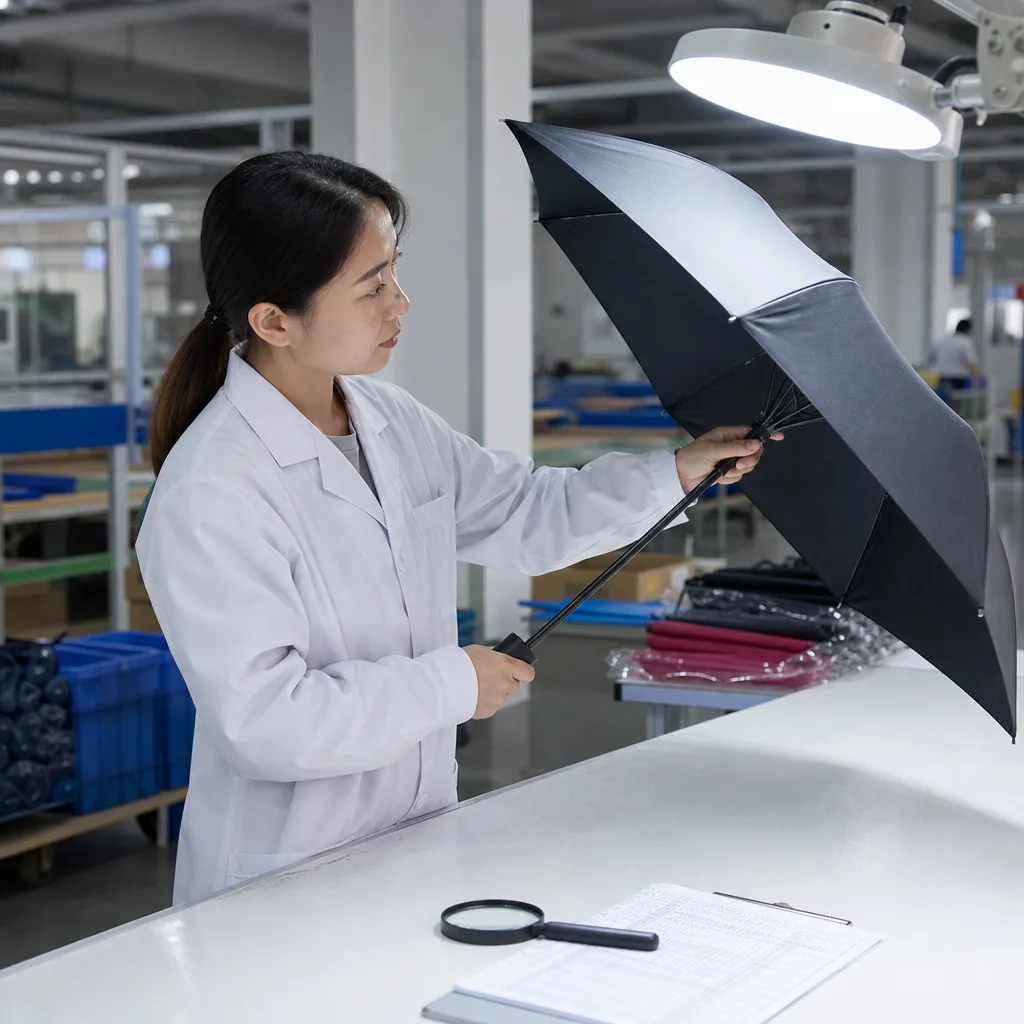
Umbrella Canopy Cutting Process for Accurate Bulk Orders
Understand how fabric spreading, panel cutting, and shade control keep 190T and 210T pongee canopies accurate across bul...
Read More »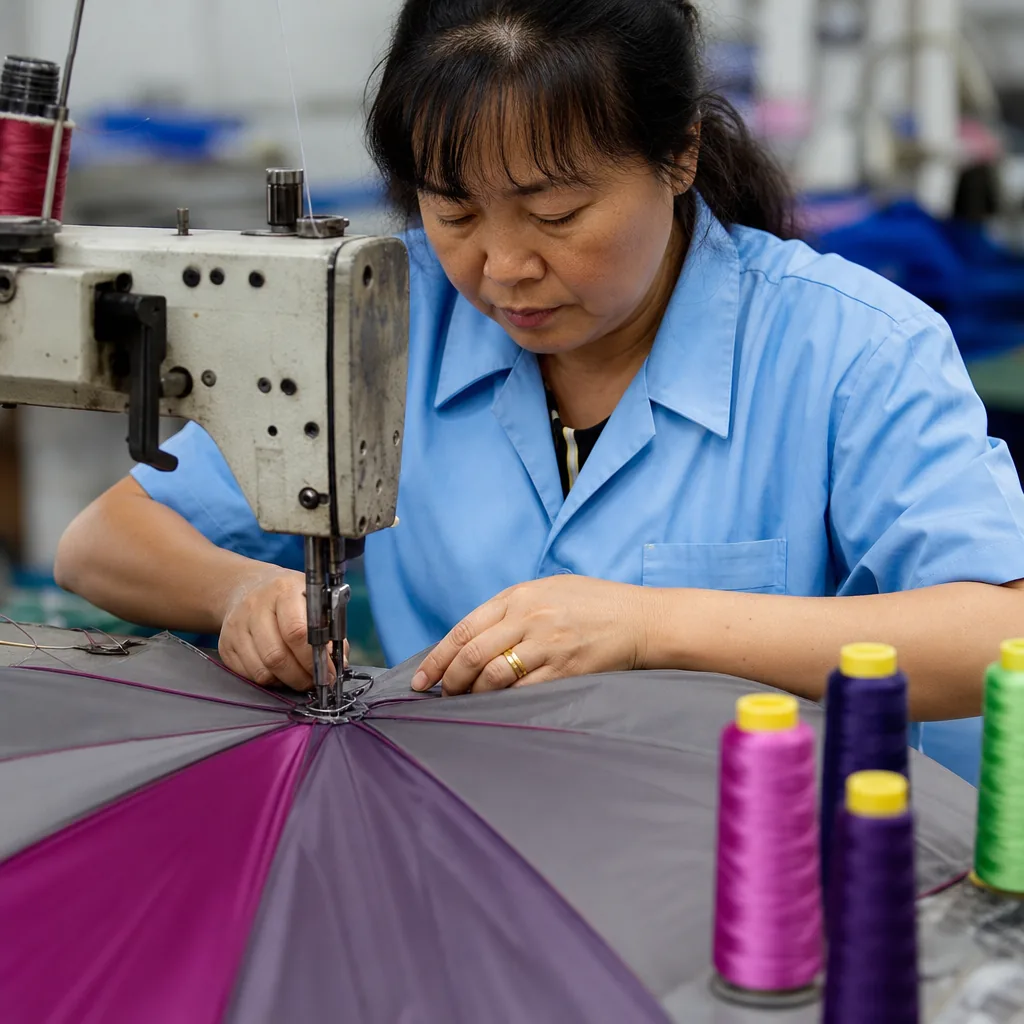
Umbrella Canopy Panel Cutting for Accurate OEM Fit
Learn how canopy panel cutting tolerances, fabric layup, and inspection controls prevent wrinkles, leaks, and fit issues...
Read More »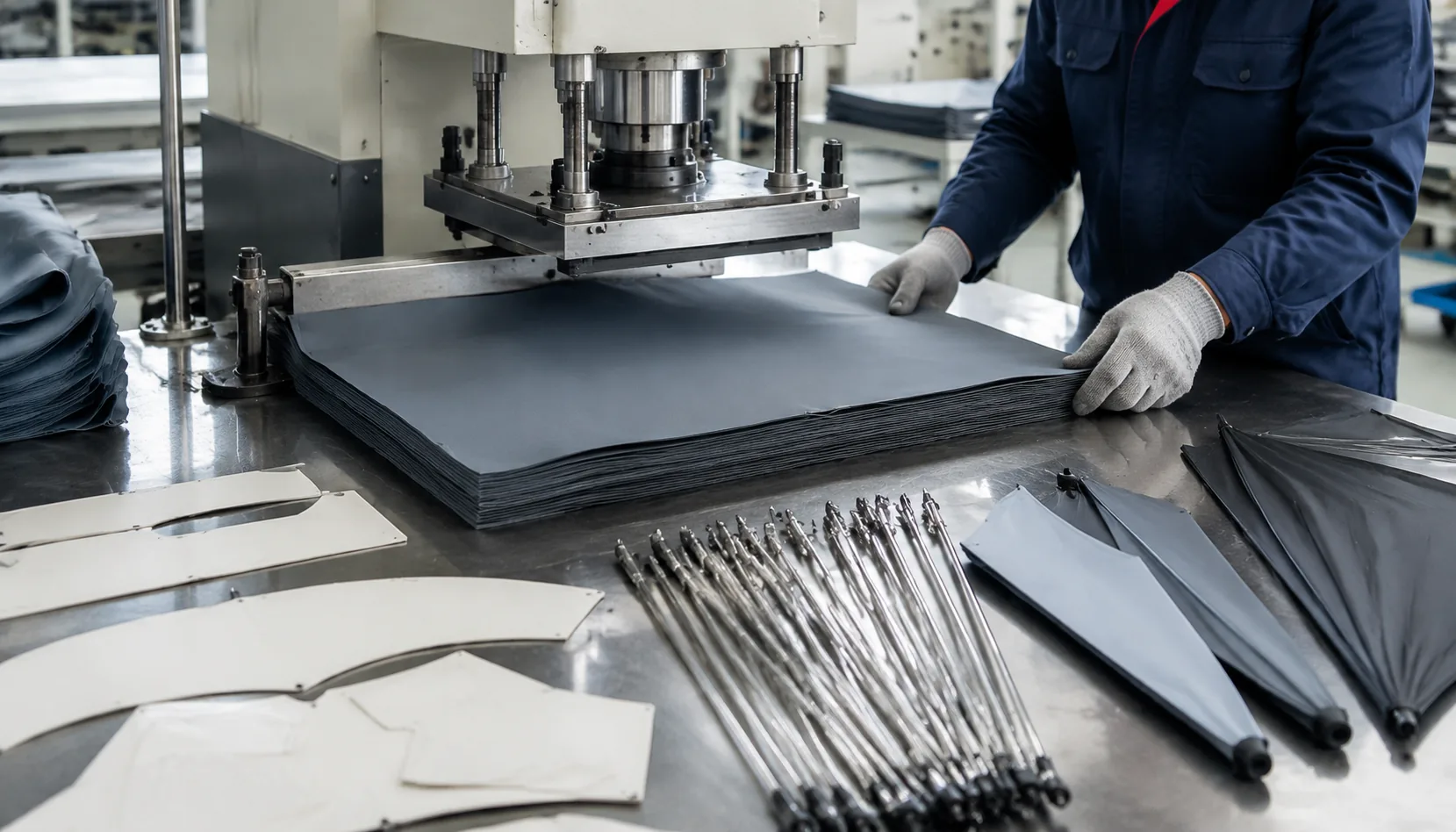
Umbrella Panel Cutting Tolerances for OEM Canopy Fit
Learn how CAD markers, die cutting, and 190T/210T pongee tolerances control canopy tension, seam alignment, and rework i...
Read More »