Umbrella Fabric Colorfastness Tests for Branded Orders
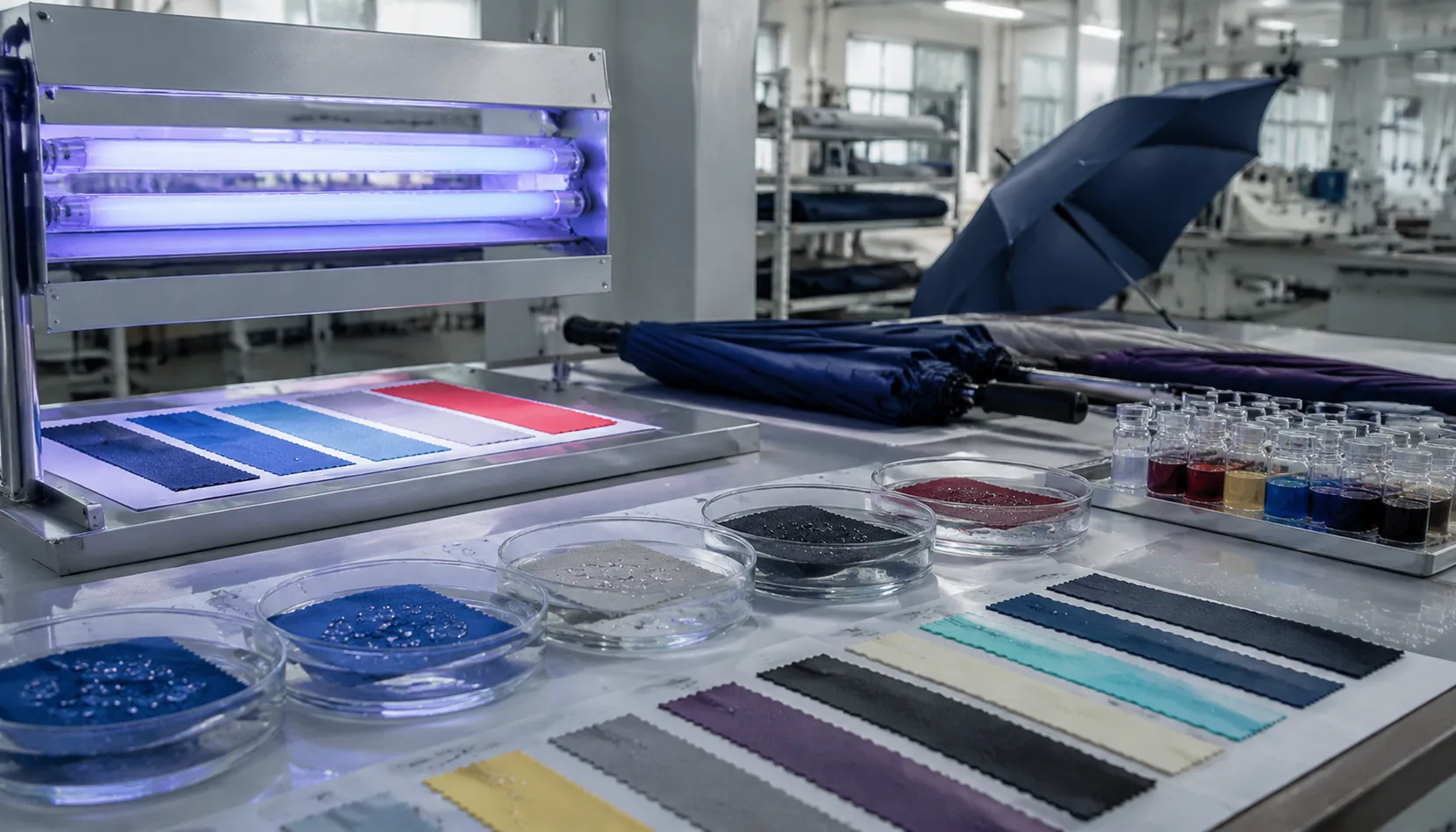
For branded umbrella orders, a fabric color that looks approved under office lighting can still bleed into a white logo, shift after UV exposure, or crock onto packaging once rain and handling enter the picture. On our Songxia cutting tables, umbrella colorfastness testing starts before bulk fabric release, especially for 190T and 210T pongee where coating, dye lot, and print ink all interact. Catching shade drift at the swatch and pilot-run stage is far cheaper than sorting finished canopies.
Why Colorfastness Matters in Umbrella Production
Colorfastness is not a lab formality; it is what keeps a branded umbrella from becoming a complaint after the first rainy event. The most common failure I see in umbrella colorfastness testing is logo bleeding on dark 190T pongee umbrella fabric, especially when a white or metallic screen print sits over navy, red, or black panels. If the dye migration is not controlled, the logo edge turns pink, gray, or yellow after wet folding. Panel-to-panel shade variation is just as damaging for retail orders: one canopy may use eight panels from two dye lots, and under daylight the umbrella looks patched even though each panel passed a basic visual check indoors. For promotional orders, that is not a small defect; it weakens branded umbrella quality because the buyer paid for color consistency as much as rain protection.
Crocking is the issue buyers often miss until samples are handled by real users. A dark 210T pongee canopy with poor wet rub resistance can transfer color onto fingers, shirt cuffs, white EVA handles, or the inside sleeve during packing. We test dry and wet rubbing because umbrellas are opened, closed, strapped, and carried while damp, not displayed flat on a table. Sublimation prints bring another risk: the artwork may look sharp after heat transfer, but weak fixation or wrong temperature can cause ghosting, dull reds, or uneven gradients after soak testing. Good canopy fabric testing should include rubbing, water spotting, soap wash where relevant, and comparison against the approved Pantone or physical strike-off, not just a quick look under factory lights.
UPF 50+ coatings and Teflon-type water-repellent finishes add another layer of risk because coating chemistry can change both shade and print adhesion. A silver or black UV backing may make the outer fabric look darker, while aggressive heat during coating can shift bright corporate colors before the logo is even printed. Fading under UV exposure is especially visible on yellow, orange, royal blue, and red umbrellas used for outdoor events, beach campaigns, and golf tournaments. Our standard practice is to lock fabric lot, print method, coating, and approved sample before bulk cutting, then verify shade bands and print rub results during AQL 2.5 inspection. If umbrella colorfastness testing is skipped until final inspection, the factory can reject defects, but it cannot cheaply rebuild 5,000 sewn canopies already carrying the wrong color behavior.
Core Tests Buyers Should Request
For branded retail orders, the first request should be water immersion or washing colorfastness, because umbrellas spend their life wet, folded, and pressed against panels of the same or contrasting color. For a 190T pongee umbrella with screen print or heat-transfer logo, we normally cut specimens from dark canopy panels, light panels, and printed logo areas, then soak them in distilled water or a mild detergent solution before pressing them against multifiber fabric. The lab reports staining and color change on the gray scale, usually from grade 1 to grade 5, where 5 means almost no visible change. In real branded umbrella quality work, grade 4 or above is the practical target for retail orders, especially navy, black, red, and royal blue canopies that may sit wet in a sleeve for hours. Grade 3 can pass for low-cost giveaways, but it is risky when a white logo or light trim is involved.
Wet and dry rubbing tests are just as important as immersion because the user’s hand, sleeve, car seat, and umbrella sleeve all rub the canopy during normal use. Dry rubbing checks loose dyestuff and pigment on the fabric surface; wet rubbing is tougher because moisture helps unstable dye migrate. In canopy fabric testing, the print area should be tested separately from the dyed fabric, since a logo ink that looks sharp after curing can still smear when the umbrella is folded wet. Reports again use gray scale grading, and for branded orders I prefer dry rubbing at grade 4–5 and wet rubbing at grade 4 minimum. This is where umbrella colorfastness testing catches problems that a normal incoming fabric check misses, especially on cheap disperse-dyed polyester or over-thick screen ink that was not fully cured before assembly.
Artificial light exposure and rain simulation complete the picture because color loss is not only a warehouse problem; it happens in sun, storm, and repeated opening. Lightfastness is commonly rated on the blue wool scale from 1 to 8, with grade 4 often treated as the minimum for promotional use and grade 5 or higher preferred for retail canopies, UV-coated fabrics, and outdoor event programs. Rain simulation checks whether running water pulls color from the canopy, piping, binding tape, or printed logo onto neighboring panels. At ZheBrella, our standard practice is to combine these lab results with AQL 2.5 inspection on finished umbrellas, including visual checks after spray testing and sleeve storage. Lab grades do not replace final inspection, but they prevent the worst failure: a beautiful approved sample turning into stained hands, faded panels, or a bleeding logo after the first real rain.
How Fabric, Dye, and Coating Choices Affect Results
Water-repellent and UV finishes are where many branded orders fail quietly. DWR and Teflon-style treatments reduce surface energy, which is good for rain beading but bad for print adhesion if the ink system is not matched. Screen ink may pass dry rubbing, then lift after a 30-minute soak or after repeated open-close cycling on auto-open frames. Sublimation works best before heavy coating, while heat-transfer logos often need a primer or adjusted press pressure on coated pongee. In our AQL 2.5 inspection, we check shade consistency, dry and wet rubbing, tape pull on the print, water spray rating, and fold-line whitening. Good umbrella colorfastness testing should include the real coating, final artwork method, and packed-aging sample, because cartons sitting 35–45 days in humid export transit can expose weak dye fixation before the customer ever opens the box.
Pre-Production Controls Before Bulk Cutting
The cheapest time to catch a color problem is before the cutting table starts feeding thousands of panels. For branded orders, we require lab dips for dyed fabric, strike-offs for printed artwork, and a signed pre-production sample before bulk cutting. A 190T pongee umbrella may look correct in a supplier photo, but under a D65 light box the shade can shift noticeably against the Pantone target, especially on navy, red, orange, and dark green. We check the approved Pantone code on the face side of the fabric, then compare it again after water-repellent finishing because Teflon or standard PU coatings can slightly deepen the tone. This is the first gate in umbrella colorfastness testing, and it should happen before fabric is relaxed, layered, and die-cut into 8K, 10K, or 16K panels.
Printed panel approval is not just about whether the logo looks sharp. On an 8K layout, the same logo may sit centered on one panel with enough seam allowance, while a 16K golf umbrella layout has narrower panel geometry and more rib lines competing with the artwork. We confirm logo size, rotation, distance from the lower hem, and clearance from the panel seam before making the strike-off. For screen printing, we check ink opacity and rubbing resistance on dark pongee; for heat transfer, we check edge bonding after opening and closing the frame several times; for sublimation, we check whether fine lines drift after heat pressing. This canopy fabric testing step prevents the common mistake of approving artwork on a flat rectangle instead of on a real umbrella panel shape.
Before bulk cutting, a pilot run of 30 to 100 umbrellas gives a better warning than any single sample. Our standard practice at ZheBrella is to assemble pilot units on the actual 8K or 16K frame, then inspect color matching, panel-to-panel shade consistency, logo alignment, seam puckering, and fabric behavior after water spray and dry rubbing. For branded umbrella quality, this pilot run becomes the reference for production inspectors and the buyer’s QC team. We keep one signed sample in the sewing line, one in the printing area, and one in final inspection so operators are not guessing from a PDF. If the order will use AQL 2.5 inspection, the approved pilot sample should define acceptable limits for shade variation, print registration, and logo placement before cartons are packed for FOB or DDP shipment.
Inspection Standards for Finished Umbrellas
Finished-umbrella inspection is where umbrella colorfastness testing becomes a shipment decision, not just a fabric-room report. For branded umbrella quality, we tie lab-dip approval, bulk roll shade bands, and printed-panel checks directly into the AQL 2.5 inspection plan before cartons are released. On a 190T pongee umbrella order, inspectors compare random finished pieces against the signed pre-production sample under D65 light, then check panel-to-panel variance, logo registration, stains, oil marks from frame assembly, and heat-transfer edge lifting. A color difference that looked minor on a flat fabric swatch can become obvious once eight panels are sewn into a 23" canopy, especially with navy, red, orange, and corporate gray. Our standard practice at ZheBrella is to reject visible shade mismatch across adjacent panels, even if the fabric roll itself technically passed rubbing and water exposure tests.
Canopy fabric testing also feeds into practical use checks: seam leakage, print cracking, canopy alignment, and tension balance after opening. During AQL 2.5 inspection, inspectors open and close manual, auto-open, and auto-open-close umbrellas repeatedly, then look for twisted ribs, uneven tips, puckered seams, needle holes, and water seepage along the top notch and panel seams. On 8K steel frames, poor sewing tension often shows as a crooked logo arc; on 10K or 16K fiberglass frames, canopy stretch can distort a full-panel sublimation print if cutting was not grain-controlled. For coated fabrics like Teflon-treated 210T pongee or UPF 50+ black-coated polyester, we also check whether coating scratches, white crease marks, or dye migration appear after folding. These are not cosmetic details for a promotional order; they decide whether 5,000 umbrellas look like one brand batch or three mixed factory leftovers.
Third-party lab reports are worth adding when the umbrella is going into retail, licensed sports, museum shops, children’s programs, or any brand-controlled distribution where claims and colors are audited later. For normal event giveaways, in-house umbrella colorfastness testing plus AQL 2.5 inspection is usually enough if the buyer approves strike-offs and pre-production samples. For retail programs, I prefer SGS, Intertek, or Bureau Veritas reports covering colorfastness to rubbing, water, light exposure, and sometimes azo or REACH-related chemical limits, especially for PVC, POE, EVA, or dark-dyed pongee canopies. The cost is small compared with a DDP shipment being challenged after arrival because a white logo picked up black dye during ocean freight. Build the test lead time into the schedule: 3–5 days for common colorfastness tests, longer if chemical compliance or licensed-brand documentation is required before bulk cutting.
Frequently Asked Questions
Should colorfastness testing be done before or after printing?
Both can be useful. Base fabric should be checked before production, while printed strike-offs should be tested for wet rubbing, rain exposure, and logo bleeding before bulk approval.
Do dark umbrella canopies fail colorfastness more often?
Dark navy, black, red, and saturated brand colors can have higher bleeding or rubbing risk, especially on lower-grade fabric. Pre-approved lab dips and printed panels reduce this risk before mass production.
What colorfastness level should branded umbrella canopies pass before bulk production?
For branded orders, buyers usually ask for dry and wet rubbing results plus lightfastness checks on the signed-off shade. A practical target is no visible dye transfer after standard rub testing and no noticeable shade drift after UV exposure on pre-production samples.
Should 190T and 210T pongee be tested the same way for umbrella orders?
Yes, the test methods are similar, but 210T usually tolerates a slightly tighter quality expectation because of its denser weave. For either fabric, confirm dry/wet crocking, UV exposure, and rain simulation on the exact production lot.
How does AQL 2.5 apply to colorfastness defects in umbrella inspection?
AQL 2.5 is commonly used to sample visible defects such as color variation, logo bleed, and staining across finished umbrellas. If the canopy shade or print transfer is inconsistent in the sampled units, the shipment can be held for recheck or rework before bulk release.
Looking to Launch Your Custom Umbrella Line?
ZheBrella is a Zhejiang-based OEM/ODM umbrella manufacturer with 17 years of export experience. Free design, low MOQ from 100 pieces, windproof construction, full-color print.
Get Free Quote Now »People Also Search For
Related Articles
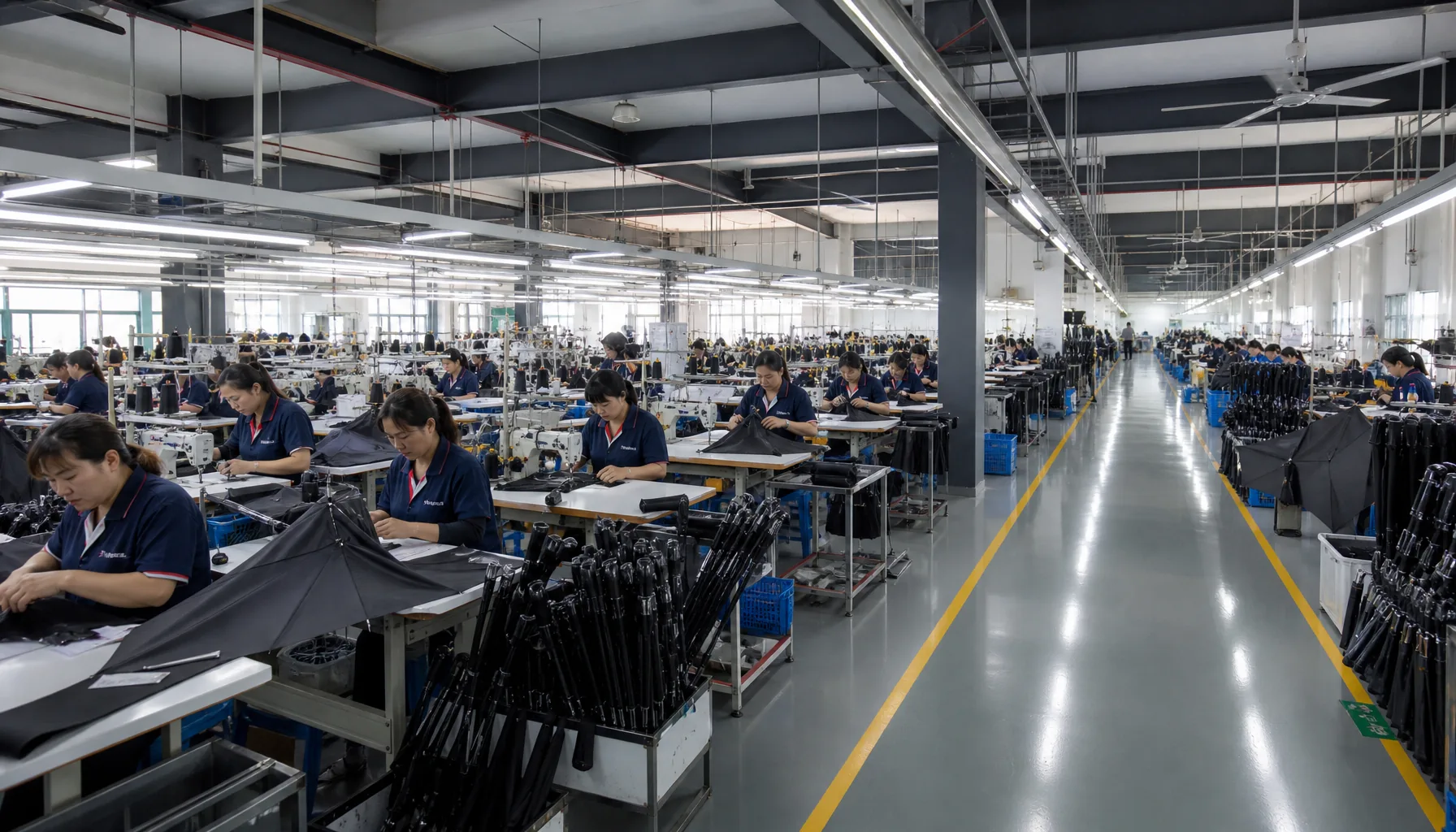
Umbrella Durability Testing Beyond AQL: What Buyers Specify
Know which durability tests to request before shipment, from open-close cycles and rain testing to salt spray, colorfast...
Read More »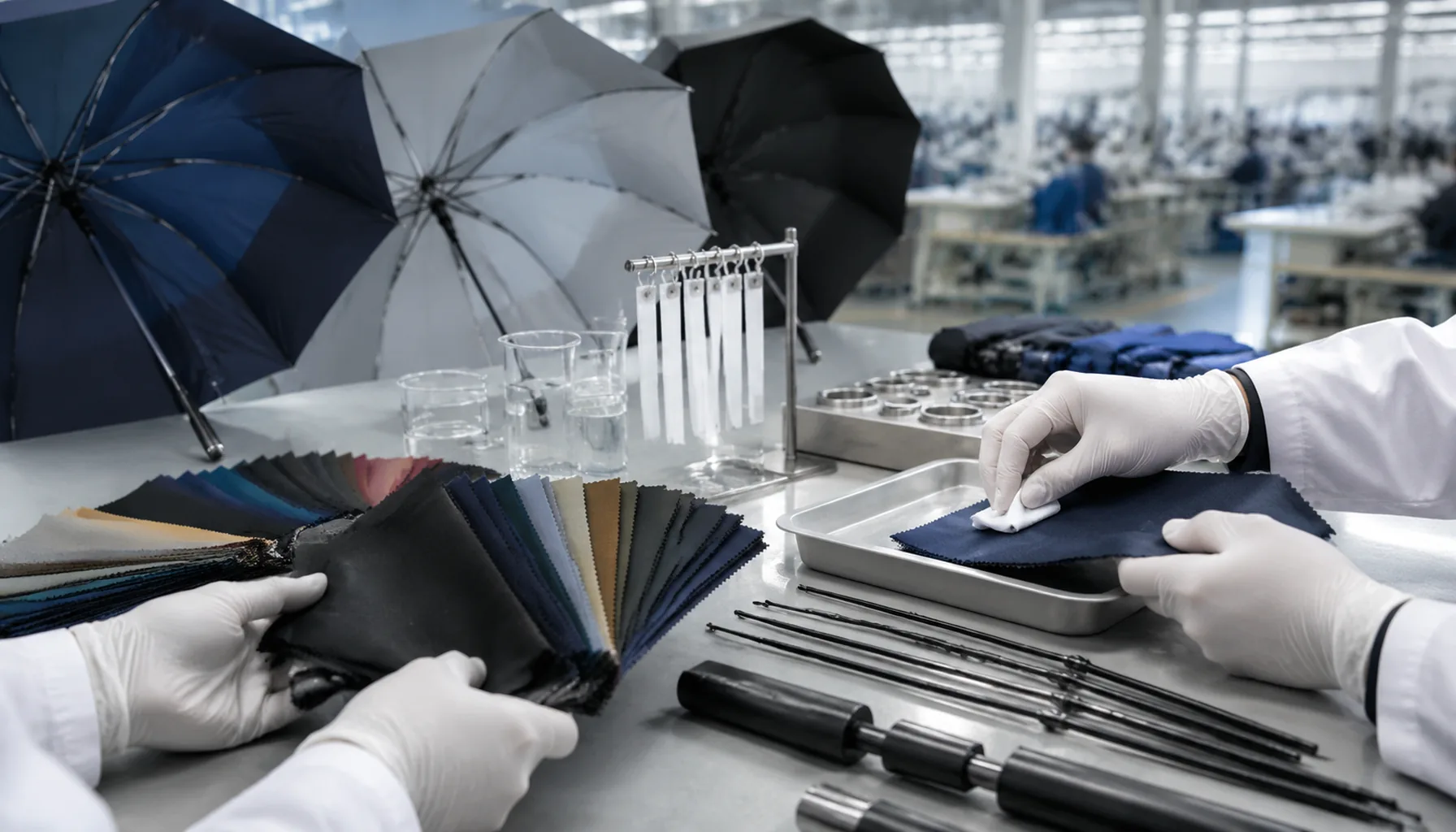
How Umbrella Factories Control Colorfastness and Dye Migration
Learn how factories test umbrella fabric colorfastness, prevent dye migration, and control print defects before bulk pro...
Read More »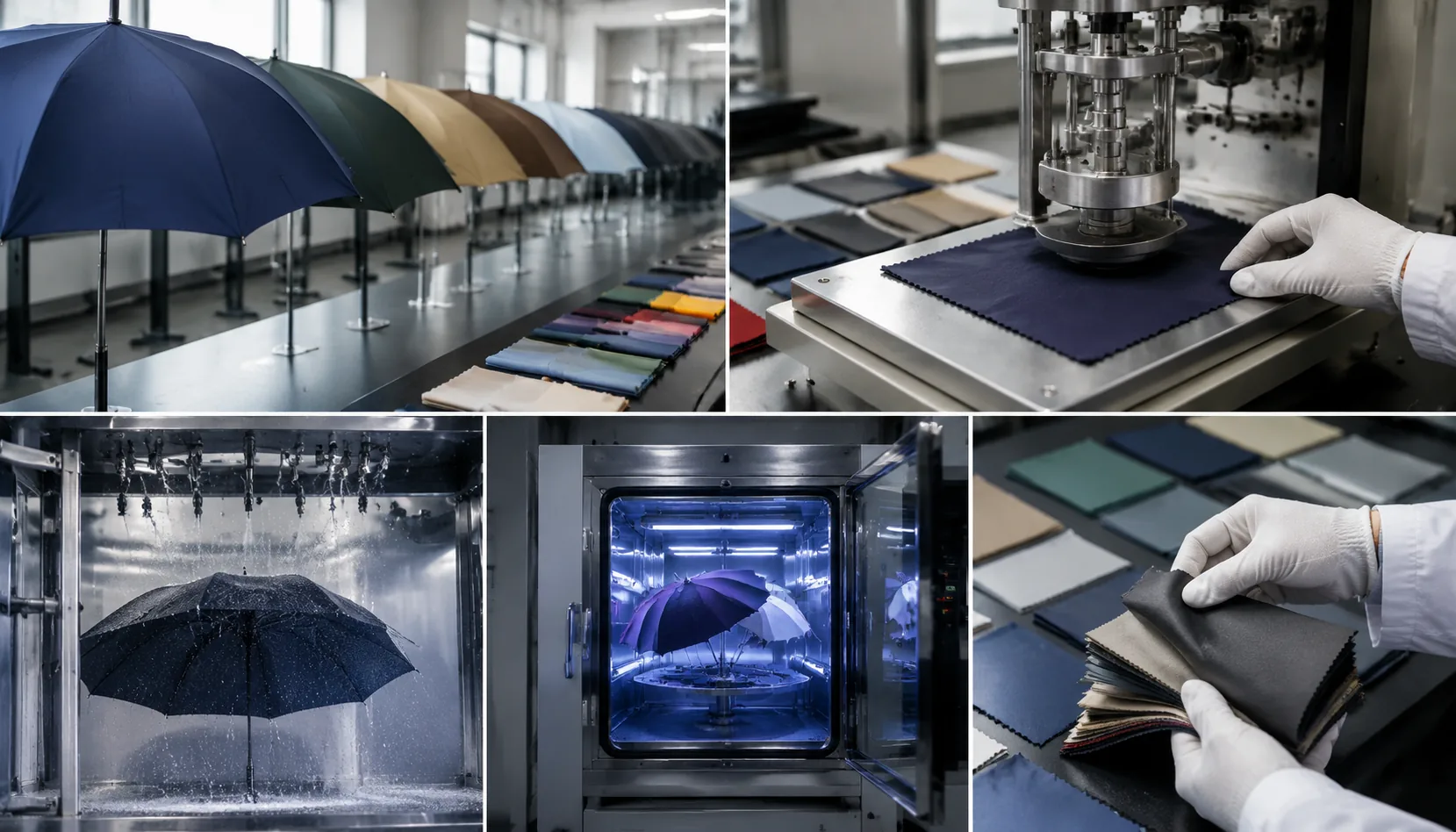
Logo Print Durability Tests for Branded Umbrella Orders
Learn which rub, tape, fold, and wet tests help buyers confirm umbrella logo durability before bulk production and final...
Read More »