Umbrella Programs for Retail Security, Valet, and Door Staff
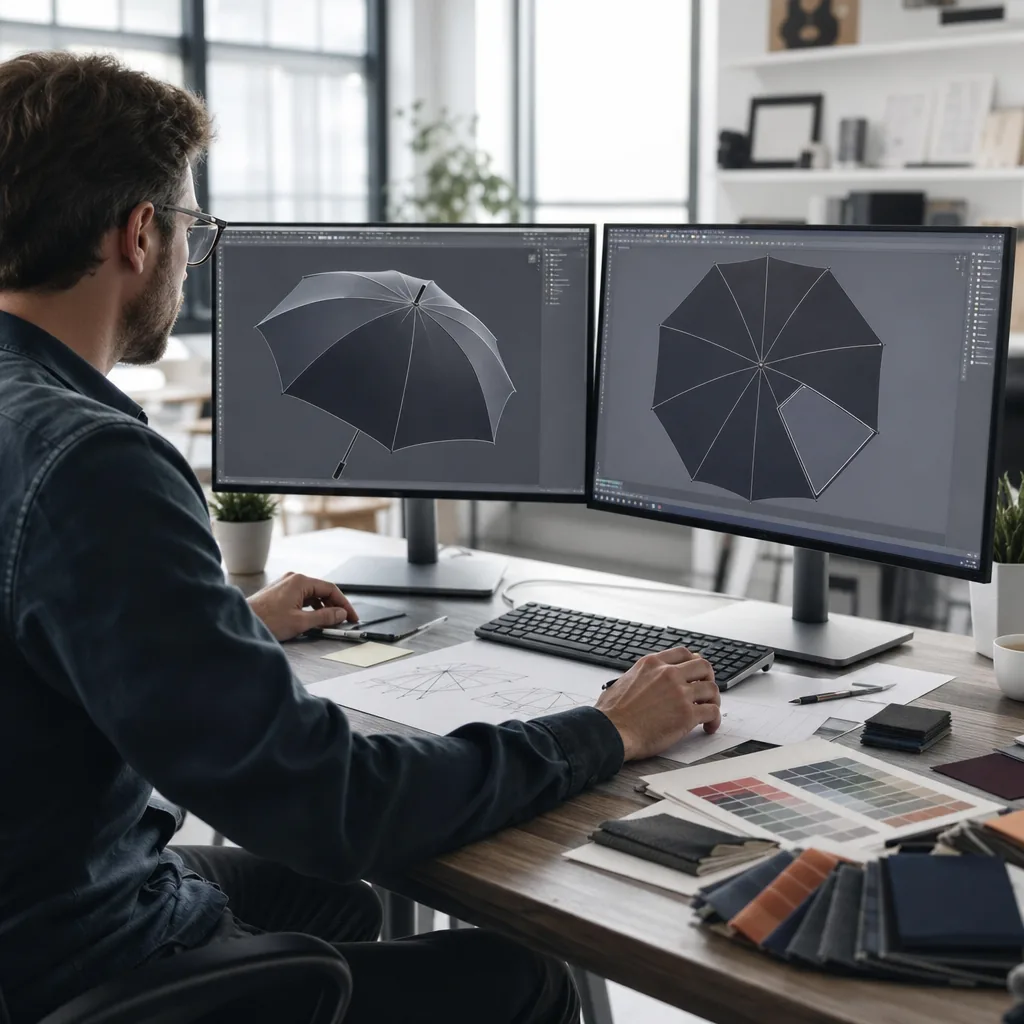
When retail groups buy rain gear for valet, security, and door teams, the real challenge is balancing polished presentation with hardware that survives daily opening, handoff, and wind load across multiple sites. On our Songxia production floor, the failures usually start at the ribs, runner, and handle joint, which is why umbrella programs for valet staff need spec control, branding discipline, and sourcing terms built for repeat deployment.
Operational Use Cases at Store Entrances and Parking Areas
The buying decision starts at the curbside handoff, not the logo. For umbrella programs for valet staff, the most practical specification is a split fleet: one customer-facing umbrella for guest escort and one heavier-duty unit for nonstop vehicle runs. At hotel, mall, and luxury retail entrances, the guest-facing standard is usually a 27-inch or 30-inch auto-open stick umbrella with an 8K or 16K frame, black fiberglass ribs, and a 190T or 210T pongee canopy. That build opens fast, feels substantial in hand, and holds up better than promo-grade steel frames. At exposed entrances, a double-canopy windproof umbrella usually earns its higher unit cost because the vented canopy is often the difference between surviving repeated 45 to 50+ mph gusts and early inversion. Handle choice also affects service reliability: EVA or matte rubber improves grip in sustained rain, while polished wood presents well but gets slippery during long shifts. For doorman escort and luxury guest service, clear POE or EVA canopies preserve sightlines and photograph cleanly at the curb, but they scratch, wrinkle, and haze faster than pongee, so they are better limited to short front-of-house walks rather than all-day circulation.
Back-of-house units should be specified by abuse level, not appearance. Retail security umbrellas used for mall patrols, curbside pickup, and parking-area escort duty are opened dozens of times per shift, leaned against walls, dragged across pavement, and often stored wet, so frame life matters more than decorative trim. Fiberglass ribs and a thicker shaft wall generally outlast lighter all-steel constructions, which add weight and can rust when plating quality is inconsistent. For patrol teams, a 23-inch or 27-inch straight umbrella is the practical standard; curbside teams sometimes use auto-open-close folding models for podium drawers or golf carts, but folding mechanisms trade compact storage for shorter service life than stick frames. Most multi-role sites reduce replacement cost by ordering by department instead of forcing one SKU across every team: premium door staff umbrellas for valet handoff and guest escort, simpler replenishment units for security and receiving, and a 16K umbrella bulk order only when visual impact justifies the extra frame cost. MOQ lead time umbrellas stay most favorable on stock black or navy pongee models at MOQ 300 to 500 pieces with FOB production around 25 to 35 days; custom Pantone components, woven labels, or full-panel printing often push lead time to 35 to 45 days. Before shipment, buyers should require AQL 2.5 checks for opening force, runner lock, stitching, and carton drop condition to reduce early replacements and claims.
Frame and Canopy Specs for Daily Commercial Use
For daily commercial use, frame construction drives replacement cost more than canopy branding. An 8K stick umbrella is the practical standard for retail security umbrellas and most umbrella programs for valet staff because the 8-rib layout keeps unit cost, total weight, and repair complexity lower in 23 inch and 27 inch full-size auto-open models. A 16K umbrella bulk order is better suited to hotel, casino, and luxury retail entrances where appearance affects the guest experience: 16 ribs create a rounder canopy, tighter panel tension, and a more uniform profile on the curb. The tradeoff is direct. More ribs mean more parts, more assembly labor, and more weight, so 16K usually costs more and is less forgiving in high-loss or high-turnover operations. If staff treat umbrellas as tools and loss rates are a real budget line, 8K is the lower-risk buy. If the umbrella is part of the uniform and stays in circulation longer, 16K can justify the premium.
Rib material matters more than rib count at exposed entrances. Fiberglass ribs and stretchers recover from inversion better than painted steel, which often stays bent after repeated curbside gusts. Steel still has a place in low-cost indoor-to-car programs, but it is a weak fit for entrances that see regular wind. That is where a double-canopy windproof umbrella earns its higher price: the vented upper canopy releases pressure before the frame turns inside out, and a well-built fiberglass or hybrid frame can realistically target about 45 to 50+ mph gust performance in wind-tunnel testing. For fast service, specify a full-size auto-open shaft rather than an auto-open-close compact mechanism, which adds more moving parts and more failure risk under daily commercial use. Reinforced runners, thicker ferrules, and replacement-part availability also matter if you want fewer write-offs over a season.
Canopy fabric determines how long door staff umbrellas still look presentable after repeated wet-dry cycles. Pongee 190T is the commercial baseline for MOQ lead time umbrellas on FOB programs because it prints cleanly, dries quickly enough for back-to-back shifts, and holds a workable cost point. Pongee 210T is the better upgrade for valet stands and exposed entrances in constant service because the denser weave resists pinholing, abrasion, and wrinkling better through repeated open-close cycles. For most buyers, the safest spec is a 27 inch full-size auto-open stick with fiberglass ribs, a vented double canopy, and 190T or 210T pongee in black or navy, which hides wear better over months of rain and sun. Move to 16K only when the buyer wants a more premium silhouette and accepts the higher unit cost, added weight, and longer assembly time that come with it.
Matching Umbrella Style to Brand Positioning and Site Conditions
For flagship entrances, specify a straight umbrella that reads as part of the uniform kit, not a giveaway. A 23-inch or 27-inch frame is the usual starting point because it photographs cleanly during customer handoff and looks more controlled at the door than a folding model. Use a solid shaft, fiberglass ribs, and either a crook or EVA handle; if the site sits in a wind corridor between buildings, step up to a double-canopy windproof umbrella in 8K or 16K construction. A 16K umbrella bulk order creates a fuller canopy and more premium silhouette that luxury retail teams often prefer, but it also adds unit weight and freight cost, so buyers should confirm whether appearance justifies the added landed cost. Fabric should be specified as tightly as the frame: 190T or 210T pongee gives better color hold than low-denier shiny fabric and keeps black, charcoal, and navy closer to brand standards. For premium door staff umbrellas, lock Pantone targets before production and treat canopy approval the same way you would any other image-standard item.
For outlet centers and other high-volume sites, the priority shifts to replacement cost, staging efficiency, and abuse tolerance. For umbrella programs for valet staff, curbside security, and back-of-house door teams, a 21-inch or 23-inch straight model with a steel shaft and fiberglass end ribs usually gives the best durability-to-cost balance. That spec handles daily use in carts, planters, and service areas better than a lighter premium frame, without paying for handle trims that retail security umbrellas typically do not need. Focus the buying spec on auto-open reliability, frame joints that survive repeated one-hand deployment, and a canopy that dries quickly between shifts. Branding should stay restrained: a 1-panel or 2-panel logo reads more clearly than an oversized print once the canopy is wet or folded. Screen printing suits black and navy runs; heat transfer or sublimation is better for tighter color match or multi-color artwork, but it increases setup cost. UPF 50+ is worth adding for outdoor queue management in sunny markets such as Phoenix, Dubai, and Southern California. On custom programs, MOQ lead time umbrellas can become the main procurement risk: Pantone-matched canopies, molded handle badges, and printed sleeves can move production from roughly 25 days to 35-45 days, so separate flagship specs from operational curbside specs early instead of forcing one model across every site type.
QC, Packaging, and Multi-Location Distribution Requirements
Set `AQL 2.5` as the release threshold for any daily-use staff issue program, because the expensive failures are visible before they are catastrophic: off-center logo placement, reversed panel orientation, crooked ribs, sticky runners, mismatched handles, and ferrules that do not line up from one store to the next. For `umbrella programs for valet staff`, lock artwork before bulk production with a pre-production sample that confirms panel layout and closed-carry logo direction, especially when the mark must face the street. During inline and final inspection, open random samples on a flat table and check frame symmetry, canopy height, rib spread, tip alignment, and runner travel. One high rib, twisted stretcher, or mis-set notch is enough to make a full line of `door staff umbrellas` look inconsistent at the entrance. Apply the same visual standard to `retail security umbrellas`, where side-by-side use exposes even small variation. If the PO mixes `8K`, `10K`, and `16K` frames, tighten visual checks further; larger canopies make minor errors in rib geometry and assembly easier to spot.
Match testing and packing to site conditions, not just unit cost. For heavy entrance use, a `27"` or `30"` straight umbrella with fiberglass ribs and a steel shaft usually outlasts a cheaper auto-open frame; for exposed sites seeing regular gusts above `35 mph`, a `double-canopy windproof umbrella` is the lower-risk option. Before shipment, run repeated open-close durability testing and spot-check runner lock engagement, tip security, stitching tension at rib pockets, and handle pull strength. For distribution, pack master cartons by store code or region, then label each case with SKU, color, logo version, destination, and carton count so a DC or `3PL` can cross-dock without breaking cartons. Add individual protective sleeves to reduce canopy scuffing in transit, and use hangtags when reserve stock may be reassigned between locations. For a `16K umbrella bulk order` or any rollout to high-loss sites, add `3%` to `8%` spare inventory to the first PO; small refill orders are usually uneconomical once `MOQ lead time umbrellas`, freight minimums, and replenishment delays are included.
MOQ, Lead Times, and Incoterms for Chainwide Rollouts
For umbrella programs for valet staff, MOQ moves with frame complexity and print method more than with canopy diameter alone. A basic 23-inch straight model with an 8K steel frame, 190T pongee canopy, and 1-color screen print is typically workable at 300-500 pieces per color. Move up to a 16K umbrella bulk order or a double-canopy windproof umbrella, and the practical floor usually shifts to 500-1,000 pieces because the rib set, stretchers, and vented-canopy cutting all add material loss and assembly time. Decoration changes MOQ lead time umbrellas as well: digital heat-transfer is often the better route for smaller runs with multi-color artwork, while Pantone-matched screen printing is still the safer choice when retail security umbrellas or door staff umbrellas need repeatable color across reorders. For chainwide rollouts, do not force one spec across every site. Put fiberglass-rib frames at exposed hotel, casino, or street-facing entrances where wind load is higher, and use simpler steel-rib units at covered pickup or valet zones to control replacement cost without underbuilding high-risk doors.
Lead times are usually won or lost in approvals. If the program needs custom Pantone matching for canopy fabric, handle coating, or sleeve print, plan 5-7 days for lab dips and strike-offs before bulk fabric booking starts. After approval, standard custom production is typically 25-35 days for manual and auto-open styles, while auto-open-close shafts, clear POE/PVC/EVA canopies, and vented double-canopy builds more often need 35-45 days because assembly yield is lower. Release should stay tied to AQL 2.5 inspection after open-close cycle checks, stitch-density review, and carton drop testing. For shipping, FOB suits buyers already using a forwarder, consolidating SKUs, or staging inventory by region, where carton cube and container loading affect landed cost. DDP fits store networks that want one landed price and do not want to manage customs clearance or inland delivery to multiple addresses. A practical mixed-order plan is to pack by store code and tier: for example, 1,000 premium 27-inch fiberglass vented units for flagship entrances and 3,000 standard 23-inch steel-frame units for covered locations, which simplifies allocation and replenishment when demand varies by region.
Frequently Asked Questions
When does a 16K umbrella make sense for valet or doorman programs?
A 16K frame can create a more refined look that suits luxury retail or hotel-style service at premium entrances. Buyers should still confirm the frame strength and weight balance, because appearance alone does not guarantee better field durability.
What is the best opening style for door staff umbrellas?
Auto-open is usually the best fit because staff can deploy it quickly while assisting customers. Auto-open straight umbrellas also tend to be simpler and more durable than compact manual-folding styles for daily commercial use.
What umbrella size works best for valet, security, and door teams in daily commercial use?
For most staff programs, a 27 to 30 inch straight umbrella gives the best balance of coverage, appearance, and storage. Many multi-site buyers choose 16-rib or double-canopy models because they hold shape better in windy curbside and entrance conditions.
How should a multi-site retailer split branding across different staff umbrella programs?
A common approach is one master canopy design with location-specific handle tags, sleeve labels, or small panel edits. This keeps visual consistency while making reorders easier, especially when distributing 100 to 500 units per site.
What sourcing terms matter most when ordering umbrellas for security and entrance teams?
Buyers usually focus on MOQ, replacement planning, carton pack counts, and production lead time. For custom commercial umbrellas, MOQ often starts around 100 to 300 pieces per style, with production lead times typically running 25 to 45 days after artwork approval.
Looking to Launch Your Custom Umbrella Line?
ZheBrella is a Zhejiang-based OEM/ODM umbrella manufacturer with 17 years of export experience. Free design, low MOQ from 100 pieces, windproof construction, full-color print.
Get Free Quote Now »People Also Search For
Related Articles

Umbrella Programs for Luxury Retail and Shopping Centers
Source umbrellas for malls and luxury retail with valet-ready specs, premium fabric options, and QC standards that prote...
Read More »
Umbrella Programs for Luxury Retail Concierge and Valet
Build a premium umbrella program for luxury retail concierge and valet teams with upscale materials, branding, QC, and d...
Read More »Custom Umbrellas for Retail Mall Operations and Tenant Programs
Build umbrella programs for malls, valet teams, and tenant campaigns with durable specs, practical SKU tiers, QC control...
Read More »