What Buyers Should Check in Umbrella Test Reports and QC Photos

When you are approving an umbrella shipment, the risk is rarely in the sample piece; it is in the gap between what the factory claims and what the lot can actually survive. Strong umbrella test reports should show more than a pass mark, including wind, water, cycle, and finish checks that reflect how ribs, runners, fabric coating, and stitching behave on the line and after packing. QC photos matter for the same reason: they should prove the defect rate, not just show a few polished examples.
Separate factory checks from third-party tests
Factory paperwork should show what was actually checked on the line: frame pull test results, opening-cycle counts, panel stitch inspection, handle fit, and carton drop or packing checks. The useful umbrella test reports from the factory are the ones tied to the exact PO style, canopy size, rib count, and mechanism, not a generic sample sheet from last season. I also want umbrella qc photos that show the open canopy, shaft straightness, runner close-up, tip caps, seam alignment, and any defect found during in-line inspection. For a real pre-shipment inspection, the report should state sample size, inspection date, and the acceptance basis, with AQL 2.5 clearly listed if that is the agreed standard. That is the document set that tells you whether production matched the approved sample before the cartons left the factory.
Outside lab documents are for claims you should not accept on factory letterhead alone. Water-repellency should be backed by a lab method reference, not just a wet-canopy photo, because spray rating, hydrostatic behavior, and rewetting performance are not the same thing. If the umbrella is sold as wind-resistant or corrosion-resistant, ask for opening-cycle data and salt-spray results on the metal parts, especially ribs, stretcher joints, springs, and rivets. A proper third-party package also helps with export compliance when the buyer needs evidence for retail or customs files, because it shows the tests were done independently and to a stated standard. In our shop, the factory handles production QA and the outside lab validates performance claims; mixing those two roles is how buyers get fooled by nice-looking paperwork.
The practical split is simple: the factory should prove consistency, while the lab should prove performance. If the supplier sends only polished umbrella test reports without sample IDs, dates, and defect photos, assume the documents are marketing collateral, not QC evidence. For higher-risk programs, ask for the full pre-shipment inspection file, including carton count, defect classification, and the exact photos taken during inspection, then compare that against the lab report for opening-cycle, water-repellency, and salt-spray testing. That cross-check matters because a canopy can pass visual QC and still fail after repeated use or corrosion in transit. Buyers who want fewer surprises should require both document sets before balance payment, not after the goods are already on the vessel.
Read the numbers that matter
Umbrella test reports should give you numbers, not adjectives. For spray rating, I want the method named and the result recorded in a way you can compare across lots: a canopy that still beads water after the full spray cycle is fine, but “good water resistance” is not. Pull force matters just as much. On a real order, I expect the runner lock, rib joints, and canopy stitching to hold a defined force without slippage or tearing, and the report should state the force in newtons, not just say the frame passed. Canopy weight should match the BOM within a narrow tolerance, especially on 190T or 210T pongee, because an underweight canopy often means thinner fabric or poor coating. Carton drop height is another place where vague language hides problems: for export cartons, a proper pre-shipment inspection should show the specified drop height, the drop faces tested, and whether tips, shafts, or panels cracked afterward.
AQL 2.5 is where buyers usually get tripped up because the sample logic is not intuitive. The exact sample size depends on lot size and inspection level, but the point is simple: the larger the order, the more a small defect rate can still fail if the defects are concentrated. Under AQL 2.5, one or two major defects in the sampled cartons can already push a lot into failure depending on the plan, so you cannot read the report by looking only at the total reject count. Good umbrella qc photos should show the actual defect class, the carton label, the counted sample, and the failed item side by side. For export compliance, I want the inspection to tie the test data back to the PO and packing list, because a report that passes the lab but ignores the shipped spec is useless in a claim dispute.
Use QC photos to verify construction, not just appearance
Wide shots are useful for overall color and silhouette, but they hide the defects that matter in use. For umbrella qc photos, I want close-ups of rib end caps, runner alignment at the stretcher joints, the stitching density at the canopy panels, seam finish at the tips, and logo placement relative to the panel centerline. Those five views tell you whether the frame was assembled cleanly or just photographed from three feet away. A rib end cap that sits proud, a runner that is tilted, or a logo that drifts off-axis usually means the factory is hiding a tolerance problem, not just a cosmetic blemish. In umbrella test reports, those same details matter because construction faults often show up later as panel pull, uneven opening, or a crooked canopy under load.
Wide-angle photos can also conceal needle issues and poor cutting. Ask for macro shots of stitch length, backtack at stress points, thread tension, and the seam fold at each panel edge. If the stitches are sparse, wandering, or chewing the fabric, the umbrella may pass a basic visual check and still fail after a few openings. The same applies to seam finish: frayed edges, uneven heat-seal work on POE or PVC canopies, and loose threads around the ferrule are easy to crop out of a frame. A proper pre-shipment inspection should pair those photos with measured counts, because AQL 2.5 is about sampling discipline, not about trusting a single clean-looking image. If the supplier will not show defects at close range, the report is incomplete.
Buyers should also ask for context shots that link the photo to the actual lot: carton label, sample ID, production date, and the exact model tested. That matters for export compliance, especially when a supplier claims wind resistance, UV coating, or a specific open-close mechanism in the umbrella test reports. The image set should show whether the canopy is centered on the frame, whether the tips are seated evenly, and whether the logo lands where the artwork proof says it should. Wide shots can hide a 5 mm logo shift, a bent rib tip, or a panel that is sewn tight on one side and loose on the other. Our standard practice is to tie those photos to the inspection record so the buyer can compare the physical unit against the approved spec instead of relying on appearance alone.
Check export paperwork before booking shipment
The first thing I check is whether the commercial invoice, packing list, and HS code all describe the same shipment. For umbrellas, that sounds basic, but it is where a lot of customs holds start: wrong HS code, missing country of origin, inconsistent carton counts, or invoice values that do not match the purchase order. A clean set of umbrella test reports helps only if the paperwork supports the same construction: 8K or 10K frame, pongee 190T or 210T canopy, manual or auto-open-close mechanism, and the correct quantity by SKU. If the invoice says 5,000 pieces and the packing list says 4,800, the broker will usually stop and ask for a correction before release. That adds days, and at destination port that often turns into storage fees and missed delivery windows.
For export compliance, the destination market matters more than many buyers expect. Some countries want material declarations for the canopy coating, handle, ribs, or packaging components, especially if the umbrella has a PVC, EVA, or Teflon-treated canopy, UV coating, or printed graphics. If the market requires REACH, Prop 65, phthalate, azo dye, or other chemical statements, those need to be matched to the actual bill of materials and the lab file. Umbrella qc photos are useful here because they show the packed product, labels, polybags, hangtags, and carton marks exactly as shipped. In our standard practice at ZheBrella, the pre-shipment inspection file is only complete when the paperwork, the photos, and the AQL 2.5 result all point to the same lot, otherwise the buyer is signing up for a customs dispute instead of a shipment.
The missing data that causes the most delay is usually not technical failure, but paperwork gaps: no country of origin marking on the carton, a vague description like "promotion item" instead of "folding umbrella," no declared material composition, or no HS code that the broker can defend. A buyer should also confirm that the umbrella test reports reference the exact production batch, because customs or a retailer compliance team may ask for traceability from test file to shipment lot. If the report says one fabric weight and the packing list says another, the inconsistency becomes a documentation problem even if the product itself is fine. The safest approach is to review the invoice, packing list, material declarations, and qc photos together before booking freight, because fixing export paperwork after the container is loaded is slower, more expensive, and usually avoidable.
Turn test reports into a release decision
The fastest way to waste money is to treat umbrella test reports like a pass/fail sticker instead of a release decision. Read the defect pattern first: one broken rib on a random sample is not the same as repeated frame opening failures, leaking seams, or canopy delamination across multiple cartons. If the issue is structural, water resistance, or UV coating inconsistency, hold the lot and stop packing. If it is cosmetic and localized, such as a print registration shift or a few scuffed tips, you may rework and retest without blowing the schedule. A proper review should tie the umbrella test reports to the sample size, the failure rate, and the defect class, not just the headline result.
Use the lab numbers to decide whether the shipment can clear AQL 2.5 or needs another round of pre-shipment inspection. Wind, spray, opening-cycle, and colorfastness results tell you whether the failure is a one-off or a process problem. For example, if the canopy passes water pressure but fails at seam tape or the runner jams after repeated cycles, that is a manufacturing control issue, not a packing issue. Our standard practice at ZheBrella is to compare the test report against umbrella qc photos from the same lot, because the photos show whether the defect is isolated to one workstation, one material batch, or the entire production run. That is the difference between a controlled rework and a shipment delay that keeps compounding.
Approve only when the report, the photos, and the carton count all line up with export compliance requirements and the buyer’s delivery window. If the defect rate is low, the fix is simple, and reinspection can be completed without missing vessel cutoff, rework is usually the right call. If the failure touches frame safety, coating performance, or packing integrity, hold the order until the supplier issues a documented corrective action and a fresh sign-off. Do not load the container on verbal approval. The release decision should be written, dated, and attached to the shipment file before the truck is sealed, so there is no dispute later over who accepted the risk and on what evidence.
Frequently Asked Questions
What is the minimum QC evidence a buyer should request?
Ask for date-stamped line photos, carton count photos, and close-ups of rib joints, stitching, and print registration. For higher-risk orders, add cycle-test and water-spray results.
When should a shipment be held?
Hold it if the defect rate suggests a failed AQL sample, key test values are below spec, or the carton counts do not match the packing list. Rework is cheaper than a chargeback when the issue is caught before loading.
Which test results should a buyer verify first in an umbrella report?
Start with spray rating, opening and closing cycle count, and frame strength results. For export orders, also confirm rust resistance and colorfastness if the umbrella uses printed fabric or metal parts. If any result is missing, ask whether the test was done on the final production material or only on a sample.
How many cycle tests are enough for a retail umbrella order?
For a standard retail program, many buyers look for at least 3,000 to 5,000 open-close cycles on manual umbrellas and higher for automatic models. The right target depends on price point, market, and whether the umbrella is intended for daily use or promotion. Ask the supplier to state the exact test method and failure criteria, not just the cycle count.
What photos should be included in umbrella QC before shipment?
Request clear photos of the full lot, canopy print, stitching, ribs, runner, handle, tips, labels, carton markings, and finished packed cartons. If there is a complaint risk, ask for close-ups of any repaired defects and random unit photos from different cartons. Good QC photos should match the inspection quantity and show the actual packed condition, not only sample pieces.
Looking to Launch Your Custom Umbrella Line?
ZheBrella is a Zhejiang-based OEM/ODM umbrella manufacturer with 17 years of export experience. Free design, low MOQ from 100 pieces, windproof construction, full-color print.
Get Free Quote Now »People Also Search For
Related Articles

Rain Test Standards for OEM Umbrellas: What Buyers Should Ask
Learn which factory rain and durability tests matter for OEM umbrellas, from water repellency and seam leakage to cycle ...
Read More »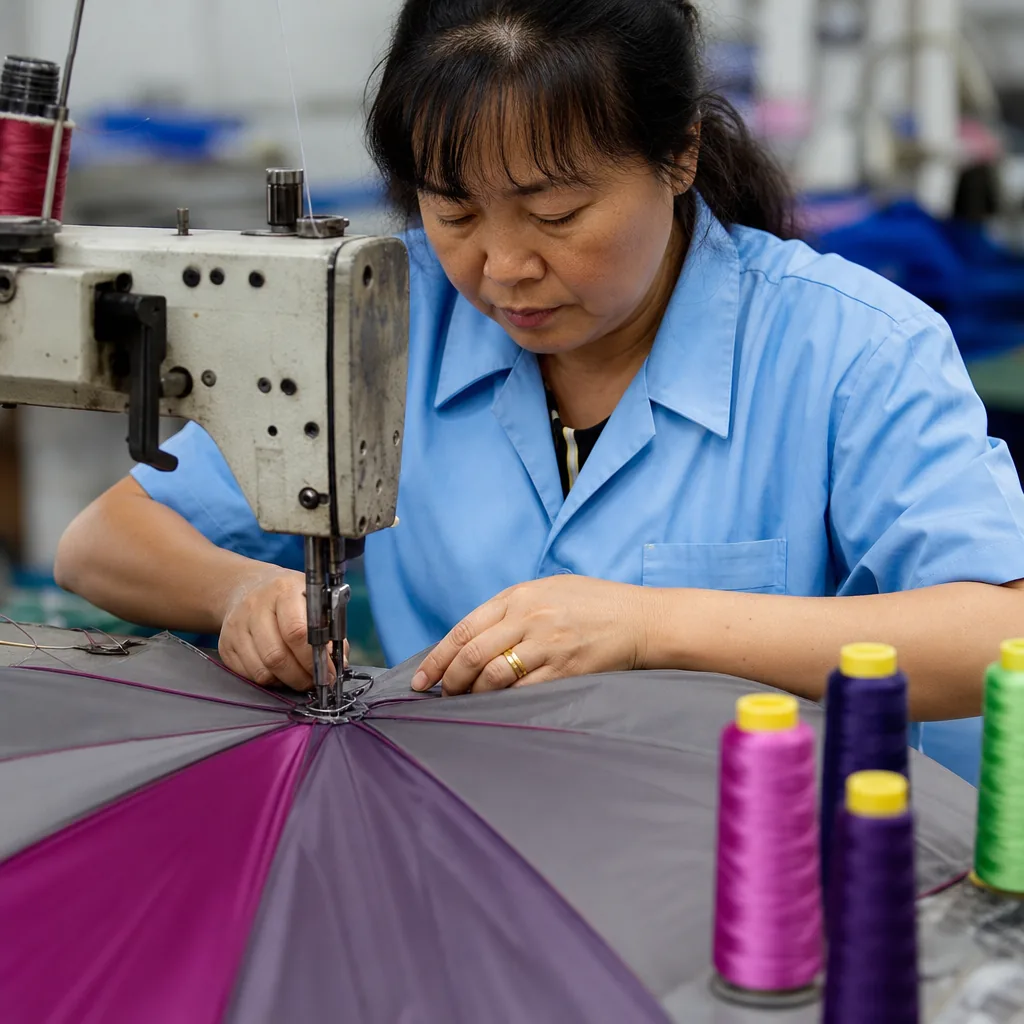
Umbrella Frame Tension and Canopy Fit: What Buyers Should Check
Learn how rib tension, stitch allowance, and canopy shrinkage affect opening feel, panel alignment, and rejection rates ...
Read More »
Custom Umbrellas for Luxury Retail and Store Concierge
Source umbrellas for luxury retail concierge and store lending programs with premium materials, tighter QC, and specs th...
Read More »