Wooden vs Metal Umbrella Shafts for Premium Brand Programs
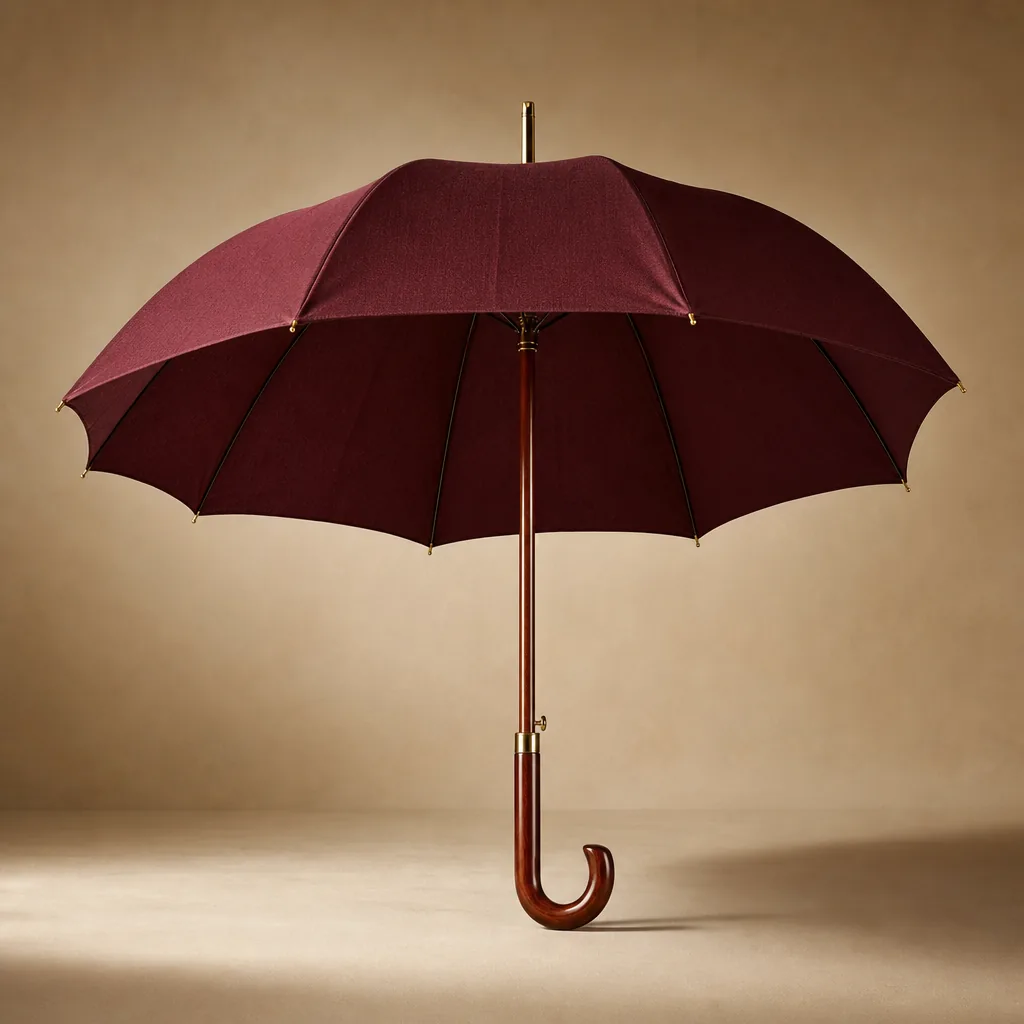
For premium umbrella programs, the shaft choice shapes more than look and feel: it affects durability, carry weight, opening stability, unit cost, and how consistently the product runs on the factory floor. When buyers compare wooden vs metal umbrella shafts, the right answer depends on brand positioning, expected use, and the tolerances your supplier can hold through production and finishing.
How Shaft Choice Changes Product Positioning
Wooden vs metal umbrella shafts changes positioning before the first sample is opened. Wood supports a premium, heritage look when the program is selling giftability, tradition, or a lifestyle accessory instead of pure utility. A maple, birch, or stained hardwood shaft on a 23-inch or 27-inch stick umbrella with a crook handle fits boutique retail, wineries, country clubs, and luxury hotel entrances, especially when paired with 190T or 210T pongee, screen printing, and an 8K frame. That combination signals warmth and craftsmanship, but it also brings real sourcing tradeoffs: wood adds weight, can vary in color and grain, and is harder to keep perfectly straight across large runs. For premium umbrella shaft options, that variance is acceptable when the buyer wants a higher perceived unit value, but it increases sorting risk and makes replenishment less uniform for retail programs that need identical cartons and repeatable finish.
Metal fits the programs where consistency, mechanism compatibility, and cost control matter more than a handcrafted story. Steel and aluminum shafts hold tighter tubing tolerances than wood, so they are the better choice for auto-open or auto-open-close umbrellas, compact 21-inch or 23-inch folding models, and builds with fiberglass ribs, vented double canopies, or wind targets above 50 mph. In retail umbrella sourcing, that makes metal the default for department-store private label, commuter umbrellas, and volume giveaway orders that need clear metal shaft umbrella specs, stable logo placement, and lower transit risk. Aluminum cuts carry weight; steel usually gives better dent resistance and a lower unit price. Channel should decide the material: boutique retail can justify a higher FOB on wood shaft umbrellas when packaging and handle finish support the story, while hospitality often splits by use case, with luxury hotels choosing wood for lobby presentation and poolside or guest-use programs choosing metal for moisture resistance, AQL 2.5 control, and easier replenishment.
Performance Differences in Weight, Strength, and Weather Use
For premium programs, the real decision in wooden vs metal umbrella shafts usually comes down to how the umbrella feels in hand versus how it behaves after a year of commuter use. A wood shaft umbrella has the warmest grip and the most upscale visual language, especially with maple, beech, or lacquered crook handles, but it is rarely the lightest option. On a typical 23 inch straight umbrella, a solid wood shaft can add 80 to 150 grams over an equivalent aluminum tube, which matters for hospitality, golf, and retail customers who expect all-day carry comfort. Steel gives the most rigid center pole and a very planted feel, but it also pushes total unit weight up fast, particularly on 27 inch and 30 inch frames. Aluminum sits in the middle of premium umbrella shaft options: lighter than steel, cleaner-looking than low-grade plated metal, and easier to pair with modern auto-open mechanisms.
Strength is more complicated than buyers assume. Shaft rigidity helps the canopy track straight when opening and closing, but wind survival is determined by the whole frame set, not just the center pole. I have seen a heavy steel shaft fail in practical use because it was matched with cheap 8K steel ribs that stayed bent after inversion, while a lighter aluminum shaft paired with fiberglass ribs and a double-canopy vented construction passed repeated 50+ mph fan testing without permanent deformation. That is why metal shaft umbrella specs should always be reviewed together with rib material, rib count, spring strength, and runner fit. For daily-use city umbrellas, a 21 inch or 23 inch frame with an aluminum shaft and fiberglass ribs usually gives the best balance of carrying weight and rebound. For executive straight umbrellas where presentation matters more than packability, wood or steel can still make sense if the rib set is engineered correctly.
Weather use is where sourcing mistakes show up fastest. Wood reacts to moisture; if the shaft is poorly sealed, repeated wet-dry cycles can cause swelling, surface checking, or slight warping, especially in humid storage or when umbrellas are dried while leaning against radiators. Steel does not have that moisture sensitivity, but if the tube wall, ferrule area, or internal spring components are not properly plated or powder-coated, corrosion starts at scratches and thread points. Aluminum has the best corrosion resistance of the three in normal retail conditions, which is one reason it is common in retail umbrella sourcing for coastal markets. Our standard practice is to assess shaft material together with canopy and use case: a POE or EVA clear umbrella stored wet needs different hardware protection than a 190T pongee promotional piece. In short, wooden vs metal umbrella shafts is not only a style call; it is a maintenance and climate decision tied directly to frame design.
Finish Options and Branding Implications
Finish drives the first retail impression, so buyers should treat it as a sourcing spec, not decoration. In wooden vs metal umbrella shafts, lacquered wood reads warmer and more giftable, while coated metal looks cleaner and more modern. For wood shaft umbrellas, the practical premium finish set is clear lacquer over a natural maple tone, walnut stain, cherry stain, or piano-black lacquer. Clear and satin topcoats usually hide handling marks better than deep gloss, and they reduce the visibility of edge chips at the runner contact point and top notch after repeated open-close testing. For department-store, hotel, and corporate gifting programs, satin or semi-gloss wood is usually the safer choice because it still looks premium under bright retail lighting without showing transit scuffs and hook-rack wear as quickly as mirror gloss.
Metal shafts give tighter color consistency across 3,000- to 20,000-piece runs, but the real issue is scratch visibility. Matte black powder-coated steel or aluminum is the lowest-risk choice for premium umbrella shaft options because it pairs cleanly with black fiberglass ribs, gunmetal tips, and ABS, EVA, rubberized, or soft-touch polypropylene handles. Plated finishes such as bright chrome, brushed nickel, and champagne gold can raise perceived value on the sample table, but they also show fingerprints, micro-abrasion, and rack wear faster in retail. When reviewing metal shaft umbrella specs, ask whether the finish is electroplated, spray painted, or powder coated, and request a cross-hatch adhesion test plus a 48-hour salt-spray reference if the line will sell in coastal markets. For branded color programs, color-matched painted shafts can get close to Pantone goals, but the match will never be exact once the shaft is paired with a canopy and handle.
Coordination matters as much as finish. Pongee 190T usually works best with lacquered wood and curved wood or PU-wrapped handles on 23-inch and 27-inch stick umbrellas, while 210T pongee pairs more naturally with matte black or color-matched painted metal and straight ABS or EVA grips. That pairing affects premium umbrella shaft options at retail: wood plus 190T creates a warmer, more classic presentation; metal plus 210T supports a sharper, more fashion-led look. Buyers should also expect slight visual variation between woven pongee and painted shafts because the fabrics and coatings reflect light differently, especially under store LEDs. In retail umbrella sourcing, the decision is usually between the natural variation and tactile warmth of wood, or the repeatable color control and lower visual risk of metal. If the program depends on exact brand color, painted metal is safer; if it depends on a premium gift feel, lacquered wood is usually the better sell.
Manufacturing, MOQ, and Lead-Time Tradeoffs
For faster launch timing, stock metal shafts usually win in wooden vs metal umbrella shafts decisions because they run on existing tube inventory and standard tooling. Aluminum or plated steel shafts in 10 mm, 12 mm, and 14 mm diameters can keep MOQ near 500 to 1,000 pieces per colorway, depending on handle mold, canopy print method, and whether the umbrella is a 21" or 23" auto-open style. A factory can cut, punch, plate, or powder-coat the shaft and move into assembly without waiting on kiln-drying or stain approval. That keeps metal shaft umbrella specs simpler to control and often shortens ex-factory lead time to about 25 to 35 days after sample approval. Larger 27" golf umbrellas, especially with fiberglass ribs and vented double-canopy construction, usually run 35 to 45 days because sewing and frame assembly add more steps.
Wooden programs take longer because finish control starts before final assembly. Premium umbrella shaft options such as beech, maple, or crook-handle hardwood often need stain confirmation to match retail packaging, fixture lighting, or a brand color standard, and special lengths or diameters can add another tooling or turning step. OEMs should check shaft straightness after turning and sanding, then verify assembly consistency under AQL 2.5, including ferrule fit, runner tolerance, handle tenon fit, and varnish adhesion after humidity exposure. Custom-stained wood shaft umbrellas commonly add 7 to 15 days and may push MOQ to 1,000 to 3,000 pieces because of wood yield loss and hand-finishing labor. For retail umbrella sourcing, the lowest-risk approach is to approve a golden sample for finish, gloss, and assembled weight, then split the launch between stock metal for speed and wood for the higher-margin program once the stain and straightness are stable.
Best-Fit Spec Combinations for Different Programs
For premium retail, choose the spec that matches the brand story, not the lowest landed cost. In wooden vs metal umbrella shafts, wood is the better fit for heritage and gift programs: a 23-inch or 27-inch straight umbrella with a beech or maple shaft, 8K canopy, manual open, and 190T or 210T pongee delivers a softer hand feel and a more elevated shelf presentation. Pair the wood shaft with fiberglass ribs instead of an all-steel frame to reduce weight and improve flex recovery, which helps in store handling and lowers return risk. A crook handle, low-gloss lacquer, stitched sleeve, and clean ferrule-to-top-cap alignment support a premium look; a crooked runner or misaligned tip is visible in product photography and signals poor retail umbrella sourcing.
Hotel entrance umbrellas should prioritize repeat-use durability, fast deployment, and wet-weather recovery. The safest starting point is a 27-inch or 30-inch straight umbrella with a black-coated steel or aluminum shaft, auto-open mechanism, double-canopy vented construction, and 8K or 16K fiberglass ribs depending on the visual profile you want. Use 210T pongee with a Teflon water-repellent finish to improve shedding and reduce panel sag after constant drying and rehanging. For exposed entrances or coastal properties, specify thicker-wall tubing, a reinforced spring, and wind testing above 50 mph to lower the chance of bent shafts, failed runners, and canopy inversion. Among premium umbrella shaft options, this is the most practical commercial build because it balances appearance, uptime, and maintenance cost.
Promotional distribution needs lower unit cost, tighter carton packing, and reliable print area. A 21-inch or 23-inch auto-open umbrella with a powder-coated steel shaft, 8K steel ribs with fiberglass end sections where possible, and 190T pongee is usually the best balance of price and branding. The metal shaft umbrella specs support faster production and more stable logo placement than many wood shaft umbrellas, which makes them easier to scale for giveaways, trade shows, and seasonal campaigns. If the program is executive gifting, move up to a wood shaft and manual-open frame, but stay at 8K unless the budget can cover the extra sewing labor and larger carton volume of 16K. For retail umbrella sourcing, lock in AQL 2.5 and inspect opening force, button function, print registration, and shaft straightness before shipment.
Frequently Asked Questions
Are wooden shafts suitable for high-humidity or frequent-rain markets?
They can be, but buyers should request sealed finishes and consistent moisture-control standards from the factory. For heavy daily-use rain programs, metal shafts may deliver more consistent long-term dimensional stability.
Do premium wood shafts always mean longer lead times?
Not always, but custom stains, special diameters, or matched wood handle sets often add time versus stock metal components. Buyers should confirm material availability before locking a launch date.
How much does a wooden shaft typically add to unit cost in a premium umbrella program?
For mid-to-large OEM orders, a wooden shaft usually adds about $0.40 to $1.20 per unit versus a standard plated steel shaft, depending on wood species, finish, and diameter. The cost gap is wider if the program also uses matching wooden tips or curved wood handles.
Which shaft option is better for large 27 to 30 inch golf umbrellas sold through retail?
Metal shafts are usually the safer choice for 27 to 30 inch golf umbrellas because they handle higher canopy tension and repeated opening cycles more consistently. Many buyers pair aluminum or steel shafts with fiberglass ribs to keep weight reasonable while maintaining strength.
Does choosing a wooden shaft change production lead time for custom orders?
Yes, it often does. Wooden shafts can add roughly 5 to 10 days to production if the order needs custom stain matching, lacquer approval, or tighter straightness grading, while standard metal shafts are typically faster to source and assemble.
Looking to Launch Your Custom Umbrella Line?
ZheBrella is a Zhejiang-based OEM/ODM umbrella manufacturer with 17 years of export experience. Free design, low MOQ from 100 pieces, windproof construction, full-color print.
Get Free Quote Now »People Also Search For
Related Articles
Wooden Shaft Umbrellas: Buyer Guide for Premium Retail
Compare wood shaft, crook handle, pongee canopy, and frame specs for premium umbrellas, with MOQ, QC checks, and FOB/DDP...
Read More »
Wooden Stick Umbrellas: OEM Buyer Guide for Premium Orders
Compare wooden shaft, steel, and fiberglass stick umbrella specs, from 8K ribs and 190T pongee to MOQ, AQL 2.5 checks, a...
Read More »
Wooden Stick Umbrellas: Buyer Guide for Premium Lines
Source premium wooden stick umbrellas with proper shaft, ribs, pongee fabric, handles, packaging, AQL 2.5 checks, MOQ, a...
Read More »