Wooden Stick Umbrellas: Buyer Guide for Premium Lines
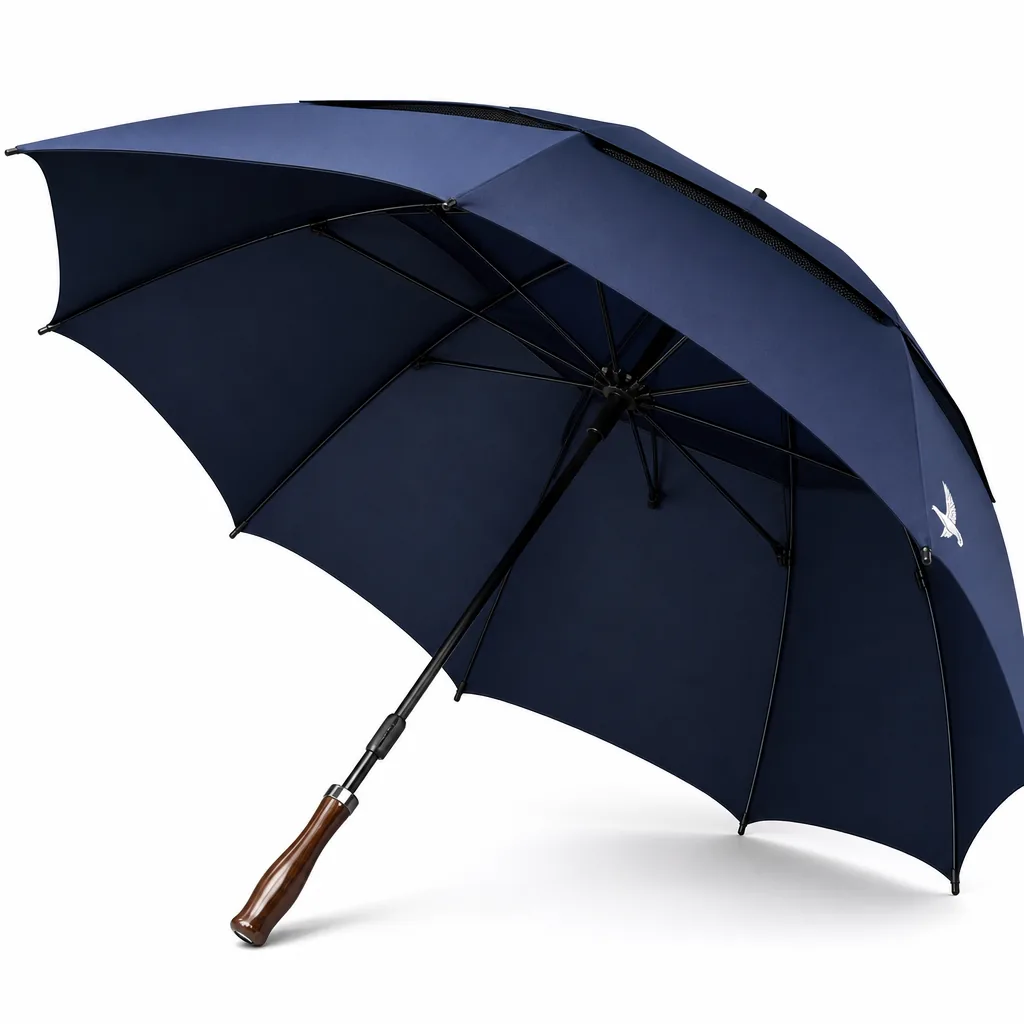
Premium wooden stick umbrellas look simple on a showroom rack, but small choices in shaft drying, rib gauge, pongee density, handle finishing, and carton packing decide whether they arrive straight, smooth, and retail-ready. On our Songxia factory floor, most buyer issues trace back to specs that were too loose before sampling, AQL 2.5 inspection points added too late, or FOB/DDP costs planned without real packaging volume.
Position Wooden Stick Umbrellas in the Product Line
Wooden stick umbrellas belong in the upper tier of a line, not as the cheapest rain-cover SKU. I would position them for executive gifts, fashion retail drops, boutique hotels, luxury real estate handovers, and premium corporate programs where the umbrella is handled slowly enough for the buyer to notice the shaft, handle finish, and canopy tension. A 23" or 27" straight umbrella with a polished beech, maple, or ash shaft feels more deliberate than a powder-coated metal-shaft model, especially when paired with 190T or 210T pongee, a matching sleeve, and a clean one-color logo on one panel. For retail umbrella sourcing, the wooden shaft also gives visual merchandising value: it hangs well, photographs well, and looks like an accessory rather than emergency weather gear. That matters for department stores, museum shops, hotel boutiques, and apparel brands building a premium rain category.
Compared with metal-shaft straight umbrellas, wooden stick umbrellas carry higher perceived value even when the functional specification is similar. A steel-shaft 23" auto-open umbrella with 8K ribs may pass the same AQL 2.5 inspection and survive normal rain use, but it feels more promotional and less permanent. Wood gives warmth and weight, while metal gives efficiency and cost control. Against compact models, the comparison is even clearer: a 21" auto-open-close folding umbrella wins on portability, courier cost, and handbag convenience, but it cannot deliver the same ceremony when a hotel doorman hands it to a guest or a financial services brand presents it in a gift box. Premium stick umbrellas are not bought only for storage size; they are bought because the user is seen carrying them.
Specification discipline is important because a wooden shaft can look premium while hiding weak construction. For OEM walking umbrellas, I prefer 8K or 10K fiberglass ribs over full steel ribs when the buyer wants better wind recovery, with a manual or auto-open runner tested for smooth travel along the shaft. A double-canopy vented design can be used for golf-style 27" or 30" models, but for classic executive use, a single-canopy 23" with tight sewing, straight rib alignment, and UPF 50+ or Teflon-coated pongee is usually cleaner. If sourcing from a wooden shaft umbrella supplier, ask for moisture control on the wood, color consistency between handle and shaft, and carton packing that prevents handle denting during FOB or DDP shipment. Our standard practice at ZheBrella is to confirm pre-production samples before bulk cutting, because wood tone, logo placement, and canopy drape are much harder to judge from a spec sheet alone.
Specify Shaft, Handle, and Finish Details
Shaft and handle details decide whether wooden stick umbrellas feel premium or just look expensive in a catalog. For true wood, most buyers specify maple, beech, ash, or rubberwood; maple gives a tighter grain and cleaner engraving, while beech is cost-efficient for OEM walking umbrellas with painted finishes. Ash has a more visible grain but needs better sanding before varnish. If the budget cannot support solid wood, a steel or fiberglass shaft with wood-look transfer film is acceptable for promotional lines, but I would not use it for premium stick umbrellas sold in retail above mid-tier pricing. For 23", 27", and 30" stick umbrellas, shaft straightness should be checked on a rolling table, not by eye; a visible wobble after rib assembly usually means poor kiln control or bad drilling alignment at the runner slot.
Finish consistency is where many wooden stick umbrellas fail inspection. Varnish should be specified by gloss level, color chip, and number of coats, not just as “natural wood” or “brown.” A good production file includes a Pantone or stained wood reference, acceptable grain variation, and whether the handle, shaft, tip, and ferrule must match exactly or only stay within a range. Curved J handles need special attention because uneven bending or poor sanding around the inner curve leaves rough edges that buyers notice immediately. Metal ferrules and tips should be brass, nickel-plated steel, or color-coated aluminum depending on price point; they must sit flush without glue overflow. For logo work, laser engraving is cleaner on maple and beech, while heat stamping can look deeper but needs a flatter handle surface.
Moisture control is not optional for any wooden shaft umbrella supplier serving export buyers. Wood parts should be stabilized before assembly, typically held around 8–12% moisture content depending on destination climate, because a shaft that is straight in Shaoxing can warp after 30 days in a dry U.S. warehouse. Our standard practice at ZheBrella is to keep finished wood components off the floor, separate fresh varnished handles from canopy sewing areas, and recheck random shafts before final AQL 2.5 inspection. Buyers should also define whether the ferrule is removable, glued, or pinned, especially for retail umbrella sourcing where replacement parts and shelf handling matter. If the umbrella uses 190T or 210T pongee with a Teflon coating, make sure the drying and packing schedule does not trap solvent odor from varnish inside the sleeve or master carton.
Choose Canopy Fabric and Frame Construction
For wooden stick umbrellas, canopy fabric should follow the selling price first, then the decoration method. A 190T pongee canopy is the right baseline for most mid-tier retail and promotional programs because it balances cost, hand feel, and water repellency after a standard DWR or Teflon finish. It accepts screen printing cleanly for 1–3 spot colors, especially on dark navy, black, burgundy, or bottle green panels. For premium stick umbrellas, I push buyers toward 210T pongee because the yarn density gives a tighter surface, better drape, and less show-through when using heat transfer logos or full-panel edge prints. If the line needs photo-grade artwork, sublimation works best on white polyester pongee, but buyers should accept that wooden handles and natural shafts usually pair better with restrained branding than all-over graphics.
Frame construction decides whether the umbrella feels premium after six months of use, not just in the showroom. Steel ribs keep the cost down and give a traditional weight that some department-store buyers still associate with a classic walking umbrella, but they can bend permanently in gusts if the rib profile is too thin. Fiberglass ribs cost more, yet they flex back better and reduce warranty claims for city commuters. An 8K frame is standard for 23 inch and 27 inch OEM walking umbrellas; it opens smoothly, keeps sewing labor reasonable, and looks clean under a solid canopy. A 16K frame gives a rounder canopy and a more substantial retail feel, but it adds weight, more rib tips, more sewing points, and higher inspection risk if the factory does not control panel tension carefully.
A double-canopy windproof version is worth specifying only when the buyer can support the added cost and thickness. The vented top lets pressure escape, so a well-built 8K or 10K fiberglass frame can survive 50+ mph wind-tunnel testing without inverting as violently as a single-canopy steel frame. For golf-inspired 27 inch and 30 inch models, double canopy makes sense; for slim 23 inch executive umbrellas, it can look bulky unless the fabric is 190T and the vent seam is kept flat. As a wooden shaft umbrella supplier, our standard practice is to confirm rib count, shaft diameter, runner fit, and canopy tension before quoting FOB or DDP, because retail umbrella sourcing problems usually come from mismatched materials rather than the wood itself.
Balance Elegance With Opening Reliability
Opening reliability is where many premium stick umbrellas either feel expensive or expose cheap engineering. For wooden stick umbrellas, a manual-open system is still the safest choice when the buyer wants a full-length natural wood shaft, crook handle, and classic retail presentation. The runner slides directly on the shaft, so the wood diameter, varnish thickness, notch position, and spring catch must be controlled tightly; even a 0.3 mm swelling after humidity exposure can make the runner feel sticky. I prefer a zinc-plated or stainless spring with enough bite to lock cleanly, but not so stiff that older users need two hands to close it. On 23" and 27" premium stick umbrellas, steel ribs give a traditional weight, while fiberglass ribs reduce return shock when the canopy snaps open. The important feel is smooth resistance, not a violent pop.
Auto-open wooden stick umbrellas need more scrutiny because the spring load is working against a less forgiving shaft than aluminum or steel. A true wooden shaft umbrella supplier should confirm whether the auto-open tube is sleeved inside the wood, fitted through a composite core, or built on a metal shaft with wood cladding; those are not equal constructions. For OEM walking umbrellas, I usually recommend auto-open only when the buyer accepts a slightly larger shaft diameter and a tested runner guide that prevents scraping the varnish after repeated use. Spring strength must match canopy size: a 21" fashion piece can use a lighter spring, but a 27" or 30" golf-style walking umbrella with 190T or 210T pongee needs stronger lift and better top-notch alignment. Too much spring makes the umbrella feel harsh; too little causes half-opening failures in cold storage or after long shipping compression.
Sample approval should include cycle testing, not just a photo of the open umbrella. Ask the factory to run at least 300 manual open-close cycles for basic retail umbrella sourcing, and 500 to 1,000 cycles for premium programs where returns damage the brand more than the unit cost. The runner should move without grinding, twisting, or black residue on the shaft, and the latch should lock on the first push at least 98 out of 100 times during inline checking. Our standard practice at ZheBrella is to inspect runner smoothness before canopy attachment, then again after sewing tension is applied, because a tight 8K or 10K frame can change the feel completely. For AQL 2.5 final inspection, include open/close function, runner wobble, spring rebound, top notch security, and handle joint strength as separate checkpoints.
Plan Branding, Packaging, and Import Checks
Branding should be locked before frame production, not after the canopy is sewn, because wooden stick umbrellas have more visible touchpoints than a compact promotional model. For premium stick umbrellas, buyers usually specify a woven main label on the inside seam, a small care label with fiber content, a branded sleeve in matching 190T or 210T pongee, and a hangtag tied to the crook handle or ferrule with cotton string. If the line is for department stores or museum shops, add a UPC/EAN barcode sticker on the hangtag and an outer sleeve barcode so warehouse staff do not need to open each unit. For OEM walking umbrellas, I recommend approving a full pre-production sample with the final wood handle stain, shaft finish, logo position, sleeve fabric, and swing tag before bulk cutting. Typical MOQ is 500–1,000 pieces per color for custom canopy fabric and 300–500 pieces if using stock black, navy, burgundy, or hunter green pongee.
Gift boxes need real drop-test thinking, not just pretty artwork. A 23" or 27" wooden shaft umbrella is long, heavy at the handle end, and easy to dent if the carton is underfilled. For retail umbrella sourcing, common packing is 1 piece in a fabric sleeve, 12 pieces in an inner carton, and 24 or 36 pieces in a 5-ply export carton with handle-end spacers. Gift-boxed orders usually reduce carton quantity to 12 or 18 pieces because the CBM rises fast, which affects DDP pricing more than FOB pricing. For higher-end wooden stick umbrellas, kraft rigid boxes, magnetic gift boxes, or window boxes can be used, but I would not approve thin 300 gsm folding boxes for sea freight unless there is an inner tray. Ask the factory to print carton marks with SKU, color, PO number, gross/net weight, carton size, quantity, and country of origin; missing carton data causes more import delays than buyers expect.
Import checks should be written into the purchase order before deposit, especially when dealing with a wooden shaft umbrella supplier across multiple SKUs. Normal lead time is 7–10 days for artwork confirmation, 10–15 days for pre-production samples, and 35–50 days for mass production after sample approval; add 7–12 days if custom gift boxes or dyed-to-match sleeves are involved. AQL 2.5 final inspection should check canopy seam tension, logo registration, sleeve fit, barcode scanability, hangtag accuracy, carton drop damage, wood cracks, crooked shafts, loose tips, runner smoothness, and open-close function across manual or auto-open builds. FOB Ningbo or Shanghai is cleaner when the buyer controls freight and import duty, while DDP is easier for retailers that need landed cost by SKU, but DDP quotes must state duty, VAT, destination warehouse, delivery appointment fees, and whether barcode labeling is included. Never compare FOB and DDP unit prices without checking carton dimensions and chargeable weight.
Frequently Asked Questions
Are wooden stick umbrellas heavier than metal-shaft umbrellas?
They can be slightly heavier depending on shaft diameter and handle type, but many buyers accept this for the premium feel. Weight should be confirmed on the approved sample before mass production.
Can wooden stick umbrellas use auto-open mechanisms?
Yes, many wooden stick umbrellas support auto-open systems, but the shaft, runner, and spring must be matched correctly. Buyers should request opening-cycle checks and inspect for smooth, controlled release.
What shaft and rib specifications should buyers request for premium wooden stick umbrellas?
For a premium line, request a straight wooden shaft with consistent varnish, 8 or 16 ribs, and fiberglass or metal ribs depending on the target price point. Ask the supplier to confirm shaft diameter, rib gauge, wind test method, and whether the frame passes open-close cycle testing.
What is a realistic MOQ for OEM wooden stick umbrellas with custom branding?
A typical MOQ is 500–1,000 pieces per design for logo printing and standard fabric colors. Custom-dyed pongee fabric, molded handles, or retail gift boxes may raise the MOQ to 1,200–3,000 pieces depending on material sourcing.
Which quality checks matter most before shipping wooden stick umbrellas?
Use AQL 2.5 for major defects and inspect shaft straightness, handle bonding, rib alignment, fabric tension, tip security, logo placement, and carton drop resistance. For retail programs, also confirm barcode accuracy, hangtag placement, polybag warnings, and master carton markings before release.
Looking to Launch Your Custom Umbrella Line?
ZheBrella is a Zhejiang-based OEM/ODM umbrella manufacturer with 17 years of export experience. Free design, low MOQ from 100 pieces, windproof construction, full-color print.
Get Free Quote Now »People Also Search For
Related Articles
Wooden Stick Umbrellas: Retail and Hospitality Buyer Guide
Choose wooden stick umbrellas for hotels and retail lines with canopy size, shaft, rib, handle, printing, MOQ, and inspe...
Read More »
Wooden Shaft Umbrellas for Retail: OEM Buyer Guide
Source wooden shaft umbrellas with clear specs for canopy fabric, ribs, handle finish, auto-open parts, MOQ, and retail-...
Read More »
Walking Cane Umbrellas for Retail: OEM Buyer Spec Guide
Source walking cane umbrellas with the right shaft, crook handle, ribs, canopy fabric, tip design, MOQ, and QC standards...
Read More »