Wooden Stick Umbrellas for Retail Brands: Spec Guide
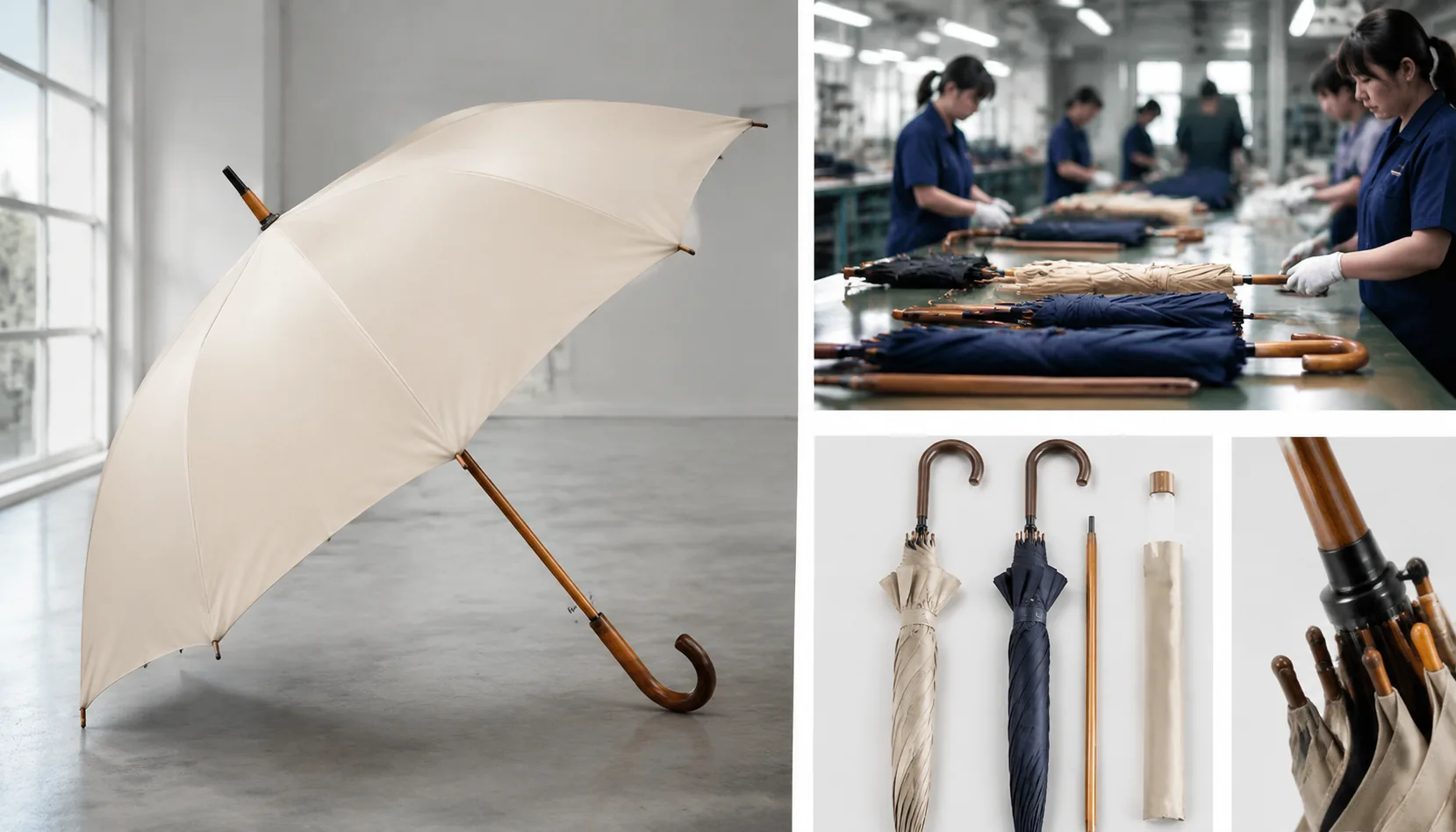
For retail buyers, the risk with wooden stick umbrellas is not the classic look—it is whether the finished program feels premium after bulk production, shipping, and store handling. On our Songxia factory floor, the details that usually decide success are rib gauge, shaft straightness, fabric tension, handle finishing, print registration, and carton packing. A clear spec keeps samples attractive, production repeatable, and QC decisions objective before the order reaches your stores.
Position the Wooden Stick Umbrella SKU
Wooden stick umbrellas earn shelf space because they look like a considered accessory, not an emergency rain tool. Department stores and fashion labels use them when the umbrella must sit beside coats, leather goods, or travel accessories without cheapening the assortment. A 23 inch model works well for women’s fashion and museum shops because it balances coverage with easy floor-stand display; 25 inch is the safest unisex retail size; 27 inch gives an executive-gift or menswear feel without becoming awkward indoors. Compared with a 21 inch folding umbrella, the straight shaft, longer canopy line, and visible wood crook handle create a higher perceived value even when the fabric is the same 190T or 210T pongee.
From a production standpoint, wooden stick umbrellas should be positioned as a premium SKU only if the frame and handle support that message. I prefer fiberglass ribs over painted steel for retail programs that claim wind resistance, especially in 8K or 10K layouts with a manual open runner that feels smooth rather than springy. Wood species, stain consistency, ferrule fit, and shaft straightness matter more than buyers expect; a crooked shaft or mismatched handle color will fail visual inspection before anyone opens the canopy. For branded stick umbrellas, the cleanest configurations are solid-color pongee with screen printing, woven labels, or subtle heat-transfer logos, while museums often choose full-panel art prints on 190T pongee or polyester.
The buyer is usually paying for display impact and giftability, so packaging and QC should be specified early with the retail umbrella supplier. A polybag-only unit may pass for a promotional event, but department stores usually need a hangtag, care label, barcode sticker, and carton drop-tested for mixed handling. Wooden handle umbrellas also need tighter moisture control than plastic-handle folding models; we keep finished goods away from wet canopy curing areas and check handle lacquer for tackiness before packing. For straight umbrella OEM projects, set AQL 2.5 for major defects, define acceptable wood grain variation, and approve one sealed pre-production sample before mass cutting begins.
Match Shaft, Rib, and Tip Materials
The shaft is where many retail teams overspec the look and underspec the mechanics. A solid beech or maple shaft gives wooden stick umbrellas the right hand feel: warmer grip, better balance in a 23" or 27" canopy, and a visible grain that matches wooden handle umbrellas sold in department stores or resort shops. The tradeoff is tolerance control. Wood must be straightened, dried, sanded, stained, and sealed; if moisture content is not controlled around 8–12%, you see warping after ocean freight or in humid warehouse storage. For a lower-risk straight umbrella OEM program, a wood-look coated metal shaft is often smarter. Powder-coated or heat-transfer wood grain on steel keeps diameter consistent, supports auto-open hardware better, and reduces breakage during drop tests. It does not feel as premium in hand, but for branded stick umbrellas at 5,000–20,000 pcs, the reject rate is usually lower and color matching is easier across repeat POs.
Ribs decide whether the umbrella survives real streets, not just showroom photos. Steel ribs are economical, stiff, and acceptable for 8K manual stick umbrellas with 190T pongee canopies, especially if the retail price point is promotional or entry-level. The weakness is permanent bending after gust loading; once a steel rib deforms, the canopy never sits clean again. Fiberglass ribs cost more but recover after inversion, which matters for 23" and 27" models sold as daily-use rain umbrellas. A practical hybrid is steel shaft with fiberglass ribs and stretchers, giving good wind recovery without making the frame too soft. For a retail umbrella supplier, I would not approve thin black-painted steel ribs for a premium wooden-handle line unless the buyer accepts higher after-sales complaints in coastal or commuter markets. Nickel-plated steel also needs salt-spray attention, because rust at the rib joint stains light-colored canopies fast.
An 8K frame is sufficient when the canopy is 21" to 23", the fabric is standard 190T or 210T pongee, and the umbrella is positioned as classic retail rather than luxury. Eight ribs keep weight down, open smoothly, and make AQL 2.5 inspection easier because rib symmetry problems show quickly on the table. A 16K frame creates a rounder canopy, stronger visual structure, and a heavier premium feel, but it is not automatically more windproof; poor rib tempering or weak tips will still fail below 40 mph. I like 16K for 27" stick umbrellas, executive gifts, hotel retail, and darker solid-color canopies where the rib pattern becomes part of the design language. Tip material should match the positioning: wood or electroplated metal tips for premium shelves, molded plastic tips for price-sensitive programs. Our standard practice at ZheBrella is to check tip pull strength, rib riveting, and shaft straightness together, because one weak connection can ruin an otherwise good frame.
Select Canopy Fabric for Retail Finish
For most wooden stick umbrellas, 190T pongee is the practical retail fabric: tight enough to shed rain cleanly, light enough to keep a 23" or 27" stick umbrella balanced, and stable enough for repeat color lots. I prefer 190T over cheap polyester taffeta because it feels less papery on the cutting table and gives fewer puckers at the seam after sewing. For a standard retail program, specify PU or Teflon water-repellent coating, hydrostatic pressure around 400–600 mm, and a clean roll-off test after 3–5 minutes of spray. If the umbrella uses steel ribs and a wooden shaft, keep the canopy weight controlled so the finished piece does not feel nose-heavy in store displays.
Move to 210T pongee when the brand wants a smoother drape, denser hand feel, and higher perceived value without jumping to specialty fabrics. On wooden handle umbrellas, 210T sits better over 8K or 16K frames because the panels hold their shape and the skirt line looks cleaner when closed with a matching tie wrap. It also takes screen printing and heat-transfer logos more consistently than low-density cloth, especially on dark navy, forest green, burgundy, and black. For branded stick umbrellas sold through department stores or museum shops, I would pair 210T pongee with nickel-free tips, a varnished wood handle, and AQL 2.5 inspection focused on seam tension, stains, and coating marks.
Colorfastness should be written into the PO, not assumed from a fabric swatch. Ask the retail umbrella supplier for ISO 105 wet rubbing and lightfastness targets, with at least grade 3–4 for wet rub and grade 4 for common retail colors; red, royal blue, and deep black deserve extra checking because migration shows quickly on folded canopies. For sun-rain SKUs, add a UPF 50+ coating or black UV backing, but confirm it does not make the canopy too stiff for manual opening or auto-open hardware. Our standard practice at ZheBrella is to approve lab dips under D65 light, then cut pre-production panels from bulk cloth before releasing the full straight umbrella OEM order.
Plan Branding on Panels and Handles
Put the logo method into the tech pack before sampling, because wooden stick umbrellas leave very little room for hiding sloppy branding. For solid logos on 190T or 210T pongee, panel screen printing is still the cleanest choice: sharp edges, good opacity, and predictable cost on 23" and 27" straight umbrellas. I normally push buyers toward one- or two-color screen prints for retail programs above 500 pieces per color, especially when the artwork sits on alternating panels. If the design uses gradients, photo artwork, or full-panel graphics, digital printing or sublimation makes more sense, but the fabric needs testing because dark grounds can mute color and PU/Teflon coatings can change ink behavior.
Print registration across seams is where many branded stick umbrellas start looking cheap. A wraparound logo, stripe, or border must account for sewing tolerance, usually plus or minus 2–3 mm per panel after cutting, hemming, and canopy attachment. Ask for a strike-off approval before bulk production, not just a PDF mockup; the strike-off should show actual fabric, ink density, panel position, and whether the print cracks or shifts after opening tension. For straight umbrella OEM work, our standard practice at ZheBrella is to approve print placement on a finished canopy sample, then lock the cutting marker and screen position before mass cutting.
Do not stop branding at the canopy. Wooden handle umbrellas can carry a laser-engraved logo on the curved or crook handle, but the artwork should be simplified because wood grain reduces fine-line clarity below about 0.3 mm. Metal nameplates, woven labels on the tie wrap, and printed or woven brand tabs near the closure strap work well for retail shelves without overloading the panels. Branded sleeves are also worth specifying: matching pongee sleeves for premium retail, PVC window sleeves for visual merchandising, or printed polybags for promotional channels. A serious retail umbrella supplier should quote these items separately, with MOQ, lead time, and AQL 2.5 inspection points clearly listed.
Control Quality, Lead Time, and Logistics
Quality control on wooden stick umbrellas has to start before final assembly, because the visible wood parts expose every shortcut. For retail programs, we normally lock a wood color standard from the approved pre-production sample, then check handles, shafts, and tips against that range under daylight and 6000K inspection lamps. Natural grain will vary, but a batch that mixes pale beech, reddish stained wood, and dark walnut tones looks cheap on shelf. Varnish defects are another common failure point: dust nibs, orange peel, runs near the curved handle, and weak coating at the ferrule area will show after carton rubbing. For branded stick umbrellas, I recommend adding a wood appearance checkpoint before sewing is complete, not only at final inspection, because rejected wooden shafts are expensive to replace after the canopy is tied and labeled.
Final inspection should be written around AQL 2.5 for major defects, with a separate critical-defect list for sharp rib tips, loose runner locks, cracked handles, and failed opening mechanisms. On the frame side, inspectors should check rib alignment, spoke tension, top notch security, runner smoothness, and whether the canopy sits evenly across all 8K or 16K ribs without twisting. Manual wooden handle umbrellas need repeated open-close testing to confirm the spring catch is firm but not too stiff; auto-open versions need button force, shaft rebound, and lock engagement checked after at least 20 cycles. I have seen many straight umbrella OEM orders pass fabric checks but fail in use because the rib tips were unevenly sewn, causing one panel to sag and another to over-tension. That is a factory-process issue, not a shipping issue.
Lead time depends on whether the wood finish, canopy fabric, and branding method are already proven. A realistic MOQ for retail wooden stick umbrellas is often 500 to 1,000 pieces per color, while custom stained wood, metal badges, or special 190T/210T pongee colors may push the MOQ higher. Samples usually take 7 to 12 days if stock frames are used, and 15 to 20 days if a new handle mold, custom varnish, or color-dipped shaft is required. Bulk production is typically 30 to 45 days after sample approval and deposit, longer before rainy-season peaks. As a retail umbrella supplier, ZheBrella usually quotes FOB Ningbo or Shanghai when buyers control freight, and DDP when they need landed cost including duty, customs clearance, and final delivery; the quote should clearly separate product cost, packaging, testing, inland trucking, ocean or air freight, and destination charges.
Frequently Asked Questions
Are wooden stick umbrellas heavier than metal-shaft umbrellas?
Usually yes, especially with solid wood shafts and 16K frames. Buyers can reduce weight by using a wood-look coated shaft or fiberglass ribs.
Can wooden handles be color matched to a brand palette?
Yes, but wood grain affects final appearance. Buyers should approve a physical handle sample, not only a Pantone reference.
What specifications should a buyer confirm before ordering wooden stick umbrellas?
Confirm the canopy size, rib count, shaft material, handle shape, fabric weight, opening system, logo method, tip material, sleeve, carton packing, and AQL inspection level. For retail programs, common specs include 23-inch or 27-inch canopies, 8 ribs, pongee fabric, and a wooden crook or straight handle.
What is a typical MOQ for OEM wooden stick umbrellas?
For a standard frame with custom logo printing, MOQ is often 500 to 1,000 pieces per design. Custom wood color, exclusive handle tooling, or fully customized packaging may require 1,000 to 3,000 pieces depending on materials and supplier setup.
How long does production usually take for branded stick umbrellas?
Sampling usually takes 7 to 14 days after artwork approval, and bulk production typically takes 30 to 45 days after sample confirmation and deposit. Add extra time for custom-dyed fabric, FSC wood requests, or third-party inspection scheduling.
Looking to Launch Your Custom Umbrella Line?
ZheBrella is a Zhejiang-based OEM/ODM umbrella manufacturer with 17 years of export experience. Free design, low MOQ from 100 pieces, windproof construction, full-color print.
Get Free Quote Now »People Also Search For
Related Articles
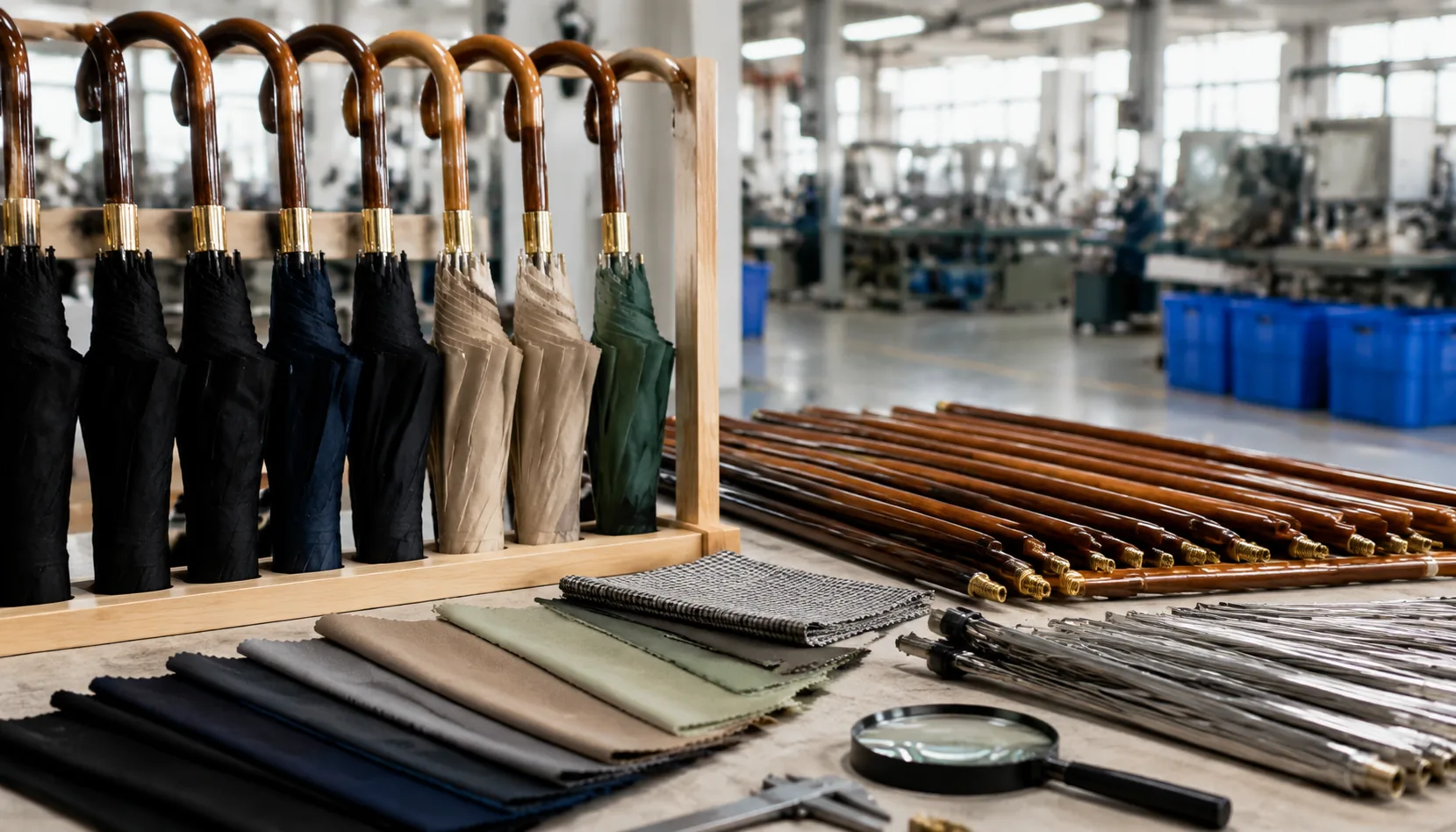
Cane Handle Stick Umbrellas: Buyer Specs for Retail Brands
Specify cane handle stick umbrellas with 8K frames, 190T/210T pongee, auto-open options, and QC checks for retail and gi...
Read More »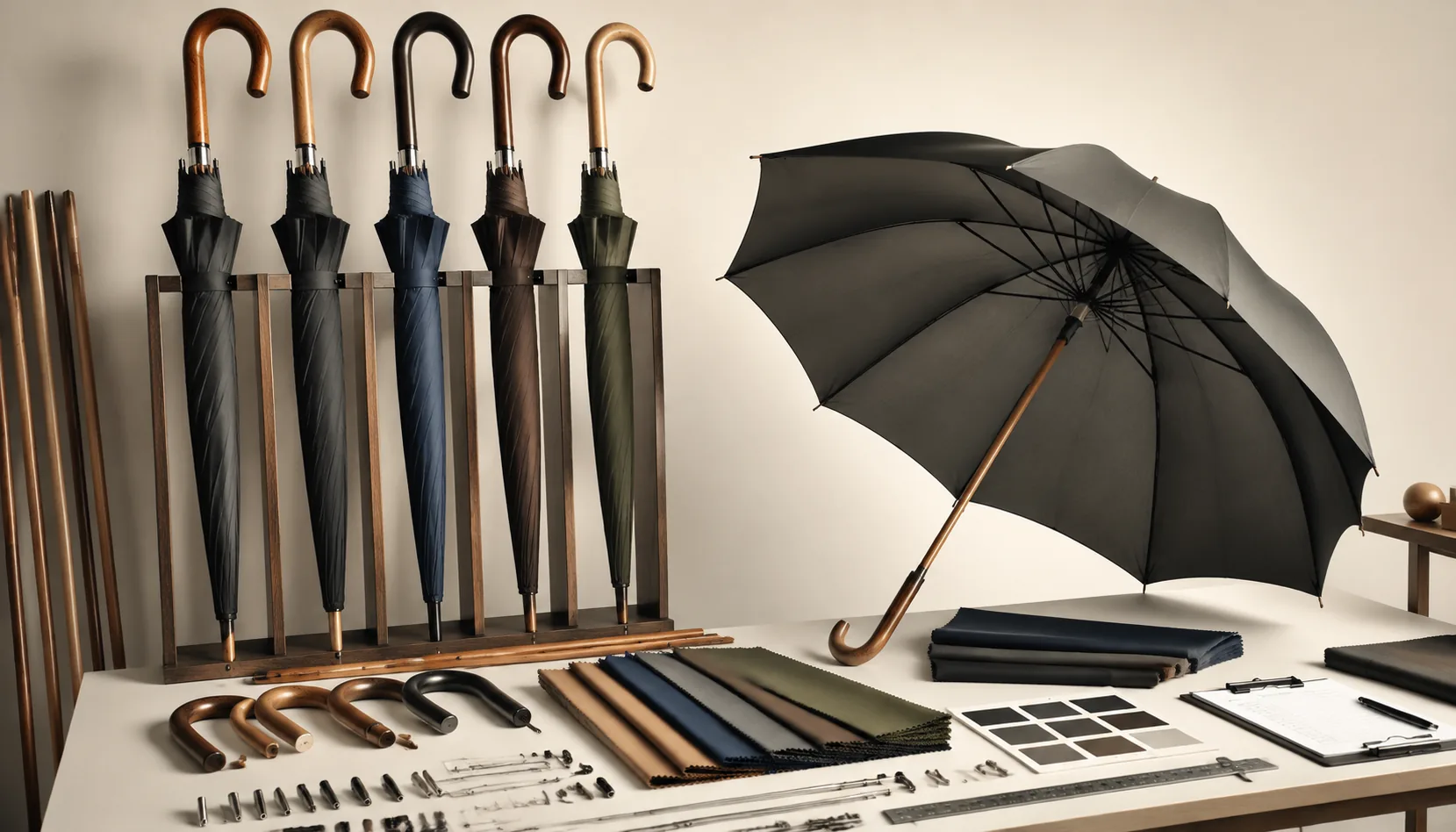
Executive Stick Umbrellas: Buyer Specs for Retail Brands
Compare executive stick umbrella specs, from 8K/16K frames and pongee fabrics to handles, QC, MOQs, and shipping terms f...
Read More »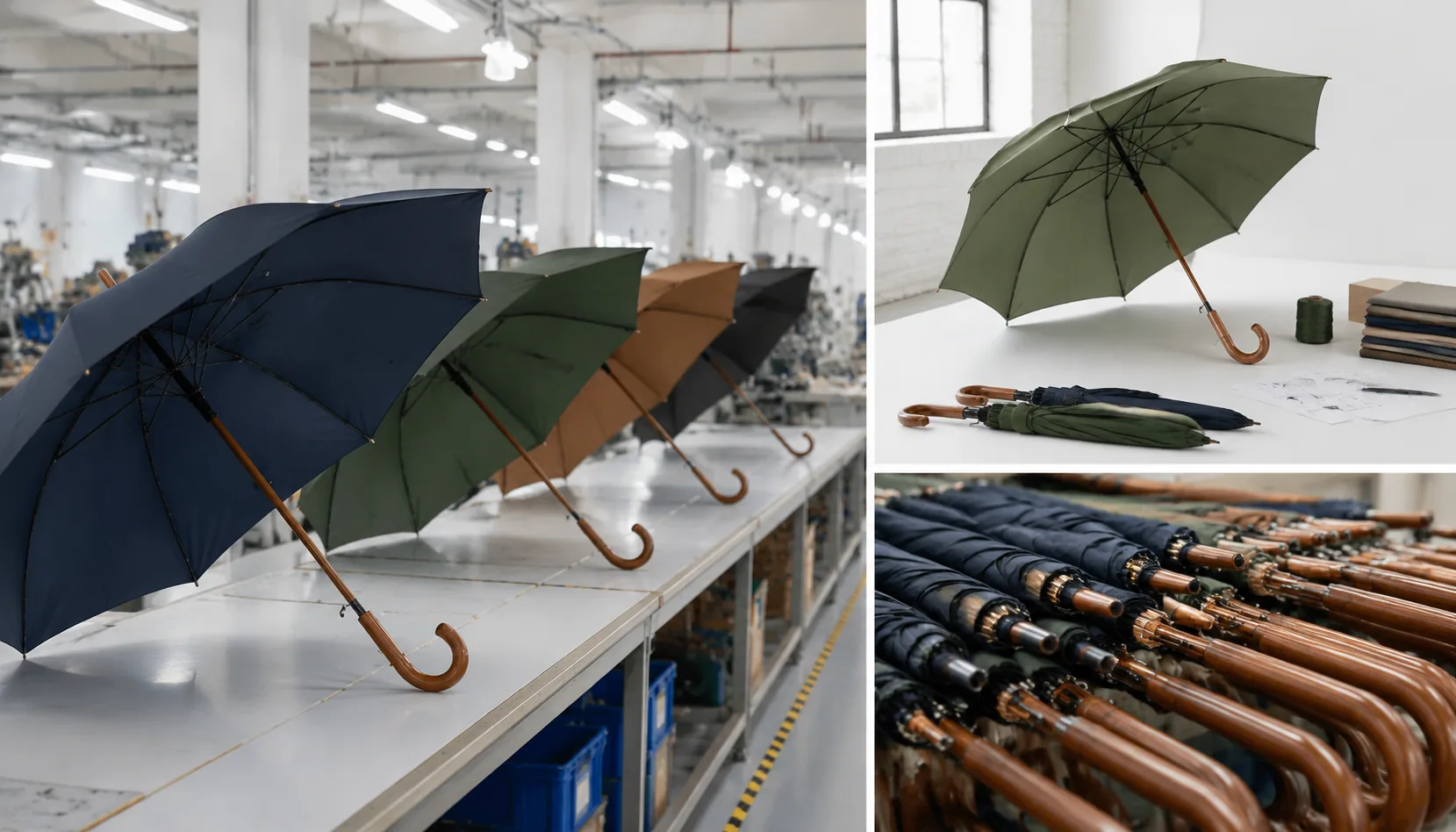
Wooden Stick Umbrellas: OEM Specs for Retail Brands
Compare wooden stick umbrella specs for retail orders, including shafts, 8K/16K ribs, 190T/210T pongee, handles, QC, MOQ...
Read More »