Wooden Shaft Umbrellas: Product Specs for Retail Brands
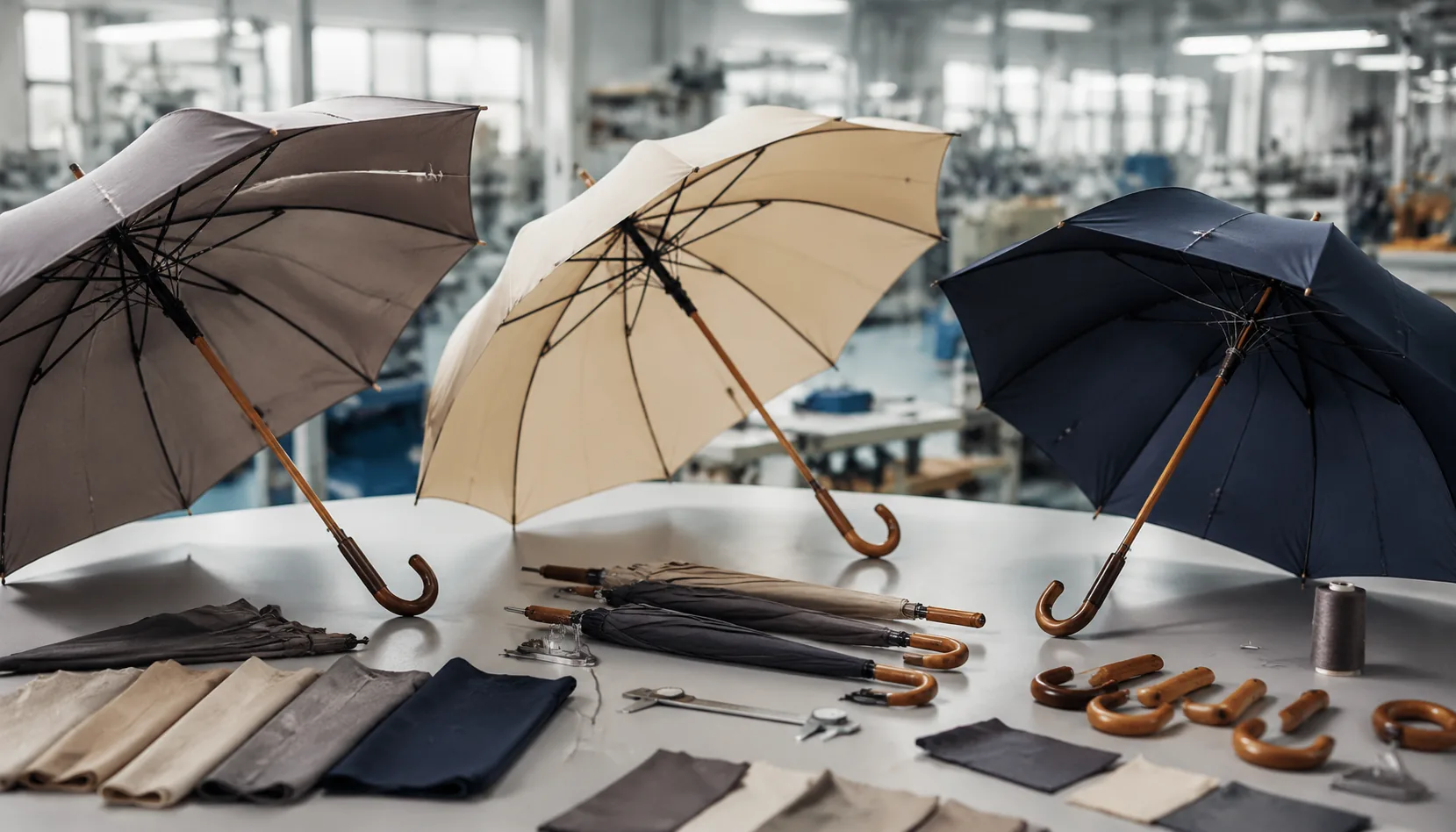
For retail and gift buyers, wooden shaft umbrellas look simple on a spec sheet but quickly expose gaps in frame balance, handle finishing, canopy tension, and packaging consistency. On our Songxia factory floor, the difference between a premium repeat order and a costly claim often comes down to how the wood shaft is matched with ribs, fabric weight, runner fit, varnish, and final QC before cartons are sealed.
Where Wooden Shaft Umbrellas Fit in the Market
Wooden shaft umbrellas sit above disposable promotional models and below true handmade luxury pieces, which is exactly why retail brands like them. A straight wooden umbrella with a beech, maple, ash, or bamboo shaft feels substantial in the hand, photographs well on a shop wall, and supports higher ticket pricing than a 21-inch folding umbrella with an aluminum center pole. For fashion retail, the common spec is a 23-inch or 25-inch canopy in 190T or 210T pongee, 8K fiberglass or steel ribs, a J-handle or crook handle, and a branded woven label, metal tip, or heat-transfer logo on one panel. In hospitality, black, navy, forest green, and burgundy sell best because they match uniforms and lobby interiors. For corporate gifting, wood handle umbrellas give buyers a premium object without moving into leather goods, where compliance and material documentation become more complicated.
They are usually straight umbrellas because wood does not like folding geometry. A folding umbrella needs telescopic shaft sections, sliding joints, compact runners, and short ribs packed under spring tension; natural wood is heavier, less dimensionally stable, and more vulnerable to splitting when drilled thin. A one-piece wooden shaft, usually 12 to 14 mm diameter, handles load much better and gives a clean line from ferrule to handle. That matters when the umbrella is expected to survive daily hotel doorman use or a retail customer carrying it through wind and rain. If the buyer wants wind performance, I would specify fiberglass ribs with a steel or reinforced runner, not an all-steel rib set, because fiberglass recovers better after inversion. A vented double canopy can help, but on luxury retail umbrellas many brands choose a single clean canopy because the silhouette is more important than a 50+ mph wind-tunnel claim.
For OEM wood umbrellas, the expensive mistakes usually happen in finishing and packaging, not canopy sewing. The shaft and handle need consistent sanding, stain absorption, and clear coat thickness; otherwise one carton looks walnut and the next looks orange. Our standard practice at ZheBrella is to confirm wood color by sealed pre-production sample under D65 lighting, then inspect handle bonding, shaft straightness, runner travel, rib symmetry, and canopy tension under AQL 2.5 before packing. MOQ is normally higher than plastic-handle stock umbrellas because wood components are batch-finished, so 500 to 1,000 pieces per color is a realistic starting point. Lead time is typically 25 to 35 days after artwork and sample approval, longer if the project needs custom carved handles, FSC documentation, UPF 50+ coating, Teflon water repellent, or gift boxes. FOB Ningbo or Shanghai is straightforward; DDP works better when carton dimensions are finalized early because straight umbrellas take more cubic volume than folding models.
Wood Types, Finishes, and Handle Shapes
For wooden shaft umbrellas, the shaft and handle are not just appearance parts; they control balance, perceived retail value, and long-term straightness. Common production choices are natural beech, maple, ash, and schima for the center pole, with bamboo used when the brand wants a lighter, more organic look. A 23" or 27" straight wooden umbrella normally uses a 12–14 mm shaft, while golf-style 30" models may step up to 14–16 mm depending on canopy load and rib count. Natural wood shows grain variation, so retail brands should define an acceptable range with approved golden sample photos, not just say “wood color.” Painted wood is easier to match to Pantone, but it hides grain and needs better scratch testing around the runner and handle joint.
Handle shape changes both cost and user behavior. Curved crook handles are the classic choice for luxury retail umbrellas because they hang on a chair, retail fixture, or forearm, but the bend radius must be smooth and symmetrical; cheap crooks often show flat spots from rushed sanding. Straight handles feel more modern and are easier to pack in narrow cartons, especially for OEM wood umbrellas with gift boxes or sleeve packaging. Wood handle umbrellas can also use J handles, knob handles, duck-head carvings, or leather-wrapped wood grips, but every added contour increases sanding time and reject risk. Our standard practice at ZheBrella is to check handle fit after canopy assembly, because a handle that looks perfect loose can sit off-axis once the runner, spring, and ferrule are installed.
Moisture control is where many attractive samples fail in bulk production. Wood components should be kiln dried and stabilized before turning, with typical moisture content held around 8–12% before varnishing; too wet and the shaft may warp after sea freight, too dry and it can crack in a heated retail store. Varnish consistency matters on every straight wooden umbrella: uneven gloss, bubbles, and thin coverage at the crook tip are obvious under store lighting. For color matching, approve both dry wood and finished varnished parts, because clear lacquer can warm the tone by half a shade or more. Buyers should also request rub testing, salt-spray exposure for metal collars, and AQL 2.5 inspection criteria for visible finish defects, loose handles, crooked ferrules, and shaft straightness before shipment.
Frame and Rib Pairings That Make Sense
A wooden shaft should not be paired with ribs by habit; the rib material decides whether the umbrella feels like a heritage product or performs like a modern rain tool. For classic wooden shaft umbrellas, I still like a steel 8K frame when the buyer wants traditional weight, a firm opening action, and a retail feel similar to old European city umbrellas. A 23" or 27" straight wooden umbrella with a beech or maple shaft, steel ribs, steel stretcher, and manual runner gives a solid hand-feel that suits menswear shops, hotel gifting, and department-store private labels. The tradeoff is weight: steel ribs can push a full-size model 80–150 g heavier than fiberglass, depending on rib gauge and handle size. If the canopy is 190T pongee or cotton-look polyester, that extra weight can feel intentional; if the brand wants a commuter umbrella, it may feel dated.
Fiberglass ribs make more sense when the retail promise includes wind resistance, lighter carry, or fewer returns from rib inversion. On wood handle umbrellas, we often keep the wooden shaft for appearance but use fiberglass ribs and sometimes a steel center rod insert to protect alignment under load. An 8K fiberglass rib set gives a cleaner balance for everyday luxury retail umbrellas, while a 16K build creates a fuller, rounder canopy that photographs better and feels more premium at the point of sale. The 16K option is not automatically stronger; it has more sewing points, more rib tips, and higher labor cost, so the frame must be tensioned correctly or the canopy wrinkles between panels. For OEM wood umbrellas, our standard practice is to confirm rib count, rib material, shaft diameter, runner type, and wind-test target before sampling, especially if the buyer asks for 50+ mph wind-tunnel survival claims.
Canopy Fabric and Branding Choices
For wooden shaft umbrellas, canopy fabric is where retail buyers usually under-spec and then pay for it in returns. 190T pongee is the practical baseline: tight enough for daily rain performance, soft enough to fold cleanly around a straight wooden umbrella frame, and cost-effective for 23" and 27" retail programs. It has a slightly lighter hand and a more relaxed drape, which works well on classic 8K steel or fiberglass rib builds. 210T pongee feels denser and smoother in the hand, with better opacity over dark ribs and cleaner color depth on navy, forest green, burgundy, and black. If the umbrella is positioned as luxury retail umbrellas rather than a giveaway item, I normally push buyers toward 210T with a water-repellent finish, because customers feel the difference as soon as they open and close it in-store.
Print behavior is different enough that it should be decided before sampling, not after artwork approval. 190T pongee accepts screen printing well for simple 1–3 color logos, especially on one or two panels, but fine serif type and thin gold lines can soften because the fabric has more texture. 210T gives sharper edges for panel printing, heat-transfer crests, and subtle tone-on-tone branding, though heavy ink coverage still needs curing control to prevent panel stiffness. Full sublimation is possible on white polyester pongee, but for wood handle umbrellas with a premium look, I prefer restrained placement: one lower-panel logo, a matching sleeve logo, and a small woven label at the seam. Our standard practice at ZheBrella is to check logo registration after sewing, because panel stretch during canopy assembly can shift artwork by 2–4 mm if the operator pulls unevenly.
Branding on OEM wood umbrellas should support the retail story without turning the product into a billboard. A woven label on the closure strap or sleeve gives better shelf recognition than a large canopy logo, especially for department stores, museum shops, golf clubs, and hospitality retail. Sleeve logos can be screen printed, heat transferred, or sewn as patches; for 210T pongee sleeves, heat transfer looks clean, while canvas-style sleeves usually suit woven labels better. Discreet handle engraving is the most reliable premium detail: laser marking on maple, beech, or ash handles keeps the branding permanent and avoids the peeling risk of stickers or printed varnish. For gift-boxed wooden shaft umbrellas, align the canopy color, shaft stain, ferrule finish, and label thread color early, then lock them into the pre-production sample before bulk cutting starts.
QC, Packing, and Import Planning
QC for wooden shaft umbrellas starts with the shaft, not the canopy, because a slightly bent stick makes the whole umbrella look cheap on a retail wall. For a 23" or 27" straight wooden umbrella, we check shaft straightness by rolling the assembled unit on a flat inspection table and measuring visible wobble; our practical tolerance is usually under 2 mm over the exposed shaft length. Varnish must be smooth around the crook handle, tip area, and runner contact zone, with no cloudy patches, sanding marks, or scratches longer than 3 mm on A-grade visible surfaces. Wood handle umbrellas also need color consistency by carton, because mixed stain tones become obvious when stores display 12 or 24 pieces together.
Mechanical inspection is just as important as appearance. Rib alignment is checked with the canopy fully opened: 8K and 10K frames should sit evenly without one panel pulling high, while 16K luxury retail umbrellas need tighter symmetry because the extra ribs make any imbalance more visible. We test runner movement through repeated open-close cycles, checking that the notch locks cleanly and the runner does not scrape varnish off the wooden shaft. For manual models, the spring and runner should move without thumb pressure beyond normal force; for auto-open versions, the release must be firm but not violent. Final inspection is normally AQL 2.5 for major defects and AQL 4.0 for minor defects, with critical defects such as sharp rib ends, cracked shafts, loose tips, or failed opening mechanisms rejected at zero tolerance.
Import planning should be locked before bulk wood finishing starts, because stain color, logo position, and packing method affect both cost and lead time. For OEM wood umbrellas, a realistic MOQ is 500–1,000 pieces per color for standard 190T or 210T pongee canopies, higher if custom wood stain, engraved handles, or retail gift boxes are required. Sample approval usually takes 7–10 days after artwork confirmation, and bulk production runs 30–45 days depending on printing, varnish drying, and frame availability. For packing, each straight wooden umbrella should have a polybag or fabric sleeve, handle foam or paper wrap, tip protection, and dividers in the inner carton to prevent handle dents during ocean freight. FOB Ningbo or Shanghai works for experienced importers; DDP is safer for smaller retail brands that need landed cost control and fewer customs surprises.
Frequently Asked Questions
Are wooden shaft umbrellas heavier than metal shaft umbrellas?
Usually yes, especially with steel ribs and a crook handle. Buyers can reduce weight by using fiberglass ribs while keeping the premium wood shaft appearance.
Can wooden handles be color matched to a brand palette?
Yes, painted or stained finishes can be matched to a target color, but buyers should approve a physical sample because wood grain and varnish affect the final shade.
What wood options are commonly used for premium straight umbrellas?
Common choices include maple, beech, ash, and rubberwood, depending on target price and finish. For retail programs, buyers usually specify stained or lacquered finishes with matching wood tips and handles for a consistent premium look.
Which frame pairings work best with wooden shaft umbrellas?
For premium retail umbrellas, a wooden shaft is often paired with fiberglass ribs for wind resistance or metal ribs for a more traditional structure. A typical straight umbrella uses 8 ribs, with 23-inch or 27-inch canopy sizes depending on whether it is positioned as a city umbrella or golf-style gift item.
What should buyers confirm before placing an OEM wood umbrella order?
Confirm shaft wood type, handle shape, canopy fabric, rib material, logo method, packaging, and AQL inspection standard before sampling. Typical OEM orders require sample approval first, with bulk production usually taking about 30–45 days after deposit and artwork confirmation.
Looking to Launch Your Custom Umbrella Line?
ZheBrella is a Zhejiang-based OEM/ODM umbrella manufacturer with 17 years of export experience. Free design, low MOQ from 100 pieces, windproof construction, full-color print.
Get Free Quote Now »People Also Search For
Related Articles
Cane Handle Stick Umbrellas: Buyer Specs for Retail Brands
Specify cane handle stick umbrellas with 8K frames, 190T/210T pongee, auto-open options, and QC checks for retail and gi...
Read More »
Executive Stick Umbrellas: Buyer Specs for Retail Brands
Compare executive stick umbrella specs, from 8K/16K frames and pongee fabrics to handles, QC, MOQs, and shipping terms f...
Read More »
Wooden Stick Umbrellas: OEM Specs for Retail Collections
Source wooden stick umbrellas with the right shaft, ribs, 190T/210T canopy, handle finish, MOQ, QC, and FOB/DDP plan for...
Read More »