Wooden Stick Umbrellas: OEM Specs for Retail Collections
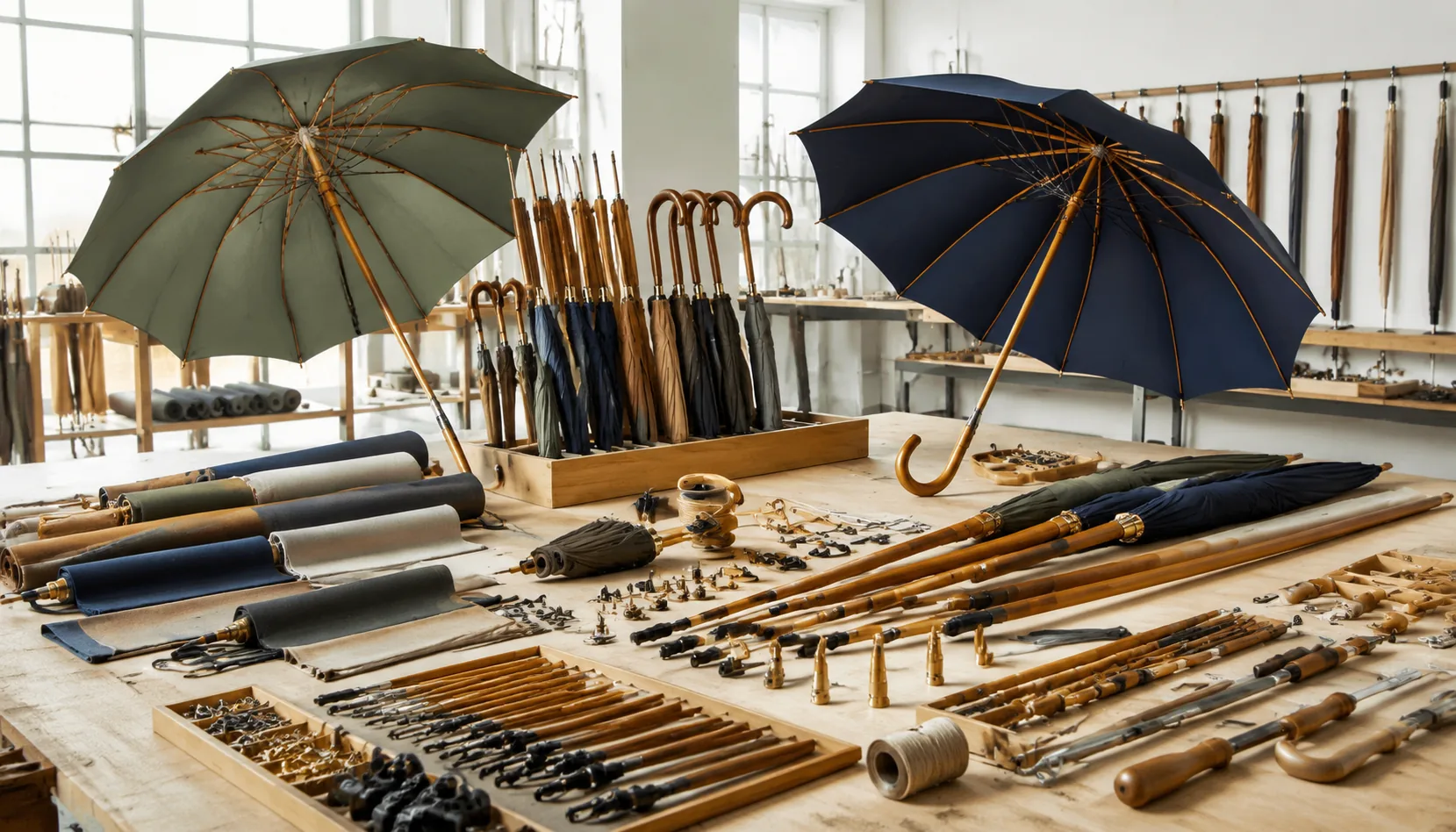
Retail buyers often approve a sample that looks right, then lose margin when bulk production drifts on shaft straightness, rib strength, canopy density, or handle finish. On our Songxia factory floor, wooden stick umbrellas are built spec by spec: wood moisture control, 190T or 210T fabric inspection, frame pull tests, logo placement checks, carton drop testing, and clear MOQ, FOB, or DDP planning before the order leaves Zhejiang.
When Wooden Stick Umbrellas Fit a Retail Line
Wooden stick umbrellas fit a retail line when the buyer wants the umbrella to read as a style accessory, not just rain protection. A metal straight umbrella can be strong and economical, but the visual language is different: powder-coated steel or aluminum feels practical, while a wooden shaft, curved crook handle, and nickel-plated tips give a more classic retail shelf presence. For fashion retail, we usually pair a 23" or 27" canopy with 190T or 210T pongee, 8K fiberglass ribs, and a manual runner because the slower opening action matches the product’s heritage feel. If the brief is a true classic stick umbrella, I would avoid cheap hollow metal tubes under wood-grain film; customers notice the weight, temperature, and handle finish immediately.
The strongest use cases are hotel boutiques, museum shops, garden centers, department-store seasonal walls, and heritage brand collections where the umbrella supports the brand story. A hotel may choose a dark maple crook handle with a black pongee canopy and discreet one-color logo, while a museum shop may need a sublimated artwork canopy on polyester with a stained beech shaft. For a retail umbrella collection, the packaging matters almost as much as the frame: paper hangtags, woven labels, FSC wood claims where available, and barcode-ready sleeves help the product sit cleanly in store systems. Our standard practice at ZheBrella is to confirm wood tone samples before mass production because “walnut,” “cherry,” and “natural” can shift noticeably between batches.
For wooden shaft umbrella OEM projects, the main trade-off is that wood gives premium character but needs tighter control than metal. Solid wood shafts can vary in grain, straightness, and moisture content, so we check shaft bowing, lacquer adhesion, handle joint strength, and tip alignment during inline inspection, then apply AQL 2.5 for final packed goods. A custom wood handle umbrella can use laser engraving, metal badges, or pad printing, but engraving is cleaner for heritage positioning and survives retail handling better than surface ink. Typical MOQ is 500–1,000 pieces per color depending on handle tooling and canopy printing, with 35–50 days lead time after artwork approval; FOB Ningbo/Shanghai is standard, while DDP works for smaller retail replenishment programs.
Shaft, Rib, and Runner Specifications
8K is the correct default for most wooden stick umbrellas because it gives the recognizable classic profile, keeps weight acceptable, and works well with 23" or 25" panels in 190T or 210T pongee. It is also the easiest structure to pass AQL 2.5 inspection consistently because rib spacing, runner travel, and canopy tension have fewer variables. A 16K frame creates a rounder, fuller canopy and looks more premium in department-store photography, but it adds labor, rivets, sewing alignment risk, and roughly 80–140 g depending on rib material and shaft length. Buyers should specify whether the 16K version is mainly for appearance or wind performance, because more ribs alone do not make a windproof umbrella. If the collection includes both entry and premium SKUs, I would use 8K steel or mixed ribs for core colors, then reserve 16K fiberglass-assisted frames for heritage patterns, gift sets, or higher-margin private-label drops.
Canopy Fabric and Finish Options
For wooden stick umbrellas, 190T pongee is the practical baseline for most retail programs because it gives a clean drape, accepts screen printing well, and keeps the finished weight comfortable on a 23" or 27" classic stick umbrella. I use 210T pongee when the buyer wants a denser hand-feel, deeper color saturation, or a more premium shelf impression; the yarn count is tighter, so the canopy looks less papery under store lighting and handles Teflon water-repellent finishing more evenly. Standard polyester can reduce cost by about 8–15% depending on color and order volume, but it usually feels stiffer and shows crease memory after compact carton packing. For a wooden shaft umbrella OEM order aimed at department stores or gift boutiques, 210T pongee is usually worth the small upcharge, especially when paired with fiberglass ribs instead of painted steel ribs.
Color work needs to be decided before frame production, not after sewing, because panel dye lots and rib shadow visibility affect the whole retail umbrella collection. Piece-dyed pongee is fine for black, navy, burgundy, forest green, and other stable stock colors, while custom Pantone matching normally needs lab dips and bulk approval before cutting; our standard practice at ZheBrella is to hold color tolerance within Delta E 1.5–2.0 for solid canopy programs when the mill has a confirmed fabric standard. Darker canopies hide rib shadows better, especially on 8K and 10K frames where the ribs press closer to the fabric during drying and packing. White, ivory, pale yellow, and light gray can look elegant with a custom wood handle umbrella, but buyers should expect more visible seam allowance, stretcher marks, and slight shade variation between panels unless the canopy uses heavier 210T fabric or a lined construction.
Finish selection should match the selling channel. A normal water-repellent coating is enough for promotional and mid-market retail, with spray-test performance typically in the 80–90 point range before abrasion; Teflon finishing improves beading and gives a smoother hand, but it adds cost and should be tested after printing because heavy ink layers can reduce runoff at the logo area. UPF 50+ coating is useful for golf shops, resort stores, and sun-sensitive markets like Australia and the southern U.S., though it can slightly change the fabric hand and make pale colors appear warmer. If the wooden stick umbrellas are meant for window display, I would avoid glossy PVC-style finishes because they cheapen the look of a natural wood shaft. For solid-color pongee, request one pre-production canopy opened on the actual frame so you can judge color, rib shadow, water repellency, and wood handle tone together before approving bulk production.
Handle Shape, Wood Finish, and Branding
Branding on wood should be chosen by durability, not only appearance. Laser engraving is clean and permanent, especially on beech or bamboo, but the artwork must allow for burn width; small serif fonts under 2.5 mm often fill in. Metal badges look more retail-ready on a premium retail umbrella collection, yet they need a recessed seat or strong two-part adhesive, otherwise they lift after humidity cycling. Woven labels are better on the canopy seam, tie wrap, or sleeve than on the handle itself; they work well when paired with 190T or 210T pongee and a matching stained handle. For wooden stick umbrellas, I prefer engraving for hotel, museum, and corporate gift programs, and metal badges for fashion retail where shelf impact matters. Pre-production samples should be reviewed as a complete set: handle color against canopy color, logo position relative to the crook curve, and consistency across at least 10 pieces, not just one perfect photo sample.
Inspection, MOQ, and Export Planning
Export planning should be decided before the carton mark artwork is approved, because FOB and DDP need different cost control. FOB Ningbo or Shanghai is cleaner for buyers with their own forwarder: you control vessel booking, insurance, destination charges, and customs broker selection, while the factory focuses on production, export carton strength, and loading documents. DDP is simpler for promotional distributors and smaller retailers, but the quote must include duty, port congestion risk, domestic trucking, and last-mile delivery rules for long cartons; a 27" or 30" wooden stick umbrella ships differently from a compact 21" folding model because carton length affects CBM and parcel surcharges. For pre-shipment QC, I like AQL 2.5 for major defects and 4.0 for minor defects, with special checks on shaft finish, runner safety, canopy stains, rib tips, hangtag accuracy, and master carton drop resistance. If the collection launches before rainy season, book inspection at least 5 days before ETD so failed lots can be reworked without missing the vessel.
Frequently Asked Questions
Are wooden stick umbrellas usually manual or auto-open?
Both are possible, but manual runners are common for classic retail designs. Auto-open mechanisms add convenience but require cycle testing and tighter QC around spring strength.
Can wood color be matched across a full production order?
It can be controlled within an approved tolerance, but natural wood grain varies. Buyers should approve a finish standard and request AQL 2.5 checks for color, lacquer defects, and handle cracks.
What MOQ should buyers expect for wooden stick umbrellas with custom canopy printing?
For OEM wooden stick umbrellas, typical MOQ is 500 to 1,000 pieces per color or design. More complex options such as custom wood staining, engraved handles, or branded tips may require higher minimums or extra sampling time.
Which canopy fabric is better for a retail wooden stick umbrella, 190T or 210T?
190T pongee is cost-effective for mid-range retail programs, while 210T pongee offers a smoother hand feel, tighter weave, and better perceived quality. For department stores or branded collections, 210T with water-repellent coating is usually preferred.
What quality checks are important for wooden shaft umbrellas before shipment?
Key QC points include shaft straightness, rib alignment, smooth open-close action, canopy tension, wood finish consistency, and handle attachment strength. Buyers should also confirm fabric color matching, print placement, carton drop testing, and AQL inspection standards before bulk production.
Looking to Launch Your Custom Umbrella Line?
ZheBrella is a Zhejiang-based OEM/ODM umbrella manufacturer with 17 years of export experience. Free design, low MOQ from 100 pieces, windproof construction, full-color print.
Get Free Quote Now »People Also Search For
Related Articles
Stick Umbrellas with Wooden Shafts: OEM Buyer Spec Guide
Compare wooden shaft stick umbrella specs, from rib materials and canopy fabric to handle finish, MOQ, QC checks, and sh...
Read More »
Wooden Shaft Stick Umbrellas: Retail Buyer Spec Guide
Compare wooden shaft umbrella specs for retail programs, including canopy fabric, ribs, handles, finishing, QC checks, M...
Read More »
Wooden Shaft Umbrellas: Product Specs for Retail Brands
Compare wooden shaft umbrella specs, frame pairings, canopy fabrics, finishes, QC checks, and order terms for premium re...
Read More »