Stick Umbrellas with Wooden Shafts: OEM Buyer Spec Guide
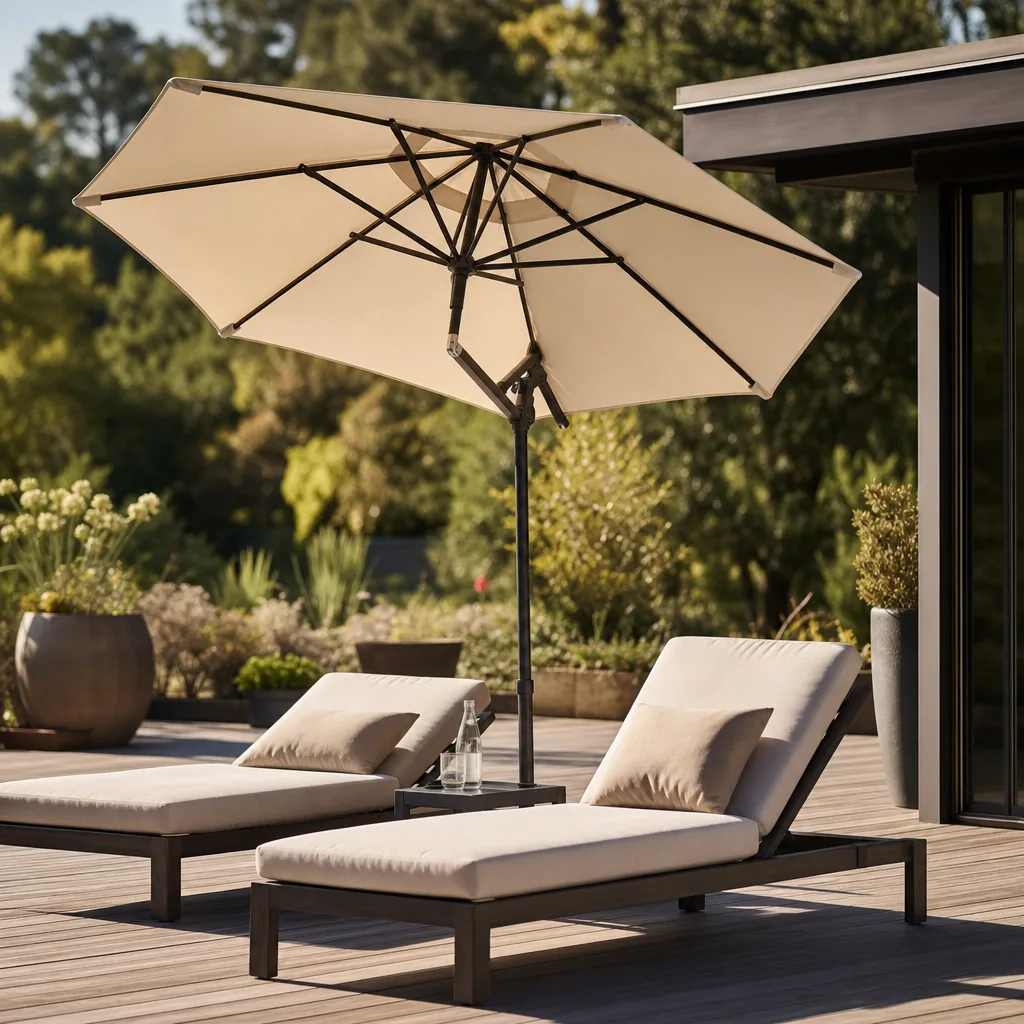
For OEM buyers, wooden shaft stick umbrellas look simple on a spec sheet, but small choices in shaft diameter, rib temper, canopy coating, and handle finish can decide whether the order feels premium or comes back with complaints. On our Songxia factory floor, the issues we watch closest are straightness after drying, rib-to-runner fit, varnish consistency, and carton protection for long sea freight. Getting those details fixed before sampling saves weeks when MOQ, QC standards, and shipping terms are already under negotiation.
Match the Wooden Shaft Build to the Buyer Segment
Buyer segment decides the wooden shaft build before artwork or fabric does. Retail buyers usually want classic rain umbrellas that feel substantial on a store rack: a 23K or 24K straight umbrella, 8K steel or fiberglass ribs, 190T or 210T pongee canopy, and a curved maple or beech handle. The “23K/24K” naming can confuse new buyers because it often refers to the stick umbrella size class, not rib count; most production orders use 8K ribs unless the buyer specifies 10K or 16K for a denser premium look. A 23 inch rib typically gives about 102–105 cm open diameter, while 24 inch moves closer to 106–110 cm depending on canopy depth and frame geometry. Retail programs care about shelf price and perceived quality, so we check shaft straightness, handle grain matching, ferrule fit, and canopy tension more aggressively than on cheap promotional umbrellas.
Hotels and corporate gift buyers choose wooden shaft stick umbrellas because they look better at a lobby stand, golf reception, or executive event than compact folding umbrellas. For hotel use, I normally recommend 24K with 8K fiberglass ribs, auto-open or smooth manual-open, 210T pongee with Teflon water-repellent finish, and a walking length around 88–92 cm so the umbrella is comfortable for guests but not awkward in an umbrella rack. Corporate buyers often ask for wood handle umbrellas with laser-engraved handles, woven labels, or one-panel screen printing; the mistake is overloading the canopy with a large logo that distorts on the panel seam. If the program is for outdoor staff, valet service, or real estate viewing, a double-canopy vented windproof structure and 50+ mph wind-tunnel target is more practical than upgrading to 16K ribs just for appearance.
Fashion and boutique OEM stick umbrellas need tighter control on silhouette, because arc and walking length change the whole character of the product. A flatter canopy with 100–104 cm diameter feels modern and city-oriented; a deeper dome-like arc gives more shoulder coverage and pairs well with dark wood shafts, leather-look crook handles, and matte black tips. As a stick umbrella manufacturer, our standard practice is to confirm three measurements on the approval sample: rib length, open diameter across opposite tips, and closed walking length from handle end to top tip. For wooden shaft stick umbrellas, I also advise buyers to lock the shaft diameter, usually around 12–14 mm, because a shaft that is too thin can flex at the runner under wind load, while a thick shaft makes the umbrella heavy for daily commuting. For OEM stick umbrellas, these specs should be frozen before PP sample approval, along with AQL 2.5 inspection points for open-close action, canopy alignment, and wood finishing defects.
Specify Frame Materials Beyond the Wooden Shaft
The wooden shaft is only the center spine; the rib set determines whether the umbrella survives real street weather or just looks good in a showroom. For wooden shaft stick umbrellas, I usually separate frame specs into three buckets: full fiberglass ribs, full steel ribs, and mixed frames with steel stretchers plus fiberglass outer ribs. Fiberglass ribs cost more, but they flex instead of taking a permanent bend when a gust hits the canopy from the side. On a 23" or 27" classic rain umbrella, 8K fiberglass ribs are a sensible baseline for retail and hotel use; 10K adds a rounder canopy and better load distribution, while 16K looks premium but adds labor and weight. Steel ribs give a crisp shape and lower ex-factory cost, but once they deform, the umbrella rarely returns cleanly to its original dome.
Steel still has a place, especially when the product is for indoor handout, short-term events, or low-risk promotional use where the buyer cares more about unit price than wind recovery. A stick umbrella manufacturer can save noticeable cost by using painted steel ribs and stretchers with a wooden shaft and curved wood handle, but the buyer should be honest about the use case. If the umbrella will sit in a hotel lobby, open during light rain, or be distributed at a conference, steel is acceptable. If it will be sold as a daily commuter umbrella, steel ribs under a 190T pongee canopy are the wrong corner to cut. Our standard practice at ZheBrella is to flag steel-frame OEM stick umbrellas as economy grade unless the customer specifically requests wind testing or reinforced joints.
Mixed frames are often the best compromise for OEM stick umbrellas because they control cost without making the umbrella feel disposable. A common build is a wooden shaft, steel runner and stretchers, fiberglass ribs, metal tips, and a 190T or 210T pongee canopy with water-repellent coating. That structure keeps the traditional look of wood handle umbrellas while giving the outer canopy enough flex to handle moderate gusts. For stronger programs, I would pair a 27" canopy with 8K or 10K fiberglass ribs and specify a wind-tunnel target such as 40–50 mph, then confirm performance with pre-production samples rather than relying on catalog claims. Buyers should also ask whether rib rivets, notch, runner, and tips are upgraded, because a good rib material cannot compensate for weak connection points.
Choose Canopy Fabric, Coating, and Print Layout
For wooden shaft stick umbrellas, canopy fabric should be chosen before you lock the frame diameter, because fabric weight changes how the umbrella closes around the shaft. 190T pongee is the safe commercial choice for most OEM stick umbrellas: tight enough for clean water beading, soft enough to fold neatly, and usually 50–55 gsm depending on finishing. 210T pongee feels denser and more premium, but it adds bulk at the tie wrap and can make a 23" or 27" stick umbrella look fat if the rib tips and runner height are not adjusted. Standard polyester is cheaper, but it has a flatter hand feel and prints less sharply after heavy rain testing. For retail classic rain umbrellas, I normally recommend 190T pongee with a clear water-repellent finish unless the buyer needs a heavier gift-market feel.
Coating is where many buyers over-spec and then wonder why the canopy wrinkles. A basic water-repellent treatment is enough for normal city rain, and a Teflon-type finish improves roll-off and stain resistance without making the fabric stiff. UPF 50+ treatment is useful for golf, outdoor event, and resort programs, but it should be tested on the actual color because black, navy, and burgundy usually pass more easily than white or pale beige. Silver or black UV backing can work, but on wood handle umbrellas it changes the product from a traditional rain item into more of a sun-rain hybrid, so confirm the brand direction first. Our standard practice at ZheBrella is to test coated fabric after printing and drying, not just on blank fabric, because heat-transfer temperature and sublimation time can weaken repellency.
For 8-panel stick umbrellas, logo placement must respect panel geometry, seam allowance, and rib obstruction. A single-panel logo is the lowest-risk option: keep the artwork centered between two ribs, usually 120–180 mm wide on a 23" canopy, with at least 25–30 mm clearance from sewn seams and the lower edge. Opposite-panel printing works well for corporate use, but all-over layouts need tighter cutting control because even a 3 mm panel shift becomes visible at the crown. Screen printing is economical for 1–3 spot colors, while heat transfer handles gradients and small text better; sublimation is best for full-panel designs on white polyester or pongee. A careful stick umbrella manufacturer will confirm seam alignment on a pre-production sample, because wooden shaft stick umbrellas are often photographed closed and open, and a crooked logo looks worse on a classic straight frame than on a compact folding model.
Define Handle, Tip, and Finish Requirements
Handle and shaft requirements should be locked before sampling, because polished wood parts are where many OEM stick umbrellas start looking inconsistent. For true wooden shaft stick umbrellas, common choices are maple, beech, ash, and Chinese hardwoods with a stained finish; maple gives a cleaner grain for premium classic rain umbrellas, while beech is stable and cost-efficient for volume orders. If the buyer wants a wood appearance without the movement risk, a steel or fiberglass shaft with hydrographic wood-grain film is acceptable, but it must be declared clearly because weight, flex, and repair behavior are different. Curved crook handles should specify inner radius, grip diameter, and end-cap shape; straight handles should specify length, taper, and whether the logo is laser-engraved, hot-stamped, or fitted with a metal badge. For retail programs, I prefer a master color chip plus one approved handle sample kept at the factory, not just a Pantone number, because stain depth changes with grain density and varnish thickness.
Ferrules, tips, and caps need the same discipline as the canopy fabric spec. A stick umbrella manufacturer should confirm whether the top ferrule is wood, nickel-plated steel, brass-look alloy, ABS, or rubberized plastic, because each material affects appearance, rust risk, and carton abrasion. On 23 inch and 27 inch OEM stick umbrellas, a long metal ferrule looks traditional but can punch through weak inner cartons if not capped; on event umbrellas, a rounded plastic tip is safer for crowds and easier to pass venue checks. The runner, notch, and rib connection should be checked against the shaft diameter, especially when using 8K or 16K frames, because a wooden center rod cannot be forced like a hollow steel tube without splitting. For wood handle umbrellas, require pull testing on the handle joint, ferrule twist checks, and a drop check after assembly so the buyer does not discover loose fittings only after DDP delivery.
Finish quality is mostly process control, not luck. The spec should state matte, semi-gloss, or high-gloss varnish, acceptable grain variation, and whether small knots are allowed on the visible side of the crook. Our standard practice at ZheBrella is to run anti-crack checks after drying and again after assembly: reject open splits, raised grain that catches a fingernail, cloudy varnish, glue bleed, and stain bands at the handle-to-shaft joint. Color matching should be judged under neutral light against the approved sample, with tolerance photos for light, medium, and dark grain so AQL 2.5 inspectors do not argue subjectively on the line. Packaging also matters: polished handles and ferrules should be individually wrapped with tissue or thin PE sleeves, tips should have protective caps when sharp or metal, and cartons should use dividers or tighter inner boxes to stop varnished parts from rubbing during 30 to 40 days of ocean freight.
Confirm MOQ, QC, Lead Time, and Shipping Terms
MOQ for wooden shaft stick umbrellas should be confirmed by material and logo process, not just by diameter. For a standard 23" or 27" classic rain umbrella with a natural wood shaft, J-handle, 190T pongee canopy, and one-color screen print, a realistic OEM MOQ is usually 500-1,000 pcs per color. If the buyer wants custom-stained wood handle umbrellas, engraved handles, matched wood tips, 16K ribs, or PMS-dyed 210T pongee, the MOQ often moves to 1,200-3,000 pcs because the handle shop, fabric mill, and frame line each have their own minimums. A serious stick umbrella manufacturer should issue a pre-production sample after artwork, fabric, frame, shaft diameter, ferrule, runner, and carton marks are frozen; I do not recommend mass cutting until that sample is signed off. For OEM stick umbrellas, sample timing is commonly 5-10 days for stock fabric and 12-18 days for custom fabric or stained wood.
QC must focus on the wooden shaft because it is the part that makes the umbrella look premium but also exposes sloppy production fastest. Our standard practice at ZheBrella is AQL 2.5 for major defects, with shaft straightness checked by rolling or fixture inspection, because even a 2-3 mm bend across the shaft length is visible when the umbrella is opened. Inspectors should also check wood moisture control, lacquer smoothness, handle bonding, runner travel, rib-to-stretcher riveting, tip stitching, and cap alignment. For 8K and 10K frames, loose rib attachment is a common failure point after repeated opening; for 16K frames, inconsistent rib tension can distort the canopy edge. If auto-open is used, test spring release, button return, catch engagement, and closing force over repeated cycles. Manual open wooden shaft stick umbrellas have fewer mechanism failures, but the notch, runner, and safety cap still need pull and shake testing.
Lead time should be planned from approved pre-production sample, not from deposit date. For retail-ready wooden shaft stick umbrellas with printed canopy, hangtag, sleeve, master carton, and barcode labels, normal production is 25-35 days after approval; add 7-12 days if custom wood staining, UPF 50+ coating, Teflon water-repellent finishing, or retail carton printing is required. FOB works best when the buyer or forwarder controls consolidation, carton compliance, and destination customs. Under FOB Ningbo or Shanghai, the factory usually quotes unit price, export carton packing, local trucking, customs declaration, and port charges up to vessel handover. DDP is cleaner for distributors and retail programs, but the quote must define carton dimensions, gross weight, HS code, duty assumptions, delivery ZIP codes, and whether Amazon, warehouse, or store cartons need drop-test strength. Retail cartons should be packed to avoid handle compression, bent tips, and scuffed lacquer during ocean or courier movement.
Frequently Asked Questions
Are wooden shaft stick umbrellas suitable for auto-open mechanisms?
Yes, many wooden shaft stick umbrellas can use auto-open mechanisms, but buyers should confirm shaft diameter, runner compatibility, and open-close cycle testing before mass production.
What is the best canopy fabric for a premium wooden stick umbrella?
210T pongee is usually preferred for premium retail programs because it feels denser and smoother than 190T. 190T can still work for cost-sensitive hotel or promotional orders.
What rib material is usually better for OEM stick umbrellas: metal or fiberglass?
Metal ribs are often chosen for lower cost and a more classic feel, while fiberglass ribs provide better wind resistance and flex. For retail programs, many buyers specify fiberglass main ribs with metal stretcher parts to balance cost and durability.
What MOQ should a distributor expect for wooden shaft stick umbrellas?
Typical factory MOQ is often 500 to 1,000 pieces per color or style, depending on canopy fabric, handle finish, and logo method. Higher customization, such as stained wood handles or special panels, usually increases the MOQ.
Which QC checks matter most before shipping classic rain umbrellas?
Buyers usually require open-close cycle testing, shaft straightness checks, rib alignment, canopy tension, and handle finish inspection. It is also common to confirm water-repellent performance, color consistency, and carton drop test results before final shipment.
Looking to Launch Your Custom Umbrella Line?
ZheBrella is a Zhejiang-based OEM/ODM umbrella manufacturer with 17 years of export experience. Free design, low MOQ from 100 pieces, windproof construction, full-color print.
Get Free Quote Now »People Also Search For
Related Articles
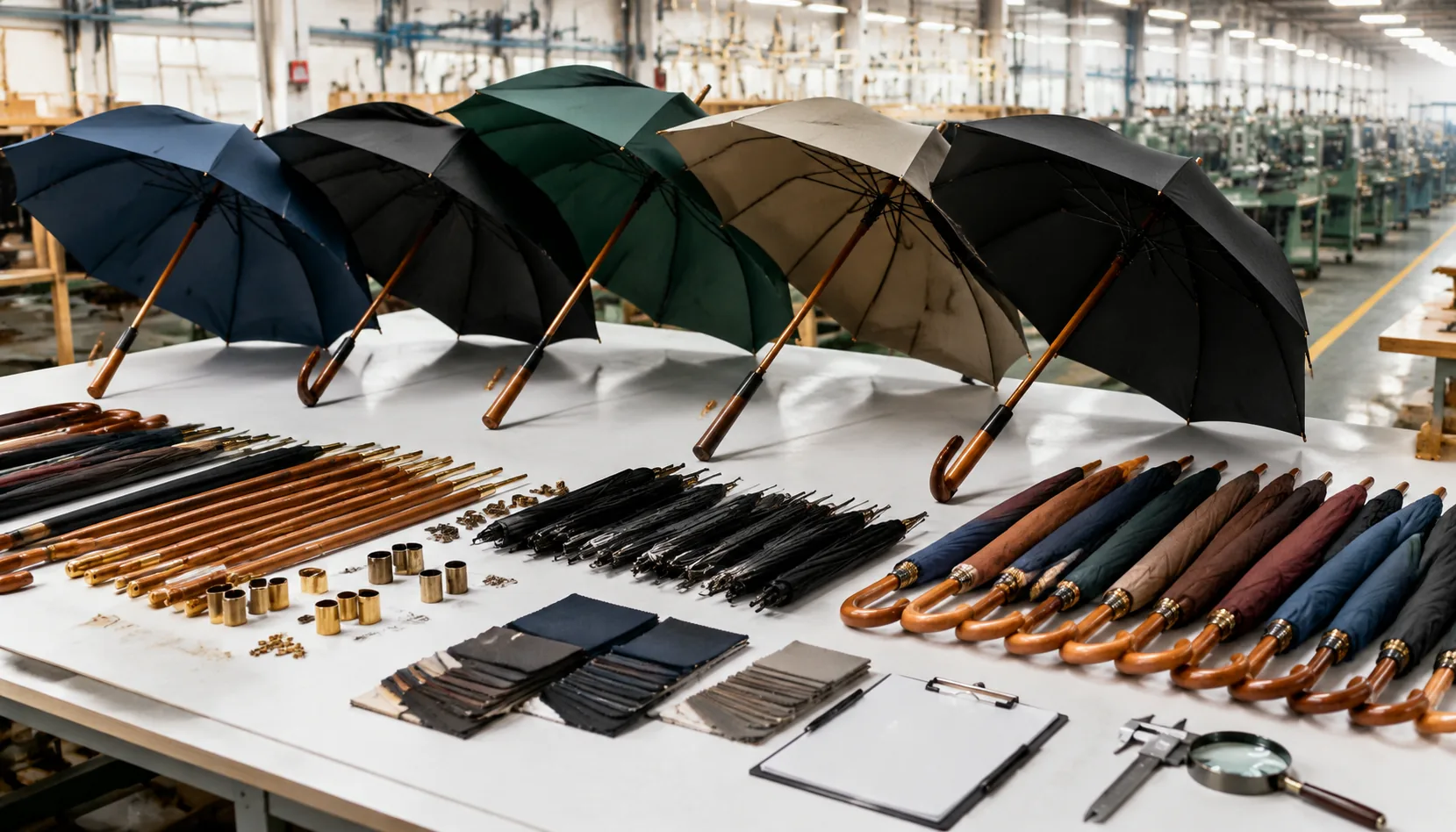
Wooden Shaft Stick Umbrellas: Retail Buyer Spec Guide
Compare wooden shaft umbrella specs for retail programs, including canopy fabric, ribs, handles, finishing, QC checks, M...
Read More »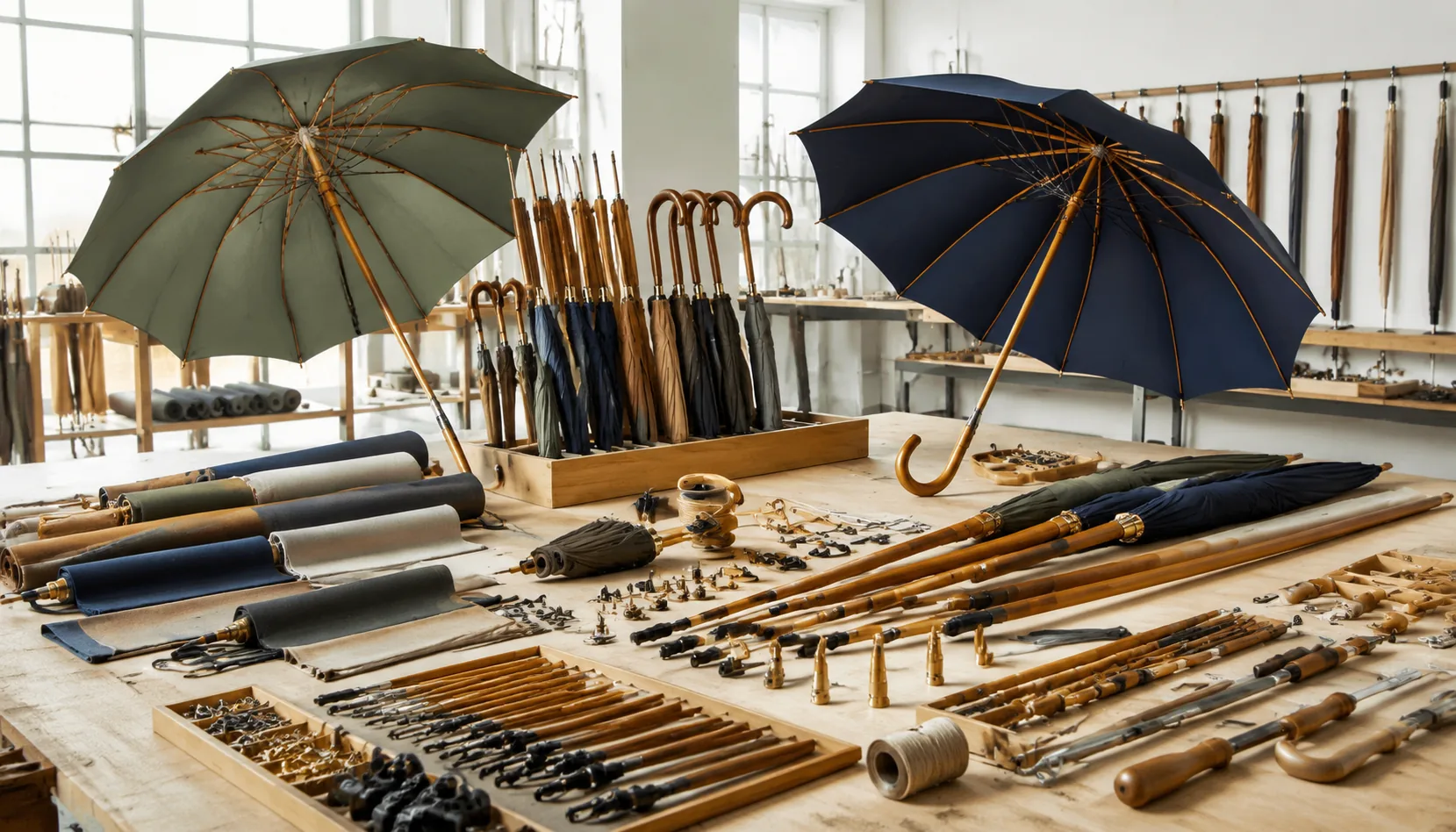
Wooden Stick Umbrellas: OEM Specs for Retail Collections
Source wooden stick umbrellas with the right shaft, ribs, 190T/210T canopy, handle finish, MOQ, QC, and FOB/DDP plan for...
Read More »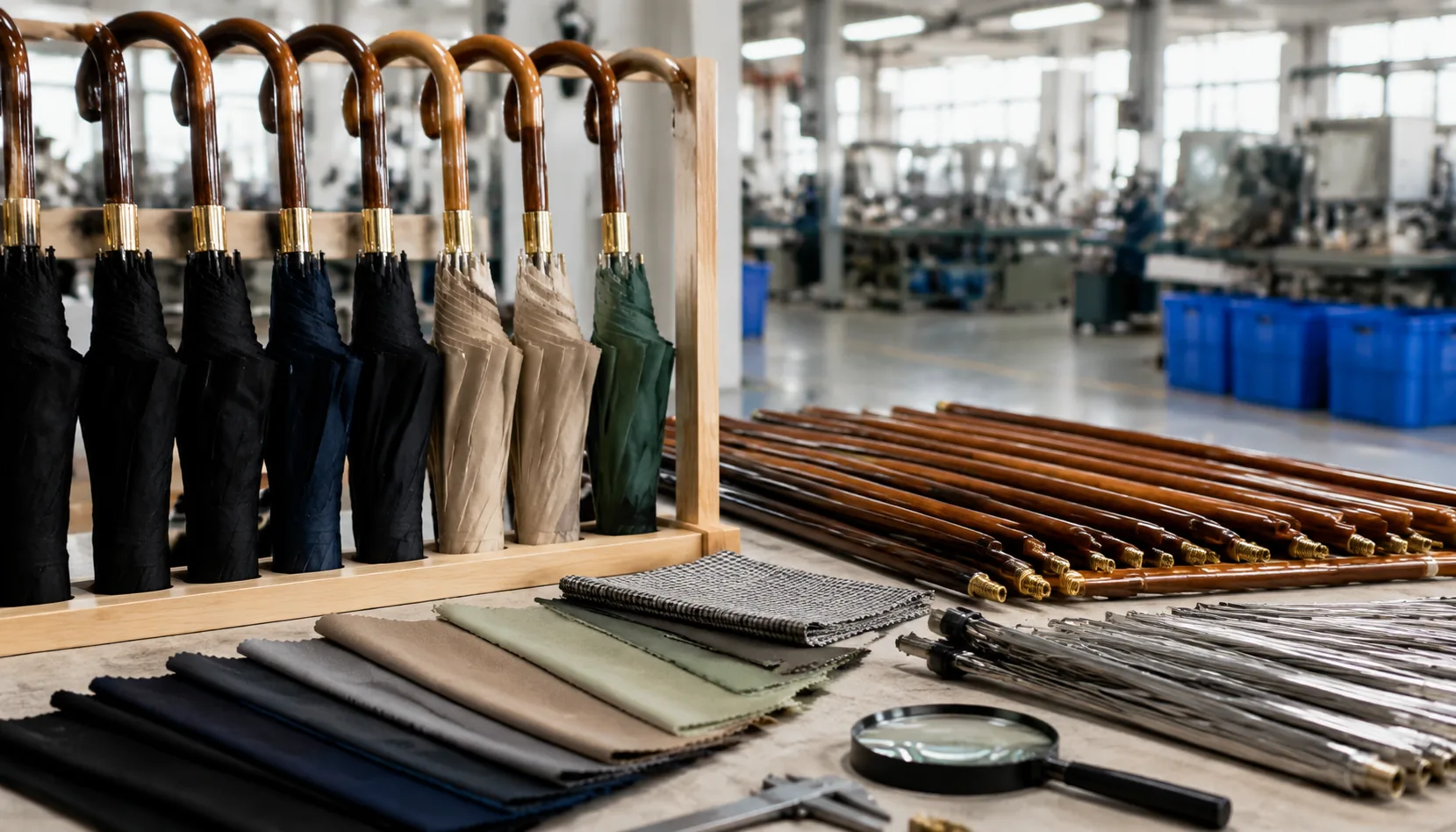
Cane Handle Stick Umbrellas: Buyer Specs for Retail Brands
Specify cane handle stick umbrellas with 8K frames, 190T/210T pongee, auto-open options, and QC checks for retail and gi...
Read More »