Wooden Stick Umbrellas: OEM Specs for Retail Brands
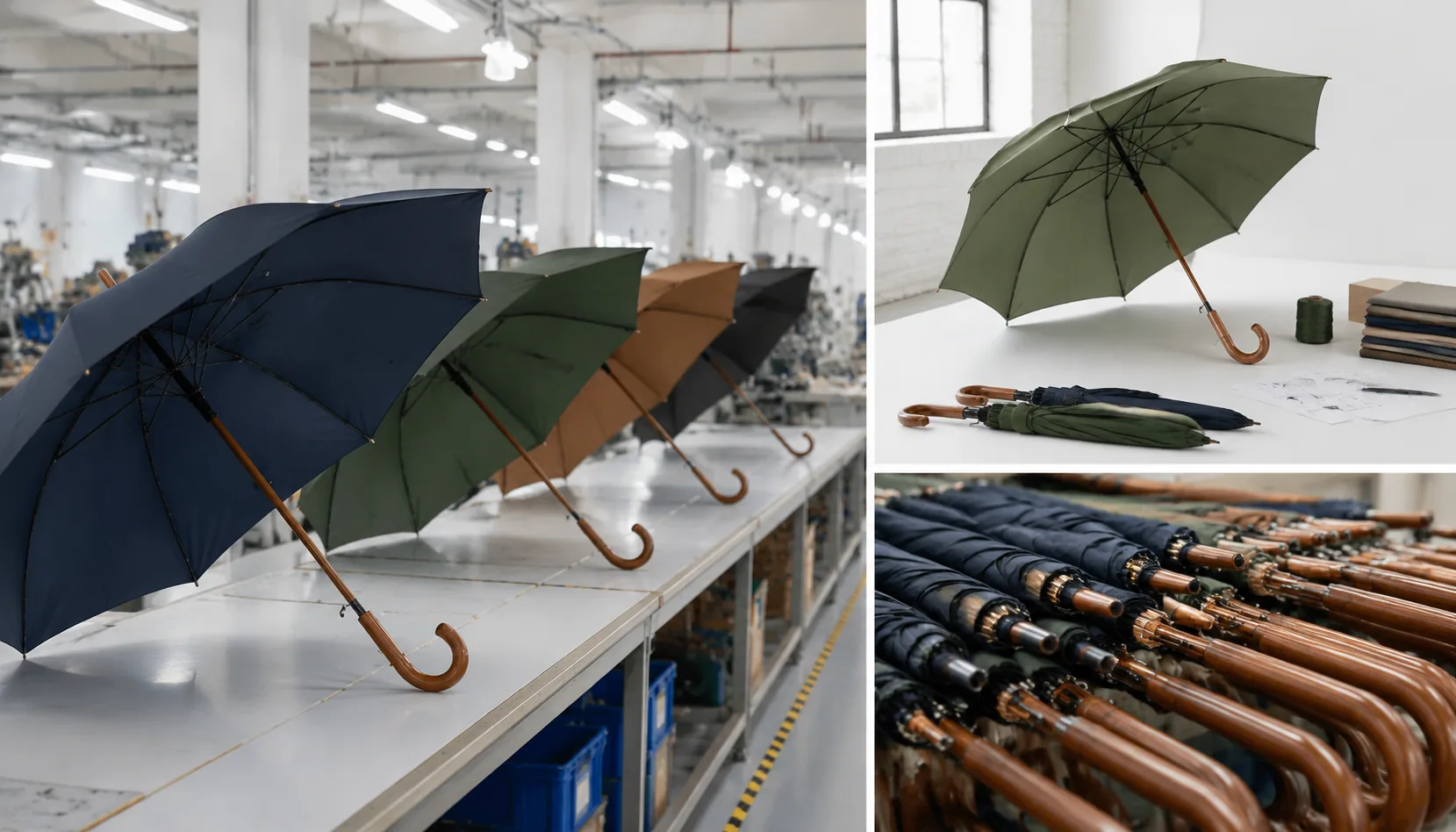
Retail buyers can lose margin fast when a classic wooden stick umbrella looks right in the sample room but fails on rib strength, fabric hand feel, or handle finish after shipment. As a wooden stick umbrellas manufacturer in Songxia, we check these orders from the frame jig outward: shaft straightness, 8K or 16K rib loading, 190T versus 210T pongee, varnish consistency, and carton drop risks before production is released.
Positioning Wooden Stick Umbrellas in a Retail Line
Wooden stick umbrellas sit in the part of the market where buyers are paying for presentation first and unit cost second. They work best in premium gifting, boutique retail, hotel gift shops, and heritage-style brand programs that want a more traditional silhouette than a compact fold. A wooden stick umbrellas manufacturer usually positions these as straight umbrella OEM products because the long shaft, visible ferrule, and wooden handle give the customer an immediate sense of weight and value. For retail, the 23" and 25" sizes are the safest shelf sellers: they look substantial without feeling oversized, and they package cleanly in premium cartons or sleeve boxes. If the brand wants a more classic, old-world look, natural wood handles and matte black or stained shafts sell that story better than bright plated finishes.
Coverage is driven more by arc than by rib count alone, and that matters on the shelf. A 23" rib length usually lands around a 41" to 43" arc, which is enough for one person with good presentation; 25" moves closer to 44" to 46" and reads more generous in-store; 27" pushes into the 48" to 50" range and starts to feel like a true premium rain umbrella. Retail buyers often miss that a larger arc improves perceived quality, but it also changes hangtag messaging, shelf depth, and carton size. Pongee canopy umbrellas in 190T or 210T fabric hold color well and look cleaner under indoor lighting than cheaper polyester, so they are the better choice for boutique displays and hotel counters. A 16K stick umbrella can be used when a tighter, more engineered frame look is part of the brand story, but for most heritage retail programs, the cleaner straight shaft matters more than overbuilding the frame.
For assortments, the right mix is usually a small set of colorways rather than a wide SKU spread: black, navy, burgundy, forest green, and one neutral like taupe or khaki. That keeps the line coherent and reduces dead stock, especially when the same wooden handle umbrellas need to support both gift and everyday retail use. The umbrella should feel intentional in the hand; if the wood finish is too glossy or the canopy too flimsy, the product looks promotional instead of retail-ready. In practice, a wooden stick umbrellas manufacturer should spec consistent grain matching, a stable shaft diameter, and enough canopy tension that the umbrella opens flat without wrinkling at the tips. For hotels and heritage brands, the sweet spot is usually a 23" to 27" frame with a refined handle shape, because it balances shelf appeal, walking coverage, and the visual premium that justifies a higher retail price.
Frame Specs: Wood Shaft, Rib Count, and Wind Resistance
For retail OEM programs, the first frame decision is whether the umbrella is truly a wood-shaft stick umbrella or a metal-shaft umbrella dressed with a wood handle. A solid maple, beech, or ash shaft gives the classic continuous-stick profile buyers expect in premium wooden handle umbrellas, but it needs tighter moisture control and straighter grain selection; otherwise, you see bending after container transport or winter warehouse storage. A steel or aluminum shaft with a crook wood handle is cheaper, more dimensionally stable, and easier to run with auto-open hardware, but it does not have the same retail feel when the customer opens it. As a wooden stick umbrellas manufacturer, I normally recommend solid wood shafts for department-store and heritage-brand lines, and metal shafts with wood handles for promotional or price-sensitive straight umbrella OEM orders where the look matters more than the hand-feel.
Rib count changes both appearance and load distribution. An 8K stick umbrella is the standard commercial build: lighter, faster to assemble, and suitable for 23 inch or 27 inch pongee canopy umbrellas using 190T or 210T fabric. A 16K stick umbrella looks fuller and more architectural on the shelf because the canopy panels are narrower and the dome holds a rounder curve, but it adds labor, sewing tolerance risk, and frame weight. If the brand wants a luxury rain umbrella for retail, 16K makes sense, especially with a 27 inch or 30 inch arc size. If the buyer wants a hotel, golf-event, or corporate gift umbrella, 8K or 10K usually gives better cost-to-performance balance. The mistake I see often is specifying 16K only for “strength”; rib material and runner quality matter more than rib quantity alone.
For wind resistance, fiberglass ribs outperform painted steel ribs because they flex and recover instead of taking a permanent bend. Steel ribs are acceptable for classic fashion stick umbrellas, especially when the target is a clean silhouette and low MOQ, but they can invert sharply in gusts above 35–40 mph. A higher-end wind-resistant build should use fiberglass ribs, a reinforced stretcher layout, and preferably a vented double canopy if the design allows it; that combination can survive 50+ mph wind-tunnel testing when the shaft and notch are properly matched. The shaft is still the weak point on solid wood models, so we check shaft diameter, notch seating, tip alignment, and runner smoothness before bulk assembly. For retail AQL 2.5 inspection, I would add open-close cycling, rib symmetry, canopy tension, and handle pull testing, not just visual checks on the wood finish.
Canopy Fabric and Coating Choices
For wooden stick umbrellas, the canopy fabric choice starts with pongee weight and weave density, not color swatches. `190T` pongee has a softer hand and drapes a little easier, so it is a safe choice for wooden handle umbrellas when the buyer wants a lighter retail feel and a lower cost point. `210T` pongee is tighter, smoother under print, and more resistant to abrasion at the fold lines and tips, which matters on a straight umbrella OEM program that will be opened and closed all day. On a `16K stick umbrella`, the canopy is doing more work at the rib ends, so the stronger weave is usually the better call if the product must survive repeated merchandising and store handling. As a wooden stick umbrellas manufacturer, we see the same result repeatedly: `190T` sells on price and soft hand, while `210T` sells on polish, shape retention, and fewer claims from bent panels or fuzzed seams.
Print quality changes with weave density more than most buyers expect. `210T` pongee gives cleaner edges for logo work, especially on large panels where fine type or small line art has to stay sharp after sewing and heat setting. `190T` still prints well, but it tends to show a little more texture in solid fills and can read less premium when the canopy is viewed at arm’s length. Both versions should be finished with a water-repellent treatment; without it, the cloth wets out too fast and the umbrella looks tired after the first rain. For pongee canopy umbrellas, I usually recommend a durable water repellent finish that does not make the fabric greasy or overly stiff, because a cheap coating ruins the hand feel. If the buyer wants a more upscale retail story, the surface needs to stay smooth, the stitch line must not pucker, and the fabric should recover flat after packing, or the product looks commercial instead of branded.
A black coating or UPF 50+ lining changes the umbrella’s perceived value more than the spec sheet suggests. Black undercoating hides the frame silhouette, blocks light, and gives the canopy a deeper color saturation from the outside, which is why darker wooden handle umbrellas often look more premium on shelf than bright pastels. UPF 50+ lining is the better sell when the umbrella is positioned as sun and rain protection, especially for markets that want one product to cover both uses. The tradeoff is weight and cost: extra coating adds process time, and too much coating can make a canopy stiffer to fold neatly. In practice, retail buyers usually choose `210T` pongee with water-repellent finish plus black coating when they want a stronger presentation, and `190T` with a lighter treatment when the order is price-sensitive. That is the normal split we see in OEM programs, and it is usually the right one for branded programs that need consistent shelf appeal.
Handle, Tip, and Branding Details
Handle specification is where many retail programs lose consistency, because wood is not plastic and every batch behaves differently after sanding, staining, and lacquer. For wooden handle umbrellas, the buyer should define crook handle radius, straight handle length, diameter tolerance, and whether the handle is solid beech, maple, ash, or laminated wood. On a 23" or 27" straight umbrella OEM project, I usually ask for a signed color range board instead of one “perfect” reference sample, because natural grain will shift from light honey to deeper brown even inside the same timber lot. The lacquer should be called out as matte, satin, or gloss, with a minimum adhesion check after 24 hours curing; cheap lacquer chips first at the lower grip edge and around the drilled shaft hole. Any wooden stick umbrellas manufacturer should require sample approval for wood color variation before bulk production, especially when matching handles to leather straps, retail hangtags, or kraft sleeves.
Tips and ferrules are small parts, but they decide whether the umbrella feels retail-grade or promotional-grade in the customer’s hand. For classic wooden stick umbrellas, the top tip can be nickel-plated, brass-plated, gunmetal, matte black, or painted to match the shaft; the ferrule must sit straight on the shaft, without glue overflow or visible wobble when the umbrella is rolled. Metal tips should be checked for plating thickness, burrs, and salt-spray resistance if the order is going to coastal markets. For a 16K stick umbrella, the heavier rib structure puts more stress on the runner and crown area, so the ferrule fit and cap crimping need tighter inspection than on an 8K promotional model. Our standard practice at ZheBrella is to include these hardware points in the pre-production sample sheet, then confirm them again under AQL 2.5 final inspection.
Branding should be locked before cutting fabric, because panel orientation affects logo visibility once the canopy is sewn and rolled. On pongee canopy umbrellas using 190T or 210T fabric, screen printing works well for one- to three-color logos, while heat transfer is better for gradients, small text, or retail artwork with tight registration. Panel logo placement should specify distance from the lower edge, centerline alignment to the rib seam, print size in inches or millimeters, and whether the logo appears on one, two, four, or all eight panels. Woven labels are usually sewn into the closure strap or sleeve seam, not randomly placed on the canopy where they can distort the panel. Sleeve printing also needs its own artwork approval, because a logo that looks balanced on a flat template may disappear when the sleeve wraps around a crook handle or thick wooden shaft.
Order Planning: MOQ, QC, Lead Time, and Shipping
For wooden stick umbrellas, MOQ should be planned by fabric color, logo method, and handle finish, not just by total order quantity. A realistic retail OEM range is 500–1,000 pieces per solid pongee color when using stock 190T or 210T fabric, and 1,000–3,000 pieces if the canopy requires a custom-dyed color, all-over sublimation, or matched wooden handle stain. For wooden handle umbrellas with a simple one-position screen print, 500 pieces per logo is usually workable; heat-transfer badges, woven labels, and custom ferrules push the practical MOQ higher because setup waste is real. A straight umbrella OEM program using a 23" or 27" frame, steel shaft, fiberglass ribs, and J-handle should lock the rib count early: 8K is standard retail, 10K feels stronger, and a 16K stick umbrella needs more sewing control because panel tension errors show quickly.
Sampling normally takes 7–10 days after artwork, Pantone references, and frame details are confirmed. I do not recommend approving a wooden stick sample only from photos; buyers should check canopy tension, tip alignment, runner smoothness, handle varnish, logo position, and whether the wood grain looks consistent across units. Bulk lead time is typically 30–45 days after sample approval and deposit, assuming stock pongee canopy umbrellas and standard steel/fiberglass frames. Custom-dyed fabric, UV UPF 50+ coating, Teflon water-repellent treatment, or retail packaging with printed hangtags can add 7–15 days. As a wooden stick umbrellas manufacturer, our standard practice is to freeze the approved sample, fabric swatch, logo film, and carton mark together so production, QC, and export packing are working from the same reference.
AQL 2.5 inspection should cover appearance and function, not just open-close testing. For stick umbrellas, inspectors should measure diameter tolerance, panel symmetry, seam slippage, rib-tip security, cap and ferrule fit, handle pull strength, print color, barcode readability, and carton drop condition. Random open-close cycling catches weak runners and poor notch engagement; water spray testing catches bad coating or skipped seam areas. FOB is usually cleaner for experienced retail importers because the buyer controls vessel booking, insurance, and destination charges, while the factory quotes product plus local export handling. DDP is easier for smaller retail launches or promotional distributors because duty, freight, customs clearance, and final delivery are bundled, but it must specify HS code, destination ZIP, carton count, and whether Amazon, warehouse, or store delivery rules apply.
Frequently Asked Questions
Are wooden stick umbrellas heavier than standard straight umbrellas?
Usually yes, especially with a solid wood shaft and 16K frame. Buyers can reduce weight by using a metal shaft with a wooden handle while keeping the same premium look.
Can wooden stick umbrellas use auto-open mechanisms?
Yes, but many premium wooden stick umbrellas use manual opening for a cleaner classic feel. If auto-open is required, specify spring strength, runner material, and cycle testing during sampling.
What MOQ is typical for OEM wooden stick umbrellas with a custom logo?
For most retail OEM orders, MOQ is usually 500–1,000 pieces per color or design. Custom handles, dyed wood shafts, or exclusive canopy prints may require 1,000–3,000 pieces depending on material availability.
Should retail brands choose 8K or 16K ribs for wooden stick umbrellas?
8K ribs are lighter and lower cost, suitable for standard retail rain umbrellas. 16K ribs create a fuller canopy shape and stronger premium feel, but they add weight and typically increase unit cost by about 10–25%.
How long does production take for pongee canopy stick umbrellas?
Sampling usually takes 7–10 days after artwork confirmation. Bulk production commonly takes 30–45 days after sample approval and deposit, with longer lead times for custom wood finishes, metal tips, or multi-color panel printing.
Looking to Launch Your Custom Umbrella Line?
ZheBrella is a Zhejiang-based OEM/ODM umbrella manufacturer with 17 years of export experience. Free design, low MOQ from 100 pieces, windproof construction, full-color print.
Get Free Quote Now »People Also Search For
Related Articles
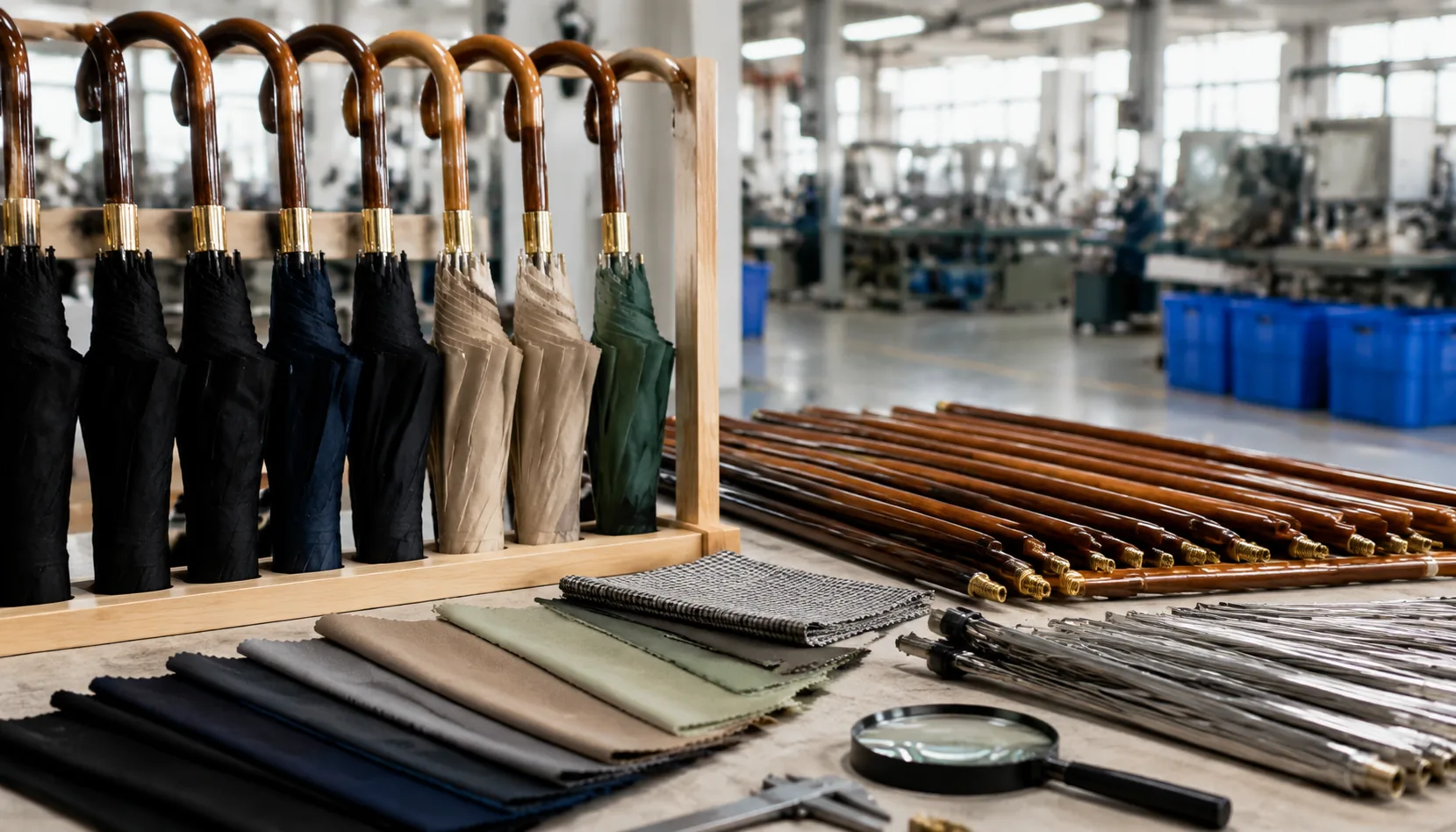
Cane Handle Stick Umbrellas: Buyer Specs for Retail Brands
Specify cane handle stick umbrellas with 8K frames, 190T/210T pongee, auto-open options, and QC checks for retail and gi...
Read More »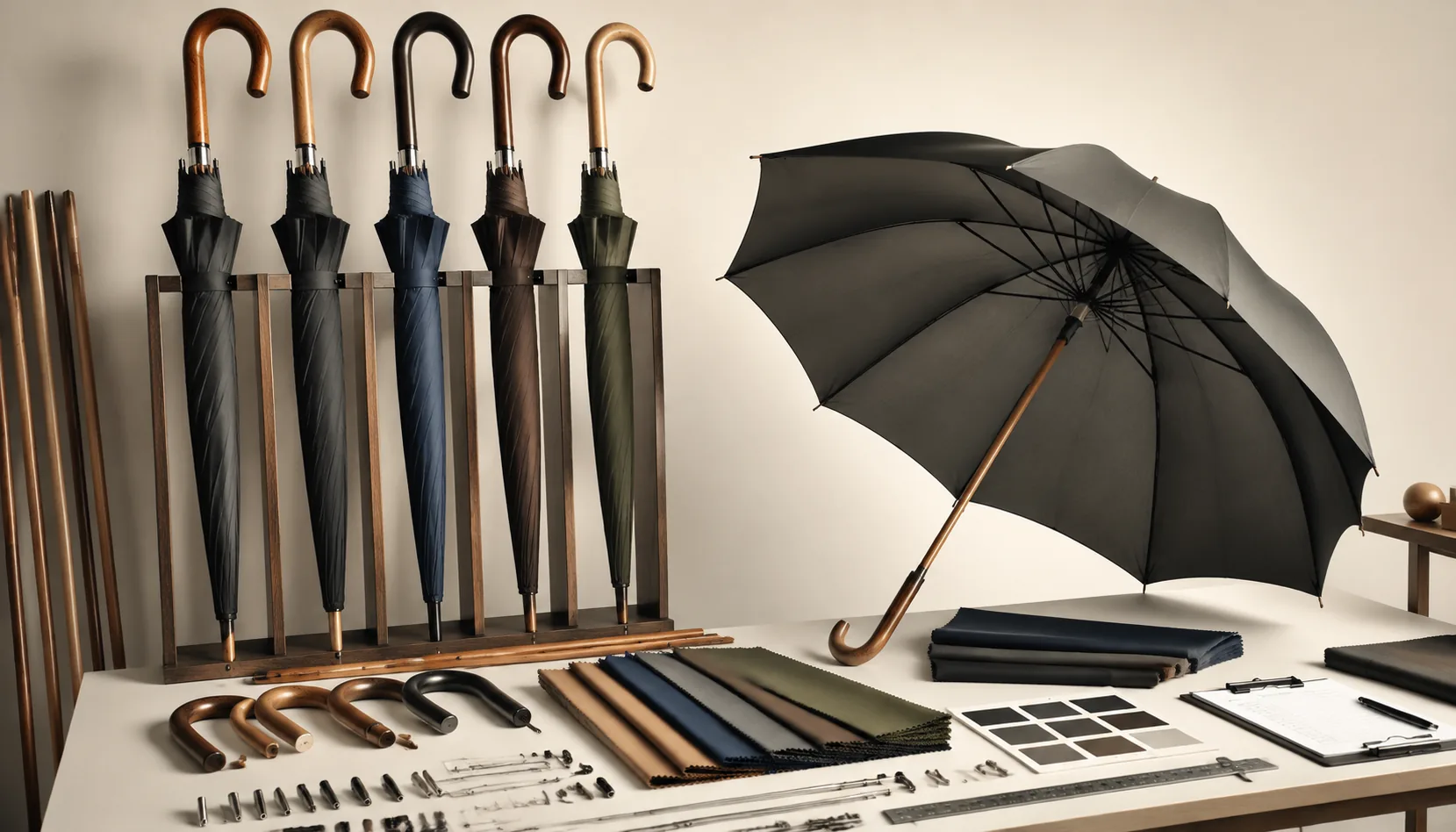
Executive Stick Umbrellas: Buyer Specs for Retail Brands
Compare executive stick umbrella specs, from 8K/16K frames and pongee fabrics to handles, QC, MOQs, and shipping terms f...
Read More »
Luxury Wooden Handle Umbrellas for Retail Private Label
Build retail-ready wooden handle umbrellas with 16K frames, 210T pongee, branded details, packaging specs, FOB/DDP terms...
Read More »