Luxury Wooden Handle Umbrellas for Retail Private Label
Retail buyers sourcing luxury umbrellas often find the sample looks good, but bulk production fails on handle finish, rib strength, fabric handfeel, or packaging consistency. On our Songxia factory floor, wooden handle umbrellas wholesale projects are controlled from 16K frame selection and 210T pongee cutting to logo placement, gift box specs, FOB/DDP paperwork, and final AQL checks, because private label retail orders leave little room for visible defects or late corrections.
Positioning Wooden Handle Umbrellas in Retail Lines
Wooden handles make sense when the umbrella is being sold as an accessory, not handed out as a cheap rain shield. Department stores, museum shops, boutique hotels, winery gift shops, and airline VIP counters can all justify them because the customer touches the handle before judging the canopy. A polished maple, beech, ash, or rubberwood crook handle feels warmer and more permanent than EVA foam or straight plastic, especially on 23" and 27" stick formats. For retail, I would not build below a target shelf price of about $24.99–$39.99 for a standard 8K or 10K model, and $49.99–$79.99 when using 16K umbrella ribs, fiberglass shaft, metal runner, branded woven label, and gift sleeve. Below that range, the added cost of sanding, staining, clear coating, and handle QC gets squeezed, and buyers start comparing it against basic promotional stick umbrellas instead of luxury retail umbrellas.
For private label stick umbrellas, the handle is also where brand positioning becomes visible without shouting. A small laser-engraved logo on the wood, a debossed faux-leather strap, antique nickel tips, or a color-matched sleeve will look more credible than a large one-color screen print across every panel. Museum shops often prefer muted canopies with a single art detail or interior print; hospitality retail usually wants navy, black, forest green, or burgundy with discreet branding; premium corporate gifts can use a 210T pongee canopy with Teflon water-repellent finish and a UPF 50+ coating if the item must feel useful beyond one event. When buyers ask for wooden handle umbrellas wholesale, I usually push them to define the retail channel first, because the same 23" umbrella can be built as a $12 giveaway or a $45 gift depending on frame, fabric, finishing, and packaging.
The main difference from a basic promotional stick umbrella is tolerance control. On low-cost giveaways, a painted plastic J-handle, 190T polyester canopy, steel ribs, and simple manual open are acceptable if the logo prints cleanly and the umbrella passes AQL 2.5 inspection. For a retail wooden-handle program, crooked grain, rough varnish, loose ferrules, uneven rib tips, and canopy puckering will trigger returns even if the umbrella opens correctly. Our standard practice at ZheBrella is to confirm pongee canopy specs, rib count, shaft material, handle finish, barcode labeling, and carton drop requirements before quoting FOB or DDP, because retail packaging can add 8–15 days to a normal 30–45 day production lead time. For wooden handle umbrellas wholesale, the MOQ should normally start around 500–1,000 pieces per colorway; below that, the handle finishing and private label setup costs become inefficient.
Choosing Shaft, Rib, and Runner Construction
For wooden handle umbrellas wholesale programs, the frame choice should start with the shaft because that is what the customer feels every time they carry the umbrella. A 14 mm black electroplated steel shaft gives the best price stability and a solid retail weight, especially on 23" and 27" private label stick umbrellas. It is not the lightest option, but it keeps the canopy aligned and resists twisting better than thin aluminum when the umbrella is opened hard in store demonstrations. Fiberglass shafts reduce weight and flex well, but they raise cost and can feel too sporty for luxury retail umbrellas with maple, beech, or chestnut crook handles. My usual recommendation is a steel shaft with fiberglass ribs and stretchers: it keeps the classic stick umbrella balance while improving wind recovery. A proper hybrid frame should survive 40–50 mph gust testing without permanent rib deformation, assuming the runner, notch, and tips are fitted tightly.
Rib count changes both performance and appearance, but more ribs are not automatically better for every retail SKU. An 8K frame is sufficient for most 23" straight umbrellas using 190T or 210T pongee, especially when the buyer needs a sharp FOB price and a clean logo panel. With good pongee canopy specs, tight panel cutting tolerance, and reinforced rib pockets, an 8K fiberglass frame can look very respectable on department-store shelves. The limitation is canopy tension: large printed panels may show slight scalloping between ribs, and the umbrella can feel less substantial when customers rotate it in hand. For entry luxury or promotional retail, I would spend money first on better fabric, plating, runner smoothness, and handle finishing before jumping to 16K umbrella ribs. A poor 16K umbrella with loose rivets feels worse than a well-built 8K.
A 16K construction becomes worthwhile when the product is positioned as a premium gift, hotel retail item, or branded fashion accessory. Sixteen ribs create a rounder canopy profile, reduce panel flutter, and give a heavier, more deliberate opening feel that matches wooden crook handles and metal tips. The tradeoff is real: more ribs mean more sewing points, more rivets, higher inspection time, and usually a 12–20% frame cost increase versus an 8K hybrid frame. For wooden handle umbrellas wholesale orders, we normally pair 16K fiberglass ribs with a 25" or 27" canopy, 210T pongee, water-repellent coating, and a manual runner rather than auto-open, because the manual mechanism feels more controlled and has fewer return risks. During AQL 2.5 inspection, I check runner lock strength, rib symmetry, tip alignment, and whether the canopy sits evenly without one panel pulling short.
Canopy Fabric, Finishing, and Brand Details
Brand details should feel intentional, not added at the end of production. Woven labels work best on the closing strap or inner seam, while engraved metal plaques on the wooden handle give luxury retail umbrellas a stronger private-label signal than pad printing directly on varnished wood. Color-matched straps, nickel or matte-black metal tips, plated runner parts, and custom sleeves should be confirmed against the same Pantone reference as the canopy, because small tone differences become obvious in retail photography. For wooden handle umbrellas wholesale orders, I would also specify sleeve fabric as matching 210T pongee, with a reinforced mouth and barcode label position agreed before mass packing. Inspection should include logo placement, plaque adhesion, strap stitching strength, tip alignment, canopy stains, and sleeve fit under AQL 2.5, since these are the defects retail customers notice before they ever test wind resistance.
Packaging and Logistics for Retail Programs
Retail packaging has to be engineered before production, not after the umbrellas are finished. For wooden handle umbrellas wholesale programs, I normally lock the packaging BOM together with the pre-production sample: brand hangtag on 350–400 gsm art card, EAN/UPC barcode sticker on the polybag or box, silica gel where needed, and a scratch-resistant sleeve over the wood crook or straight handle. For private label stick umbrellas, buyers often choose a 190T or 210T pongee canopy with a woven label at the tie strap, then add a cotton dust bag or microfiber sleeve for department-store presentation. If the item is positioned as luxury retail umbrellas, a rigid gift box with foam-free paper inserts looks better than thin folding cartons, but it adds real volume, usually increasing CBM by 25–40%. That affects freight more than many buyers expect, especially on 23" and 27" stick umbrellas with long shafts.
Master carton design should match the channel, not just the factory’s convenience. A 5-ply export carton is usually enough for standard retail cartons, while heavy gift-boxed umbrellas or mixed 16K umbrella ribs models should move to stronger double-wall board, typically 7-ply or reinforced 5-ply with edge protectors. Cartons need clear markings: SKU, color, size, quantity, gross/net weight, carton dimensions, country of origin, PO number, and barcode if the warehouse requires scan-in receiving. For mixed SKU drops, do not let the factory pack random colors just to save time; set an exact carton matrix, such as 12 pcs black, 6 pcs navy, 6 pcs burgundy, or single-SKU cartons for Amazon and 3PL receiving. Our standard practice at ZheBrella is to confirm carton drop resistance and label placement during AQL 2.5 inspection, because a perfect umbrella can still fail retail intake if carton marks do not match the packing list.
FOB is cleaner when the buyer already has a forwarder, multiple suppliers in Zhejiang or Guangdong, and enough volume to consolidate. The factory quotes product cost, inner packaging, master cartons, and delivery to Ningbo or Shanghai port; the buyer controls ocean freight, customs clearance, duty, and destination trucking. DDP is more practical for first seasonal retail drops, smaller mixed-SKU orders, or buyers without an import team, but the quote must separate product, packaging, freight, duty, and final delivery so margin is visible. Wood handles, pongee canopy specs, UV coating, Teflon finish, and 16K frame upgrades all change unit weight and carton size, so logistics should be recalculated after sample approval, not estimated from a generic umbrella. For retail launch calendars, allow 7–10 days for packaging proofing, 25–35 days for production after deposit and artwork approval, and another 25–40 days for sea freight depending on destination.
Sampling, Lead Times, and AQL Inspection Points
Prototype approval should start with the parts that make the umbrella feel expensive in the hand: the wood handle profile, stain color, ferrule plating, tip cup, runner, and shaft finish. For private label stick umbrellas, I prefer one physical sample over three rounds of photos because walnut, maple, bamboo, and beech all absorb stain differently, especially on curved J handles where sanding pressure changes the grain. If the buyer wants custom hardware in antique brass, gunmetal, matte black, or brushed nickel, allow 7–10 days for lab dips and plating chips before the full prototype. A normal sample using existing molds and stock pongee canopy specs can be ready in 5–7 days; custom handle turning, laser logo, engraved metal badge, or matched wood color usually pushes sampling to 12–18 days. For wooden handle umbrellas wholesale orders, the approved prototype must lock the bill of materials, not just the logo artwork.
Pre-production sample signoff is where retail risk gets removed before cutting bulk fabric. The PPS should use production-grade 190T or 210T pongee, the final seam allowance, the chosen frame, and the real carton packing method, because luxury retail umbrellas are often damaged more by poor packing than by rain testing. For a 23" or 27" stick umbrella, we check canopy tension on the open frame, panel symmetry, logo placement tolerance within about 3 mm, and whether the wood handle aligns cleanly with the shaft when viewed from the side. If the design uses 16K umbrella ribs, the PPS also needs a full open-and-close cycle check because high rib counts create more contact points and more chances for friction at the runner. Our standard practice at ZheBrella is to start bulk production only after written PPS approval, signed sample photos, and final packaging confirmation.
Typical bulk lead time is 30–40 days after deposit and PPS approval for standard wooden handle umbrellas wholesale production, assuming existing frame tooling and stock fabric colors. Add 7–15 days for custom wood stain matching, molded handle shapes, nonstandard shaft plating, retail gift boxes, or imported coating requests such as Teflon water repellency or UPF 50+ treatment. Inspection should be written against AQL 2.5 for major defects, with separate checkpoints for handle finish scratches, uneven varnish, loose end caps, shaft straightness, canopy stains, skipped stitches, panel puckering, broken tips, and open-close reliability. For stick umbrellas, I also require a vertical roll test or visual straightness check on the steel or fiberglass shaft, plus 20–30 open-close cycles from pulled cartons. Any sticking runner, rattling handle, exposed nail, cracked lacquer, or visible oil mark on light pongee should be treated as a retail-facing defect, not a cosmetic argument after shipment.
Frequently Asked Questions
Are real wooden handles better than plastic imitation wood?
Real wood gives a warmer grip and premium retail feel, but it needs tighter QC for grain, varnish, and color consistency. Plastic imitation wood is more consistent and lower cost for larger promotional orders.
What MOQ should buyers expect for wooden handle private label umbrellas?
MOQ depends on handle customization, canopy color, and packaging. Standard wood handles with logo printing may start lower, while custom stained handles, metal badges, or gift boxes usually require higher MOQ.
What is a practical MOQ for private label wooden handle umbrellas?
For most OEM/ODM programs, MOQ is often 300-500 units per color or design, depending on handle material, canopy print method, and packaging. If you need multiple retail SKUs, factories usually set MOQ by style rather than by total order value.
How does a 16K frame affect retail umbrella performance?
A 16K frame means 16 ribs, which usually improves wind resistance and canopy shape compared with lower-rib constructions. It is a good spec for premium retail umbrellas, but it also increases material cost and pack weight.
What shipping term is better for retail importers, FOB or DDP?
FOB works well if your team already manages freight, customs, and destination delivery. DDP is better when you want landed pricing to a warehouse, but you should confirm duty assumptions, carton count, and final delivery coverage before approving quotes.
Looking to Launch Your Custom Umbrella Line?
ZheBrella is a Zhejiang-based OEM/ODM umbrella manufacturer with 17 years of export experience. Free design, low MOQ from 100 pieces, windproof construction, full-color print.
Get Free Quote Now »People Also Search For
Related Articles
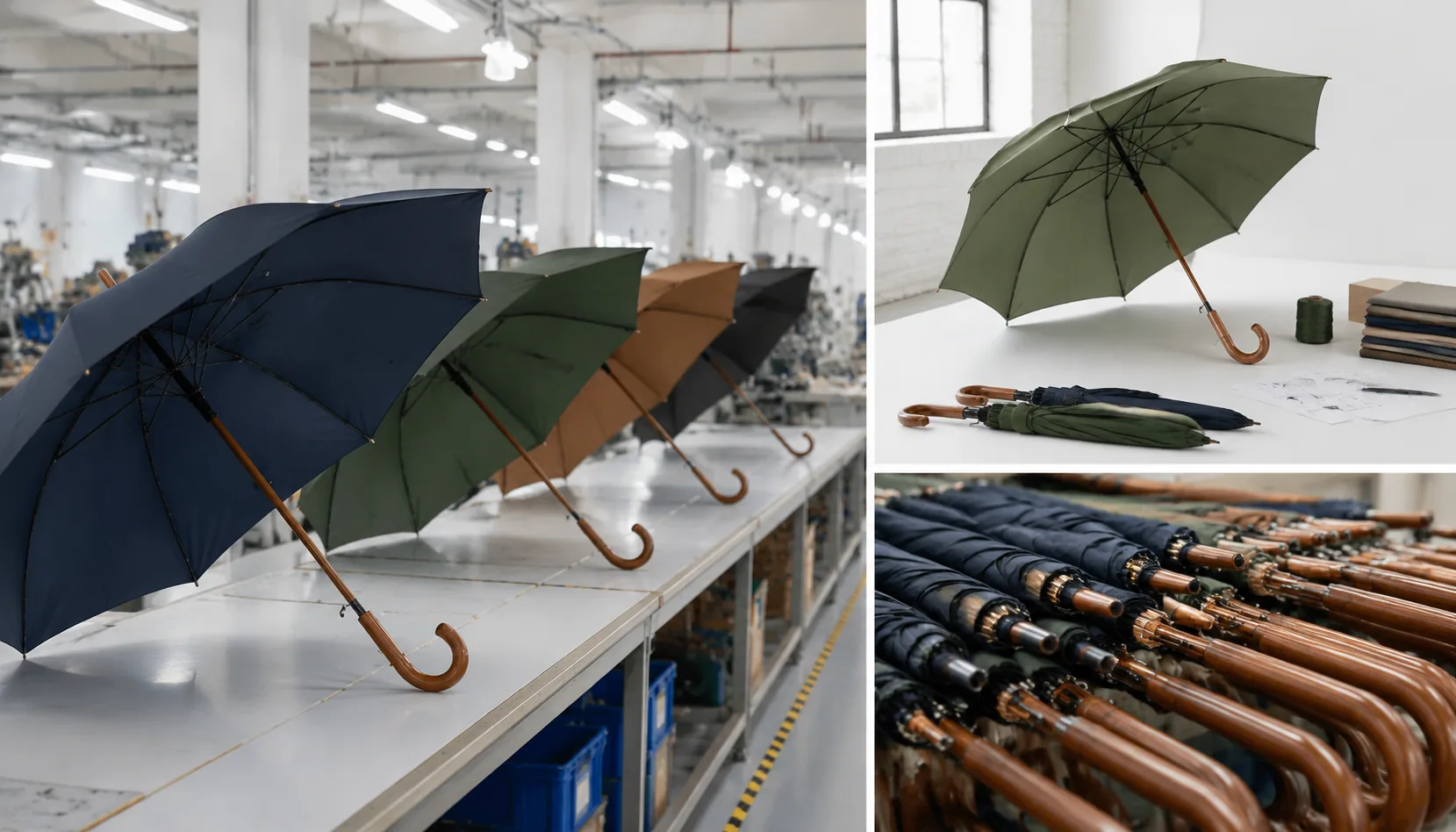
Wooden Stick Umbrellas: OEM Specs for Retail Brands
Compare wooden stick umbrella specs for retail orders, including shafts, 8K/16K ribs, 190T/210T pongee, handles, QC, MOQ...
Read More »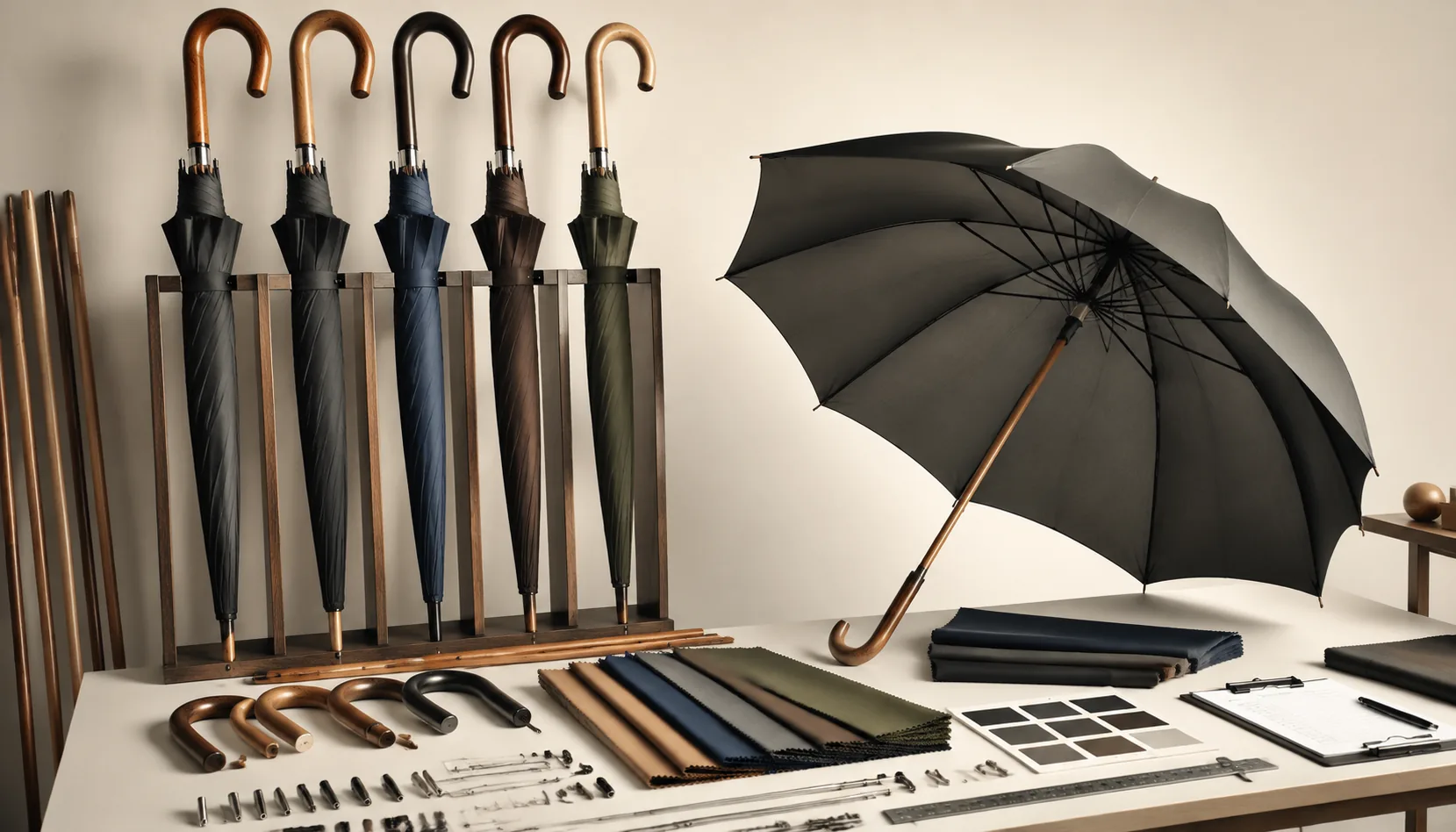
Executive Stick Umbrellas: Buyer Specs for Retail Brands
Compare executive stick umbrella specs, from 8K/16K frames and pongee fabrics to handles, QC, MOQs, and shipping terms f...
Read More »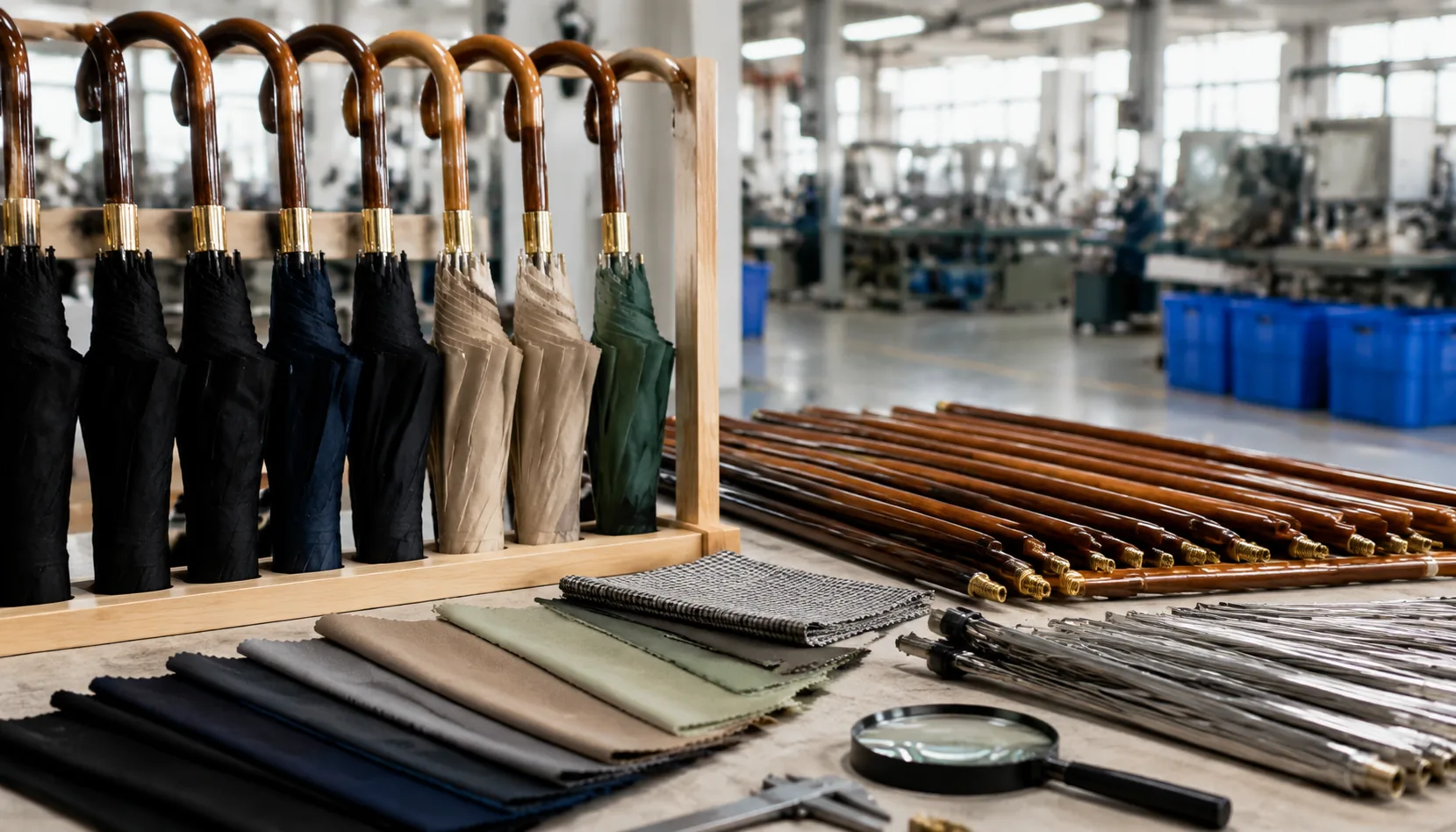
Cane Handle Stick Umbrellas: Buyer Specs for Retail Brands
Specify cane handle stick umbrellas with 8K frames, 190T/210T pongee, auto-open options, and QC checks for retail and gi...
Read More »