Wooden Shaft Umbrellas for Retail: OEM Buyer Guide
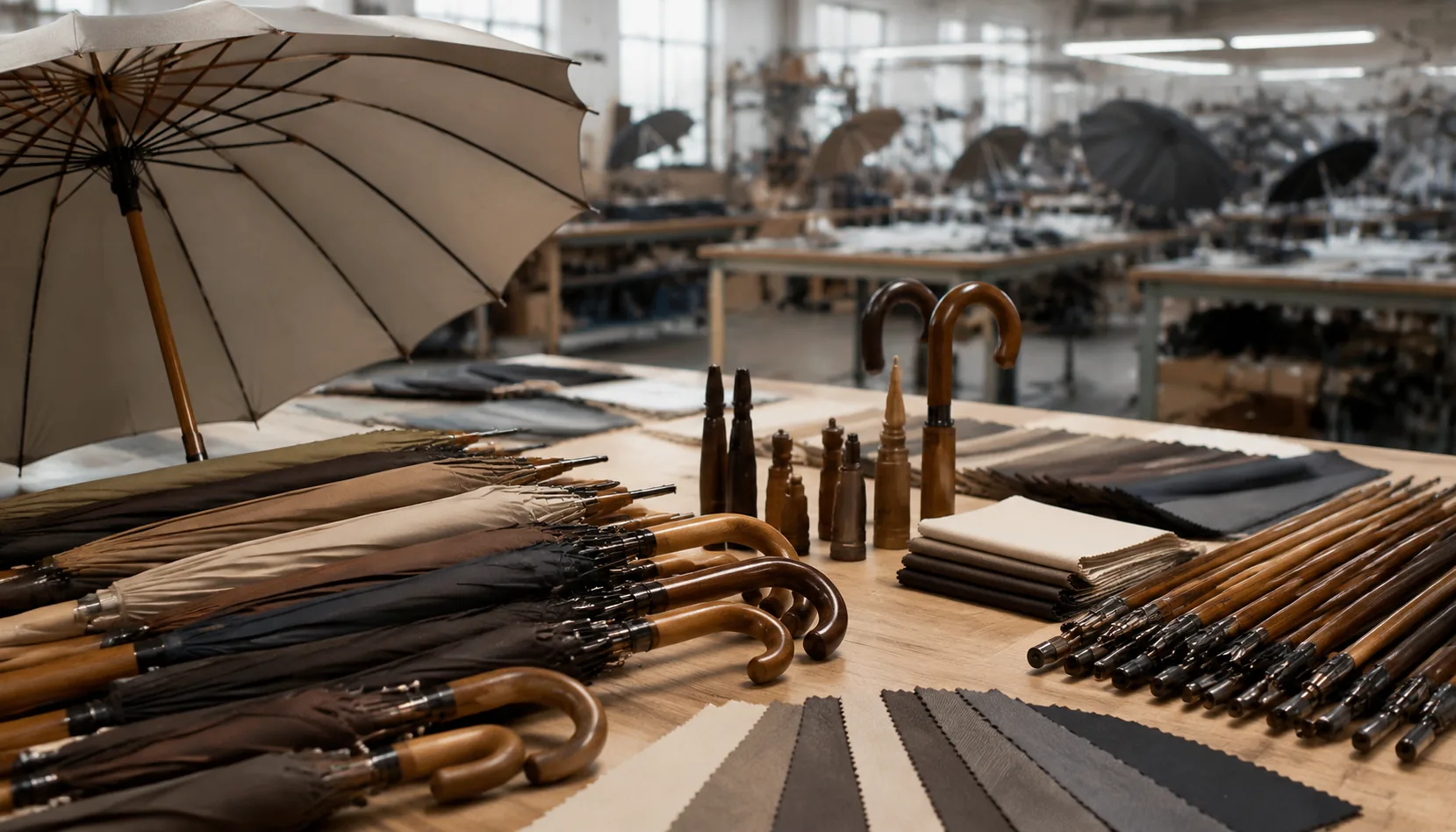
Retail buyers often discover too late that a classic wood look can hide loose grain matching, weak rib joints, rough handle lacquer, or auto-open parts that fail after sampling. When we build wooden shaft umbrellas on the factory floor in Songxia, the real work is locking down canopy fabric, rib gauge, shaft straightness, handle finish, packing, and QC checkpoints before bulk production starts.
Where Wooden Shaft Umbrellas Fit in Retail Lines
Wooden shaft umbrellas belong in retail lines where the umbrella is part of the outfit, not just an emergency rain tool. I see them work best in fashion, lifestyle, hotel gift shops, museum stores, golf-club boutiques, and heritage collections where a straight stick profile and natural handle justify a higher shelf price. A 23" or 27" stick umbrella with a beech, maple, or ash shaft feels closer to leather goods than hardware, especially when paired with 190T or 210T pongee, a color-matched sleeve, and a clean woven label. For retail umbrella sourcing, the buyer should treat the wood as a visible design component: grain consistency, stain color, varnish thickness, and ferrule alignment matter as much as canopy print accuracy. If the collection already uses canvas totes, waxed jackets, wool scarves, or hotel robes, wooden shaft umbrellas fit naturally because customers read them as classic, durable, and giftable.
Compared with metal-shaft stick umbrellas, wooden shaft umbrellas are usually a little heavier and less compact in production tolerance, but they carry more perceived value at retail. A steel-shaft 23" umbrella may be practical and lower cost, while an aluminum shaft can cut weight, but neither gives the same warm hand feel as a crook wood handle. Typical wooden handle umbrellas run well with 8K or 10K frames; I prefer fiberglass ribs over full steel ribs when the buyer wants better wind recovery, especially on 27" golf-style models. Metal shafts are easier to keep perfectly straight in mass production, so wood needs stricter incoming inspection for bending, knots, cracks, and moisture content. In our standard practice at ZheBrella, wood components are checked before assembly because a beautiful canopy cannot save an umbrella with a twisted shaft or uneven lacquer.
For OEM planning, wooden stick umbrella specs should be locked earlier than standard promotional umbrellas because wood color, handle shape, and logo method affect both cost and lead time. Laser engraving on the handle looks premium but needs a flat enough area and stable varnish; metal badges or heat-stamped logos can work, but they add fixture cost and more AQL checkpoints. For fashion retail, a 23" manual-open model with 8K fiberglass ribs and 210T pongee is a safe core SKU; for hotel doorman use, a 27" or 30" canopy with 10K ribs and a thicker shaft gives better presence. Buyers should not overspec wind claims unless the frame supports it: a double-canopy vented design may survive 50+ mph testing, but many classic single-canopy wooden models are bought for look and serviceability, not storm performance. A serious OEM umbrella factory will separate these two use cases before quoting MOQ, FOB, DDP, and 35–60 day lead times.
Shaft, Rib, and Runner Specifications
For wooden shaft umbrellas, the shaft decision is the first cost-and-positioning fork: true solid wood looks better at retail, while wood-look metal or fiberglass shafts give tighter straightness tolerance and lower breakage in transit. A beech or maple shaft in 12–14 mm diameter is common for 23" stick umbrellas, with stained finish, clear lacquer, and moisture content controlled around 8–12% before assembly. If the shaft is under-dried, it can warp after ocean freight; if the lacquer is too thick, the runner will scrape and feel cheap. Wood-look shafts are usually aluminum or steel tube with heat-transfer grain film, which is acceptable for promotional retail but less convincing on close inspection. For wooden handle umbrellas, I prefer matching the shaft and crook handle stain in the same batch, because mixed wood lots often show color shift under store lighting.
An 8K rib build is the standard retail baseline because it balances canopy tension, packing weight, and repair risk. For a 23" or 27" stick umbrella, 8 ribs with steel main ribs and steel stretchers keep FOB cost controlled, but they can invert permanently in gusty conditions if the rib gauge is too light. Fiberglass ribs cost more but recover better after inversion, especially in double-canopy vented windproof designs rated around 50+ mph in a controlled wind test. A practical mid-spec is steel shaft, fiberglass ribs, and steel stretchers; for premium wooden shaft umbrellas, fiberglass ribs with a 190T or 210T pongee canopy make the product feel less disposable. Ask the OEM umbrella factory for rib thickness, stretcher width, and runner material, not just “windproof,” because that word is often used loosely on quotes.
Reinforced tips and stretchers are worth specifying when the umbrella will sit in retail bins, be handled hard at events, or ship DDP with multiple carton transfers. Plastic tips are fine for basic 8K builds, but metal tips or thicker injected tips reduce canopy tear-out where the rib end punches through the sewn pocket. Stretchers matter even more: weak 0.8 mm steel stretchers deform during auto-open impact, while better 1.0–1.2 mm stretchers hold canopy geometry and improve open-close feel. Our standard practice at ZheBrella is to check runner sliding force, rivet setting, and rib symmetry during inline inspection before final AQL 2.5, because a pretty canopy cannot save a crooked frame. For retail umbrella sourcing, lock stick umbrella specs in the PO: shaft diameter, rib material, rib count, stretcher gauge, tip type, runner material, and opening mechanism.
Canopy Fabric and Weather Performance
For retail wooden shaft umbrellas, canopy fabric is where buyers either save pennies correctly or create returns. 190T pongee is the practical baseline for mid-market stick umbrella specs: tight enough to shed rain cleanly, soft enough for neat panel sewing, and lighter on cost for seasonal programs. 210T pongee has a denser hand, better drape, and a more premium look under store lighting, especially on 23-inch and 27-inch stick umbrellas where larger panels show wrinkles more easily. I would not specify polyester taffeta for a retail wood-shaft line unless the price point is very aggressive; it sounds crinkly, prints less smoothly, and feels cheaper when a customer opens it in the aisle. For wooden shaft umbrellas positioned as gift, golf, or boutique rainwear, 210T pongee with a clear water-repellent finish is usually the better commercial choice.
Water repellency is not only the coating formula; it is also how the panels are cut, tensioned, and sewn. A good pongee canopy should bead water after spray testing, but if the seam allowance is uneven or the top notch is pulled off-center, water will track along the stitching and drip near the runner. On wooden handle umbrellas, we normally check seam straightness, panel symmetry, and tip alignment before final packing because wood shafts do not hide canopy imbalance the way cheaper flexible frames sometimes do. For OEM retail umbrella sourcing, ask the factory to confirm colorfastness to rubbing and water, especially for navy, black, burgundy, and dark green canopies. Printed logos should be tested after the water-repellent treatment, not only on raw fabric, because coating chemistry can change ink adhesion.
If the product needs dual rain-sun positioning, specify UPF 50+ treatment at the start rather than adding it after sampling. A silver or black UV coating gives stronger sun protection but changes the inside appearance and hand feel; a clear UV treatment keeps the canopy more retail-friendly but may need lab confirmation depending on color. For wooden shaft umbrellas sold through garden centers, resort shops, museums, or outdoor events, UPF 50+ is a useful upgrade because it justifies a higher ticket without changing the classic silhouette. Our standard practice at ZheBrella is to pair 210T pongee, water-repellent coating, colorfastness checks, and optional UV testing with AQL 2.5 final inspection, because canopy failure is one of the first defects shoppers notice even when the shaft, ribs, and handle are well made.
Handle Finish, Branding, and Retail Packaging
For retail wooden shaft umbrellas, the handle finish decides whether the product feels premium before the customer even opens the canopy. I prefer curved wooden handles over straight cylinders for retail because they hang cleanly on fixtures, feel balanced in the hand, and give more surface area for branding. Be specific on wood species or appearance: beech is common and stable, maple gives a tighter grain, and bamboo-style laminated handles need tighter color matching. Lacquer should be called out clearly: matte, satin, or gloss, with an approved control sample. In production, the problem is rarely the first sample; it is batch consistency after 2,000 pieces. We check for orange peel, dust spots, uneven staining, sharp seam lines, and color drift between handle, wooden shaft, and ferrule. For a retail shelf program, I would set handle finish inspection under AQL 2.5 and require carton-level shade grouping if the order uses natural wood grain.
Branding should be chosen based on durability, visibility, and the price point of the channel. Laser engraving works well on wooden handle umbrellas because it will not peel off like a surface print, but the buyer should approve burn depth and logo contrast before mass production. Pad printing can hit sharper color logos, though it needs a smooth lacquer base and rub testing. Metal logo plates look good on gift-oriented stick umbrella specs, but they add tooling cost and can fail if the adhesive is not matched to lacquer chemistry. For canopy branding, woven labels at the tie strap or inside seam look more retail than oversized printing, especially on 190T or 210T pongee. Hang tags should include barcode, SKU, material claims, care wording, country of origin, and any UV or Teflon coating claims only if the canopy actually supports them, such as UPF 50+ test documentation or a verified water-repellent finish.
Packaging must be engineered for the shelf, not only for export cartons. A basic sleeve is fine for promotional distribution, but retail umbrella sourcing usually needs a fabric sleeve with matching color, a hang tag tied at the handle, and sometimes a clear POE window sleeve so the handle and canopy color remain visible. Gift boxes need stronger specs: 350–400 gsm paperboard for standard retail, corrugated E-flute for e-commerce, and internal paper collars if the curved handle can rub against the canopy during transit. Our standard practice at ZheBrella is to confirm packed-drop resistance before final carton sealing, especially for 23 inch and 27 inch stick umbrellas where the shaft length creates leverage inside the box. Buyers should lock inner-carton quantity, master-carton dimensions, barcode placement, warning labels, and DDP pallet requirements before production starts, because packaging changes after canopy sewing can add 5–10 days to the lead time.
Production Control for Natural Materials
Inspection should combine normal umbrella performance checks with wood-specific defects under AQL 2.5 for major issues and tighter internal screening for visible handle flaws. In final inspection, I want to see open-close function, rib alignment, canopy tension, seam strength, print position, shaft straightness, handle bonding, lacquer scratches, carton drop condition, and barcode or hangtag accuracy checked by SKU. For an OEM umbrella factory, the realistic MOQ for wooden shaft retail models is usually higher than basic steel-shaft promo umbrellas because wood finishing, sorting, and handle matching create more setup loss; many factories will quote from 1,200–3,000 pieces per color, with lower quantities only if standard handles and in-stock 190T pongee colors are used. Lead time is normally 35–50 days after deposit and PP sample approval, longer if custom stained wood, carved handles, FSC documentation, or multi-color canopy printing is required. FOB Ningbo or Shanghai is straightforward, but DDP schedules need extra buffer because wooden components may attract closer document review at destination customs.
Frequently Asked Questions
Are wooden shaft umbrellas suitable for auto-open mechanisms?
Yes, many wooden shaft umbrellas use auto-open runners. Buyers should confirm spring strength, runner smoothness, and repeated open-close testing before mass production.
How should buyers control color variation in wooden handles?
Approve a physical finish sample and define an acceptable shade range. Natural wood grain cannot be perfectly identical, so QC should focus on consistency, cracks, and lacquer defects.
What specs should buyers confirm before ordering wooden shaft umbrellas?
Confirm canopy fabric such as 190T pongee or polyester, rib material and count, shaft diameter, handle wood type and finish, auto-open mechanism, tips, ferrule, printing method, and retail packaging. For retail programs, also request open-close cycle testing, fabric colorfastness, and carton drop-test standards.
What is a typical MOQ for OEM wooden handle umbrellas?
A practical MOQ is usually 1,000 to 3,000 pieces per style, depending on fabric color, handle finish, and logo process. Custom dyed fabric, special wood stains, or private-label packaging may require a higher MOQ.
How long does production take for retail-ready wooden stick umbrellas?
Sampling usually takes 7 to 12 days after artwork and specs are confirmed. Bulk production commonly takes 30 to 45 days after sample approval and deposit, with extra time needed for custom fabric dyeing or complex retail packaging.
Looking to Launch Your Custom Umbrella Line?
ZheBrella is a Zhejiang-based OEM/ODM umbrella manufacturer with 17 years of export experience. Free design, low MOQ from 100 pieces, windproof construction, full-color print.
Get Free Quote Now »People Also Search For
Related Articles
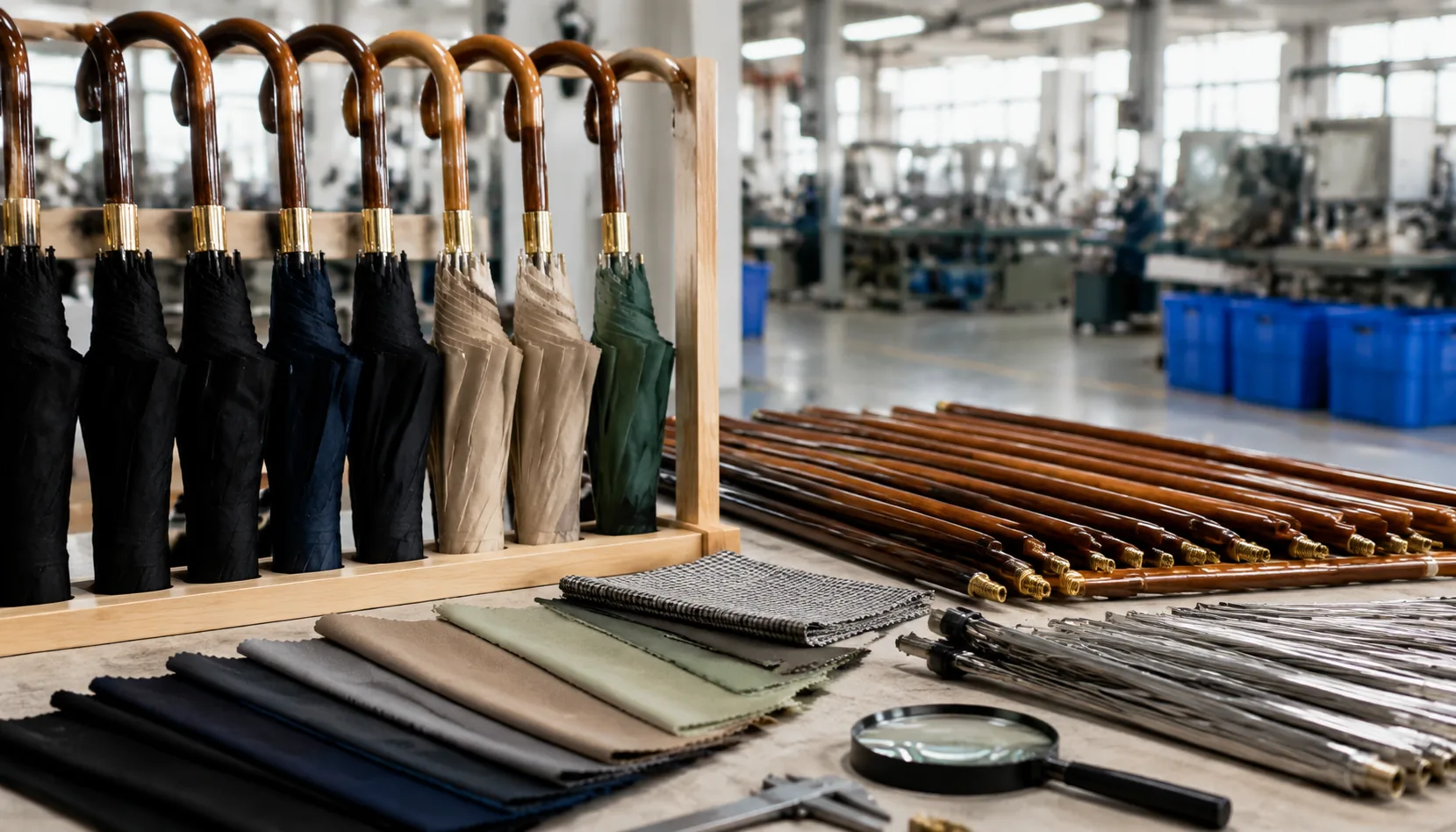
Cane Handle Stick Umbrellas: Buyer Specs for Retail Brands
Specify cane handle stick umbrellas with 8K frames, 190T/210T pongee, auto-open options, and QC checks for retail and gi...
Read More »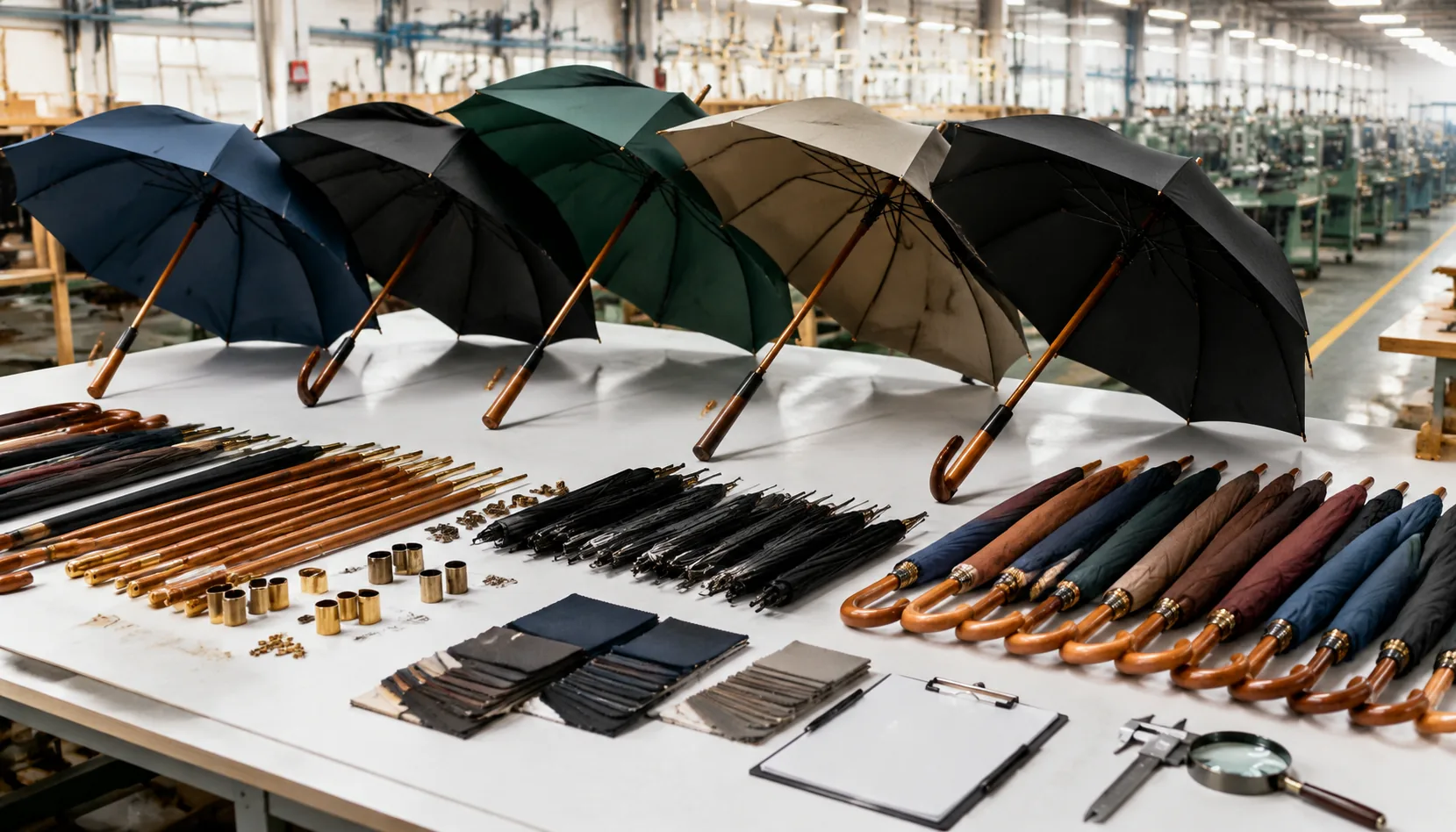
Wooden Shaft Stick Umbrellas: Retail Buyer Spec Guide
Compare wooden shaft umbrella specs for retail programs, including canopy fabric, ribs, handles, finishing, QC checks, M...
Read More »
Wooden Stick Umbrellas: Buyer Guide for Premium Lines
Source premium wooden stick umbrellas with proper shaft, ribs, pongee fabric, handles, packaging, AQL 2.5 checks, MOQ, a...
Read More »