All-Over Logo Patterns for Retail Branded Umbrellas
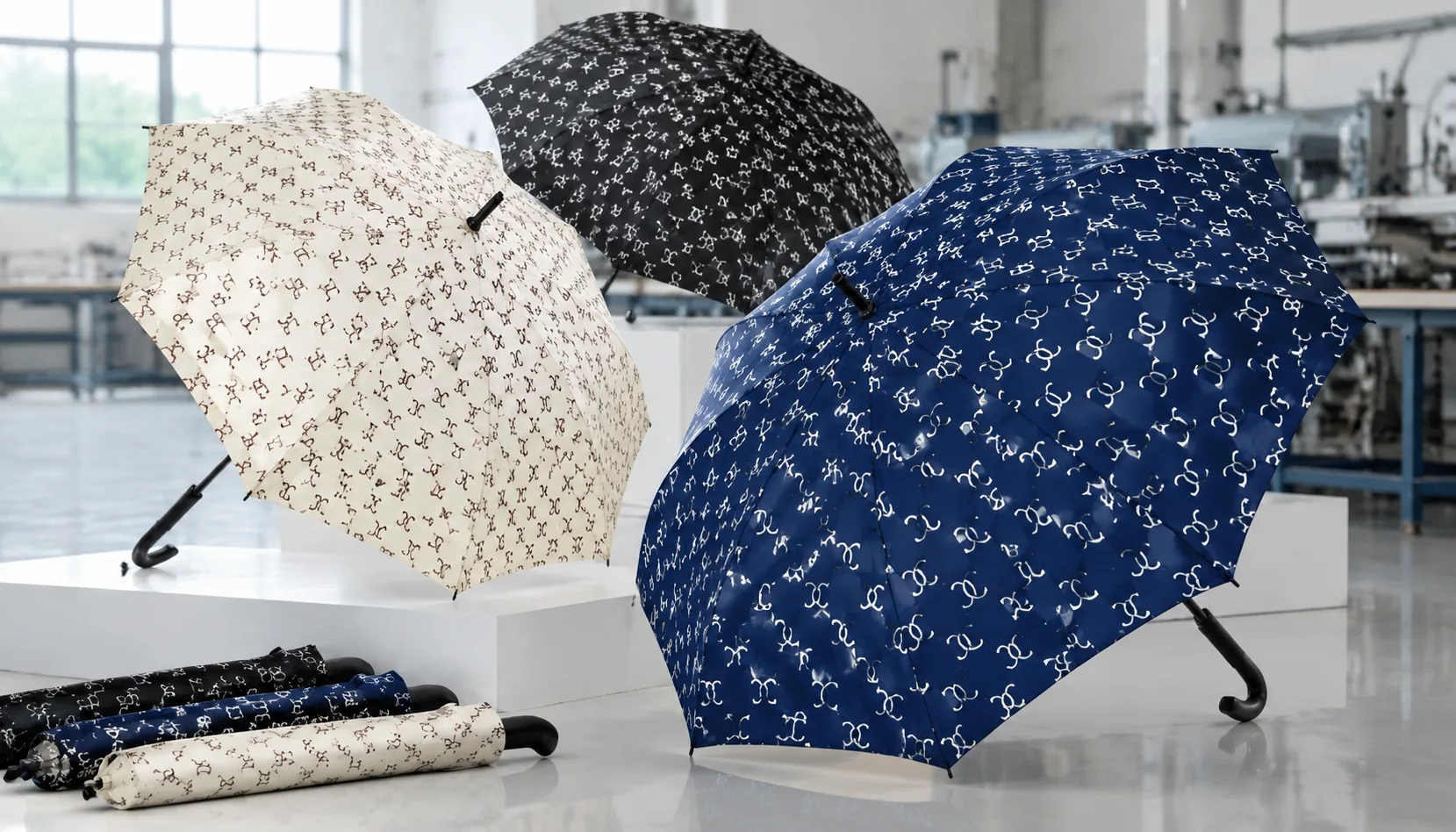
For retail buyers, all-over logo umbrellas look simple on a mockup but can turn messy once the repeat crosses eight curved panels, seams, ribs, and wet fabric tension. On our Songxia production floor, the problems usually start before printing: repeat size, panel registration, fabric coating, and color control are not locked tightly enough for bulk cutting and sewing. Getting these details right early reduces distorted logos, slow sampling loops, and shade drift between PO runs.
Where Repeat Logo Patterns Fit in a Branding Program
All-over logo umbrellas fit best where the umbrella is treated as a retail product, not just a giveaway. Private-label retail lines, hotel boutiques, museum shops, golf pro shops, resort stores, and licensed merchandise programs all benefit from a repeat logo umbrella print because the branding feels like part of the fabric design. A 23" auto-open stick umbrella in 190T pongee with a small 18–25 mm repeat mark can sit beside scarves, tote bags, and caps without looking like event swag. For premium hospitality, I usually recommend 210T pongee with a Teflon water-repellent coating, fiberglass ribs, and a wood or rubber-coated handle so the umbrella can carry a $18–$35 retail price instead of being perceived as a free amenity.
The big decision is scale: a small repeat pattern creates retail texture, while one large panel logo creates billboard visibility. A single 180–260 mm logo on one or two panels works well for corporate events, sponsor exposure, and staff identification, but it can feel too promotional for a shop wall. By contrast, all-over logo umbrellas use controlled spacing, usually 40–80 mm between repeats, so the brand is visible from close range without overpowering the canopy. On 8K and 10K frames, the pattern must be aligned across panel seams; on 16K fashion umbrellas, the narrower panels make distortion more noticeable, so artwork needs tighter prepress work before cutting.
For private label umbrella design, the repeat artwork should be planned before fabric cutting, not forced onto finished panels. Screen printing is economical for one- or two-color repeat marks at MOQs around 500–1,000 pieces, while heat transfer handles sharper multicolor logos but adds hand feel. Sublimation is the cleanest option for edge-to-edge umbrella pattern printing on white polyester pongee, especially for licensed merchandise with mascots, monograms, or heritage patterns. Our standard practice at ZheBrella is to print strike-offs first, check color against Pantone or brand references under D65 light, then run AQL 2.5 inspection on print registration, seam matching, coating marks, and frame operation before FOB or DDP shipment.
Repeat Scale, Spacing, and Panel Break Planning
Repeat scale should be decided from the umbrella size and rib count before artwork is tiled, not after the buyer approves a flat mockup. On a 23" stick umbrella with an 8K canopy, each panel is a wide triangle, so a 35–55 mm logo repeat usually reads clearly from 2–3 meters without turning into visual noise. On compact 21" frames, I prefer 25–40 mm repeats because the viewing area is smaller and the panel tip narrows fast. For retail branded umbrellas, the mistake I see most is using the same repeat logo umbrella print across 21", 23", and 27" sizes; the pattern may look balanced on the sample but crowded or sparse in production. If the logo has thin text, keep the minimum printed stroke above 0.35 mm for screen printing and above 0.25 mm for heat transfer or sublimation on 190T/210T pongee. Dark canopies also need trap or knockout planning, especially when printing white logos on navy, black, or forest green fabric.
Safe margins around seams are not optional because every canopy panel loses material to sewing, tension, and rib attachment. For umbrella pattern printing, keep critical logo elements at least 12–15 mm away from stitched seam lines and 20–25 mm away from the tip area where the panel converges. The cap, runner pressure, and ferrule alignment can shift the visual center slightly after assembly, so a perfect CAD repeat may still look crooked if the artwork ignores frame geometry. On all-over logo umbrellas, I usually recommend treating seams as natural pattern breaks rather than trying to match every logo across the seam; exact seam matching slows sewing, raises rejection rates, and rarely survives normal canopy stretch. For private label umbrella design, ask the factory for a panel template with rib lines, seam allowance, tip reinforcement, and top cap position marked separately. A clean production file should show live artwork, bleed, no-print zones, and logo direction on every panel.
Rib count changes the whole density calculation. An 8K umbrella has eight larger panels, so each panel can carry a more relaxed repeat, larger icons, or staggered diagonal layout without the logo being chopped too often by ribs. A 16K canopy has sixteen narrow panels and twice as many visual breaks; if the same 50 mm repeat is used, logos near the ribs will be cut constantly and the umbrella can look busy even when the fabric print is technically correct. For 16K all-over logo umbrellas, reduce the repeat to about 22–35 mm, simplify secondary marks, and avoid placing full wordmarks close to panel edges. Double-canopy vented windproof styles need extra planning because the upper vent layer may hide or interrupt the lower pattern from certain angles. Our standard practice at ZheBrella is to review one full open-canopy digital proof plus one single-panel production template before sampling, then check the first printed canopy on frame before bulk cutting.
Choosing Fabric and Print Method for Pattern Clarity
Small-logo clarity starts with yarn density and surface stability, not the printing machine. For retail branded umbrellas with a 6–12 mm repeat logo umbrella print, 210T pongee gives the cleanest edge because the weave is tighter and the face is smoother after water-repellent finishing. 190T pongee is still workable for most all-over logo umbrellas, especially if the mark is 15 mm or larger, but tiny letters, registration symbols, and thin outlines can look slightly broken after sewing tension and canopy stretch. Standard polyester is cheaper, but the hand feel is rougher and the weave can show more through light ink coverage, so I avoid it for premium private label umbrella design unless the pattern is bold, high-contrast, and not text-heavy.
Screen printing is reliable when the repeat is simple: one to three spot colors, strong logo geometry, and no gradient. It gives good opacity on navy, black, or bottle-green 190T/210T pongee, but every color needs a screen, and tight repeats must be registered across eight canopy panels, usually 23", 27", or 30" arc sizes. For umbrella pattern printing with a fine step-and-repeat layout, we normally ask for a panel-level AI/PDF file with 3–5 mm bleed and a logo safe zone away from seam allowances. If the logo crosses panel seams, expect visible interruption; umbrellas are sewn cones, not flat posters.
Digital printing is the better choice for multi-color marks, tonal backgrounds, mascot artwork, and dense all-over logo umbrellas where color changes would make screen setup expensive. Sublimation works best on white or light polyester/pongee and can hold very tight repeats, but Pantone matching can drift after heat setting, usually within a practical tolerance rather than a hard ink match. Heat transfer is useful for crisp small logos on limited areas, but it is not my first choice for full-canopy repeats because large transfer films can affect hand feel, folding, and long-term abrasion. Our standard practice at ZheBrella is to test a 30 x 30 cm strike-off before bulk cutting, then check adhesion, rub resistance, and visual clarity under AQL 2.5 inspection.
Construction Details That Protect the Pattern
The frame choice decides whether the repeat stays readable after the first season. For retail branded umbrellas, I prefer fiberglass ribs on most all-over logo umbrellas because the rib flex absorbs gust load without permanently bending the canopy shape. Steel ribs are cheaper and feel solid in the hand, but once a 23" or 27" steel frame takes a set, panel tension changes and the repeat logo umbrella print starts looking wavy along the rib lines. Fiberglass also gives a cleaner dome on 190T or 210T pongee, especially when the print has small 8–15 mm marks spaced across every panel. On budget programs, steel shafts with fiberglass ribs are a good compromise; full steel is acceptable for low-use event giveaways, not for a retail SKU expected to survive daily commuting.
Double-canopy windproof construction protects the artwork by controlling pressure, not just by adding vents. A vented 8K or 10K umbrella lets air escape between the top and lower canopy, so the panels do not balloon as hard in a 40–50 mph gust. That matters for umbrella pattern printing because small repeated logos stretch visually when the fabric bows between ribs. Our standard practice at ZheBrella is to check logo alignment at the panel seam, rib tip, and vent overlap before bulk cutting, because a perfect flat digital proof can shift 3–6 mm once the canopy is sewn onto a curved frame. The stitch gauge, seam allowance, and binding width all affect how the pattern lands; heavy seam pulling can pinch diamonds, circles, and small wordmarks into uneven shapes.
Compact auto-open umbrellas create the most distortion risk because the frame geometry is aggressive. A 21" or 23" folding frame has shorter rib sections, more joints, and steeper canopy curvature than a straight 27" stick umbrella, so the same private label umbrella design may need a larger repeat, more spacing, or a less rigid grid. Auto-open-close models add spring force, and if the canopy is cut too tight the fabric pulls hard from the notch to the tip, making logos near the panel center look stretched while seam-side logos compress. For all-over logo umbrellas, I tell buyers not to approve artwork only on a flat panel mockup; approve it on a sewn pre-production sample opened on the final frame. AQL 2.5 inspection should include pattern skew, seam matching, print cracking at folds, and logo legibility at normal arm’s-length viewing distance.
Sampling, Bulk Tolerance, and Retail Delivery Specs
Strike-off approval is non-negotiable for all-over logo umbrellas because a repeat that looks clean on a flat CAD can shift badly once it crosses 8K ribs, seam allowances, and the crown patch. For a repeat logo umbrella print, I like to approve three things before cutting bulk fabric: the repeat size in millimeters, the logo position relative to the panel centerline, and the color under the real canopy material, not just a paper proof. 190T pongee, 210T pongee, POE, PVC, and EVA all hold ink differently; sublimation on white pongee gives sharper edges, while screen printing on darker fabric needs tighter ink control to avoid clogging small logos. A proper strike-off should be at least 60 x 60 cm, large enough to show one full repeat and the seam crossing. For retail branded umbrellas, approve it under D65 light and compare against Pantone or brand master color, not a phone photo from the print room.
Pre-production samples should use actual bulk components: the selected 21", 23", 27", or 30" frame, fiberglass or steel ribs, handle, sleeve, hangtag, barcode label, carton marks, and the final packed configuration. This is where private label umbrella design usually exposes hidden problems: logos cut off at the ferrule, pattern mismatch at the closing strap, print gaps near the panel tips, or color drift after Teflon water-repellent or UV UPF 50+ coating. Our standard practice at ZheBrella is to inspect the open canopy at arm’s length and then again panel by panel, checking repeat alignment across sewn seams within about 3-5 mm depending on artwork density. Auto-open and auto-open-close frames also need cycling checks because a tight printed canopy can twist during closing if panel tension is uneven. For double-canopy vented windproof models, approve both upper and lower canopy placement; buyers often forget the lower vent until the sample is already packed.
For bulk control, write the tolerance into the purchase order instead of relying on “same as sample.” AQL 2.5 final inspection should include repeat alignment, color drift, missing print, ink scratches, pinholes, seam puckering, rib tip attachment, opening force, and packed retail presentation. For umbrella pattern printing, we normally set major defects for visible print gaps over 2 mm, wrong logo direction on any panel, obvious shade variation between panels, and misaligned retail labels or UPC stickers. Typical MOQ for all-over logo umbrellas is 600-1,200 pieces per design for sublimation or screen print, while complex private-label packaging can push the practical MOQ higher. Sampling usually takes 7-12 days after artwork confirmation; bulk production runs 25-45 days depending on rib count, 8K versus 10K or 16K, fabric stock, and peak season load. For retail rollouts, plan FOB Ningbo or Shanghai if your forwarder handles consolidation, or DDP when store-ready cartons need predictable landed cost and delivery windows.
Frequently Asked Questions
What logo size works best for an all-over umbrella pattern?
Many retail programs use repeated logos between 20 mm and 60 mm wide, depending on canopy size and viewing distance. Very small logos need 210T pongee or smooth polyester to keep edges readable.
Can the repeat pattern align perfectly across every panel seam?
Perfect seam matching is difficult because umbrella panels are cut and sewn under tension. The safer approach is to design a forgiving repeat with enough spacing so minor sewing tolerance is not obvious.
What repeat size is usually best for a full-canopy logo pattern on retail umbrellas?
For most 21 to 23 inch panels, repeat tiles in the 120 to 180 mm range are common because they balance visual density and panel layout. The final repeat should be set after the panel template is confirmed so the logo does not stretch at the seam.
How do you keep panel registration consistent during sampling and bulk production?
Use a locked panel dieline, a confirmed print repeat, and a preproduction strike-off on the same fabric and coating as bulk goods. Most factory programs allow a sample lead time of about 7 to 10 days, while bulk production is often 30 to 45 days after approval.
What fabric specs help reduce color drift on all-over printed umbrellas?
A stable polyester canopy with consistent coating weight is the usual choice because it holds ink better and shrinks less after printing. Buyers should confirm fabric GSM, coating type, and color tolerance before approval; many projects target a delta E under 3 for repeat orders.
Looking to Launch Your Custom Umbrella Line?
ZheBrella is a Zhejiang-based OEM/ODM umbrella manufacturer with 17 years of export experience. Free design, low MOQ from 100 pieces, windproof construction, full-color print.
Get Free Quote Now »People Also Search For
Related Articles
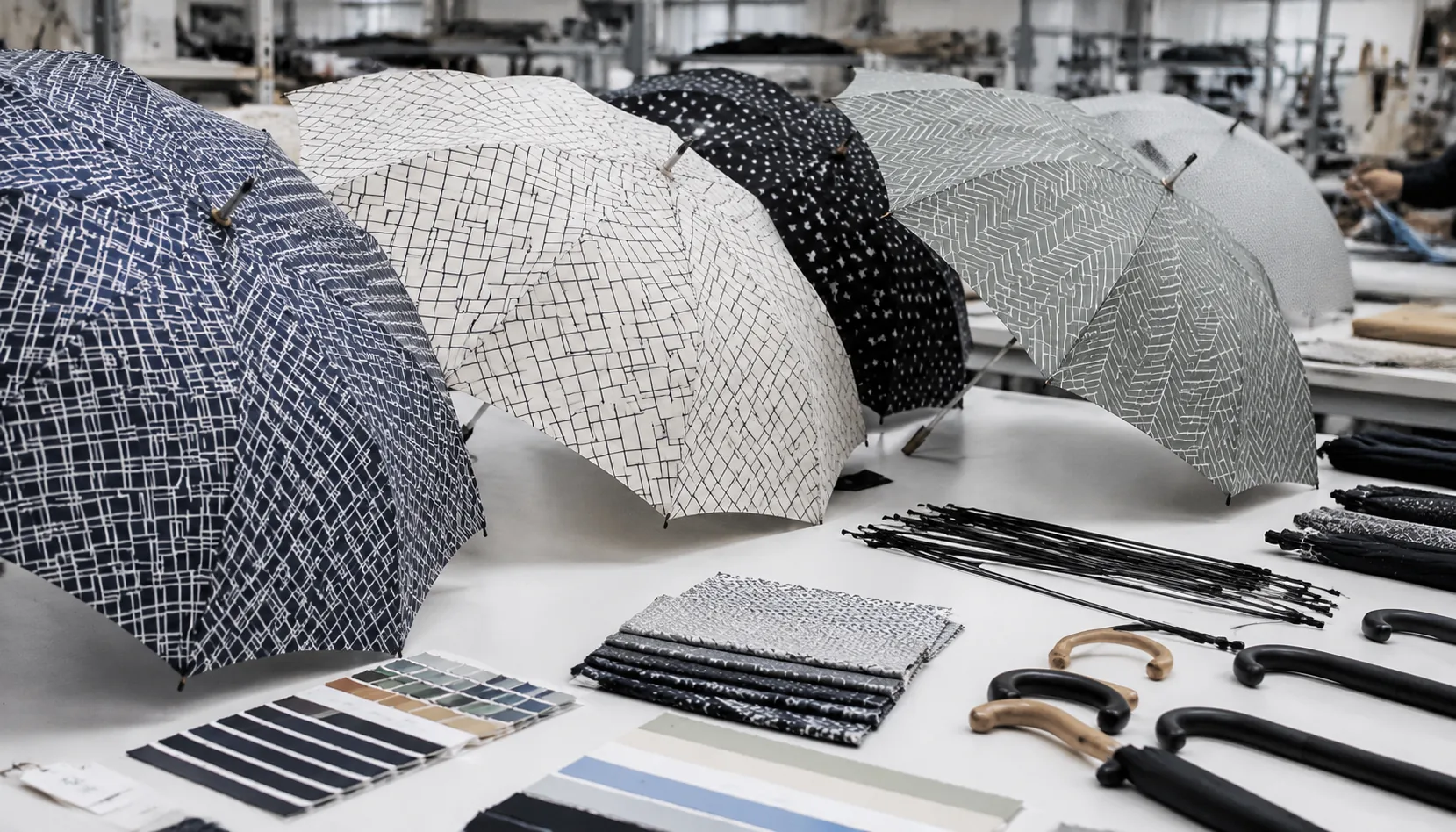
Repeat Pattern Umbrella Printing for Retail Collections
Plan repeat-pattern umbrella canopies for retail lines with panel layout, fabric choice, color control, sampling, MOQ, a...
Read More »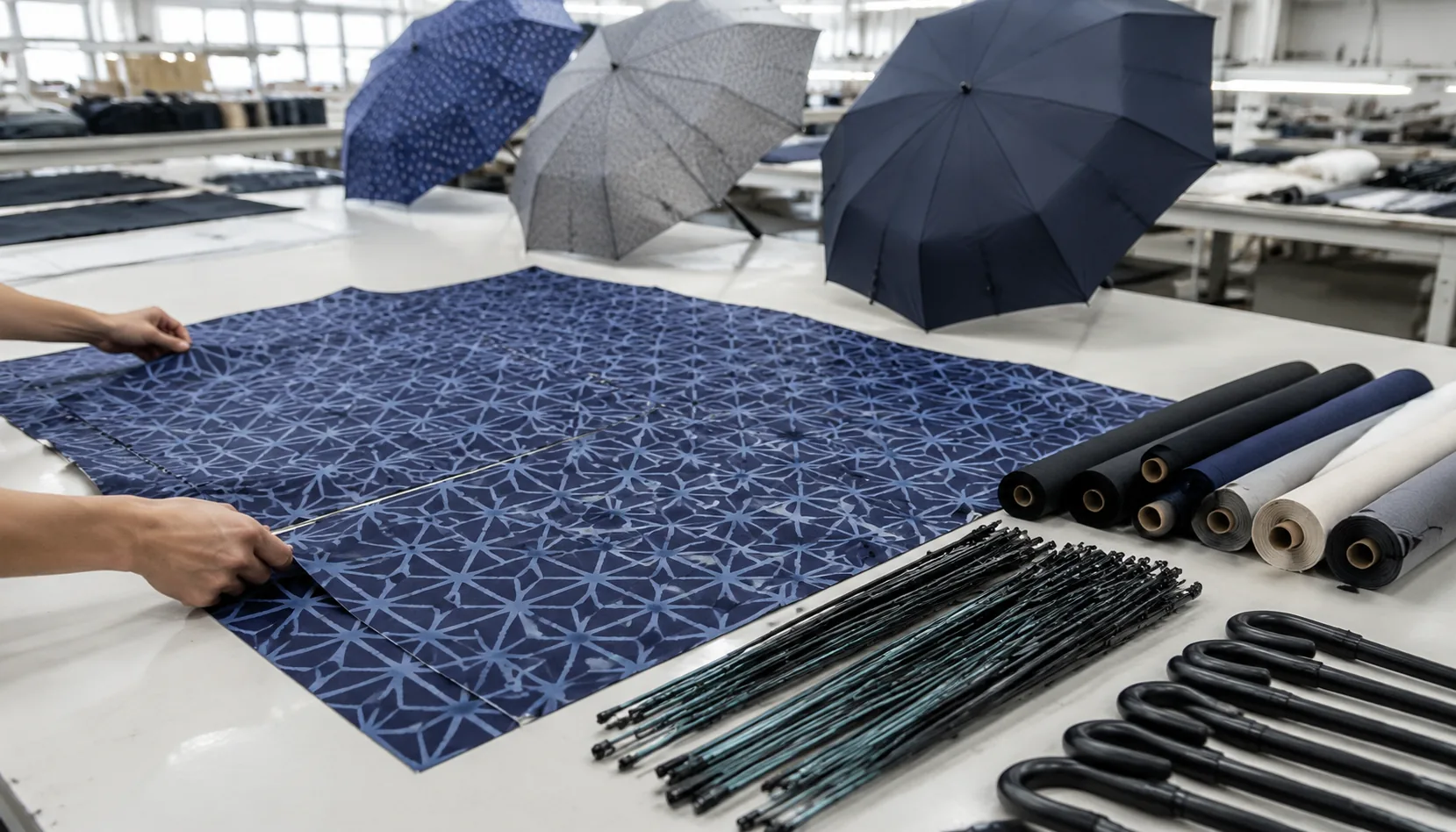
Repeat Pattern Umbrella Printing for Private-Label Brands
Build repeat pattern umbrellas with controlled panel matching, fabric selection, print tolerances, sampling, and product...
Read More »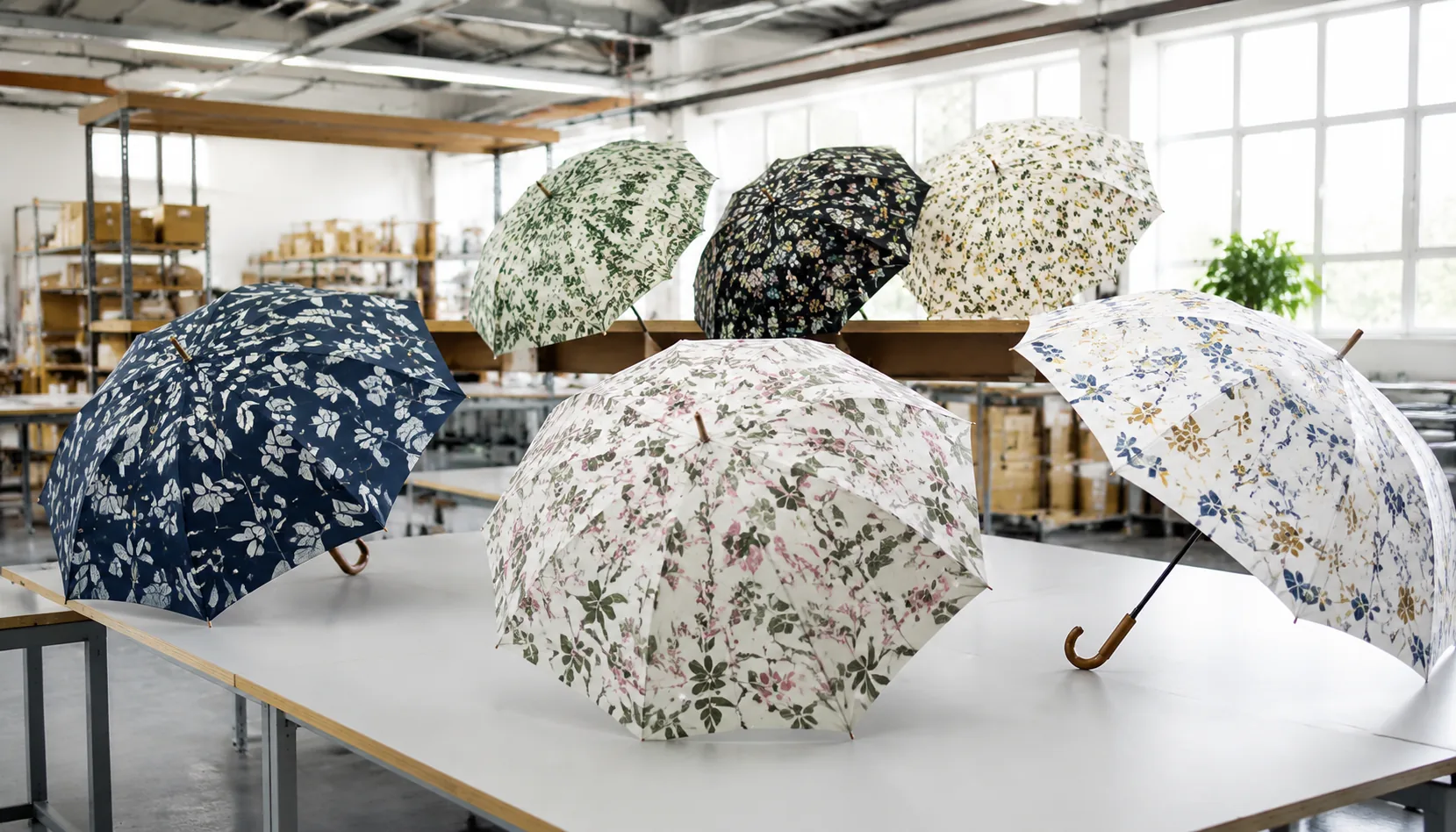
All-Over Repeat Pattern Umbrellas for Retail Branding
Plan repeat-pattern umbrella prints with cleaner panel joins, practical fabric choices, MOQ expectations, and approval s...
Read More »