Repeat Pattern Umbrella Printing for Retail Collections
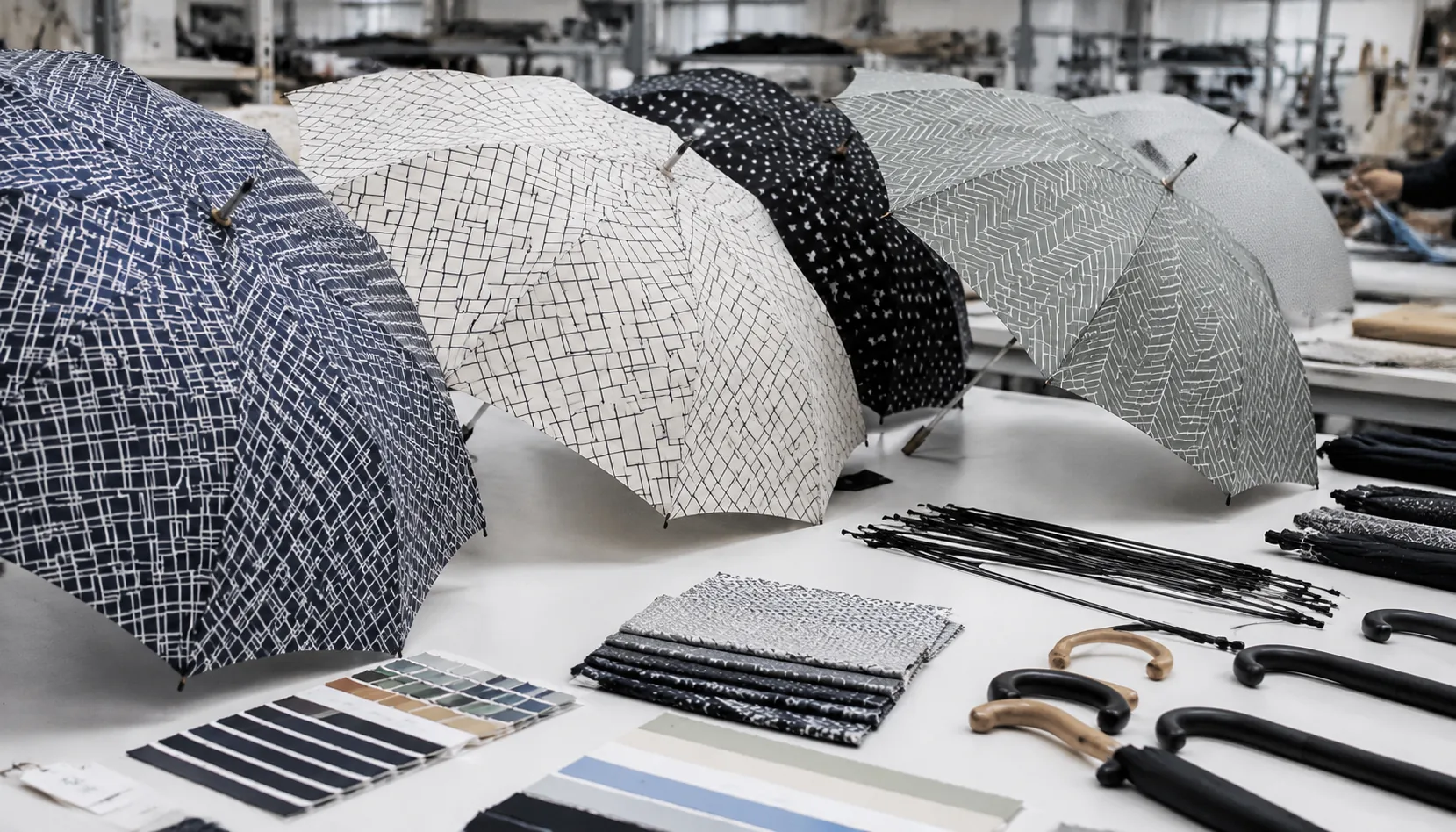
For retail buyers, repeat pattern umbrella printing looks simple on a flat artwork file but gets risky once the design is cut into eight curved panels, sewn under tension, and matched against real fabric behavior. On our Songxia factory floor, the issues usually show up in panel alignment, color drift between sample and bulk, and patterns that ignore rib positions or seam loss. Planning these details early keeps the collection consistent, costed correctly, and realistic for mass production.
When Repeat Patterns Beat a Single Logo
Repeat pattern umbrella printing makes sense when the umbrella is part of a retail collection, not a giveaway item. A fashion retailer, museum shop, hotel boutique, licensing program, or lifestyle brand usually needs the canopy to feel like merchandise customers would buy at full price. That is where retail umbrella patterns outperform a single chest-style logo dropped onto one panel. A watercolor floral, archive artwork, monogram repeat, map motif, animal print, or seasonal stripe can run across 8 panels and still look intentional when the umbrella is open, closed, or hanging in-store. For private label umbrella design, I usually push buyers toward 190T or 210T pongee for clean hand feel and stable printing, with 23 inch auto-open or 21 inch compact auto-open-close frames depending on shelf position and target retail price.
The biggest difference is brand posture. A large promotional logo tells people who paid for the umbrella; an allover umbrella print tells people what world the brand belongs to. Museum shops use collection details, architectural sketches, or exhibit graphics because shoppers want a souvenir with taste, not a billboard. Hotel boutiques often prefer tonal palm leaves, geometric lobby patterns, or small crest repeats because guests may carry the umbrella after checkout. Licensed collections need tighter control: character artwork, sports marks, or artist signatures must be repeated with approved scale, color, and spacing so the canopy looks like official merchandise instead of a cheap transfer job.
Subtle step-and-repeat branding works best when the logo is treated as pattern material, not as the whole message. Branded canopy patterns can use tone-on-tone ink, low-contrast sublimation, jacquard-style repeats, or small icons mixed with non-logo artwork; the result feels closer to a scarf or tote than an event handout. In our factory checks at ZheBrella, repeat artwork is reviewed before bulk cutting because a 2 mm shift at the seam can break a stripe, crop a mascot, or make a monogram look uneven across an 8K or 10K canopy. For repeat pattern umbrella printing, I recommend approving one printed pre-production sample under real light, then inspecting bulk under AQL 2.5 for color drift, panel matching, print rub, and coating defects before export.
Designing Patterns Around Umbrella Panels
Panel geometry decides whether a pattern looks intentional or chopped up. On an 8K umbrella, the canopy is built from 8 triangular panels, so each panel has a wider visual field and fewer seam interruptions; this suits larger florals, diagonal stripes, scarf-style borders, and retail umbrella patterns where the motif needs room to breathe. A 16K canopy doubles the seam count, giving a rounder silhouette but more rib breaks, so small geometrics, ditsy prints, monograms, and tight branded canopy patterns usually register cleaner than large centered artwork. For repeat pattern umbrella printing, I ask designers to place the repeat on the actual panel template, not a flat circle, because the grain line, hem curve, and top notch all change how the repeat lands after sewing. A motif that looks balanced in Illustrator can lean badly once 190T or 210T pongee is tensioned over steel or fiberglass ribs.
Keep a practical safe zone along every rib seam. For screen print and heat-transfer work, I prefer 8-12 mm clearance from seam allowance for critical logos or recognizable faces; for sublimation on white pongee, we can print closer, but the stitched seam still visually cuts the motif. On 8K layouts, a half-drop or mirrored repeat can hide seam breaks better than a straight grid, especially for allover umbrella print programs. On 16K layouts, avoid placing vertical stripes exactly on every seam unless the factory has confirmed cutting tolerance, because even a 2-3 mm shift panel-to-panel creates a zipper effect. Our standard practice at ZheBrella is to mark rib lines, center-front panel, vent overlap if used, and top cap loss area on the CAD proof before sampling. That proof matters more than a pretty flat mockup.
Pattern direction also changes when the umbrella is closed, and buyers often miss this until the pre-production sample. When open, the eye reads the canopy from top cap to hem; when closed, panels stack into narrow folds, so horizontal repeats become broken bands and directional motifs may rotate into awkward fragments. Folding umbrellas, especially 21" and 23" auto-open-close styles, have tighter panel folds and shorter visible sections when strapped, so smaller repeats and non-directional private label umbrella design are safer. Golf umbrellas in 27", 30", or 32" arc sizes give more panel length and work better for large tropical prints, plaid repeats, or alternating branded panels. For double-canopy vented windproof models, treat upper and lower canopies as separate pattern surfaces, because the vent gap can interrupt an allover repeat more visibly than a normal rib seam.
Choosing Fabric and Print Method
For retail umbrella patterns, fabric choice decides whether the artwork looks premium or washed out before the printer even starts. 190T pongee is the common commercial base because it balances cost, weight, and water repellency; on a 23" or 27" umbrella it gives a clean drape and folds without looking bulky. But if the pattern has dark grounds, saturated florals, or fine geometric repeats, 210T pongee usually gives better color depth because the denser weave holds coating and ink more evenly. The hand-feel is also tighter and smoother, which matters for private label umbrella design sold in gift shops or department-store racks. I do not recommend choosing 210T blindly, though. On compact 21" auto-open-close models, thicker fabric can make closing harder and increase pressure on the runner, especially with 8K steel ribs. For repeat pattern umbrella printing, we normally test the fabric on the actual frame size, not just as a flat swatch.
Digital printing is the right method when the allover umbrella print has gradients, watercolor effects, photographic elements, or more than 6 spot colors. Screen printing is still strong for bold branded canopy patterns with clean edges, especially when the repeat is simple and the order is above 1,000 pieces, but every color needs a screen and registration becomes unforgiving across eight panels. Heat transfer can work for small logos, not full retail repeats, because the film changes the fabric hand and can crack at fold lines after wet-dry cycles. Sublimation gives excellent penetration on polyester pongee, but the base fabric must be white or very light; it will not print opaque pale colors over navy or black cloth. For sampling, we cut canopy panels after printing and sew them onto a real frame, because the same artwork can look darker once the panels curve and overlap at the seams.
UPF 50+ coating helps sun protection, but buyers should understand the limit: coating does not rescue a thin fabric, a pale yellow ground, or ink coverage that leaves pinholes when stretched. Waterproof finishing is usually a post-treatment such as PU, Teflon, or silicone-based water repellent, and it must be compatible with the print chemistry. Too much coating can improve spray rating but dull the color, stiffen 190T pongee, or cause white stress marks along folded ribs. Our standard practice at ZheBrella is to approve a printed strike-off under D65 light, then check it again after coating, sewing, and a 24-hour folded rest. We look for color shift, panel-to-panel repeat alignment, crocking, and whether water beads after a basic spray test. For retail collections, I suggest approving both a flat fabric swatch and one finished umbrella sample before bulk repeat pattern umbrella printing, because AQL 2.5 inspection will not fix a color standard that was approved too casually.
Color Control Across Multi-SKU Collections
Color control in repeat pattern umbrella printing starts with a real target, not a guess. For retail umbrella patterns, we lock the main canopy colors to Pantone references first, then check lab dips on the actual base cloth, because pongee 190T and 210T do not hold ink the same way. A white or light ground is usually forgiving, but an allover umbrella print on a dark ground will always read deeper and duller once the pigment sits into the weave. That is why private label umbrella design should specify whether the artwork is built for a white underbase, a transparent print, or a full-coverage blockout effect. If the buyer wants matching straps or sleeves, those parts need their own color standard too, because webbing, elastic, and sewn labels often come from different dye lots and show drift faster than the canopy.
Strike-offs are where most collections go wrong, especially when one artwork has several SKUs in different panel counts or sizes. A repeat pattern umbrella printing job can look balanced on a flat screen file and still shift visually after panel cutting, seam overlap, and panel alignment change the rhythm of the repeat. We usually approve a strike-off on the exact cloth construction, then compare it under daylight and D65 light to catch metamerism before production. Batch shade control matters just as much: one lot can sit slightly warmer or cooler than the next, and that difference becomes obvious when branded canopy patterns are merchandised side by side in a retail set. If the collection needs 8K, 10K, or 16K variants, keep the color standard fixed and allow the repeat scale or panel mapping to change, not the Pantone target.
The practical rule is to separate artwork approval from production approval. Lab dips confirm the fabric base, strike-offs confirm the print on that base, and a sealed shade standard keeps the factory from chasing color with every batch. Dark grounds need extra attention because the ink has to fight the substrate; white underbase helps brightness but can also make edges look sharper and the repeat feel more contrasty than the original artwork. That is why the same allover umbrella print can look slightly different from canopy to canopy even when the file is unchanged. For multi-SKU retail programs, we keep one master standard, one approved reference for panels, straps, and sleeves, and one tolerance window for shade variation so the whole line still reads as a single branded umbrella pattern family on the shelf.
Production Planning for Retail Buyers
Retail buyers should plan repeat pattern umbrella printing around the pattern repeat, not just the umbrella model. For a true allover umbrella print, MOQ is usually set by pattern and colorway, because every new screen set, sublimation file, or panel layout adds setup time and waste. In practice, we quote by design family: one repeat pattern umbrella printing program may be split into separate SKUs for navy/white, black/red, or other retail umbrella patterns. That matters because a private label umbrella design that looks simple on a mockup can become expensive once the canopy panels, seam matching, and center-top alignment are checked on the line. If the buyer wants multiple branded canopy patterns, it is better to confirm the full color matrix first and freeze the artwork before sampling.
Typical production lead time is 30–50 days after artwork approval, but only if the print method, fabric base, and panel count are already locked. Digital sublimation moves faster on complex gradients; screen print is better for flat repeat marks, but it needs cleaner registration and more control on edge bleed. FOB and DDP should be quoted separately, because freight, duties, and last-mile delivery can change the landed price more than the print itself. For retail programs, we also ask whether cartons need barcode sorting by size, colorway, or store set, since mixed-carton packing slows packing but can save distribution labor. If the buyer wants shelf-ready cartons, that requirement should be built into the packing spec before approval, not added after production starts.
Inspection has to be tied to the pattern, not just the umbrella frame. Under AQL 2.5, we check print defects, color shift, missing repeats, seam mismatch, and whether the motif walks across adjacent panels when the canopy opens under tension. Pattern alignment on a 10K or 16K canopy can look fine flat on the cutting table and still fail once the ribs pull the fabric into shape, so we inspect opened samples, not only cut panels. For repeat pattern umbrella printing, buyers should specify the acceptable tolerance for logo placement, panel-to-panel registration, and any zone where the repeat may break near the vent, tie strap, or edge binding. That keeps retail umbrella patterns consistent across cartons and reduces chargebacks when the assortment hits stores.
Frequently Asked Questions
Can a repeat pattern line up perfectly across every umbrella seam?
Not perfectly. Panel cutting and sewing create small tolerance variations, so patterns should be designed to look intentional even with minor seam shifts.
Is digital printing better for repeat-pattern umbrellas?
Digital printing is usually better for photographic, gradient, or many-color repeats. Screen printing can still work well for simple two- or three-color motifs at higher volumes.
Can a repeat pattern line up across all umbrella panels?
Exact matching across every seam is difficult because umbrella canopies are cut into separate triangular panels and sewn under tension. For retail orders, factories usually control the repeat direction and key visual placement, but allow a small seam tolerance of about 3–5 mm.
Which printing method is best for allover retail umbrella patterns?
Digital printing is usually best for multicolor repeats, gradients, or small retail test runs, while screen printing is more cost-effective for simple 1–3 color patterns at higher quantities. MOQ can vary by fabric and print method, but many OEM projects start around 500–1,000 pieces per design.
What files should buyers provide for a private label umbrella pattern?
Provide vector artwork or a high-resolution repeat file, Pantone or TCX color references, logo placement, and the umbrella panel template. A pre-production sample normally takes about 7–15 days after artwork confirmation.
Looking to Launch Your Custom Umbrella Line?
ZheBrella is a Zhejiang-based OEM/ODM umbrella manufacturer with 17 years of export experience. Free design, low MOQ from 100 pieces, windproof construction, full-color print.
Get Free Quote Now »People Also Search For
Related Articles
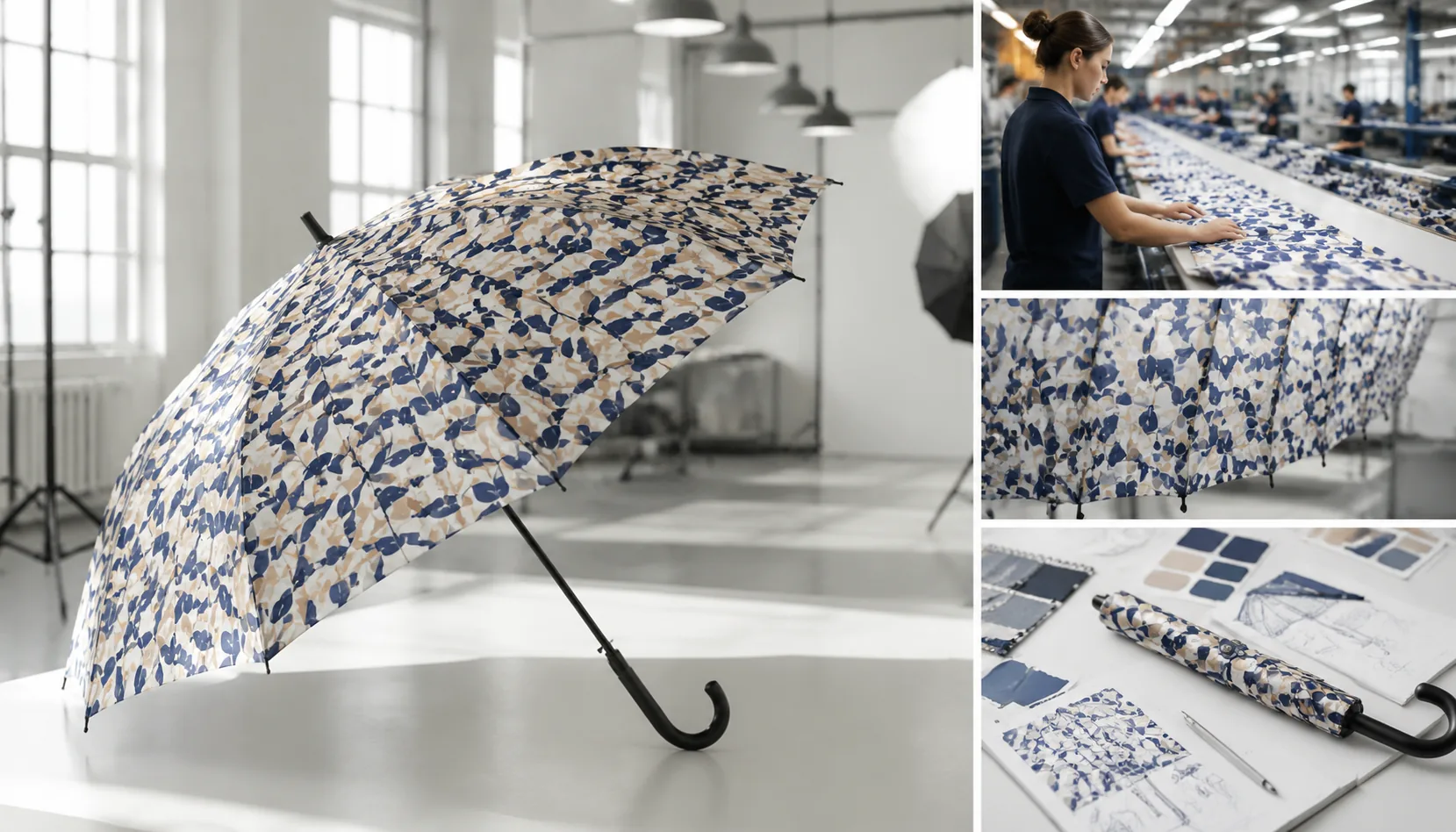
Repeat Pattern Umbrella Printing for Branded Collections
Plan repeat logo, monogram, or pattern umbrellas with clear rules for panel layout, fabric choice, sampling, MOQ, and pr...
Read More »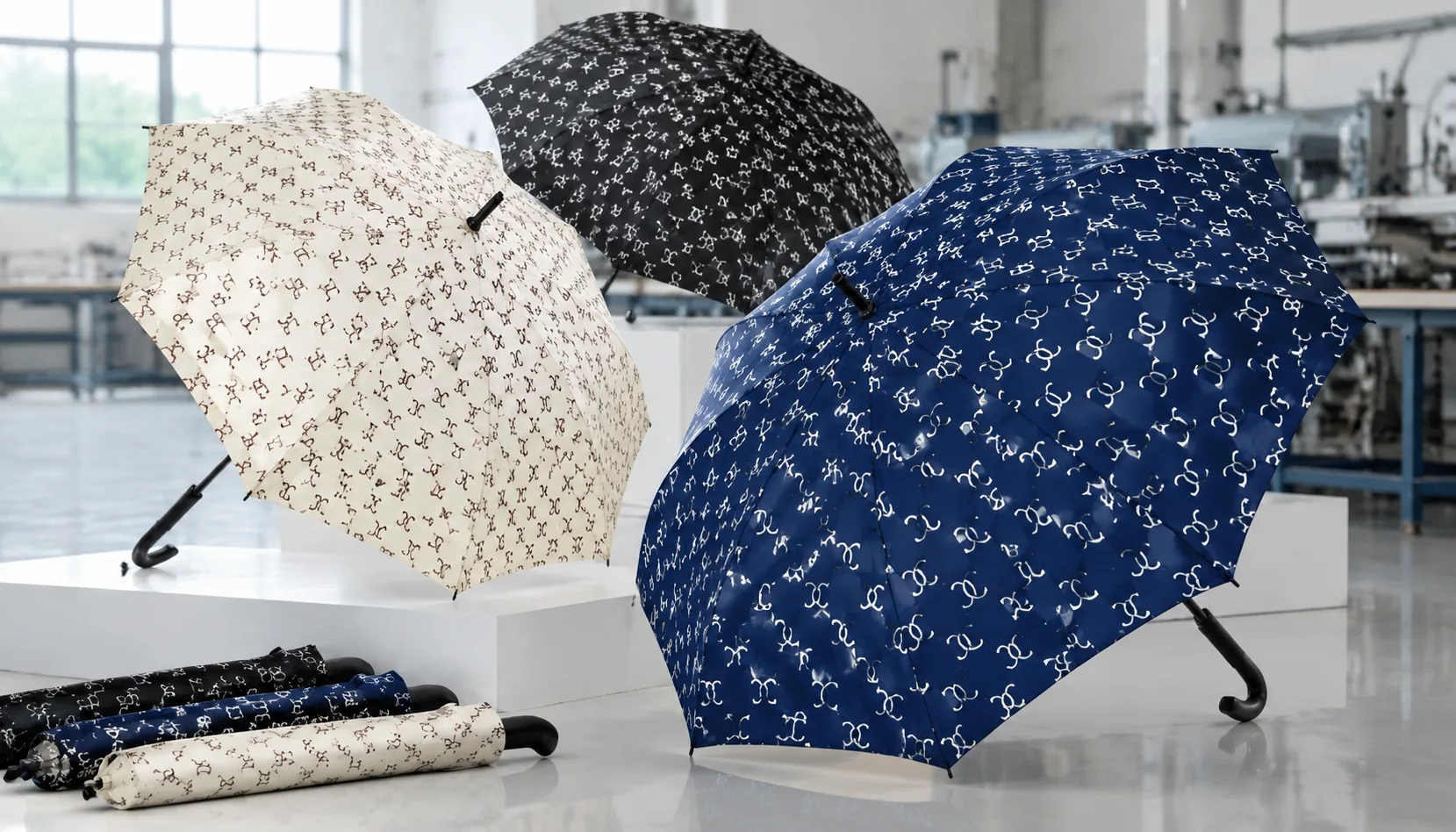
All-Over Logo Patterns for Retail Branded Umbrellas
Build all-over logo umbrella patterns with repeat sizing, panel registration, and fabric specs that reduce distortion, s...
Read More »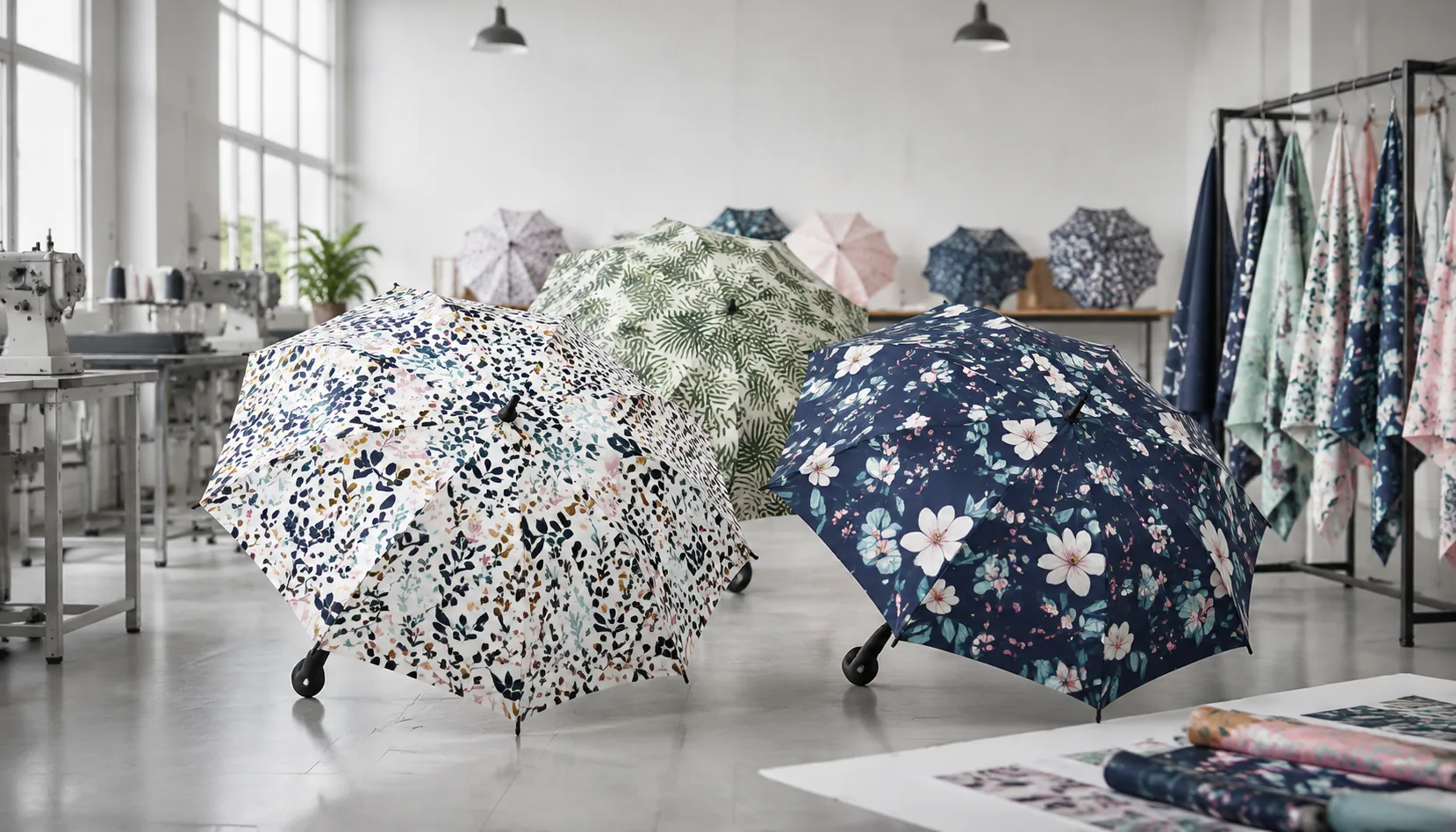
Repeat Pattern Umbrella Branding for Retail Collections
Build repeat pattern umbrellas with clean panel alignment, fabric selection, rib planning, MOQ, and inspection rules for...
Read More »