Repeat Pattern Umbrella Branding for Retail Collections
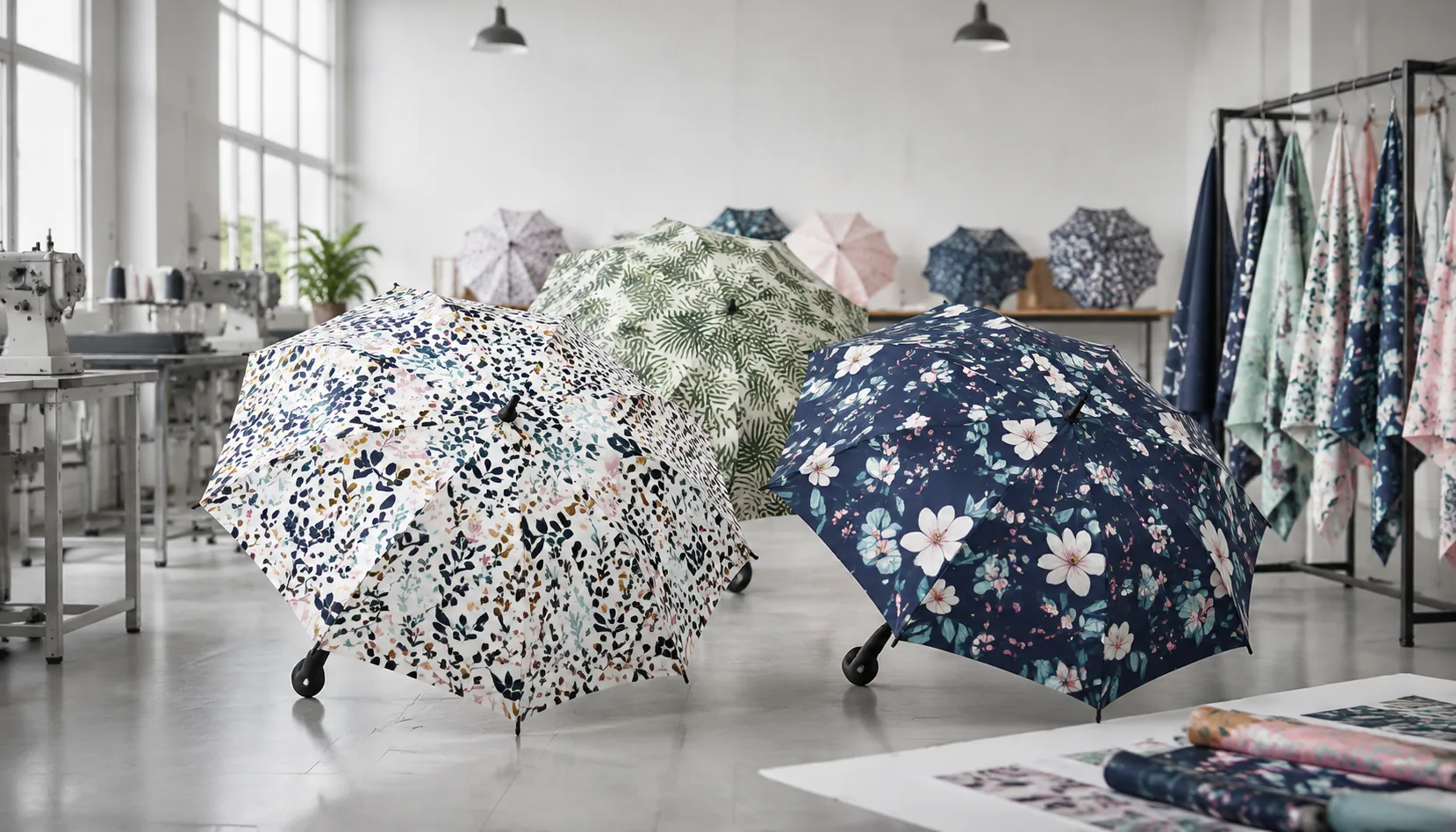
For retail collections, repeat pattern umbrella branding can look strong on a sales sample but fail on the shelf if panel matching, fabric shrinkage, and rib spacing are not planned before cutting. On our Songxia factory floor, the real work starts with print repeat calculations, panel nesting, and first-piece checks at the sewing line, because a 2 mm drift across eight panels is enough to make a premium pattern look careless.
Why Repeat Patterns Suit Retail Branding
Repeat pattern umbrella branding works because the canopy is a moving surface, not a flat billboard. A single large logo often disappears when the umbrella is half-open, tilted, or photographed from the side; a tiled monogram, mascot, icon set, or seasonal motif stays visible across all 8 panels. For retail umbrella design, I usually recommend building the artwork around the panel geometry first: a 23" stick umbrella gives enough radius for clean repeats, while a 21" folding umbrella needs smaller-scale motifs so the pattern does not break at the seams. On 190T or 210T pongee, screen printing is economical for 1–3 spot colors, while heat transfer or digital sublimation handles detailed printed umbrella patterns with gradients, watercolor effects, or licensed character artwork.
For fashion collections, repeat patterns make branded fashion umbrellas feel like accessories instead of giveaway items. A tone-on-tone monogram on black 210T pongee with a matte handle can sit beside handbags and scarves; a brighter mascot repeat on a 21" auto-open-close compact fits youth or travel lines. Museum stores do well with cropped artwork, architectural icons, floral studies, or exhibit-specific motifs because shoppers want an object that references the visit without shouting a sponsor logo. Hotels often use crest repeats, room-key graphics, palm leaves, or city landmarks on 27" guest umbrellas, usually with fiberglass ribs and a vented double canopy if the property is in a coastal or windy market.
Licensed merchandise needs tighter production control because every repeat must match the approved style guide. We check icon spacing, color tolerance, seam alignment, and trademark placement before bulk cutting, then inspect under AQL 2.5 for print defects, skewed panels, and handle-logo consistency. Private label umbrellas also benefit from repeat artwork because the same motif can scale across a 21" compact, 23" fashion stick, and 30" golf umbrella without redesigning the whole collection. Our standard practice at ZheBrella is to request a vector repeat tile, Pantone references, and a marked canopy mockup before sampling; typical sampling takes 7–10 days, and bulk lead time is usually 25–40 days depending on MOQ, printing method, and FOB or DDP delivery terms.
Designing Patterns Around Umbrella Panels
The first mistake I see in repeat pattern umbrella branding is treating the canopy like a flat rectangle. An umbrella is built from triangular panels, usually 8K on standard rain umbrellas and 16K on fashion or premium frames, so the repeat gets cut into wedges before sewing. A 23" umbrella with 8 panels gives each panel enough width for medium florals, logos, checks, or geometric repeats; a 16K frame cuts that visual field almost in half, so small motifs often look cleaner. For printed umbrella patterns, I normally ask for the repeat tile, one full canopy simulation, and one single-panel cut file before approving screens or sublimation. If the buyer wants a 30" golf umbrella, the repeat can breathe more, but a 21" compact umbrella needs tighter spacing or the design feels randomly cropped.
Seams are not invisible, and good retail umbrella design plans around that interruption instead of pretending it will disappear. Each sewn edge consumes allowance, and even accurate sewing can shift 2–3 mm from panel to panel, so thin stripes, circular medallions, and border lines are risky unless the artwork allows tolerance. Direction also changes as panels rotate around the shaft: a bird, logo, wordmark, or one-way floral stem may point upright on one panel and lean awkwardly on the next if the designer does not rotate artwork intentionally. For private label umbrellas, we usually separate true all-over repeats from engineered layouts. All-over repeats accept small seam breaks; engineered layouts place icons, logos, or borders in controlled positions and need stricter panel numbering during cutting and sewing.
8K and 16K layouts need separate artwork review because the same repeat does not behave the same on both frames. On an 8K auto-open 23" umbrella, a 60–80 mm motif may read as a confident fashion print; on a 16K branded fashion umbrella, that same motif can be chopped by seams and look busy. Narrower panels also exaggerate diagonal movement, so plaids, herringbone, and monogram grids should be tested in a canopy mockup, not just approved from a flat AI or PDF file. For repeat pattern umbrella branding, I prefer production artwork at 1:1 scale with bleed, seam allowance, panel orientation arrows, Pantone or CMYK targets, and the final rib count confirmed before sampling. That prevents the common problem where the sales sample looks attractive, but bulk production fails AQL 2.5 visual inspection for pattern mismatch.
Choosing Fabric and Printing Method
Fabric choice sets the ceiling for how clean a repeat can look on an umbrella canopy. For most promotional retail programs, 190T pongee is the practical baseline: it is light, folds neatly on 21" and 23" compact umbrellas, takes water-repellent coating well, and keeps cost under control for MOQ runs of 500–1,000 pieces per colorway. I use 190T when the artwork has medium-scale printed umbrella patterns, scattered logos, or seasonal graphics where the buyer needs reliable color, not luxury hand feel. The tradeoff is density. On dark grounds or fine geometric repeats, 190T can show slightly softer edges after cutting, sewing, and tensioning over 8K steel or fiberglass ribs, especially if the canopy panels are not aligned carefully at the seams.
For premium retail umbrella design, 210T pongee is usually worth the upgrade. The tighter weave gives a denser hand feel, better drape on 23", 27", and 30" canopies, and a smoother surface for sharper premium print results. It also supports better perceived value for branded fashion umbrellas and private label umbrellas sold in gift, museum, resort, or apparel channels. If the design uses fine stripes, small icons, tonal repeats, or brand monograms, 210T reduces visual fuzziness and helps the artwork stay crisp after Teflon coating or UV treatment such as UPF 50+. Our standard practice at ZheBrella is to check strike-off fabric under both indoor light and outdoor daylight before bulk cutting, because some blues, reds, and warm grays shift noticeably after water-repellent finishing.
Digital printing is the right choice for repeat pattern umbrella branding when the repeat has many colors, gradients, watercolor effects, photographic elements, or tight color-to-color registration across all eight panels. It has higher unit cost than basic screen work, but avoids the setup burden of multiple screens and gives buyers more freedom for short seasonal collections. Screen printing still wins for simple two-color motifs, bold logos, polka dots, stripes, and high-volume promotional runs where the artwork is flat and repeat spacing is forgiving. For screen printing, I prefer larger repeats and fewer seam-critical details; a 2–3 mm panel sewing tolerance is normal, and pretending every rib line will match perfectly is how bad approvals happen. The safest workflow is digital strike-off or screen proof, canopy mockup, then AQL 2.5 inspection against approved color, alignment, coating, and print rub standards.
Matching Construction to the Brand Tier
Construction should follow the shelf price, not the other way around. For entry retail umbrella design, a 21" or 23" manual straight umbrella with steel shaft and steel ribs still makes sense when the target is a value bin, a seasonal supermarket program, or a high-volume promo-to-retail crossover. Steel gives predictable cost and decent stiffness, but it bends rather than rebounds, so I do not position it as windproof unless the frame has been reinforced and tested. On printed umbrella patterns with dense all-over artwork, the canopy often carries the visual value while the frame stays economical: 190T pongee, 8K steel ribs, plastic J-handle or EVA foam grip, and a simple manual runner can keep FOB pricing controlled for large private label umbrellas where margin matters more than feature storytelling.
Mid-tier repeat pattern umbrella branding usually benefits from fiberglass ribs because the customer can feel the difference after the first gust. Fiberglass ribs reduce weight, flex back better than steel, and help a 23" or 27" umbrella survive normal city wind without turning into a warranty problem. A common retail build is a steel center shaft with 8K fiberglass ribs, 190T or 210T pongee canopy, Teflon water-repellent finish, and auto-open mechanism. Auto-open adds convenience that shoppers understand immediately, especially for commuters carrying bags, and it supports a higher ticket than manual construction. For branded fashion umbrellas, this is often the sweet spot: the artwork looks retail-ready, the frame has a credible performance claim, and the cost does not jump into specialty outdoor territory.
Premium outdoor programs need more than a nice repeat print; they need a frame story that justifies the price tag. A 27" or 30" double-canopy vented build with fiberglass shaft, 8K or 10K fiberglass ribs, reinforced tips, and wind-tunnel validation at 50+ mph can sit comfortably in a higher retail tier. The vent reduces inversion by letting pressure escape between canopy layers, which is why golf, resort, and outdoor lifestyle collections often specify it. Auto-open is acceptable here, but for oversized 30" golf models I still prefer a strong manual runner when durability is the priority. Our standard practice at ZheBrella is to match AQL 2.5 inspection points to the tier: tighter checks on rib symmetry, runner lock strength, panel matching, and print alignment for premium repeat pattern umbrella branding, because the consumer paying more will notice small construction faults.
Bulk Production Controls for Pattern Consistency
Pattern consistency is won before bulk sewing starts, not at final inspection. For repeat pattern umbrella branding, we first lock the color standard with lab dips on the actual canopy fabric, usually 190T or 210T pongee for retail programs, or POE/PVC/EVA when the buyer wants transparent panels. A Pantone callout alone is not enough because Teflon water-repellent finishing, UV coatings, and sublimation heat can shift color by 3–5%. After lab dip approval, we run strike-offs at production scale, not on a desk printer, so the buyer can check repeat size, logo spacing, edge registration, and how the artwork wraps across 8K, 10K, or 16K panel layouts. Printed umbrella patterns with diagonal stripes, monograms, plaid, or border artwork need special attention because a 2 mm cutting drift becomes visible after the canopy is sewn under rib tension.
Approved cutting direction must be written into the production sheet, especially for branded fashion umbrellas where the artwork has a top, bottom, or retail-facing orientation. On the cutting table, we mark fabric grain, panel apex direction, and the first-panel reference so sewing lines do not create upside-down logos or mismatched repeats. Our standard practice at ZheBrella is to keep one signed strike-off, one approved cut panel, and one sealed pre-production umbrella beside the line during bulk production. Inspectors check skewed panels before assembly, then again after the canopy is mounted to the frame, because errors are easier to catch before tips are fastened. For retail umbrella design, we also check whether the print remains visually balanced on manual, auto-open, and auto-open-close frames, including 21 inch folding, 23 inch stick, 27 inch golf, and 30 inch double-canopy vented models.
For private label umbrellas, AQL 2.5 inspection should include print placement, color tolerance, panel orientation, seam alignment, frame function, and carton labeling, not just open-close testing. A typical MOQ for repeat prints is 500–1,000 pieces per SKU for digital or heat-transfer work, while screen printing and custom-dyed fabric often make better cost sense from 2,000–3,000 pieces because screens, setup waste, and strike-off rounds are spread over more units. Lead time is usually 30–45 days after artwork and sample approval, but private-label retail launches should add 7–10 days for lab dips and 5–7 days for strike-off approval if color is critical. FOB Ningbo or Shanghai gives the buyer more freight control, while DDP is cleaner for distributors shipping to multiple retail DCs, but DDP needs earlier carton dimensions, HS code confirmation, and delivery appointment planning to avoid missing launch windows.
Frequently Asked Questions
What pattern scale works best on umbrella canopies?
Medium-scale repeats usually work best because they stay visible from a distance without becoming messy at panel seams. Very small repeats can blur on textured fabric, while very large repeats may look misaligned.
Can the same repeat pattern be used on stick and folding umbrellas?
The motif can be reused, but the artwork template should be adjusted for each frame size and panel shape. A stick umbrella usually gives more uninterrupted visual space than a compact folding model.
How accurate can repeat pattern alignment be across umbrella panels?
For retail umbrellas, factories typically control panel-to-panel alignment within about 2-5 mm depending on fabric stretch, print method, and pattern complexity. Larger geometric repeats or border prints should be checked with a pre-production sample before bulk cutting.
Which printing method is best for all-over fashion umbrella patterns?
Digital printing is best for complex artwork, gradients, and low-to-mid volume retail collections, while screen printing is more cost-effective for simple repeat patterns at higher quantities. Polyester pongee is commonly used because it prints cleanly and performs well with water-repellent coating.
What MOQ should buyers expect for private label repeat pattern umbrellas?
A practical MOQ is often 500-1,000 pieces per design for custom printed canopies, with higher MOQs if custom handles, frames, packaging, or multiple colorways are required. Sampling usually takes 7-14 days after artwork confirmation, and bulk production often takes 30-45 days.
Looking to Launch Your Custom Umbrella Line?
ZheBrella is a Zhejiang-based OEM/ODM umbrella manufacturer with 17 years of export experience. Free design, low MOQ from 100 pieces, windproof construction, full-color print.
Get Free Quote Now »People Also Search For
Related Articles
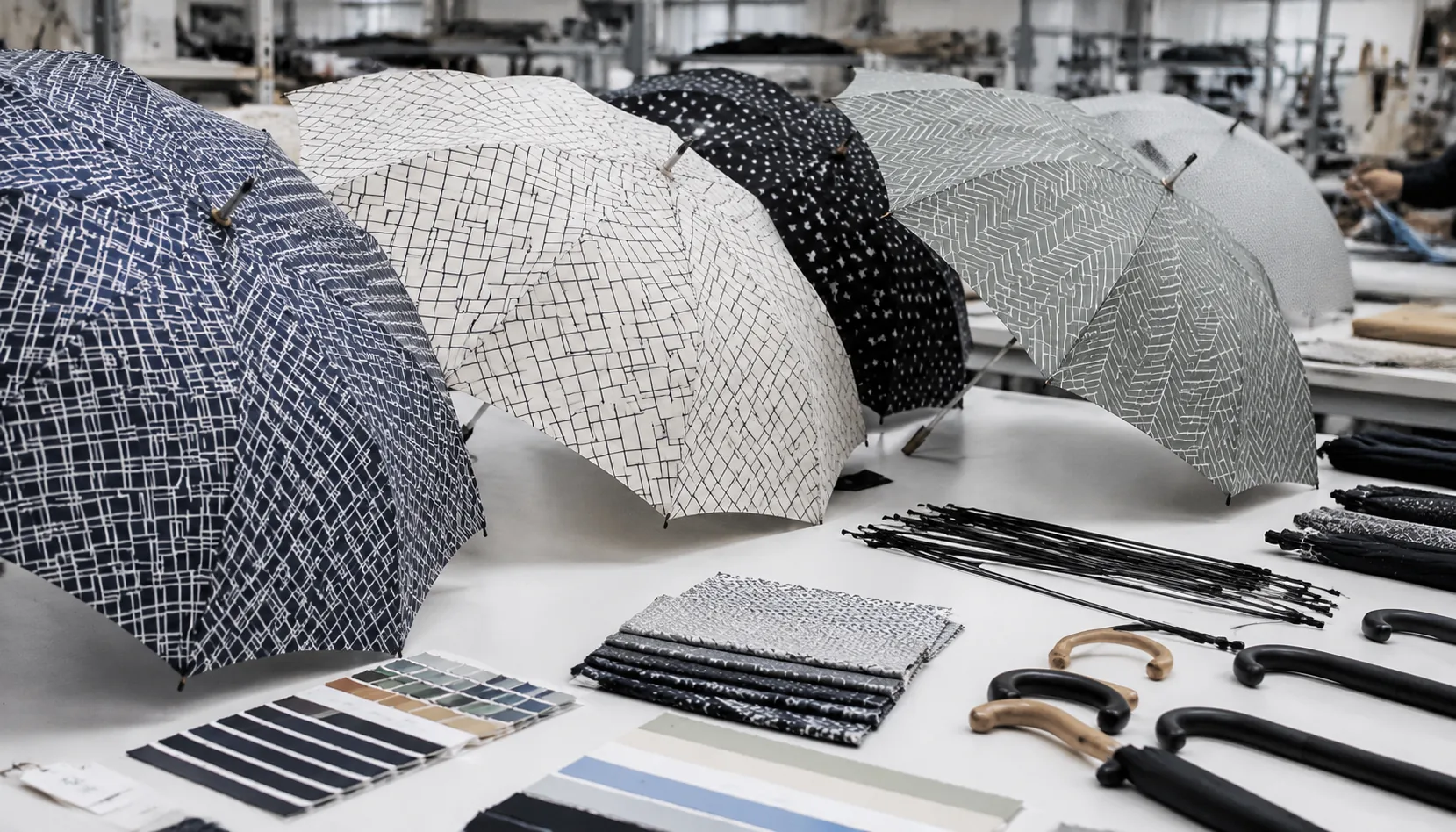
Repeat Pattern Umbrella Printing for Retail Collections
Plan repeat-pattern umbrella canopies for retail lines with panel layout, fabric choice, color control, sampling, MOQ, a...
Read More »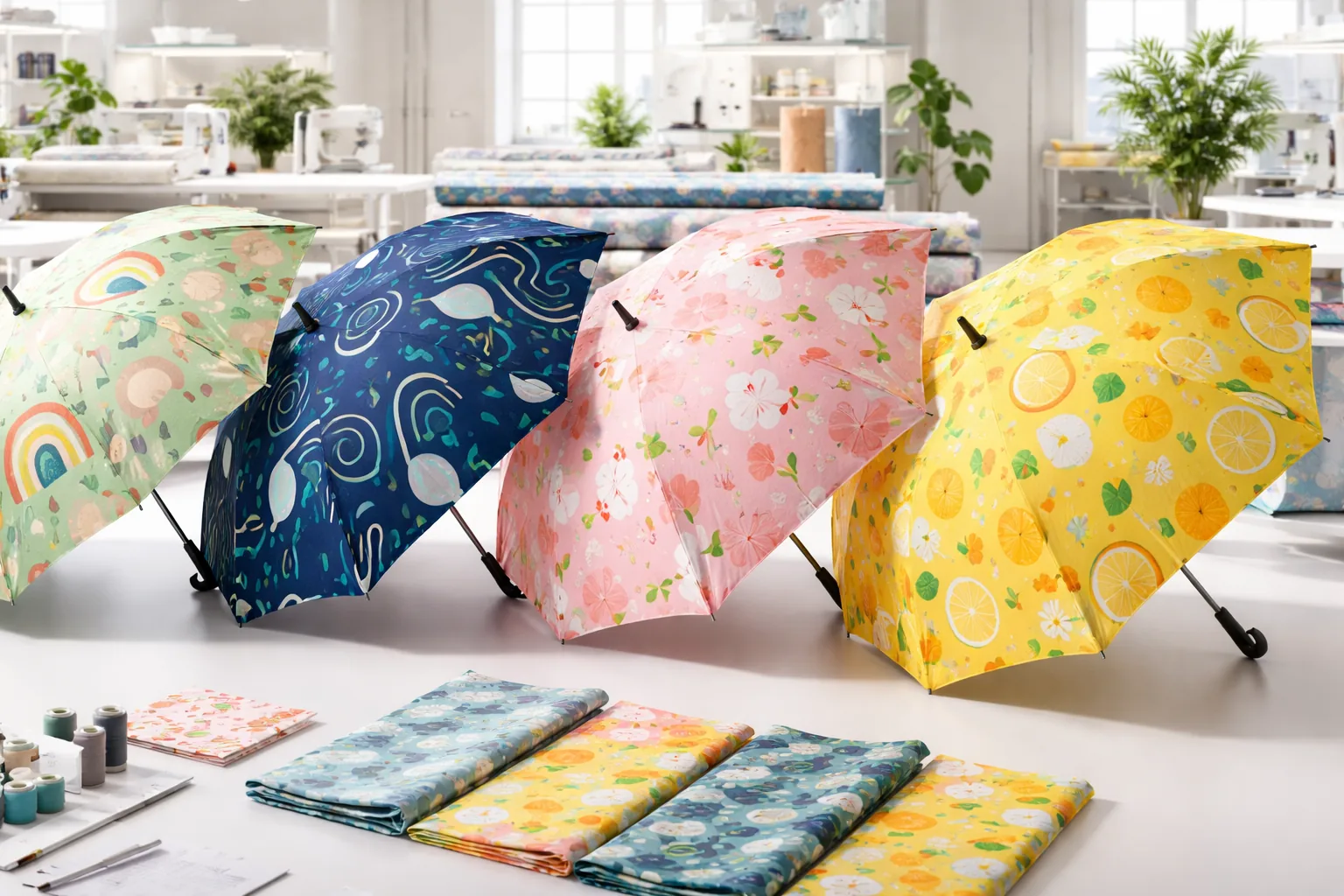
All-Over Pattern Umbrellas for Private Label Branding
Develop all-over pattern umbrellas with repeat artwork, panel matching, fabric specs, and QC controls for private label ...
Read More »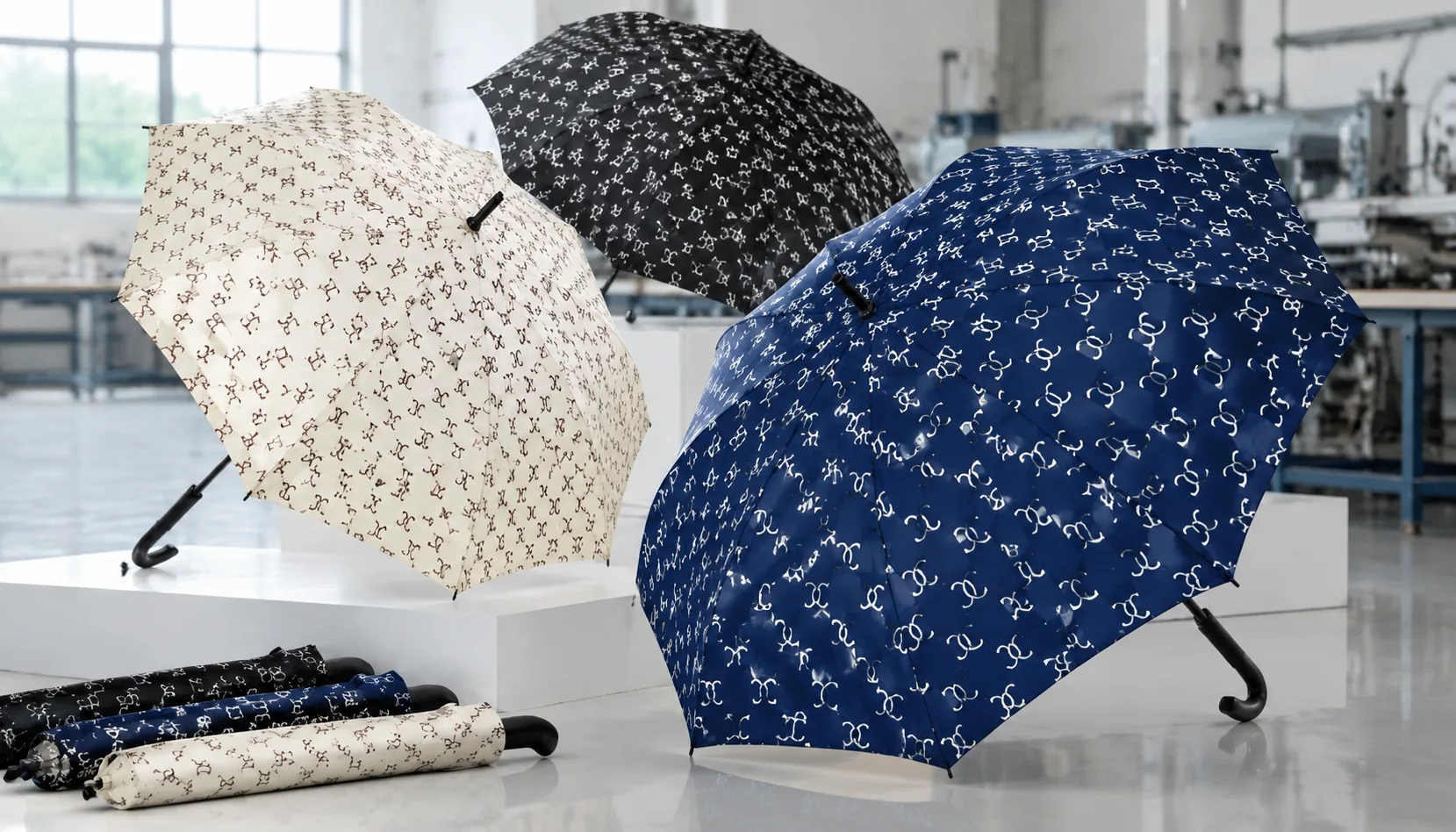
All-Over Logo Patterns for Retail Branded Umbrellas
Build all-over logo umbrella patterns with repeat sizing, panel registration, and fabric specs that reduce distortion, s...
Read More »