Auto-Open Umbrella Mechanisms for Promotional Orders
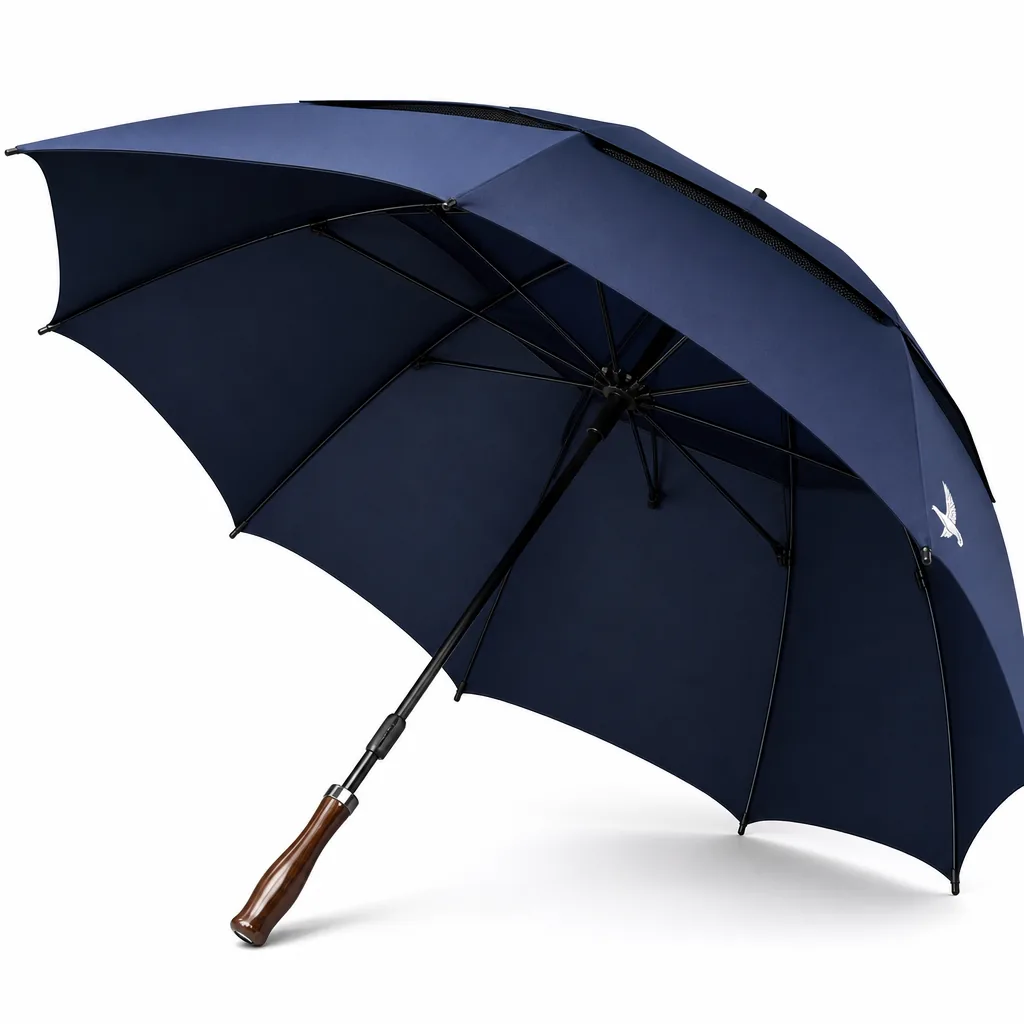
Promotional umbrella orders look simple until the mechanism starts failing in transit, at sample approval, or after a few thousand openings. Choosing the right auto-open umbrella mechanism means matching spring force, shaft parts, and safety tolerances to the fabric weight, handle style, and target price before production begins. At the factory floor, those details decide whether a brand program ships on time, passes testing, and stays within MOQ and lead-time commitments.
How auto-open and auto-open-close systems differ
A one-button opening unit is the simpler auto-open umbrella mechanism: press the button, the shaft spring fires the canopy open, and the user closes it by hand. That is what most buyers mean when they ask for an automatic umbrella opener, because it gives speed without adding the full complexity of a reverse-action frame. In promotional umbrella specs, this usually means fewer moving parts in the handle, fewer plastic pawls, and lower assembly cost. In factory terms, the spring button mechanism is doing one job only, so the failure risk is lower and the return rate is usually easier to control, especially under AQL 2.5. For 21" and 23" compact folders, this is the practical choice: it keeps weight down, fits standard retail price points, and avoids making the handle bulky. ZheBrella usually treats this as the default for volume promotional orders where cost and reliability matter more than one-handed convenience.
A one-button open-close unit adds a second release path so the same button both opens and collapses the umbrella, which is why people call it an auto-open close umbrella. That extra convenience comes from more parts inside the handle, more precise spring loading, and tighter tolerances on the shaft and runner assembly. If the plastic guide, latch, or spring stack is off by even a little, you get weak opening force, premature closing, or a button that feels mushy after repeated use. This is why premium promotional umbrellas, especially higher-end 23" or 27" stick models, are where the auto-open umbrella mechanism makes sense: buyers want a cleaner user experience and are willing to accept higher unit cost and more inspection. For compact umbrellas, it can be too much mechanism in a small handle; for stick umbrellas, it is a better fit because the handle has more room and the product itself is positioned as a gift or brand piece rather than a bare-minimum giveaway.
Core parts inside the spring and trigger assembly
The auto-open umbrella mechanism lives or dies on the spring stack and latch geometry, not the button cap buyers can see. In a typical automatic umbrella opener, the compression spring stores enough energy to drive the runner up the shaft and snap the canopy open in one stroke. If the spring wire is undersized or heat-treated poorly, the return force drops after a few hundred cycles and the umbrella starts opening sluggishly. The latch has to engage cleanly with a hardened catch on the shaft interface, with just enough clearance to release under thumb pressure but not so much that it rattles under vibration in transit. For promotional umbrella specs, I look first at spring wire diameter, shaft wall thickness, and whether the button path stays straight under side load from the handle shell.
The runner is the part most buyers underestimate. It has to slide smoothly on the shaft, compress the main spring, and stop at a repeatable point so the ribs deploy at the same angle every time. If the runner bore is too tight, the auto-open close umbrella action feels gritty and can jam when the shaft has plating buildup or burrs from stamping. If it is too loose, you get wobble, inconsistent release, and premature wear on the latch face. The button path also matters: a crooked spring button mechanism can scrape the housing, shorten the effective travel, or fail to transfer force fully to the release tab. On the factory floor, we check for burrs, roundness of the runner bore, and whether the button travel stays within a narrow tolerance after repeated cycling.
Common failures are easy to trace once you know where to look. Weak return force usually comes from low-grade spring steel, poor tempering, or a spring that is too short for the shaft length. Jammed latches come from misaligned catch slots, soft zinc die-cast edges, or paint overspray that reduces the release window. Loose button travel is usually a housing issue, not the button itself: oversized guides, poor mold wear, or a handle shell that shifts under load. For a durable auto-open umbrella mechanism, buyers should ask for cycle testing, not just a sample that opens once on camera. ZheBrella’s standard practice is to verify trigger engagement, runner rebound, and button free play before AQL 2.5 inspection, because those are the points that separate a usable promotional umbrella from one that fails after a few events.
Choosing mechanisms by umbrella size and user profile
Mechanism choice starts with the frame size, not the brochure artwork. A 21" or 23" travel model for commuters usually needs a lighter automatic umbrella opener so the shaft stays compact and the spring load does not make the canopy snap open too aggressively in a crowded subway or car doorway. Once you move to a 27" or 30" stick umbrella, the extra mass is useful: a heavier spring button mechanism feels more stable in the hand, especially with a straight wooden or EVA handle. On those larger formats, an auto-open umbrella mechanism gives a cleaner opening stroke and better user confidence, because the rib set, stretcher joints, and runner have enough structure to absorb the force without feeling flimsy.
Target user matters just as much as size. For hospitality buyers, front-desk and valet staff usually want one-handed opening with a simple push button because speed and presentation matter more than packed weight. For event giveaways, the priorities are different: low unit cost, predictable deployment, and fewer returns from broken buttons after a few open-close cycles. If the brief calls for an auto-open close umbrella, I would only push that on a model with decent ferrule, rib thickness, and a handle that locks the hand in place, because the return spring and release components add cost and failure points. In factory terms, promotional umbrella specs should always list the mechanism cycle target, not just the canopy fabric and print method.
Handle style changes the experience more than most buyers expect. A curved plastic J-handle makes a push-button umbrella easier to control in rain because the wrist can hang naturally, while a straight rubber or EVA grip works better for travel and commuter use where the umbrella is stored in a bag or briefcase. Our standard practice at ZheBrella is to match the mechanism weight to the frame class: a heavier internal assembly is acceptable on a stick umbrella with fiberglass or steel ribs, but it is overkill on a lightweight folding model where every extra gram is felt. For promotional programs, the cleanest result is usually a balanced automatic umbrella opener on a mid-size stick or three-fold frame, then verify sample cycling before quoting MOQ and lead time.
Durability tests buyers should ask for
For an auto-open umbrella mechanism, I would not accept a generic “tested in factory” statement. Ask for cycle-count targets tied to the product level: 1,500 to 2,000 open-close cycles for a basic promotional umbrella spec, and 3,000 cycles or more if the order is an auto-open close umbrella with heavier shaft parts and a stronger spring button mechanism. The point is not to chase an arbitrary number; it is to prove the latch, release pawl, and return spring still work after repeated compression. A proper report should show how many samples ran, how many failed before the target, and what failed first: button sticking, partial release, shaft rebound, or canopy not locking fully. If the factory cannot name the failure mode, the test was not real.
Drop tests matter because small internal damage shows up later as field complaints, especially on automatic umbrella opener styles with tighter tolerances. Ask for both open and closed drop tests from at least 1 meter onto concrete or steel plate, plus one wet-condition check if the canopy uses pongee 190T or 210T and a UV or Teflon finish. I want to see whether the shaft bends, the runner cracks, or the spring loses tension after impact. Accidental-release checks are just as important: the button should not fire from a pocket bump, carton vibration, or light side pressure. For promotional umbrella specs, ask the factory to record button-force consistency across the sample lot, ideally with a gauge, and flag any unit that varies too much from the nominal force or shows a sharp increase near end-of-life.
Under AQL 2.5, the factory should report defects by class, not hide everything under one pass/fail line. For a shipment, ask for critical, major, and minor counts separately, the actual sample size used, the acceptance number, and the rejection number, plus the lot ID and carton mapping. A competent report will also note whether failures were concentrated in one workstation or one shift, which is how you catch a bad spring lot or weak crimp before it leaves. Before shipment, request photos of the fully open position, closed position, button close-up, latch interface, shaft tip, and any failed units with the defect tagged on the photo. If possible, get short test notes with the cycle count reached, the drop-test result, and the exact failure point. That is the minimum evidence I expect before approving a promotional umbrella order with an auto-open umbrella mechanism.
How mechanism choice affects cost, MOQ, and shipping terms
A basic auto-open umbrella mechanism is cheaper because it is a simpler build: one spring cartridge, one trigger button, fewer molded parts, and less time at the bench. An auto-open close umbrella adds a second control path, usually a stronger compression spring, a more precise locking set, and a handle assembly that can survive repeated cycling without loosening. That extra hardware sounds small on paper, but in production it means more incoming inspection, more assembly steps, and more chances for misalignment during final function testing. For promotional umbrella specs, that difference shows up quickly in unit cost, especially when buyers compare a 23" or 27" fiberglass frame against the same frame with a spring button mechanism for full automatic operation.
The cost gap is not only labor. An automatic umbrella opener can usually run on standard stock parts, while an auto-open close umbrella often needs dedicated springs, reinforced push-buttons, and sometimes a custom handle core to keep the release action consistent. When those parts are not already in inventory, the factory has to source them separately, which raises MOQ and slows the first run. In practice, FOB pricing moves up because the supplier is carrying more tooling risk and more component variation, and lead time typically stretches by 7 to 15 days if the handle or spring spec has to be confirmed before mass production. Buyers who want a low MOQ should expect fewer color options and less flexibility on canopy material such as 190T pongee versus 210T pongee.
From a shipping standpoint, the mechanism choice matters because it affects both weight and failure risk. A basic auto-open unit is easier to pack, easier to sample, and easier to pass AQL 2.5 because the function test is simple: open cleanly, lock cleanly, and close manually. An auto-open close umbrella needs a stricter cycle test, because the button, spring, and slider must stay aligned through repeated use, especially on larger 30" frames or vented double-canopy builds. If the buyer wants FOB terms, the factory will usually quote a wider tolerance band for the automatic umbrella opener only when the parts are standard; if the order depends on a special handle or imported spring, expect a higher minimum order quantity and a longer approval loop before production starts.
Frequently Asked Questions
Is auto-open-close worth the extra cost?
It is worth it when convenience and perceived value matter, but it adds parts, weight, and more failure points than a simple auto-open mechanism.
What should a buyer confirm before ordering an automatic umbrella?
Confirm the button feel, opening force, locking sound, cycle target, and compatibility with the shaft diameter and handle style. Those details affect both user experience and failure rate.
What spring force should I request for a promotional auto-open mechanism?
For most promotional umbrellas, buyers usually specify a button feel that opens reliably without being stiff, often validated with cycle testing rather than a single force number. A practical spec is to request 3,000 to 5,000 open-close cycles and confirm the button return feels consistent across samples.
Can I mix auto-open and auto-open-close models in one brand program?
Yes, but it is better to separate them by SKU because the runner, spring assembly, and cost structure are different. Most factories will quote each model separately, with samples ready in about 7 to 10 days and bulk lead time around 25 to 35 days after approval.
What MOQ is typical for custom promotional umbrella mechanisms?
For OEM/ODM orders, MOQ is often 500 to 1,000 pieces per color or per style, depending on the canopy fabric and frame components. If you need custom shaft parts or special safety testing, the MOQ may be higher because tooling and inspection setup add cost.
Looking to Launch Your Custom Umbrella Line?
ZheBrella is a Zhejiang-based OEM/ODM umbrella manufacturer with 17 years of export experience. Free design, low MOQ from 100 pieces, windproof construction, full-color print.
Get Free Quote Now »People Also Search For
Related Articles
How to Specify a Promotional Stick Umbrella for Bulk Orders
Build a bulk stick umbrella spec that fits promo budgets and daily use, from 8K frames and 190T pongee to MOQ, AQL 2.5, ...
Read More »
Auto-Open Umbrella Mechanisms: What Buyers Should Specify
Specify the right auto-open mechanism for retail, promo, or travel umbrellas. Learn what to ask for on spring force, but...
Read More »
Manual Open Compact Umbrellas for High-Volume Promo Orders
Learn when manual compact umbrellas outperform auto-open styles on cost, defect risk, and packing for large promotional ...
Read More »