Subtle Tone-on-Tone Umbrella Branding for Premium Buyers
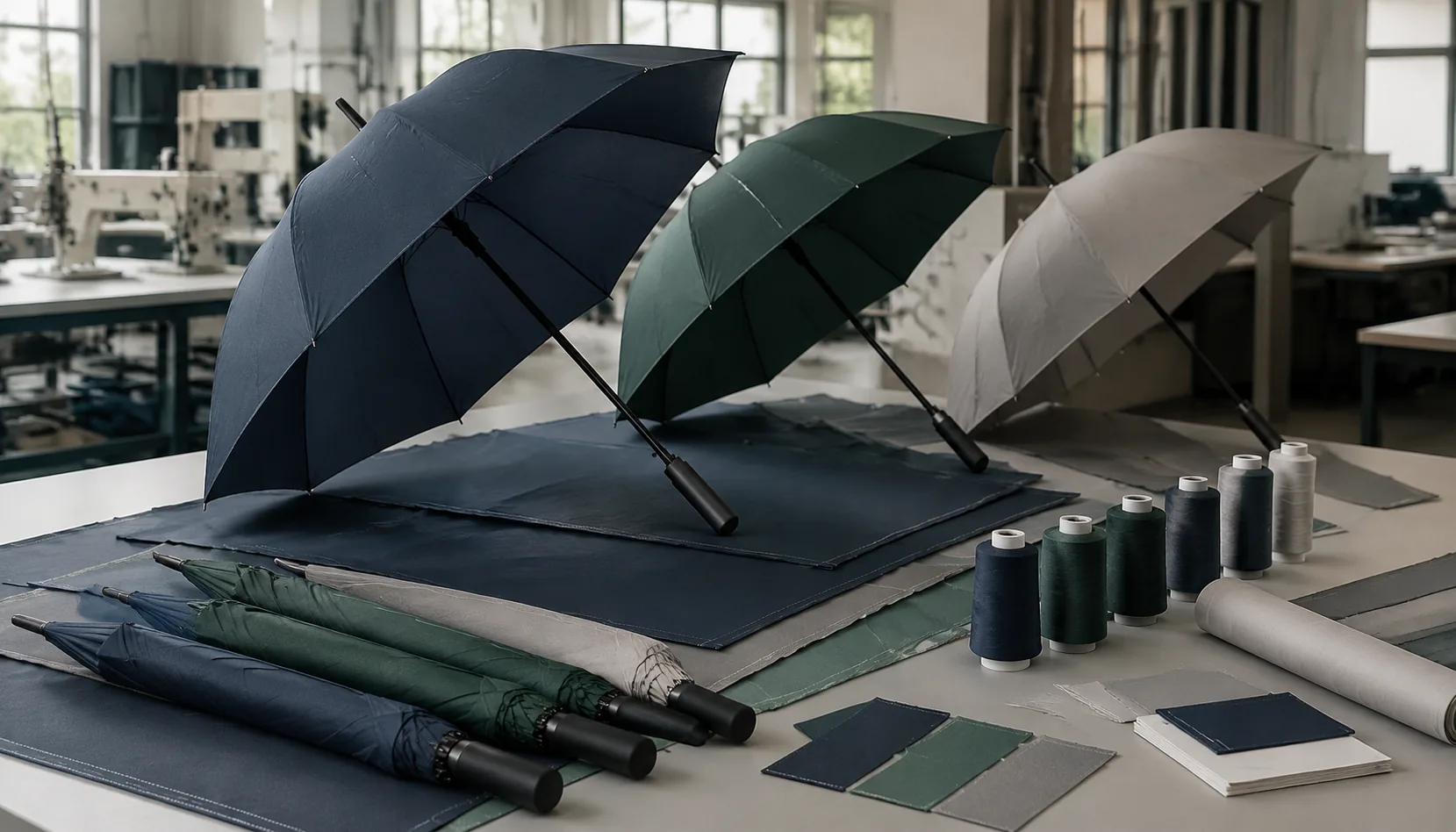
Premium buyers often ask for a logo that feels visible in hand but almost invisible on the shelf, and that balance is easy to lose when fabric sheen, panel tension, and ink absorption change across a bulk run. On our Songxia factory floor, tone-on-tone umbrella branding starts with matching canopy fabric, coating, print method, and inspection tolerances before sampling, because a subtle mark that looks refined on one panel can turn patchy or too loud after cutting, sewing, and curing.
When Tone-on-Tone Branding Works Best
Tone-on-tone umbrella branding works best when the umbrella is part of a premium experience, not a walking billboard. Luxury retail stores, five-star hotels, private banks, law firms, golf clubs, and executive conference organizers usually want the logo visible at arm’s length but quiet from across the street. On a 23" or 27" stick umbrella using 190T or 210T pongee, we often match a charcoal logo to a black canopy, navy to midnight blue, or warm gray to beige. The result is especially good with screen printing, heat transfer, or woven-look jacquard panels where the logo appears under changing light instead of shouting. These subtle logo umbrellas feel more like merchandise the recipient would actually keep in a car, office, or hotel suite. For private label umbrellas sold through boutiques, the same approach supports a higher retail price because the branding reads as design detail rather than promotional placement.
Low contrast umbrella printing improves perceived value when the buyer cares about discretion, executive taste, and long-term use. A finance event umbrella with a 10K fiberglass frame, auto-open shaft, 210T pongee canopy, and small tone-matched logo near the lower panel edge will usually feel more expensive than the same model with a large white logo centered on every panel. For hotel gifting, tone-on-tone is strongest on black, navy, forest green, burgundy, and stone canopies because those colors accept close logo shades without looking accidental. At ZheBrella, our standard practice is to make strike-off samples under both indoor LED and outdoor daylight, because a logo that looks elegant in the showroom can disappear completely under rain clouds. Buyers should also specify gloss level: matte ink, rubberized transfer, and slightly satin coatings all create different visibility even when the Pantone values are close.
Higher visibility is still the better choice when the umbrella must perform as advertising, wayfinding, or crowd identification. Outdoor festivals, sports sponsorships, charity walks, campus events, and trade-show giveaways need stronger contrast, larger print areas, or even full-panel sublimation so the brand is readable in photos and from 20–30 feet away. Tone-on-tone umbrella branding also becomes risky on small 21" folding umbrellas, because the visible panel area is limited and the logo can be broken by seams, folds, or canopy tension. If the order is for premium branded umbrellas, I recommend a low-contrast logo on one or two panels, paired with better product specs: fiberglass ribs instead of thin steel, a vented double canopy for 50+ mph wind resistance, Teflon water repellency, and AQL 2.5 inspection before FOB or DDP shipment. If the order is for mass promotion, spend the budget on contrast and coverage before upgrading subtle details.
Choosing Fabric and Color Combinations
Fabric choice decides whether tone-on-tone umbrella branding looks intentional or just under-printed. For premium branded umbrellas, I usually prefer 210T pongee over 190T when the buyer wants a quiet logo with clean edges. The tighter 210T weave gives better ink holdout, less feathering at small serif text, and a smoother handfeel after Teflon or water-repellent finishing. It also has a slightly denser sheen, so a low-contrast logo can catch light without shouting. 190T pongee is workable for subtle logo umbrellas, especially on promotional runs where MOQ and unit cost matter, but it absorbs more variably panel to panel. On dark colors, that can make a 5% tonal difference disappear after curing or after the canopy is tensioned over an 8K or 10K frame. If the logo includes thin lines under 0.4 mm, I tell buyers to sample 210T first, not approve from a digital mockup.
Navy-on-navy is the safest premium combination because the base fabric already has depth, and a slightly glossier ink or heat-transfer film gives visibility at an angle. In production, do not expect perfect lab matching: for dyed pongee and printed ink together, a realistic tolerance is about Delta E 1.5–2.5 for controlled lots, and up to Delta E 3.0 when fabric is reordered later. Black-on-charcoal is more difficult than it sounds. If the charcoal base leans warm, the black mark looks brownish under daylight; if it leans blue, the umbrella can look cheaper beside leather goods or dark overcoats. Gray-on-silver works well for retail private label umbrellas, but only when the silver fabric is not too shiny. High-sheen silver 190T can overpower low contrast umbrella printing because the panel reflection changes more than the ink color itself.
Our standard practice at ZheBrella is to approve tone-on-tone work using both flat-panel swatches and a finished 23 inch or 27 inch umbrella, because canopy curvature changes logo visibility. A logo that is readable on a cutting-table swatch may vanish once sewn with 8 panels and pulled tight along the ribs. For navy-on-navy, I like a 6–10% contrast gap plus a satin clear overprint if the buyer wants executive-gift restraint. For black-on-charcoal, 8–12% is more reliable. For gray-on-silver, keep the logo 10–15% darker or use matte transfer film to stop glare from washing it out. Buyers should also lock fabric lot, coating type, and print method before bulk production. Changing from screen print to heat transfer, or from 190T to 210T pongee, can shift the perceived logo by more than the approved color tolerance even when the Pantone reference stays the same.
Decoration Methods for Subtle Logos
For tone-on-tone umbrella branding, the decoration method matters more than the logo file. Matte screen print is the safest choice when the buyer wants a quiet mark on 190T or 210T pongee: we usually print one or two shades darker than the canopy, then check it under daylight, warehouse LED, and rain-wet conditions because contrast changes after water beads on the coating. Gloss clear ink is more premium but less forgiving; it looks almost invisible straight on and appears when light hits at an angle, which works well on black, navy, charcoal, forest green, and deep burgundy canopies. For subtle logo umbrellas, I avoid oversized artwork with thin strokes under 0.3 mm because low contrast umbrella printing loses edge definition faster than normal white or metallic ink.
Tonal heat transfer is better when the logo has gradients, fine lettering, or a retail-brand lockup that cannot tolerate screen distortion across panel seams. The film must stay soft enough for folding; cheap transfers feel like a plastic patch and crack after repeated opening, especially on 23 inch auto-open and 27 inch golf umbrellas. For premium branded umbrellas, we specify stretch-compatible PU transfer film and run a 3M tape pull, wet rub test, and 24-hour folded storage check before approving bulk. Gloss-on-matte and matte-on-gloss transfers can give a clean tonal effect, but the press temperature and dwell time must be controlled tightly so the canopy does not shrink, shine, or leave a square heat mark around the artwork.
Woven strap labels are the most understated option for private label umbrellas because the branding sits on the closure strap instead of the canopy field. A 12 to 18 mm woven damask label with tonal thread works well for executive gifts, hotels, and luxury retail programs where the buyer does not want the umbrella to look like a giveaway. The tradeoff is scale: a strap label is visible only when the umbrella is closed, so it should be paired with good handle engraving, a tonal sleeve print, or a small panel mark if shelf recognition matters. PU-coated, black-out, and UPF 50+ canopies need extra adhesion testing before approval; our standard practice at ZheBrella is to test ink or transfer on the actual coated fabric lot, not just a lab swatch, before locking the production sample.
Frame and Canopy Specs That Support Premium Positioning
Premium positioning starts with the frame, not the logo. If a buyer wants tone-on-tone umbrella branding to feel deliberate instead of cheap, I usually steer them away from thin 6K promotional frames and toward 8K or 16K layouts with fiberglass ribs and a plated steel or aluminum shaft. Fiberglass ribs give better rebound in gusts than painted steel ribs, especially on 23" and 27" stick umbrellas, while a steel center shaft adds the weight many retail buyers associate with durability. For compact models, an auto-open or auto-open-close mechanism must be tested carefully because a weak spring makes even premium branded umbrellas feel like giveaway stock. Handles matter too: a matte EVA handle works for golf and commuter umbrellas, while lacquered wood or rubberized ABS suits executive private label umbrellas where the hand feel is part of the brand impression.
Canopy fabric decides whether subtle logo umbrellas look refined or simply hard to see. A 190T pongee canopy can work for cost-sensitive programs, but 210T pongee gives a tighter surface for low contrast umbrella printing, especially with dark gray on black, navy on navy, or warm beige on champagne. A Teflon water-repellent finish helps the canopy shed rain cleanly, while UPF 50+ coating is worth adding for golf, resort, and outdoor retail lines. The 16K canopy layout is useful when the artwork uses small repeated marks because the extra panels create a more tailored, radial rhythm; the umbrella looks less like a billboard and more like a textile product. The tradeoff is alignment control: every panel seam becomes a checkpoint, so our standard practice is to verify repeat placement during cutting, sewing, and final AQL 2.5 inspection before packing. That adds labor, but it protects the premium look.
Sampling, QC, and Bulk Order Control
Strike-off approval is where subtle work either gets controlled or becomes expensive rework. For tone-on-tone umbrella branding, we do not approve from a PDF mockup alone; we print the logo on the actual canopy cloth, usually 190T or 210T pongee, with the same coating, ink system, and drying time planned for bulk. Low contrast umbrella printing changes under different light, especially navy-on-navy, charcoal-on-black, or cream-on-beige, so the buyer should approve physical strike-offs before any pre-production sample is cut. Our standard practice at ZheBrella is 7-10 days for sampling after artwork confirmation, including one strike-off round and one complete pre-production sample with final rib count, handle finish, closure strap, woven label, and sleeve. For premium branded umbrellas, I prefer approving both open-canopy photos and close-up logo photos, because a logo that looks refined at 30 cm can disappear completely when viewed from 2 meters.
A good QC file for subtle logo umbrellas must define what “subtle” means in measurable terms. We normally set a control sample with acceptable contrast, logo position tolerance of plus or minus 3 mm, print size tolerance of plus or minus 2 mm, and no visible ink bleeding along fine strokes. Logo rub testing should be done after full curing, not immediately after printing; for screen print and heat-transfer logos, we check dry rub and wet rub with a white cotton cloth for 20 cycles, then inspect for transfer, peeling, or gloss change. On POE, PVC, or EVA canopies, adhesion is more difficult than pongee, so a tape pull test is also useful before bulk. Photo standards should include natural daylight, indoor white LED light, and a folded umbrella view, because private label umbrellas often fail retail approval when the logo looks too bright indoors or too dull on the shelf.
Bulk control starts before fabric cutting, not at final inspection. Typical MOQ for tone-on-tone umbrella branding is 500-1,000 pcs per colorway, because dye lot, ink mixing, and frame setup need enough volume to stay consistent. For production, 30-45 days is realistic after sample approval, depending on whether the order uses manual, auto-open, or auto-open-close frames, 8K/10K/16K ribs, custom handles, or UPF 50+ and Teflon-coated fabric. Final inspection should follow AQL 2.5 for major defects, with checks on canopy symmetry, seam strength, rib tips, runner locking, water repellency, logo placement, and carton markings. I also like a mid-line inspection after 20-30% of goods are assembled, because low contrast printing defects are hard to catch once umbrellas are packed. FOB Ningbo or Shanghai is straightforward; DDP shipping needs carton dimensions and HS code confirmation early to avoid customs delays.
Frequently Asked Questions
Can tone-on-tone logos pass retail buyer approval if they are intentionally subtle?
Yes, but the approval sample should be photographed under daylight, office lighting, and wet canopy conditions. Buyers should sign off on an acceptable contrast range, not only a Pantone reference.
Which umbrella fabric is better for subtle branding, 190T or 210T pongee?
210T pongee usually gives a denser, smoother surface for premium tonal logos. 190T can still work for promotions, but ink texture and fabric shine may vary more by color.
What logo size works best for tone-on-tone umbrella branding?
For premium low-contrast branding, most buyers keep the logo between 3 and 6 inches wide on a canopy panel, depending on umbrella size and panel count. Smaller marks near the ferrule or one-panel placement usually look more upscale and print more consistently across bulk runs.
How do you control color consistency on low contrast umbrella printing?
Use Pantone or lab-documented color targets for both canopy fabric and ink, then approve a physical strike-off before production. For repeat orders, keep the same fabric dye lot, print method, and QC tolerance, typically within a small Delta E window agreed before sampling.
What is the usual MOQ for private label umbrellas with subtle branding?
MOQs often start around 300 to 500 pieces per design and color combination, but it depends on canopy fabric, print method, and frame type. If you need multiple retail SKUs, combining sizes or colors can help reach factory minimums more efficiently.
Looking to Launch Your Custom Umbrella Line?
ZheBrella is a Zhejiang-based OEM/ODM umbrella manufacturer with 17 years of export experience. Free design, low MOQ from 100 pieces, windproof construction, full-color print.
Get Free Quote Now »People Also Search For
Related Articles
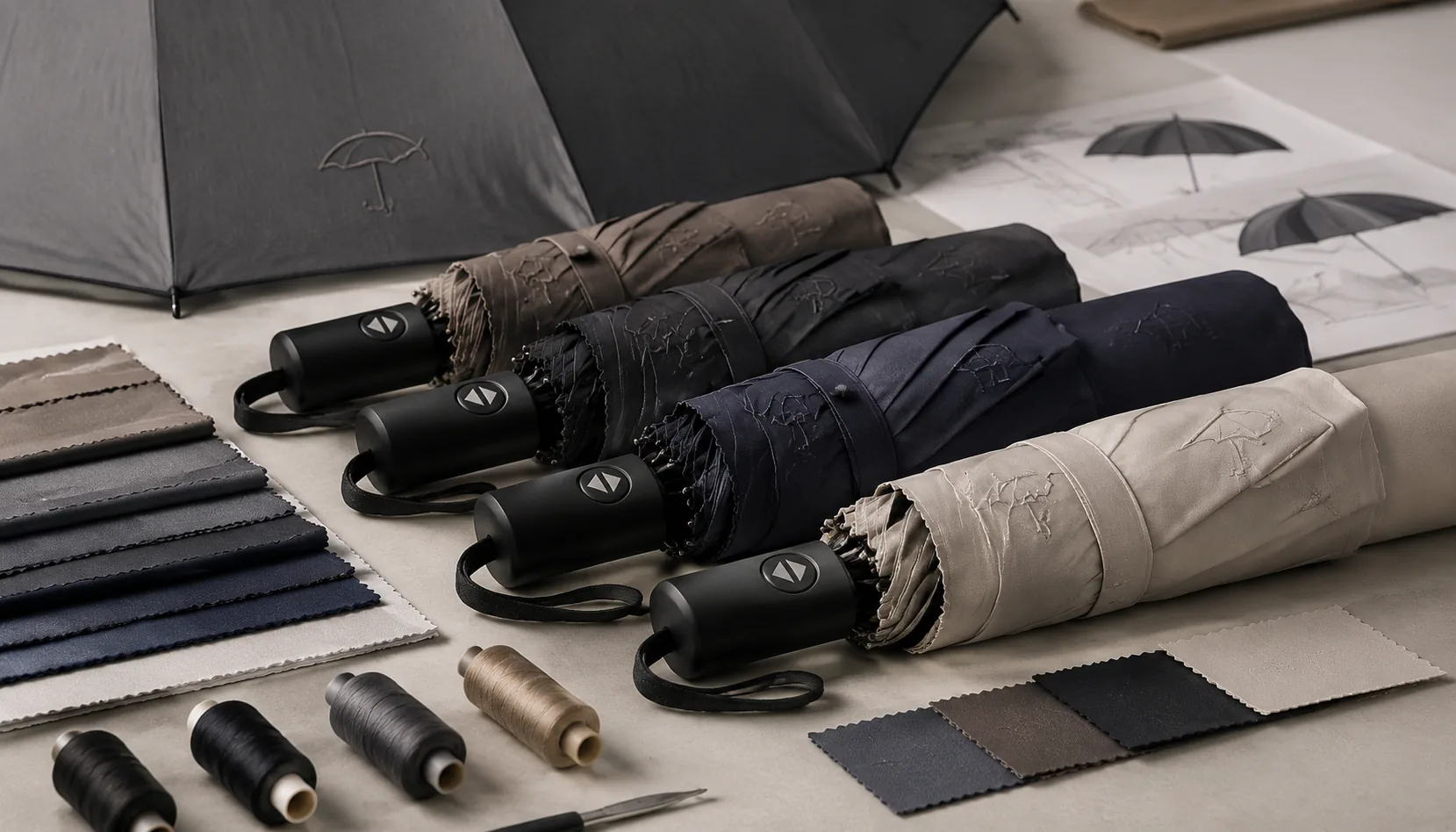
Tone-on-Tone Umbrella Logos for Premium Retail Branding
Use tonal logo printing to create premium umbrellas with controlled contrast, fabric choices, QC checks, and repeatable ...
Read More »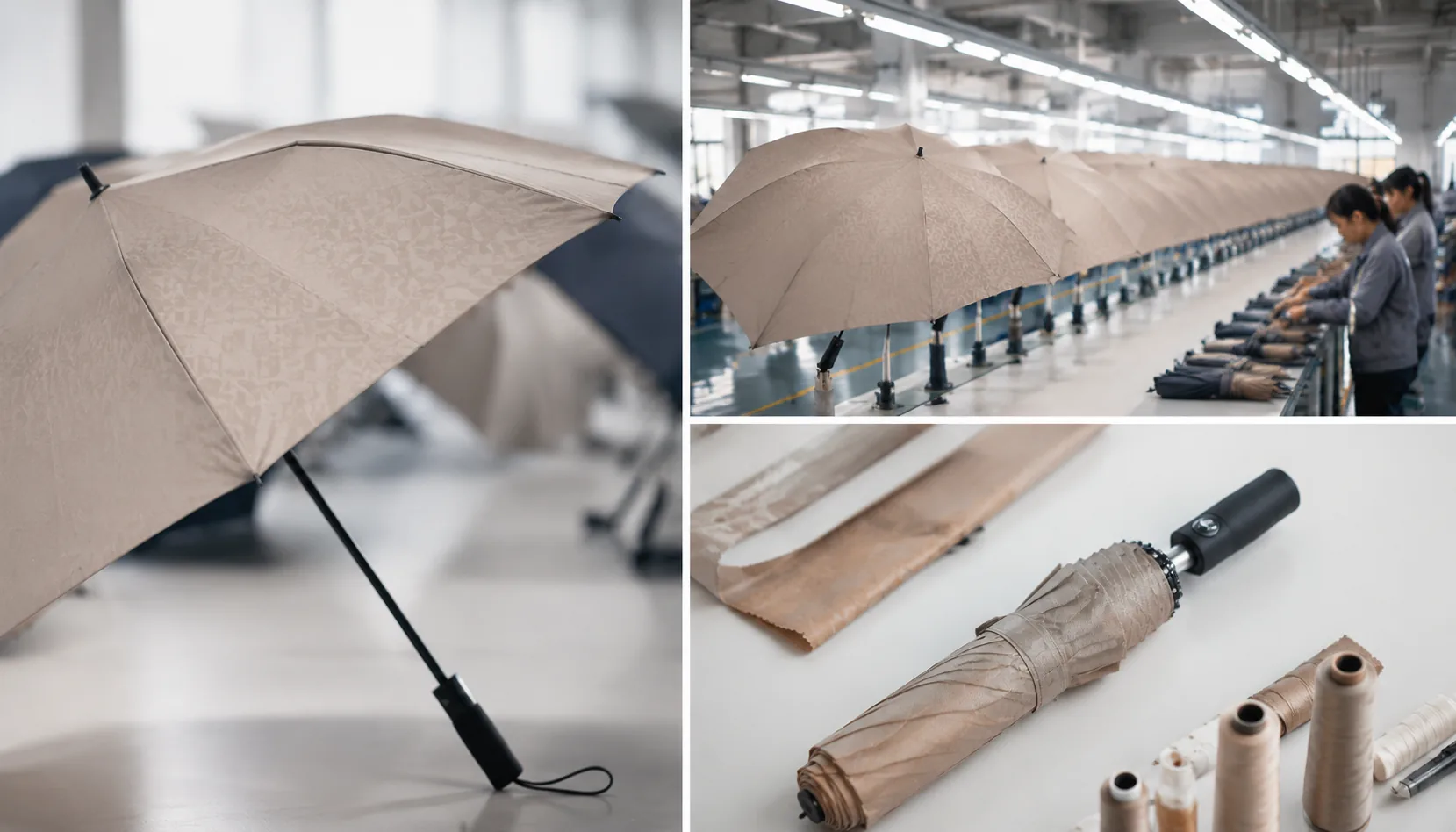
Tone-on-Tone Umbrella Branding for Subtle Retail Programs
Create understated umbrella branding with tone-on-tone logos, matched trims, and controlled contrast for premium retail ...
Read More »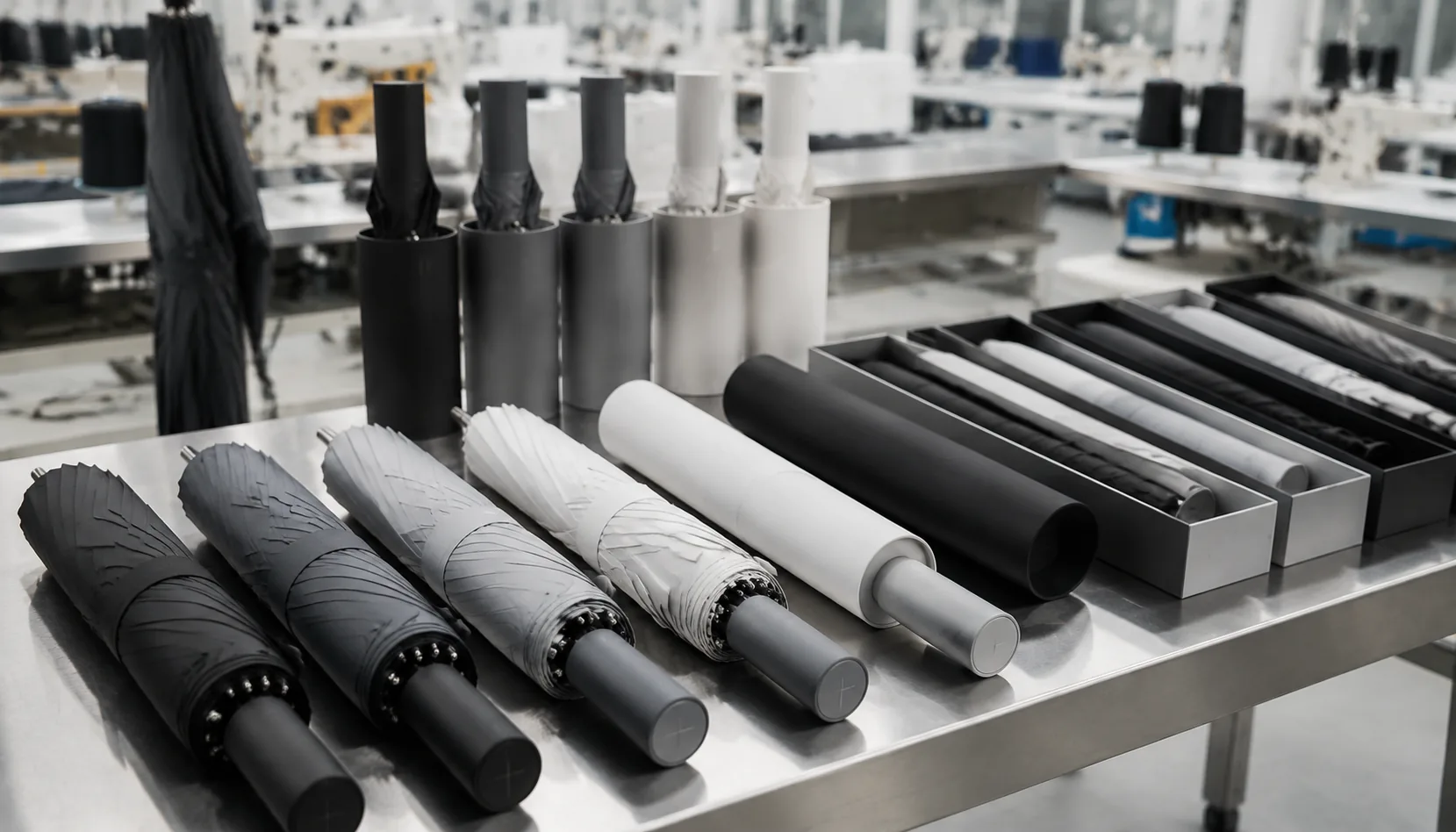
Tone-on-Tone Umbrella Branding for Premium Retail Lines
Use tone-on-tone umbrella branding to create premium retail programs with controlled logo contrast, fabric choices, samp...
Read More »