Tone-on-Tone Umbrella Branding for Premium Private Labels
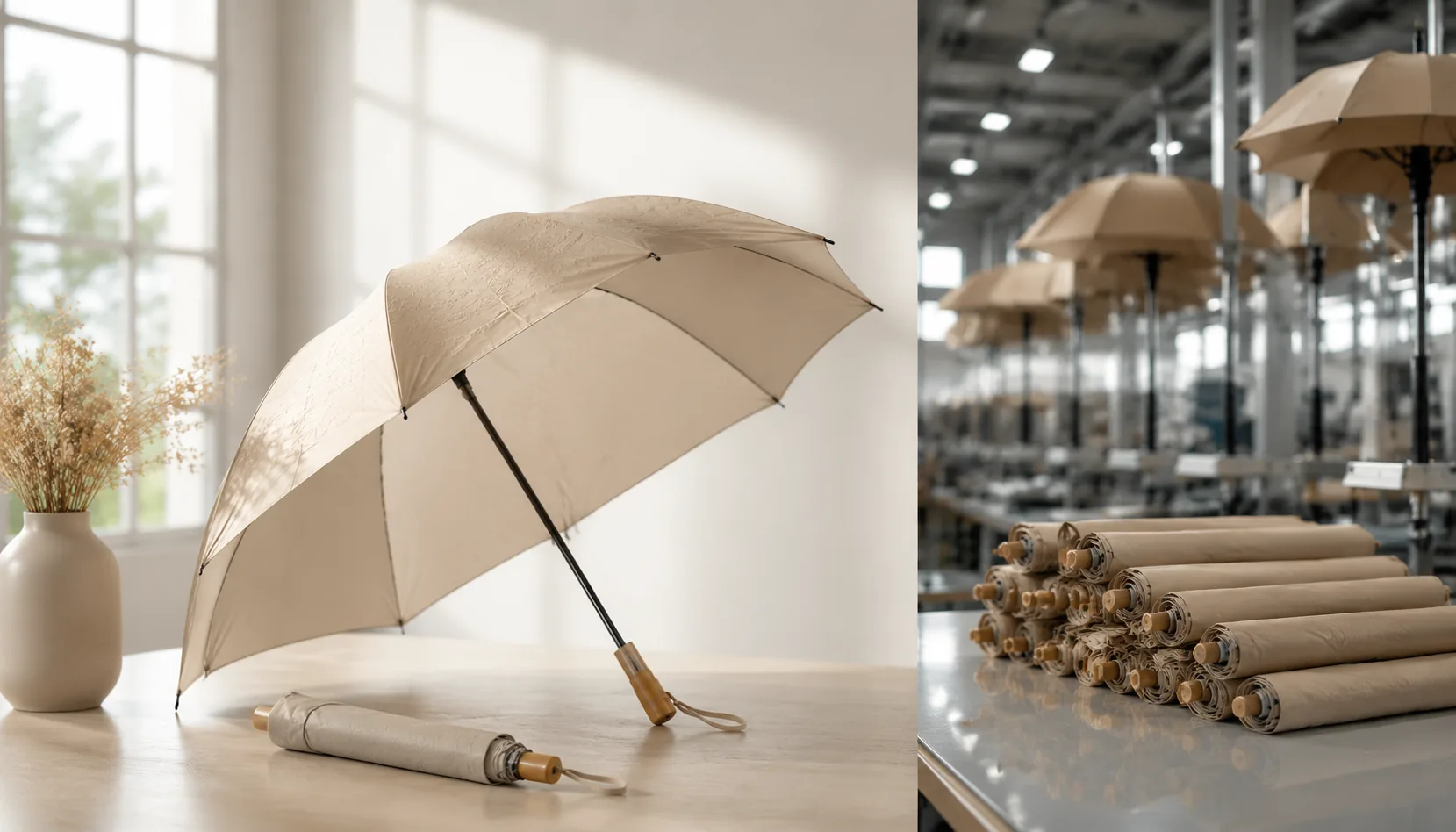
Premium buyers often ask for a quiet logo, then discover that tonal printing can disappear under showroom lighting or turn too shiny after coating. With tone on tone umbrella branding, the factory work is in controlling fabric dye lots, ink gloss, screen pressure, and matte finishing so the mark reads cleanly without looking loud. On 190T or 210T pongee, small contrast decisions at sampling decide whether the umbrella feels private-label premium or simply underprinted.
When Subtle Branding Works Better Than High Contrast
Tone on tone umbrella branding works best when the umbrella is meant to feel owned, not advertised. Luxury retail buyers, five-star hotels, private banks, and executive gifting teams usually reject loud white logos on black canopies because they make a 23" or 27" umbrella look like a trade-show giveaway. A restrained mark, printed one shade darker or lighter than the 190T/210T pongee canopy, keeps the product inside premium territory. On navy, charcoal, bottle green, and black panels, tonal umbrella printing gives enough visibility under lobby lighting or rain glare without shouting across the street.
The technical choice matters more than many buyers expect. Screen printing can hold a clean tonal logo on pongee if the ink opacity is controlled, but heat transfer may look too glossy unless the film is specified matte. For premium branded umbrellas, I prefer a matched low-sheen ink on 8K or 10K fiberglass-frame models, especially with wood, EVA, or rubberized handles. If the umbrella is a hotel loaner or finance client gift, the logo should be tested wet and dry, because a subtle gray mark on black fabric can disappear once the canopy absorbs surface water, even with a Teflon coating.
High-contrast branding still has a place for golf events, outdoor crews, and sponsor visibility, but it is usually the wrong language for private label umbrella design aimed at executives. Subtle logo umbrellas signal confidence because the buyer is not trying to turn the user into a walking billboard. Our standard practice at ZheBrella is to produce a strike-off before bulk cutting, then check logo contrast at arm’s length and 3 meters under indoor light. For programs using auto-open-close 21" compacts or 30" golf umbrellas, that sample approval prevents the common mistake of approving a beautiful digital mockup that prints too bright in production.
Color Contrast Targets for Tonal Logos
The safest contrast target for tonal logos is not “barely visible”; it is visible at arm’s length under office light and still discreet outdoors. For dark-on-dark work, I like a Delta E difference of roughly 6–10 between canopy and print when using one-shade Pantone variations, such as Pantone 532C on a near-black navy pongee. Below Delta E 4, buyers often approve the sample on a desk and then complain that the logo disappears in photos. Above Delta E 12, the result starts looking like standard contrast branding, not tone on tone umbrella branding. On 190T and 210T pongee, remember that the weave reflects light differently along the warp and weft, so a logo can look stronger on one panel angle and weaker on the next after sewing.
Gloss-on-matte is usually more reliable than color-on-color for subtle logo umbrellas because the eye reads surface reflection before it reads pigment. A matte 210T pongee canopy with a clear gloss screen print, PU gloss ink, or silicone-effect ink can give a premium private label look without pushing the color too far. This works especially well on black, charcoal, forest green, burgundy, and deep navy 23-inch and 27-inch models. The problem is abrasion and folding: a high-gloss logo placed near rib tips or tight folds can scuff after open-close cycling, especially on auto-open-close compact umbrellas. For premium branded umbrellas, I normally keep the gloss logo on one or two outer panels and avoid seam edges by at least 18–25 mm.
Dyed pongee is not paper, so Pantone matching must be treated as a controlled range, not a fixed promise. For bulk 190T pongee, a realistic fabric tolerance is usually Delta E 1.5–2.5 against the approved lab dip; for heavier 210T pongee with coating, Delta E 2.0–3.0 is more practical because water-repellent, Teflon, UV, or PU back coatings change perceived depth. That is why lab dips are mandatory for private label umbrella design when the logo is only one shade away from the canopy. Our standard practice at ZheBrella is to approve the canopy lab dip, then strike off tonal umbrella printing on the actual fabric lot before cutting production panels. Otherwise, a beautiful tone on tone umbrella branding concept can fail simply because the bulk dye lot shifted half a shade warmer.
Print Techniques for Matte and Gloss Effects
For tone on tone umbrella branding, the first decision is not the logo artwork; it is the finish contrast between canopy fabric and ink. Tonal screen print is the most stable choice on 190T or 210T pongee because we can tune the ink 5–15% darker or lighter than the dyed fabric and keep the hand feel thin enough for daily folding. Matte ink on a matte pongee canopy gives a quiet retail look, while gloss clear or semi-clear ink catches light only at an angle, which works well for subtle logo umbrellas sold as executive gifts. The limitation is color control: navy-on-navy and black-on-black need lab dips under D65 and warm indoor light, otherwise the logo either disappears or looks too loud. Screen printing usually keeps MOQ reasonable, often 300–500 pieces per colorway, because the tooling is only film, screen mesh, and setup time rather than molded parts.
Silicone print is more expensive but gives the cleanest raised gloss effect for premium branded umbrellas, especially on black, charcoal, forest green, and deep burgundy canopies. It sits on the fabric surface like a soft rubber layer, so the curing window matters: under-cured silicone can tack after packing, while over-cured silicone may crack across fold lines after 200–300 open-close cycles. In our production line, silicone logos normally require controlled oven curing and a 24-hour rest before folding into sleeves, which adds time compared with standard ink. MOQ often starts closer to 500–1,000 pieces because silicone waste and setup loss are higher. It performs well in rain because cured silicone rejects water, but the logo edge must be tested after wet folding; sharp serif fonts under 1 mm stroke width are risky on 8K compact umbrellas with tight canopy folds.
Deboss-like transfer effects and low-opacity inks are useful when private label umbrella design needs restraint rather than decoration. A heat-transfer film can create a pressed, shadowed logo on polyester pongee, but it is not true debossing because canopy fabric is too thin and tensioned over ribs; the effect comes from film thickness, sheen, and edge shadow. Transfers need accurate temperature, pressure, and dwell time, typically around 140–160°C depending on film, or the adhesive either bleeds through the weave or releases after rain exposure. Low-opacity tonal umbrella printing is softer and cheaper, but buyers should accept variation between panels because umbrella canopies are cut in bias directions and reflect light differently after sewing. For AQL 2.5 inspection, I recommend judging tonal logos from 1 meter at 45 degrees, not flat on a table, because that is how customers actually see the umbrella when opened.
Matching Premium Branding to Umbrella Construction
Premium private-label umbrellas should not carry loud artwork on weak construction; the product has to feel expensive before the user even notices the logo. For tone on tone umbrella branding, I usually match the decoration method to the handle and frame first. A dark maple or beechwood crook handle pairs well with black-on-black screen printing or debossed PU patches because the warmth of the wood already signals retail quality. Rubberized straight handles work better for corporate gifting, especially with 23" or 27" auto-open models where the buyer wants a clean, modern grip and fast one-hand operation. If the handle feels hollow, sticky, or poorly balanced, even the best tonal umbrella printing will look like a cover-up rather than a design choice.
Frame choice is where subtle logo umbrellas become believable as premium branded umbrellas. Steel ribs are cheaper and acceptable for basic 8K promotional models, but fiberglass ribs give a smoother flex and better recovery after gusts, especially on 8K and 16K frames. A 16K frame adds visual density under the canopy and makes the umbrella feel more engineered, but it also increases weight and sewing points, so the runner, tips, and rib joints must be specified properly. For private label umbrella design, I prefer fiberglass ribs with a steel shaft on compact models and fiberglass ribs with a stronger center shaft on golf sizes. The branding stays quiet, while the construction does the selling when the user opens it.
Double-canopy windproof construction is the strongest partner for understated branding because it adds function without making the umbrella look busy. A vented 27" or 30" model with 190T or 210T pongee, fiberglass ribs, and an auto-open system can survive 50+ mph wind-tunnel testing when the rib geometry and vent overlap are correct. On that kind of umbrella, a tonal logo on one panel, a woven label on the closure strap, or a same-color heat transfer near the edge feels intentional, not cheap. Our standard practice at ZheBrella is to align canopy fabric, handle finish, rib count, and logo process before sampling, because premium positioning fails when any one of those parts looks like it belongs to a lower price tier.
Approval Workflow for Repeatable Tonal Results
Repeatable tone on tone umbrella branding starts with fabric lab dips, not artwork files. For premium private labels, I ask buyers to approve 2–3 lab dip options on the actual canopy fabric: 190T pongee, 210T pongee, recycled PET pongee, or POE/EVA if the umbrella is transparent. A tonal logo that looks refined on a Pantone chip can disappear after Teflon water-repellent coating or shift under UV coating, especially on navy, charcoal, forest green, and burgundy. Lab dips should be reviewed in daylight, office LED, and store lighting because subtle logo umbrellas fail when the density is judged only on a computer screen. For tonal umbrella printing, we normally control the logo by ink transparency, mesh count, and curing temperature, not just by matching Pantone numbers. If the umbrella uses fiberglass ribs, steel shaft, 8K or 10K frame, and auto-open hardware, the sample should also show how the canopy tension changes logo visibility after assembly.
After lab dips, move to strike-off samples before cutting bulk fabric. A strike-off should show the actual logo size, print method, and placement on a single canopy panel or full umbrella panel set. For tonal effects, I prefer screen printing for solid but quiet marks, heat transfer for sharper small text, and sublimation only when the fabric color and artwork allow controlled low-contrast output. The approval sheet should record logo density, edge sharpness, panel position, handle logo if any, sleeve label, hangtag, carton mark, and barcode position. For private label umbrella design, do not approve a loose swatch and assume bulk will match; approve a complete pre-production sample with the real 21-inch, 23-inch, 27-inch, or 30-inch size, manual, auto-open, or auto-open-close mechanism, and final packaging. ZheBrella’s standard practice is to keep one signed PP sample in the sample room and one with the production line leader for comparison during canopy sewing and final assembly.
For retail launches, lock the inspection checklist before mass production starts. AQL 2.5 should cover logo density, color deviation, center alignment, distance from panel seam, upside-down panels, print scratches, ink migration, canopy stains, rib deformation, open-close function, and water-shedding after a spray test. For premium branded umbrellas, I recommend measuring logo placement with a tolerance such as ±3 mm on compact umbrellas and ±5 mm on golf umbrellas, because tonal marks look cheap when they drift between panels. Typical MOQ is 300–500 pieces per color for stock fabric with tonal printing, and 1,000–3,000 pieces when custom-dyed fabric, UPF 50+ coating, or special handles are required. Lead time is usually 7–10 days for lab dips, 5–7 days for strike-offs, 10–15 days for PP samples, and 30–45 days for bulk after approval. FOB Ningbo or Shanghai is cleaner for buyers with forwarders; DDP is better when launch timing needs landed-cost control.
Frequently Asked Questions
Is tone-on-tone branding readable on black umbrellas?
It can be readable if the finish contrast is planned, such as gloss black ink on matte black pongee. A strike-off sample is important because small Pantone shifts may disappear on dark fabric.
Does tonal logo printing cost more than standard one-color printing?
Sometimes, especially if it uses silicone ink, special matte/gloss effects, or extra sampling. Standard tonal screen printing can remain cost efficient when artwork and fabric color are confirmed early.
What logo colors work best for tone-on-tone umbrella branding?
For a premium tonal look, use logo ink within 5–15% contrast of the canopy color, such as charcoal on black, navy on midnight blue, or warm gray on beige. Pantone matching is recommended because small color shifts are more visible in low-contrast branding.
Is 190T or 210T pongee better for subtle logo umbrellas?
210T pongee gives a denser, smoother surface and is usually preferred for premium private-label umbrellas with tonal printing. 190T pongee is more cost-effective and still suitable for retail programs where the logo size is moderate and contrast is controlled.
Can matte finishes affect tonal umbrella printing accuracy?
Yes. Matte coatings can slightly mute ink brightness, so pre-production samples are important before bulk production. For OEM orders, buyers should approve a strike-off or finished sample, typically adding 5–10 days before mass production.
Looking to Launch Your Custom Umbrella Line?
ZheBrella is a Zhejiang-based OEM/ODM umbrella manufacturer with 17 years of export experience. Free design, low MOQ from 100 pieces, windproof construction, full-color print.
Get Free Quote Now »People Also Search For
Related Articles
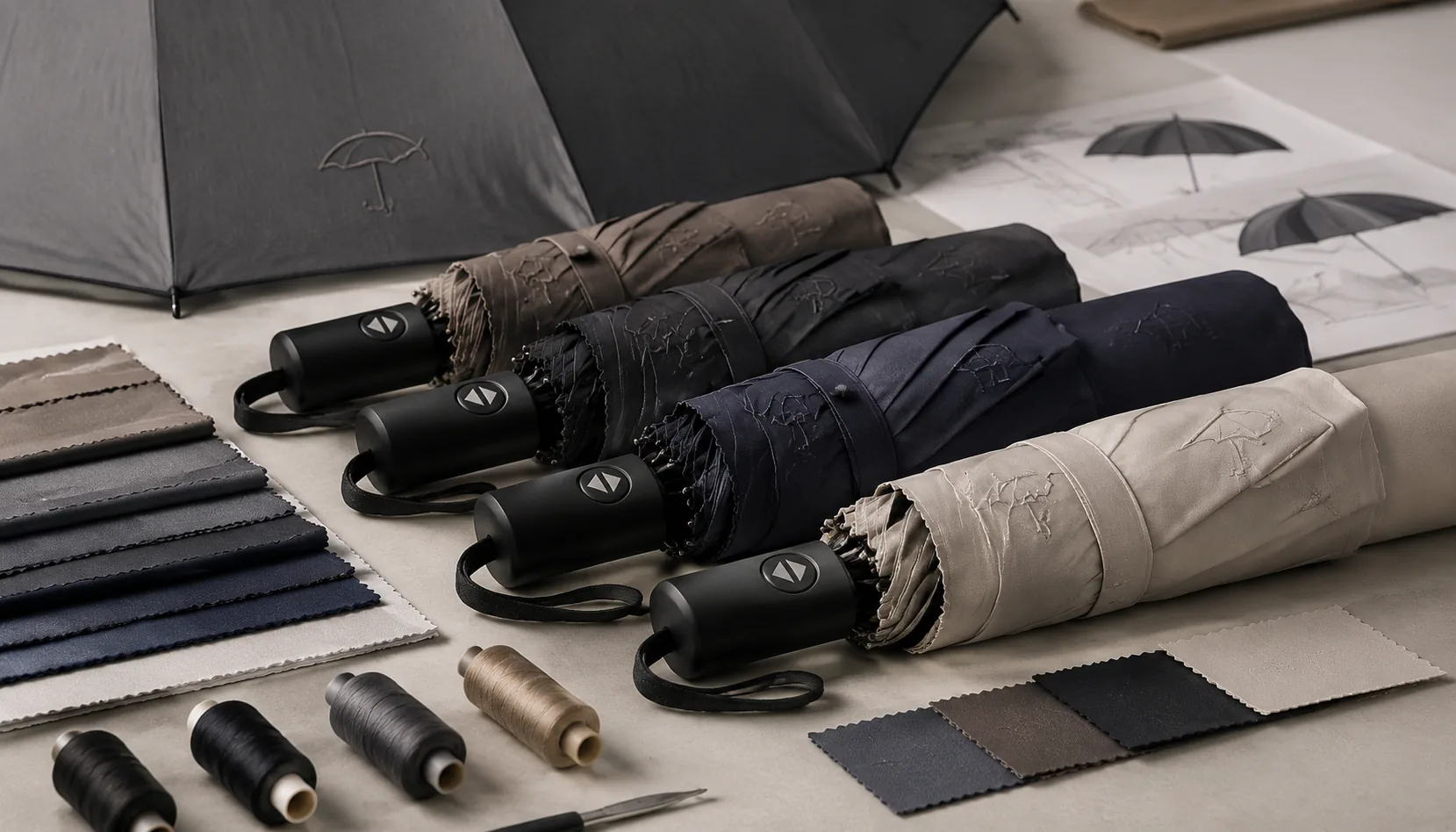
Tone-on-Tone Umbrella Logos for Premium Retail Branding
Use tonal logo printing to create premium umbrellas with controlled contrast, fabric choices, QC checks, and repeatable ...
Read More »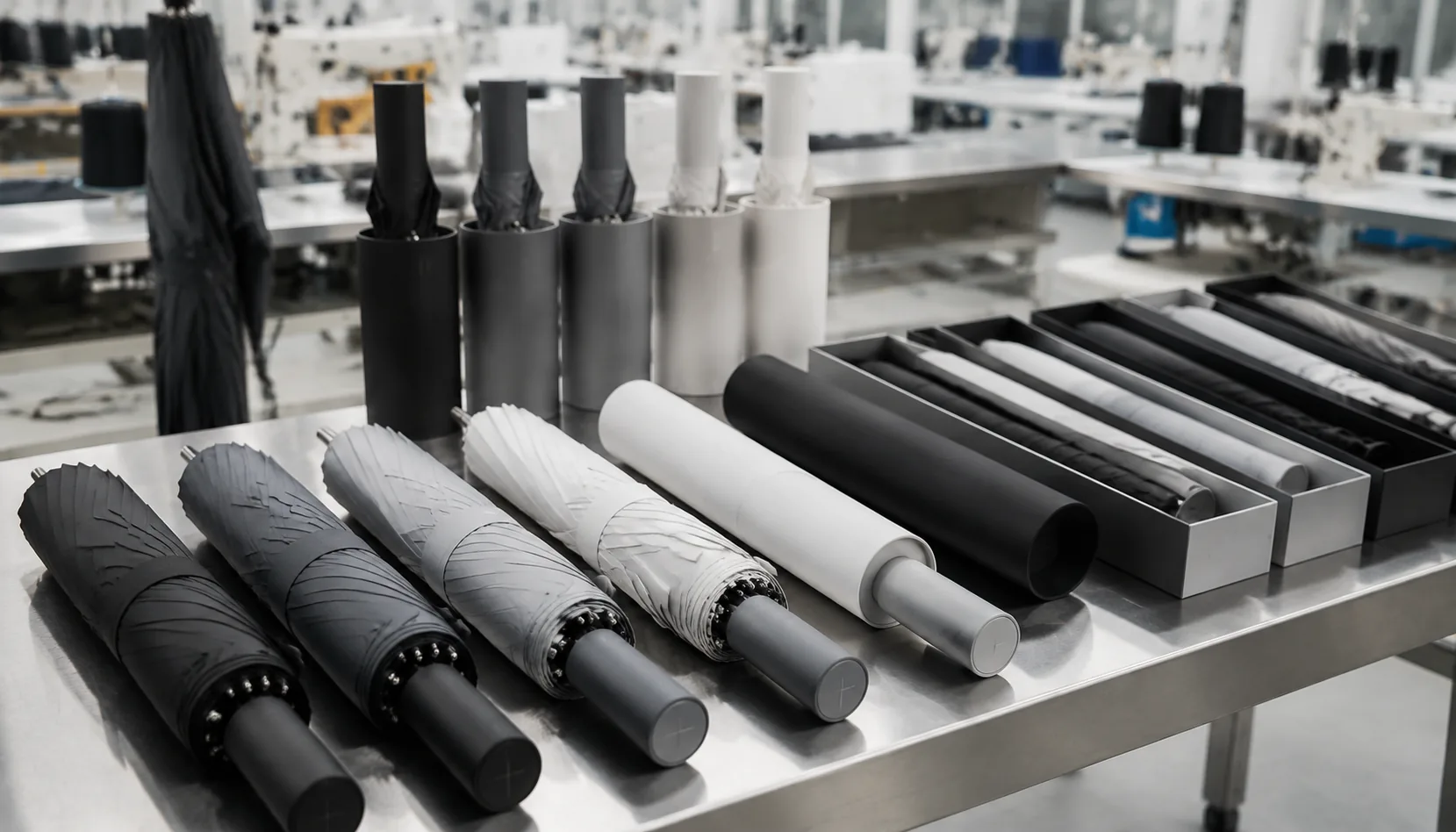
Tone-on-Tone Umbrella Branding for Premium Retail Lines
Use tone-on-tone umbrella branding to create premium retail programs with controlled logo contrast, fabric choices, samp...
Read More »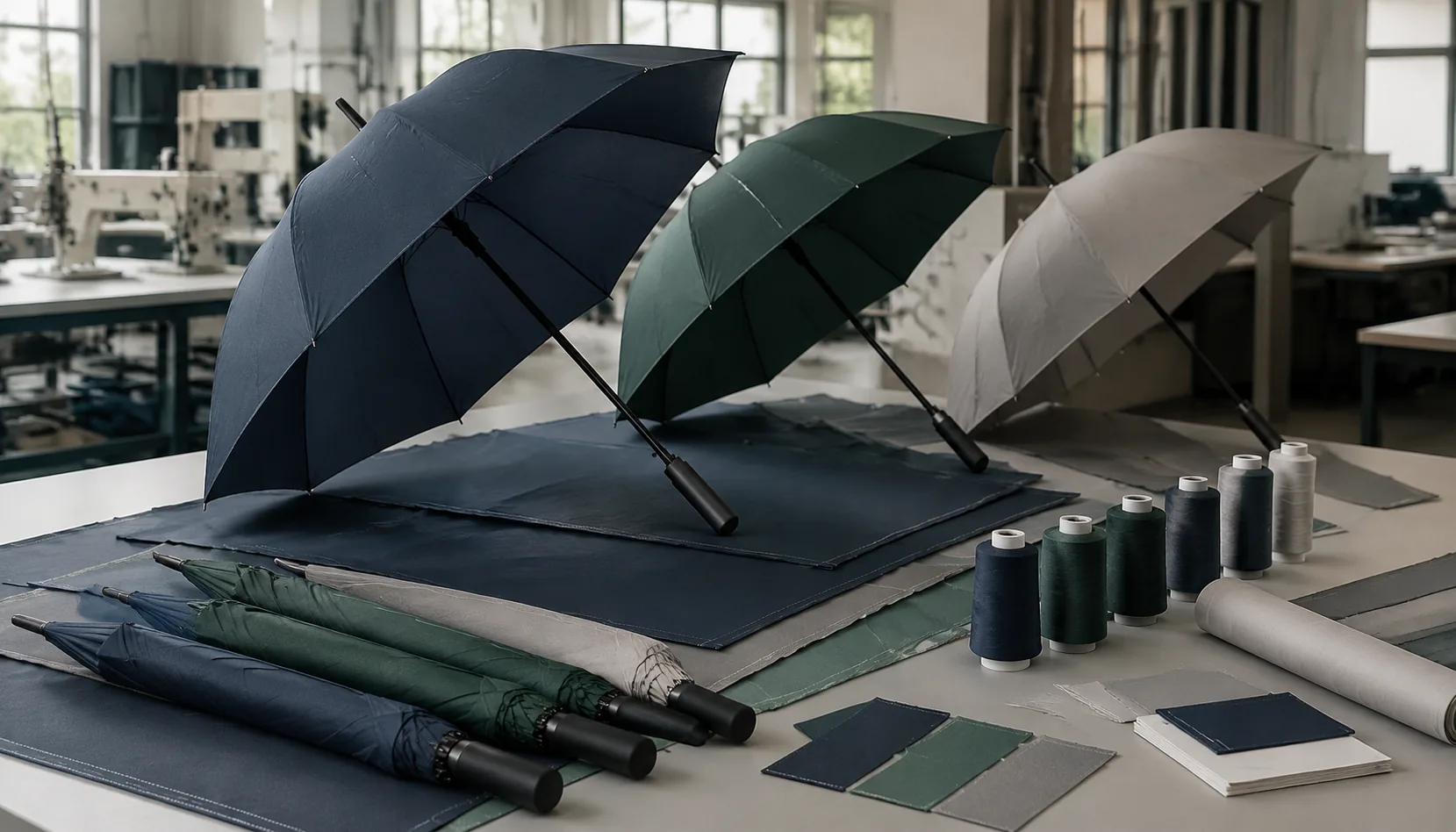
Subtle Tone-on-Tone Umbrella Branding for Premium Buyers
Plan premium low-contrast umbrella branding with fabric, ink, and QC specs that keep logos subtle, repeatable, and retai...
Read More »