Inside the Automatic Umbrella Spring: Designing for Durability
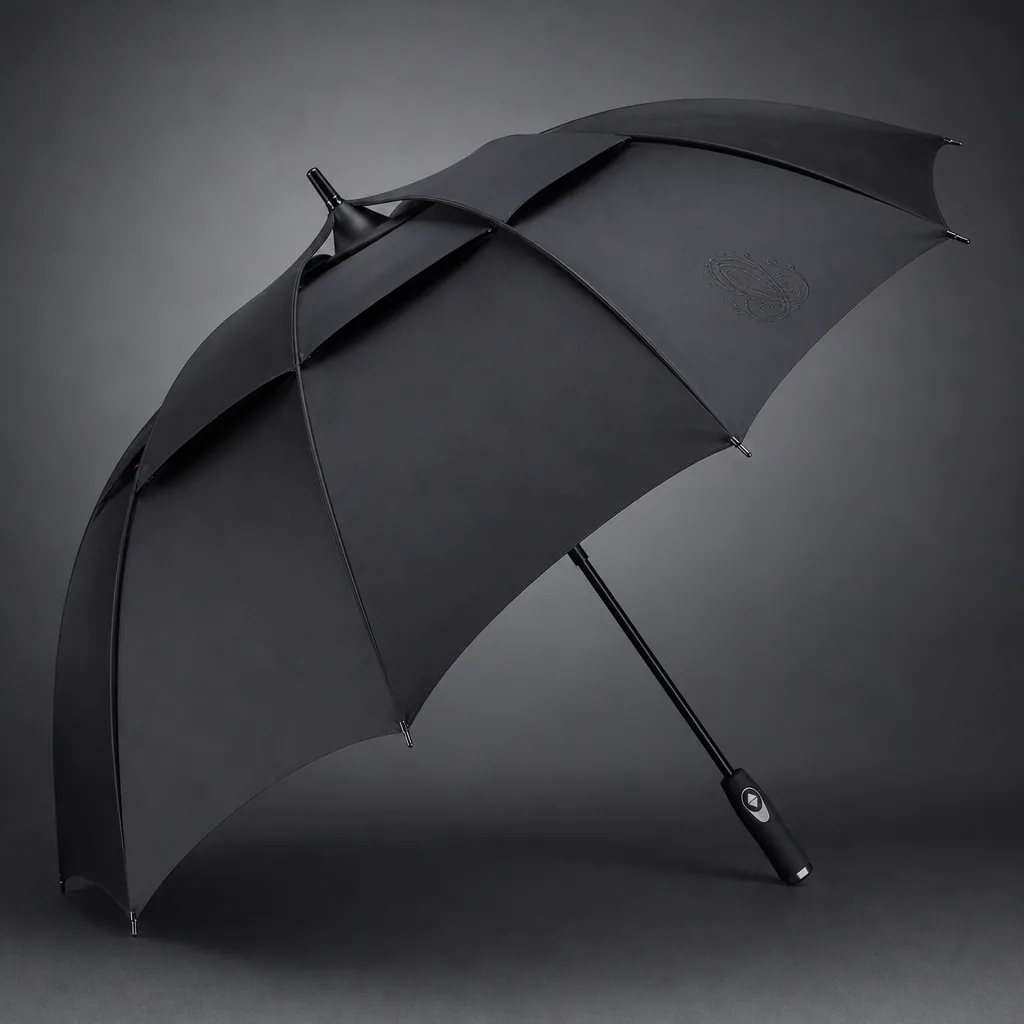
When an auto-open umbrella starts failing, the problem usually shows up as slow deployment, weak snap-back, or a runner that wears out long before the canopy does. At the factory floor level, durability comes down to how the automatic umbrella spring, runner geometry, and locking surfaces work together under repeated load. Buyers who spec these parts carefully avoid warranty returns, loose opens, and the kind of cycle-life problems that only appear after real use.
How the auto-open mechanism works
The auto-open system is a simple energy storage and release train, not magic. When the canopy is closed, the automatic umbrella spring is compressed inside the shaft or handle assembly, usually around a steel rod, plunger, or spring cartridge tied to the runner. Press the button, and the latch releases the stored force in one shot. That force moves the shaft components upward, drives the runner toward the open stop, and pushes the ribs into their locked position. In a well-built frame, the energy path is direct: button, sear, spring, plunger, runner, rib joints, then canopy tension. If any one of those interfaces has excessive play, the opening action becomes sluggish or inconsistent, which is where auto open umbrella reliability starts to drop.
What matters on the factory floor is not just whether it opens once, but whether it opens the same way after thousands of cycles. Umbrella mechanism durability depends on spring wire diameter, heat treatment, surface finish, and how cleanly the latch engages. A weak spring loses force too early; an over-stiff one can slam the runner hard enough to wear the detent or deform the plastic trigger parts. We usually see umbrella spring failure at the ends first: fatigue cracks at the coil transitions, rust pitting on low-grade steel, or a bent plunger caused by off-center load. That is why stainless spring steel, tighter guide tolerances, and better lubrication matter more than cosmetic upgrades.
The button release has to be crisp, but not violent. If the trigger travel is too short, the latch may slip under vibration; if it is too long, the user feels drag and assumes the umbrella is cheap. Good auto-open design balances spring preload with runner travel so the canopy starts moving cleanly and finishes fully locked without a second push. On 21-inch and 23-inch folding frames, that balance is especially sensitive because there is less shaft length to absorb impact. In production, we check open force, latch retention, and repeat cycles together, because a mechanism that looks fine at first can still show umbrella spring failure after repeated wet-dry exposure, salt mist, or 5,000 to 10,000 actuations.
Common failure modes
The first failure mode is spring fatigue, and it usually starts with a weak wire spec, poor heat treatment, or too much preload in the automatic umbrella spring. On the factory floor, I see it when the spring loses snap after a few thousand cycles, then the button starts feeling mushy and the canopy opens halfway instead of fully. A good auto open umbrella reliability target is not just “it opens,” but that the spring still returns with enough force after repeated compression, humidity exposure, and salt-spray conditions. For umbrella mechanism durability, the spring steel needs consistent temper, clean coil geometry, and enough clearance inside the tube so it does not scrape and wear itself down. Cheap zinc-plated parts often fail early because the coating cracks at the coil ends and corrosion starts right there.
Button cracking is the second common problem, and it is usually a housing issue rather than a spring issue. If the release button is molded from brittle ABS or thin PP, the impact from repeated thumb presses will create stress whitening first, then a split at the hinge or latch wall. Once that happens, the automatic umbrella spring can still have force, but the lock cannot hold it, so the umbrella pops open unpredictably or will not reset. In our standard practice at ZheBrella, we check button wall thickness, pin engagement depth, and mold flash because even 0.2 to 0.3 mm of mismatch can create a bad feel and premature cracking. Strong umbrella mechanism durability depends on the button, latch, and spring working as one system, not as separate parts.
Runner binding is the failure mode that gets ignored until users complain about a sticky open-and-close action. The runner should travel smoothly along the shaft with controlled friction; if the interior tube is rough, stamped poorly, or contaminated with nylon dust, the spring energy gets wasted on drag instead of opening force. That is where umbrella spring failure often gets misdiagnosed, because the spring looks fine but the runner is catching on a burr, bent rib joint, or oversized rivet head. On auto open umbrella reliability tests, I look for consistent travel under repeated cycling, because a runner that binds at 21" and 23" sizes will usually worsen on longer 27" or 30" frames where the load is higher. A dry film lubricant helps, but only after the metal parts are deburred and aligned correctly.
Cycle-life testing on the line
For an automatic umbrella spring, the number that matters is not the brochure claim, it is the cycle count we can repeat without the mechanism changing feel. On the line, a decent target for a retail-grade auto-open umbrella is 3,000 open/close cycles with no spring breakage, no latch slip, and no loss of snap force. For higher-end models, especially 23" and 27" umbrellas with fiberglass ribs and a double-canopy vent, we push closer to 5,000 cycles before we call the design stable. ZheBrella’s standard practice is to test the complete shaft and runner assembly, not just the spring by itself, because umbrella mechanism durability usually fails at the interface points first. If the handle button starts sticking, the sear wears, or the runner hesitates under load, the spring is only part of the problem.
A useful test is simple: run repeated opens and closes at a controlled speed, then check three things after every few hundred cycles, which are spring force, lock engagement, and rebound consistency. A good automatic umbrella spring should still return the runner cleanly after the canopy is loaded by wind or a wet fabric pack-down. When the force drops too fast, you get the classic umbrella spring failure pattern: weak pop-open action, partial deployment, then manual intervention from the user. That is where auto open umbrella reliability falls apart in the market, because customers do not care whether the spring technically survived if the umbrella stops opening with authority. We usually pair cycle testing with heat and humidity exposure, since plated carbon steel and low-grade stainless can behave very differently after sweat, salt air, or tropical warehouse storage.
The pass/fail bar should be set by use case, not by wishful thinking. A promotion umbrella for light city use may be acceptable at 2,000 to 3,000 cycles, but a travel or golf umbrella should be designed around 5,000 plus cycles, with the spring still delivering a strong, consistent throw. For manual-open styles, the spring is less stressed, but once you move to auto-open or auto-open-close systems, the whole mechanism has to absorb repeated shock without loosening the ferrule, bending the shaft, or chipping the plating. Good umbrella mechanism durability also depends on spring wire diameter, heat treatment, and lubrication, because a spring that feels strong on day one can still fail early if the temper is uneven. In practice, the best target is a design that keeps its opening force stable enough that umbrella spring failure shows up in test before it shows up in customer complaints.
Material and tolerance choices that last
The automatic umbrella spring is not a generic coil you can source by diameter alone. For long service life, the steel needs a controlled carbon range, consistent hardening, and good surface finish so the coils do not take a permanent set after repeated compression. In practice, we look for spring steel with enough elastic recovery to survive thousands of cycles without losing snap force, then match that to the shaft and runner geometry instead of forcing a loose off-the-shelf part into the mechanism. If the spring is too soft, auto open umbrella reliability drops fast because the release force becomes inconsistent; if it is too hard, the trigger load rises and users feel a sticky release. That balance is where umbrella mechanism durability is won or lost, especially on low-cost umbrellas that see daily use in bags, cars, and offices.
Fit tolerance matters as much as material. The inner diameter of the automatic umbrella spring, the wire thickness, and the shoulder length all need to hold tight process windows so the spring seats concentrically and does not rub the shaft wall. Our standard practice is to keep critical mating parts within a narrow tolerance band and to verify compression travel under load, because a spring that looks fine on paper can still bind once the ferrule, slider, and button stack up. Most umbrella spring failure starts as a tolerance problem, not a dramatic breakage event: the spring drags, the opening speed slows, and the mechanism starts chewing itself. Once that wear begins, the umbrella loses crisp deployment and the customer reads it as poor quality, even when the canopy and ribs are fine.
Material choice also has to reflect the actual duty cycle. A small promotional umbrella used a few dozen times a year does not need the same spring reserve as a 23-inch auto open umbrella sold for commuter use, where repeated one-hand operation creates constant impact loads. We specify spring wire and heat treatment to match the opening force target, then test for set retention after repeated compression so the opening stroke stays consistent. That is the real measure of umbrella mechanism durability: not whether the first open feels strong, but whether the force curve remains stable after months of use. If the spring loses tension or the ends deform, the canopy may still deploy, but it will do so with hesitation, and that is usually the first visible sign of umbrella spring failure in the field.
Spec'ing a reliable automatic umbrella
The first thing to pin down is not the canopy fabric; it is the automatic umbrella spring package inside the handle and center shaft, because that is where auto open umbrella reliability usually fails. Ask the factory what wire diameter, steel grade, and heat treatment are used for the automatic umbrella spring, and whether the mechanism is a simple auto-open or an auto-open-close build with separate compression and return springs. For a 23" or 27" frame, I want a clear target for opening force, closure force, and repeated-cycle wear, not just a statement that it "opens smoothly." Require 5,000 to 10,000 open-close cycles on production parts, not hand-picked samples, and check for spring set, button rebound, latch slippage, and rivet loosening. If the supplier cannot tell you where umbrella mechanism durability is limited, they probably have not tracked umbrella spring failure in real use.
Buyers should ask for tests that match the mechanism, not generic umbrella testing. A good spec includes button actuation after low-temperature conditioning, closure after humidity exposure, and cycle testing with the canopy loaded, because fabric tension changes the load path. For wind resistance, ask whether the rib set is fiberglass or steel, whether the frame is 8K, 10K, or 16K, and whether the auto-open umbrella reliability claim is based on a vented double-canopy or just a marketing line. On the floor, we see failures from weak button springs, worn pawls, and poor clearance around the trigger housing, not from the canopy print. ZheBrella’s standard practice is to separate mechanism tests from fabric checks, then verify samples under AQL 2.5 so the spring issue does not get hidden by a good-looking canopy.
The purchase order should spell out acceptance criteria in numbers: minimum cycle count, maximum opening time, allowable button play, salt-spray hours if any steel parts are exposed, and the exact pass/fail limit for umbrella spring failure. If you want a promotional umbrella for retail or events, ask for a pre-production sample, a sealed golden sample, and a pilot run of at least 100 to 300 pieces before mass production. For POE, EVA, or pongee 190T/210T canopies, the fabric is secondary to whether the frame returns cleanly after repeated use. Also ask for packaging and transit tests, because a spring can be fine in the factory and fail after carton compression or rough FOB handling. A reliable supplier should be able to quote lead time in days, not vague promises, and explain exactly which parts are covered by replacement if the mechanism slips or jams in service.
Frequently Asked Questions
Why do automatic umbrellas break so often?
They concentrate stored energy in a spring and release it through small plastic parts, so the spring or button is the usual failure point. Quality spring steel, good tolerances, and cycle-life testing make the difference between a 1,000-cycle and a 5,000-cycle mechanism.
How many open-close cycles should an umbrella survive?
A solid auto-open mechanism should pass 3,000-5,000 cycles in testing. Ask the factory for their cycle-test target and AQL sampling on the mechanism before committing to bulk.
How many opening cycles should a reliable auto-open umbrella mechanism pass?
For retail-grade products, buyers often ask for 5,000 to 10,000 open-close cycles on the mechanism. For higher-end programs, 10,000+ cycles is a common target if the spring, runner, and locking parts are properly matched.
What part fails first in most automatic umbrella mechanisms?
The most common failure points are the spring losing tension, the runner wearing out, or the latch not engaging cleanly. In practice, poor material selection and weak tolerances usually cause failures before the canopy or shaft does.
What should a buyer specify to improve umbrella spring durability?
Ask for the spring wire material, wire diameter, heat treatment, and cycle test standard. It also helps to specify the runner material, corrosion resistance requirements, and whether the mechanism needs salt-spray or fatigue testing for your target market.
Looking to Launch Your Custom Umbrella Line?
ZheBrella is a Zhejiang-based OEM/ODM umbrella manufacturer with 17 years of export experience. Free design, low MOQ from 100 pieces, windproof construction, full-color print.
Get Free Quote Now »People Also Search For
Related Articles
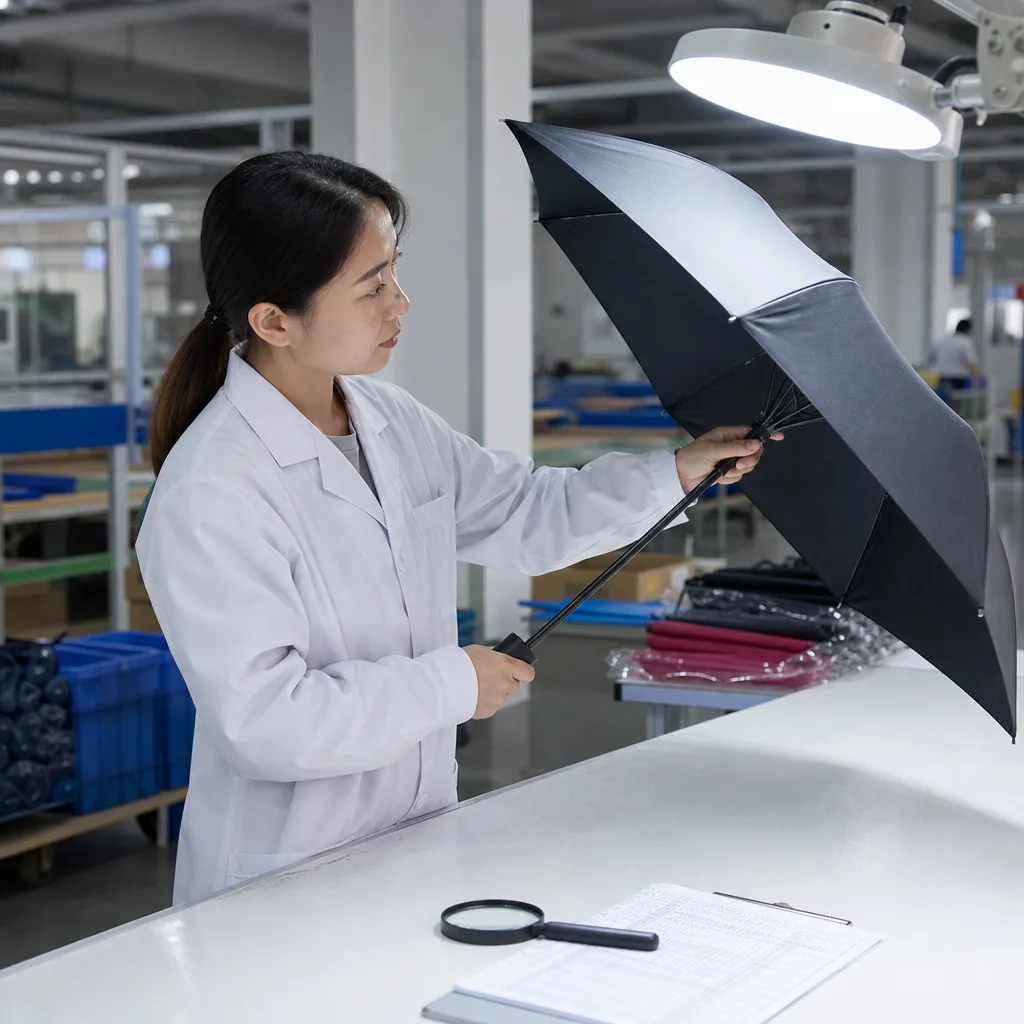
How Umbrella Factories Build Durable Auto-Open-Close Models
See how auto-open-close umbrellas are engineered, tested, and inspected so buyers can specify durable mechanisms and rea...
Read More »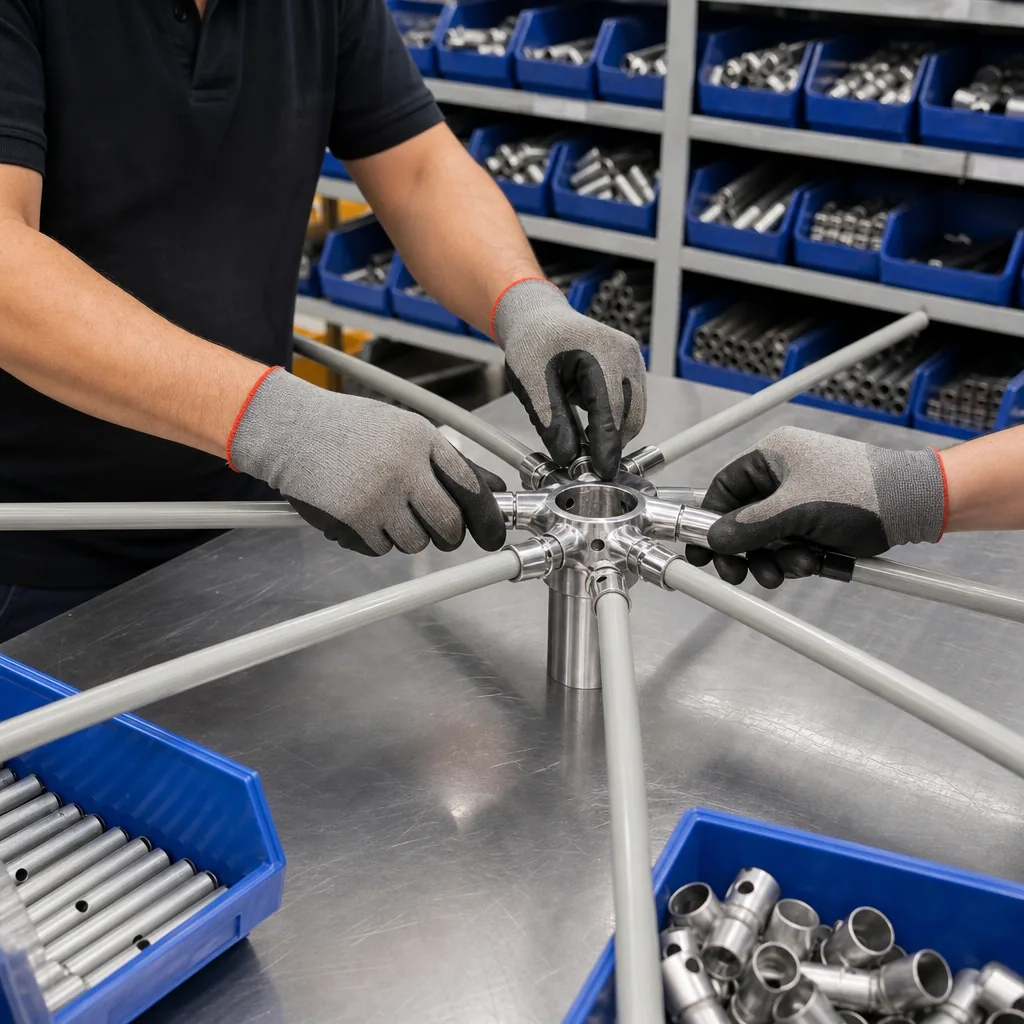
Umbrella Opening Cycle Tests for Durable OEM Mechanisms
See how factories test manual and auto-open umbrellas for cycle life, spring stability, and field reliability before bul...
Read More »How Umbrella Factories Test Ribs, Springs, and Openers
See how factories test ribs, springs, and openers before shipment, and what buyers should ask for to reduce failures in ...
Read More »