Umbrella Opening Cycle Tests for Durable OEM Mechanisms
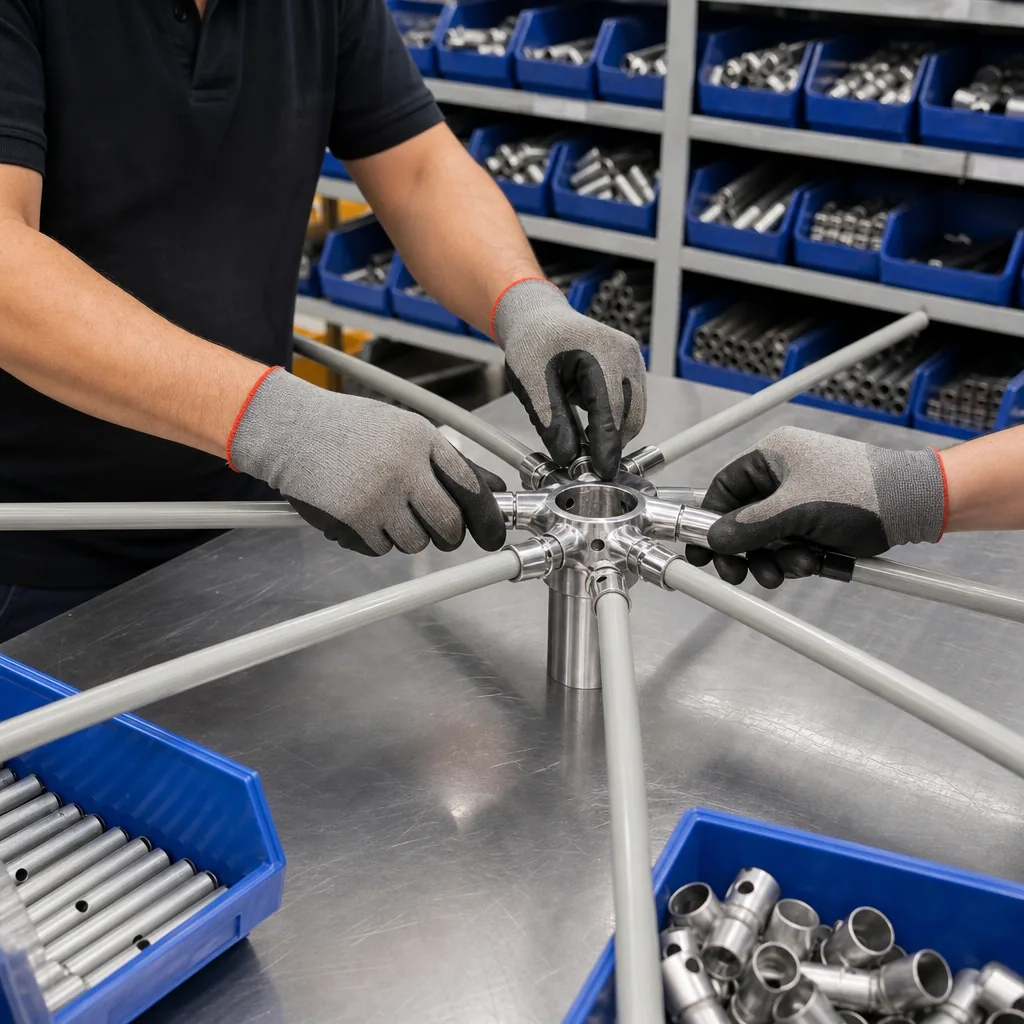
OEM buyers rarely find mechanism failures in the sample phase; they show up after thousands of opens, closes, and carts of humid warehouse handling. At our factory in Songxia, we treat the umbrella opening cycle test as a build-quality check, not a lab formality, watching spring tension, latch wear, shaft alignment, and trigger feel across repeated cycles. The goal is simple: catch weak mechanisms before they become warranty claims in bulk shipment.
Which Opening Mechanisms Need Different Test Protocols
Manual umbrellas are the simplest to test, but they are not the easiest to get right. The user is providing all the force, so the real failure points are the runner stop, stretch in the stretcher, and wear at the shaft button or ferrule interface. In an umbrella opening cycle test, a manual stick can often tolerate a broader pass/fail window because the spring load is low and the travel path is short. That does not mean it is low risk; cheap steel runners can still burr the channel and start sticking after a few hundred cycles. For OEM umbrella quality test planning, I look at whether the canopy reaches full lock without over-travel, whether the runner returns cleanly, and whether the release point is consistent after repeated use. If the mechanism feels rough in hand after 300 to 500 cycles, it usually becomes a complaint in the field long before the fabric fails.
Auto-open systems need a different protocol because the spring does the work and the shock load is much higher at full release. The runner accelerates fast, so spring fatigue, latch wear, and shaft alignment matter more than they do on a manual frame. Auto-open mechanism durability should be checked with controlled cycle speed, not just raw counts, because a fast snap can hide a marginal latch that will fail under real use. I also separate runner spring testing from canopy testing: the spring can still feel strong while the release geometry is already wearing out. On a production line, the better target is not just total cycles but consistent opening force, clean lock engagement, and no partial opens after repeated compression. A good umbrella opening cycle test for auto-open models will also inspect button return and whether the user has to fight the mechanism to reset it.
Compact folding styles usually need tighter durability control than straight umbrellas because they pack more moving parts into a shorter frame. A 3-fold or 5-fold design has more hinge points, more rivet interfaces, and more chances for misalignment in the slider, stretcher, and ribs, so compact umbrella reliability is often limited by geometry before material strength. That is why a high-cycle test on a folding frame should include full open-close sequences, not just open-only counts, and should track side play in the shaft and rib pivots as the test progresses. In practice, I would give compact autos a stricter acceptance threshold than a straight stick umbrella at the same cycle count, because the same wear shows up sooner under tighter tolerances. On our factory floor at ZheBrella, we treat the compact frame as a system test: spring, runner, latch, and rib stack all have to stay aligned or the mechanism starts dragging long before fabric wear becomes visible.
The Minimum Cycle Tests Buyers Should Request
Buyers should not accept a simple count of how many times an umbrella opens. A proper umbrella opening cycle test has to run the full open-close sequence, then check whether the frame still locks cleanly, the button returns with the same force, and the shaft telescopes without grinding. For compact umbrella reliability, I usually expect qualification bands of 1,000 to 3,000 cycles for standard orders and 5,000 cycles for higher-spec OEM programs, especially when the frame uses lighter alloy shafts or a crowded auto-open mechanism. Failure is not just “it still opens” or “it no longer opens.” I define failure as a delayed trigger, incomplete canopy deployment, broken lock engagement, a button that sticks, or visible play in the shaft that grows after repeated cycling.
The lock engagement check matters because many umbrellas start failing before the canopy actually tears. During runner spring testing, the spring should hold the runner in the locked position without slipping under repeated impact, and the release should not require a second press or a harder thumb push after cycling. On auto-open styles, button response consistency is the real risk area: the first press may still fire, but the internal return spring can weaken, causing partial release or slow recoil. An OEM umbrella quality test should record whether the latch surface is rounding off, whether the ribs seat fully at each open, and whether the release travel changes over time. If the mechanism needs hand assistance by cycle 500, that is already a failed design, not a pass with minor wear.
Shaft telescoping wear is often ignored, yet it is one of the clearest indicators of whether the umbrella will survive actual use. After repeated open-close cycling, the inner tube should still slide without galling, the stop positions should remain positive, and the assembled shaft should not develop rattling or ovalized wear marks at the joints. For a qualification test, factories typically separate lightweight promotional models from retail-grade frames: a 1,000-cycle screen may be acceptable for low-cost manual umbrellas, while 3,000 to 5,000 cycles is a more realistic bar for durable OEM programs and better compact umbrella reliability. The test result should be rejected if the shaft binds, the lock misses, the button rebounds inconsistently, or the frame opens with reduced tension, because those are the failure modes customers actually notice in the field.
How Frame Materials Affect Mechanism Fatigue
On an umbrella opening cycle test, the first thing that fails is rarely the canopy. It is usually the moving hardware: the runner track, spring legibility, and the little friction points where the stretcher tips bite into the frame. Fiberglass ribs tolerate repeated flex better than plain steel because they recover instead of taking a permanent set, but fiberglass also changes how the load is transferred into the hub and runner. Steel ribs feel stiffer at the bench, yet they can concentrate fatigue at the pivot holes if the stamping and riveting are sloppy. In practice, shaft stiffness matters as much as rib material, because a soft shaft lets the whole mechanism twist, which raises side load on the spring and accelerates wear in an OEM umbrella quality test.
The 8K versus 16K layout changes the stress map more than most buyers expect. An 8K frame has wider rib spacing, so each stretcher sees a larger opening angle and a harsher snap at full deploy, especially on auto-open models. A 16K frame spreads the load across more ribs, which can reduce peak force on the runner spring, but only if the joint friction is controlled and the shaft tolerances are tight. ZheBrella typically checks this with runner travel and spring preload because a weak spring gives slow opening, while an over-stiff spring punishes the latch and push-button housing. For compact umbrella reliability, that balance matters more than raw cycle count on paper.
Double-canopy windproof umbrellas and large golf frames put a different kind of demand on the mechanism. The vented top reduces inversion risk, but the extra canopy layer adds drag and can increase the return force on the runner during closure. On a 30-inch golf frame, the longer shaft and wider spread mean more leverage at the joints, so the auto-open mechanism durability target has to account for torsion, not just vertical compression. In an umbrella opening cycle test, I would expect a well-built steel-and-fiberglass hybrid to survive more cycles than an all-steel frame if the spring steel is properly tempered and the runner channel is polished. For OEM buyers, the real signal is whether the mechanism still opens cleanly after repeated cycling with wet fabric and dust, because that is where bad friction design shows up fast.
Common Failure Modes Found During Reliability Testing
The failures that show up first in an umbrella opening cycle test are usually spring weakening and runner drag, not dramatic breakage. A good steel spring or tempered wire spring should keep the same snap after thousands of cycles; when it starts to soften, the canopy opens slower, the lock feels shallow, and the auto-open mechanism durability drops fast. Runner jamming often comes from poor tube finish, burrs, or inconsistent lubrication, especially on compact umbrella reliability work where smaller diameters leave less tolerance for slop. Inspectors should record the cycle count at first change in opening force, the measured spring free length, runner travel distance, and any increase in actuation force. Photos should show the runner path, the latch face, and any scuffing inside the shaft, because those marks usually point to tooling wear or assembly contamination rather than random field damage.
Misaligned ribs and broken notch connections are usually traceable to geometry and material selection, not just abuse. If a rib is twisted, the canopy will not seat evenly on the stretcher joints, and repeated opening can concentrate load on one side until the notch cracks or the ferrule slips. On 8K and 10K frames, that often comes from inconsistent rib temper, poor rivet setting, or a runner hole that was punched off-center during tooling. In our standard factory checks at ZheBrella, we measure rib length, socket clearance, and rib-to-rib symmetry before and after the umbrella opening cycle test so we can separate design defects from assembly drift. Inspectors should photograph each broken notch in close-up, label the rib position, note the rib material, and record a simple left-right alignment measurement so the failure can be traced back to the exact station.
Rebound issues after repeated use are easy to miss if you only watch whether the umbrella opens. A frame can still deploy while losing lock retention, bouncing partially closed, or failing to seat fully after the canopy reaches end travel. That usually means the spring rate is drifting, the latch angle is wrong, or the runner and shaft surfaces are wearing unevenly. For OEM umbrella quality test reporting, inspectors should log open-to-lock distance, rebound height, the number of cycles to first partial close, and any visible deformation at the notch, rib tip, or spring seat. Photographs need to include a full-frame view, a close-up of the lock interface, and a scale reference next to damaged parts. Without those measurements, you cannot tell whether the root cause is tooling tolerance, poor heat treatment, or a bad material lot.
How to Turn Test Results Into Better Production Control
If you want real control over mechanism quality, put the umbrella opening cycle test into the PO, not into a vague email thread. Write the clause around the exact mechanism: manual, auto-open, or auto-open-close; specify the cycle count, the load condition on the runner spring, and the failure definition. For example, the sample passes only if it completes the agreed number of open-close cycles without rib cracking, runner slippage, button failure, canopy inversion, or loss of opening force beyond the agreed limit. That gives procurement something enforceable and gives the factory a target instead of guesswork. For OEM umbrella quality test control, I also want a pass-fail standard stated in plain terms, with no “should be acceptable” language. At ZheBrella, we treat that as a production gate, because if the spec is fuzzy, the factory will optimize for shipment volume instead of mechanism life.
The second control that matters is retention samples from mass production. Keep sealed golden samples from the first approved lot, then pull comparison samples from later runs so you can see whether the runner spring testing results are drifting as tooling wears or sub-suppliers change. This is what protects compact umbrella reliability in practice, especially on 21-inch and 23-inch models where small changes in spring rate or rivet finish show up fast in the field. Pair that with AQL 2.5 inspections on appearance, dimensions, and functional checks, and you catch defects before they become warranty claims. Buyers who do this usually protect launch lead times too, because a bad mechanism lot discovered at the warehouse can delay a retail rollout by weeks. A written test clause, retention samples, and AQL 2.5 together are far cheaper than airfreight rework and customer replacements.
Frequently Asked Questions
Is auto-open-close always less durable than auto-open only?
Not always, but auto-open-close systems are mechanically more complex and usually need stricter cycle testing. More springs, locks, and moving joints create more failure points if tolerances or lubrication are inconsistent.
Should opening cycle tests be done before or after salt spray or humidity testing?
Both sequences can be useful depending on the use case. For resort, coastal, or rainy-market programs, a factory may run corrosion or humidity exposure first and then repeat cycle tests to confirm the mechanism still locks and releases correctly.
What cycle count do OEM umbrella buyers usually request for opening tests?
For standard programs, many buyers ask for 3,000 opening cycles on manual umbrellas and 5,000 cycles on auto-open models. For premium or promotional lines, some specifications go to 8,000 cycles or more, depending on the frame and spring design.
Which component usually fails first in an umbrella cycle test?
The most common weak points are the runner spring, push-button assembly, and the joint area near the shaft or stretcher rivets. If the canopy still opens but does not lock cleanly after repeated cycles, the spring stability spec usually needs to be tightened.
Can cycle testing be added to a pre-shipment inspection for OEM orders?
Yes. A common setup is to test 1-3 sample pieces per style before carton release, which usually adds 1-2 business days if the factory already has a test bench. If a buyer requires long-run endurance data, full validation can take several days longer depending on the target cycle count.
Looking to Launch Your Custom Umbrella Line?
ZheBrella is a Zhejiang-based OEM/ODM umbrella manufacturer with 17 years of export experience. Free design, low MOQ from 100 pieces, windproof construction, full-color print.
Get Free Quote Now »People Also Search For
Related Articles
Umbrella Frame Torque Testing for Smooth Opening and Closure
Learn how torque, spring force, and cycle testing keep auto-open and manual umbrellas smooth, safe, and consistent in ma...
Read More »
Umbrella Frame Tension Specs for Stable Opening and Closure
Learn how frame tension, runner friction, and spring force affect smooth opening, closure, and return rates in OEM umbre...
Read More »Umbrella Fatigue Testing Protocols for OEM Durability Approval
Learn which fatigue tests matter for umbrella OEM orders, from opening cycles to rib-joint wear, with pass criteria buye...
Read More »