Umbrella Fatigue Testing Protocols for OEM Durability Approval
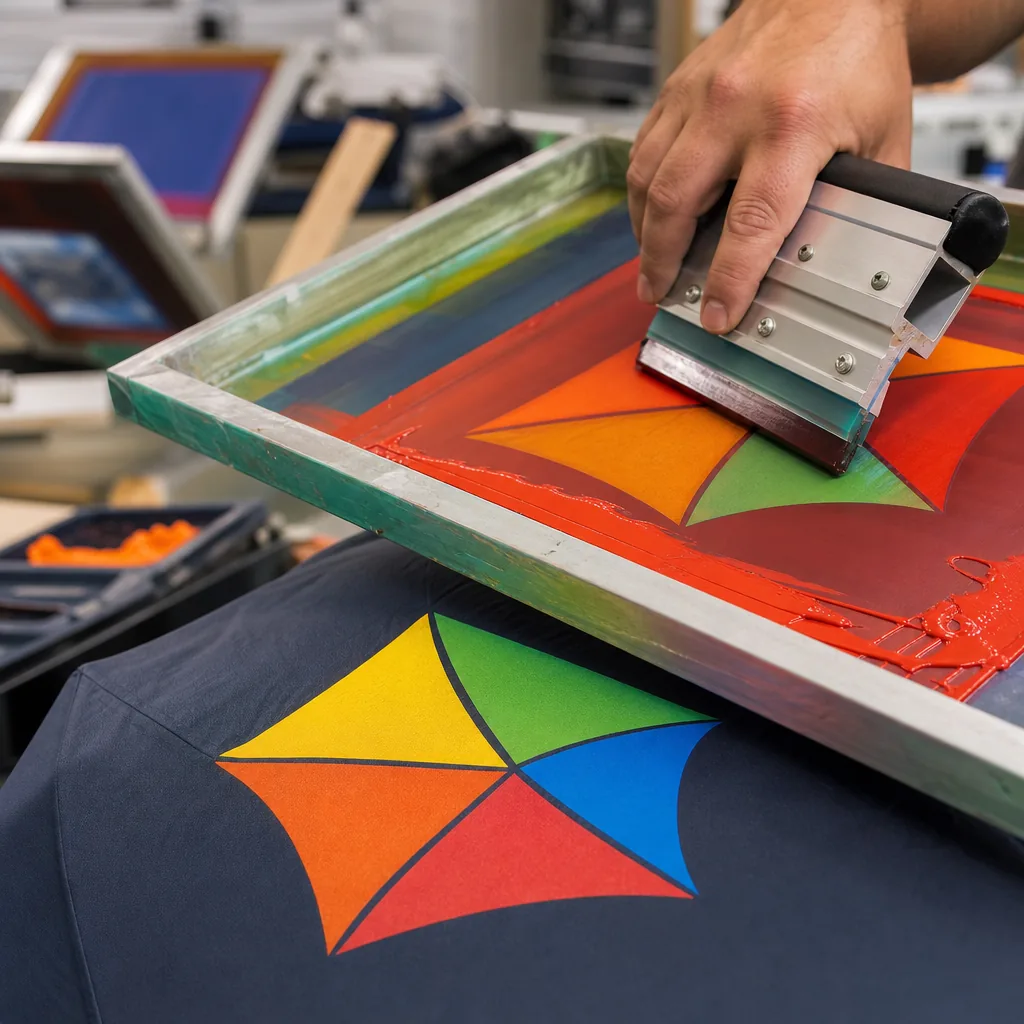
When an OEM umbrella passes a showroom check but fails after a few hundred opens, the real cost shows up in claims, chargebacks, and lost retail confidence. On our Songxia production floor, umbrella fatigue testing starts with repeatable open-close cycling, then checks rib-joint play, runner wear, spring set, and canopy attachment under load so buyers can lock pass criteria before tooling approval.
Why Fatigue Testing Matters Before Mass Production
Most repeated-use failures start in the frame, not the canopy. A 190T pongee or POE cover may still look retail-ready while the umbrella is already failing at the stress points: rib-to-stretcher joints loosen, the runner wears on the shaft, springs lose force, and the top notch cracks around the shaft hole. That is why umbrella fatigue testing should be completed before mass-production approval, not after bulk fabric cutting. Open-close cycling on a 21-inch 8K compact, 23-inch straight umbrella, or 27-inch golf frame shows whether the structure survives daily use instead of merely passing first-piece inspection. It also catches problems that carton drop tests do not: a frame can arrive intact, then start sticking, misfiring, or deforming after only 200 to 500 consumer cycles. For OEM umbrella quality, that matters because frame fatigue usually triggers warranty claims and retail returns well before fading, leakage, or visible canopy wear.
The highest-risk failure points are in the mechanism stack, where small component weaknesses multiply over hundreds or thousands of actuations. In cycle testing umbrellas, steel ribs may pass static load checks yet still wear out at the joint if pin finishing is poor and holes begin to oval; fiberglass ribs recover better after flex, but low resin quality can split rib ends during repeated cycling. Auto-open and auto-open-close models carry higher risk because runner wear, spring force, latch geometry, shaft lock, and safety catch must stay consistent through the full test sequence. At the PP sample stage, buyer approval should require fatigue data alongside wind testing, corrosion checks, and AQL 2.5 inspection standards. If rib joint durability drops, the runner starts binding, or the top notch fractures during validation, the factory should change tooling, pin specs, or material selection before production starts. That correction is far cheaper than absorbing replacements, chargebacks, and return exposure on a 5,000- or 50,000-unit FOB or DDP order.
Core Test Methods for Frames, Runners, and Springs
Umbrella fatigue testing should begin with cycle targets matched to frame type, because wear usually appears in the mechanism before any visible break. For 21 in. to 23 in. folding frames, use 3,000 open-close cycles as the minimum engineering screen for manual styles and 5,000 cycles for auto-open or auto-open-close models, where the spring pack, latch, and runner absorb higher impact loads. For 27 in. and 30 in. straight or golf frames, 1,500 to 2,500 cycles is the normal approval range, with wind-load checks inserted more often between intervals. During cycle testing umbrellas, pause every 250 to 500 cycles and record runner travel force, spring rebound speed, shaft straightness, top-notch engagement, and closed-lock first-pass catch rate. A sample that only locks after the shaft is twisted should be treated as an early functional failure, not cosmetic variation. For OEM umbrella quality approval, these interval records are more useful than a single pass-fail result because they show when wear starts and how much production margin the design actually has.
The first failures usually appear at the moving joints: stretcher-to-rib rivets, runner hinge points, and the top-notch seat. Those locations should be checked each interval for looseness, burr formation, rivet hole elongation, and lock reliability, since they expose rib joint durability problems before a full frame collapse. Steel ribs generally keep their shape better under static load, but after plating wears through they can gall at rivet holes and take a permanent set under repeated side loading. Fiberglass ribs usually recover better over high cycle counts, which is why they are common in windproof 8K and 10K frames rated above 50 mph, but poor resin control or uneven wall thickness can cause splintering near the ferrule or end cap after repeated opening shock. Auto-open mechanism testing should also verify clean spring release, full runner extension without hesitation, and positive latch engagement after low-temperature exposure or dust contamination. On auto-open-close frames, a clear increase in telescopic shaft reset force after 1,000 to 2,000 cycles usually indicates inner-tube tolerance drift or spring misalignment. Final release at AQL 2.5 should show no cracked hubs, loose rivets, spring ejection, lock failure, or canopy centering drift at the agreed fatigue count.
How Construction Choices Change Test Results
Construction choice changes umbrella fatigue testing results more than many OEM buyers expect. An 8K frame puts each rib under a larger share of canopy load, so a 27 inch or 30 inch umbrella usually shows higher peak bending during inversion and snap-back than a comparable 16K frame. A 16K layout reduces per-rib deflection because the canopy is split into sixteen shorter bays, which can improve straight open-close results and apparent rib joint durability. The drawback is mechanical complexity: more stretchers, tips, rivets, and hinge points, so looseness often appears after about 3,000 to 5,000 cycles even when the canopy still opens cleanly. That is why a 27 inch or 30 inch 8K golf frame with thicker fiberglass main ribs can outlast a decorative 16K frame in OEM umbrella quality approval. For cycle testing umbrellas, the lab should log hinge play, runner abrasion, closing-force drift, and lock reliability at fixed intervals, not just record a pass-fail result.
Rib material changes both service life and failure mode. Fiberglass main ribs usually tolerate repeated elastic bending better than painted steel ribs, especially on 23 inch to 30 inch windproof designs tested above 50 mph, while steel is more likely to take a permanent set at the rib elbow or corrode around rivets if salt-spray is part of approval. On 21 inch auto-open-close umbrellas, however, steel stretchers can hold tighter tolerances than low-grade fiberglass, so a hybrid frame with fiberglass main ribs, steel stretchers, and a reinforced runner is often the stronger fatigue choice. Canopy weight also matters: 210T pongee adds more load than 190T, and water-repellent, UV, or two-pass print layers further increase stress on the spring, runner, and latch over repeated cycles. In auto-open mechanism testing, that extra mass typically shows up as slower opening speed, harder rebound at full open, spring-force loss, and earlier notch wear by about 2,500 cycles. Single-canopy umbrellas usually perform better in pure open-close umbrella fatigue testing because they are lighter, while double-canopy vented designs often hold up better in gust loading because the vent reduces pressure spikes that break ribs. The cleanest comparison is the same 8K or 10K frame built as single- and double-canopy versions in both 190T and 210T pongee, then inspected to AQL 2.5 for seam slippage, tip pull-out, crown-cap loosening, and closing-force increase.
Pass-Fail Criteria Buyers Should Put in the Spec Sheet
Put the pass-fail line in the spec sheet before umbrella fatigue testing starts. If you do not, the factory will score results against house practice instead of your approval standard. For structural and functional parts, use zero-failure criteria after the full cycle sequence: 0 broken main ribs or stretchers, 0 detached rib tips, 0 runner cracking, 0 spring misfires, and 0 shaft looseness above 1.0 mm lateral play at full extension. Every tested unit must open and close fully in one motion, lock positively, clear the notch without hang-up, and stay closed without rebound. For 21 inch and 23 inch folding umbrellas, add canopy tension retention: no panel sag that creates visible wrinkling between ribs at full open. For 27 inch and 30 inch straight or golf frames, specify joint stability at the ferrule, top notch, and handle: no visible looseness and no rotation over 3 degrees under hand torque.
Match cycle counts to the product class; one generic standard masks risk. A practical OEM umbrella quality baseline is 3,000 open-close cycles for promotional folding models, 5,000 for better retail compacts, and 8,000 to 10,000 for commuter or golf styles sold as windproof. For auto-open mechanism testing, write the threshold clearly: 0 spring misfires in the tested sample, 0 delayed launches, and 0 cases where the runner stops short of the top notch. Add a separate line for rib joint durability, because wear usually shows there before a rib breaks: 0 rivet pull-out, 0 joint-hole elongation above 0.3 mm, 0 fiberglass splintering, and 0 steel rib kinking. If the umbrella is sold as vented and wind resistant, require 50 mph wind exposure with no inversion damage and full post-wind open-close function. Cosmetic limits should align with incoming inspection and AQL 2.5: accept only minor shaft coating rub, light runner-track polishing, and small handle-socket scuffs; reject visible rust, plating peel, cracked paint at stress points, torn 190T or 210T pongee at rib tips, seam slippage above 2 mm, or haze, stick marks, or stress whitening on POE, EVA, or PVC visible at 80 cm under normal indoor light. Classify any functional failure as critical, cracked parts or structural looseness as major, and minor wear as acceptable only if saleability and service life are unchanged.
How to Use Test Data in Sampling, Pricing, and Lead Times
Use umbrella fatigue testing as a stage gate, not a formality. If a prototype survives a few hand open-close checks but shows rib-tip distortion, runner looseness, or latch play at 500-1,000 cycles, it is still in sampling, not ready for tooling sign-off. Those failures usually trace back to wire diameter, rivet tolerance, spring force, or shaft fit, and they should be corrected before the BOM is frozen. Lock the BOM only after the target cycle count is reached on the exact construction you will buy: the same 21-inch, 23-inch, or larger frame size, the same 8K, 10K, or 16K rib count, the same canopy weight, and the same mechanism. That matters because approval paths differ by design. A straight stick golf umbrella with fiberglass ribs and a manual runner often clears in 1-2 sample rounds. A 3-fold 21-inch auto-open-close umbrella usually needs 3-5 rounds because the shaft, spring, runner, and latch all load each other under repeated use. Build that difference into your sample budget and calendar from the start.
Validation depth should also shape MOQ, pricing, and lead time. If the factory is using an existing 8K or 10K frame with known cycle data, a trial MOQ of 500-1,000 pieces is usually reasonable because the failure modes are already mapped. If the program adds a new handle mold, custom runner, 16K frame, or a heavier 210T pongee blackout canopy, risk goes up; a higher MOQ or a paid pilot run is often cheaper than finding a frame problem after bulk cutting and sewing. Cycle testing umbrellas also adds real time. A 3,000-cycle test can take several days once setup, execution, teardown, failure review, and corrective action are included, so a new frame or mechanism can add 5-10 days before bulk production starts. Ask for evidence in layers: a short test video shows the unit completed repeated cycles, but approval should also include a lab or factory record with cycle count, failure point, pass criteria, sample code, frame specification, and canopy weight. FOB and DDP do not change the test itself, but they do change document flow. Under FOB, buyers usually need records released before balance payment and before cargo reaches port. Under DDP, reports often stay with the supplier unless the PO states exactly when they must be issued: before deposit release, before mass production, or before shipment booking. That clause determines whether OEM umbrella quality stays controlled or turns into a vessel-delay risk.
Frequently Asked Questions
What cycle count should a buyer request for an everyday promotional umbrella?
For a basic promotional model, buyers commonly ask for repeated open-close testing sufficient to expose runner, spring, and rib-joint weakness before approval. The exact count varies by design, but the requirement should be written into the sample approval standard rather than left verbal.
Do fiberglass ribs always perform better in fatigue tests than steel ribs?
Not always. Fiberglass usually resists permanent bending better, while steel can perform well if gauge, coating, and joint design are properly engineered. The full frame design matters more than material alone.
What cycle count should a buyer specify for a mid-range OEM umbrella order?
A practical baseline is 3,000 open-close cycles for manual umbrellas and 5,000 cycles for auto-open or auto-open/close models, depending on frame complexity. Buyers should also require no broken ribs, no runner jamming, and no spring misfire at the end of testing.
Should fatigue testing be done on pre-production samples or mass-production units?
Both are useful, but mass-production units are more reliable for approval because tooling wear, rivet setting, and spring sourcing can change final performance. Many buyers test 3-5 PPS samples first, then confirm again on 5-10 units from bulk production before shipment.
How can buyers set a clear pass standard for rib-joint durability?
Specify no cracked rivet holes, no detached stretchers, and no more than 2 mm permanent play at key joints after the agreed cycle count. For higher-risk compact umbrellas, request visual inspection every 500 cycles to catch progressive loosening before full failure.
Looking to Launch Your Custom Umbrella Line?
ZheBrella is a Zhejiang-based OEM/ODM umbrella manufacturer with 17 years of export experience. Free design, low MOQ from 100 pieces, windproof construction, full-color print.
Get Free Quote Now »People Also Search For
Related Articles
Umbrella Frame Torque Testing for Smooth Opening and Closure
Learn how torque, spring force, and cycle testing keep auto-open and manual umbrellas smooth, safe, and consistent in ma...
Read More »Umbrella Opening Cycle Tests for Durable OEM Mechanisms
See how factories test manual and auto-open umbrellas for cycle life, spring stability, and field reliability before bul...
Read More »Umbrella Hinge and Joint Engineering for OEM Durability
See how hinge geometry, rivet quality, and joint fatigue testing affect umbrella life, repair rates, and factory accepta...
Read More »