Beach Umbrella vs Patio Umbrella: Different Builds, Different Buyers
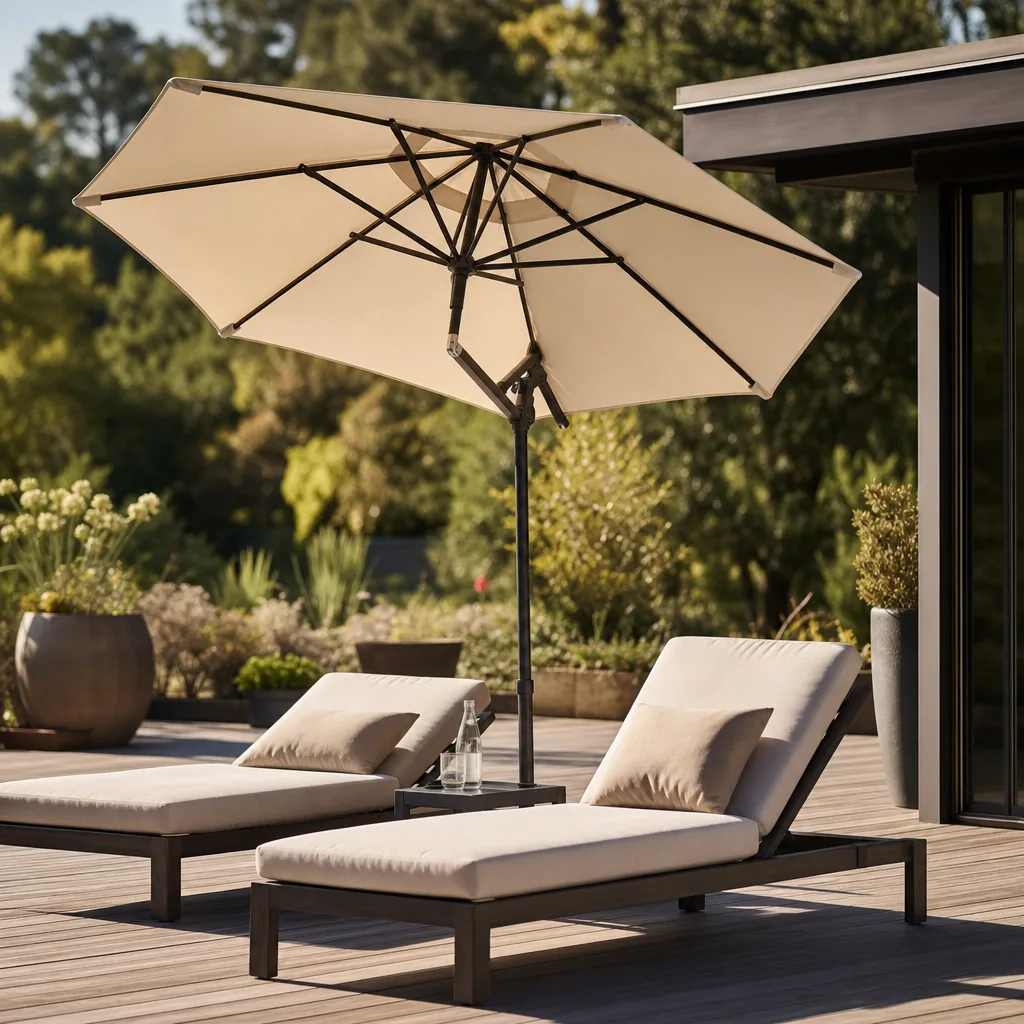
Buyers often treat beach and patio umbrellas as interchangeable, then run into failures in the field: the beach model needs light weight, fast setup, sand anchoring, and strong venting, while the patio model needs heavier structure, stable bases, and longer outdoor duty cycles. As a beach umbrella manufacturer, we see these differences at the frame, fabric, and stitching lines every day, and the right build starts with the intended site, wind load, and transport method. Sourcing them well means specifying the function first, then matching materials and construction to that use.
Two products that look similar but aren't
A beach umbrella is built to move fast and pack light. Most of the units I see on the production floor use a thinner pole, usually aluminum or coated steel, with fiberglass ribs to keep weight down and reduce breakage in sandy wind. A custom beach umbrella is normally sized for a single chair setup or a small group, so 6.5 to 7.5 feet is common, and the canopy is often 190T or 210T pongee, sometimes with silver or UV coating for UPF 50+. As a beach umbrella manufacturer, the first question is always portability: how quickly it goes into the sand, how much it weighs, and whether the tilt mechanism survives repeated beach use without loosening. Buyers in this category usually care about carton size, MOQ, and whether the umbrella can be carried by hand on a crowded boardwalk, not whether it can anchor to a concrete patio.
A patio umbrella is the opposite problem. It is not meant to be shoved into sand and folded into a car trunk; it is meant to sit upright through long exposure, heavier wind, and repeated opening cycles. The frame is usually thicker aluminum or steel, with stronger ribs, wider canopies, and a base system that actually matters because the pole alone is not enough. Common sizes run 8 to 13 feet, with crank-lift, push-button tilt, or offset cantilever designs depending on the buyer. For patio umbrella programs, outdoor umbrella wholesale customers usually ask about base weight, wind resistance, fade performance, and whether the fabric is solution-dyed polyester, acrylic, or PVC-backed material. The construction target is stability first, then appearance, because a patio unit that tips or wobbles in a restaurant terrace becomes a liability fast.
That difference changes the buyer profile too. Beach umbrellas are usually sold through seasonal retail, resort supply, event rentals, and promotional channels where low weight and fast setup matter more than hardware complexity. Patio umbrellas move through garden centers, hospitality projects, and contract furniture buyers who want a product that matches tables, loungers, and permanent outdoor layouts. A beach umbrella manufacturer can often standardize on simpler components and faster assembly, while patio programs need tighter tolerance control on hubs, runners, ribs, and tilt joints because failure shows up after months, not minutes. ZheBrella handles both types, but the spec sheet is never the same: beach orders are about mobility and UV coverage, while patio orders are about base stability, frame durability, and long-term outdoor exposure. If the buyer mixes those two use cases, the product fails on the first real day of wind.
Beach umbrella construction and sand anchoring
A beach umbrella is built around movement and anchoring, not static shade. The pole usually needs a tilt joint, because the sun shifts and the umbrella has to be re-angled without dragging the base. On a real production line, that means a reinforced push-button or screw-lock tilt head, not the loose friction fittings you sometimes see on low-cost patio umbrella hardware. For a beach umbrella manufacturer, the pole choice is usually lightweight aluminum with a thicker wall, or fiberglass-reinforced sections where corrosion and transport weight matter. Sand anchoring also changes the design: a molded sand auger, spiral anchor, or screw-in stake grips loose beach sand far better than a flat base. ZheBrella’s standard practice is to match the pole diameter and anchor thread so the umbrella does not wobble after a few wind gusts. This is the kind of detail that separates a dependable custom beach umbrella from a decorative shade product.
The canopy structure matters just as much as the base. A beach umbrella usually uses a vented crown so wind can escape instead of lifting the canopy like a sail. That vent is not cosmetic; it reduces upward pressure and helps the frame survive sudden gusts on open sand. In production, we typically see 190T or 210T pongee, polyester, or coated fabric, depending on the buyer’s target price and UV requirement. For outdoor umbrella wholesale programs, a double-layer vent is often the better call because it gives more stability than a single slit vent, especially on 6.5-foot to 8-foot beach models. Rib count also matters: 8K and 10K builds are common on lighter beach umbrellas, while 16K is more typical for heavier vented frames. If the canopy is too heavy for the pole and hub, the tilt mechanism wears out early.
Lightweight frames are the point, but lightweight does not mean weak. A proper beach umbrella uses thinner sections with enough reinforcement at the ferrule, hub, and tilt joint so the structure can flex without cracking. Fiberglass ribs are usually preferred over steel for beach use because they bend under load instead of snapping, and that matters in coastal wind. For buyers comparing patio umbrella and beach umbrella construction, the difference is clear: patio units are built for weight and stationary load, while beach units are built for portability, sand engagement, and quick setup. A beach umbrella manufacturer should also confirm the pack size, carry bag, and anchor compatibility before quoting MOQ, because those details affect freight and retail handling. For export work, we usually see lead times of 30 to 45 days depending on canopy print, frame finish, and whether the order is standard outdoor umbrella wholesale stock or a fully custom beach umbrella program.
Patio umbrella stability and base systems
Patio umbrella stability starts at the base, not the canopy. A 9 ft market-style patio umbrella with a 1.5 in pole can look fine in a catalog and still fail on a windy deck if the base is undersized. For residential use, 50 to 75 lb is the practical floor for a freestanding setup; for larger 10 ft to 11 ft canopies, 75 to 100 lb is safer, and commercial food-service sites often go heavier or bolt the frame down. Cross bases only work when they are paired with real ballast, usually concrete pavers or steel plates. As a beach umbrella manufacturer, we see the same mistake repeatedly: buyers spec the canopy first and treat the base as an accessory, but for a patio umbrella the base is the structural part that keeps the whole product usable.
Crank lift systems are standard on better patio umbrella builds because they reduce operator error and keep the mast aligned under load. A cheap push-up collar can bind when the pole flexes, while a geared crank with a lock pin handles repeated open-close cycles better, especially on 8 ft to 11 ft commercial units. The better assemblies use an internal zinc or aluminum gearbox, a stainless cable, and a stop that prevents over-cranking. For an outdoor umbrella wholesale order, I would specify a crank handle that can survive at least several thousand cycles, plus a tilt mechanism only when the customer actually needs side-shade control. Overcomplicated tilt hardware on a lightweight frame usually becomes the first failure point, not a selling feature.
Commercial-grade poles need more than thicker paint. For a patio umbrella, I would start with powder-coated aluminum or galvanized steel, then size the wall thickness so the pole does not ovalize at the joint or spin inside the base collar. A 2-piece pole with a reinforced lower section is common on 8K and 10K frame builds, while higher-end commercial units may use a 2.0 in mast with welded rib hubs and stainless fasteners. If the buyer wants a custom beach umbrella for hospitality or retail display, the same logic applies: the structure has to match the wind exposure, not just the print. On mixed-use jobs, we usually separate lightweight promotional models from true patio umbrella frames so the buyer is not paying for a base system that cannot hold the canopy in place.
Fabric and UV needs for sun-heavy use
For sun-heavy use, fabric is the first place where a beach umbrella manufacturer wins or loses the job. A beach umbrella usually lives closer to direct reflection from sand and water, so I specify UV performance first: 190T or 210T polyester with a real UPF 50+ coating, not just a marketing label printed on the hangtag. The coating has to penetrate evenly; if it is sprayed poorly, the canopy looks fine on day one and then starts fading in panels after a few weeks. For a custom beach umbrella, I prefer solution-dyed or high-colorfast polyester when the buyer wants stronger brand colors, because pigment locked into the yarn holds up better than surface-only printing. ZheBrella’s standard practice is to treat UV resistance as a fabric-and-ink system, not a single coating claim. If the use case is resort rentals or seasonal retail, I also push for tighter weave and reinforced stitching at the hem, since UV damage often shows up first at seams and stress points, not in the center panel.
A patio umbrella faces a different problem: longer dwell time and more exposure to grime, so fade resistance matters as much as initial UPF. For patio umbrella programs, outdoor umbrella wholesale buyers usually want heavier polyester, acrylic, or olefin-style fabric because the canopy sits open for hours over pools, dining sets, and commercial terraces. The better fabrics keep color under repeated UV cycles and do not chalk out as quickly when cleaned with mild detergent. If the buyer wants a print program, I tell them to test sublimation or screen ink on the exact base fabric, because a dark logo on low-grade cloth can still wash out even when the canopy itself survives. The wrong spec is a thin canopy with a fake UV claim; it may pass a sample photo, but it will not hold color after a season. For both formats, the right call is a tested UPF coating plus proven fade resistance, matched to whether the umbrella is meant for beach salt, patio shade, or both.
Branding and retail packaging differences
Branding on a beach umbrella is usually built around the valance, because that is the first surface people read from a distance and the easiest place to print a logo without distorting the canopy layout. A patio umbrella is different: most buyers want cleaner panel graphics, tighter color matching, and a more restrained retail look that fits restaurant terraces or residential sets. As a beach umbrella manufacturer, we treat the canopy construction first and the branding second, because a custom beach umbrella with a deep valance can take large screen-print or heat-transfer graphics without interfering with seam alignment, while a patio umbrella often needs panel-by-panel artwork, edge-to-edge registration control, and better ink handling on heavier fabrics like 190T or 210T pongee. Valance branding is cheaper to set up and easier to read on a crowded beach; panel branding usually costs more, but it gives retail buyers a more premium presentation and more control over brand color placement.
Packaging is where the business case changes fast. Beach umbrella retail packs are usually optimized for volume: thin carry bags, folded canopies, fewer inserts, and carton dimensions that let outdoor umbrella wholesale buyers load more units per cube. Patio umbrella packaging is heavier because the pole, ribs, crank parts, and bases often ship together, so the carton has to protect hardware and survive longer distribution chains. If the customer wants printed sleeves, barcode stickers, hangtags, or multilingual instructions, that adds both labor and freight volume, which matters more on a 27" or 30" patio model than on a lightweight 21" beach unit. In practice, the best packaging decision is not cosmetic; it is a freight calculation. A lower-profile carton can save meaningful space in a 40HQ, while overbuilt retail boxes can raise landed cost even if the umbrella itself is unchanged.
Frequently Asked Questions
Can a beach umbrella be used as a patio umbrella?
Not reliably. Beach umbrellas prioritize light weight and sand anchoring, so they lack the base weight and crank/tilt stability that patio use demands. Wind will move them if they are not anchored.
What keeps a beach umbrella from blowing away?
A vented canopy reduces lift, and a sand auger or screw-in anchor plus a tilt pole keeps it planted. We recommend specifying both for any branded beach umbrella program.
What build differences should I request if I need umbrellas for seaside retail versus cafe patio use?
For seaside retail, ask for a lighter frame, sand auger or carry-in anchor, and vented canopy to improve wind release. For cafe patio use, specify a heavier pole, stronger ribs, and a base-compatible design; many buyers also request solution-dyed polyester or acrylic for better color retention.
Can one factory produce both beach and patio umbrella models in the same order?
Yes, but the specs should be separated by use case because the frame, base, and canopy construction are different. Mixed orders are common for distributors, and MOQ is usually quoted per model, not just by total quantity.
What lead time should a buyer expect for custom beach or patio umbrella orders?
Typical production is about 25-45 days after sample approval, depending on print complexity, frame material, and order size. If you need custom packaging or mixed SKUs, add extra time for QC and carton coordination.
Looking to Launch Your Custom Umbrella Line?
ZheBrella is a Zhejiang-based OEM/ODM umbrella manufacturer with 17 years of export experience. Free design, low MOQ from 100 pieces, windproof construction, full-color print.
Get Free Quote Now »People Also Search For
Related Articles
Patio and Market Umbrellas: A Custom Manufacturing Guide
Specs that matter for custom patio and market umbrellas - pole material, canopy fabric, wind venting, and base - for hos...
Read More »
Boutique Fashion Umbrellas: Spec Choices for Retail Buyers
Plan boutique fashion umbrellas with canopy shape, 210T pongee, handle materials, 8K/16K frames, packaging, and AQL 2.5 ...
Read More »
Luxury Umbrella Specs for Retail and Corporate Gift Buyers
Specify a premium umbrella that feels worth the price, with guidance on materials, mechanisms, finish details, QC standa...
Read More »