Boutique Fashion Umbrellas: Spec Choices for Retail Buyers
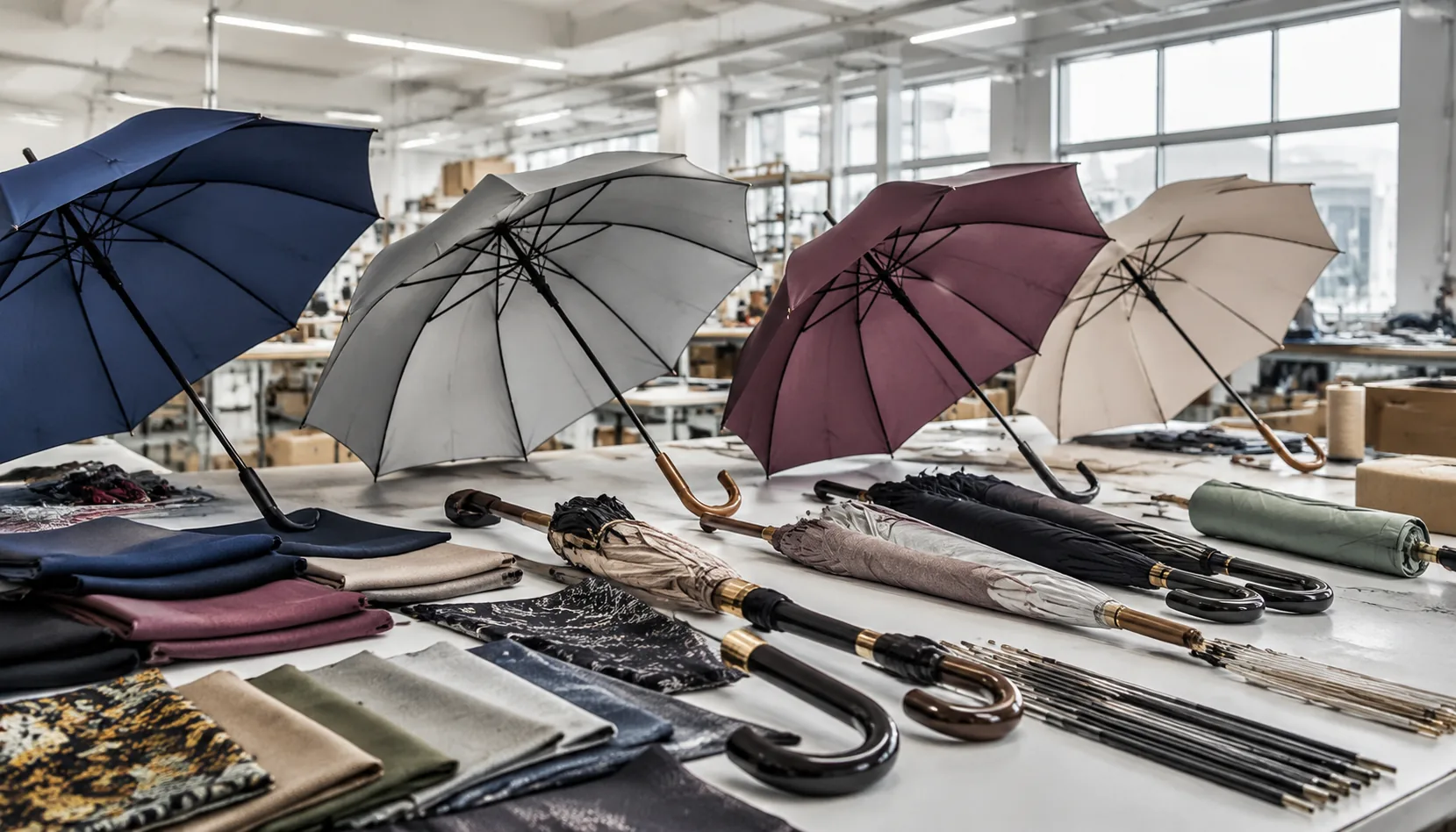
For boutique retail buyers, fashion umbrella mistakes usually show up late: a canopy shape that photographs well but collapses in wind, 210T pongee that misses the handfeel target, or handles and cartons that look cheaper than the price tag. As a fashion umbrellas manufacturer on the factory floor in Songxia, we plan each spec around sell-through first—8K or 16K frame strength, handle material, retail packaging, and AQL 2.5 checks before goods leave the line.
Define the Retail Position Before Engineering
The first engineering decision is not rib material or canopy fabric; it is where the umbrella must sit on the retail wall. Entry fashion umbrellas usually target an FOB cost around $2.20–$4.50 for a 21" or 23" manual or auto-open model, then retail at $9.99–$19.99 depending on the chain. Specs should stay controlled: 190T pongee or polyester, steel shaft, 8K steel ribs, molded plastic handle, one-color screen print or simple all-over pattern, and an OPP sleeve or basic hangtag. This is the lane for volume programs, mall events, campus stores, and boutique umbrellas wholesale orders where the print changes often but the frame should not. MOQ can be 500–1,000 pieces per color, with 25–35 day production after artwork approval if fabric is in stock.
Premium boutique umbrellas need a different cost logic because the shopper is buying handle feel, color discipline, and packaging as much as rain protection. A 23" auto-open stick umbrella or compact auto-open-close can sit at $5.50–$9.50 FOB and retail at $24.99–$49.99 when the details are right: 190T or 210T pongee, fiberglass ribs or a steel-fiberglass hybrid frame, Teflon water-repellent coating, matching sleeve, woven label, matte rubberized handle, and a printed belly band or kraft gift box. For retail fashion umbrellas, I would rather spend $0.40 on a better runner, tips, and closure strap than add a complicated print that slows sewing and raises defect risk. Our standard practice at ZheBrella is to lock AQL 2.5 critical checks around opening force, seam leakage, rib alignment, and carton drop performance before quoting FOB or DDP.
Designer-collaboration umbrellas should be engineered backward from brand presentation and margin protection, not from the cheapest available frame. These programs may carry $10–$18 FOB cost and retail from $59 to $120, especially for designer style umbrellas with custom PMS-dyed 210T pongee, digital sublimation, carved wood or leather-wrapped handles, UV UPF 50+ coating, double-canopy vented windproof construction, and 10K or 16K fiberglass rib systems rated in testing to survive 50+ mph gusts. MOQ is usually higher if the buyer wants custom fabric dyeing, often 1,000–3,000 pieces per design, while OEM fashion umbrellas with shared frame tooling can start lower. A good fashion umbrellas manufacturer should challenge the buyer’s packaging plan early: a rigid gift box, barcode label, care card, and reinforced export carton can add $0.80–$2.50 per unit, but they also prevent crushed retail presentation and chargebacks after a 35–50 day lead time plus ocean freight.
Choose Silhouette, Size, and Rib Count
For boutique umbrellas wholesale, the first decision is silhouette, because it changes both the price ladder and how the product sits on a rack. Slim folding umbrellas are the easiest to carry and ship; they usually pair with 8K steel or fiberglass frames, auto-open or manual-open mechanisms, and 21" to 23" canopies that fit retail fashion umbrellas buyers who want a compact, lower-cost item. A fashion umbrellas manufacturer will normally push this format when the buyer needs fast turns, lighter carton weight, and a broad color program. In practice, the slim fold is the safest entry point for designer style umbrellas because it keeps the opening diameter modest, uses less fabric, and avoids the extra labor that comes with larger stick constructions.
Classic stick umbrellas sell differently: they look more premium on a floor stand, take a cleaner print, and give more room for shaft finishes, hook handles, and trim details that matter for designer style umbrellas. A 23" or 27" stick with 8K ribs is still the cost-control choice, especially for OEM fashion umbrellas where the buyer wants a decent canopy profile without inflating freight or component cost. Eight ribs mean fewer ferrules, fewer stitching points, and less metal or fiberglass in the frame, so the umbrella stays lighter and the landed price is easier to protect. For retail fashion umbrellas, that matters because the margin often disappears on weight and packaging before it disappears on decoration.
Premium 16K silhouettes are for buyers who want a rounder, fuller canopy line and are willing to pay for it. The extra rib count pulls the pongee 190T or 210T fabric into a smoother arc, so the edge looks less faceted and more refined from the shelf or in product photos. That is the real visual benefit of 16K: it improves the dome shape and makes the umbrella read as higher-end, not just bigger. The tradeoff is obvious to anyone who builds frames on the factory floor: more ribs add cost, more assembly time, and more points to inspect under AQL 2.5. For a fashion umbrellas manufacturer, 16K is the right spec only when the buyer wants a stronger premium signal, not when the goal is purely boutique umbrellas wholesale volume.
Select Fabric, Color, and Print Finish
For retail fashion umbrellas, start with 210T pongee unless the price target is extremely tight. The tighter weave gives a smoother hand feel, less pinholing under backlight, and a cleaner drape on the rack, which matters more in boutique umbrellas wholesale than buyers admit. A fashion umbrellas manufacturer will usually pair 210T with a better-cut canopy and tighter QC because the fabric shows sewing distortion and print defects less brutally than cheaper cloth. 190T still works as a value option for promotional sets or entry-level designer style umbrellas, but it looks thinner, flashes more light through the panel, and tends to read as lower grade when hung next to a heavier canopy. For OEM fashion umbrellas, I’d treat 190T as the floor, not the goal.
Print finish is where the product either looks retail-ready or cheap. Digital print is best for photographic art, gradients, and small runs because it handles multiple colors without screens, but it can feel softer and may not be as sharp on very dark bases. Screen print is better for bold logos, solid blocks, and repeat orders because it gives stronger opacity and lower unit cost at scale. Border prints are useful when you want a restrained premium look; they keep branding visible without covering the whole canopy. If the brief calls for sun protection, specify UPF 50+ coating early, because the coating can shift hand feel and sometimes slightly mute color. That matters when comparing retail fashion umbrellas across samples from different factories.
Color matching has limits, and buyers should write them into the spec instead of arguing after production. On dyed pongee, expect shade variation between lots, and on printed panels expect small shifts from ink absorption, heat setting, and seam alignment. If you need exact brand colors, send Pantone references, approve a sealed lab dip, and set an acceptable tolerance before bulk cut. Deep blacks, reds, and fluorescents are the hardest to hold consistently, especially on large canopy panels where edge-to-center variation shows up. In practice, a fashion umbrellas manufacturer can get close, but not perfect, so I recommend approving one master sample, one bulk strike-off, and one sewn top sample. That is the only reliable way to protect retail fashion umbrellas from looking mismatched on the shelf.
Specify Handles, Tips, and Retail Packaging
For retail fashion umbrellas, the handle is not a cosmetic afterthought; it controls how the product feels on shelf and in hand. Faux leather works well for a cleaner, branded look on 21" and 23" folding umbrellas, while wood still sells best for designer style umbrellas when buyers want a warmer, more premium feel. Acrylic and soft-touch TPR are better when you need color matching or a modern finish, and EVA handles make sense on lighter promotional builds because they hide grip wear better than glossy plastic. As a fashion umbrellas manufacturer, our standard practice is to match the handle finish to the ferrule, tip, and canopy trim so the umbrella looks intentional instead of assembled from mixed parts.
Tips and sleeves should be specified with the same discipline. A metal tip on a wood handle looks wrong unless the plating and cap shape are coordinated; on faux leather or acrylic handles, matte black or gunmetal tips usually read more upscale than bright chrome. For boutique umbrellas wholesale, I prefer a sleeve that actually protects the canopy edge, not a thin decorative sock that tears after one retail return. EVA sleeves and fabric pouches both work, but the sleeve should fit the folded length tightly enough that the retailer can hang or stack the carton without scuffing the print. If you are ordering OEM fashion umbrellas, send the final handle color, tip finish, and sleeve artwork together, because changing one late almost always creates a mismatch.
Retail packaging is where many programs get sloppy. Barcode labels should be placed on the polybag or the gift box, not only on the outer carton, so store staff can scan units without opening cases. Hangtags are useful for retail fashion umbrellas when you need a hang-ready SKU with size, mechanism, and country-of-origin details; gift boxes make more sense for higher-margin designer style umbrellas, especially when the buyer wants a boxed set with care instructions. Polybags should include warning text and a clean fold, while carton marking must show style number, color, quantity, gross weight, carton size, and destination code for export. On mixed orders, I also recommend one carton label format across all SKUs so the warehouse does not waste time sorting by print layout or pack method.
Control Quality Before Launch
Quality control for boutique umbrellas starts before bulk fabric is cut, not at the carton-closing table. For retail fashion umbrellas, I require a signed pre-production sample that locks the 190T or 210T pongee weight, canopy shape, rib count, handle finish, tip color, ferrule plating, care label, hangtag, and sleeve construction. If the order uses designer style umbrellas with border artwork or panel-by-panel motifs, print registration must be checked on a full umbrella, not only on flat fabric. Screen print tolerance should stay within 1.5 mm across adjacent panels; heat-transfer logos need edge adhesion checks after rubbing and wet wipe testing; sublimation artwork needs color comparison under D65 light because boutique buyers reject small shade shifts faster than promo buyers do.
Open-close cycle testing catches weak mechanisms early, especially on 21 inch compact auto-open-close models where spring force is high and shaft play becomes obvious after repeated use. Our standard practice at ZheBrella is to cycle samples 300 to 500 times before approving bulk production, then check button response, runner locking, rib deformation, and cap tightness. Seam inspection should cover stitch density, skipped stitches, puckering at panel tips, loose threads around the top notch, and waterproof tape alignment if the canopy uses POE, PVC, or coated pongee. For boutique umbrellas wholesale programs, I also check handle bonding after 24 hours because resin, leather-wrap, bamboo, and acrylic handles can pass visually but loosen during transit if glue curing is rushed.
Final inspection should follow AQL 2.5 for major defects, with critical defects set to zero tolerance: broken ribs, unsafe sharp tips, failed auto mechanism, wrong logo, wrong barcode, or mold odor inside cartons. A serious fashion umbrellas manufacturer will separate functional testing from cosmetic grading, because a luxury-looking umbrella with a bent 8K steel frame or weak fiberglass rib joint will still become a return. Lead time planning matters: standard OEM fashion umbrellas can often ship in 30 to 45 days after sample approval, but custom handles, dyed-to-match tips, plated caps, or special Pantone fabric can add 10 to 20 days for tooling, color lab dips, and component curing. Buyers should approve trims before mass sewing, or the factory may finish canopies while waiting on one missing decorative part.
Frequently Asked Questions
Are custom handles worth it for boutique umbrella lines?
Custom handles can lift perceived value, but they add tooling cost and lead time. Buyers with smaller MOQs often start with stock wood, acrylic, or soft-touch handles in coordinated colors.
Which fabric is best for fashion umbrellas sold at retail?
210T pongee is usually preferred because it feels smoother, prints cleanly, and supports a more premium finish. 190T pongee can still work for price-sensitive seasonal collections.
What canopy shape options work best for boutique fashion umbrellas sold in retail stores?
For retail sell-through, buyers usually choose compact round, straight-edge, or octagonal canopies because they photograph well and fit premium packaging. If you want a more distinctive look, specify panel shape, vent style, and canopy diameter at the sampling stage so the factory can confirm cost and production feasibility.
Why do many buyers specify 210T pongee for fashion umbrellas?
210T pongee gives a smoother hand feel and better print clarity than lower-density polyester, which helps with fashion-focused branding. It is commonly used for retail umbrellas because it balances appearance, water resistance, and cost, especially for OEM and private label programs.
How should I set frame and inspection specs for a retail umbrella order?
For boutique retail, 8K frames are common for lighter, more affordable styles, while 16K frames are used when buyers want a stronger and more premium feel. Ask the supplier to quote AQL 2.5 inspection for critical defects and confirm whether packaging, opening/closing force, and rib alignment are included in QC checks.
Looking to Launch Your Custom Umbrella Line?
ZheBrella is a Zhejiang-based OEM/ODM umbrella manufacturer with 17 years of export experience. Free design, low MOQ from 100 pieces, windproof construction, full-color print.
Get Free Quote Now »People Also Search For
Related Articles
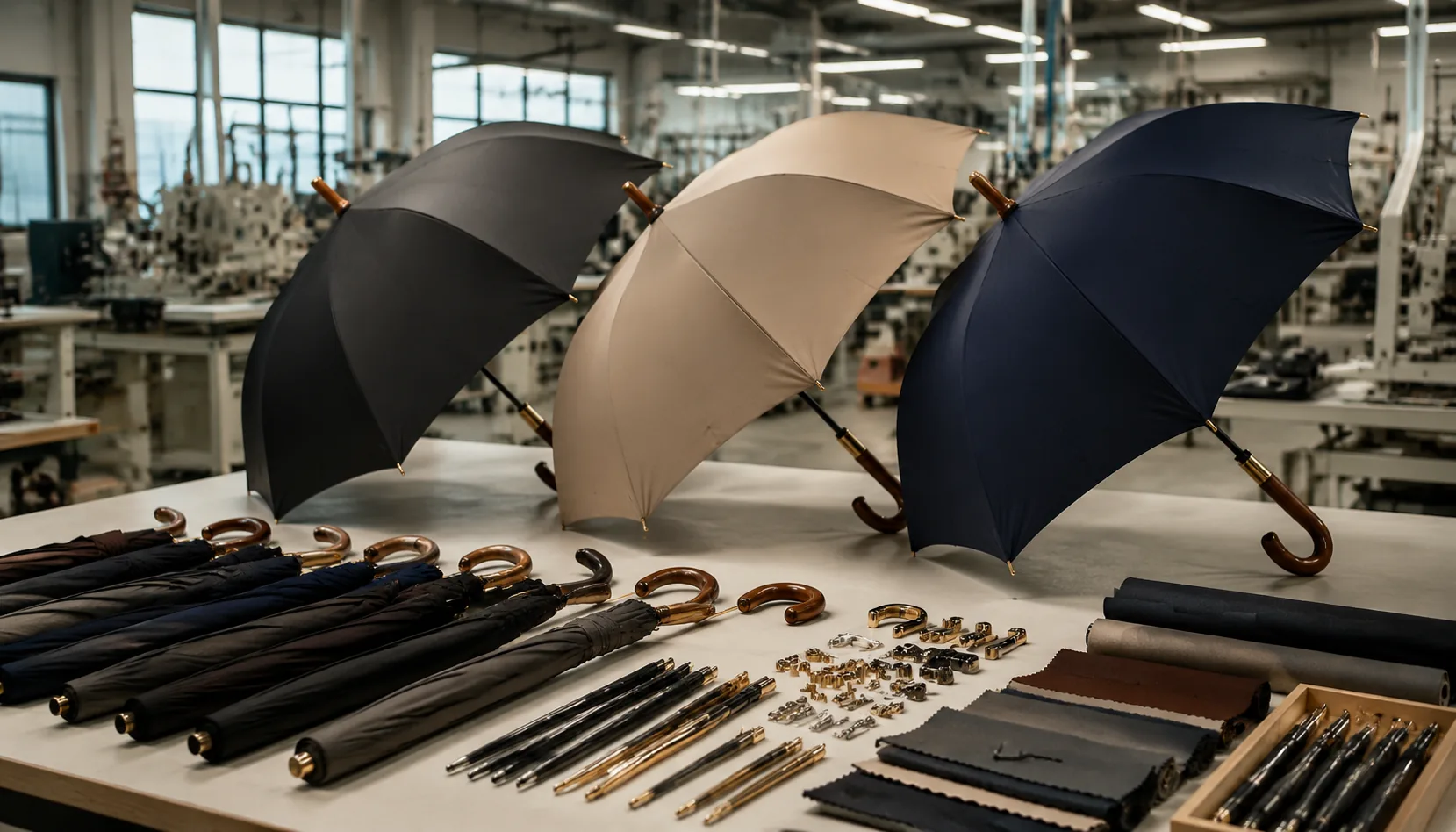
Boutique Fashion Umbrellas: OEM Specs for Premium Retail
Source boutique fashion umbrellas with guidance on canopy fabric, handles, frame finish, print registration, packaging, ...
Read More »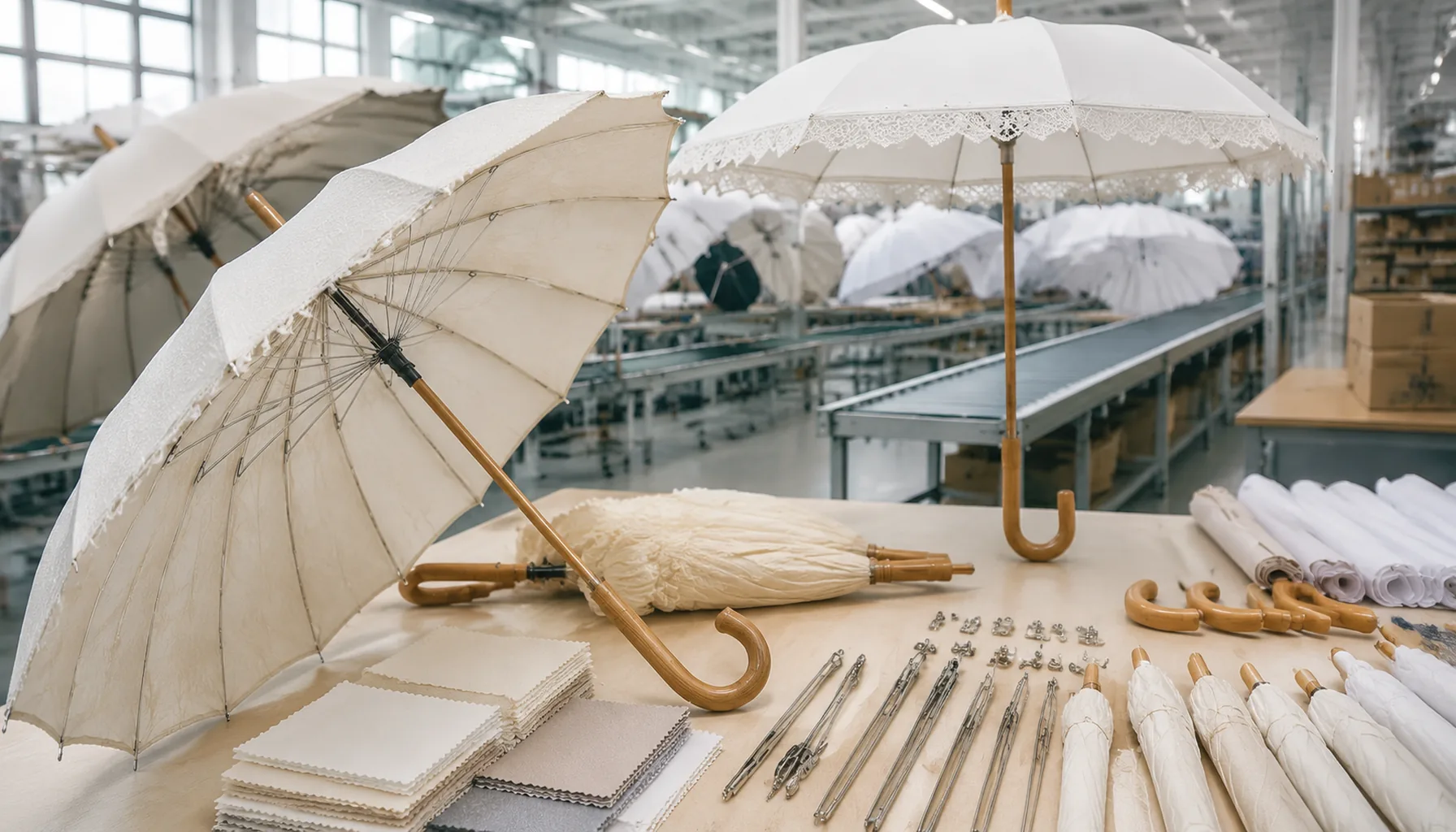
Wedding Umbrellas: Product Guide for Event and Retail Buyers
Source wedding umbrellas with the right canopy color, frame, print method, packaging, MOQ, and lead time for venues, pla...
Read More »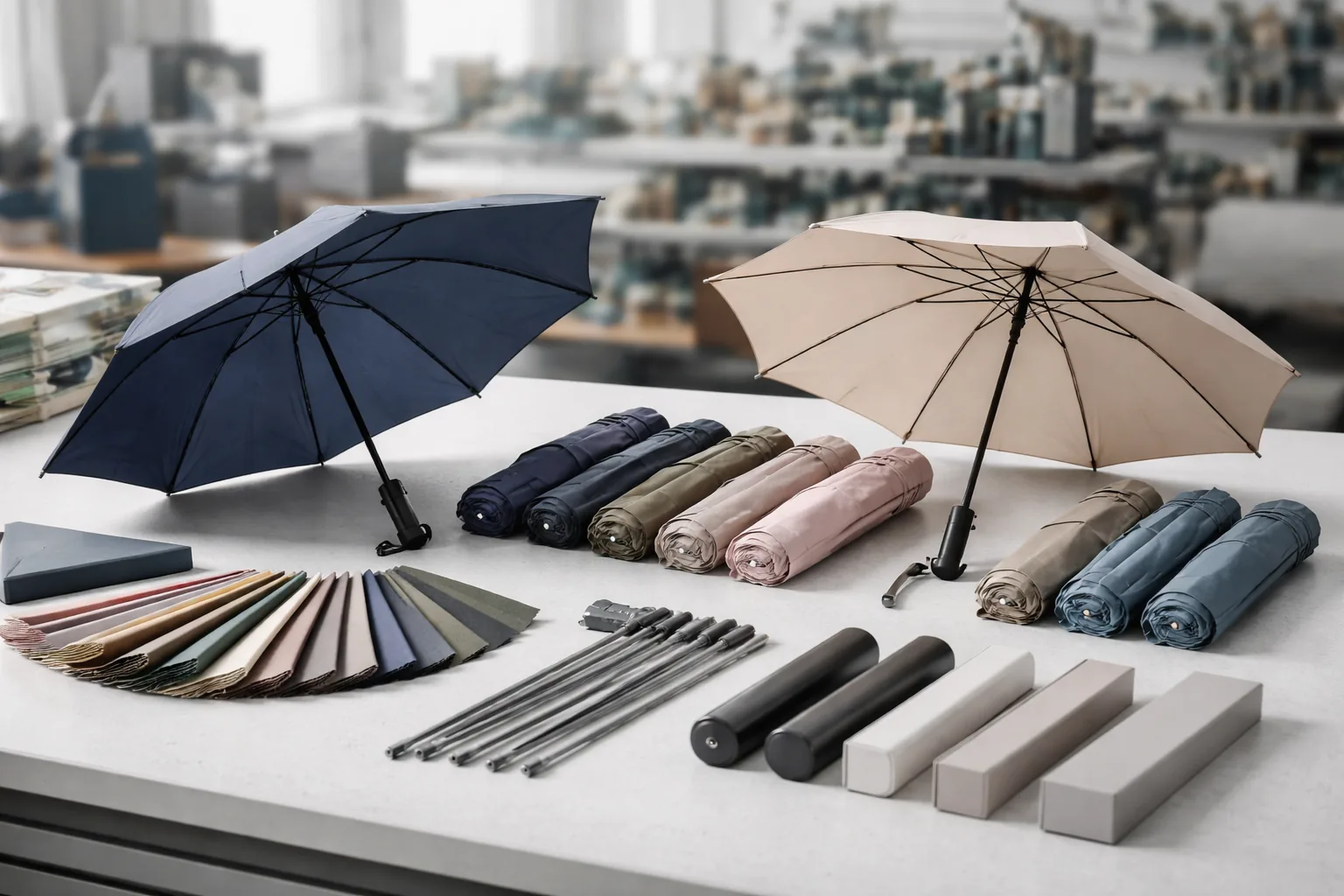
Flat Mini Umbrellas: Retail Buyer Spec and Sourcing Guide
Source flat mini umbrellas for retail with clear specs for folding structure, rib strength, pongee fabric, coating, pack...
Read More »