Patio and Market Umbrellas: A Custom Manufacturing Guide
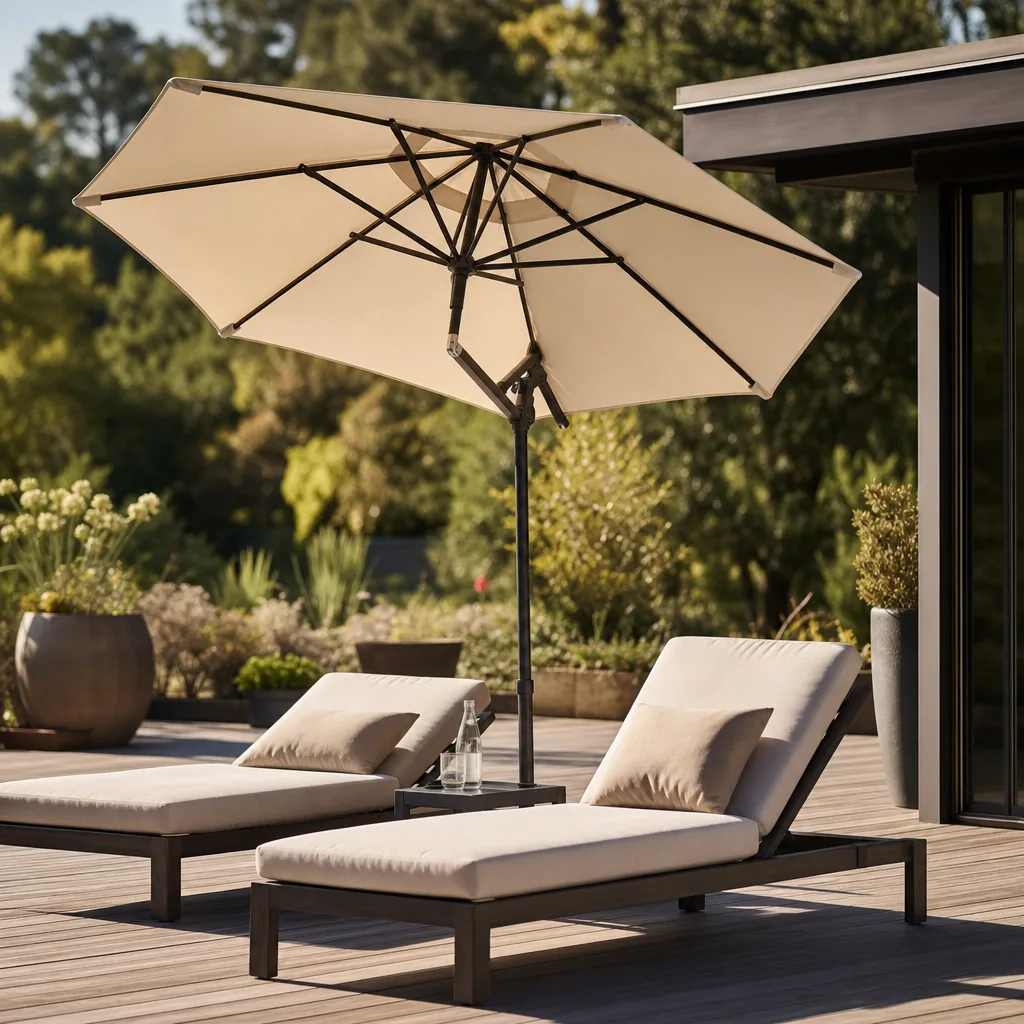
Buying custom patio and market umbrellas is less about picking a color than locking down the details that decide whether the product holds up in daily use. As a patio umbrella manufacturer, we see the same failure points on the factory floor: underspecified poles, fabric that fades too fast, vents that do not relieve wind load, and bases that are sized for the brochure instead of the site. The right spec has to match the application, not just the look.
Pole and frame materials: aluminum vs steel vs wood
For a patio umbrella manufacturer, powder-coated aluminum is the default choice when the buyer cares about weight, corrosion resistance, and repeatable production. A 38 mm or 48 mm aluminum pole with 1.2 to 1.5 mm wall thickness is light enough for easier handling in an outdoor cafe umbrella program, but still stiff enough for 21-inch to 30-inch canopy formats if the rib set is engineered correctly. In salt air, aluminum outperforms bare steel because the coating protects the tube and the material does not rust red through scratches the way carbon steel does. It also gives a cleaner, more modern look for market umbrella wholesale orders, especially when the finish is matte black, champagne, or anodized silver. ZheBrella normally specifies aluminum when the product needs a commercial appearance without making the base package too heavy for shipping and retail setup.
Steel is the better answer when the priority is low material cost, mass, and a more traditional custom parasol profile, but it has real penalties. A steel pole and frame feel solid in hand and can be useful for larger center-pole programs, yet the added weight increases freight cost and makes patio placement harder for the end user. If the coating is poor, chips around welds and joints become rust points, which is why steel needs better powder coverage and tighter AQL control at the weld and splice areas. Wood sits at the other end of the spectrum: it is visually warm, appropriate for higher-end restaurant terraces, and often preferred when the umbrella is part of a branded hospitality concept. The tradeoff is maintenance and variability. Wood can check, swell, or discolor if the finish is not handled correctly, so I only recommend it when the buyer wants appearance first and accepts more care in storage and field use.
Outdoor canopy fabrics and fade resistance
For a patio umbrella manufacturer, the first fabric decision is whether the canopy needs long-term color retention or simply a lower entry price. Solution-dyed acrylic is the better commercial cloth when the umbrella will sit in direct sun all season. The pigment is built into the fiber before weaving, so the color holds up far better than surface-dyed polyester under UV exposure and repeated washing. In practice, I look at 280-320 GSM acrylic for restaurant terraces, hotel pools, and high-traffic retail patios because it has better body, less stretch, and a cleaner edge after sewing. A cheaper polyester canopy can still work for short-life programs, pop-up activations, or price-sensitive market umbrella wholesale orders, but it will usually show visible fade sooner and needs tighter specification control on coating and thread quality.
Polyester is not the problem by itself; the problem is using the wrong grade. For an outdoor cafe umbrella or custom parasol with moderate duty, 180-240 GSM polyester with UV-stabilized dye and a proper PU or acrylic backing can be acceptable if the client wants a lower-cost program and understands the service life. The fabric weight matters because light cloth flutters, pumps water through stitching, and usually degrades faster at the fold lines. Heavier cloth gives better hand feel and a straighter panel profile, but it also adds load to the frame, so the rib set and hub need to match. On the factory floor, we usually pair better polyester with fiberglass ribs and reinforced corners, while saving steel-only builds for very large commercial frames where stiffness matters more than weight.
UV ratings should be treated as a functional requirement, not a brochure claim. For commercial use, ask for a tested UV protection level such as UPF 50+ and a documented fade rating from accelerated light testing, then compare it against the actual dye system and coating, not just the lab number. ZheBrella specifies different fabric packages depending on whether the umbrella is meant for 21-inch promotional frames, 8K- or 10K-rib patio builds, or large 30-inch market units, because canopy size, wind exposure, and opening frequency all change how fast the fabric ages. If the project needs a longer service life, solution-dyed acrylic usually wins; if the buyer needs faster turnover and a lower landed cost, polyester is workable, but the expectation should be a shorter cosmetic life in strong sun and coastal conditions.
Wind venting and crank/tilt mechanisms
On a large shade frame, venting is not decoration. A single vent cuts updraft pressure and keeps the canopy from acting like a sail, which matters on 9-foot and 10-foot canopies with 8-rib or 10-rib frames. A double-vent design does the same job more aggressively: the upper cap relieves pressure, the lower layer stabilizes airflow, and the result is less wobble in gusts. For a patio umbrella manufacturer, the vent is usually matched to the pole and rib package, not added at the end. Light aluminum ribs with fiberglass tips can handle a basic single vent well, while heavier market umbrella wholesale programs often specify double vents for better stability in restaurant terraces and pool decks. On an outdoor cafe umbrella, the vent also helps reduce the twisting load that shows up after repeated open-close cycles and sudden weather changes.
Crank-lift is the standard choice when operators need speed and low effort. A geared crank raises the runner smoothly, which is better than forcing a push-up collar on large 11-foot and 13-foot spans. The weak point is usually the gear housing and cable path, so a custom parasol built for commercial use should use a reinforced lift tube and a clean stop position, not a loose, rattling mechanism. Auto-tilt adds a second function through the same crank path: after full lift, continued turning engages the tilt joint and angles the canopy toward low sun. That is useful for a patio umbrella manufacturer serving restaurants, but it adds parts and must be tuned carefully so the tilt does not bind under load. In practice, auto-tilt is best on lighter commercial frames, while heavier wind-exposed units often stay with lift-only crank systems.
Push-tilt is simpler and cheaper, but it depends on the operator manually sliding the top hub to the side and locking it into a tilt notch. That works on smaller 6.5-foot to 9-foot umbrellas, yet on larger market umbrella wholesale orders it is often chosen because it reduces failure points and replacement parts. The tradeoff is obvious: less mechanical complexity, but more user effort and less precise angle control. For custom parasol projects, I usually recommend matching the mechanism to the use case, not the catalog price. If the umbrella will sit over fixed tables all season, crank-lift with manual push-tilt is often enough. If it will be opened daily by staff, auto-tilt saves time. If wind exposure is a real issue, the better answer is not a fancier tilt head, but a stronger frame, a vented canopy, and a fabric spec that can hold tension without fluttering loose.
Bases, mounts, and stability
A patio umbrella manufacturer has to size the base to the canopy, not to a generic catalog number. For a 6 to 7 foot table umbrella, 30 to 40 lb is usually enough if the pole is centered through a table. Once you move to 8 to 9 foot canopies, 50 to 70 lb is the practical floor for freestanding use, and 75 to 100 lb is safer in exposed dining areas. For 10 to 11 foot market umbrella wholesale programs, I would not ship a stand-alone base under 100 lb unless the buyer is only using it in a fully sheltered courtyard. ZheBrella’s standard practice is to separate table-mounted, freestanding, and commercial wind-load specs because the same canopy can behave very differently depending on height, pole diameter, and fabric tension.
In-ground mounts are the right answer when the umbrella is permanent or semi-permanent. A steel sleeve set into concrete gives better torsional control than any portable base, especially for an outdoor cafe umbrella that stays open all day. For a custom parasol over a fixed terrace, I typically specify a 2 to 4 foot footing with the sleeve embedded below grade, plus a removable pin or clamp so the pole can be pulled for maintenance. That setup is cleaner than stacking decorative weights, and it keeps the center of gravity low without turning the site into a trip hazard. Freestanding bases still have a place for seasonal layouts, but they need real ballast, not cosmetic covers, and they should be checked after the first storm cycle because settlement and shifting are common.
Cantilever frames are where buyers get into trouble, because the leverage is brutal even when the canopy size looks modest. A 10 foot offset umbrella often needs 200 to 300 lb of ballast, and larger square models can need more if the arm extends far from the mast. For market umbrella wholesale orders, I usually recommend either a cross-base with four fillable weights or a dedicated slab base with locking casters only if the site is smooth and protected from wind. The hardware matters as much as the weight: thicker mast walls, reinforced tilt joints, and a rotation collar reduce wobble and keep the frame from chewing itself apart. As a patio umbrella manufacturer, I would rather overspec the base by 20 percent than lose the product to a tipped frame, because that failure is usually a site safety issue, not a cosmetic one.
Custom branding for cafes and resorts
For a patio umbrella manufacturer, custom branding usually starts with the valance because it is the first thing guests see at table height. Straight logos on the valance work well for cafes and resorts that need visibility from a distance, but the print method matters: screen printing is still the cleanest choice for solid spot colors on 190T or 210T pongee, while heat-transfer and sublimation are better when the art has gradients or fine text. On an outdoor cafe umbrella, I would keep the valance print size conservative and place it where the seams will not break the logo. If the design needs heavy exposure, use UV-resistant inks and ask for wash and rub testing; otherwise the branding looks sharp for a month and then starts fading unevenly. For market umbrella wholesale orders, it is usually cheaper to standardize the canopy color and vary only the printed branding, which keeps production stable and reduces reject risk at the sewing table.
Panel logos are the better option when the brand wants a more premium custom parasol look instead of a simple promotional umbrella. We can place logos on one or two canopy panels, or repeat them around the circumference, but the print must be aligned to the panel grain and seam allowance so the logo does not distort after tensioning. On large 8K, 10K, or 16K frames, panel printing works best when the artwork is built with the panel shape in mind rather than forced onto a flat rectangle. Resorts often ask for a subtle tone-on-tone logo on the top panels and a stronger mark on the valance, which is the right approach if the goal is identity without making the canopy look like a billboard. ZheBrella’s standard practice is to proof the artwork at full scale before sampling, because a 2 cm shift at the pattern stage becomes obvious once the ribs are opened.
Color matching is where most custom orders go wrong, not on the logo file itself. For a patio umbrella manufacturer, the right process is to match the canopy cloth to Pantone or an approved physical swatch, then confirm the dyed lot under daylight and indoor light, because navy, burgundy, and beige all read differently on pongee, polyester, and acrylic fabrics. If the buyer needs exact brand consistency across multiple drops, we should set an acceptable delta E range and lock the thread, piping, and binding colors too, otherwise the finished umbrella looks mismatched even when the canopy is close. This matters especially for market umbrella wholesale programs going to chains, where the first shipment and the reorder must look identical. For hotel terraces and restaurant patios, I usually recommend one master color standard, one approved print file, and one production reference sample, so every outdoor cafe umbrella in the program stays visually consistent without constant re-approval.
Frequently Asked Questions
What fabric lasts longest on outdoor patio umbrellas?
Solution-dyed acrylic resists fading far better than printed polyester and is the standard for cafes and resorts in strong sun. Polyester is cheaper and fine for seasonal or lower-exposure use.
How heavy should a patio umbrella base be?
As a rule of thumb, around 10 lbs of base weight per foot of canopy diameter for freestanding use, more in windy locations or for cantilever designs.
What pole material is best for a commercial patio umbrella?
For hospitality use, powder-coated aluminum is usually the best balance of weight, corrosion resistance, and cost. Steel is stronger but heavier and more prone to rust if the finish is damaged.
Which canopy fabric should a B2B buyer choose for outdoor seating areas?
Solution-dyed acrylic is the most common premium option because it holds color well and offers strong UV resistance. Polyester is a lower-cost option, but it usually has a shorter service life in direct sun and frequent weather exposure.
What should buyers confirm before placing a custom umbrella order?
Confirm canopy size, pole diameter, venting style, printing method, and base compatibility before production. Typical OEM/ODM orders start around 100 to 300 units per design, with sample approval usually adding 7 to 15 days before mass production.
Looking to Launch Your Custom Umbrella Line?
ZheBrella is a Zhejiang-based OEM/ODM umbrella manufacturer with 17 years of export experience. Free design, low MOQ from 100 pieces, windproof construction, full-color print.
Get Free Quote Now »People Also Search For
Related Articles
Beach Umbrella vs Patio Umbrella: Different Builds, Different Buyers
Why beach and patio umbrellas are engineered differently - portability, anchoring, wind venting, and fabric - and how to...
Read More »
How to Choose Sun Protection Umbrellas for Outdoor Promotions
Learn how to specify UPF 50+ sun umbrellas for promotions, from canopy materials to frame strength, decoration, and ship...
Read More »
Boutique Fashion Umbrellas: Spec Choices for Retail Buyers
Plan boutique fashion umbrellas with canopy shape, 210T pongee, handle materials, 8K/16K frames, packaging, and AQL 2.5 ...
Read More »