Bluesign and OEKO-TEX for Umbrella Fabrics: What They Certify
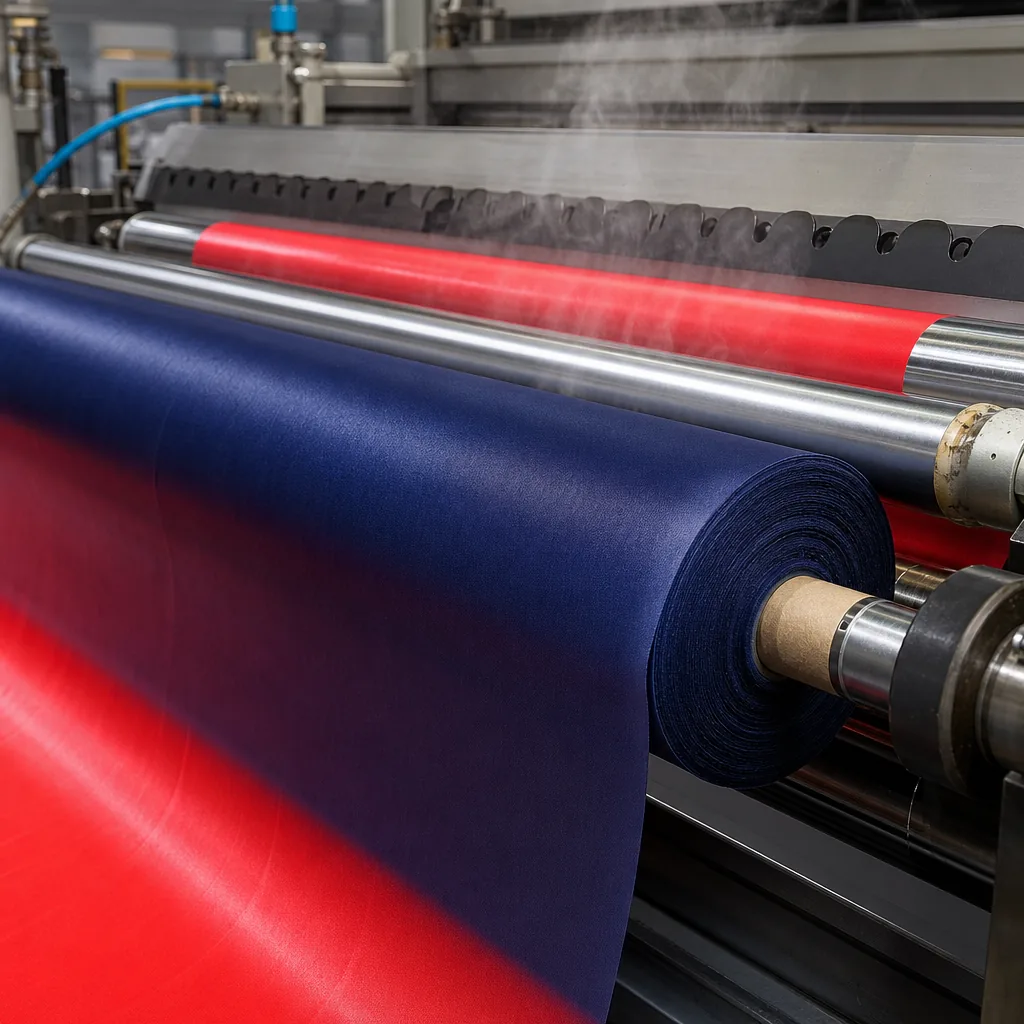
When buyers specify bluesign umbrella fabric or OEKO-TEX labels, they’re usually trying to reduce chemical risk without slowing down production or triggering rework at the factory. From the cutting room to printing and coating, the real issue is not the logo on the hangtag but whether the mill, laminator, and finished fabric lot can consistently meet the right test standard for the end market.
OEKO-TEX Standard 100 in plain terms
OEKO-TEX Standard 100 is a finished-textile test, not a raw-material badge. For umbrella buyers, that matters because the canopy is what touches hands, skin, bags, and sometimes food areas in retail or hospitality use. An OEKO-TEX umbrella usually means the completed fabric has been tested against a defined list of harmful substances, including some restricted dyes, formaldehyde, heavy metals, and certain pesticides or plasticizer-related compounds depending on the product class. It is best understood as a chemical safety screen on the finished umbrella fabric, not a statement about durability, waterproofing, or wind performance.
In plain factory terms, this is umbrella fabric certification that helps buyers reduce chemical-risk complaints and retailer compliance problems. It is especially relevant for pongee 190T or 210T polyester, nylon, POE, and printed canopy materials where coatings, inks, and finishing agents can change the chemical profile after weaving. A chemical safe umbrella fabric claim should always be tied to the exact article number, colorway, and production lot, because a pass on one black canopy does not automatically cover a different print or coating system. For importers, that detail is usually more useful than a generic logo on a sales sheet.
The limit is simple: OEKO-TEX tells you the textile passed a substance test, not that the whole umbrella is certified as a finished product in every component. Metal tips, frames, handles, adhesives, and printing layers may sit outside the textile scope unless separately tested or documented. That is why buyers comparing bluesign umbrella fabric and OEKO-TEX umbrella paperwork should ask for the test report, class level, and validity date, then match it to the exact canopy spec they are ordering. In procurement, good paperwork is only useful if it follows the real BOM and the real color standard, not just a sample canopy sent months earlier.
What Bluesign covers
Bluesign is not just a fabric label; it is a system that controls chemicals, water, energy, and emissions at the mill and finishing stage, which is why buyers treat bluesign umbrella fabric differently from a generic “eco” claim. In practical terms, it looks at whether the dyestuffs, water repellents, coatings, and auxiliaries used on the cloth are approved and whether the process keeps restricted substances out of the final textile. For umbrella work, that matters most with pongee 190T/210T, polyester, and recycled polyester canopy fabrics, because those are often finished with PU, water-based coatings, UV coatings, or DWR treatments that can create compliance problems if the chemistry is sloppy.
A real umbrella fabric certification under Bluesign is broader than a single lab test on the finished canopy. It covers input stream management, worker exposure, wastewater load, and air emissions, so the mill has to control the whole production chain instead of only passing a one-off test report. That is why a bluesign umbrella fabric is usually easier to defend in procurement than a vague “safe umbrella textile” claim: the system is built to reduce heavy metals, unwanted solvents, and other restricted substances before the cloth ever gets cut into a 21-inch, 23-inch, or golf-size canopy.
For buyers, the practical value is consistency. If you are sourcing an OEKO-TEX umbrella or a chemical safe umbrella fabric for retail, promotional, or children’s programs, Bluesign gives you a process-based compliance story, not just a final-product snapshot. It does not mean the umbrella is automatically non-toxic in every component, because handles, inks, tapes, and frame coatings still need separate review, but it does mean the canopy textile is produced under tighter chemical and environmental control than ordinary stock fabric. In FOB or DDP purchasing, that can reduce documentation headaches when the customer asks for chain-of-custody evidence and third-party proof.
How they differ from GRS
Bluesign and OEKO-TEX are mainly about what is left on the fabric after production, while GRS is about where the material came from. If you are buying bluesign umbrella fabric, the question is whether the dyeing, finishing, and chemical inputs were controlled to reduce harmful residues and worker exposure. An OEKO-TEX umbrella is tested against a list of restricted substances in the finished textile, which is why buyers often treat it as a safe umbrella textile claim rather than a recycled-content claim. In other words, these systems tell you something about chemical safety and process control; they do not tell you whether the cloth contains recycled polyester, virgin polyester, or a mix.
GRS, the Global Recycled Standard, answers a different question: how much recycled content is in the material and whether that content is traceable through the supply chain. A fabric can be GRS-certified and still fail a buyer’s internal chemical limits if the mills used poor auxiliaries or heavy finishing. The reverse is also true: a chemical safe umbrella fabric can pass OEKO-TEX or bluesign tests without containing any recycled fiber at all. That is why umbrella fabric certification should not be treated as one box to tick. Procurement teams often need both a recycled-content claim for sustainability reporting and a chemical compliance claim for retail or brand safety requirements.
On the factory side, these programs affect different stages of sourcing and documentation. For a bluesign umbrella fabric or OEKO-TEX umbrella spec, I care about the mill’s chemical inventory, lab test reports, and lot-level consistency on coating, printing, and colorfastness. For GRS, I need transaction certificates, recycled input records, and chain-of-custody paperwork. Buyers get into trouble when they assume one label covers the other. It does not. If you need a safe umbrella textile for a promotional program, start with chemical compliance; if you need recycled content for a brand sustainability target, add GRS separately and verify the paperwork on every PO.
When to request each
Ask for OEKO-TEX when your main concern is human safety in the finished cloth: skin-contact compliance, restricted azo dyes, formaldehyde limits, heavy metals, and general chemical cleanliness. For an OEKO-TEX umbrella, I want to see the certificate number, the product class, and the exact fabric style, not just a generic “passed” note on the spec sheet. It is the faster, more common request when buying pongee 190T or 210T, PVC, POE, or EVA canopy material for retail, school, or promotional programs where the buyer needs a chemical safe umbrella fabric rather than a deep supply-chain audit.
Ask for Bluesign when the fabric story matters beyond end-product chemistry. A bluesign umbrella fabric is about inputs, process control, and downstream environmental management, so it is the better request if you are sourcing from mills that claim lower-impact dyeing, better chemical substitution, and tighter resource control. In practice, Bluesign is more useful when you want to understand how the polyester yarn, coating, and finishing chemicals were selected and handled, not just whether the final textile passed a test. That is the difference between a basic umbrella fabric certification and a more complete sustainability claim.
If your brief is brand compliance for a large retail chain, I would request both: OEKO-TEX for the safe umbrella textile claim at the product level, and Bluesign for the upstream sourcing narrative. If you only choose one, pick OEKO-TEX for anything that will be handled by consumers directly, especially kids’ umbrellas, travel umbrellas, and rainwear-adjacent items. If you are building a premium program with ESG reporting, then ask for the bluesign umbrella fabric documentation as well, because it gives procurement teams more to verify when they compare mills, coatings, and dye houses across different quotes.
Reading and verifying certificates
The first thing to check is whether the certificate is still valid and whether it actually covers the fabric you are buying, not just a dyehouse, yarn mill, or a different product line. I have seen buyers accept a nice-looking PDF for a bluesign umbrella fabric claim, then discover the approved scope was for polyester yarn or apparel fabric, not the 190T pongee or 210T canopy they ordered. A real umbrella fabric certification should show the certifying body, certificate number, issue and expiry dates, and the exact material description. If the document is vague, expired, or copied from another supplier, treat it as worthless. You also need to read the scope line by line. An OEKO-TEX umbrella document may cover only the finished textile, or only a component like dyed fabric before lamination, printing, or water-repellent finishing. That matters because umbrella canopies often get Teflon coating, UV coating, heat-transfer printing, or color-specific resin finishes after the base cloth is certified. If the certificate does not match the actual construction, it is not a chemical safe umbrella fabric claim for your product. For procurement, I always tell buyers to compare the exact composition, weight, weave, and finish description against the PO spec sheet, then ask for the latest PDF and a screenshot of the online validity check.
The next step is to verify that the certificate applies to the actual mill, factory, or trader in your supply chain. A lot of people assume a bluesign umbrella fabric certificate automatically means every roll from that supplier is compliant, but scope is narrower than that. The certificate should name the legal entity, factory address, and sometimes the production site. If your supplier is only a trading company, you still need the underlying mill documentation, because umbrella fabric certification is only useful when it traces to the source of the fabric you are cutting and sewing. Cross-check the certificate against the lot information on the goods. Ask for roll labels, batch numbers, and test reports tied to the same dye lot or production run. For an OEKO-TEX umbrella order, the safest practice is to request confirmation that the finish, printing method, and any coating were included in the certified scope. If the canopy will be sublimated, laminated, or converted into a double-canopy vented windproof style, the final textile may no longer match the tested sample. That is why a safe umbrella textile claim should be backed by documents that tie certificate scope to the exact fabric roll, not just the supplier’s name on a brochure.
Finally, verify the certificate independently instead of relying on a scanned PDF sent over WeChat or email. Most legitimate programs have a public database or QR code where you can confirm the certificate number, status, and scope. I tell buyers to save a screenshot of the online result, because expired or suspended certificates do show up in the market, especially when a factory is changing mills or outsourcing finishing. If the bluesign umbrella fabric or OEKO-TEX umbrella claim cannot be verified online, assume it is not ready for a purchase decision. For purchasing, the practical test is simple: does the paperwork match the fabric in your hand? Check fiber content, GSM, weave, coating, color, and end use, then compare that to the certificate wording. If you are ordering 21-inch promotional umbrellas or 27-inch golf umbrellas, the base cloth may come from different finishing lines even within the same factory, so one certificate may cover one style and not the other. Good buyers ask for the certificate, the test scope, and the production records together. That is the only way a chemical safe umbrella fabric claim becomes something you can defend in an audit or a retailer compliance review.
Frequently Asked Questions
What's the difference between OEKO-TEX and GRS on an umbrella?
They certify different things. OEKO-TEX Standard 100 confirms the fabric is tested free of harmful substances (chemical safety). GRS verifies recycled content and chain of custody. An umbrella can hold one, both, or neither — so ask for the certificate that matches the claim you care about.
Is OEKO-TEX certification worth requiring for umbrella fabric?
If chemical safety matters to your market or customers — especially kids' umbrellas or skin-contact handles — OEKO-TEX Standard 100 is a recognized, easy-to-verify assurance that the fabric has been tested against harmful-substance limits. It complements, but doesn't replace, regulatory compliance like REACH.
If I order OEM umbrellas, should I ask for the fabric certificate or the finished umbrella certificate?
Ask for both when possible. OEKO-TEX is usually provided at the fabric level, while the finished umbrella should still be checked for trim, ink, coating, and accessory compliance. For import programs, the supplier should also show the certificate scope and test report number so you can confirm the material is covered.
Does bluesign certification automatically mean the umbrella fabric is OEKO-TEX certified?
No. bluesign focuses on approved chemical inputs and a controlled manufacturing process, while OEKO-TEX verifies the finished textile against harmful substance limits. A fabric can be one, the other, or both, so buyers should not assume one certificate covers the other.
How much longer does certified umbrella fabric sourcing usually take?
If the mill already stocks certified fabric, the timing is often the same as standard fabric, usually about 7 to 15 days for sampling and 25 to 40 days for bulk production depending on order size. If the fabric must be specially booked or re-tested, add extra time for certificate verification and lab paperwork.
Looking to Launch Your Custom Umbrella Line?
ZheBrella is a Zhejiang-based OEM/ODM umbrella manufacturer with 17 years of export experience. Free design, low MOQ from 100 pieces, windproof construction, full-color print.
Get Free Quote Now »People Also Search For
Related Articles
RPET Umbrella Canopies: Recycled Content, Certification, and Real Verification
How to verify that an 'RPET' umbrella canopy is genuinely recycled — GRS certification, transaction certificates, and th...
Read More »Quick-Dry and Anti-Drip Umbrella Fabrics: The Technology Explained
How quick-dry and anti-drip umbrella fabrics shed water faster, the coatings behind them, and whether the upgrade is wor...
Read More »
Incoming Material Inspection Standards for Umbrella OEMs
Learn which incoming checks on ribs, fabric, hardware, and mechanisms prevent production defects, failed inspections, an...
Read More »