RPET Umbrella Canopies: Recycled Content, Certification, and Real Verification
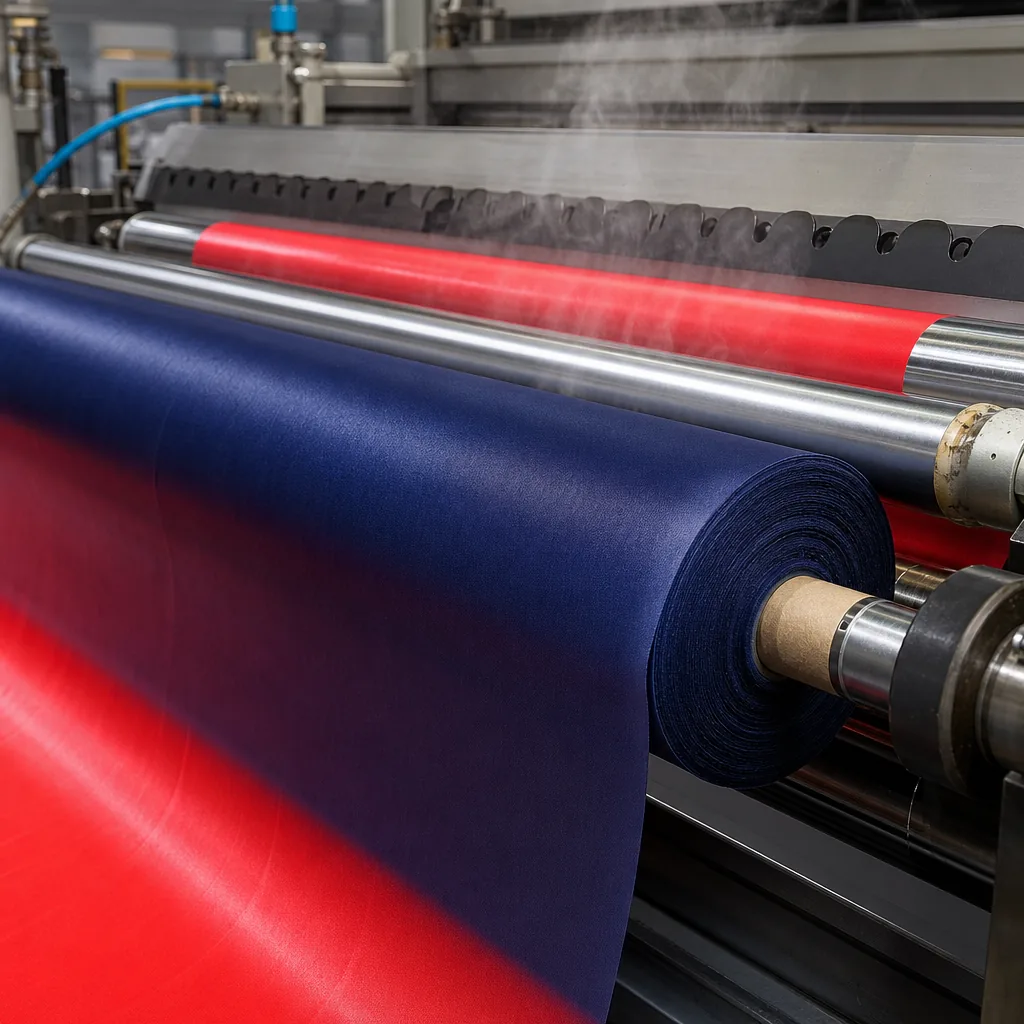
Buying an RPET umbrella canopy sounds straightforward until the paperwork and the fabric do not line up. On the factory floor, recycled claims only matter if the resin source, knitting, dyeing, and finished fabric can be traced through GRS certification, transaction certificates, and production records that hold up under review. Buyers need a clear way to separate real recycled content from labels that look correct but cannot be verified.
What RPET fabric actually is
RPET is polyester made from recycled PET, usually post-consumer bottles or industrial scrap that gets sorted, washed, shredded, melted, and re-extruded into filament yarn. In umbrella work, that yarn is then woven into pongee, most commonly 190T or 210T, because pongee gives a tight, even canopy with predictable hand feel and print performance. A true RPET umbrella canopy is not a different fiber family; it is the same polyester chemistry as virgin PET, but with recycled feedstock at the polymer stage, so the fabric can still be coated, heat-set, dyed, and cut on normal umbrella lines.
What matters in production is the actual recycled content and how consistently the fabric is made. Cheap claims usually stop at a marketing sheet, while a real recycled umbrella fabric certification should tie the yarn or fabric lot back to audited input material and documented mass balance or pre-consumer/post-consumer content, depending on the program. GRS RPET umbrella orders are the ones buyers ask for when they need a verifiable chain, not just a recycled-looking tag. In practice, the canopy still has to pass the same factory checks as virgin polyester: denier stability, coating adhesion, colorfastness, seam slippage, and shrink control after heat-setting. That is how you verify recycled content umbrella claims without guessing from the finish or the price.
For buyers, the useful distinction is between recycled origin and finished performance. RPET can be turned into a sustainable umbrella fabric that behaves very close to standard polyester, but only if the spinning and weaving are controlled; poor resin contamination shows up as weak yarn, uneven weave, and inconsistent coating pickup. On the floor, we treat it like any other canopy fabric from a quality standpoint: inspect roll width, GSM, tensile strength, and color lot first, then confirm the certification paperwork separately. If either side is weak, the claim is not worth much, because a recycled umbrella still has to open cleanly, resist tearing at the tips, and hold up under wind and UV coating without early failure.
Why claims need verification
An `RPET umbrella canopy` line on a spec sheet proves almost nothing by itself. In practice, I have seen suppliers call a canopy RPET because a few percent of the yarn stream came from recycled bottles, or because the top cloth was blended with virgin polyester and nobody bothered to say so. That is exactly how greenwashing happens: the buyer sees one recycled keyword, but the fabric, the dye lot, and the finished umbrella may not meet any real recycled-content standard. If you need a sustainable umbrella fabric that can stand up in procurement, the claim has to be traceable back to the fiber source, not just printed on a quotation.
A real `GRS RPET umbrella` should come with paperwork that connects the resin, yarn, weaving mill, and cut-and-sew factory under chain-of-custody controls. The useful documents are not marketing brochures; they are transaction certificates, scope certificates, and test records that show the recycled input percentage and the certified facilities involved. Without that, a supplier can switch from recycled yarn to virgin yarn without the buyer noticing until an audit or customer complaint exposes the gap. Our standard practice at ZheBrella is to treat recycled-content claims the same way we treat waterproof or windproof claims: if it cannot be verified, it is not a spec, it is a sales statement.
To verify recycled content umbrella sourcing, ask for the certificate number, issuing body, facility scope, and the exact fabric construction, such as 190T or 210T pongee, before you approve production. Then match the purchase order, dye lot, and carton labels against the certified paperwork, because mismatches are where most failures show up. A `recycled umbrella fabric certification` should also be consistent with the rest of the supply chain, including labeling, export documents, and any customer-facing sustainability language. If the factory cannot produce that chain in a clean file, treat the claim as unverified and assume the recycled percentage may be overstated or entirely fabricated.
GRS and RCS certification
GRS and RCS are not decorative labels; they are chain-of-custody systems that track recycled material from the first input to the finished RPET umbrella canopy. The Recycled Claim Standard verifies that recycled content is present and documented through each handoff, while the Global Recycled Standard adds broader requirements around social, chemical, and environmental controls. In practice, that means every lot of PET flakes, chips, or yarn needs transaction certificates, supplier declarations, and mass-balance records that line up with purchase orders and production output. If the paperwork breaks at any point, the claim breaks with it. For a buyer trying to verify recycled content umbrella goods, that paper trail matters more than a sales spec sheet. Our standard practice is to treat the certification scope as part of the BOM, not an afterthought, because a recycled umbrella fabric claim without traceability is just marketing text.
For an RPET umbrella canopy, certification only works if the mill, yarn spinner, laminator, printer, and final assembler are all inside the same audited chain or covered by valid transfer records. The auditor checks that the recycled input percentage matches the certified output, that uncertified material is segregated, and that labels are used correctly. GRS is usually the stronger signal when a buyer wants recycled umbrella fabric certification with broader compliance controls; RCS is narrower and easier to apply when the only question is recycled content. In real purchasing, the gap is between a GRS RPET umbrella on paper and one that can survive a factory audit with invoices, lot codes, and material balances intact. A sustainable umbrella fabric claim should be backed by test reports, scope certificates, and transaction certificates, not just a recycled yarn supplier’s verbal assurance.
Transaction certificates as proof
A GRS or RCS transaction certificate is the paper trail that connects your specific order to certified recycled material. For an RPET umbrella canopy, it should sit on top of the supplier’s scope certificate and list the buyer, seller, certificate number, product description, material claim, and the exact quantity transferred. In practice, that means the fabric mill or converter can show that the recycled polyester used in the canopy was bought and sold through a certified chain of custody, not just described as “recycled” on a spec sheet. If you are trying to verify recycled content umbrella claims, this document is the point where the claim becomes auditable instead of promotional.
A proper GRS RPET umbrella file should match the transaction certificate to the purchase order, commercial invoice, packing list, and shipment quantity. If the certificate says 5,000 meters of 190T recycled polyester fabric, and your order uses 5,000 meters for a 23-inch auto-open-close model, that is a clean trace. If the numbers do not align, the claim gets weak fast. The same logic applies to colorway, weave, coating, and composition: pongee, POE, PVC, or EVA all need separate treatment, and a recycled umbrella fabric certification should not be confused with a general factory quality report. The certificate proves chain-of-custody volume, not product performance by itself.
Buyers should read the transaction certificate as part of the total evidence set, not as a stand-alone badge. A sustainable umbrella fabric claim is stronger when the supplier can show scope certificate, transaction certificate, and batch-level production records that connect the RPET umbrella canopy to the finished umbrellas in that shipment. Our standard practice is to keep those documents aligned with the order number and export paperwork so procurement teams can verify the claim during audit or resale. If the mill, converter, and umbrella assembler all sit inside the certified chain, you can defend the recycled content claim with actual records instead of relying on vague marketing language.
Performance and cost vs virgin polyester
An RPET umbrella canopy does not look dramatic to the end user if the yarn quality is controlled. In 190T and 210T pongee, it can hang and print almost like virgin polyester, but the fabric often has slightly more yarn-to-yarn variation because the feedstock comes from recycled bottles and post-industrial scrap. That is where buyers need to be realistic: a sustainable umbrella fabric can still be smooth, water-repellent, and suitable for UV coating or Teflon finish, but the hand feel may be a little less crisp than a top-grade virgin polyester run. On a 21" to 27" frame, the difference is usually subtle unless the spec is under tight color matching or high-end retail positioning.
Durability is more about yarn quality, coating, and sewing than the recycled label itself. A GRS RPET umbrella built on a fiberglass rib set with proper panel tension can pass normal wind testing and daily use, but it should not be judged as automatically better than virgin polyester just because it is recycled. Buyers should verify recycled content umbrella claims with recycled umbrella fabric certification, not with a generic supplier statement. The usual premium for RPET is modest but real: depending on certification scope, dyeing, and order volume, the canopy fabric can land about 8% to 20% above virgin polyester, and the total umbrella cost often moves less than that once frame, labor, and packaging are included.
Where the cost gap becomes visible is in low-MOQ orders, custom dyed panels, and programs that need a full paper trail for retail compliance. ZheBrella typically sees the strongest RPET demand from buyers who need a certification package for brand audits, not from buyers chasing the lowest FOB number. If you want to verify recycled content umbrella claims properly, ask for the GRS transaction certificate, scope certificate, and material balance documents tied to the exact lot, then match those records to the fabric mill and the finished PO. That is the only way to separate a real recycled program from a canopy that just uses recycled claims in the selling sheet.
Frequently Asked Questions
How do I know an RPET umbrella is really recycled?
Ask for GRS (Global Recycled Standard) or RCS certification and, critically, a transaction certificate that links your specific order to certified recycled input. Without that chain-of-custody paperwork, an 'RPET' label is just a claim and can expose you to greenwashing risk.
Does RPET fabric perform as well as virgin polyester?
Modern RPET pongee performs very close to virgin polyester for umbrella canopies — similar strength, hand-feel, and water repellency. It typically costs a little more and benefits from certification, but quality is not the obstacle it once was.
What documents should I request to verify recycled content in an RPET umbrella order?
Ask for the supplier’s GRS scope certificate, the transaction certificate for the batch, and the commercial invoice that matches the certified quantity. If the factory is using subcontractors, confirm each link in the chain of custody is covered; otherwise the recycled claim can break at a non-certified step.
How much recycled content is typically required for a GRS umbrella canopy?
For GRS product claims, the recycled input must be at least 20% of the product by weight, and the claim must be supported by chain-of-custody documentation. For canopy-only orders, buyers usually still verify the exact recycled polyester percentage in the fabric spec sheet before approving production.
How long does it usually take to get a certified RPET umbrella sample and bulk order moving?
A certified sample is usually 5-10 days once the fabric and print are approved, while bulk production often runs 25-40 days depending on canopy fabric availability and decoration method. If you need transaction certificates issued cleanly, add time for document matching before shipment.
Looking to Launch Your Custom Umbrella Line?
ZheBrella is a Zhejiang-based OEM/ODM umbrella manufacturer with 17 years of export experience. Free design, low MOQ from 100 pieces, windproof construction, full-color print.
Get Free Quote Now »People Also Search For
Related Articles
Eco-Friendly Umbrellas: RPET, Recycled Frames, and Real Sustainability
What genuinely makes an umbrella sustainable - RPET canopy, recycled handles, repairability - versus greenwashing, and h...
Read More »
Recycled rPET Umbrellas: Buyer Guide for Sustainable Programs
Specify recycled rPET umbrellas with verified yarn, 190T/210T canopy options, print limits, MOQ, lead times, and QC chec...
Read More »
Recycled PET Umbrellas: OEM Spec Guide for Buyers
Learn how to specify rPET umbrella fabric, GRS claims, frame options, print limits, MOQ, QC, and lead times for sustaina...
Read More »