Recycled PET Umbrellas: OEM Spec Guide for Buyers
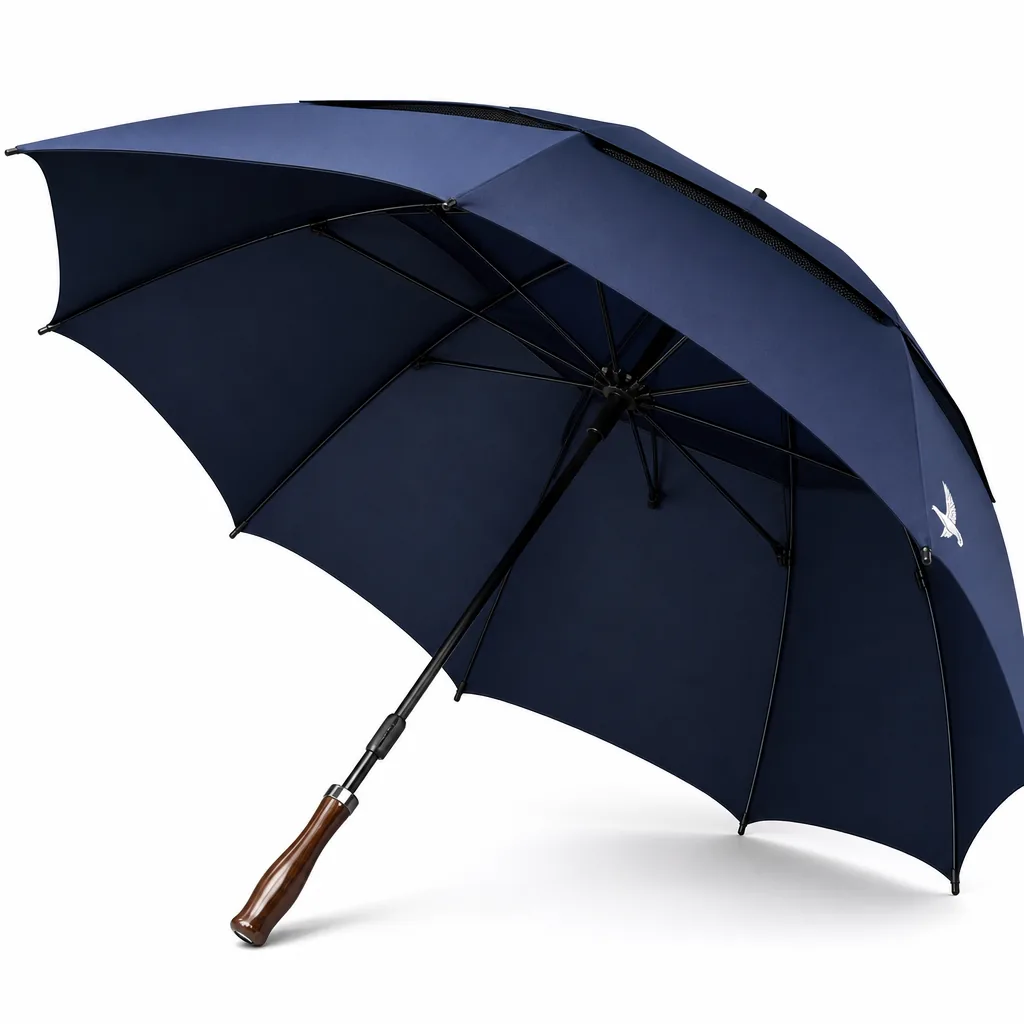
Sourcing an eco umbrella is not just changing the canopy fabric; every claim, dye lot, print method, rib choice, and packing spec has to survive both buyer audits and real production tolerances. As a recycled PET umbrellas manufacturer in Songxia, we see OEM projects succeed when rPET fabric, GRS documentation, frame engineering, MOQ planning, and QC checkpoints are defined before sampling—not corrected after bulk goods are on the line.
How rPET Umbrella Fabric Is Specified
The first specification question is not “Is it recycled?” but “What is the yarn source and how is it certified?” Most rPET umbrella fabric starts with post-consumer PET bottles that are washed, chipped, melted, and extruded into filament yarn; better mills keep transaction records from flake to yarn to greige fabric. For export programs, buyers should ask whether the fabric mill or the finished umbrella factory holds GRS scope certification, because GRS certified umbrellas require chain-of-custody paperwork, not just a hangtag claim. In our area, a recycled PET umbrellas manufacturer will usually offer 190T and 210T pongee equivalents in rPET, but the hand feel can differ slightly from virgin polyester because yarn denier, filament count, and heat-setting conditions vary by mill. For compact 21" and 23" models, 190T rPET pongee is normally adequate; for 27" golf umbrellas or retail pieces where drape and opacity matter, 210T is the safer baseline.
rPET umbrella fabric is specified much like standard pongee: yarn count, construction, weight, dye method, finishing, and test standard should all be written on the purchase order. Piece-dyed rPET is common for black, navy, red, and PMS-approximate promotional colors, while yarn-dyed options are limited and costlier. For sustainable promotional umbrellas with logo printing, I recommend checking colorfastness to rubbing and water before approving bulk fabric; a practical target is Grade 4 or above for wet rubbing and Grade 4-5 for water staining, especially on white heat-transfer logos. Dark rPET shades can bleed if the mill rushes soaping after dyeing. If the project needs sublimation, use white or light-color rPET polyester, not recycled nylon, and confirm shrinkage after heat press. A factory should test panels after cutting because canopy tension can reveal shade variation that is hard to see on a flat lab dip.
Water repellency is added after weaving and dyeing, usually with a C0 fluorine-free finish or, on older specs, a fluorocarbon DWR. The coating does not cancel the recycled-content claim as long as the base fabric’s recycled polyester percentage is documented correctly; however, buyers should not describe the whole umbrella as “100% recycled” if the frame is steel, the handle is virgin plastic, and the sewing thread is conventional polyester. A more accurate claim is “canopy made with 100% recycled PET polyester,” backed by GRS transaction certificates where required. PU, silver UV, black UV, and Teflon-type finishes also affect weight, hand feel, and print adhesion, so they must be approved together with the logo process. For eco friendly OEM umbrellas, ZheBrella’s standard practice is to lock the rPET fabric mill before sampling, then keep the same lot source for bulk production to avoid mismatched panels and failed compliance reviews.
Certifications and Claims Buyers Should Verify
The first document to ask for is the current GRS certificate, and not just a PDF screenshot with a logo on it. A real recycled PET umbrellas manufacturer should show the certificate holder name, site address, scope, standard version, and certification body, because that tells you whether the factory is actually approved for the process you are buying. Scope matters more than people think: a mill may be certified for recycled yarn or woven fabric only, while the umbrella factory itself may have no GRS scope at all. In that case, the material may be legitimate, but the final product claim still needs careful wording. For sustainable promotional umbrellas, I always tell buyers to separate “uses GRS-certified fabric” from “GRS-certified finished goods,” because those are not the same commercial claim.
The transaction certificate, or TC, is the piece that connects the recycled input to your order quantity, and it is where many eco friendly OEM umbrellas fall apart in review. The TC should match the supplier name, product category, recycled fiber content, and shipment volume, and the dates should make sense relative to production and export. If a supplier cannot show a transaction certificate for the exact lot, then the recycled-content claim is weak even if the fabric mill is certified. Recycled-content labeling also needs precision: say “contains recycled PET,” “rPET umbrella fabric,” or “made with GRS-certified material” only when the paperwork supports it. Do not let a printer put a generic green leaf on the canopy and call it compliance; that is marketing, not certification.
Buyers also need to understand the difference between certified fabric and certified finished umbrellas before placing an order. Certified fabric means the textile in the canopy has a valid chain of custody; certified finished umbrellas mean the cut-and-sewn umbrella, assembled with ribs, shaft, handle, and packaging, is covered within the certified scope and documented by the factory. If you are sourcing GRS certified umbrellas, ask whether the sewing plant, print shop, and packing line are all within scope, because subcontracting can break the chain. As a recycled PET umbrellas manufacturer, ZheBrella treats this as a paperwork exercise first and a production exercise second: if the scope, TC, and label claim do not line up, the shipment should be described conservatively in the PO, invoice, and carton marks. That avoids customs disputes and prevents overstating the recycled content of the final goods.
Frame, Rib, and Mechanism Choices for rPET Programs
For rPET programs, the frame choice matters more than the canopy story once the umbrella is in a user’s hand. A 3-fold compact with a recycled PET canopy is usually built on steel, aluminum, or a mixed shaft system: steel gives better price and stronger joint feel, aluminum cuts weight but bends easier at the runner and middle shaft, and fiberglass is best kept for ribs or rib tips rather than the whole compact frame. For 21" and 23" 3-fold models, I normally recommend a black electroplated steel shaft with fiberglass ribs if the order is for sustainable promotional umbrellas that must survive real commuting. Straight umbrellas in 23" or 27" sizes can use full fiberglass ribs with a steel shaft for a good balance, while golf umbrellas at 30" or 32" should move to fiberglass shaft and ribs if the buyer wants a wind-tunnel claim around 50+ mph. A recycled PET umbrellas manufacturer should not quote only canopy fabric; the frame BOM decides return rates.
Rib count is another place where buyers often overpay or underspec. An 8K umbrella is standard: 8 ribs, fewer sewing points, lower labor cost, and enough stability for most 190T or 210T rPET umbrella fabric. A 10K frame adds some canopy tension but is not always worth the tooling change unless the panel artwork needs a rounder silhouette. A 16K straight umbrella looks premium and feels stable in the showroom, but it adds weight, sewing time, and more failure points if the rib gauge is too thin. For eco friendly OEM umbrellas, I prefer 8K for compact giveaways, 8K or 10K for retail straight models, and 8K double-canopy construction for golf umbrellas rather than blindly choosing 16K. If the buyer needs GRS certified umbrellas, remember the GRS scope normally covers the fabric and sometimes certain components, not automatically every steel spring, rivet, runner, or fiberglass rib in the frame.
Manual, auto-open, and auto-open-close mechanisms should be selected by use case, not by catalog photos. Manual open is cheapest, lighter, and more durable because it has fewer springs and locking parts; it is the safest choice for low-MOQ event umbrellas and budget retail programs. Auto-open adds convenience for straight and golf models, usually increasing cost by roughly $0.20 to $0.60 per unit depending on shaft and runner quality, but it also needs better QC on button force, lock engagement, and runner smoothness. Auto-open-close on 3-fold umbrellas is the most failure-sensitive option, especially when paired with heavy 210T pongee or coated rPET fabric, because the closing spring must fight canopy weight and rib resistance. Our standard practice at ZheBrella is to cycle-test mechanisms before bulk production, then inspect under AQL 2.5 for open/close function, rib alignment, button safety, and shaft wobble before FOB or DDP shipment.
Printing, Packaging, and Brand Presentation
Logo method should be chosen after the rPET umbrella fabric color is locked, not before. On 190T or 210T pongee made from recycled PET yarn, screen printing is still the most reliable choice for 1–3 spot colors, especially on 23" and 27" panels where a buyer wants a clean corporate mark across one, two, or four panels. For sustainable promotional umbrellas, I usually specify low-bleed ink and a 24-hour curing check because rPET can behave slightly differently from virgin polyester when the canopy has WR, Teflon, or UV UPF 50+ coating. Heat transfer works better for gradients, small text, and multi-color event artwork, but the transfer film must be tested for adhesion after opening and closing cycles; cheap film cracks near the panel fold lines after 200–300 cycles. Digital print is useful for full-panel graphics, but it needs a white underbase on dark navy, black, forest green, or burgundy rPET umbrella fabric, otherwise brand colors look dull.
Darker recycled fabrics make logo visibility harder than many buyers expect. A white logo on black rPET looks sharp, but yellow, red, and light blue often lose brightness unless the factory adds a white base layer or increases ink opacity. On double-canopy vented windproof umbrellas, print placement also matters because the upper vent panel can shift slightly during wind release; I avoid placing thin typography across vent seams. For GRS certified umbrellas, the print process should be documented separately from the fabric certificate, because GRS normally proves recycled input and chain of custody, not that every ink or coating is recycled. A serious recycled PET umbrellas manufacturer should provide strike-off samples before mass production, with logo size, Pantone reference, print position tolerance, and rubbing test results recorded. Our standard practice at ZheBrella is to approve one pre-production canopy under D65 light before cutting bulk panels.
Packaging should support the eco claim without making the umbrella look unfinished. Recycled kraft sleeves are a good default for eco friendly OEM umbrellas, especially for promotional distributors shipping 500–5,000 pieces to conferences, universities, or outdoor campaigns. For retail, kraft alone is often too plain, so buyers add a printed belly band, FSC paper hangtag, barcode sticker, and care label showing canopy material, frame type, and origin. A 21" folding umbrella may use an individual rPET sleeve plus kraft tuck box, while a 23" or 27" straight umbrella usually uses a sleeve, hangtag, and master carton with 24 or 36 pieces depending on handle size. If the order claims sustainability, avoid mixed-material packaging like laminated glossy boxes or PVC windows unless retail requirements demand it. Confirm carton drop test, humidity protection, and AQL 2.5 packing inspection, because damaged sleeves and crooked hangtags are the first defects buyers see before they ever test the frame.
MOQ, QC, Lead Time, and Import Terms
MOQ is usually where recycled projects get misunderstood. For stock rPET umbrella fabric, especially black, navy, royal blue, red, forest green, and white in 190T or 210T pongee, a practical MOQ is often 500–1,000 pieces per model and color for straight umbrellas, golf umbrellas, and auto-open folding umbrellas. Custom-dyed rPET fabric is different because the dye lot must justify mill setup, lab dips, and GRS transaction documentation; expect 2,000–3,000 pieces per color, sometimes 5,000 pieces if the buyer needs a tight Pantone match on 210T pongee with PU, Teflon, or UPF 50+ coating. For sustainable promotional umbrellas with a one-color logo, stock fabric plus screen printing is the cheapest route. If the canopy needs full-panel sublimation, digital proofing, and exact brand colors, the MOQ may stay low, but unit cost and approval time rise.
QC for GRS certified umbrellas should check both umbrella performance and material traceability. On the product side, we normally inspect under AQL 2.5 for major defects and AQL 4.0 for minor defects unless the buyer specifies stricter limits. Critical checkpoints include canopy symmetry, stitch density at panel seams, tip attachment strength, runner movement, auto-open or auto-open-close function, rib alignment, shaft straightness, handle bonding, logo placement tolerance, and water repellency after spray testing. For golf models, I also want open-close cycling and wind testing on fiberglass ribs, especially 8K and 16K frames, because cheap rib joints fail before the rPET canopy does. On the document side, ask your recycled PET umbrellas manufacturer for GRS scope certificate, transaction certificate when applicable, fabric composition report, and a production lot record matching fabric rolls to finished cartons.
Sampling is not instant if the buyer wants real rPET umbrella fabric instead of a normal polyester substitute. A plain sample from available stock parts can usually be made in 5–7 days, while a printed sample takes 7–12 days after artwork confirmation. Custom-dyed rPET with lab dip approval normally adds 7–10 days before sample cutting. Bulk production is realistic at 25–35 days for stock fabric orders after deposit and sample approval, and 40–55 days for custom-dyed fabric, special coatings, FSC paper packaging, or mixed models across 21-inch folding, 23-inch stick, and 27-inch/30-inch golf umbrellas. Import terms should be agreed before pricing: FOB Ningbo or Shanghai works for buyers with their own forwarder, while DDP is better for Amazon sellers and promotional distributors needing landed cost control. As an eco friendly OEM umbrellas supplier, ZheBrella treats freight carton strength, HS code, packing list accuracy, and carton drop resistance as part of QC, not an afterthought.
Frequently Asked Questions
Is rPET umbrella fabric less waterproof than regular pongee?
No, waterproof performance depends more on weaving density, finishing, and coating than on whether the yarn is recycled. Buyers should request hydrostatic or water-repellent test data for the specific 190T or 210T rPET fabric.
Can every part of an umbrella be made from recycled material?
Usually not. The canopy can use rPET, but ribs, shafts, tips, handles, and mechanisms are commonly steel, fiberglass, aluminum, PP, ABS, EVA, or wood depending on the model.
What documents should a buyer request to support a GRS umbrella claim?
Ask for the supplier’s current GRS certificate, the relevant transaction certificate for the rPET fabric lot, and a product material breakdown showing which umbrella components are recycled versus conventional. If hangtags or packaging mention GRS, confirm the exact claim language is covered by the certified scope.
Are there technical limits when printing logos on rPET umbrella fabric?
Yes. rPET pongee and polyester usually support 1-color to full-color printing, but very large solid coverage can affect color consistency and hand feel. Buyers should approve a pre-production strike-off and confirm whether water-based or standard screen inks are being used for the target market.
How do MOQ and lead time usually differ for recycled PET umbrella programs versus standard polyester?
MOQ is often the same for standard factory models, commonly around 500 to 1,000 pieces per design, but special rPET fabric colors or custom-certified trims can push minimums higher. Lead time is typically 7 to 15 days longer if the recycled fabric must be newly booked, dyed, or matched to certification paperwork.
Looking to Launch Your Custom Umbrella Line?
ZheBrella is a Zhejiang-based OEM/ODM umbrella manufacturer with 17 years of export experience. Free design, low MOQ from 100 pieces, windproof construction, full-color print.
Get Free Quote Now »People Also Search For
Related Articles
RPET Umbrellas for Sustainable Retail and Promo Programs
Learn how to specify RPET umbrella fabric, certification, print methods, frames, MOQ, and packaging for sustainable reta...
Read More »
RPET Umbrellas for Custom Programs: What Buyers Should Spec
Source RPET umbrellas with clear specs on recycled canopy fabric, frame options, testing, MOQ, and lead times to avoid v...
Read More »
RPET Pongee Umbrellas: Buyer Guide for Sustainable Orders
Source RPET pongee umbrellas with verified recycled fabric, 190T or 210T specs, GRS documents, print options, MOQ planni...
Read More »