Bottle Umbrellas for Retail and Gift Programs: Buyer Guide
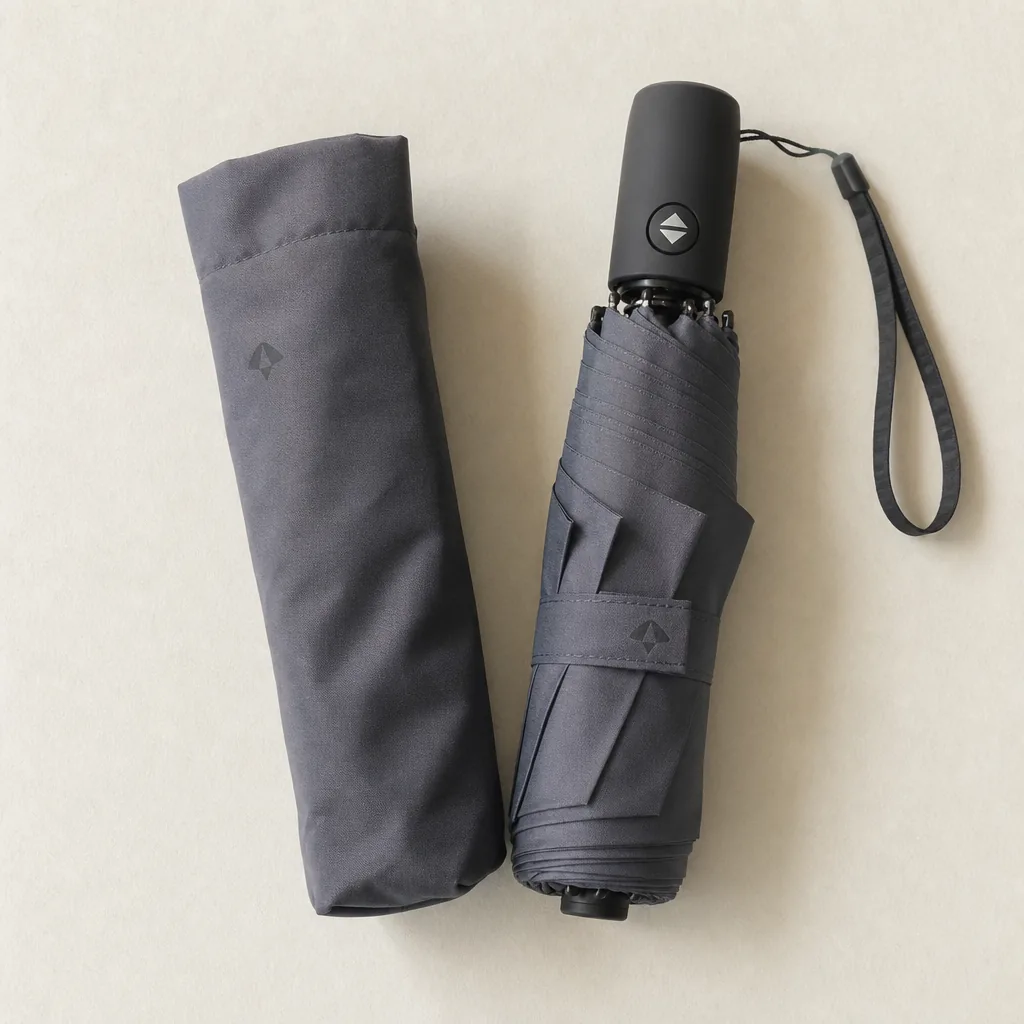
For retail buyers and gift program managers, bottle umbrellas look simple until leakage complaints, weak ribs, or oversized packaging start eroding margin and customer trust. On our Songxia production lines, the real decisions come down to frame gauge, canopy drying behavior, bottle fit tolerance, print area limits, and carton efficiency—details a reliable bottle umbrella supplier should be able to explain before sampling starts.
What Makes a Bottle Umbrella Different From Standard Compacts
A bottle umbrella is typically a 3-fold compact packed in a rigid or semi-rigid case shaped like a water bottle, thermos, or capsule instead of a standard sleeve. For retail, that is not a cosmetic tweak; it changes merchandising. The case stands upright, hides a damp canopy after use, and reads as a finished gift item rather than a loose compact umbrella with a slipcover. That presentation matters in bookstores, museum shops, lifestyle retail, and other impulse channels where shelf appeal often drives the first purchase decision before the buyer asks about an 8K frame, manual versus auto open compact umbrella function, or 190T versus 210T pongee. Most programs in this format use a 21 in. or 22 in. compact on an 8-rib frame, with manual open or auto open selected against target FOB. For a buyer evaluating a bottle umbrella supplier, the real question is simple: does the bottle format add enough perceived value, display advantage, and gift readiness to offset the added packaging cost and freight cube versus a standard compact.
The self-contained case is why this format works so well for gift programs and licensed retail. After use, the wet umbrella drops back into a fitted PP, ABS, or EVA shell, which helps protect tote bags, backpacks, and store purchases while reinforcing the product as a compact umbrella gift item. That benefit is especially useful in museum shops, admission stores, corporate gift kits, and design-led retail where bottle umbrella packaging is part of the sale, not an afterthought. A reliable bottle umbrella supplier should engineer the shell, folded umbrella length, handle shape, strap, and insert card as one system. If the closed umbrella runs even 8-10 mm too tall, cap fit and daily usability suffer immediately. Confirm folded length, bottle inner diameter, and handle profile before mass production. The trade-off is direct: compared with a compact in a polyester sleeve, the bottle adds molded parts, assembly labor, and more carton volume, raising both FOB and landed freight. If the program also needs custom umbrella gift packaging such as a printed box, hangtag, barcode label, or color-matched bottle, packaging can become a significant share of total unit cost, so retail umbrella OEM buyers should decide early whether the bottle itself is the sellable package or only one layer of it.
Frame, Fabric, and Case Specs Buyers Should Compare
Start with the opening mechanism because it directly affects unit cost, return risk, and shelf appeal. Most bottle-format models use a 21-inch or 22-inch 8K compact frame with a 3-fold shaft sized to fit rigid bottle umbrella packaging. Manual open is usually lower cost by a few tenths of a dollar at production volume and generally creates fewer warranty issues because it removes the spring cartridge—the part most likely to weaken first in an auto open compact umbrella. Auto-open can improve perceived value for a compact umbrella gift item, but approval should depend on measurable frame details: spring strength, runner thickness, rib diameter, and shaft wall thickness. Thin steel ribs paired with a weak spring are a common cause of bent stretchers and poor re-close performance after repeat use. A credible bottle umbrella supplier should define the exact frame build before sampling—standard 8K layout, manual or auto-open mechanism, rib material, and whether the design is intended for basic commuter use or a higher wind-resistance target.
Frame construction has more impact on durability than the bottle shell. A full steel 8K frame can work for low-cost promotions, but it adds weight and steel ribs that deform in gusts often stay bent, which raises replacement risk. Fiberglass ribs cost more but flex and recover better, making them the stronger choice for retail umbrella OEM programs that need better field performance. A mixed build is often the practical middle ground: steel shaft for cost control, fiberglass end ribs for better flex recovery, especially on 21-inch and 23-inch auto-open units. Buyers should also inspect runner, notch, rivet quality at rib joints, and finish consistency, since poor riveting causes more failures than the canopy fabric. For the canopy, 190T pongee is usually sufficient for event gifting and mass retail when the weave is even and the water-repellent finish is applied correctly; 210T pongee is the upgrade for a denser hand, cleaner print surface, and better drape on dark Pantone shades or full-panel graphics. Treat the case as part of the performance spec, not just custom umbrella gift packaging: rigid PP shells, secure cap fit, silicone-sealed tops, and absorbent or quick-dry inner sleeves reduce post-use leakage far better than decorative bottle styling alone. A simple drip test—wet the umbrella, cap it, carry it in a tote, then check for leaks—will tell you more than the mockup.
Branding Opportunities on the Bottle Case and Canopy
A bottle umbrella supplier should treat the bottle case and canopy as two separate branding surfaces because the print methods, cost, and visual payoff are different. The bottle shell is usually ABS or AS plastic with a curved profile, so it favors controlled, small-area decoration instead of full-wrap art. In most retail umbrella OEM programs, the cleanest result is 1-color or 2-color pad printing on the front face, with laser engraving as an option on coated shells when the brief calls for a low-key retail mark. The curve sets real limits: fine serif copy, dense QR codes, and edge-to-edge graphics can distort or lose definition as the image wraps around the radius. For gift-led programs, that is often an advantage. A small logo, monogram, or short wordmark reads more premium on bottle umbrella packaging than a crowded layout, and it keeps reject risk lower during mass production. If the objective is shelf impact or event visibility, use the case for brand identification and move the main artwork to the canopy rather than forcing the shell to do both jobs poorly.
The canopy is the high-visibility branding area because it is readable at normal viewing distance when open. On a 21-inch or 23-inch auto open compact umbrella, buyers typically print 1 to 4 panels for retail programs and expand to 6-panel or full 8-panel coverage for promotional campaigns. Pongee 190T and 210T fabrics are standard for spot-color screen printing; heat transfer or sublimation is the better fit for gradients or photo-style graphics, especially on white or light canopies. An 8K fiberglass frame helps keep panel geometry consistent for repeat logo placement, but seam allowance and panel taper still reduce usable art area near the tips. Use hangtags and inserts for the information the shell and canopy should not carry: UPC, care instructions, compliance details, QR codes, gift messaging, and brand story. For a compact umbrella gift item, the most cost-efficient setup is usually a printed shell logo, a simple canopy mark, and a branded insert. Add a belly band or color card for custom umbrella gift packaging only when the retail presentation justifies the extra unit cost and packing time.
Operational Considerations for Retailers and Importers
For retail, bottle umbrella packaging has to sell on shelf and survive distribution. Specify a case with a wide, stable base so it stands straight, plus a flat or slightly recessed barcode panel so the UPC or EAN scans cleanly without bridging a seam or a tight radius. A common placement is the lower back quadrant, 12-18 mm above the base, which works with handheld scanners and keeps the front panel clean for graphics. Buyers should also review wall thickness and resin choice with the bottle umbrella supplier, because thin PP, AS, or PET-style cases can ovalize under master-carton compression and look used before they reach store shelves. Clear glossy bottles often present better than fabric sleeves, but scratch-prone surfaces raise avoidable returns when shoppers assume scuffs mean prior handling. Ask for post-transit photos after carton vibration and compression testing, not just studio samples, so you can judge shelf appearance after actual distribution. For gift retail, custom umbrella gift packaging only works if the case still looks saleable after inbound handling, store replenishment, and reverse logistics.
Bottle umbrellas need tighter impact controls than standard sleeves because the rigid case absorbs the first hit. A sleeve can scuff and remain acceptable; a cracked bottle usually becomes a breakage claim even when the 21 inch or 23 inch umbrella inside still functions. A practical check is repeated filled-sample drops from 80-100 cm onto the base, sidewall, and cap edge, with attention to thread starts, hinge points, and cap interfaces where cracks usually begin. If the program uses an auto open compact umbrella, the heavier shaft and handle increase internal movement, so a locator ring or bottom pad is worth adding in most retail umbrella OEM programs to cut cracked-case complaints during FOB shipment and store restocking. Customer satisfaction also depends on wet repacking. Bottle formats usually keep handbags, cars, and counters cleaner than standard sleeves, which helps a compact umbrella gift item outperform sleeve-packed units on mess-related returns, but only if the opening is wide enough for the runner and strap to reload a wet canopy without forcing it. A 190T pongee canopy sheds water faster than basic polyester, yet poor neck clearance still frustrates users. Net result: bottle designs usually improve presentation and reduce mess-related returns, but only when the case is durable enough for parcel handling and simple to repack after use.
MOQ, QC Standards, and Shipping Terms to Confirm
Start with MOQ, because the bottle case usually sets the minimum more than the canopy does. With a stock bottle mold, standard cap threading, and a regular ABS or PP shell, most bottle umbrella supplier programs can start at 500 to 1,000 pieces per color. If you need a Pantone-matched case, molded logo, or soft-touch coating for bottle umbrella packaging, the practical MOQ usually moves up to 2,000 to 3,000 pieces. A fully new shell tool can push the floor to 5,000 pieces or higher, depending on cavity count and how many case colors you split across the run. Ask the factory to break out MOQ by component: umbrella assembly, bottle case, printed sleeve, hangtag, and insert card. That matters because a compact umbrella gift item can meet the umbrella minimum but still fail the minimum for custom umbrella gift packaging, especially when carton quantities, print plates, or barcode labeling are quoted separately. For retail umbrella OEM work, that line-item view also makes it easier to compare stock packaging against custom pack-out before you commit to a launch quantity.
Set QC at AQL 2.5 and define the pass-fail points so your inspector and factory score the same defects. For bottle fit, require the folded umbrella to sit fully inside the case without bulging, the cap to thread smoothly within 2 to 3 turns, and no leakage after a light water-spray test plus shaking. On coated shells, check for visible scratches, color rub, and gloss variation under standard inspection lighting. On the umbrella itself, require repeated open-close cycling, secure runner lock engagement, rib alignment after cycling, and stable spring action on any auto open compact umbrella version; weak top notches and poor stitching usually show up early on 8K frames in 21 inch or 23 inch sizes. Lead time is typically 25 to 35 days after sample approval for stock 190T pongee umbrellas with an existing shell, and 35 to 50 days when you add shell color matching, retail labels, or retail-ready packaging, especially from August through November. FOB works better when your team already manages a forwarder and needs control over bookings, carton marks, or sailing changes. DDP is usually the safer choice for gift-season launches with fixed delivery dates or first-time imports because it reduces booking mistakes and landed-cost surprises.
Frequently Asked Questions
Do bottle umbrellas usually cost much more than regular compact umbrellas?
Yes, because the bottle case adds material, assembly, and packaging complexity. The premium is usually justified when the program values shelf presentation or drip containment more than lowest landed cost.
Is auto-open a good choice for bottle umbrellas?
It can be, but buyers should balance convenience against mechanism cost and defect risk. For mass gift programs, a manual or auto-open-only design is often simpler than a full auto open-close compact.
What bottle umbrella dimensions work best for retail shelves and gift boxes?
Most buyers choose a 21 to 22 inch, 3-fold bottle umbrella with a closed length around 11 to 12 inches. That size balances usable canopy coverage with carton efficiency and fits more easily into gift boxes, tote bundles, and countertop displays.
What leakage-control details should buyers confirm before placing a custom bottle umbrella order?
Ask whether the bottle case uses a threaded cap, silicone seal, or drain-friendly inner cup, and request a wet-pack test after 30 minutes of closure. For retail programs, confirm the case material thickness and whether the umbrella sleeve and bottle interior are designed to reduce trapped moisture during transit.
How does custom gift packaging affect MOQ and lead time for bottle umbrellas?
A standard private-label umbrella with stock bottle casing may start around 500 to 1,000 pieces, but custom printed boxes, inserts, or molded packaging often push MOQ to 1,000 to 3,000 pieces. Lead time typically increases by 7 to 15 days if packaging requires new artwork approvals, dielines, or sampling.
Looking to Launch Your Custom Umbrella Line?
ZheBrella is a Zhejiang-based OEM/ODM umbrella manufacturer with 17 years of export experience. Free design, low MOQ from 100 pieces, windproof construction, full-color print.
Get Free Quote Now »People Also Search For
Related Articles
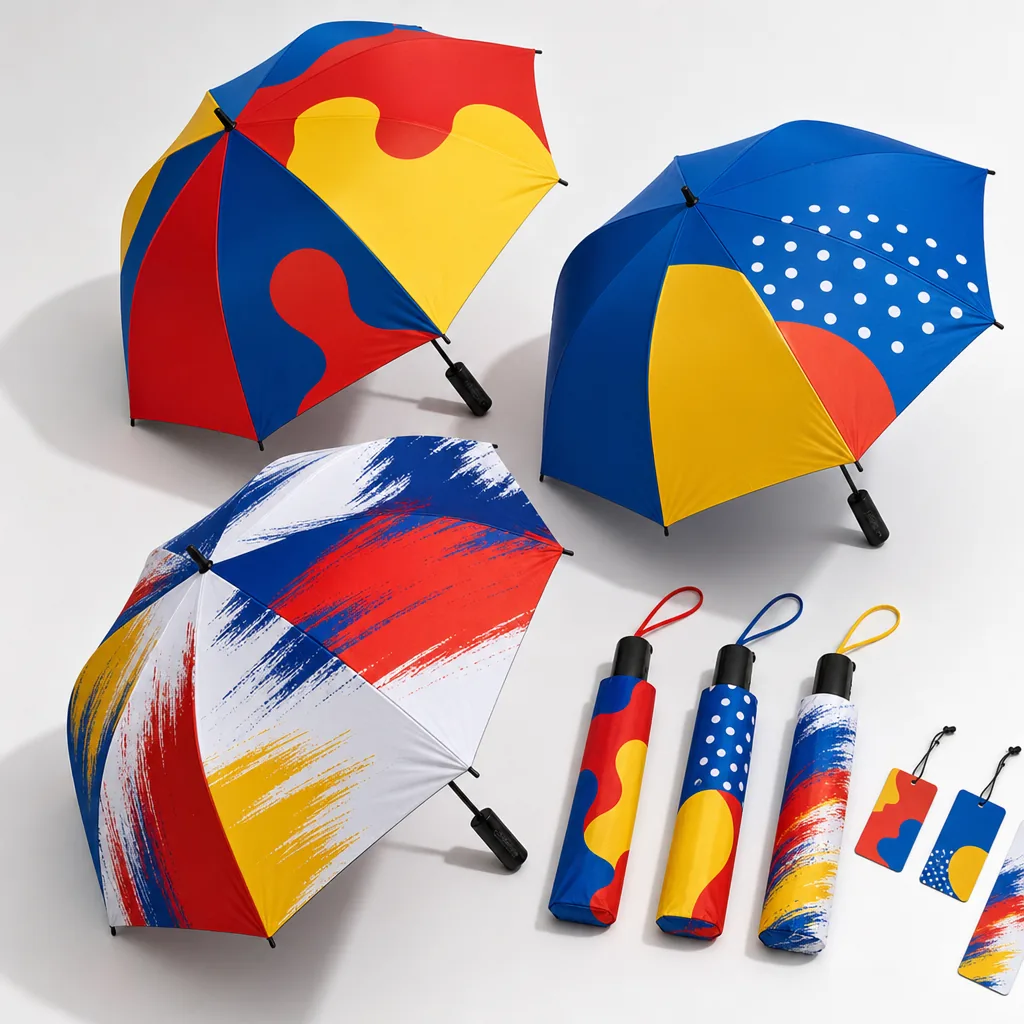
Travel Umbrella Specs for Airline Amenity and Retail Programs
Compare 3-fold vs 5-fold travel umbrella specs, weight, fabric, mechanisms, and packaging to source compact models for a...
Read More »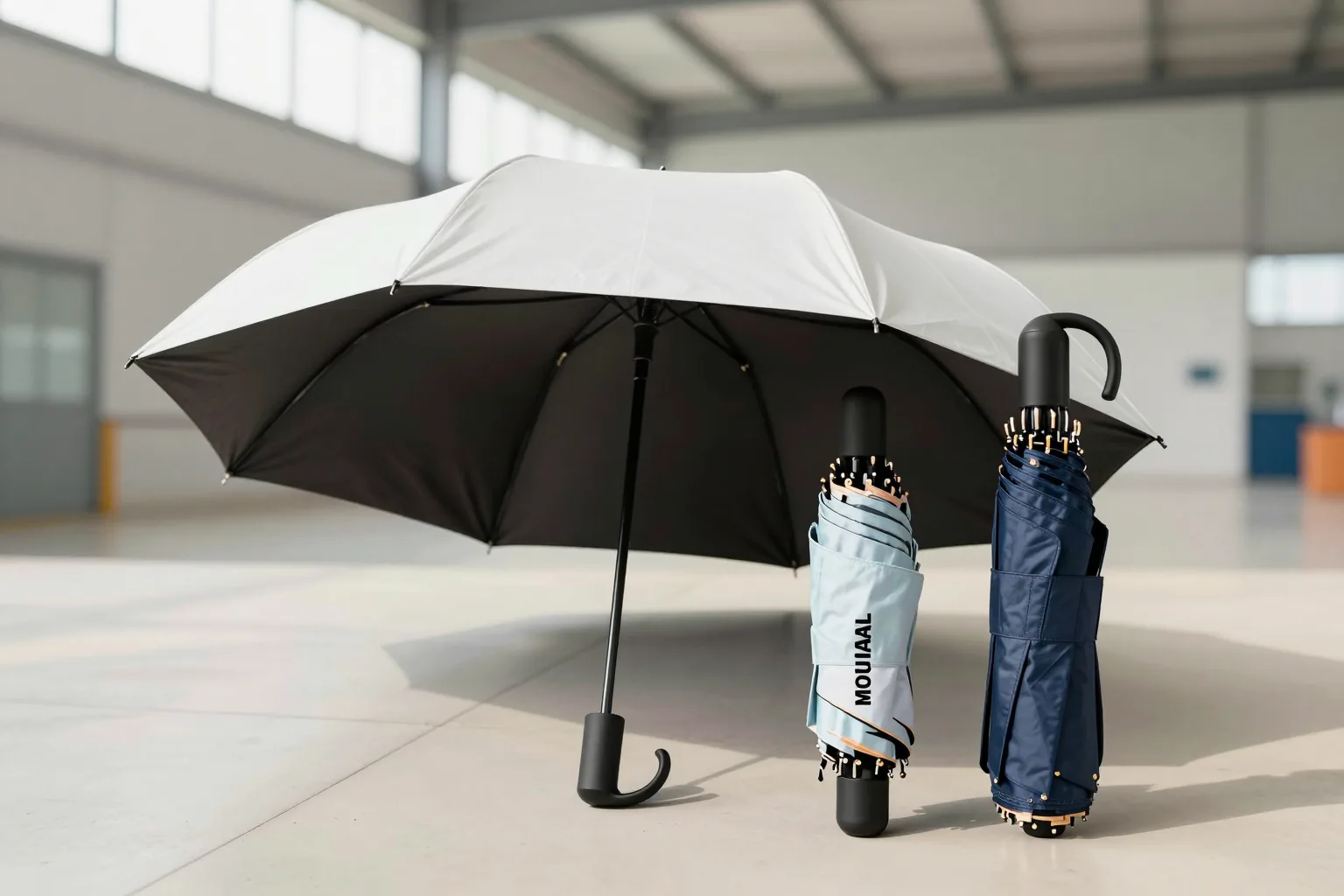
Manual Open vs Auto Open Mini Umbrellas for Gift Programs
Choose the right mini umbrella for gift and promo programs by comparing manual and auto-open builds, size, durability, p...
Read More »Travel Umbrella Specs for Airline Giveaways and Duty Free
Compare 3-fold and 5-fold travel umbrella specs, packaging, and freight tradeoffs so buyers can source compact branded u...
Read More »