Branded Belly Bands for Compact Umbrella Retail Packs
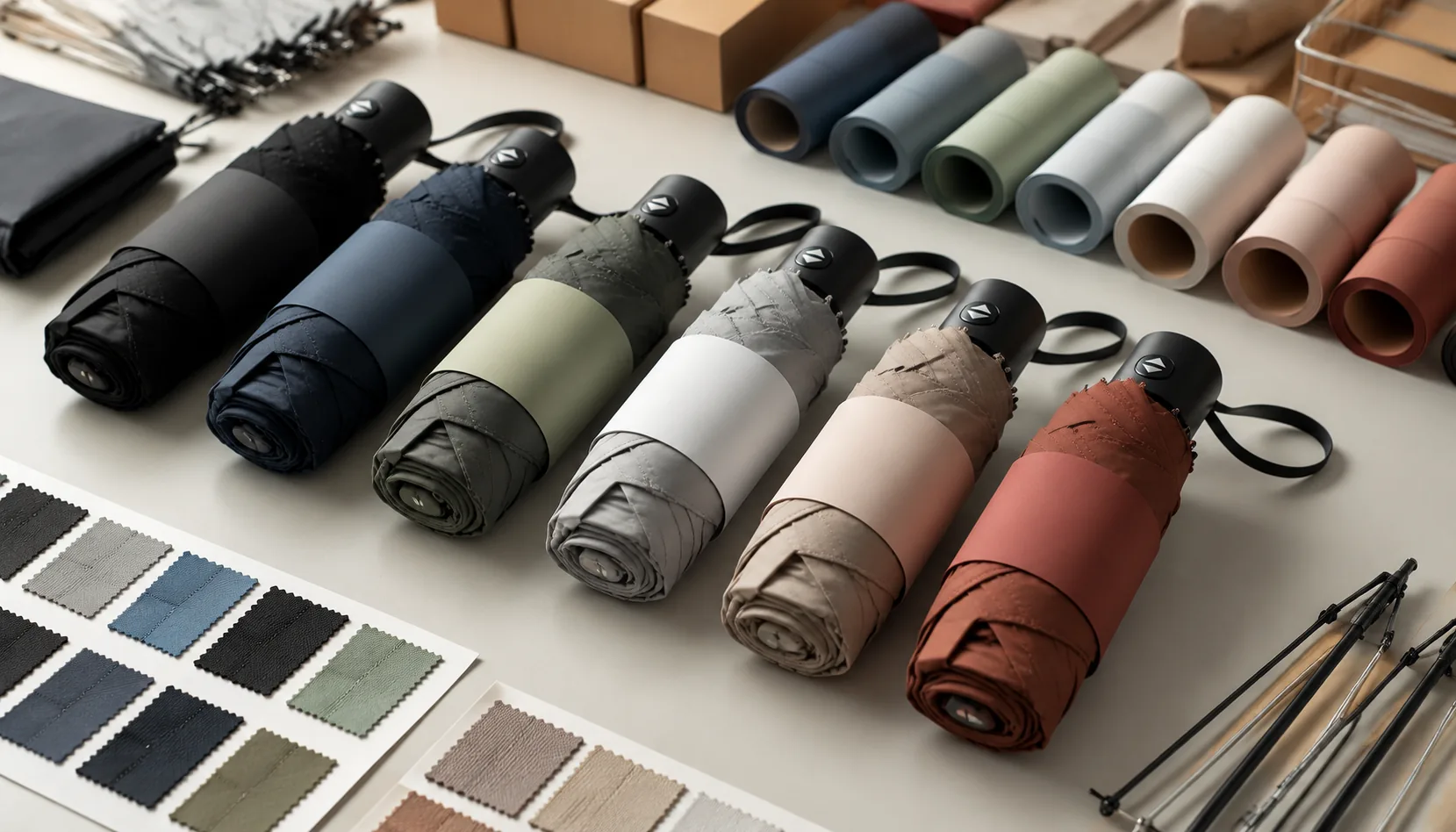
For compact umbrellas, the retail pack has to do more than hold the folds tight; it must carry the brand, scan cleanly, and tell buyers what model, color, and UPF or wind features they are looking at. On our Songxia production floor, branded umbrella belly bands are often the lowest-friction way to add that information because they run after final inspection, fit existing polybag or sleeve workflows, and avoid pushing MOQ or lead time the way custom boxes can.
Why Belly Bands Work for Compact Umbrellas
A belly band is the cheapest packaging component that still gives a compact umbrella a real retail face. On a 21" or 23" 3-fold umbrella, the folded body is narrow, rounded, and usually hidden inside a pongee sleeve, so a hangtag alone does not carry enough brand weight on a shelf or in a gift kit. A 250–350 gsm art card band wrapped around the sleeve or umbrella-and-pouch set creates a flat print panel for logo, barcode, model name, UPF 50+ claim, care icons, and country-of-origin text without changing the sewing spec. For compact umbrella packaging, I prefer bands around the sleeve rather than directly around wet-look POE or PVC canopies because paper edges can scuff clear plastic during carton vibration.
Branded umbrella belly bands work especially well for compact auto-open umbrellas because the handle, wrist strap, and sleeve shape vary from model to model, but the band can standardize the line visually. A 21" auto-open-close with 8K fiberglass ribs and 190T pongee may share the same outer band layout as a manual 3-fold steel-rib economy style, while the printed feature strip changes from “auto open/close” to “lightweight manual.” That keeps private label umbrella branding consistent across price tiers. Our standard practice at ZheBrella is to confirm folded diameter after final handle approval, then set band circumference with 3–5 mm clearance so workers can slide it on fast without crushing the sleeve.
For promotional and gift-ready runs, umbrella retail wraps do more than decorate; they control how the buyer reads the item in three seconds. Event planners often want the belly band to match the invitation, hotel welcome kit, or conference color system, while retail buyers usually need UPC, SKU, and warning copy placed where scanners can reach it. On MOQ runs of 500–1,000 pieces, digital print is acceptable for short campaigns; for 3,000+ pieces, offset print with matte lamination gives cleaner solids and better carton rub resistance. A good umbrella pack design also leaves one side open enough for AQL 2.5 inspectors to verify canopy color, sleeve stitching, and mechanism type without destroying the retail presentation.
Material, Size, and Print Specs to Define Early
Lock the belly band substrate before artwork starts, because stiffness changes how cleanly the wrap sits around a compact umbrella. For most branded umbrella belly bands, I specify 250–350 gsm art card: 250 gsm is easier to fold around small 21" manual compact umbrellas, while 300–350 gsm feels more retail-grade for 23" auto-open-close models but needs better scoring. Kraft paper works when the brand wants a natural look, but it absorbs ink more than coated card, so small QR codes, Pantone logos, and thin care icons need heavier line weight. Matte lamination reduces scuffing during carton loading and shelf handling, especially when the band rubs against a 190T or 210T pongee sleeve. Spot UV and foil are possible, but keep them away from fold lines because cracking shows quickly after 500–1,000 handling cycles in packing and repacking.
Wrap size is not a fixed template; it moves with frame count, handle diameter, and sleeve thickness. An 8K compact frame usually packs flatter than a 16K windproof frame because the extra ribs and springs increase the folded canopy stack, even if both are sold as 21" umbrellas. A slim plastic J-handle or straight rubberized handle may need 5–8 mm less band length than a chunky EVA or coated ABS handle. Sleeve thickness also matters: plain pongee sleeves are thin, but padded sleeves, PVC windows, or double-layer gift sleeves add bulk and can change the circumference by 10–18 mm. Our standard practice at ZheBrella is to measure the final packed umbrella after AQL pre-production samples, then add a controlled overlap area of 12–20 mm for glue, tape, or locking tabs.
Print specs should be written into the umbrella pack design sheet, not left as a printer’s assumption. For umbrella retail wraps, confirm CMYK or Pantone spot color, barcode size, bleed of at least 3 mm, fold-score positions, glue-free zones, and whether the inside face needs printing. Private label umbrella branding often looks simple, but small differences matter: matte black ink on kraft reads softer than the same logo on white art card, and foil stamping needs a clean vector file, usually with strokes above 0.3 mm. If the compact umbrella packaging includes country-of-origin text, fiber composition, warning labels, recycling marks, or retailer SKU stickers, reserve a quiet panel instead of squeezing them under the logo. For export packs, I also recommend carton rub testing, barcode scanning after lamination, and a band pull check so the wrap stays tight without crushing the sleeve.
What Branding and Compliance Details Fit Best
The front panel of branded umbrella belly bands should carry only the information a shopper needs in three seconds: logo, product name, umbrella size, and one clear feature claim. For a 21" or 23" compact umbrella, I usually keep the logo under 35 mm wide, the product name on one line, and the main claim short, such as “UPF 50+ Sun Protection” or “Auto-Open Compact Umbrella.” If the canopy is 190T or 210T pongee, say it plainly, but do not turn the front into a spec sheet. “210T Pongee Canopy” reads cleaner than a long sentence about yarn density, coating, and water repellency. For private label umbrella branding, the front wrap must match the handle tag, sewn label, and master carton artwork, or buyers will catch the inconsistency during pre-shipment inspection.
The back panel is where technical and compliance details belong: barcode, SKU, country of origin, importer or distributor address if required, fabric note, care icons, and safety warnings when applicable. For U.S. and EU retail packs, “Made in China” should be legible, not hidden in 4-point type near the glue seam. UPC/EAN barcodes need enough quiet zone, and on matte paper bands we normally test scans after lamination because heavy ink coverage can reduce readability. Care icons should cover air drying, no bleach, and no ironing of the canopy; for POE, PVC, or EVA transparent umbrellas, add a note to avoid high heat storage. Our standard practice at ZheBrella is to put claims like UPF 50+ only after the coating and fabric combination has a matching test report, especially for silver-coated pongee or black glue sun umbrellas.
Good umbrella retail wraps leave breathing room because compact umbrella packaging is already small: a belly band for a folded 21" umbrella may have only 180–230 mm of printable length before curves and overlap steal usable space. Keep windproof details, rib count, and mechanism specs on the rear or side panel: “8K fiberglass ribs,” “auto-open-close,” or “double-canopy vented design” are useful, but they compete with the brand if placed beside the logo. If the umbrella pack design includes multilingual copy, use icons first and text second, or the band becomes crowded and cheap-looking. Branded umbrella belly bands work best when the front sells the product, the back satisfies compliance, and every technical claim can survive an AQL 2.5 inspection and a buyer’s artwork audit.
Assembly, Packing, and Quality Control Points
Manual banding is where compact umbrella packaging either looks retail-ready or cheap. For a 21" or 23" folding umbrella, we normally set belly band overlap tolerance at ±2 mm and vertical position tolerance at ±3 mm from the approved gold sample, because anything looser makes the umbrella retail wraps look crooked once 50 pieces are lined up in a shelf tray. The band must sit tight enough not to slide during carton movement, but not so tight that it dents the pongee canopy roll, especially on 190T and 210T fabric with Teflon coating. Before mass packing, ZheBrella requires photo approval from the buyer or sourcing office showing front, back, side overlap, barcode area, and one full inner carton layout. For branded umbrella belly bands, we also check that logo direction matches handle orientation, since this is a common factory-floor mistake when multiple colors share one band design.
Closure choice should match the retail channel, not just the lowest unit cost. A glue dot is fast and clean for high-volume promotional jobs, but the dot position must be consistent and the adhesive cannot bleed into matte lamination or leave oil marks on kraft paper. For premium private label umbrella branding, I prefer tuck-lock closure when the paper is 250–350 gsm, because it avoids adhesive aging and lets store staff open a sample without tearing the wrap. The tradeoff is labor speed: tuck-lock packing is slower and needs a tighter die-cut tolerance, usually within ±1 mm on slot and tab registration. With glue dots, inspectors should pull-test random samples after 24 hours, not immediately after assembly, because weak adhesive often fails only after humidity exposure or carton compression during FOB or DDP transit.
Quality control has to include the carton, not only the printed band. We run a simple carton rub test by loading packed umbrellas into the export carton, shaking or rotating the carton, then checking whether the band edges show scuffs, ink transfer, or barcode abrasion; glossy dark inks fail this more often than buyers expect. Under AQL 2.5 final inspection, critical checkpoints for branded umbrella belly bands include print alignment within approved tolerance, color matching to the signed sample, no visible scratches on the logo face, no crushed corners, and barcode readability with a handheld scanner through any retail polybag. For umbrella pack design with mixed SKUs, the outer carton mark, band barcode, canopy color, and hangtag model number must match one by one. A good inspector opens cartons across the production run, not only the neat cartons staged near the door.
MOQ, Lead Time, and Shipping Cost Impact
Belly bands usually do not need a separate high MOQ if they are produced with the umbrella order, but the paper mill and printing shop still care about sheet efficiency. For compact umbrella packaging, we normally align the band MOQ with the umbrella MOQ: 500 pcs for a basic digital-print band, 1,000–3,000 pcs for offset CMYK with matte lamination, and 5,000 pcs if the buyer wants spot UV, foil, embossing, or a custom kraft stock. The safe rule is simple: if the band uses standard 250–350 gsm art paper and a straight die line, it can ride with the umbrella production lot. If the band size changes for every SKU, or each colorway needs different UPC, warning text, and private label umbrella branding, the factory should count versions early because printing setup cost can exceed the paper cost.
Branded umbrella belly bands add time after artwork approval, not during frame assembly. For a 21" or 23" compact umbrella with 190T pongee canopy, the frame, sewing, and AQL 2.5 inspection schedule may stay at 25–35 days, but umbrella retail wraps add 3–5 days for digital proofing and cutting, or 5–8 days for offset printing, lamination, die cutting, and bundling. Do not approve the band artwork before confirming folded umbrella diameter, sleeve material, barcode position, and carton pack method. I have seen good umbrella pack design fail because the band was 3 mm too tight after the sleeve fabric changed from thin pongee to thicker EVA, slowing packing and tearing at the glue seam.
The cost impact is mostly labor and handling, not freight cube. A belly band may add only 2–6 grams per unit and almost no carton volume when wrapped tight around a compact umbrella sleeve, but it can add 4–10 seconds per piece for positioning, barcode checking, and carton orientation. Under FOB Ningbo or Shanghai, buyers mainly plan the added unit labor, printing charge, and a few days of buffer before vessel closing. Under DDP, the timing risk is bigger because retail launch dates depend on factory completion, export customs, ocean or air freight, destination clearance, and final delivery appointment. For branded umbrella belly bands, I tell buyers to freeze artwork at least 10–14 days before final umbrella packing, especially when retail cartons need mixed SKUs or marketplace FNSKU labels.
Frequently Asked Questions
Can belly bands be added without changing the umbrella itself?
Yes. They are a packaging component, so buyers can add them to existing 8K or 16K compact umbrella SKUs without changing frame, fabric, or mechanism specs.
What information should not go on a belly band?
Avoid long warranty terms, multi-language legal copy, or detailed instructions if space is tight. Use an insert card or QR code for content that could reduce logo visibility or barcode scan quality.
Can belly bands be added to compact umbrellas without changing the umbrella MOQ?
Yes. Belly bands are usually treated as a packaging add-on, so they can often be produced at the same umbrella MOQ, commonly from 500 to 1,000 pieces depending on print method and paper stock.
What information should a retail belly band include for importers?
Most buyers include the brand logo, barcode or EAN/UPC, SKU, color name, canopy size, key selling points, country of origin, and any required compliance marks. Leave at least 30 mm of clear width for reliable barcode scanning.
Do custom belly bands slow down compact umbrella production?
Not usually if artwork is approved before mass production. Digital or offset printed bands typically add 3 to 7 days for printing, while packing can run in parallel with final QC to avoid delaying shipment.
Looking to Launch Your Custom Umbrella Line?
ZheBrella is a Zhejiang-based OEM/ODM umbrella manufacturer with 17 years of export experience. Free design, low MOQ from 100 pieces, windproof construction, full-color print.
Get Free Quote Now »People Also Search For
Related Articles
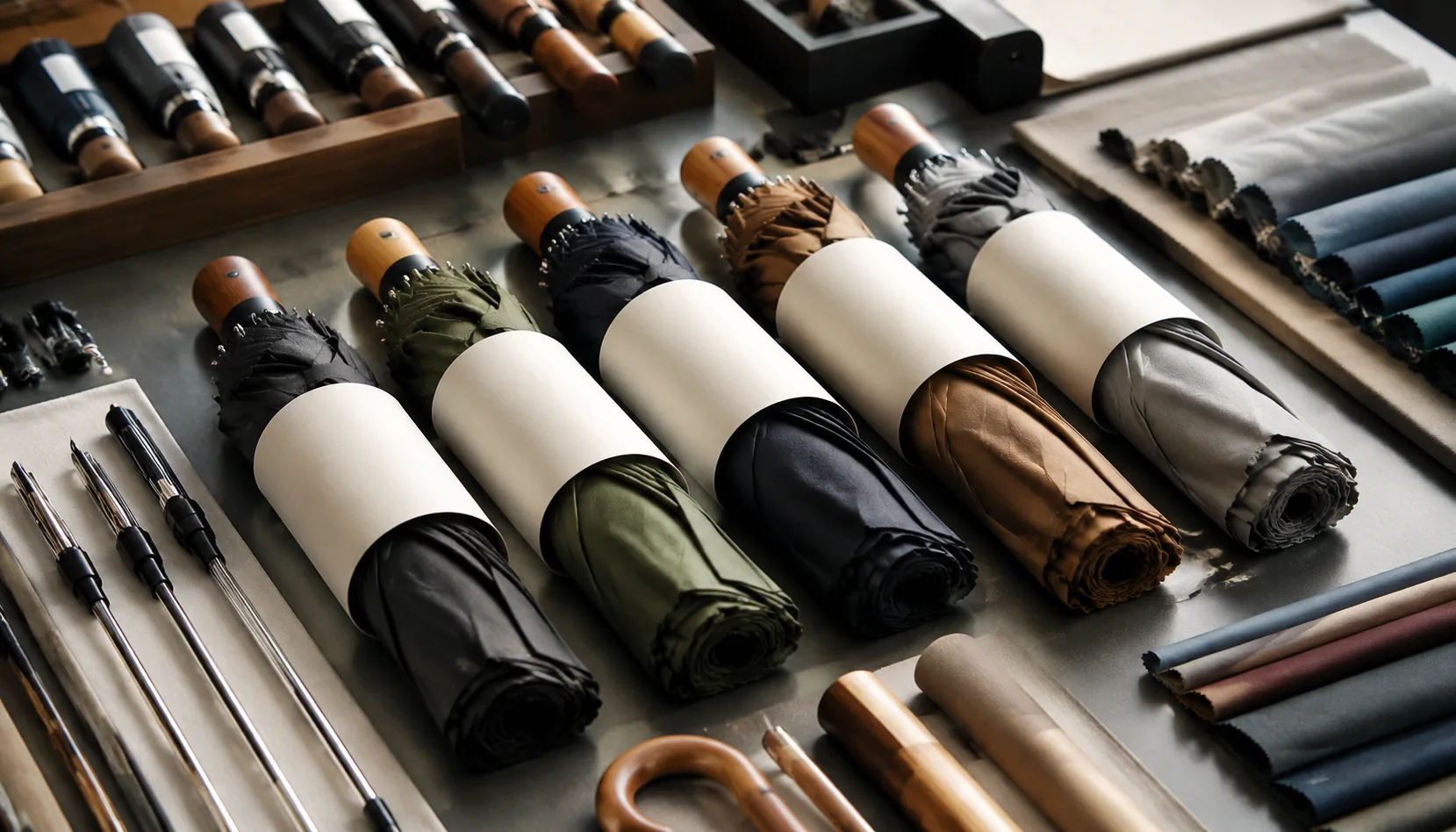
Custom Umbrella Belly Bands for Retail Brand Storytelling
Use printed belly bands to add brand story, size cues, and retail polish to folded umbrellas without changing sleeves or...
Read More »
Branded Umbrella Belly Bands for Gift and Retail Sets
Use belly bands to add logo impact, barcode space, and gift-ready presentation without changing umbrella structure or ra...
Read More »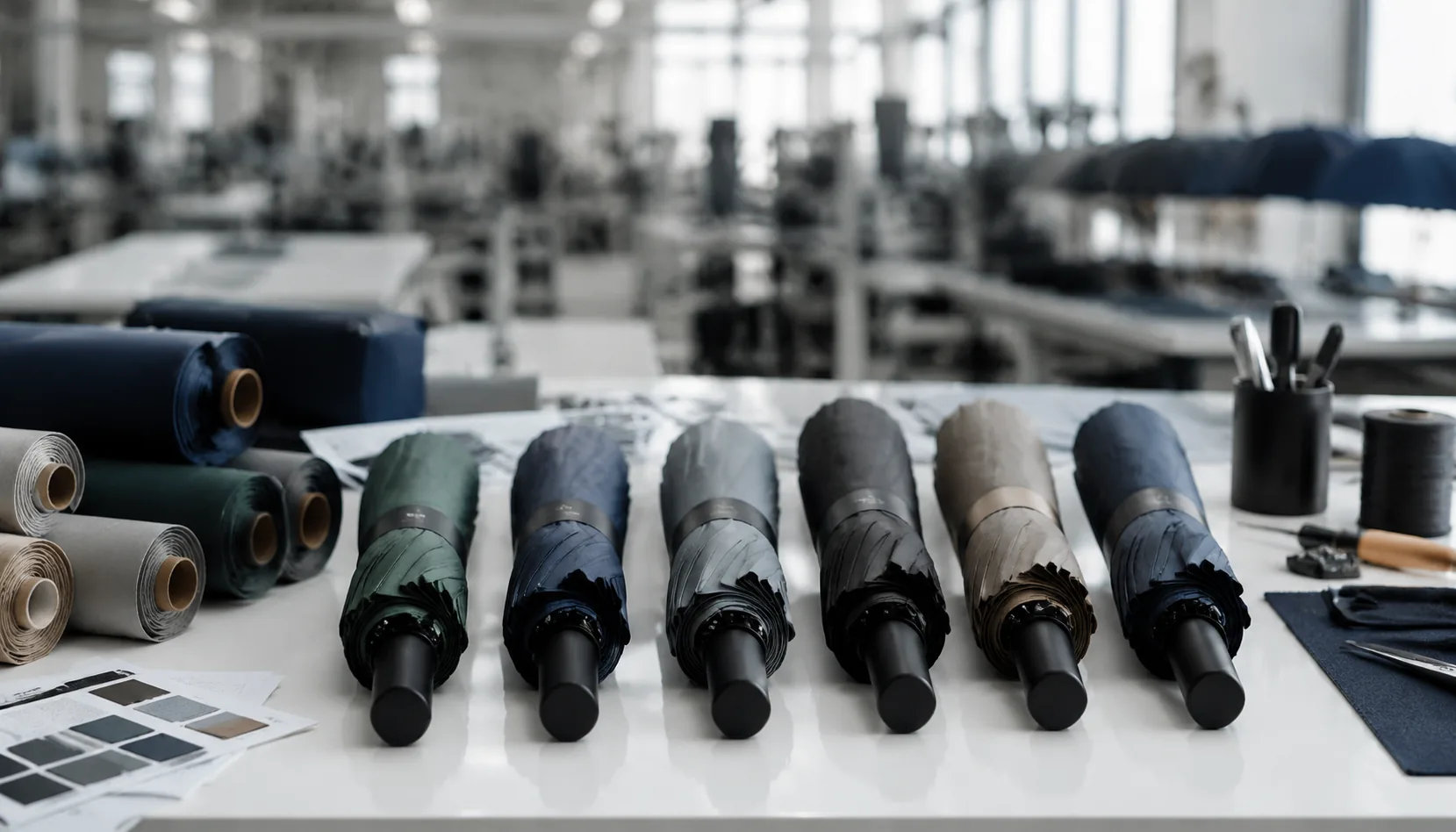
Branded Umbrella Belly Bands for Retail Gift Presentation
Plan branded belly bands with logo, SKU, and gift messaging while keeping canopy quality visible, with material, sizing,...
Read More »