Branded Umbrella Belly Bands for Retail and Gift Programs
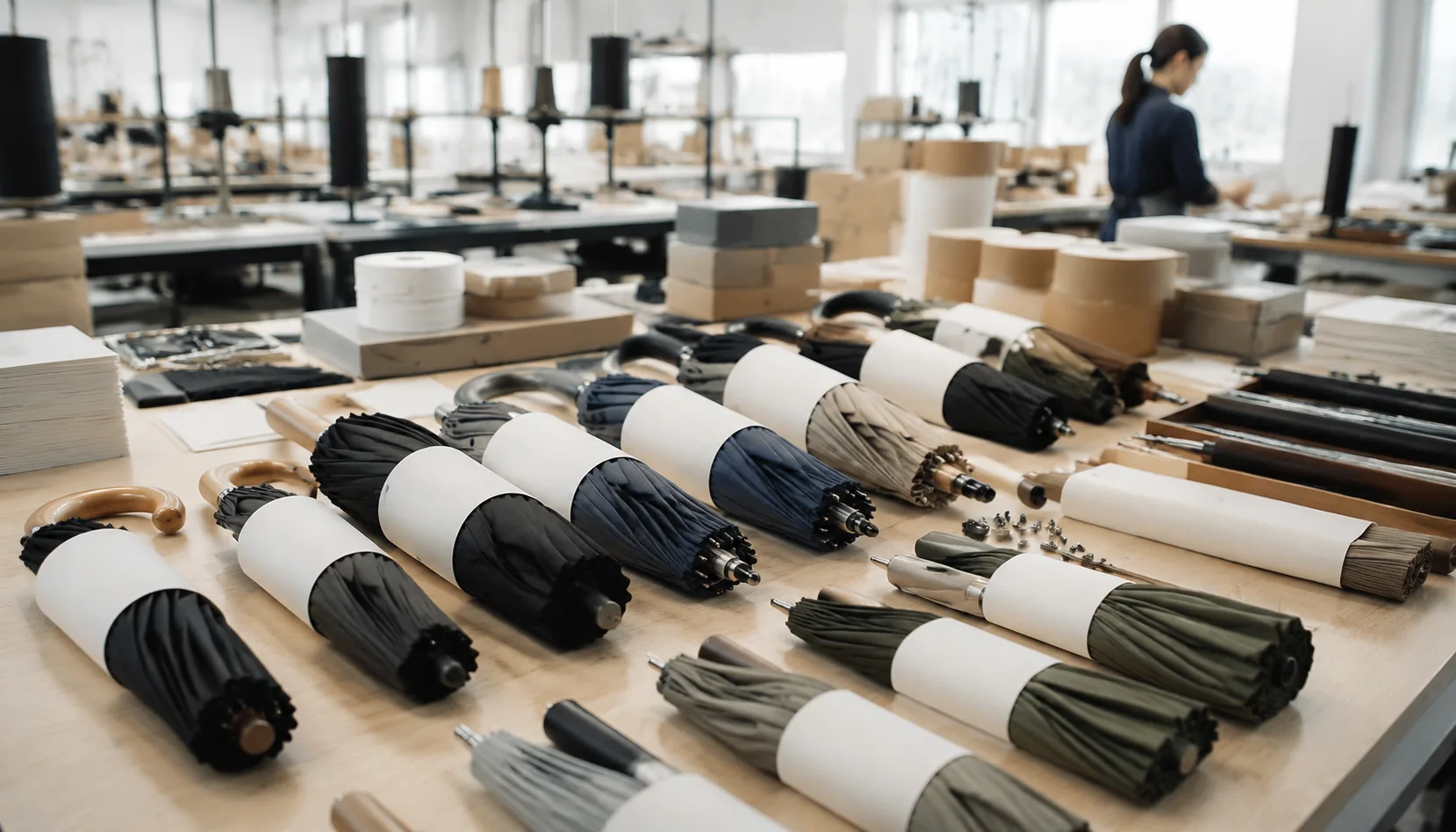
When a retail buyer or gift-program manager needs stronger shelf presence, the first instinct is often to redesign the sleeve or box, which adds cost, lead time, and MOQ pressure. On our umbrella packing line in Songxia, branded umbrella belly bands are a practical way to add campaign messaging, barcode clarity, and a cleaner handoff without disturbing the approved umbrella, sleeve, or master carton setup.
How Belly Bands Fit the Umbrella Packaging Stack
Belly bands sit in the middle of the umbrella retail packaging stack: more visible than a hangtag, cheaper and faster than a printed sleeve, and far lighter than a gift box. For folded umbrellas, the band usually wraps around the packed sleeve at the widest point, often 55–75 mm wide for 21" and 23" compact models, so the logo faces up in a counter display. For stick umbrellas and 27" or 30" golf umbrellas, the band normally wraps the closed canopy directly, positioned 120–180 mm below the runner, where it keeps the panels tidy without hiding the handle, shaft, or ferrule. Hangtags still carry barcode, warning, and care text; the band carries the selling message. That separation matters when buyers need the same private label umbrellas for several retailers but with different UPC or language requirements.
For paper, I do not like going below 250 gsm on branded umbrella belly bands unless the run is for a short indoor event. The factory-floor sweet spot is 300–350 gsm coated art card for clean CMYK printing, spot UV, matte lamination, or foil stamping; it holds shape after carton vibration better than thin card. Kraft stock at 250–300 gsm gives a more natural look for promotional umbrella packaging, but it absorbs ink and makes fine QR codes or small Pantone text less sharp unless we add a white ink base or simplify the artwork. Coated stock works best for retail shelves with bright graphics, while kraft is better for eco-positioned corporate gift umbrellas where the band is part of a restrained presentation.
Belly bands work best when the canopy already has enough body to fold cleanly, which is why 190T and 210T pongee are both good candidates. A 190T pongee folding umbrella with an auto-open frame can use a narrower band because the sleeve controls most of the bulk; on a 210T pongee stick umbrella, the fabric is denser and smoother, so the band can sit directly on the canopy without wrinkling the panels if the wrap length is measured from actual folded circumference, not from a drawing. We normally check band fit after the first packed sample because Teflon coating, UV UPF 50+ coating, and double-canopy vented construction all change thickness. For branded umbrella belly bands, a 3–5 mm tolerance in overlap and adhesive position prevents loose bands in FOB cartons and torn edges during retail unpacking.
Sizing Bands for Folding, Stick, and Golf Umbrellas
For 3-fold compact umbrellas, the belly band usually works best at 35–45 mm wide with a finished wrap length of 240–290 mm, depending on whether the umbrella is a slim 21" manual model or a heavier 23" auto-open-close. A 190T pongee canopy packs tighter than 210T pongee with Teflon coating, and a fabric sleeve can add 8–15 mm to the packed circumference. For branded umbrella belly bands, I do not size from the frame drawing alone; I size from a real packed sample after 24 hours in the sleeve, because fresh-folded canopies measure smaller than bulk-packed stock. Most folding umbrellas close cleanly with a glue dot, tuck tab, or 20–25 mm hook-and-loop patch positioned opposite the main logo panel, so the customer sees artwork before seeing the closure seam.
Two-fold and straight stick umbrellas need wider tolerances because handle thickness changes the wrapped profile more than buyers expect. A 2-fold 23" umbrella with steel shaft and plastic J-handle commonly needs a 45–55 mm band width and 300–360 mm wrap length, while a straight 23" or 27" stick umbrella often lands at 50–65 mm wide and 360–460 mm long. Wood crook handles, EVA foam grips, and rubberized straight handles can shift the band position upward by 20–40 mm so the band sits on the canopy body, not on the handle transition. In umbrella retail packaging, that position matters: too low and the band wrinkles over the ferrule end; too high and it hides the woven label, care tag, or private label umbrellas branding on the sleeve.
Golf umbrellas in the 60–68 inch class usually need 65–90 mm wide bands and 520–700 mm wrap length, especially on 16K fiberglass frames with double-canopy vented windproof construction. An 8K golf frame with single 190T pongee canopy may look compact, but a 16K fiberglass rib set, 210T pongee, UV UPF 50+ coating, and vent overlap can increase packed diameter by 15–25%. For promotional umbrella packaging and corporate gift umbrellas, our standard practice at ZheBrella is to approve the band on a production-grade packed umbrella, not a showroom sample, then check closure alignment during AQL 2.5 inspection. If the belly band is shared across folding, stick, and golf SKUs, use a stepped artwork layout with safe zones, because one universal dieline almost always leaves the logo off-center on at least one frame size.
Branding, Information, and Compliance Layout
The front face of branded umbrella belly bands should sell the product in three seconds: brand mark, product name, one clear performance claim, and the scannable retail code if the channel requires front-facing UPC. For a 23" auto-open stick umbrella, I usually reserve the top 35–40% of the band for the logo and product name, then use a second line for callouts such as 190T pongee canopy, fiberglass ribs, auto-open, UPF 50+, or windproof vented canopy. Do not stack every feature; a 10K fiberglass frame and Teflon water-repellent coating matter, but they compete visually if printed at the same weight as the brand name. On umbrella retail packaging for mass retail, the UPC needs a quiet zone and flat placement, so avoid wrapping it across a fold or glue seam. If the umbrella is merchandised in a bin, keep the product name and color visible on the broadest face, not the narrow side panel.
The back face is where compliance belongs: country of origin, importer details, material composition, warning statements, care icons, recycling marks, and SKU or PO references. For private label umbrellas shipped FOB or DDP, we normally confirm this panel during pre-production artwork review because missing importer language can stop cartons at the customer’s warehouse even when the umbrellas pass AQL 2.5 inspection. Care icons should be simple: open to dry, do not machine wash, wipe clean, keep away from flame, and close before storage. For UPF 50+ claims, buyers should provide test basis or approved wording; factories should not invent sun-protection language because different markets treat UV claims differently. The same rule applies to “windproof”: if the model survived 50+ mph in a wind tunnel, say that only if the test method and sample construction match the order—8K steel ribs and 8K fiberglass ribs do not perform the same.
Promotional umbrella packaging often has more freedom than retail, but the belly band still needs hierarchy. Corporate gift umbrellas usually prioritize the recipient-facing logo and event message, while operational details like SKU, carton quantity, and color code can sit near the barcode or inside flap. For branded umbrella belly bands used across multiple colors, avoid printing the color name inside the main artwork unless the run is large enough to justify separate plates; a small white SKU sticker is cheaper and prevents mixed-carton errors during packing. If the umbrella has special construction—double-canopy vented windproof design, 16K ribs, EVA handle, POE clear canopy, or auto-open-close mechanism—use icons only when they are instantly understood. Our standard practice at ZheBrella is to check belly band fit on a packed production sample, because a band that looks clean on a flat dieline can hide the UPC or buckle around a 30" golf umbrella handle.
Production Specs, MOQ, and Quality Checks
Belly band production should start from the finished folded umbrella size, not from a generic sleeve template. A 21" compact auto-open-close umbrella may need a band width of 45-55 mm, while a 23" stick umbrella or 27" golf umbrella often needs 60-75 mm so the band reads clearly on shelf without covering the handle or hang tag. For umbrella retail packaging, we build dielines around the packed diameter, add 3-5 mm tolerance for fabric bulk, and specify 2-3 mm bleed on all sides for full-color artwork. Pantone references are important when the band must match private label umbrellas, especially navy, red, and corporate green tones that shift badly in CMYK. Matte lamination hides scuffing better in carton handling; gloss lamination gives stronger color pop but shows fingerprints. Adhesive tabs should be tested on laminated stock because weak glue lifts in humid warehouses, while aggressive glue can tear the paper during repacking.
MOQ usually follows the umbrella run, because making 1,000 bands for a 600-piece umbrella order only creates inventory confusion. For most branded umbrella belly bands, practical MOQ is 500-1,000 pieces per artwork, with better unit cost at 3,000 pieces and above because die-cutting, plate setup, lamination, and packing labor are spread across the batch. For corporate gift umbrellas, buyers often request several department logos or event versions; in that case, we keep the dieline fixed and change only the print file to reduce approval time and tooling risk. Sample approval should include a flat printed proof and a wrapped sample on the real umbrella, not just a PDF. The wrapped sample catches problems that screens miss: logo hidden by overlap, barcode placed on a curved edge, tab landing over a seam, or a band too tight for 210T pongee after final rolling.
Quality checks need to cover print, fit, and packout consistency because a perfect umbrella can still look cheap if the belly band is crooked or scratched. Our standard practice is AQL 2.5 for visible defects: color deviation against Pantone reference, misregistration over 0.5-1.0 mm, lamination bubbles, dirty marks, cracked fold lines, poor die-cut edges, loose adhesive tabs, and incorrect barcode or SKU text. For promotional umbrella packaging, inspectors should also pull packed cartons and confirm every umbrella faces the same direction, the band sits at the agreed position, and mixed-color assortments use the right band version. If bands are applied after final umbrella inspection, the work instruction must define band height from the tip or handle, overlap direction, and carton orientation. That keeps private label umbrellas and retail display orders consistent from the first carton to the last, especially when multiple assembly tables are working the same shipment.
Cost, Lead Time, and Logistics Considerations
Belly bands are one of the cheapest visible upgrades in umbrella retail packaging because they use paper, not new tooling. For FOB Ningbo or Shanghai orders, a printed 250–350 gsm coated paper band usually adds only a few cents per unit when the artwork is stable and the order is above normal MOQ. Even on DDP programs, the extra landed cost is small because the weight increase is minimal compared with the umbrella frame, handle, and carton. I see them used most often on private label umbrellas where the buyer wants shelf branding but does not want to pay for a custom color box, insert card, or sewn woven label. For corporate gift umbrellas, the band can carry the event logo, QR code, size callout, compliance text, and barcode while leaving the canopy clean. Our standard practice at ZheBrella is to quote belly bands separately from canopy printing so buyers can see the packaging cost clearly instead of hiding it inside the umbrella unit price.
Printed paper components need their own schedule, and buyers often underestimate that part. Digital proofing can be done in 1–2 days, but offset printing, die cutting, creasing, and packing normally add 5–8 days after artwork approval; specialty finishes like matte lamination, spot UV, foil stamping, or textured paper can push that to 10–12 days. If the umbrella itself has a 30–35 day lead time, the band rarely delays production as long as the artwork is approved before bulk canopy sewing starts. The problem comes when procurement waits for final retail barcode, distributor logo, or legal copy until the umbrellas are already packed. Then the line has to reopen cartons, apply bands manually, and reseal export cartons, which costs labor and can disturb AQL 2.5 final inspection sequencing. For promotional umbrella packaging, lock the dieline, Pantone colors, barcode size, and country-of-origin wording early, especially for DDP shipments where customs and retailer receiving labels must match the packing list.
Ship branded umbrella belly bands flat when the destination team will kit multiple SKUs, add local language stickers, or combine umbrellas with other gift items. Flat bands travel well in bundles, avoid crushing, and let the importer apply them after final assortment decisions. The carton impact is almost zero: 1,000 flat paper bands may fit in a small inner carton, while pre-applied bands can slightly reduce packing efficiency because the umbrella roll diameter increases by 2–4 mm depending on paper thickness and overlap. For auto-open 23 inch straight umbrellas or 27 inch golf umbrellas, that small diameter change can affect whether a master carton holds 24, 36, or 48 pieces cleanly without pressure marks. Pre-applied bands make sense when the order goes straight to retail DCs, Amazon FBA prep, hotel gifting, or event distribution where the buyer does not want extra handling. For FOB orders, either option works; for DDP orders, I prefer pre-applied only after carton drop testing confirms the bands will not scuff, slide, or wrinkle during long truck and ocean movement.
Frequently Asked Questions
Can belly bands be added without increasing the umbrella MOQ?
Often yes, if the band supplier MOQ is lower than the umbrella MOQ. For private-label runs, factories usually align belly band printing with the umbrella production quantity to avoid leftover packaging.
Do belly bands work on umbrellas with fabric sleeves?
Yes, but the band size must account for sleeve thickness, strap position, and handle shape. A pre-production sample should confirm the band does not slide off during carton vibration testing.
Can belly bands be added without changing the umbrella sleeve or carton packing?
Yes. Belly bands wrap around the folded umbrella or sleeve, so they can usually be added without changing the existing sleeve, box, or master carton layout. Buyers should confirm band size, paper thickness, and final packed diameter before mass production.
What information should a retail umbrella belly band include?
A retail belly band typically includes the brand logo, product name, SKU or barcode, color name, size, key features such as windproof or UV protection, and country-of-origin details if required by the destination market.
What is the typical MOQ and lead time for custom umbrella belly bands?
For OEM umbrella orders, belly bands can often follow the umbrella MOQ, commonly around 500 to 1,000 pieces per design. Printing usually adds about 5 to 10 days after artwork approval, depending on paper stock, finish, and quantity.
Looking to Launch Your Custom Umbrella Line?
ZheBrella is a Zhejiang-based OEM/ODM umbrella manufacturer with 17 years of export experience. Free design, low MOQ from 100 pieces, windproof construction, full-color print.
Get Free Quote Now »People Also Search For
Related Articles
Branded Umbrella Belly Bands for Retail Gift Programs
Plan branded umbrella belly bands that lift retail presentation, protect folded canopies, and keep logo, barcode, MOQ, a...
Read More »
Branded Umbrella Belly Bands for Retail Gift Presentation
Plan branded belly bands with logo, SKU, and gift messaging while keeping canopy quality visible, with material, sizing,...
Read More »
Branded Umbrella Belly Bands for Gift and Retail Sets
Use belly bands to add logo impact, barcode space, and gift-ready presentation without changing umbrella structure or ra...
Read More »