Umbrella Sleeves and Pouches: An Overlooked Branding Surface
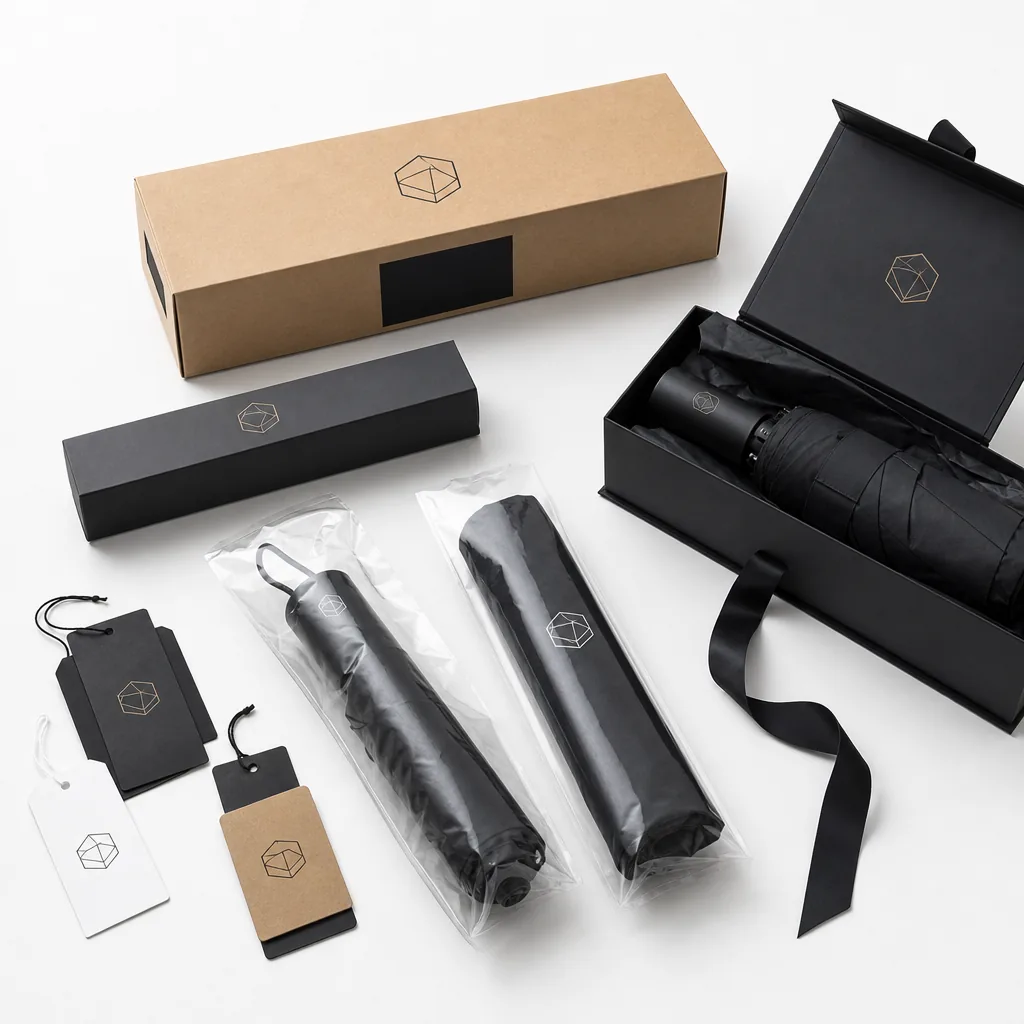
For many buyers, the umbrella sleeve is treated as packing scrap, yet it is often the first branded surface a customer sees and the easiest one to lose if the spec is wrong. At the factory level, we see that a poorly chosen custom umbrella sleeve can wrinkle, scuff, or misprint just when it needs to carry retail value, gift appeal, and logo consistency. Getting the material, closure, print method, and fit right is what turns a simple cover into useful branding real estate.
The sleeve as free advertising space
A custom umbrella sleeve is one of the cheapest branding surfaces on the whole product, yet buyers often treat it like afterthought packaging. That is a mistake. The sleeve is what shoppers see first on a shelf, what commuters keep in a bag, and what hotel guests or event attendees hold in their hand before the umbrella is even opened. On a 21" compact umbrella, the sleeve can carry more visible brand impressions than the canopy itself because it stays folded, handled, and stored for months. If you are selling promotional goods, retail sets, or corporate gifts, umbrella packaging branding should be planned at the same time as the canopy print, not after the carton is already approved. From the factory side, umbrella pouch branding works best when the sleeve is treated as a repeat-use item, not disposable wrapping. A simple woven label, one-color screen print, or small heat-transfer logo on polyester, pongee, or nonwoven sleeves can hold up through daily stuffing and pulling without cracking if the ink system is matched correctly. We see buyers waste space by placing a tiny logo in one corner when the whole sleeve body is available for brand name, website, QR code, or campaign message. If the umbrella itself is plain black, the sleeve becomes the only controlled graphic surface until the product is opened, so umbrella cover printing has real retail value, especially for sets sold through travel, hospitality, and premium promo channels. The practical point is visibility: the sleeve sits in carts, desk drawers, car consoles, and coat pockets long after the umbrella has been used. A well-designed custom umbrella sleeve can act like a mini billboard every time the user stores or retrieves the umbrella, which is why I always tell buyers to think about it as free advertising space, not a packing accessory. ZheBrella’s standard practice is to confirm sleeve material, print method, and stitch allowance together with the umbrella spec sheet, because poor alignment between sleeve width and folded rib count will make even good artwork look sloppy. If the goal is long-term brand recall, the sleeve is usually the lowest-cost place to get it.
Sleeve styles: pouch, zippered, strap, bottle-shape
The cover format has to match the umbrella geometry or it becomes dead inventory. A flat fold-over pouch works for most 21" and 23" folding umbrellas because the folded length is predictable, usually around 24 to 27 cm depending on rib count and runner design. A simple drawstring sleeve is cheaper and faster to sew, but it only makes sense when the buyer is prioritizing bulk packing or giveaway cost over retail presentation. If you are buying a custom umbrella sleeve for a compact automatic-open umbrella, check the folded diameter as well as length; auto-open-close models with thicker shafts and metal tips often need a little extra room at the mouth so the cover does not split at the seam after repeated use.
Zippered sleeves are the more practical choice when the umbrella is sold as a retail item or bundled with a gift set. They hold the shape better, protect printed canopies from abrasion, and are common for 23" and 27" folding umbrellas with pongee 190T or 210T canopies. Strap-style pouches, usually with a webbing loop or snap tab, fit promo programs where the user needs to clip the cover to a bag or keep it on a workstation; they are not elegant, but they are functional. For umbrella pouch branding, the sleeve material matters as much as the print method: nonwoven is cheap, polyester is better for screen print, and PVC or EVA windows make sense only when you want a display effect, not a soft hand feel.
Bottle-shape covers are the most specific format and are worth using only when the umbrella itself collapses into a very narrow form factor. They work best with travel umbrellas, slim 5K to 7K compact models, and some windproof designs that use a tighter folded stack; they are poor fits for 10K or 12K frames with thicker ferrules and reinforced joints. From an umbrella packaging branding standpoint, the bottle shape gives you the largest uninterrupted print panel, which is useful for logo repeat, care instructions, or QR code placement, but it also raises sewing cost and packing bulk. ZheBrella’s standard practice is to size the sleeve from the actual folded sample, not the catalog spec, because a 5 mm error at the hem can decide whether the umbrella slides in cleanly or tears the opening after 200 cycles.
Printing and material options for sleeves
For a custom umbrella sleeve, the first decision is whether the sleeve should disappear into the product or act like a separate brand surface. Matching fabric gives the cleanest retail look: if the umbrella canopy is 190T or 210T pongee, I usually recommend a sleeve in the same polyester family so the color and sheen stay close, especially on black, navy, and deep red. Contrast color is the opposite approach and works better when the sleeve needs to be found fast in a bag or on a display rack. In practice, a contrasting sleeve in bright grey, white, or a brand accent color can improve usability and make the umbrella packaging branding look more intentional, but only if the ink and fabric dye are tested together so the shade does not shift after heat sealing or washing.
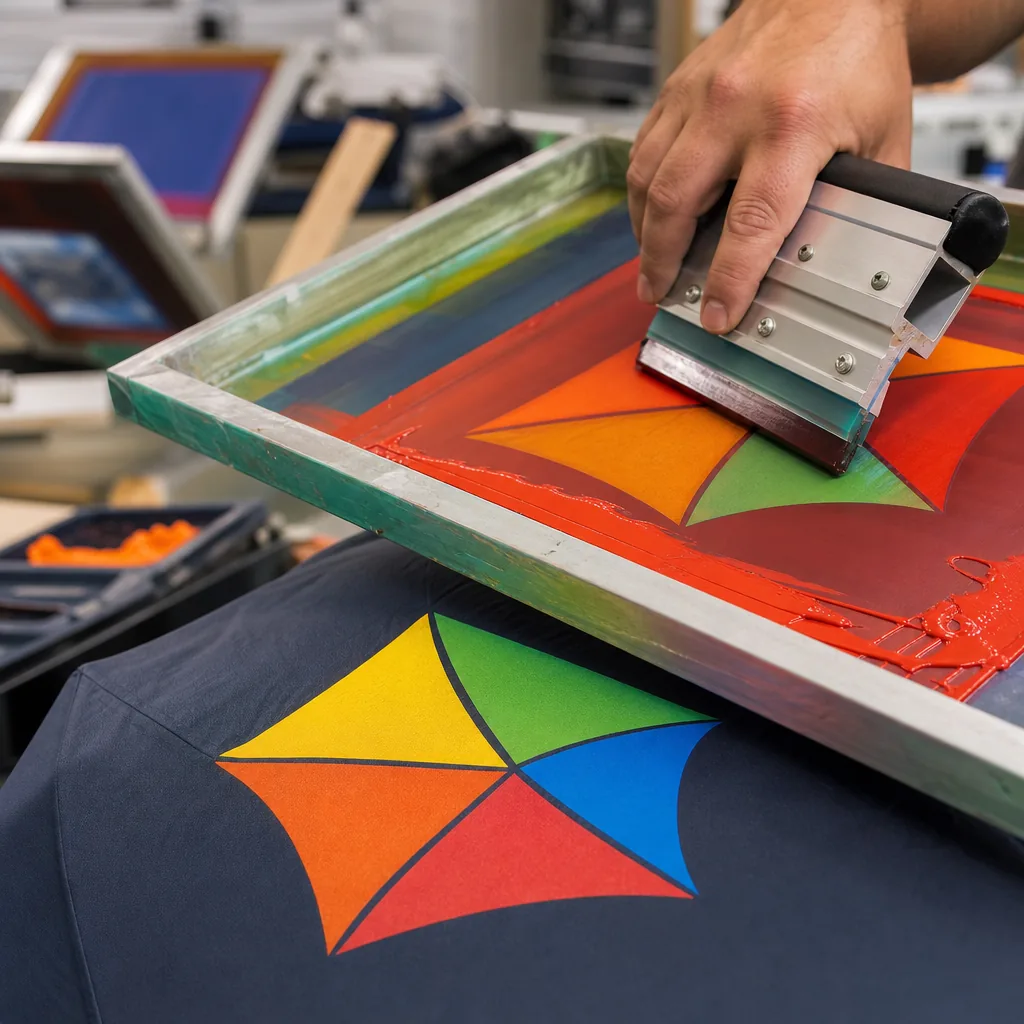
Full print is where umbrella cover printing becomes useful, because the sleeve can carry a logo repeat, pattern, QR code, or simple text without fighting the umbrella’s main canopy design. On woven polyester sleeves, screen print is the cheapest for one- or two-color graphics, but it shows limits on fine detail and large solid areas. Heat transfer is better for short runs and sharper edge definition, while sublimation only makes sense on white or very light polyester and gives the best all-over coverage. I have seen buyers waste money by specifying a full-print sleeve on a fabric that cannot hold the color cleanly; the result is bleeding at the seams and a cheap retail feel, especially once the sleeve is folded and compressed inside the tube.
Woven labels are still the best low-cost branding move when the sleeve itself is plain. A stitched woven tab on the seam or near the opening gives a premium cue without forcing a full print, and it holds up better than a printed mark on low-gsm fabric or POE-style vinyl sleeves. For umbrella pouch branding, I prefer a small woven label combined with one spot print if the buyer wants both durability and immediate recognition; that combination survives repeated stuffing better than heavy ink coverage. ZheBrella’s standard practice is to check label placement against the folding pattern, because if the label lands where the sleeve bends sharply, it curls, frays, or becomes unreadable after a few uses.
Functional add-ons: straps, hooks, hang loops
A custom umbrella sleeve does more than keep a wet canopy from dripping on a lobby floor; it changes how the product gets carried, stored, and remembered. The useful upgrades are simple: a shoulder strap for commuters, a snap or Velcro closure so the sleeve does not fall open in transit, and a small hang loop so the umbrella can be clipped to a backpack, stroller, or retail hook. In practice, these features matter most on 21" and 23" folding umbrellas, where the sleeve becomes part of the user experience instead of dead packaging. If the sleeve is made from 190T or 210T pongee, you get a smoother print surface and better hand feel than thin nonwoven, but you also need to watch seam allowance and stitch density so the strap anchor does not tear after a few weeks of use.
For umbrella pouch branding, the hardware choices are where most buyers either add real value or create a useless gimmick. A carabiner-style loop is useful only if the umbrella weight is reasonable and the attachment point is bar-tacked into a reinforced corner; otherwise it twists and fails. Shoulder straps should be adjustable enough to clear a coat or tote bag, and the closure should be easy to operate with one hand, especially on auto-open-close models where the user already has the frame and handle to manage. ZheBrella’s standard practice is to test the sleeve with repeated open-close cycles and basic pull checks on the strap stitch, because a printed sleeve that rips at the loop after one week hurts the brand more than having no sleeve at all.
For umbrella cover printing and umbrella packaging branding, these add-ons also create more usable artwork space than most buyers expect. A snap tab, hang loop, or strap patch can take a small logo, while the full sleeve body can carry a repeat pattern, QR code, size marker, or retail message without touching the canopy itself. That said, the print method should match the fabric: sublimation works on polyester sleeves, screen print is better for solid logos on darker material, and heat-transfer is fine for short runs but can crack if the sleeve is folded tightly. If the sleeve is part of the sales package, I would treat it like a small textile product, not an afterthought—ask for AQL 2.5 inspection on stitching, closure function, and print alignment, because those are the defects buyers actually notice when the umbrella hits the shelf.
Coordinating sleeve with retail packaging
If the umbrella is sold as a gift, the sleeve should not be treated as leftover fabric; it is part of the unboxing system. A good custom umbrella sleeve carries the same visual hierarchy as the outer carton: the logo placement, color code, and finish should match the retail box so the buyer sees one coherent product story instead of three disconnected pieces. On a 21" or 23" folding umbrella, a slim pongee 190T sleeve with a clean one-color print usually looks more premium than a crowded full-bleed design, because the sleeve is visible only after opening the box. For larger 27" or 30" stick umbrellas, a heavier sleeve with reinforced mouth stitching and a stitched label can handle more weight and prevents the “cheap accessory” look that ruins box presentation.
In practice, umbrella pouch branding works best when the sleeve and carton are designed together from dieline stage, not after the umbrella is already approved. I look at whether the carton insert, tissue wrap, and sleeve opening all fit the same folding geometry; if the sleeve is too tight, the customer fights it every time, and if it is too loose, the umbrella shifts and scuffs the print. For premium sets, use matching Pantone colors and keep the print method consistent—screen print for bold logos, heat transfer for fine text, or sublimation if you want edge-to-edge artwork on polyester. If the box is matte black, a white or metallic logo on the sleeve usually reads better than trying to force a full-color image into a small surface.
For umbrella cover printing tied to retail packaging, the practical goal is repeatability at AQL 2.5, not just a nice sample. The sleeve must survive packing, transit, and shelf handling without ink cracking, seam twist, or dye migration onto the canopy or box lining. Standard practice at ZheBrella is to confirm the sleeve with the final packaging before mass production, because changing the carton height or insert width later will affect sleeve fit and labor time. If the buyer wants umbrella packaging branding for a promotional set, I would usually specify the sleeve, box, and canopy artwork in one approval sheet, then lock the production method and lead time together; that avoids the common mistake of approving a beautiful sleeve that does not actually fit the finished umbrella.
Frequently Asked Questions
Can the umbrella sleeve be printed with my logo?
Yes, and it should be. The sleeve is visible whenever the umbrella is carried closed. We can match it to the canopy, print it in a contrast color, or add a woven brand label - usually at minimal extra cost.
What sleeve style is best for a travel umbrella gift?
A zippered pouch or a sleeve with a shoulder strap reads as premium and practical for gifting. Bottle-shaped covers are a popular novelty for compact umbrellas.
What sleeve material works best for retail umbrella branding?
For retail and gifting, 190T polyester and RPET are the most common choices because they hold print well and keep costs controlled. If the sleeve is part of the premium presentation, woven jacquard or a cotton-blend pouch gives a higher perceived value but usually increases MOQ and unit cost.
What minimum order quantity should I expect for custom umbrella sleeves?
For simple printed sleeves, many factories can start around 500-1,000 pieces per design. If you want a fully custom pouch shape, woven branding, or specialty closures, the MOQ often moves to 1,000-3,000 pieces.
How long does it take to produce branded umbrella sleeves?
Typical lead time is about 2-4 weeks after sample approval for standard printed sleeves. If the project needs custom fabric, woven labels, or color matching to a retail program, plan for 4-6 weeks plus sample time.
Looking to Launch Your Custom Umbrella Line?
ZheBrella is a Zhejiang-based OEM/ODM umbrella manufacturer with 17 years of export experience. Free design, low MOQ from 100 pieces, windproof construction, full-color print.
Get Free Quote Now »People Also Search For
Related Articles
Custom Umbrella Sleeve Printing for Retail Brand Programs
Plan printed umbrella sleeves that support retail branding, protect the product, and align with MOQ, lead times, and fac...
Read More »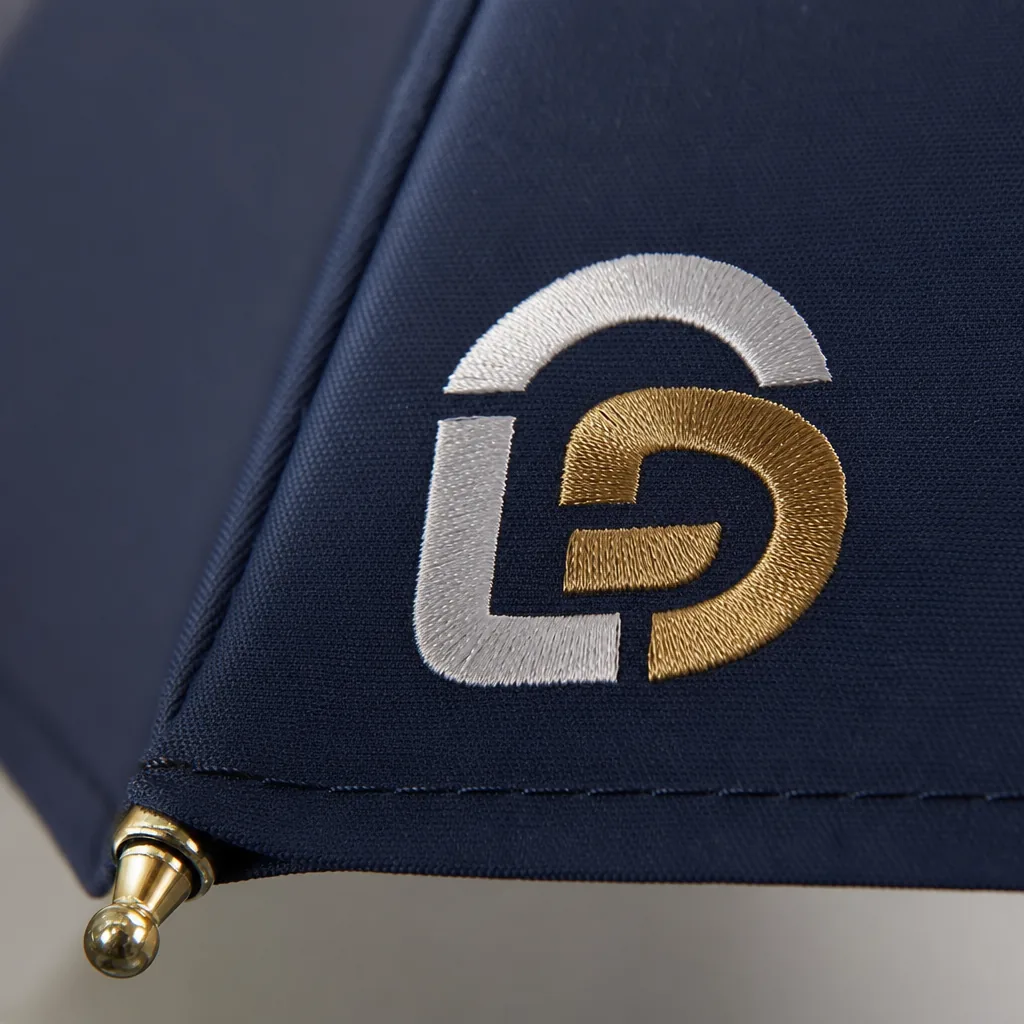
Umbrella Sleeve Logo Design for OEM Retail and Promo Orders
Plan umbrella sleeve branding with the right print area, fabric, MOQ, and QC standards to improve retail presentation wi...
Read More »Custom Umbrella Sleeve Printing for Stronger Brand Presentation
Plan branded umbrella sleeves that look consistent with the canopy, control print quality, and fit procurement targets f...
Read More »