Custom Umbrella Sleeve Printing for Stronger Brand Presentation
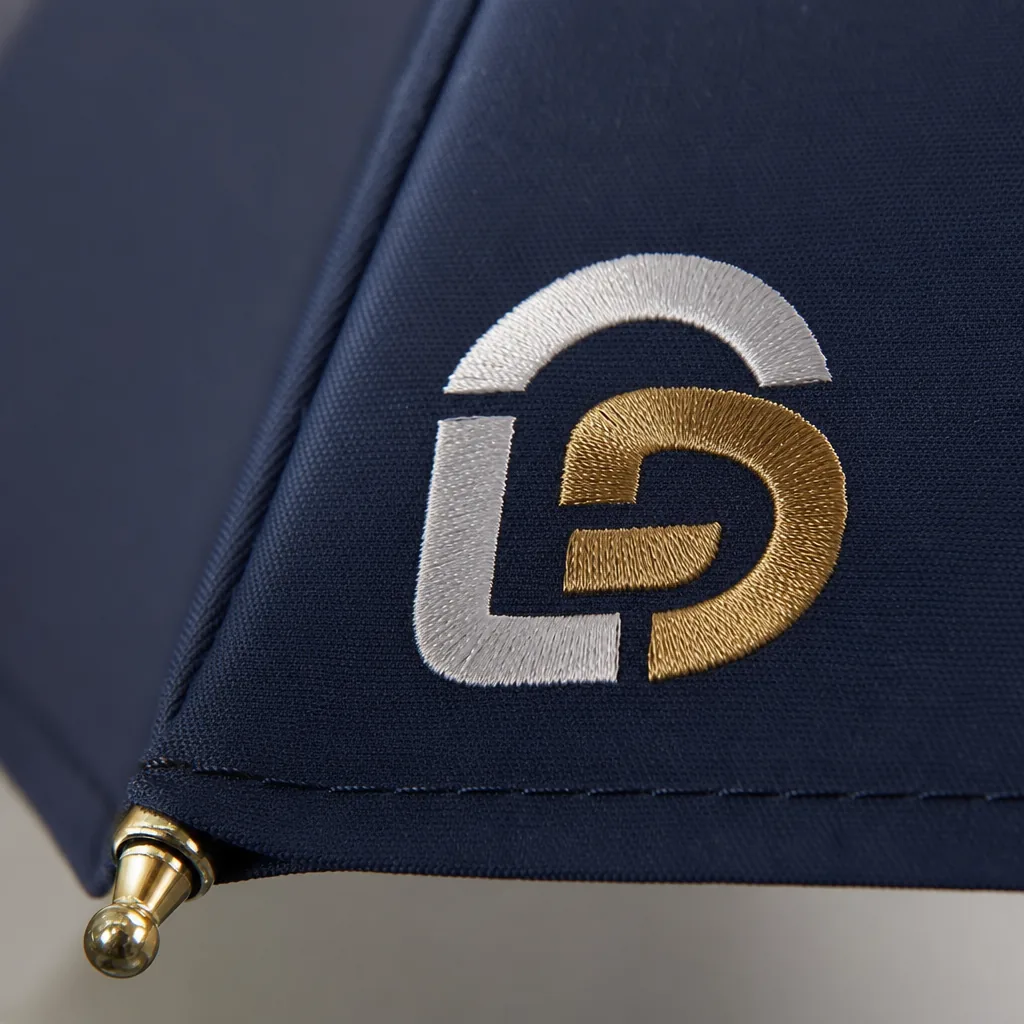
When a branded umbrella arrives with a sleeve that misses the canopy color, logo scale, or print sharpness, buyers see the problem immediately and so do end customers. On our Songxia production floor, sleeve printing has to be managed like a matched component, with fabric selection, color control, sewing tolerance, MOQ planning, and packing sequence aligned from the start. That is why custom umbrella sleeve printing is less about artwork alone and more about controlling the full factory process behind brand presentation.
When a Printed Sleeve Adds Branding Value
Custom umbrella sleeve printing pays off when the sleeve is visible before first use and stays with the product after purchase. Retail is the clearest case. On a 21-inch or 23-inch folding umbrella sold in a polybag, gift box, or travel set, the sleeve becomes the front-facing branding panel, so it does work the canopy cannot do while the umbrella is closed. A branded umbrella cover can make a standard 190T pongee compact look like a more finished SKU without changing frame cost. The most practical methods are a sewn-in woven label for a premium look, 1-color screen printing for simple marks, and heat-transfer printing for small artwork with cleaner edges. This is most effective on mid-range and premium builds where presentation supports margin: auto-open-close 8K fiberglass frames, UPF 50+ UV-coated compacts, and hotel resale sets. For many buyers, sleeve branding is a lower-cost presentation upgrade than moving from steel ribs to fiberglass or adding double-canopy vented construction.
Gifting, hospitality, and event distribution also benefit because the sleeve shapes the first impression when the umbrella is stored, carried, or handed out. Corporate gift programs gain from umbrella sleeve logo printing when the item sits in a conference bag, car door pocket, or on a desk; the sleeve makes it look specified rather than leftover stock. Hotels, resorts, and golf properties get practical value on 27-inch and 30-inch umbrellas because guests often identify borrowed units by the cover in a lobby stand or shuttle basket. For event kits, a promotional umbrella sleeve helps staff sort and distribute large runs faster, and sponsor logos, event IDs, or room-number ranges reduce mix-ups even if the umbrellas are never opened. A plain sleeve is still acceptable for price-driven orders such as manual-open 21-inch compacts with steel ribs, standard black 190T pongee, emergency rain programs, or short-term giveaways handed out loose. In those cases, budget usually goes further on larger canopy print or stronger tip stitching. For retail umbrella branding, executive gifting, licensed merchandise, and room placement, even a simple 1-color branded sleeve improves perceived value and brand recognition at the same FOB level.
Sleeve Materials, Print Surfaces, and Color Reproduction
Sleeve material decides whether the umbrella looks like one coordinated product or a canopy with an off-spec accessory. For most folding umbrellas, the sleeve is made in polyester pongee, typically 190T or 210T, to match the canopy fabric and, when color control matters, should be cut from the same dye lot. That matters most on navy, black, red, dark green, and custom Pantone shades viewed under store lighting, where a sleeve made from cheaper flat polyester often reads lighter or glossier than a matte 190T canopy. Buyers should lock custom umbrella sleeve printing at the same time as canopy material, color, and finish, not after sampling, because print behavior and shade match are linked. Clear POE, PVC, or EVA umbrellas are a separate case: factories usually switch the sleeve to polyester or oxford rather than the same film, since film sleeves crease easily, scratch during packing, and are harder to sew cleanly. The tradeoff is different ink absorption, gloss, and edge definition, so approval should be based on sleeve and canopy samples reviewed side by side, not on canopy print alone.
The print area on a sleeve is narrower, stitched, and interrupted by seams, flap folds, piping, or hook-and-loop closure, so artwork that works on an open canopy panel often fails when reduced to sleeve scale. For umbrella sleeve logo printing, build artwork to the finished sleeve dimensions and keep minimum line weight above about 0.3 mm; fine reversed text and dense halftones break up faster on sleeve fabric because weave distortion is more visible in a compact area. Large solid fills also reproduce differently by fabric: 190T pongee can show pinholes or slight strike-through, while 210T usually gives better ink holdout and a cleaner face. Color risk is highest on dark grounds. White on black sleeves is usually clean in screen print, but yellow and orange solids need enough opacity to avoid a muddy result. Sublimation suits light-color polyester for gradient-heavy promotional umbrella sleeve designs, but it will not print on black without adding a separate light printable panel. For retail umbrella branding, standard controls should include sleeve strike-offs, canopy lab dips, and final inspection of print position, seam interference, and visual defects to AQL 2.5 before packing.
Matching Sleeve Design to Umbrella Construction
Size the sleeve from the umbrella’s closed geometry, not the open arc on the spec sheet. A 21-inch folding umbrella usually needs a sleeve about 24-27 cm long because the shaft collapses into 3 or 5 sections; a straight 23-inch auto-open model is typically 84-88 cm; and a 30-inch golf umbrella is often 98-102 cm after ferrule and handle length are confirmed. For custom umbrella sleeve printing, the main approval risk is locking artwork before the packed diameter is fixed. A slim 8K steel-rib frame with 190T pongee packs much narrower than a 10K fiberglass frame with 210T pongee and a heavy closure strap, so one sleeve width will not fit both without either drag marks or excess slack. Closure type changes both fit and presentation. An open-end slip sleeve is the lowest-cost, fastest-packing option, but a zipper, hook-and-loop tab, or drawcord reduces usable width, adds bulk at the seam, and can pull the logo off-center once the umbrella is fully packed.
Windproof and oversized constructions need extra allowance in the pattern, especially for umbrella sleeve logo printing that must stay straight at retail. A 27-inch double-canopy golf umbrella rated for 50+ mph wind resistance, with fiberglass ribs and a reinforced runner, can need 1.5-3 cm more sleeve width than a single-canopy version of the same size because the vented upper layer adds bulk when rolled. The increase is greater on 16K fashion-golf hybrids, where more ribs thicken the packed profile, and on POE, EVA, or PVC canopies that rebound more than 190T or 210T pongee. Handle shape is the other common fit failure. Flat ABS compact handles usually fit a standard promotional umbrella sleeve, while EVA foam straight grips, wood crook handles, and oversized auto-open-close handles often require a flared mouth or a wider lower pattern to prevent catching. If the handle binds, the branded umbrella cover scuffs, seams twist, and the printed mark sits off-axis on shelf. For retail umbrella branding, approve sleeve size from folded production samples only after final rib, canopy, and strap assembly, then place artwork to account for the closure seam so the logo remains visible in peg display and packed FOB or DDP cartons.
Cost Drivers, MOQ, and Inspection Points
For custom umbrella sleeve printing, unit cost moves most with decoration and post-cutting labor, not the sleeve fabric itself. The lowest-cost spec is usually a straight 1-piece sleeve in 190T pongee for a 21 inch or 23 inch folding umbrella, with a 1-color screen print, standard side seams, and in-stock black drawcord. Pricing rises quickly when artwork shifts to 2-4 print colors, tighter print registration, full-wrap heat transfer, or all-over sublimation, because each method adds setup, color control, and rejection risk. Construction changes add more sewing minutes and scrap risk: a shaped sleeve, boxed bottom, piped edge, or extra insert panel for a thicker auto-open-close frame will cost more than a basic sleeve. Separate trim sourcing is another clear driver. If the branded umbrella cover needs a woven label, molded rubber puller, contrast binding, Velcro strap, or custom drawcord, the factory may need outside trim purchasing, which increases both unit price and lead time.
MOQ for umbrella sleeve logo printing is driven more by print setup and trim complexity than by sewing alone. For a basic promotional umbrella sleeve with 1-color screen printing and stock cord, 1,000 pieces is a practical MOQ; some factories will accept 500 pieces when sleeves are produced with a full umbrella order. Heat-transfer graphics with gradients or metallic effects, or retail umbrella branding that must match canopy PMS colors, typically fit a 1,000-3,000 piece MOQ because proofing and wastage must be absorbed. Custom-dyed fabric, molded pullers, or separate EVA or PVC outer sleeves can push MOQ to 3,000-5,000 pieces. In Songxia, repeat orders often ship in 12-18 days, while first orders with new artwork, trims, and fit samples usually need 20-30 days. Under AQL 2.5, inspect four points on bulk production: print registration stays square to the seam with no ghosting, seams are clean with no skipped stitches or puckering, the sleeve fits the actual umbrella frame and handle, and every drawcord, strap, snap, or cord lock stays secure after repeated pull testing.
Artwork Handoff and Shipping Terms Buyers Should Confirm
Start artwork from the sleeve dieline, not from the umbrella canopy file. For custom umbrella sleeve printing, ask the factory for a measured layout that shows cut width, finished length, seam overlap, opening fold, drawstring or flap position, bleed, safe area, and print direction. Those dimensions control whether the logo stays visible after sewing and packing. A sleeve wraps a closed umbrella, so artwork approved on a flat PDF can shift into the side seam or disappear under the opening fold once the umbrella is inserted. Confirm the finished circumference against the actual frame build: a 21-inch compact, 23-inch straight, and 27-inch golf umbrella use different sleeve girths, and slim manual frames pack differently from thicker auto-open-close frames. Packed bulk also changes with canopy fabric, frame profile, and 8K, 10K, or vented double-canopy construction. For umbrella sleeve logo printing, require the supplier to show logo scale on the actual packed umbrella, not only on a digital mockup, so the branded umbrella cover remains legible under real tension.
Approve the sleeve and umbrella together in one sample round. The factory should submit the promotional umbrella sleeve with the production umbrella sample so the buyer can check handle exposure, strap position, canopy color match, and logo readability when the umbrella is fully inserted. This matters even more when the umbrella canopy uses 190T or 210T pongee and the sleeve uses a different print method, such as screen print, heat transfer, or sublimation, because color and edge definition will not match automatically. Lock sleeve artwork only after the umbrella sample is approved; otherwise Pantone tone, orientation, and copy placement often get revised twice. Reserve a non-logo area for barcode labels, hangtags, warning labels, or size stickers so they do not cover the main retail umbrella branding panel. Lead time should be counted from final sample approval, not from PO date: umbrella production typically runs 35 to 50 days, while sleeves usually need 7 to 15 days after artwork approval, depending on material stock, sewing capacity, and pack-out sequence. When comparing FOB versus DDP, confirm whether sleeves ship flat, pre-fitted, or loose in export cartons, because sleeve packing method directly affects carton count, CBM, loading efficiency, AQL 2.5 inspection handling, and the true landed cost.
Frequently Asked Questions
Can a sleeve use the exact same artwork as the umbrella canopy?
Sometimes, but not always. Sleeve dimensions, seam placement, and fold direction usually require a simplified adaptation of the canopy artwork rather than a direct copy.
Do branded sleeves work for double-canopy golf umbrellas?
Yes, but the sleeve has to be sized for added canopy bulk and thicker frame parts. This is especially important on windproof models using fiberglass ribs and larger shaft diameters.
Which printing method works best for umbrella sleeves with small logos or fine text?
For fine text and narrow linework, heat transfer or digital transfer usually holds detail better than standard screen printing on textured sleeve fabric. For simple 1-2 color logos in larger sizes, screen printing is still the most cost-efficient option on bulk orders.
Can the sleeve artwork be matched to the umbrella canopy color and logo layout?
Yes, but buyers should approve canopy fabric color, sleeve fabric color, and logo file together as one set because the sleeve material can absorb ink differently. Pantone matching is typically possible, though a physical pre-production sample is the safest way to confirm visual consistency.
Does adding sleeve printing change MOQ or production lead time?
In most OEM orders, printed sleeves can raise the effective MOQ if the artwork is unique, especially for separate sleeve colors or print plates. A common planning range is 7-15 extra days for sampling and mass production, depending on print method, quantity, and whether the sleeve is standard or custom-sized.
Looking to Launch Your Custom Umbrella Line?
ZheBrella is a Zhejiang-based OEM/ODM umbrella manufacturer with 17 years of export experience. Free design, low MOQ from 100 pieces, windproof construction, full-color print.
Get Free Quote Now »People Also Search For
Related Articles
Umbrella Sleeve Logo Design for OEM Retail and Promo Orders
Plan umbrella sleeve branding with the right print area, fabric, MOQ, and QC standards to improve retail presentation wi...
Read More »Umbrella Strap Printing for Stronger Brand Recall
Learn how printed closure straps add repeat logo exposure, what artwork works best, and how MOQ, lead time, and QC affec...
Read More »
Umbrella Logo Placement Guide for Better Brand Visibility
Plan canopy, sleeve, handle, and strap branding with print-size limits, panel layouts, and model selection to improve lo...
Read More »