Umbrella Sleeve Logo Design for OEM Retail and Promo Orders
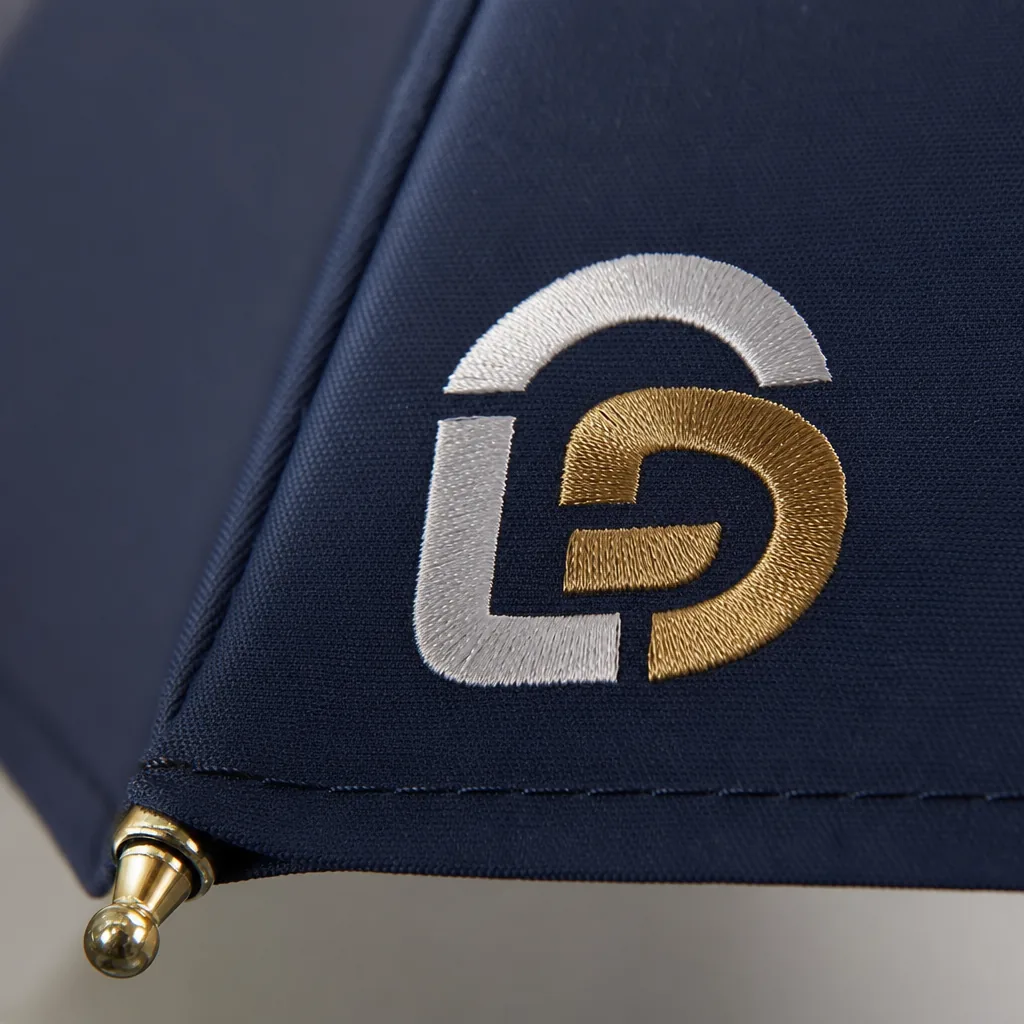
For OEM retail and promo orders, umbrella sleeve logo design is not just decoration; it has to fit the sleeve size, print method, fabric behavior, and packing line without creating rejects or delays. At the factory floor, we see the same issue often: a logo that looks sharp on a mockup can shift, crack, or wash out once it runs through cutting, stitching, heat transfer, and final QC.
When Sleeve Branding Makes Business Sense
Umbrella sleeve logo design makes the most sense when the sleeve is visible at the point of sale or handoff, not when it is hidden in a carton. Retail shelf programs benefit first: a closed umbrella gives buyers a branded surface before they ever open it, so branded umbrella sleeve printing on a 190T or 210T pongee sleeve can lift perceived value more reliably than canopy print alone. The same logic applies to e-commerce fulfillment, where the sleeve keeps the umbrella aligned during shipping and adds a second branded touchpoint at unboxing. Hotel use and corporate giveaways also fit well when the umbrella is distributed closed in a room, lobby, conference kit, or welcome pack; in those cases, the sleeve carries the message while the canopy can stay plain and cost-controlled.
Basic carry sleeves are designed to keep dust off and reduce abrasion, but they usually add little to margin. Premium pouches are tighter cut, use better stitching, and often include a drawstring, zipper, or woven label, which makes the sleeve feel like part of the product rather than throwaway packaging. That upgrade is justified when the sleeve helps the order earn a higher ticket price or supports retail umbrella sleeve branding in a gift set, hotel amenity program, or executive giveaway. A custom umbrella pouch logo can make a low-cost umbrella read as a more premium item without changing the canopy specification. For promotional umbrella sleeve OEM orders, keep the build simple unless the sleeve is the branded giveaway itself: spunbond or thin fabric works for volume promos, while a structured pouch is the better choice when protection, presentation, and margin all matter.
Choosing Sleeve Format, Fabric, and Logo Area
For umbrella sleeve logo design, start with the sleeve format because it determines both the print field and the failure points. Standard straight sleeves for 21"–30" stick umbrellas usually give the most usable front panel for retail umbrella sleeve branding, with a long, flat area that tolerates screen print or heat transfer well. Folding umbrella pouches for 3-fold and 5-fold models are narrower and often tapered, so the logo has to fit a shorter face with less room at the hem and top fold. Zipper styles can look better for retail presentation, but the zipper tape and end stops take space out of the artwork zone and can introduce puckering along the seam. Drawstring sleeves are common in promotional umbrella sleeve OEM orders because they pack fast and cost less, but the gathered opening can crowd the mark if the artwork sits too close to the top edge. On narrow sleeve shapes, the practical custom umbrella pouch logo area is usually one centered panel: roughly 2–3 inches wide on folding pouches and 3–4.5 inches wide on straight sleeves, depending on hem allowance and sleeve construction.
Fabric choice affects both print sharpness and durability. Polyester sleeves are the safer substrate for branded umbrella sleeve printing because the surface is more stable for screen print and heat-transfer graphics, especially for 1-color or 2-color logos with small type. Pongee-based sleeves feel softer and look more premium, but the tighter weave still has texture, so fine lines, gradients, and heavy solid fills can break up unless the artwork is simplified. Light-colored pongee is the better choice for sublimation; dark fabric usually needs a simpler mark with stronger contrast. Keep at least 8–10 mm clear of seams, zipper tape, and drawstring channels so the logo does not distort after stuffing, transit, or repeated handling. For most retail umbrella sleeve branding, a centered horizontal layout is the most reliable because it survives folding and banding better than side-placed graphics.
Use the sleeve style to match the buyer’s use case, cost target, and print risk. Zipper sleeves need clean seam reinforcement at the end stops, or the logo area can crease after repeated opening and closing. Drawstring sleeves are efficient for low-cost giveaways, but the cord channel can warp artwork if the design runs into the opening. Polyester usually delivers the cleanest result for simple prints and consistent repeat orders, while pongee supports a softer premium look when the design stays restrained. For narrow promotional umbrella sleeve OEM orders, a single bold mark, a clean wordmark, or a small woven label is usually more durable than trying to cover the entire sleeve face. If the order is retail-facing, keep the artwork aligned to the flat front panel and confirm the final print field before sampling, since sleeve shape and seam allowance often change more than the mockup suggests.
Print Method Limits and Artwork Rules for Sleeves
For umbrella sleeve logo design, screen print is the safest choice on smooth polyester, nylon, and 190T pongee sleeves when the artwork uses 1–3 spot colors and no gradients. Build for the finished sleeve, not the flat file: keep the smallest line weight at 0.4 mm or thicker, set text no smaller than 4–5 pt if it must print cleanly, and leave 8–10 mm away from the side seam, top fold, and cord channel. Place the mark in the center third of the visible panel so sewing does not pull the logo off-axis. A 40 x 40 mm logo is the practical minimum for branded umbrella sleeve printing; smaller marks can work only with bold shapes and simple lettering. On dark sleeves, use a white or high-contrast solid color, because fine reversed text and thin outlines drop out quickly.
Heat transfer is the better fit for custom umbrella pouch logo artwork that needs gradients, more than 3 colors, or small details that would require multiple screens. It is also useful for retail umbrella sleeve branding on smooth coated materials when the logo must stay compact, but textured oxford, brushed fabric, and PVC-like surfaces can reduce adhesion and blur the edges. Keep the transfer area at 40 x 40 mm or larger, avoid seam crossings, and use bold sans-serif type rather than thin serif fonts. On black, navy, or charcoal sleeves, a white, silver, or bright outline improves readability far more than a muted tone. For promotional umbrella sleeve OEM orders that need the lowest print risk and longer wear, sewn-on branding—woven labels, stitched patches, or heat-seal badges—holds up best, but it should stay at 25 x 25 mm or larger so stitching does not crowd the mark.
Cost, MOQ, and Production Impact
Umbrella sleeve logo design is not a free add-on once you move past a plain stock sleeve. Standard unbranded sleeves are usually made from 190T polyester or pongee, cut from shared rolls, and packed with minimal handling. Branded umbrella sleeve printing or a custom umbrella pouch logo adds artwork approval, plate or digital setup, color matching, and an extra sewing-and-folding check so the logo lands straight on the finished pouch. That usually pushes the sleeve into a separate cost line, not a small tweak to the umbrella price. Buyers should budget for higher per-unit sleeve cost, plus more packaging labor if the order needs a woven label, one-color screen print, or retail folding for shelf display.
MOQ moves with the decoration method and construction. A simple one-color screen print on a 190T pongee sleeve can often run at a lower quantity than full-color sublimation, heat transfer, or a zipper pouch, because those options require tighter control of fabric width, cutting layout, and finishing. For promotional umbrella sleeve OEM orders, a basic sleeve may be feasible at a few hundred pieces per artwork, while more complex packaging often starts at 500–1,000 pcs. Buyers should compare sleeve pricing against standard unbranded sleeves as a separate line item and confirm whether the quote is based on FOB or DDP, since packing and inland handling can change the landed cost.
Lead time also stretches when umbrella sleeve logo design is added to an order that already includes auto-open mechanisms, fiberglass frames, or double-canopy windproof construction. Auto-open parts add assembly and spring testing, fiberglass ribs need bend-recovery checks, and double-canopy builds take longer to sew and inspect under AQL 2.5. The sleeve then adds another packing-stage step after the umbrella passes function and appearance checks, so it can add several production days before carton close. For planning, treat retail umbrella sleeve branding as part of the critical path and lock artwork early; otherwise a sample may look simple while final packing becomes the bottleneck.
QC Standards and Shipment Planning
For umbrella sleeve logo design, QC starts with the sleeve, not the canopy. Inspect print placement against the fold line, seam allowance, and drawcord channel, because a centered logo on a flat pouch can shift after folding and stuffing. For branded umbrella sleeve printing, check for fuzzy edges on 190T pongee, ink cracking on PVC, and color misregistration near the cord opening. Measure stitch quality at the mouth and side seams for skipped stitches, loose thread ends, needle holes, and uneven topstitching around the custom umbrella pouch logo. The drawcord must close smoothly, the stopper must hold tension, and the cord end must resist fraying and pull-through after repeated open-close cycles. Fit is a separate checkpoint: the sleeve should slide over the folded umbrella body without forcing the artwork or leaving so much slack that the presentation looks sloppy.
Set color control before bulk production. Compare the sleeve fabric and print against the approved lab dip or digital proof under D65 light, and define the allowed shade variance by lot before cutting. For promotional umbrella sleeve OEM orders, verify fit on the actual folded product size, such as 21" or 23" stick umbrellas, and on thicker auto-open-close models with larger runner stacks. Use AQL 2.5 for sleeve and packed-umbrella inspection, with zero tolerance for critical defects: wrong logo position, broken drawcords, open seams, or a sleeve that does not fit the umbrella body. Treat sleeve print, seam alignment, and functional fit as separate checkpoints in umbrella sleeve logo design, because one failure can downgrade the entire order even if the canopy passes.
For FOB orders, bulk-packed sleeves usually lower labor and carton cost, but the buyer must handle retail presentation after arrival. Retail-packed orders need tighter control of polybag size, hangtag position, carton labels, and compression so the sleeve does not scuff in transit. DDP adds more variables: build in time for export carton rework, palletizing, customs paperwork, and final carton verification before handoff. A mismatch in SKU count or carton marks can hold freight for days. Lock lead time before production starts, and tie inspection, packing, and shipping terms to the same spec sheet so QC pass and logistics planning stay aligned.
Frequently Asked Questions
Do all custom umbrellas need a branded sleeve for retail sale?
No. Many promotional programs use standard sleeves or no sleeve at all to control cost. Branded sleeves are more common when presentation, resale value, or private-label consistency matters.
Will a sleeve logo hold up as well as a canopy logo?
It depends on the sleeve fabric and print method. Because sleeves see frequent rubbing during carrying and storage, buyers should choose durable methods and review abrasion performance during sample approval.
What print area is usually available for an umbrella sleeve logo?
For most standard umbrella sleeves, the usable print area is about 8 to 12 inches long by 2 to 4 inches wide, depending on sleeve shape and seam placement. Final artwork should leave at least 0.25 inch of safe margin so the logo does not get cut off during sewing.
What is a typical MOQ for custom printed umbrella sleeves?
MOQ often starts around 500 to 1,000 pieces per artwork version, but it depends on the print method and sleeve material. Screen printing usually supports lower-cost repeat runs, while woven labels or full-color transfer printing may require a higher setup quantity.
How does sleeve branding affect lead time for OEM umbrella orders?
Adding a custom sleeve usually adds 7 to 15 days to production if the artwork is approved on time and no new fabric is needed. If the supplier must source a special fabric, zipper, or woven label, lead time can extend by 1 to 2 additional weeks.
Looking to Launch Your Custom Umbrella Line?
ZheBrella is a Zhejiang-based OEM/ODM umbrella manufacturer with 17 years of export experience. Free design, low MOQ from 100 pieces, windproof construction, full-color print.
Get Free Quote Now »People Also Search For
Related Articles
Umbrella Logo Size Guide for Retail and Promo Orders
Plan readable branding across compact, golf, and stick umbrellas with practical logo size ranges, panel limits, and fact...
Read More »Custom Umbrella Sleeve Printing for Stronger Brand Presentation
Plan branded umbrella sleeves that look consistent with the canopy, control print quality, and fit procurement targets f...
Read More »
Logo Size Standards for Branded Umbrella Production Runs
Set practical logo sizes by umbrella style, panel count, and print method so procurement teams can approve branded umbre...
Read More »