Logo Size Standards for Branded Umbrella Production Runs
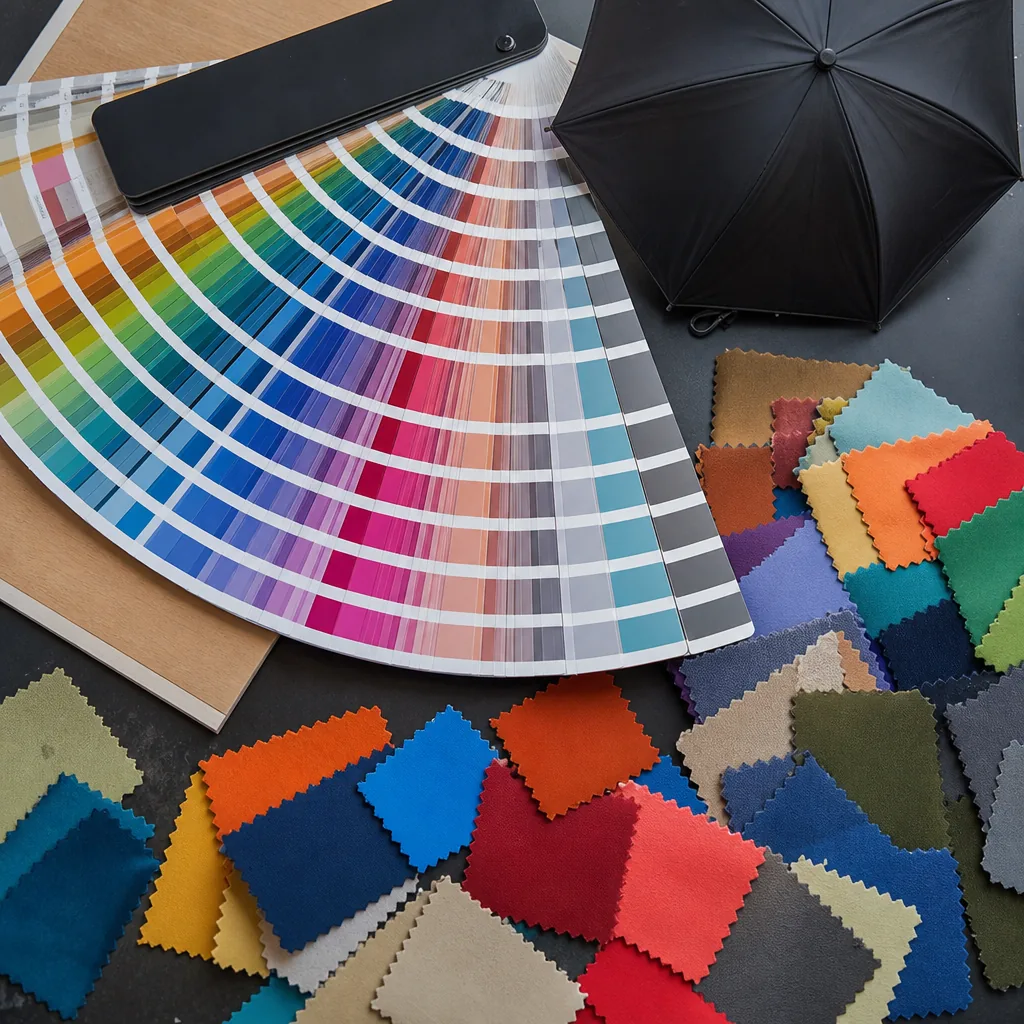
For procurement teams, logo approval is often where a branded umbrella order loses days: the artwork looks clean on a screen, then stretches over a curved panel, crosses a seam, or breaks down in production print. On our factory floor in Songxia, we set umbrella logo size standards by canopy style, panel count, fabric, and print method so the first sample is closer to bulk reality and buyers can approve with fewer revisions.
Map Logo Size to Umbrella Type
Set umbrella logo size standards by canopy class and panel geometry, not by the artwork file alone. For a 21" folding umbrella, keep a single-panel logo around 110-150 mm wide; the compact canopy and steeper panel curve make oversized marks distort after cutting and sewing. A 23" stick umbrella typically supports 160-200 mm on one panel, or the same size repeated on two opposite panels for corporate giveaways. A 27" golf umbrella can usually carry 220-260 mm cleanly, while a 30" golf model may allow a wider mark only after the factory checks the cutting pattern, panel width, and seam allowance. Kids umbrellas need stricter limits: on 19"-21" canopies, 80-120 mm is safer because the panel height is short and the logo sits closer to ribs, seams, and the lower canopy curve.
The branded umbrella print area depends on canopy diameter, rib count, and the seam-safe zone. An 8K umbrella has wider panels, so it gives more usable logo width per panel than a 16K umbrella of the same diameter; 16K layouts add more seams and narrower panels, which reduce clean print space even when the finished canopy looks more premium. Keep artwork inside the stitched-edge allowance, especially on pongee 190T/210T, coated UPF 50+ fabric, PVC, EVA, or POE, where ink adhesion and edge sharpness vary by material and print method. For OEM umbrella printing, the spec sheet should list logo width and height, panel number, print method, distance from seams, and whether the mark repeats on opposite panels. ZheBrella confirms the final umbrella logo production size with a printed strike-off before bulk production to reduce sampling risk, color disputes, and panel-cutting errors.
Account for Fabric, Frame, and Panel Shape
Set logo size from the canopy material, not from a flat apparel template. 190T pongee has a more open weave and shifts more under dryer heat or heat-transfer pressure, so it is best for bold marks, 1-color screen printing, and simple promotional umbrella branding. Fine reverse text, tight traps, and halftones are higher risk because ink can wick into the yarn texture. For 190T, keep strokes near 0.6-0.8 mm and letters above 8-10 mm, especially when printing white ink on navy, black, or red fabric. 210T pongee is denser and smoother, so it holds cleaner edges during drying or pressing; 0.4-0.5 mm lines and 6-7 mm letters are more realistic. These umbrella logo size standards match the production path: fabric is cut on bias, printed as a loose panel, then pulled into a curved 8K or 10K frame.
Frame material changes the branded umbrella print area because it changes finished canopy tension. Steel ribs are stiffer and usually leave a flatter print surface on standard 23 inch and 27 inch straight umbrellas, improving screen print registration and keeping round logos closer to round. Fiberglass ribs flex to absorb wind load, commonly on windproof umbrellas rated around 50+ mph, but that flex lets the canopy move under pressure; graphics can stretch slightly between ribs. On double-canopy vented models, especially 8K fiberglass and 10K fiberglass frames, the upper and lower canopy layers rarely sit at identical tension. For OEM umbrella printing, approve umbrella logo production on an assembled sample, not only on a loose cut panel, because ribs, tips, runner position, and opening mechanism all change the final geometry.
Distortion risk is highest near ribs, seams, and canopy edges. Artwork can look correct in an Adobe Illustrator panel template but bend once the panel curves into the frame. Keep important text at least 25-35 mm from rib seams and usually 40-50 mm from the outer edge on 23 inch and 27 inch umbrellas; increase the margin on 30 inch golf umbrellas because the panel curve is longer and edge tension is higher. Small sponsor logos placed beside a rib line can fold visually around the seam, while wide rectangular marks near the edge often appear arched after the canopy locks to the tips. Practical umbrella logo size standards should reflect fabric grade, panel geometry, rib stiffness, and opening type, whether manual, auto-open, or auto-open-close. AQL 2.5 inspection can reject smears and misregistration, but it cannot rescue artwork placed in a distortion zone.
Set Minimum Line Weights and Clear Space
Set print minimums before sampling because umbrella canopies do not behave like flat paper. On 190T and 210T pongee, fabric can shift under the squeegee, seams pull the finished panel, and a 23-inch arc panel is usually printed before sewing. For screen print, use 0.35 mm minimum positive lines and 0.5 mm reversed-out lines. Keep sans serif text at 8 pt or larger, serif text at 10 pt or larger, and any text on textured polyester or coated UPF 50+ fabric at 12 pt or larger. Digital print can hold about 0.25 mm positive lines, but only from clean vector artwork or high-resolution raster files. Heat transfer needs heavier geometry: 0.5 mm minimum lines, 1.0 mm gaps between separate elements, and no hairline icons. Put these umbrella logo size standards in the artwork guide, PO notes, and pre-production sample checklist so the buyer, designer, and factory approve against the same limits.
Define clear space from the finished umbrella panel, not the Illustrator artboard. On a common 23-inch 8K umbrella, the practical branded umbrella print area on one panel is often about 180 x 120 mm; keep the main logo within 150 x 90 mm to avoid drift into ribs, seams, hems, tip pockets, or Velcro stitching. Leave at least 15 mm from any seam, 25 mm from the lower hem, and 20 mm from a tip pocket or strap stitch line. On double-canopy vented windproof umbrellas, never run artwork across the vent overlap because the upper canopy layer can shadow, crease, or hide part of the print. Simplify registered marks, TM symbols, and legal lines for umbrella logo production instead of copying packaging artwork. Set circled R or TM marks at 3 mm high for screen print and 2 mm high for digital print, with clear space around the mark equal to the mark height.
Treat QR codes as scan-critical artwork, not decoration. Curved panels, water-repellent coatings, fold memory, and off-angle use all reduce readability, so set QR codes at 25 x 25 mm minimum for digital print, 30 x 30 mm for heat transfer, and 35 x 35 mm for screen print. Keep a quiet zone of four modules on every side, and keep the code off seams, fold lines, vent overlaps, and high-flex areas near the runner path. A lower panel corner is acceptable only if the code stays flat when the canopy is open. For OEM umbrella printing and promotional umbrella branding, require AI, EPS, or PDF vector files with all fonts outlined and Pantone colors specified. Raster artwork must be 300 dpi at final size, not enlarged from a website PNG. At ZheBrella, files without outlined fonts are rejected before mass production because font substitution is easy to miss until the AQL 2.5 inspection table is already full.
Confirm Size Through Sampling and AQL Checks
Confirm umbrella logo size standards with a printed strike-off before bulk fabric cutting, not after canopy assembly. A flat PDF does not show how a mark will read on a curved 23" or 27" panel, especially on 190T/210T pongee with Teflon or UPF 50+ coating. For screen printing, measure logo width and height on the strike-off with a steel ruler or caliper, then record distance from the panel seam, lower edge, and center line. Set placement tolerance in writing: typically +/-3 mm for a single-panel logo and +/-5 mm for two-panel alignment, where sewing tension and rib spacing can shift the final position. For heat-transfer and sublimation, recheck the branded umbrella print area after pressing because heat, pressure, and coated fabric can shrink edges or distort fine detail.
Use pre-production samples as the production control standard, not as a second artwork review. Approve finished umbrellas made with the same canopy fabric, rib count, and mechanism specified for bulk production, such as 8K steel ribs, 10K fiberglass ribs, or a double-canopy vented windproof frame. Review each sample open and closed, including whether the logo must face outward when folded. Check color against Pantone or the approved digital proof under D65 light, then compare panel to panel because coated pongee, POE, PVC, and EVA accept ink differently. Buyer approval for umbrella logo production should state logo width, logo height, panel position, print method, acceptable color variance, and closed-position orientation. That prevents a 100 mm logo approved for a 21" compact umbrella from being copied unchanged onto a 30" golf umbrella.
Mass-production inspection under AQL 2.5 should treat logo size, placement, skew, opacity, and color as measurable defects. Inspectors should pull cartons by lot size, open umbrellas fully, and record logo width, height, seam distance, tilt, ink bleeding, ghosting, and color consistency across panels. A tilted transfer, weak opacity on dark pongee, mismatched panel color, or any logo outside the approved tolerance should follow the buyer’s defect list before shipment release. For OEM umbrella printing, keep the signed strike-off and pre-production sample at the inspection table so QC compares bulk pieces against a physical standard, not a phone image. On FOB or DDP orders tied to event dates, this reduces schedule risk: reprinting 2,000 canopies after final assembly can add 7 to 12 days, while catching the issue before sewing usually keeps the order recoverable.
Build Size Rules Into the Purchase Spec
Make the PO the controlling document before fabric cutting, because umbrella logo size standards affect panel layout, screen frames, print alignment, and final QC. List logo width and height in millimeters, approved artwork file name, and exact panel location. For a 23-inch 8K straight umbrella in 190T or 210T pongee, a one-panel mark is commonly 180-220 mm wide; for 27-inch or 30-inch golf umbrellas, 250-320 mm may fit, subject to rib spacing and canopy curve. Define the branded umbrella print area by panel number, distance from the lower hem, centerline between ribs, and print count: one panel, two opposite panels, four panels, or full canopy. This prevents the factory from shifting the logo to an easier position after your retail, distributor, or event team has approved the layout.
Keep color, print process, and substrate requirements inside the same PO. Specify Pantone Solid Coated references for every logo color and name the method: screen printing, heat transfer, sublimation, digital print, or reflective transfer. Screen printing is efficient for one- to three-color promotional umbrella branding on pongee; sublimation suits full-panel polyester artwork but requires tighter color review. Heat transfer works for smaller OEM umbrella printing runs, especially on dark fabric, but thick transfers near fold lines can crack after repeated closing. For POE, PVC, or EVA canopies, require written confirmation of ink adhesion and curing method because standard textile ink may fail on plastic. Attach the signed artwork sheet to the approved sample, with Pantone codes, logo dimensions, print position, and an open-umbrella photo from the buyer’s viewing angle.
Tie commercial terms to the umbrella logo production spec so cost, MOQ, and schedule risk are clear before deposit. State MOQ by style, canopy color, and print version; 500 pieces is common for a simple one-panel screen print, while four-panel printing, custom Pantone canopy fabric, or auto-open-close construction can push practical MOQ to 1,000 pieces or more. Define FOB Ningbo or Shanghai, or DDP destination; DDP quotes need carton dimensions, HS code, duty assumptions, and final delivery address. Write lead times in calendar days: 5-7 days for a printed pre-production sample after artwork approval, then 25-35 days for bulk after deposit and signed sample. Add inspection terms, typically AQL 2.5 for major defects, and reject logo placement off center by more than 5 mm, wrong Pantone shade, bleeding, pinholes, poor curing, or distorted print.
Frequently Asked Questions
What is a safe logo size for a golf umbrella panel?
Many 27-inch golf umbrellas can support a logo around 8 to 10 inches wide on one panel, depending on the artwork shape and seam allowance. Final size should be confirmed on the exact 8K or 16K frame.
Can the same logo size be used on folding and stick umbrellas?
Usually not. Folding umbrellas have smaller, more segmented panels, so the same logo may need to be reduced or simplified to avoid distortion and poor readability.
What logo size is usually safe for a standard 8-panel folding umbrella?
For most 21 to 23 inch folding umbrellas, a logo around 18 to 22 cm wide on one panel is usually safe for screen printing. Larger artwork may need adjustment because the panel narrows toward the top and seams reduce the usable print area.
Should buyers approve logo size before or after the pre-production sample?
Buyers should approve the logo size on the artwork proof before sampling, then confirm final placement on the pre-production sample. This helps avoid sample remakes, which commonly add 5 to 10 days depending on the factory schedule.
Does the print method affect the maximum logo size on an umbrella?
Yes. Screen printing is best for simple logos within a defined panel area, while digital printing can handle larger or full-panel artwork but usually has a higher unit cost and longer setup time. Heat transfer is useful for detailed logos but may have stricter limits near seams and curved edges.
Looking to Launch Your Custom Umbrella Line?
ZheBrella is a Zhejiang-based OEM/ODM umbrella manufacturer with 17 years of export experience. Free design, low MOQ from 100 pieces, windproof construction, full-color print.
Get Free Quote Now »People Also Search For
Related Articles
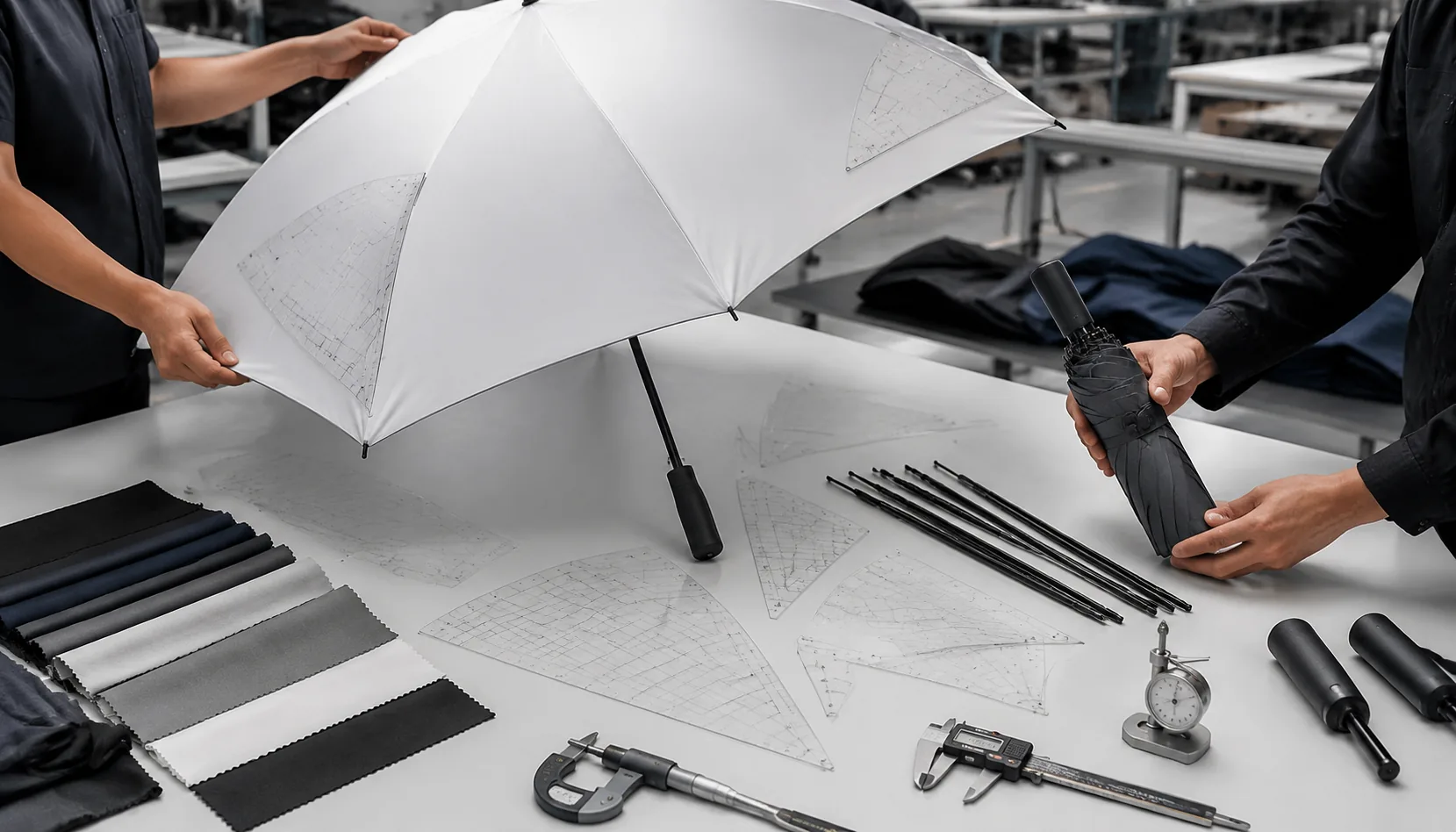
Logo Scaling on Folding and Golf Umbrellas for Brand Teams
Set practical logo sizes across folding, stick, and golf umbrellas while accounting for ribs, panels, print methods, mec...
Read More »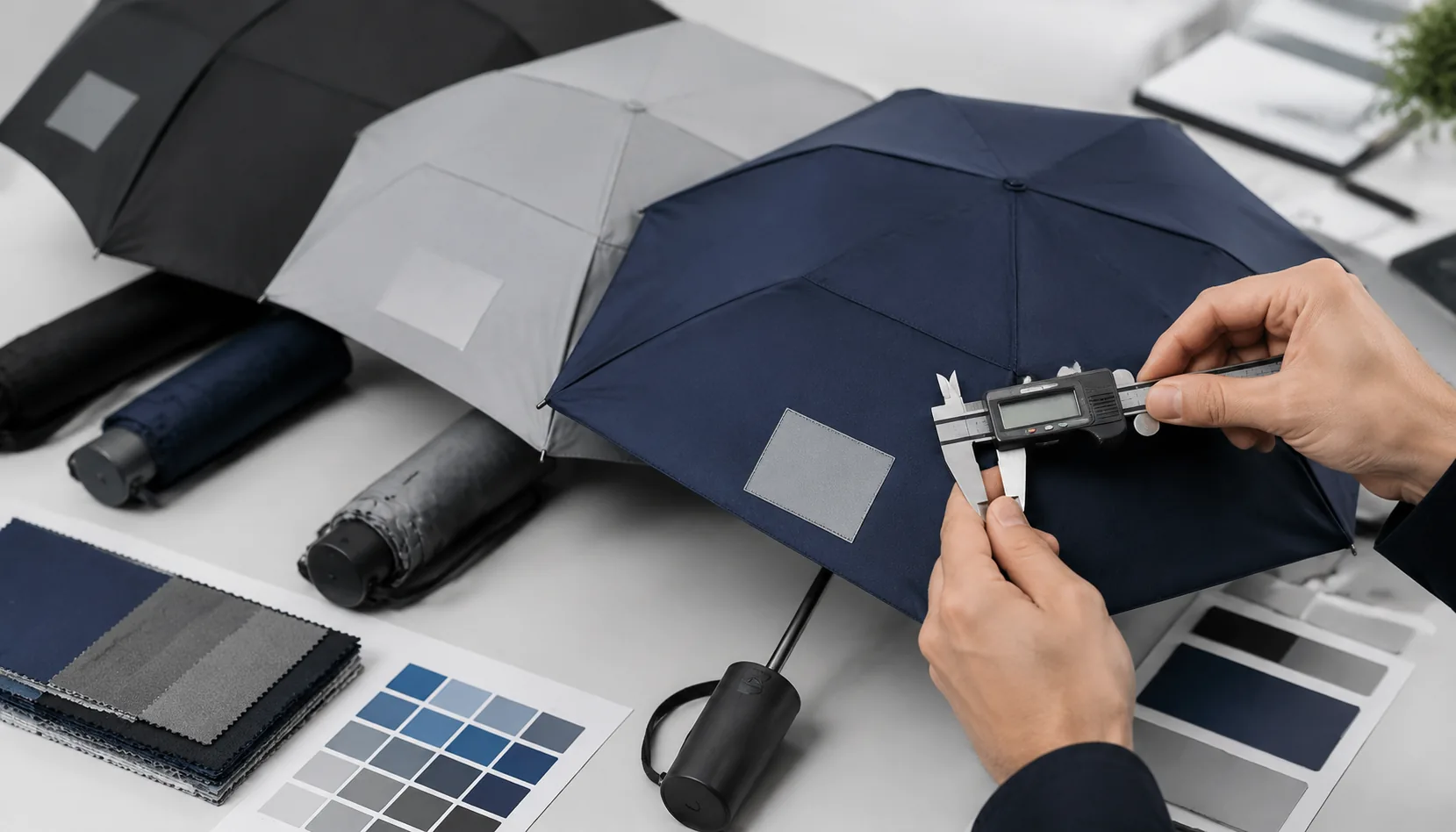
Minimum Logo Size Rules for Branded Compact Umbrellas
Set practical logo size, line weight, fabric, and print specs for compact umbrellas so small branding stays readable in ...
Read More »
Top 5 Logo Size Decisions for Branded Umbrella Panels
Plan logo size by umbrella type, panel count, print method, and buyer approval needs before sampling branded umbrella or...
Read More »