Umbrella Logo Placement Guide for Better Brand Visibility
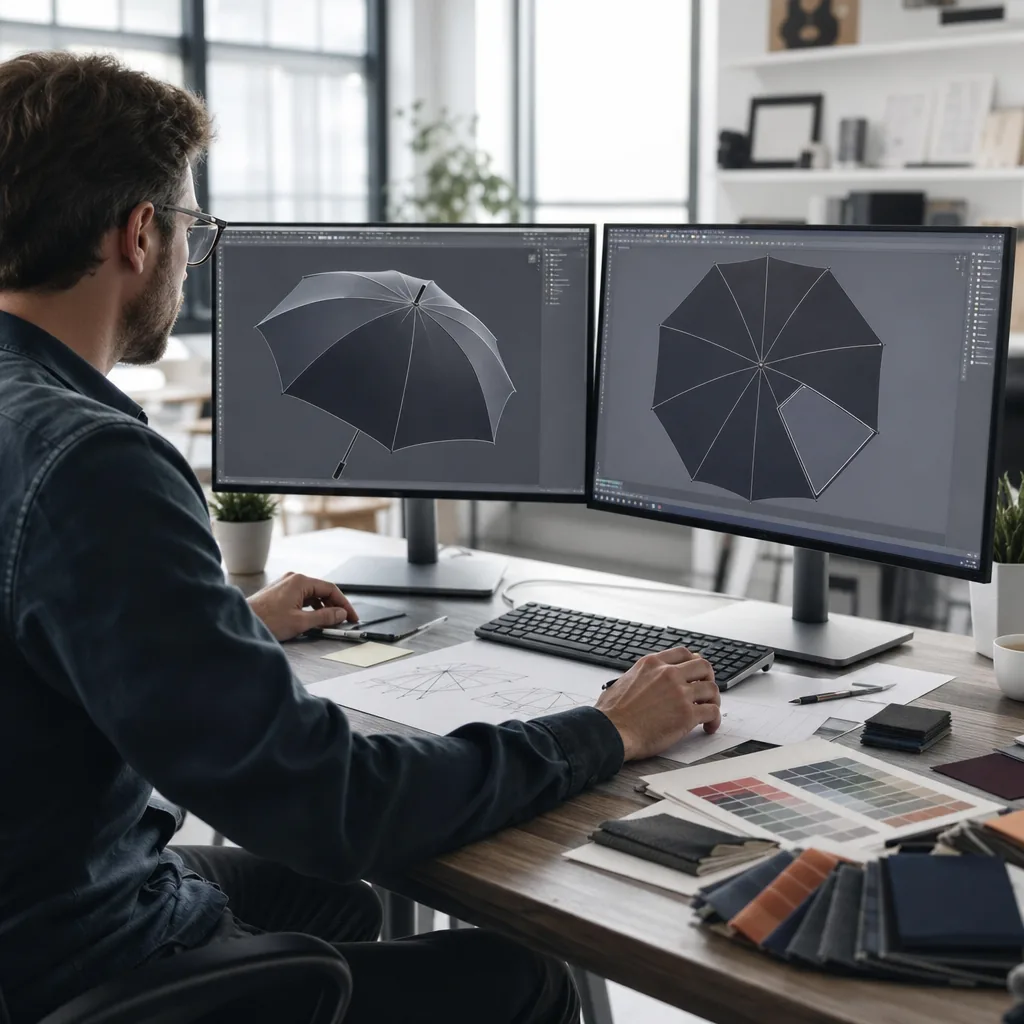
For buyers, umbrella logo placement looks simple until print limits, panel seams, curved canopies, and mixed models start changing what actually shows on the finished product. On the factory floor, we have to balance brand visibility with ink coverage, fabric stretch, handle shape, sleeve size, and strap hardware so the logo lands cleanly and repeats consistently across production. The right placement plan prevents costly surprises, whether the order is for compact folding umbrellas, golf umbrellas, or promotional giveaways.
Start With the Viewing Distance and Brand Goal
Start with viewing distance, not artwork size. If the umbrella must be read from a sidewalk, street, transit queue, or stadium aisle, umbrella logo placement should favor a full canopy panel or a repeat on two opposite panels, because moving viewers only catch a flash of the mark. For that job, a 23" or 27" canopy with bold umbrella panel printing usually outperforms a small handle stamp, strap label, or ferrule mark. Event photography follows the same rule: cameras compress detail, so high-contrast graphics on the canopy hold up better than subtle branding that disappears at arm’s length. At retail, the umbrella is often sold closed, so shelf impact comes from the sleeve, hang tag, and handle print more than the open canopy. Different channels need different priorities; reusing one layout for all of them weakens logo visibility on umbrellas and wastes print area where it will not be seen.
Brand goal should decide how aggressive the branding gets. For premium corporate gifting, subtle marks on the handle, strap, or sleeve can keep the product clean, especially on a 10K or 16K fiberglass frame where buyers expect a refined finish. But if the umbrella is for outdoor events, street teams, golf programs, or campus distribution, the canopy should carry the main message because people see it from 20 to 50 feet and often from above. In that case, a large canopy logo matters more than small secondary branding. The practical rule for promotional umbrella branding is simple: put the primary message where the first viewer will see it, then use the handle or strap as support, not the other way around. That approach balances visibility, cost, and presentation without overcomplicating the build.
For corporate gifting, restraint still matters, but the logo cannot vanish. A discreet handle or strap mark can signal quality, yet the canopy should remain legible when the umbrella opens in public. The strongest branded umbrella design usually uses a two-layer system: primary branding on the canopy for distance, secondary branding on the handle, strap, or sleeve for close-up recognition. That gives you cleaner presentation for executives while preserving public exposure for trade shows, client programs, and hospitality giveaways. If the order is for a retail box or a premium gift set, smaller exterior marks may be enough; if the buyer needs fast recognition in crowded spaces, canopy branding should lead. The best results come from matching panel count, print area, and message hierarchy to the actual use case, not from adding decoration everywhere.
Match Logo Placement to Umbrella Type and Panel Geometry
Straight umbrellas give the most forgiving umbrella logo placement because the canopy is taller, the panels are flatter, and the shaft does not cut into the print zone. On common 23" and 27" stick models, you can usually place one centered mark per panel or run a repeat logo across adjacent panels with less distortion than on a folding frame. For umbrella panel printing, the practical advantage is fewer stitch breaks and less stretch around the ribs, so text, icons, and thin rules stay legible from roughly 10 to 15 feet. If you need cleaner branded umbrella design with lower artwork risk, straight umbrellas are usually the best starting point for cost control and proofing.
Golf umbrellas offer the largest physical canvas, but usable area changes with rib count and panel geometry. A 30" golf umbrella usually gives broad panels for logo visibility on umbrellas, but vented double-canopy construction still adds edge curvature and seam interruptions that can shift artwork off square. An 8K frame creates wider panels with fewer seam breaks, so more of the artwork stays legible; a 16K frame divides the canopy into narrower sections, increasing interruptions but making repeated simple logos easier to place around the perimeter. For promotional umbrella branding, bold block type, larger icons, and simpler shapes hold up better than fine outlines, especially near the upper panel area where the canopy is most visible when tilted. 3-fold and 5-fold compact models are the most restrictive. Shorter ribs, tighter curvature, and extra folding points leave only small print wedges, often on 21" canopies, so small text and detailed marks can disappear after repeated folding and creasing. If the goal is maximum legibility with lower production risk, choose straight or golf styles first; if portability matters more, keep the artwork large, bold, and aligned to seam interruptions instead of crossing them.
Choose Fabric and Color Setups That Support Clean Reproduction
Pongee 190T and 210T are the two fabric specs that most directly affect umbrella logo placement. 190T is lighter and slightly more open, so it can work for simple one- or two-color marks with larger type. 210T has a denser face, which improves print sharpness, edge definition, and ink hold on small text, thin strokes, and detailed umbrella panel printing. On a sewn canopy, that denser weave also reduces show-through and gives solids a cleaner base, especially for heat transfer or screen printing. For buyers comparing cost and presentation, 210T is usually the safer choice when logo visibility on umbrellas matters more than saving a small amount on fabric.
Dark canopies need tighter artwork control than white or light colors. Black, navy, deep green, and burgundy can look premium, but they reduce contrast and make registration flaws easier to notice. White ink on dark pongee is the hardest combination to execute well: it often needs heavier ink deposit, tighter curing control, and thicker line weights to stay opaque. Bright white, silver, and yellow can work, but only if the mesh count, ink system, and curing temperature are matched to the fabric; otherwise the result looks gray, patchy, or uneven. For branded umbrella design, the issue is not matching a Pantone swatch on a screen — it is keeping the mark legible on a curved panel with seams, tension, and stitching.
Some color combinations should never move to bulk production without early strike-off approval. Pale logos on mid-tone fabric, gradients, and multi-color artwork crossing panel seams are the most likely to shift after cutting and sewing. This risk is higher on 21-inch and 23-inch umbrellas because the print area is smaller and seam placement leaves less room for the art. A physical strike-off on the actual 190T or 210T fabric gives the buyer a real check on color hold, edge sharpness, and final appearance before cutting begins. It also protects cost and lead time by reducing reprints, approval disputes, and avoidable scrap in promotional umbrella branding runs.
Use Secondary Branding Zones Without Overloading the Product
The most efficient umbrella logo placement is usually on secondary branding zones, not the canopy. Sleeve prints, woven labels, closure straps, handle badges, and hangtags let you add a logo, website, QR code, slogan, or compliance copy without crowding the product. For promotional umbrella branding, the sleeve is often the best value because it gives you a flat area for 1-color screen print or full-color transfer, and it stays visible in packaging and at retail. Woven labels on a sleeve or strap fit retail programs better when the buyer wants a stitched, higher-end finish. Use these zones for brand marks, short campaign copy, and simple QR codes; they are not the right place for long legal text or dense specifications. If the program needs faster production and lower risk, keeping most decoration off the canopy also reduces print alignment issues and avoids rework when rib count or panel size changes. Handle badges and hangtags should carry the information that needs to be identified quickly. A molded plastic or metal badge works for a logo or short wordmark, but it is too small for fine lines, small type, or a QR code that must scan reliably. Hangtags are the right location for barcode, SKU, fiber content, country of origin, care instructions, and short retail messaging because they are removable before use. On closure straps, keep the artwork simple: a logo or short slogan prints cleanly on stable woven webbing, while elastic or very narrow straps can distort detail. This structure improves logo visibility on umbrellas without affecting opening, folding, or wind performance, and it keeps compliance copy separate from the customer-facing graphic. For branded umbrella design, that separation also makes it easier to manage AQL 2.5 inspections, because print, label, and packaging checks can be handled as separate quality items instead of one crowded decoration spec.
Use canopy printing only when the brief needs maximum street visibility. Umbrella panel printing works best on one or two panels, not all-over coverage, because seams, ribs, and vent cuts break up text and QR codes. On 23-inch and 27-inch auto-open styles, large logos read better than small copy, and the cleanest placement is usually high on the panel, above the hem and away from rib tips. For retail programs, put technical information, warnings, and care data on the swing tag or sleeve, where they stay legible and do not compete with the main graphic. That approach is easier to control on 8K, 10K, or 16K frame constructions because the canopy layout stays simple even when panel width changes. If the buyer wants strong promotional umbrella branding without overload, lead with the panel logo, then support it with secondary marks on the sleeve, strap, and tag so the product stays readable, compliant, and cost-efficient across production runs.
Approve Artwork Through Sampling, QC, and Production Specs
For umbrella logo placement, the artwork file is the starting point. Ask buyers for vector files in AI, EPS, or PDF with outlined fonts; use a clean PNG only for reference, not production. A low-resolution JPG will break down once the logo crosses curved panels, seams, and top vents. The correct approval set includes a panel-by-panel mockup showing rib count, seam positions, logo size, and exact placement on a front panel, alternating panels, or a full-wrap layout. That level of detail matters on 21"/23"/27"/30" umbrellas with 8K, 10K, or 16K construction, because a centered logo on a flat board can shift after sewing. For better logo visibility on umbrellas, compare the mockup against the open-diameter template and the actual canopy pattern, not a generic print-area estimate.
Sampling should convert the approved branded umbrella design into a locked production spec. Use a pre-production sample made with the actual canopy fabric, ink, and finishing method, then get written sign-off before bulk cutting. Check color match, logo scale, seam alignment, bleed control, and fold resistance; screen print, heat transfer, and sublimation do not behave the same on pongee 190T, pongee 210T, POE, or PVC canopies. For umbrella panel printing, set inspection to AQL 2.5 and define rejects for registration error, missing ink, pinholes, and repeated-panel misprints. If the buyer approves the sample with comments, move those notes into the spec sheet immediately so production does not rely on email threads or memory.
Confirm MOQ, lead time, and packaging before artwork revisions begin, because changes after sample approval add prepress cost and can push delivery. MOQ will vary by frame type, decoration method, and packaging complexity, so a simple single-logo order is easier to schedule than a custom umbrella logo placement project with sleeve printing, hang tags, or multi-piece retail packaging. Budget about 7–15 days for sample approval and 25–45 days for bulk production, depending on order size and whether the umbrella is manual, auto-open, or auto-open-close. If custom packaging is required, include it in the same FOB or DDP shipment plan from the start so cartons, inserts, and outer cases follow the same production timeline and do not trigger separate freight charges or delay the final delivery.
Frequently Asked Questions
Which umbrella model gives the best logo visibility at outdoor events?
Large straight or golf umbrellas usually provide the best logo visibility because the panels are wider and easier to read from a distance. Compact 3-fold and 5-fold models are better for gifting and portability, but they offer less usable artwork area.
Does a 16K umbrella improve branding compared with an 8K umbrella?
Not always. A 16K design looks premium, but each panel is narrower, so large logos may need to be reduced or repeated across multiple panels. An 8K umbrella often gives more efficient single-panel logo space.
What is the typical logo print size for a standard 23-inch promotional umbrella?
For a 23-inch umbrella, logo size is often kept around 8 to 12 inches wide on one panel, depending on panel shape and print method. If you want better visibility, multi-panel printing can be used, but each panel usually needs a simplified layout to avoid distortion near the seams.
Can the umbrella sleeve and strap be branded without affecting production?
Yes, both the sleeve and strap can usually be branded with screen print, heat transfer, woven labels, or embroidery-style patches. These areas are ideal for secondary branding, and they typically require separate artwork approval because the printable area is much smaller than the canopy.
How does umbrella model choice affect logo visibility?
Golf umbrellas and straight-handle umbrellas usually offer the largest canopy area for logo placement, while compact folding umbrellas have tighter print limits. If the goal is maximum visibility, choose a larger canopy with fewer seams and a lighter canopy color for stronger contrast.
Looking to Launch Your Custom Umbrella Line?
ZheBrella is a Zhejiang-based OEM/ODM umbrella manufacturer with 17 years of export experience. Free design, low MOQ from 100 pieces, windproof construction, full-color print.
Get Free Quote Now »People Also Search For
Related Articles
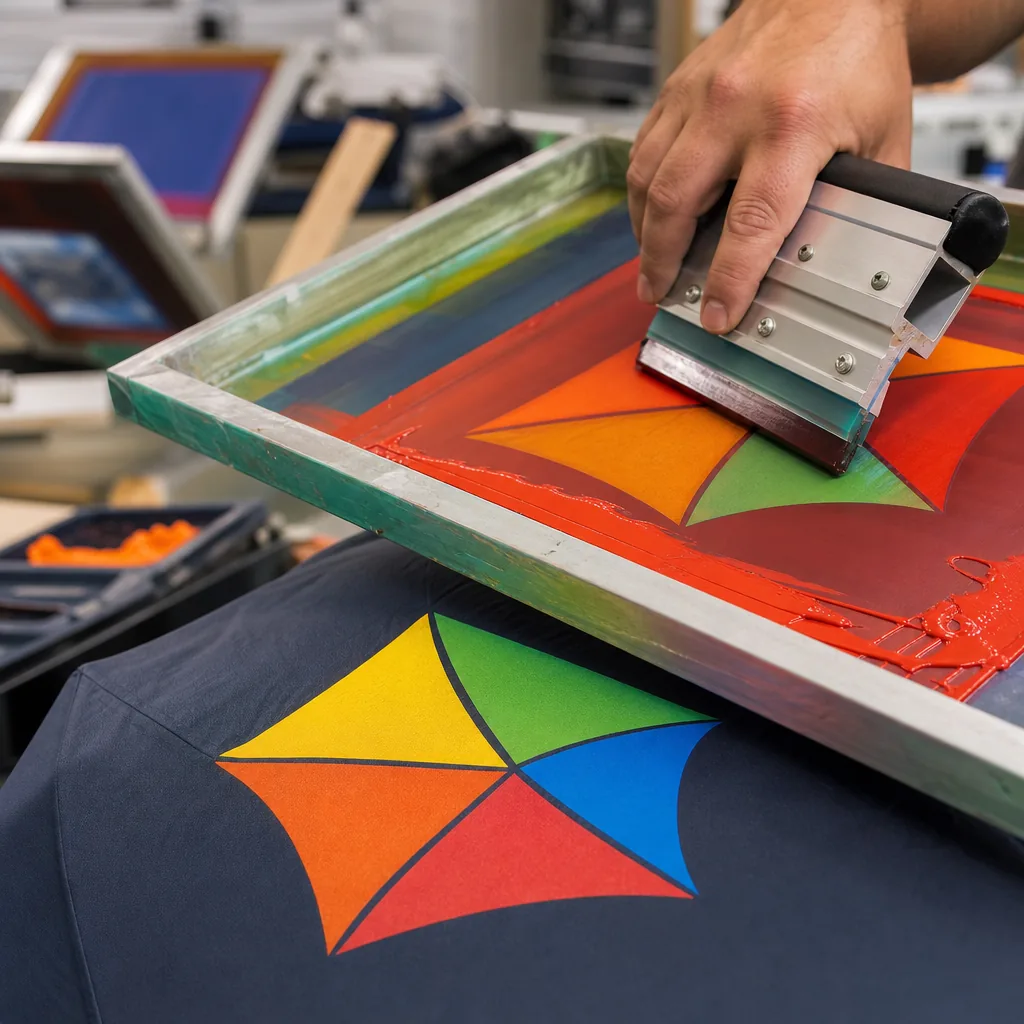
Best Umbrella Panel Layouts for Event Brand Campaigns
Compare umbrella panel layouts for event campaigns, from repeat logos to alternating colors, with practical print and QC...
Read More »How Umbrella Color Blocking Improves Brand Visibility
See how panel colors, trims, and contrast blocks improve logo visibility on custom umbrellas while keeping brand colors ...
Read More »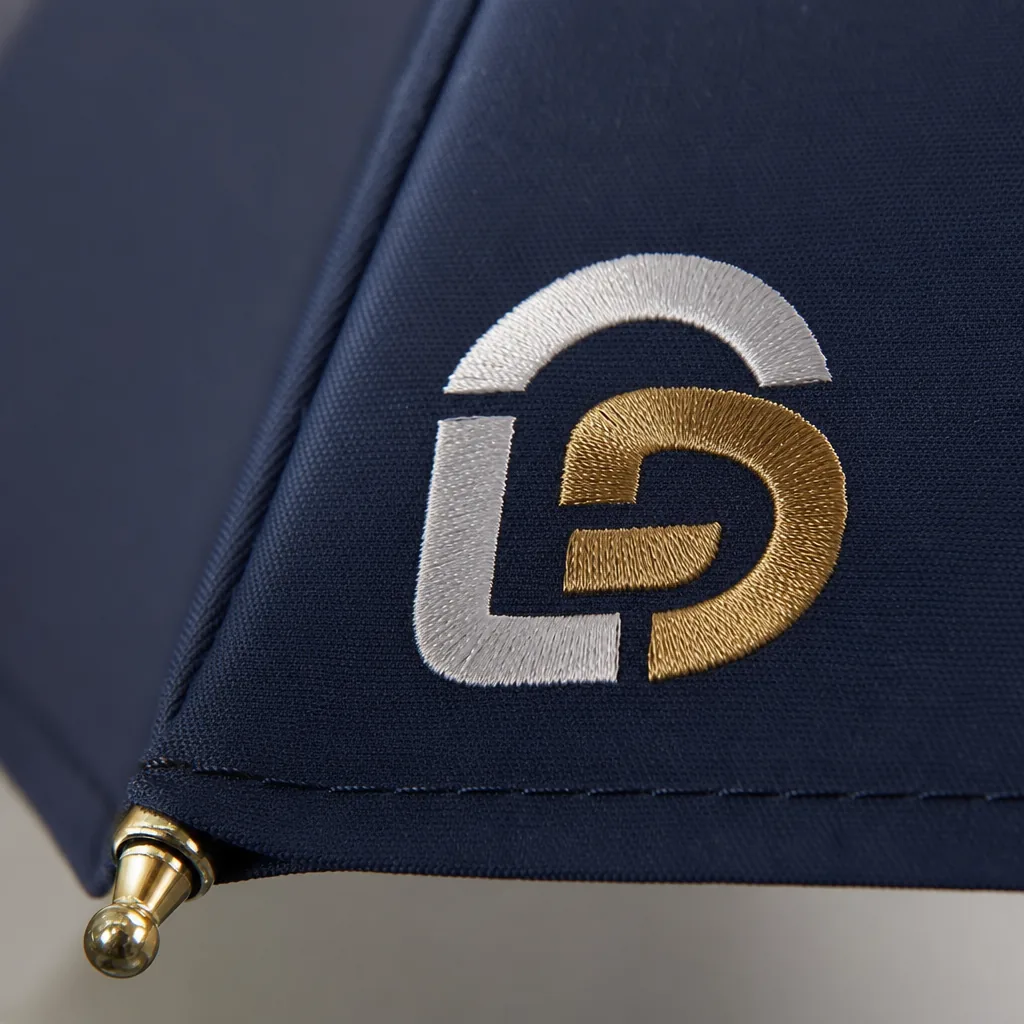
Umbrella Sleeve Logo Design for OEM Retail and Promo Orders
Plan umbrella sleeve branding with the right print area, fabric, MOQ, and QC standards to improve retail presentation wi...
Read More »