How 8K and 16K Umbrella Panels Affect Logo Printing Results
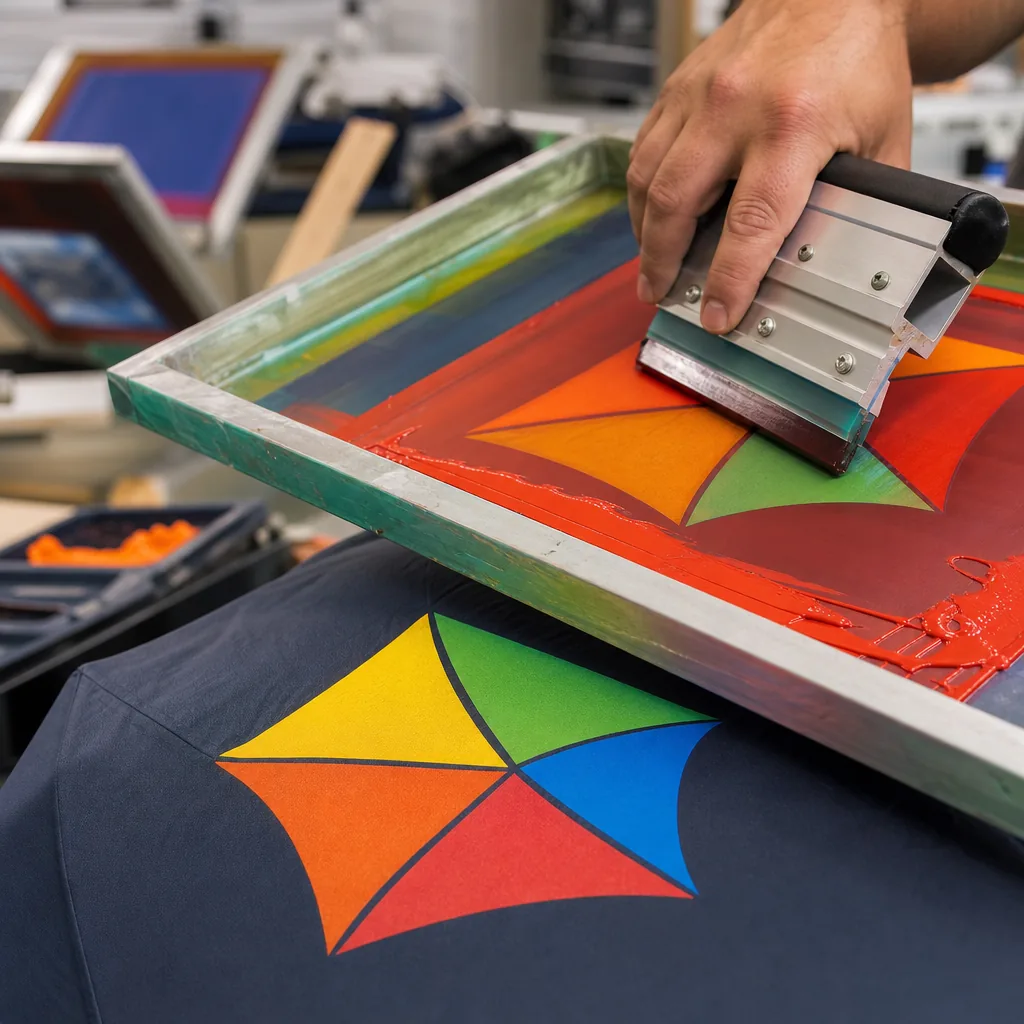
When buyers compare 8K and 16K frames, the real question is not just shape or price, but how the panel layout will handle logos, seams, and color fidelity on the finished umbrella. In umbrella panel printing, more panels usually mean narrower print zones, more seam interruptions, and tighter registration limits, which can change how a logo reads on the shelf. From the factory floor, the right choice depends on the artwork, the panel width, and how much visual continuity the brand needs.
What 8K and 16K actually change
Panel count is the number of fabric segments around the canopy, and on a normal stick umbrella it usually tracks the rib count: an 8K umbrella has 8 panels, a 16K umbrella has 16. The practical difference for umbrella panel printing is simple: more panels means narrower pieces of fabric, more seams, and less uninterrupted space for one large graphic. On an 8K canopy, each panel is wider, so a single logo can sit flatter and cleaner with fewer interruptions from stitching. On a 16K canopy, the print area is broken into smaller sections, which is better when the artwork is designed to repeat or wrap around the umbrella rather than sit as one centered mark. In factory terms, the more panels you add, the more seam matching matters, because the print has to survive cutting, sewing, and tension without drifting off-center.
For single-logo placement, an 8K umbrella is usually easier to control because there are fewer seams cutting through the visual field. That gives more room to center a logo on one panel or across two panels without fighting panel seam printing distortion. A 16K umbrella can still carry a strong logo, but the artwork has to be built with seam allowance in mind, especially if the mark crosses multiple ribs. If the logo sits near a seam, the stitch line can interrupt fine text, thin outlines, or gradients. For branded umbrellas used in retail or corporate gifting, I usually tell buyers to decide first whether they want one dominant mark or a distributed brand presence. Those are different print jobs, and they behave differently once the canopy is stretched open in the wind.
Repeated pattern branding is where 16K starts to make sense. More panels give you more segmentation points, so small logos, icons, or all-over motifs can be repeated around the canopy with a more premium, wrapped look. That said, edge alignment becomes more demanding because every panel edge has to meet the next one cleanly or the pattern looks stepped at the seam. With umbrella panel printing, the artwork should be laid out from the rib geometry, not forced onto a flat template and adjusted later. ZheBrella treats this as a production setup issue, not just a graphic issue: the print file, panel size, and sewing tolerance all have to match before cutting starts. For buyers, the rule is straightforward. Use 8K when the priority is one clear logo with maximum readability. Use 16K when the priority is a more detailed, repeated brand treatment and you can accept tighter control on registration.
Logo readability across seams
A logo that crosses a seam on an umbrella is not being printed on a flat poster. The fabric is cut into wedges, stitched under tension, then pulled around a curved frame, so the image gets broken at every panel join. On an 8K umbrella, those joins are wider relative to the graphic area than on a 16K umbrella, which means a thin line or small letter can lose continuity fast. If the artwork relies on clean edges, the seam can split a letter stem, chop a circle, or make a diagonal look jagged. In umbrella panel printing, the practical rule is simple: if the logo has fine details, keep it inside one panel instead of straddling two. Once a mark crosses a seam, logo alignment becomes a sewing problem as much as a printing problem, and the printer cannot fully correct what the stitch line distorts.
Thin outlines are the first thing to disappear. On pongee 190T or 210T fabric, a stroke that looks acceptable on screen can break after heat, ink spread, and panel tension are added. As a production standard, I would not trust anything below about 1.5 to 2.0 mm stroke weight for silkscreen or heat-transfer work on branded umbrellas, and I would push wider if the art crosses seams or uses reversed type. Small sans-serif text below roughly 10 to 12 pt equivalent is risky, especially on a 16K umbrella where each panel is narrower and the curvature changes more quickly from center to edge. If the brand name is short, keep the whole word inside one panel. If the mark is complex, choose panel seam printing only for bold shapes, not for delicate strokes or hairline borders.
The better approach is to design for the panel count instead of fighting it. An 8K umbrella gives you larger panels, so a centered logo, icon, or single-word mark can usually stay readable with less distortion. A 16K umbrella gives more panel divisions, which can improve symmetry for a repeating pattern, but it is less forgiving for a single logo that depends on exact spacing. For logo alignment, I always check the artwork at full size on a panel template, not just on the umbrella canopy mockup. That is where weak points show up: counters closing in letters, outlines drifting off-seam, and small registered elements landing on stitches. For most branded umbrellas, keep the main logo inside one panel, reserve seam-crossing only for bold geometric graphics, and use a test strike before mass production so you catch the failures before AQL inspection.
Frame structure and print stability
For umbrella panel printing, frame stiffness matters more than most buyers expect. A well-built 8K umbrella or 16K umbrella does not just feel stronger in the hand; it holds the canopy flatter while the artwork is applied, which improves logo alignment and keeps panel seam printing from drifting at the stitch line. Fiberglass ribs usually give better elastic recovery than light steel ribs, so they resist permanent bend after repeated opening cycles and keep tension more consistent across the canopy. Steel ribs can be acceptable on low-cost branded umbrellas, but once the frame starts flexing unevenly, the printed image follows that movement and you get stretched circles, broken text, or a logo that looks centered on one panel and off by 5 to 8 mm on the next.
Auto-open and auto-open-close mechanisms also affect print stability because they change how much force is transferred into the runner and rib joints when the canopy snaps open. On a loose frame, that shock can pull the fabric unevenly before curing or final trimming, which is why better canopy tension usually improves registration and reduces distortion. In our standard practice at ZheBrella, we check whether the open arc is symmetrical before we approve a layout for umbrella panel printing, because a frame with uneven lift will make even a simple one-color mark look sloppy. This is especially visible on 16K umbrella constructions with smaller panels, where the seam line is closer to the logo area and any distortion becomes obvious fast.
Double-canopy vented windproof frames are usually the most forgiving for branded umbrellas because the vent relieves pressure instead of forcing the entire canopy to balloon outward. That keeps the top layer from twisting and helps the lower layer stay taut, which is useful when the artwork crosses panel seams or has tight letter spacing. The result is cleaner transfer placement, fewer registration errors, and less risk of the print looking warped after the first wind test. For production, I would rather print on a stable 10K or 16K structure with consistent rib geometry than on a cheaper frame that opens fast but sags at the edge; the cheaper option may save a little on hardware, but it costs more in rejects when the logo no longer reads straight across the panels.
Material choice and color output
For umbrella panel printing, fabric choice matters more than most buyers expect because the same artwork behaves differently on 190T pongee, 210T pongee, standard polyester, and clear POE. 190T pongee is the workhorse for branded umbrellas: it takes screen print and heat-transfer ink cleanly, gives solid ink coverage, and usually holds sharper edges around small text and thin logos. 210T pongee has a tighter weave and slightly smoother face, so colors read brighter and gradients look less broken, especially on a 16K umbrella where each panel is narrower and the print sits closer to the seam. Polyester is cheaper and can work for simple one-color marks, but it is easier to over-ink and can look dull if the coating is not consistent. Clear POE is a different case entirely: opacity is low, so the logo must be designed for backlit visibility rather than coverage, because dark ink will show differently in daylight versus under indoor light.
UPF 50+ coatings can also shift the final appearance, and buyers often misread that as a printing defect. The coating adds a slight surface haze or muted tone on some pongee grades, which reduces perceived brightness even when the actual ink laydown is correct. On an 8K umbrella, the panels are wider, so umbrella panel printing has more room for bold logos and fewer seam interruptions, but the fabric grain is more visible, especially on 190T. On a 16K umbrella, the smaller panels improve logo alignment across the canopy because each repeat is shorter, yet panel seam printing becomes the controlling factor: if the artwork crosses a rib line, any fabric stretch or registration error shows immediately. Our standard practice is to test the exact fabric, coating, and panel count together before production, because branded umbrellas fail at the interface between material opacity, ink density, and seam placement, not in the artwork file itself.
Sampling, tolerances, and bulk production
For umbrella panel printing, the strike-off is where most problems show up before anyone wastes time on bulk. Buyers should ask for a physical sample on the exact canopy fabric, not a flat art proof, because an 8K umbrella and a 16K umbrella do not behave the same once the panels are cut, stitched, and tensioned over the frame. The important checks are logo alignment across the centerline, seam-to-seam registration, and whether key text or thin outlines fall too close to a panel seam printing zone. On a real canopy, a design that looks centered on screen can drift 3-5 mm after sewing, especially on curved panels. I always tell buyers to approve strike-offs with the umbrella fully assembled and opened, because a print that looks clean on a loose panel can still warp when the ribs pull the fabric tight. That is the only honest way to judge umbrella panel printing before mass production.
For bulk production, the acceptance standard should be written around AQL 2.5 and not left vague. The inspection plan needs to call out shifted prints, color variation, ghosting, pinholes in the coating, thread marks, and seam defects that break the artwork at the panel join. AQL 2.5 is reasonable for cosmetic and functional checks, but only if the sampling sheet specifically includes the logo area, panel seam printing, and repeat position from panel to panel. On a 16K umbrella, the tighter segmentation creates more seams and more opportunities for small misalignment to compound across the canopy, so the tolerance on repeatability matters more than the absolute artwork size. For branded umbrellas, I also recommend checking the first and last panel against the approved strike-off, because drift often appears after the print head or screen setup has stabilized. If the buyer cares about retail presentation, those seam defects should be treated as a reject, not a rework.
Lead times should be planned separately for sample approval and for production, because those are different risks. A normal strike-off and sample cycle is about 5-10 days if the artwork is final and the fabric is already confirmed, but if the buyer is still adjusting logo alignment or changing the panel count, it can stretch longer. After approval, mass production for standard manual or auto-open frames usually runs 20-35 days depending on order size, rib material, and print complexity. FOB planning should include enough time for packing, carton labeling, and booking space, since panel-heavy branded umbrellas take more inspection and handling than plain stock items. DDP planning needs extra margin for customs clearance, duty classification, and final-mile delivery, so the buyer should not use the same lead-time assumption as FOB. Our standard practice is to lock the print approval first, then freeze the shipping method, because changing both at once is how schedules slip and claims start later.
Frequently Asked Questions
Is a 16K umbrella always better for logo printing than an 8K umbrella?
No. A 16K frame gives more, smaller panels, which can look premium but increases seam interruptions. For large simple logos, 8K can provide cleaner uninterrupted print zones.
Should a buyer avoid printing across panel seams?
As a rule, yes, if the logo has fine text or sharp geometry. Crossing seams is possible, but it needs stricter artwork setup and usually a pre-production sample to confirm readability.
Does an 8K umbrella usually give more usable logo space than a 16K umbrella?
Yes. An 8K frame typically has wider panels, so there are fewer seam interruptions and more continuous space for a logo or slogan. A 16K umbrella can still work for branding, but the logo often has to be broken across more panel sections.
What print method works better when the logo must cross panel seams?
For seam-crossing artwork, sublimation or carefully registered digital printing usually gives better results than basic screen printing. If the logo must stay crisp, many buyers also move the mark slightly above the seam line to avoid distortion at the stitch points.
What file setup do factories usually need for panel printing on branded umbrellas?
Most factories will ask for vector artwork, Pantone color references, and a panel-by-panel layout showing seam positions and logo center points. For custom samples, lead time is often 5-7 days, and bulk production is commonly 20-30 days after artwork approval, depending on order size and print complexity.
Looking to Launch Your Custom Umbrella Line?
ZheBrella is a Zhejiang-based OEM/ODM umbrella manufacturer with 17 years of export experience. Free design, low MOQ from 100 pieces, windproof construction, full-color print.
Get Free Quote Now »People Also Search For
Related Articles

Artwork Setup Rules for Clean Umbrella Branding Results
Get practical artwork setup rules for umbrellas, including bleed, panel alignment, safe zones, and production tolerances...
Read More »Brand Pattern Umbrellas: Repeat Prints Without Panel Mismatch
Plan repeat-print umbrellas with cleaner seam alignment, fabric choices, and sampling controls for retail, promotional, ...
Read More »
Logo Placement on Umbrellas: Panels, Straps, and Handles
Choose umbrella logo positions by use case, print area, handle material, and visibility so branded orders look balanced ...
Read More »